February 2024
Complete authored posts and demonstrable self-threads.
I’m yet to hear ONE member of National Cabinet acknowledge the tens of thousands of Australians killed by Covid, as a direct consequence of decisions made by them. None of our Covid debates talk about deaths in any meaningful way. Historically catastrophic numbers dead. #auspol https://t.co/WoXItvworK
Right on cue, politicians leading the assault on the insurance industry, for problems the same politicians cause and do nothing about. https://t.co/DnLcKmfnFE
What does Rousseau have to offer us on Covid and climate change? Something pretty mind-blowing, actually. He said that a society has all of its rules at once. What does that mean? Some amazing and unexpected things, about how societies work, and how to fix their problems. /1 https://t.co/7eCX5FUFCK
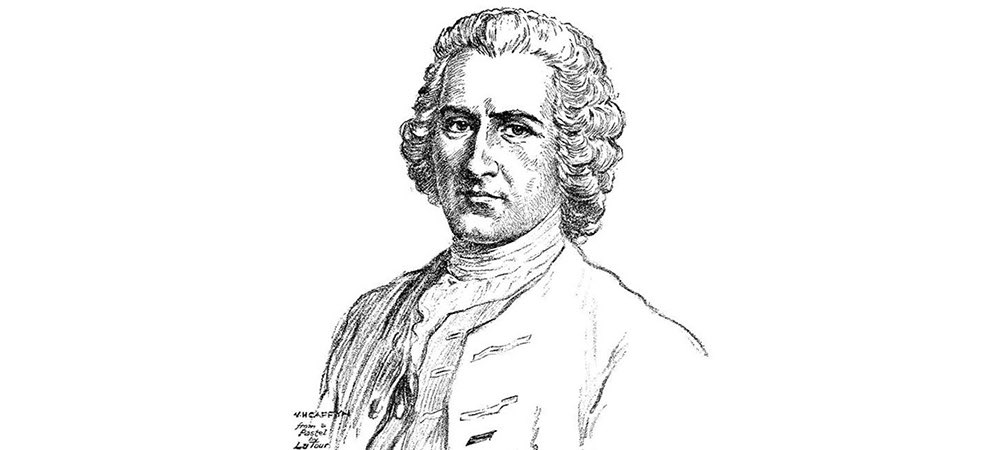
What Rousseau is saying is that societies don’t exist in pieces at a time. That when you change one aspect of them, it changes all of the other aspects, automatically and at the same time. Just think about the power of what that means. /2
We’re so stuck around ideas of micro/macro, local/global. Convinced that a society is adding up of lots of ‘micro’ things, in some magical and unexplained way. In economics they even coined the concept of ‘the invisible hand’ to try to explain it (i.e. they had no idea). /3
Rousseau’s insight turns all of this inside out and upside down. Anything you do, anywhere, is both micro and macro, local and global, at the same time. While the Earth isn’t flat, society absolutely is. There are no levels, no micro or macro. /4
It astonishes me that we watch our politics, where the tiniest most trivial act can transform the political landscape, in as little as 10 minutes. And not see the fiction of micro/macro, local/global thinking. We are the age of things ‘going viral’, we see it every single day. /5
I Tweeted the other day about how collective change doesn’t come from adding up lots of individual beliefs. But rather from shifts to wide narratives of how everything works, which individuals then adopt to a greater or lesser extent. Often extremely quickly, in a day. /6 https://t.co/lAcmoSYhkf
The power of that difference is what going viral actually means. You don’t need to ‘mobilise’ millions or billions of people individually, changing their individual beliefs to try to shift them. You just need to put a compelling narrative out there, a story. /7
A story that reshapes their view of how all of society works, all at once. That can change everything, in a matter of minutes. Collective action can be as swift as any individual action, if the narratives are powerful enough. And individuals will come to the narrative. /8
You don’t have to mobilise them. You need to get the story out there, sure, but if it’s a good one, they will come to it. Societies aren’t shaped from above, or below. There is no top or bottom. They’re completely flat, with any levels the outcome of these shifting narratives. /9
A fascinating empirical example for these ideas comes from psychology. Professor Ben Fletcher pioneered an approach to peoples’ chronic problems called Do Something Different (DSD). Say a person can’t lose weight, or give up smoking. /10 https://t.co/xlWMLcbPP5.
Traditionally those specific problems are targeted with a range of approaches. But Fletcher says humans have all of their habits at once, they’re connected via a habit-web. (You can see the link to Rousseau’s ideas there.) Every habit is already linked to all other habits. /11
So Fletcher says, if you want to lose weight for example, just do something different. Don’t try to address your weight specifically, change another simpler habit, like which sock you put on first in the morning, or which route you drive to work. Interrupt your habit-web. /12
The results are pretty impressive. These are the simplest of all interventions, and they can have the most powerful effects. All through the recognition that everything we think and do is connected to everything else we think and do. This is huge, and empowering. /13
You don’t need to feel like an isolated tiny cog in a vast social machine, powerless to effect change. Anything you do can go viral, can have widespread and fast collective impact. If you do it creatively, and strategically. And you can see this in another way. /14
Take Covid, where as we know pubic health minimisers managed to disrupt over 150 years of established practice in the management of infectious disease, with simple narratives like ‘just like the flu’, and ‘living with the virus’. Slogans that create an entire worldview. /15
But it goes much further, because everything is connected to everything else. We’ve seen now that this disruption has also flowed through into other public health areas, driving down vaccination rates for all diseases, for example. And concepts like ‘the vulnerable’. /16
Vulnerability has crossed out of Covid territory and into multiple political domains, being used as an excuse now to do nothing in a public way, and just try to assist ‘the vulnerable’ while everybody else is left to cope for themselves. /17
Assistance that rarely arrives, betraying that something else is going on here. None of this is accidental, political strategists know that a good narrative will flow through to everything else we do too. They’re getting huge bang for their buck, with Covid. /18
The libertarian dream of everybody just living as a self-reliant individual, with only the most vulnerable (in theory) supported collectively, is now playing out at an accelerated rate, because of the pandemic. The same narrative changed things well outside public health. /19
All because bad people understand Rousseau, and good people are bogged down in ridiculous ideas about society being millions of individual cogs that have to be each aligned, like doing a massive jigsaw puzzle. Look at what a TINY minority the dominant ultra-conservatives are. /20
And the tiny minority of the population that are their ‘base’. And yet, they’ve been winning in politics comprehensively, for decades. Because they understand that societies are already connected. They just need to tweak narratives, to take control of everything. /end
The picture says it all. How retirement went from being a time of winding down after a lifetime of hard work, to some sort of perpetual orgy of recreation. It will be scaled back when the boomers are done with it, as every other entitlement they enjoyed while working has. /1 https://t.co/cNKQNfxh7I
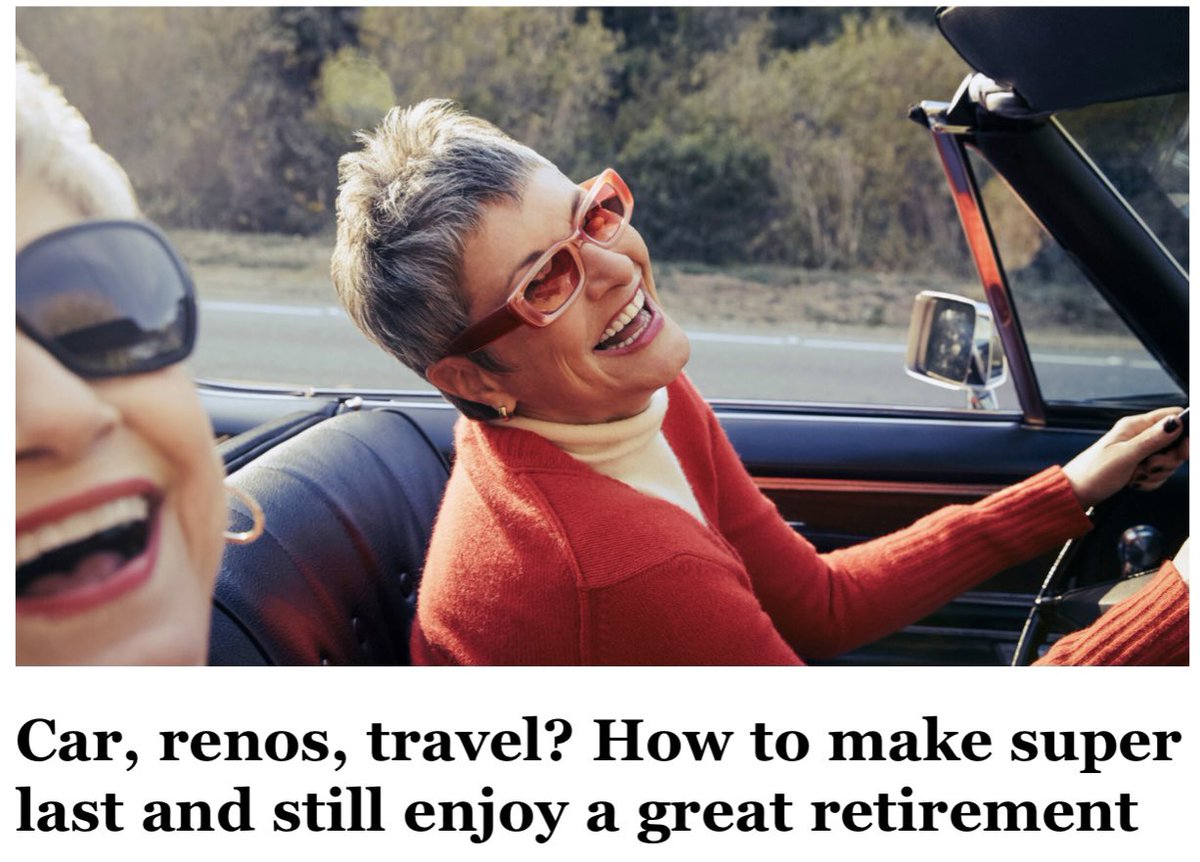
And don’t be conned, much of the funding for these retirement lifestyles is public money, not boomer money. Astronomical tax concessions. Which again, as night follows day, will be removed as soon as they’re done with them. Just as free education and cheap housing was. /2
Friends of mine retired 10 years ago at 55, on the old gold-plated public super schemes which gave them their final working income for life, at retirement. They didn’t contribute a single cent to those schemes. That’s what the ‘Future Fund’ is, public money. /3
Put aside to pay for this outrageous largesse. Again, quickly removed once the next generation came along. Many if not most people now have more money in retirement than they did when they were working. That’s a cultural abomination. /4
And we wonder why we have a ‘cost of living’ crisis, when the families doing the hard yards of raising the next generation have no money at all, and can’t even afford a roof over their heads. Intergenerational injustice is very real. Remember this is the Woodstock generation. /5
The down with the establishment, back to simple living hippies who went on to become far and away the richest generation in history, trashing institutions and monetising the wreckage. The destruction of any sense of a circle of life. Just a perpetual lifestyle present. /end
A week after a party with 50+ people, in an ordinary residential home, where we made sure all windows and doors were open and multiple HEPA filters were used, there’s not one report of any infection from any attendees.
A teacher friend maintains a CO2 reading in the low-500s in a classroom full of primary school children, using open windows. Also bought 2 HEPA filters out of their own money. 4 years of teaching like that, never infected. /1
This was so simple, and relatively inexpensive. Disgust that this wasn’t mandated as a minimum for all classrooms. And watching self-promoting experts with no knowledge of schools or ventilation, actively discouraging basics like this, creates white-hot anger. /2
Ask people who work in schools, the total disrespect that this hasn’t been done until now. Governments do ridiculous desktop audits of ventilation, from central HQ, but then do nothing to enforce even the basics like opening windows. /3
Ask kids and teachers how many of those windows are closed, even in warmer months. Lots. But then many schools used unflued gas heaters for years with no ventilation requirements either. Nobody with authority gives a shit. /end
UK Labour on TV saying that while other issues like the environment are important, ‘the economy’ is the bedrock of being able to do anything. Complete nonsense, and complete capture by conservative framings. The economy is how conservatives win even when they don’t win.
THIS is what ‘living with the virus’ really means. It means individuals masking the impact of infections to maintain their compliance with the social norm of the pandemic being over. https://t.co/V1a9fHPZhw
Shouldn’t take long in most places. Then they can move onto schools, even quicker. ‘What safety protocols are you using? None? Tick.” https://t.co/rpmsbABrag
We’re ’living with the virus’ in the way we used to live with domestic violence. By ignoring it. It’s social. The sickness is all out there, but to admit it would violate the group norms. Doing that is more terrifying to people, than death. https://t.co/LbvESl1PYc
While even primary and secondary schools, usually the arse-end of any priority list, have air conditioning today, university residential colleges often don’t. It’s not justifiable, students given little more than a ceiling fan to cope.
Of course it is. What we’re doing with Covid, trying to manage it as a non-pandemic mild respiratory illness, is the EXACT equivalent of saying ‘we’re going to address cost of living issues by stopping the data on cost of living’. https://t.co/Jz0l6KIO1T
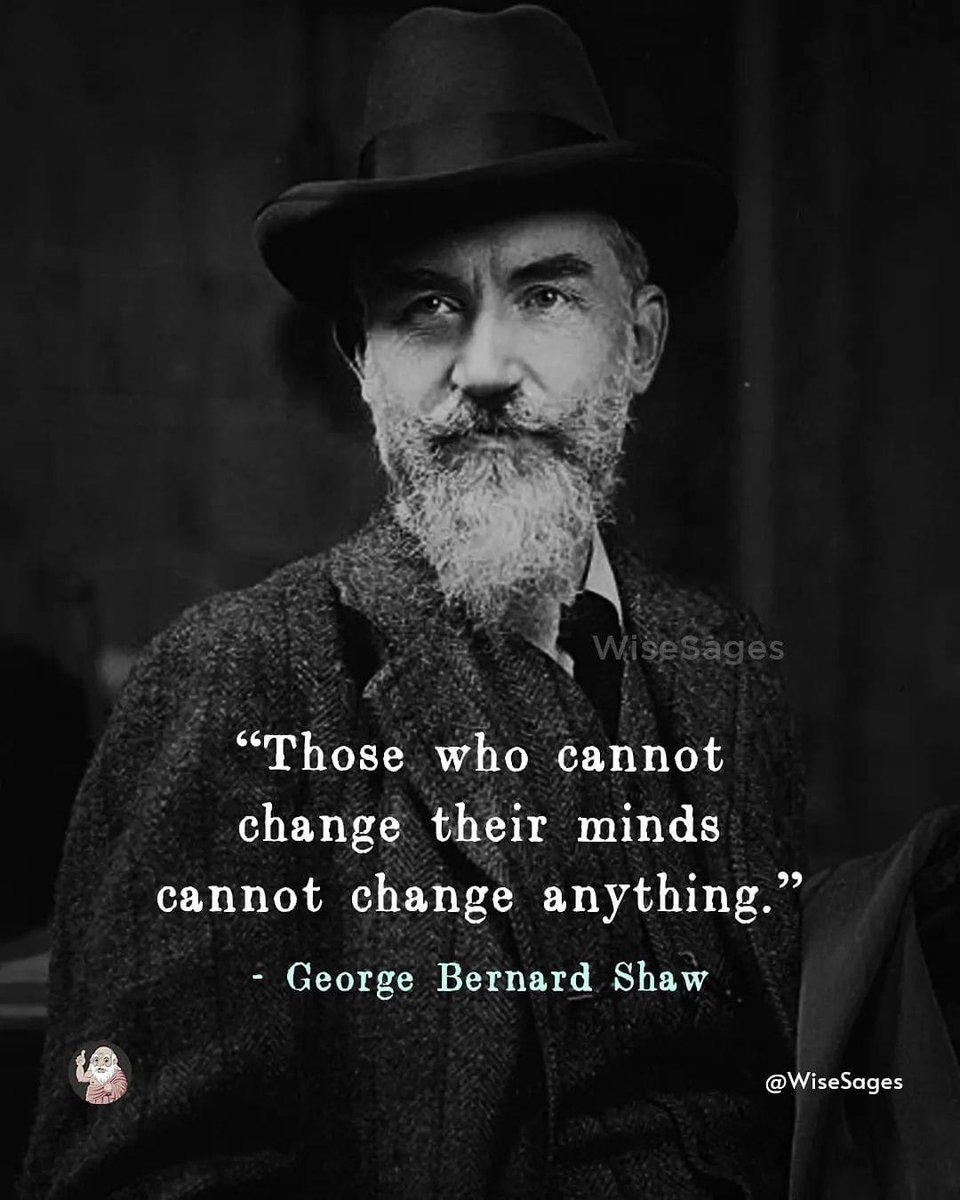
I read every word Shaw wrote, growing up. To this I would say most of what we attribute to the use of the human mind is really imitative social behaviour. Minds are not changed, different beliefs achieve greater or lesser success, socially. https://t.co/z6Ef83cVmG
I’m sure many would happily shut up about Covid, if even one Infinite Covid could put a date on when we can expect infection rates and deaths to be somewhere in the ballpark of the flu. Not just vague hand-waving assertions about ‘hybrid immunity’.
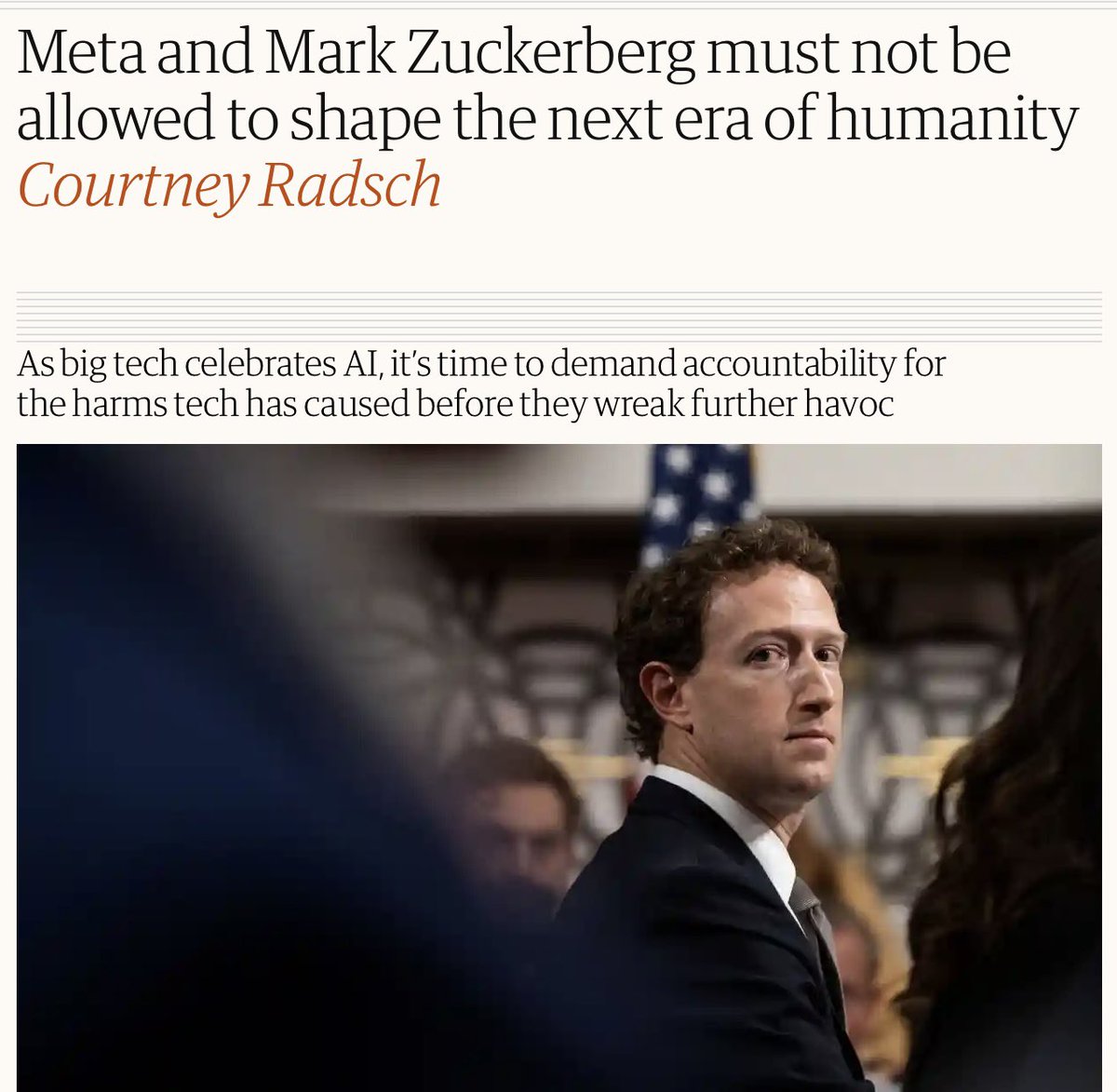
It’s not evil corporates. It’s the social mechanism of school, popularity or likes, extended to adult life. Both kids and adults use social media. These platforms built-out adult life to be socially and culturally equivalent to school life. It’s not difficult to see. https://t.co/GJWFksKzma
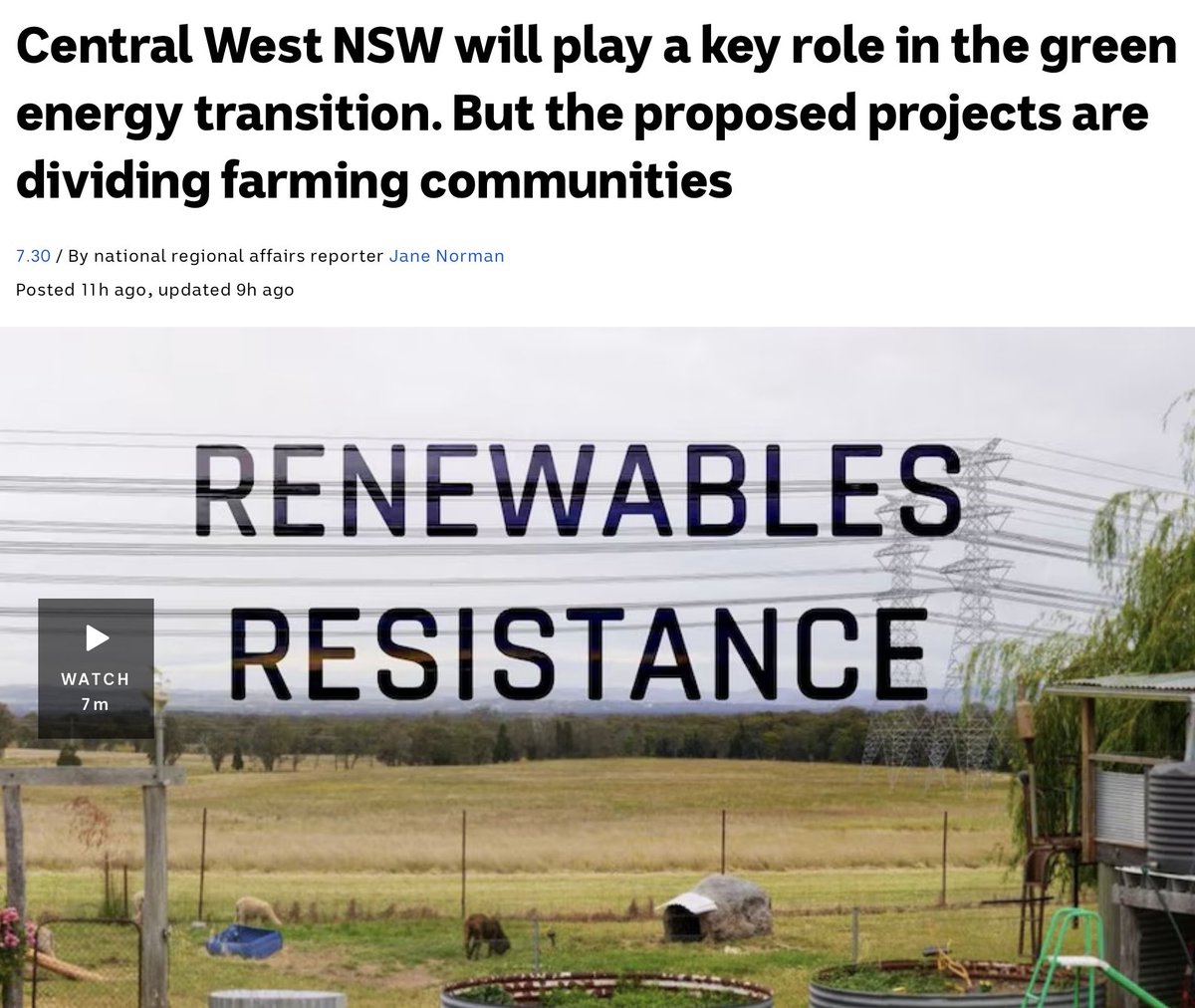
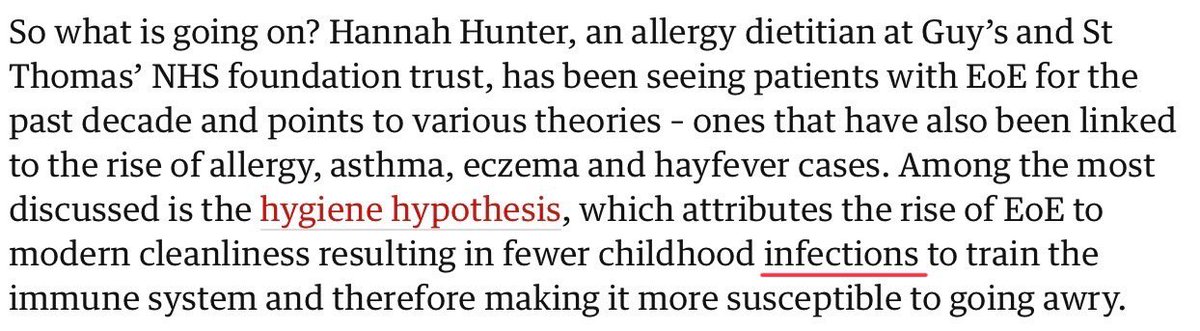
Lovely example of the mythology of ‘the people’ and ‘grassroots action’. Much of the anti-renewables protesting has been organised by the LNP. This pro-renewables counter-protesting is largely organised by unions. All change is led. https://t.co/GAtz1Orbib
@PhillipAdams_1 having worked night shifts and known others who do, it can create an entirely different sense of the life of our societies. A sort of calm, allowing more nuanced things to emerge with the silencing of the daily bustle. Was that part of the attraction of LNL?
In relationships that are failing, often people carry on for some time maintaining an illusion of business as usual, while knowing and feeling that something is fundamentally wrong. Societies are the same. Things are broken, you can feel it. https://t.co/fNtwTGvp2y
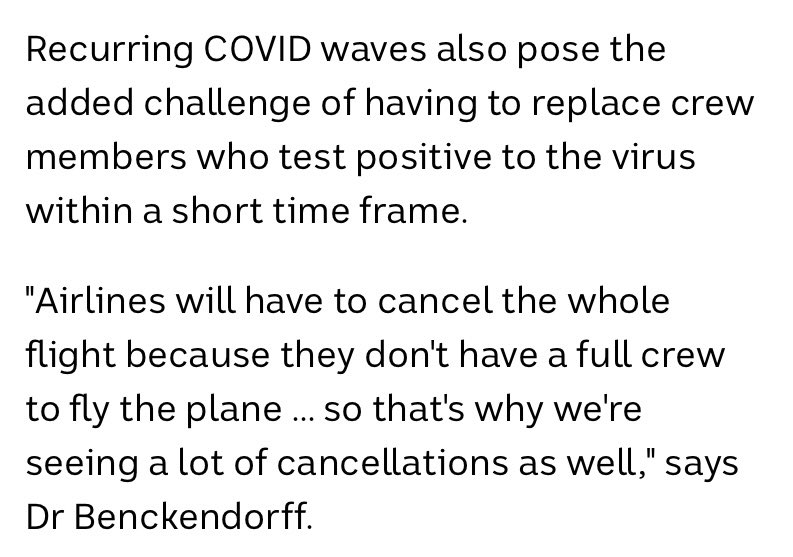
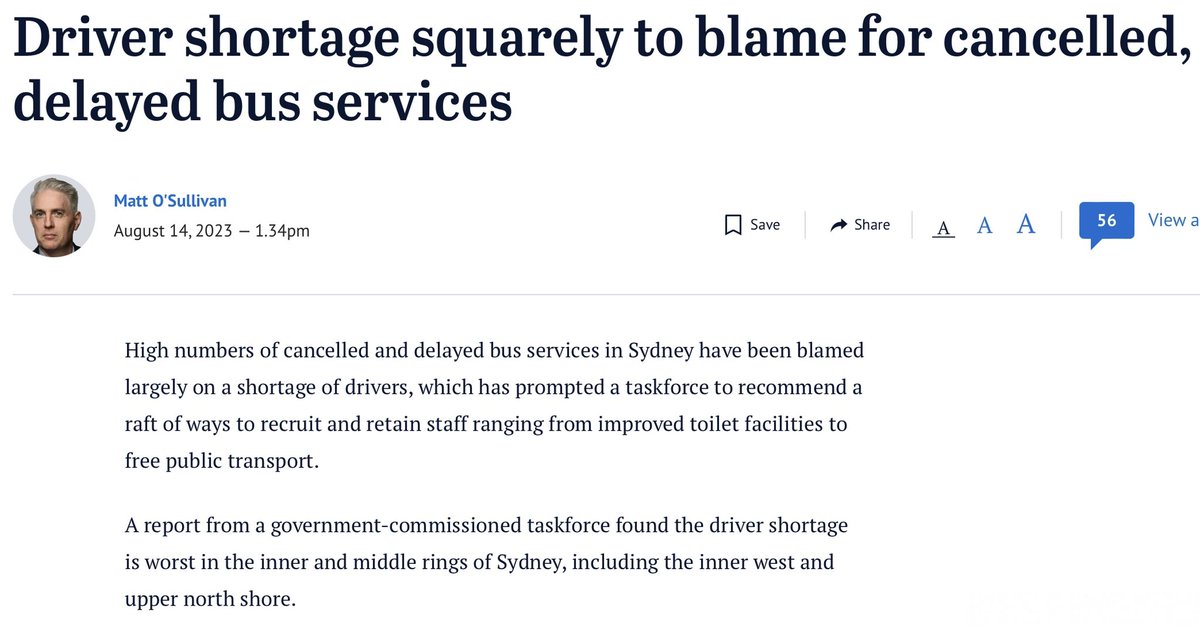
I’m happy to not be a younger worker. My heart is no longer in work or most other related things. The pandemic wasn’t a disruption to normal life, which will now return. No great catastrophes are that. Our lives changed fundamentally post the Spanish Flu and WW1 and WW2. /1
Pre-Covid I like many others could go to work every day with an implicit or sometimes even explicit sense of contributing something to the collective good of society. That provided a sense of purpose, the true source of motivation. But Covid revealed how much that was a lie. /2
How much something I knew was happening and had been watching my whole adult life, the gradual dismantling of the whole idea of a collective life, had already fundamentally damaged social operating systems. The fake good times of debt-funded euphoria hid it. /3
That’s how the vandals pulled it off, we would have noticed this change a lot earlier, except we used debt to continuously re-animate a corpse, allowing ourselves to feel that good times would go on forever. Creating such endlessly fun lifestyles. All on the plastic. /4
Whether government or personal debt (the latter the true horror story). Those whose collective lives were being shredded were allowed to feel a part of society by continuously borrowing, to maintain that illusion. That’s now all over. The ‘cost of living’ reveals the lie. /5
And for me, the total disregard for my own family in public health work, where my kids can go to schools where literally zero is done to prevent them becoming infected with a novel pandemic pathogen. Like nothing in my experience to that date. /6
The fact some of our leaders, both politically and in health care, to this day still actively *promote* that dereliction of duty. In some ways that broke me, or at least made me face up to a collapse I’d known in my head was happening already for years. /7
I’m a resilient person, I continue to function at high levels in this society. But I no longer feel it the same way, because it isn’t really a society now. I know it’s about looking out for yourself the best you can, because collectively we no longer give a fuck. /8
There is no ‘we’ now, I look here every day at people screaming into the void about why ‘we’ aren’t doing things differently. It is a void, that we is dead. It was a homicide, it was delibertaely destroyed. They’re still doing it, pretending ‘personal responsibility’…/9
…for existence is something to celebrate. Rather than throwing most people to the wolves, under narratives about them being ‘leaners’ and ‘vulnerable’ (i.e. losers). It’s the brain-dead populist morons you were glad to be free of when leaving school, now in charge. /10
My personal responsibility included the sense of being personally responsible for helping to make the world a *collectively* better place than when I arrived in it. Not maximising my ‘fun’ or other empty lifestyle aims. I don’t want to live in an episode of the Love Boat. /11
Work feels empty now, stripped of that collective focus, now just a job to earn enough to fund endless, empty cruises and trips, to ‘see the world’. Like existential porn, looking at the world, rather than engaging with it and shaping it. The passion of good works, gone. /12
I’m glad I can soon choose to avoid in some ways this world going through the motions of an old normal that is long gone. I can’t even imagine facing 40 years more of work, as the young now do. With no sense of it meaning anything. Just customers of life now. /13
Hoping they can afford it. My own kids are part of that, I’ll do everything I can to help them have some sort of refuge from its worst excesses. Maybe a new, entirely different normal will emerge, as happened after WW2, after decades of war and plague death. /14
But the times have changed. People were hungry then to make a new world, to do big, exciting, collective things. To build public health systems, and schools, and clean water, and put people on the moon, etc. Now we actually celebrate doing the opposite. /15
‘Living your best life’ is seen as some sort of great existential project. Which it might be if it didn’t just mean being a perpetual tourist and lifestyle fetishist. As I Tweet about, the catastrophe may need to be much worse before we’re roused from this idiot slumber. /16
Time and again history shows that to be how actual change happens. Things have to completely collapse. Old status hierarchies have to be decimated, or else they obstruct all change. Generations have to pass on. Progress, one funeral at a time, thank you Planck. /end
In 1928 DH Lawrence wrote ‘A Letter from Germany’. Novelists are necessary to diagnose a zeitgeist. This is more than 10 years before WW2. He knew then what was coming. Compare with our ‘peace-and-production’ fake normality today. /1 https://t.co/dXYwXzEsRM
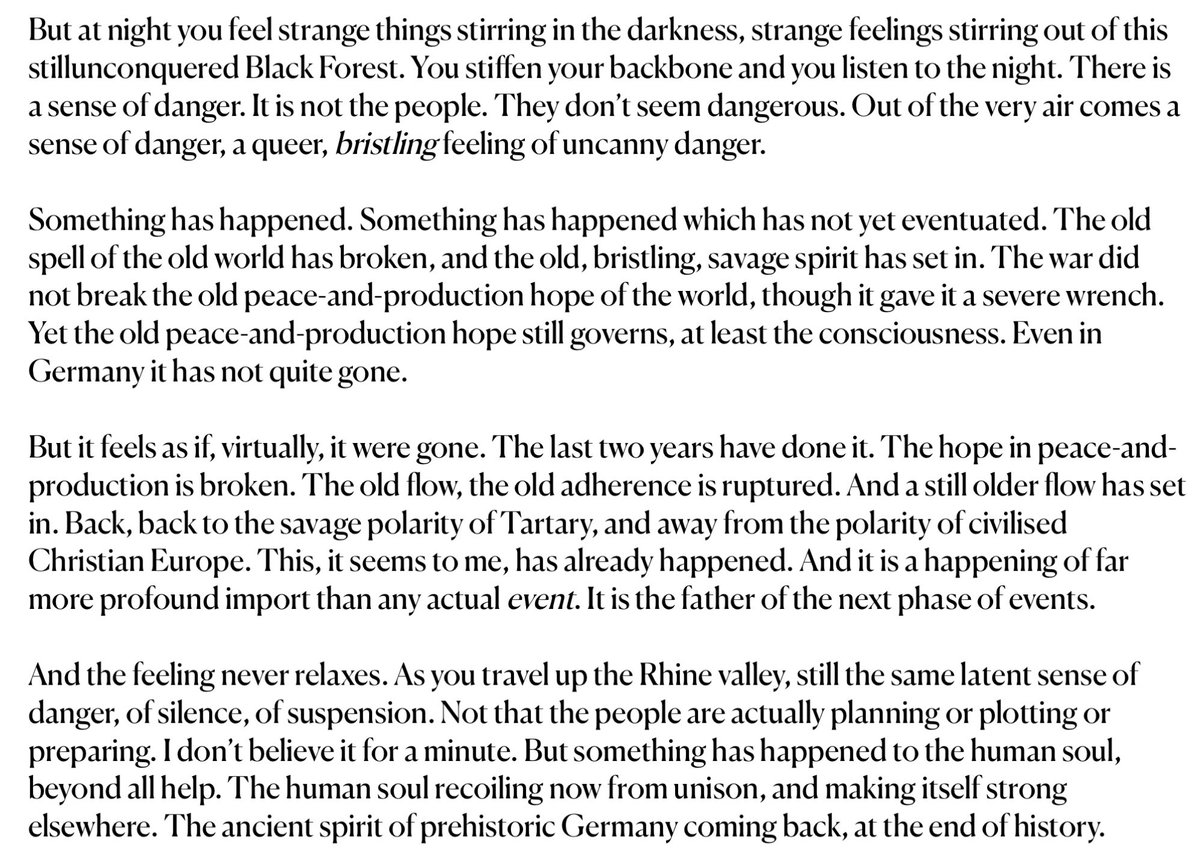
The glossing over of deep currents. As Lawrence says, ‘Something has happened. Something has happened which has not yet eventuated.’ He knew it was broken, he could sense it. As a novelist he had a much more sophisticated diagnostic toolkit. And this is how 2024 feels, to me. /2
Something has happened. Something that hasn’t yet eventuated. We broke society. We’re desperately repairing the plane while it’s still in flight, but it’s broken. /end
Every single time it’s called a ‘mystery’. Watson could solve these mysteries, you don’t need Holmes. https://t.co/xXpwkadbGi
Older people generally follow medical advice pretty faithfully? Why are we seeing such terrible vax numbers in aged care? It seems important that we know. https://t.co/eA5CKTKufT
What changed with the Grammies? Why does an artist like Kanye have 24 Grammies, Taylor Swift 12, while absolute giants like Led Zeppelin, Queen and Abba got none?
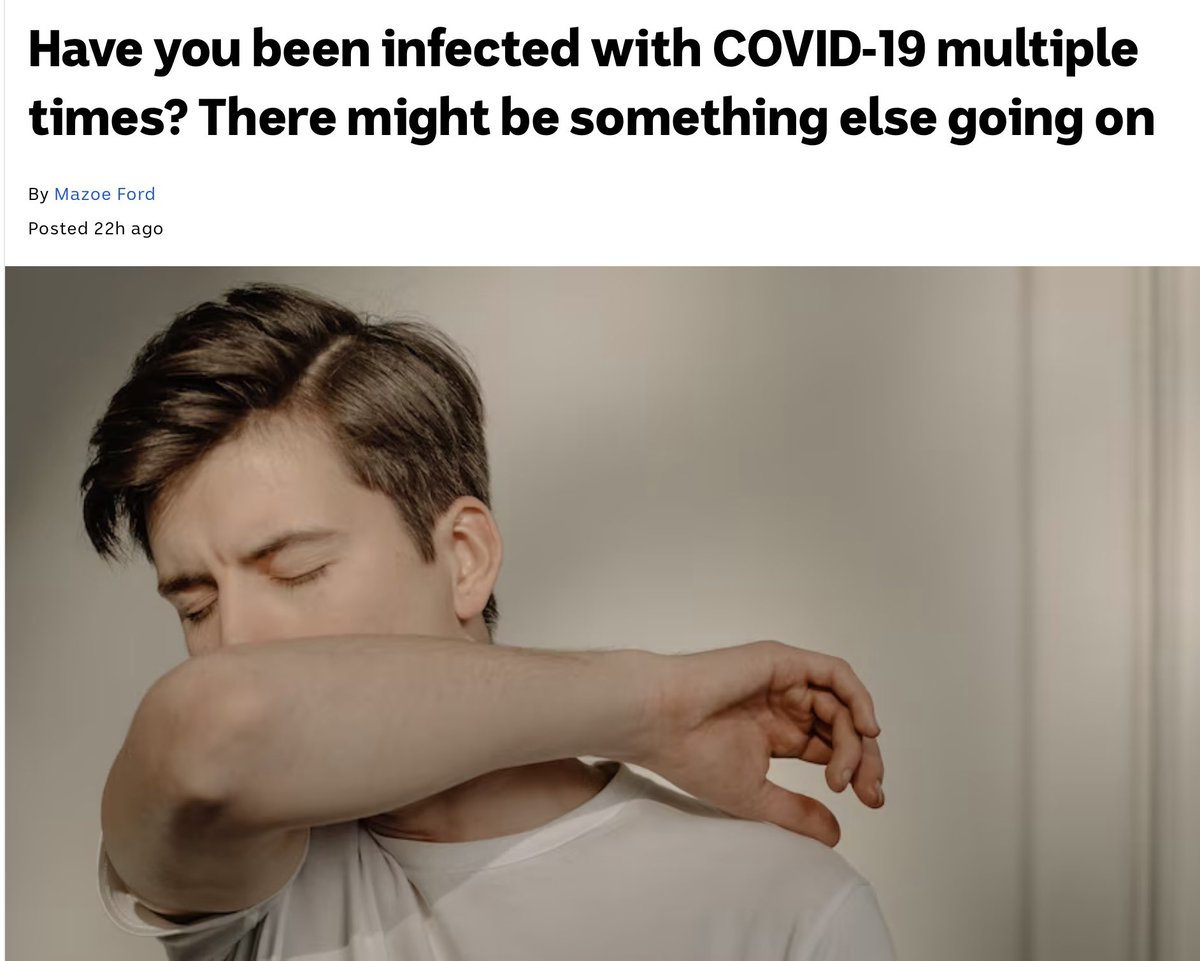
I thought we were all supposed to be getting Covid multiple times? Except now that means our immune system might be damaged? Knock me over with a feather. https://t.co/tulpeP5twp https://t.co/7xxau0NeoN
Elections attract corrupt money like shit attracts flies. The solution isn’t donation reform, it’s to get rid of elections. We don’t select any other person for any other position in society using popularity as the metric. https://t.co/tIh0XhTs7R
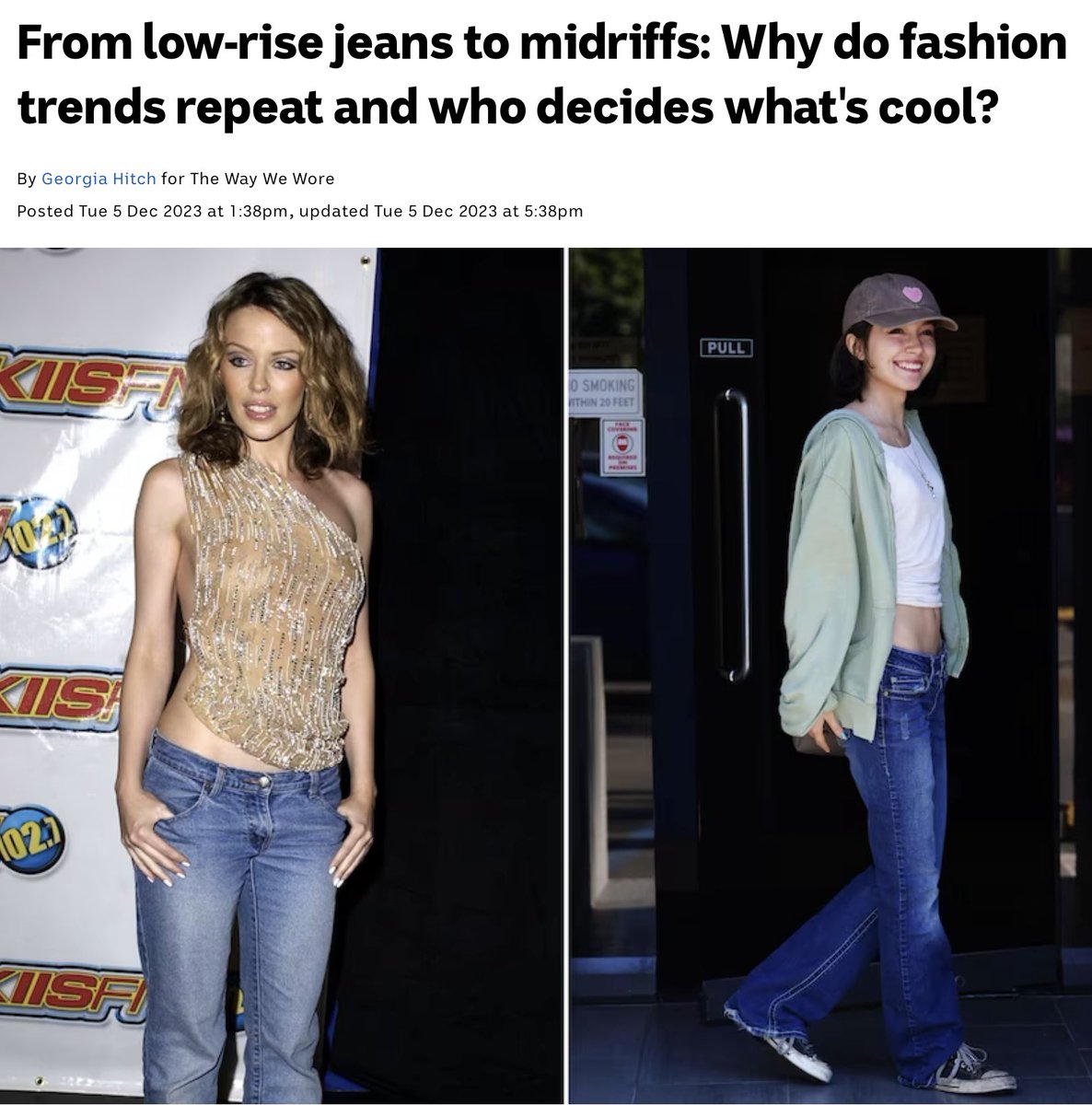
Fashion is imitation, the core human act. The greater capacity we have to imitate, such as with social media, the smaller and faster the imitation cycles become. Also why you end up with revolving door prime ministers, because popularity (elections) turn politics into fashion. https://t.co/ysv57bmSGm
I’m not a # or ‘Stand With’ person. Yelling into a void. If there’s a problem, we should just fix it. The only reason we don’t do that is because we created a roadblock - elections - between problem and action. Now urgent actions need to be popular, to happen. Make it make sense.
Blocked a lot of trolls the other day saying “dude, it’s just a head cold”. Seriously, the things that used to get you a diagnosis of sociopath that are now currency of the day. https://t.co/P1XotUVRVd
Surely on so many measures the US is now a failed State? Our ideas about democracy, as ‘do whatever you like, provided it’s popular’, are destroying it. Fast, and at a constantly accelerating rate. https://t.co/XgFbFYeFY0
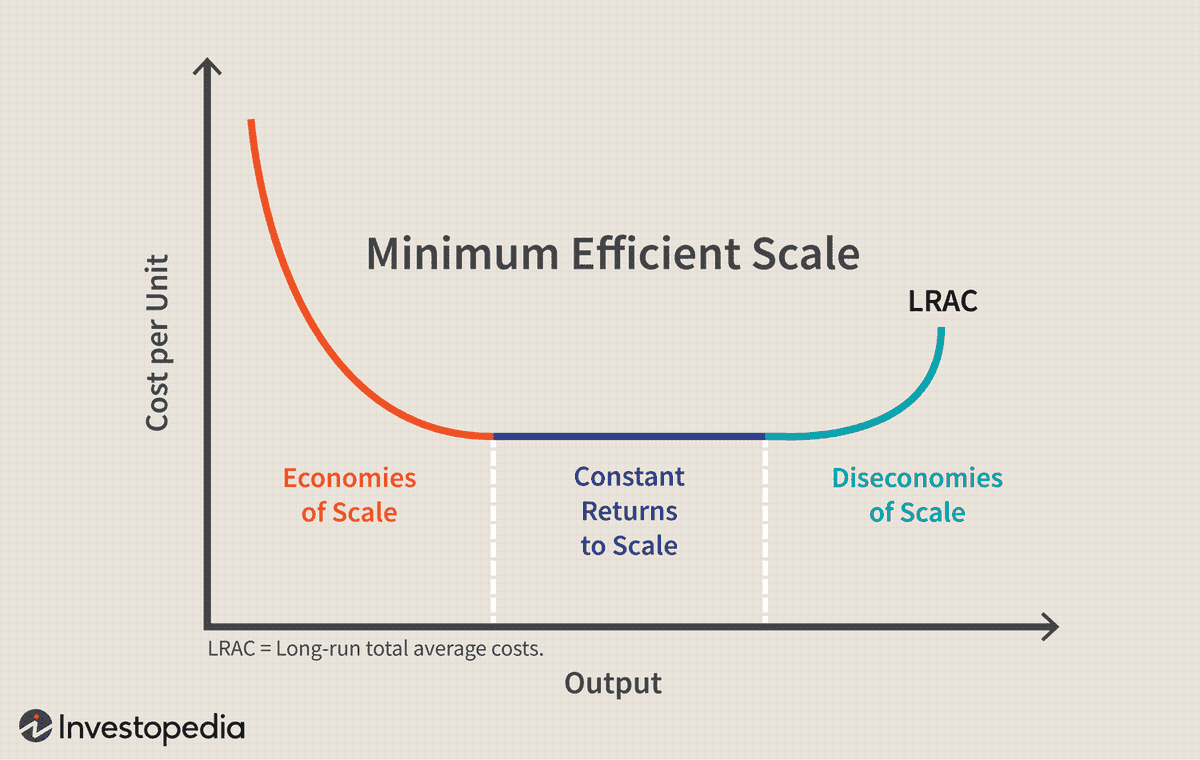
All the idiot supply and demand and price curves that get applied to politics. We'd be much better off applying the economies of scale curve. Showing that scale brings efficiency. The whole rationale for having a public sector, it's a more efficient way to govern. https://t.co/6GQ1b4n1Pu
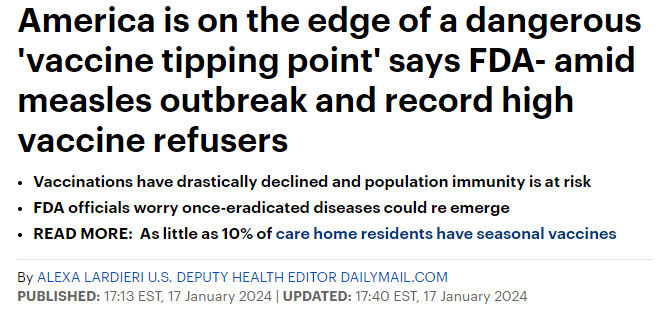
Haven't looked at analyses for a while. Are we saying the original vaccines that the young received are still providing protection against severe disease and death? Or are we saying they're young, and that's the protection?
All of society is connected. Those who advocated for 'living with' Covid were really looking to destroy what remains of public institutions. It was political. They succeeded, and the damage is still spreading. https://t.co/XfUBzdFNTy
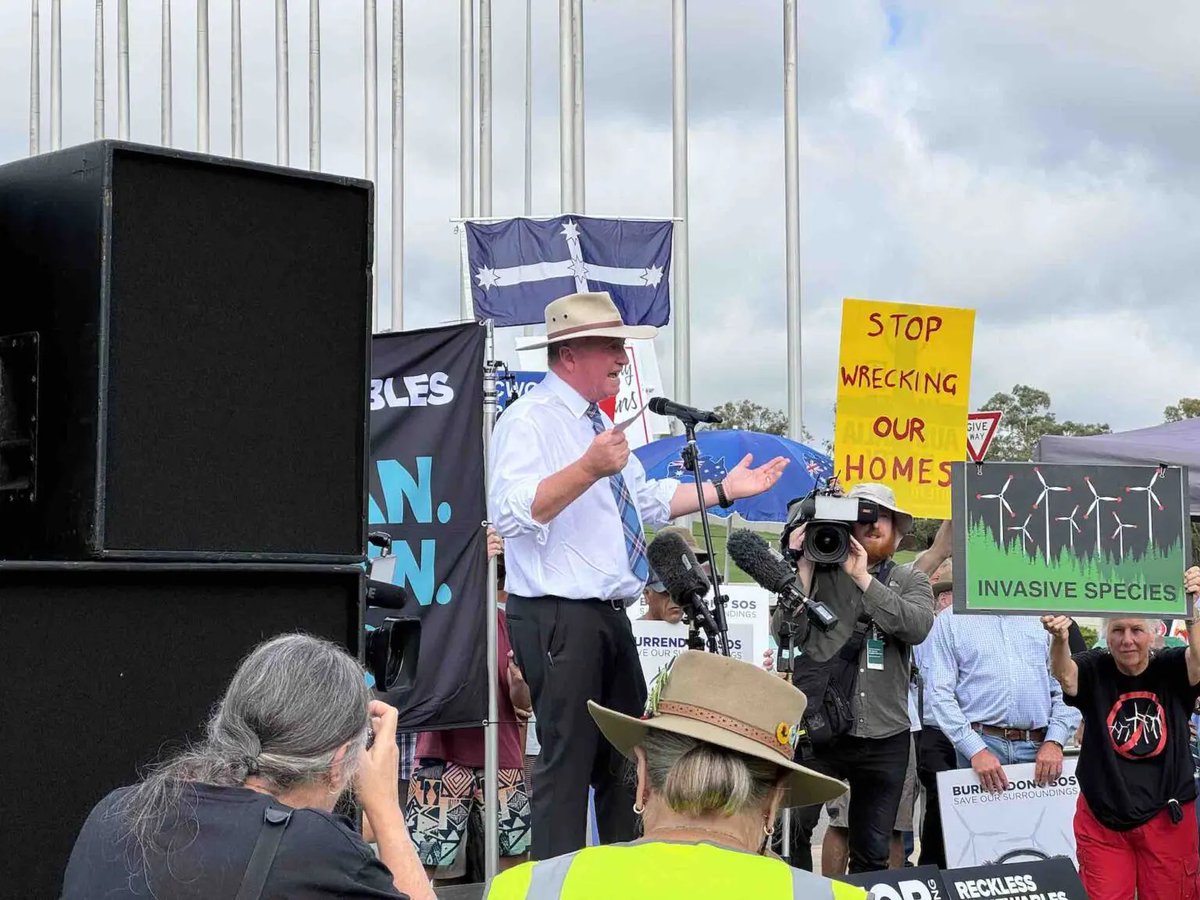
The community opposition to renewables projects is the same as the community opposition to further Covid action. Fake. Created, by the same people. Communities or ‘the people’ don’t spontaneously mobilise in one direction. All change is led. https://t.co/iS5Abwasfh
I love the ‘hysteria’ thing from minimisers. Who are the only hysterics in the conversation, literally terrified of doing simple things like controlling the spread of infections. While those arguing for control are like people asking for pot holes on roads to be fixed.
The hilarious nonsense of ‘the economy’. It’s said to be a market, where supply and demand regulates the exchange of goods and prices. But it never does that, unless you regulate it. And everybody agrees ‘competition’ is what fixes everything. Except it never does./1 https://t.co/cFchr70y5a
Competition just makes businesses unprofitable, which is why so few survive even 5 years. Competing on price without reference to underlying costs is the fast track to bankruptcy. So then you get increasingly bad service, and cut corners. /2
Like 737 jets falling out of the sky. Business is most efficient when larger, because of economies of scale. But that then violates the competition mythology. The whole set of ideas is ludicrous. /end
Female friend, pregnant (8 months). Said to me yesterday, ‘so you’re still wearing a mask?’ I was curious about her source of Covid info. Turns out it’s mostly Gerard Rennick. Also thinks Trump has a lot to offer. Highly educated. Social media did this.
The Nats found a way to marry their affair with fossil fuel and mining dollars to their traditional base. Renewables. Don’t be fooled into thinking this is some ‘grassroots’ movement. The Nats are out there scaring the horses every day, whipping up hysteria. https://t.co/qaXWabh1nD
It's remarkable that some clinicians, dealing with Covid patients at the front line, could still be Covid minimisers. Armchair theorists, sure, swimming way outside their own lane, they're often up their own orifices. But clinicians?
Wise clinicians and researchers tell me that physical exertion is maybe the worst thing you can do when infected with Covid. https://t.co/4oVqD4qnFi
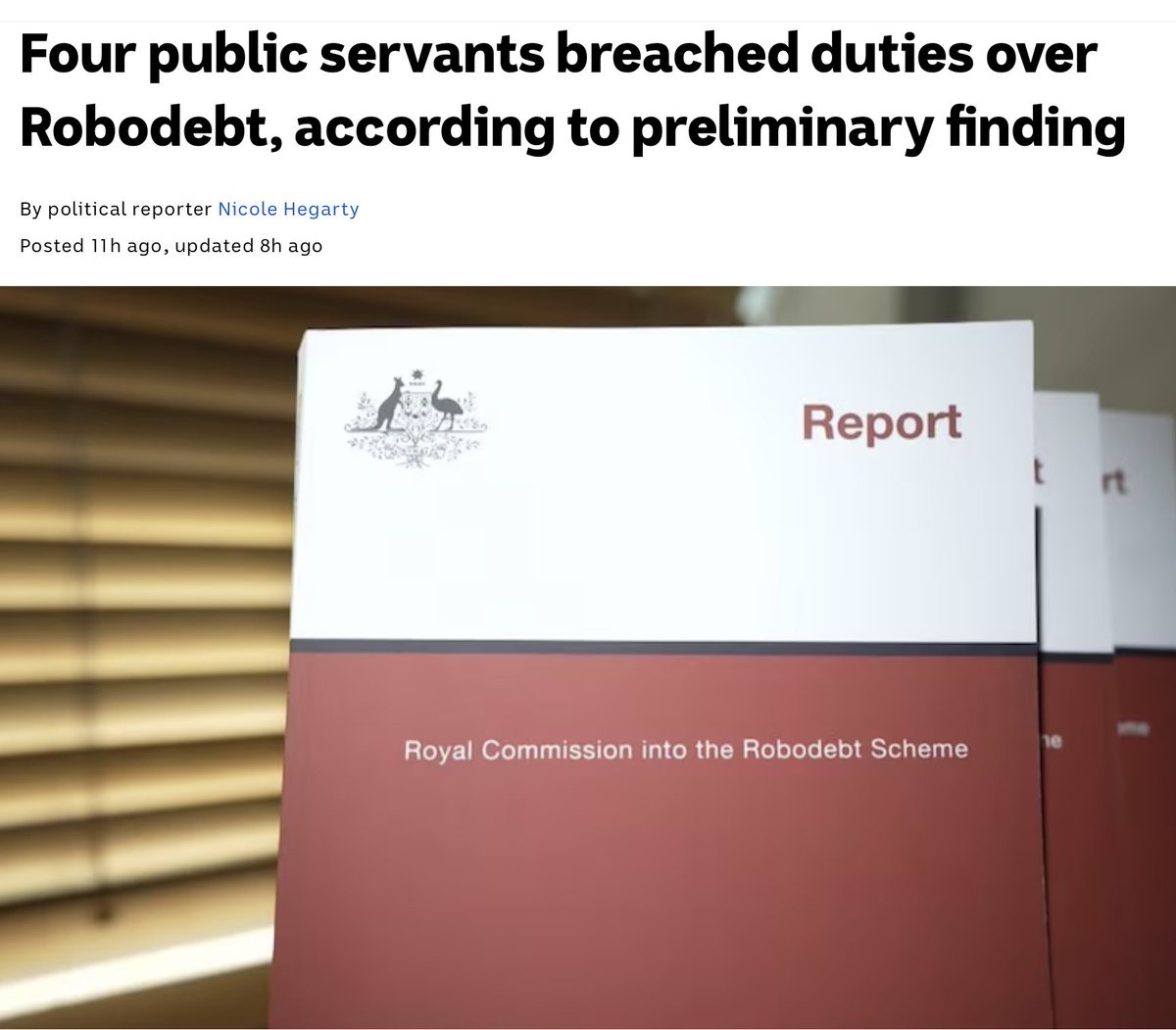
Meanwhile the actual architects of the scheme are not only not being charged, some are still members of parliament. Because in popularity-based governance, you can act criminally and unethically, but winning the popular vote cleanses you of all accountability. https://t.co/TySDbb0CvE
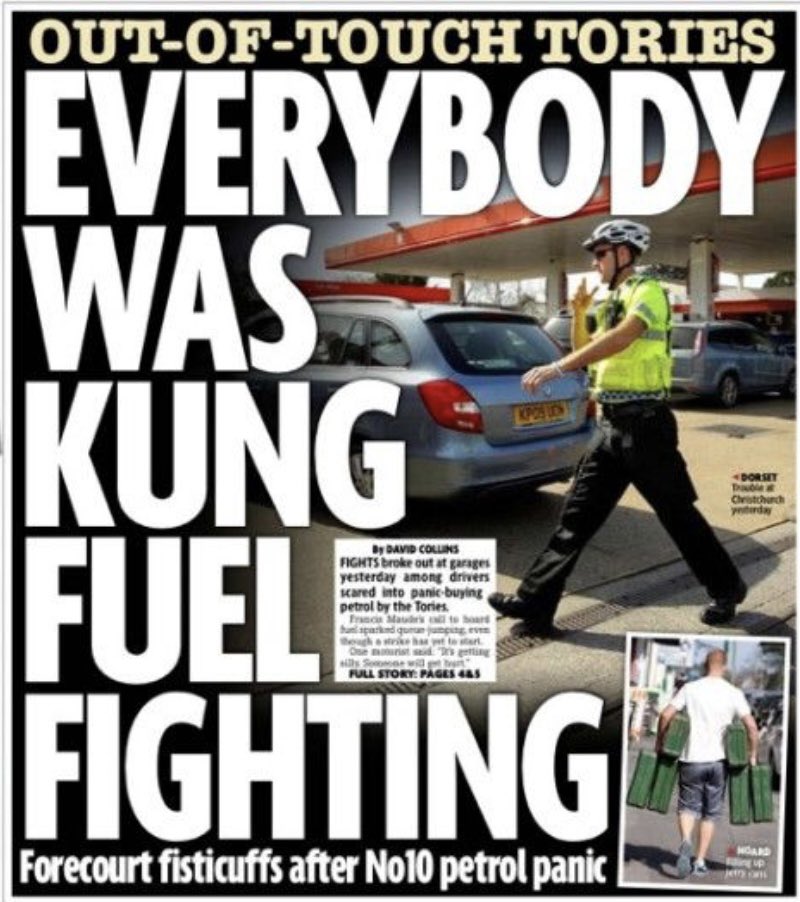
Tabloids embody an essential truth. That there is no distinction between the individual and the collective, the specific and the general. Once you really understand that, you can change the world. https://t.co/2p6kOHRCVN
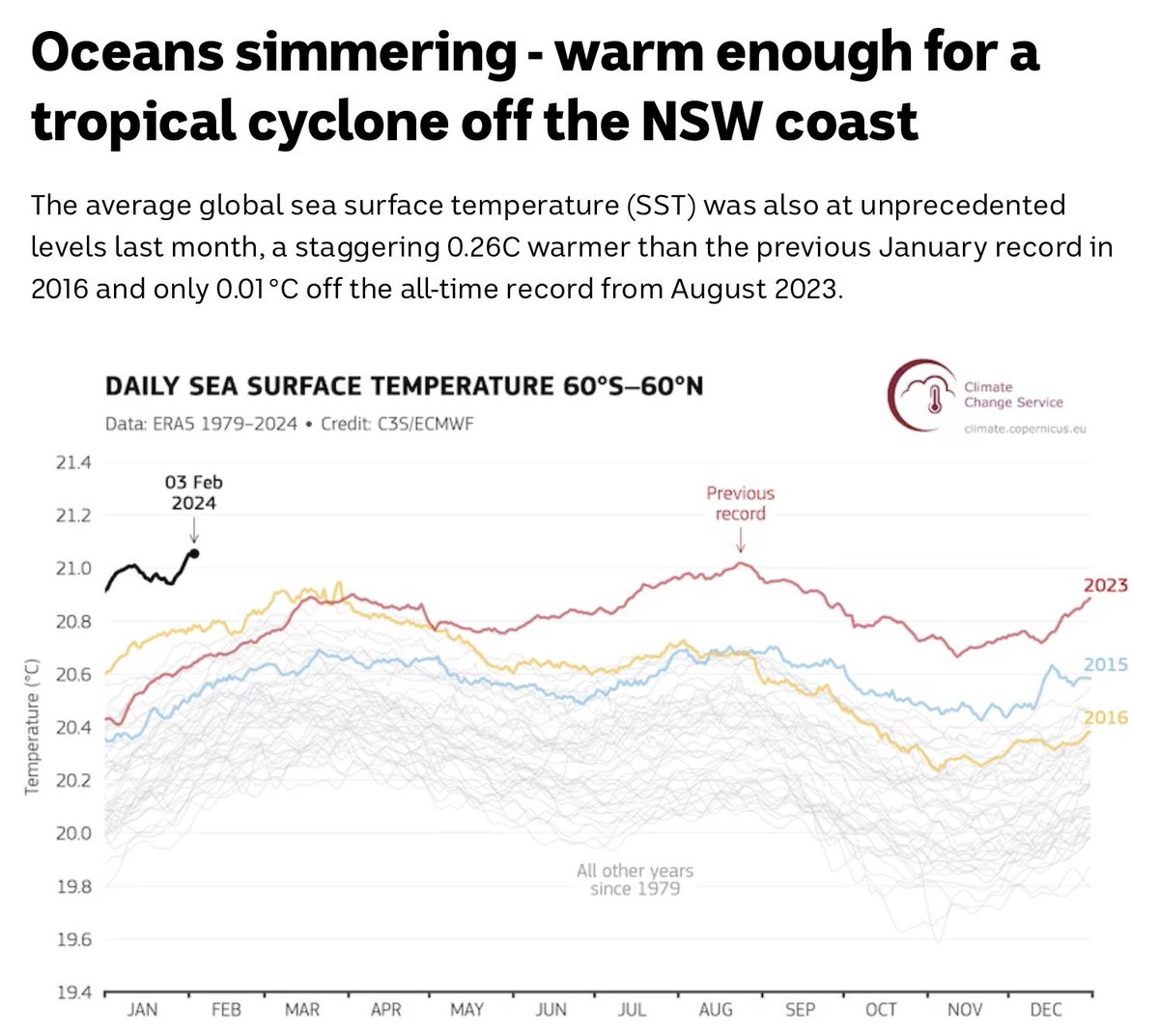
It’s ludicrous we’re all going on with our ‘normal’ lives in ‘the economy’, when as a civilisation we’re facing the greatest emergency in all of history. We should be on a war footing. Who cares about our bullshit jobs? The economy does. Our most lethal invention. https://t.co/rmkDsV9E1z
Like many, I’d still like National Cabinet and ATAGI to explain how those who don’t even qualify for vaccines and boosters, like our youngest children, can achieve ‘hybrid immunity’. There’s nothing hybrid there, just getting sick, repeatedly.
h/t to everybody daily maintaining their own shelters from infection. A society that weaponises the most basic act of sheltering from harm so people can go on cruises doesn’t deserve to survive. https://t.co/GFOTWJsv82
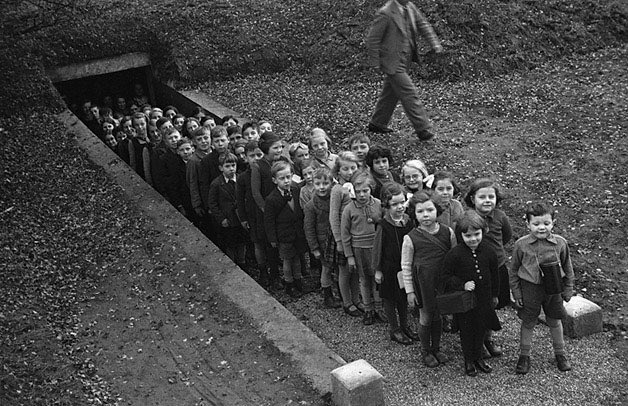
Chronic disease is like the perfect medical crime. The cause is usually long gone by the time the disease manifests, and nobody links the two until it's much too late for most.
Need help with hybrid immunity and immunity debt. Back when people were getting infected all the time, people weren’t getting infected all the time. Something like that? https://t.co/nW6dlg1r5s
I haven’t been in this data for a while, but do we really not have any Covid vaccination data for Australia later than 2021? https://t.co/1QcEjCCzKI
Many with expertise came to Twitter to network, when public health mechanisms were sidelined. I’m noticing more of them becoming silent and even disappearing from here now. Some no longer even take the precautions they advocated for, for so long. /1
Social media as a place to build community is spin. That’s what it sees itself as, and it even believes it. Communities never build themselves from their component people. They’re led into existence by a very small number, within a group. About 5%. /2
Experts meant well. But have been naive about how change happens. Societies don’t run on data or information, the currency of expertise. If all you have is a hammer, everything begins to look like a nail. We’ve had 30+ years of all of the data on climate change, ignored. /3
I’ve said before, it’s extraordinary to me that so many thought Covid would be any different. We’ve had nearly 5 years of brilliant data and information. It’s done little to change any of the outcomes. Why would be surprised? Again, climate change showed us how this would end. /4
My contribution to many of these debates has been to try to show how the really quite tiny number of people who do determine our collective fates, the ultra-conservatives of our time, manage to do it. And to encourage the use of their methods against them. /5
Ironically, they’ve been winning for so long because despite the veneer they project, of being focused on economic things, that was always only a means to an end. Their genius is that they understand people, and how they act, SOCIALLY. /6
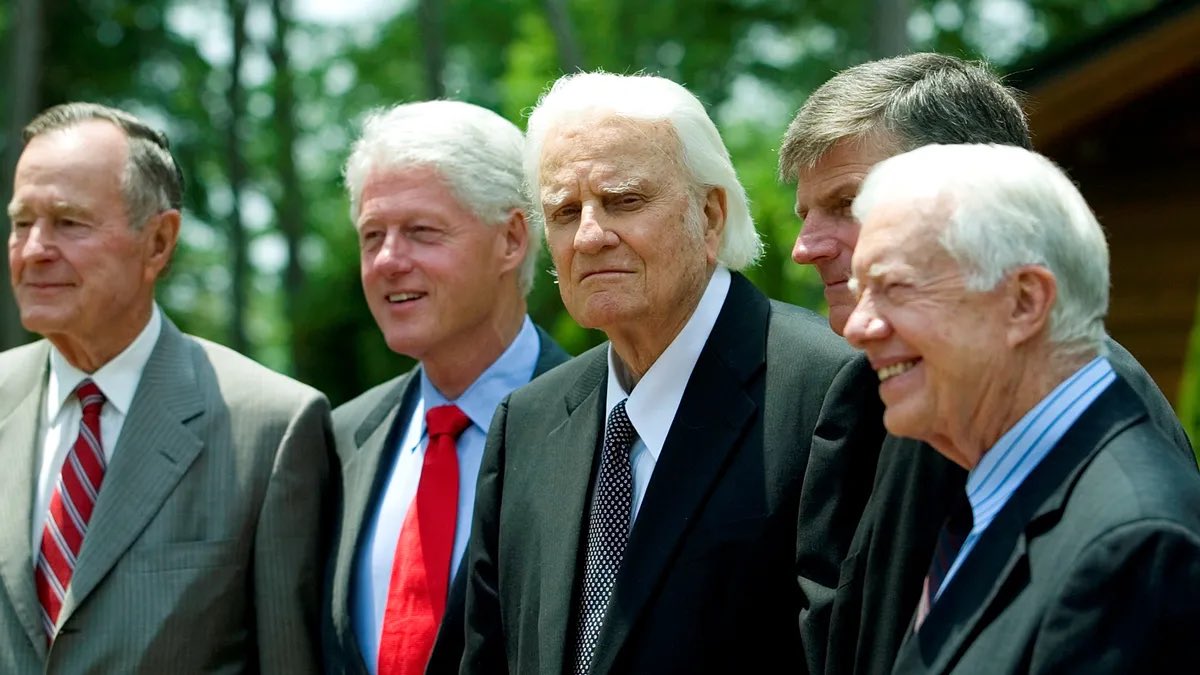
Much of this they learned from fellow conservative travellers in churches, who have millennia of experience in mobilising populations. Billy Graham for example, mingling with a range of Presidents here. All part of a massive strategic effort, since the 1950s. /7 https://t.co/PxfndFlL8c
Church v State IS Western history. It’s maybe a sign of how bad our education is that this dominant trope is rarely even mentioned now, replaced with pointless team sport debating fantasies like Left vs Right. None of this battle ever went away. We changed the names of things. /8
The ultra conservatives keep winning because the churches taught them how to mobilise people. By offering them social status hierarchies driven by imitative rivalry. Decades of shock jocks and think tanks turning every issue into end of the world hysteria. /9
Calmed only by electing a saviour, a Great Leader. Whose continuing power is always to set up more and more fake battles against evil foes. Good vs evil. The think tanks churn out this engineered anxiety every minute of every day. /10
We’re deluded in thinking democracy has bypassed any of this. Using popular elections, the same conservatives have completely transformed democracies into apocalyptic culture wars of good and evil, with followers flocking to leaders who offer regal or even messianic relief. /11 https://t.co/fnmIcCVKnK
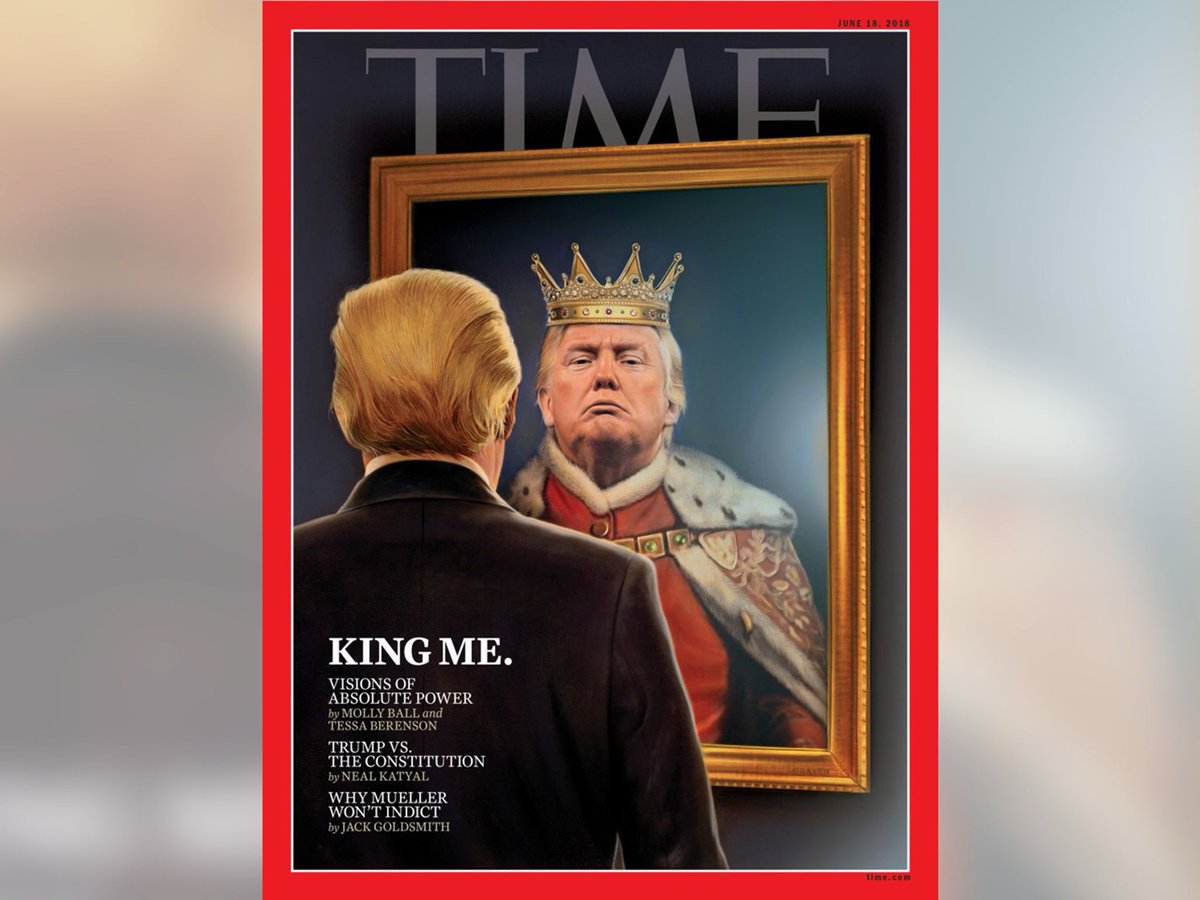
This stuff is as old as history. It IS history. We desperately need to give up the idea that democracy is just letting everybody do, think and say whatever they like. What they like is to line up behind Kings, emperors and messiahs. To be part of a status hierarchy. /12
I Tweeted recently that ancient Rome discovered this. Its centuries of being a republic ‘for the people’ were marked by continuous bloodshed and war. Then when they shifted to a model led by emperors, they had centuries of peace and prosperity. The Pax Romana. /13
You can see this anywhere you look. Take Australia’s favourite 10 car models in 2023. Why these 10, in this order? It’s all status. Big utes and other wankpanzers are the status vehicles of our time. People live in groups defined by status. Even the EVs in there - the same. /14 https://t.co/I60UMAAceK
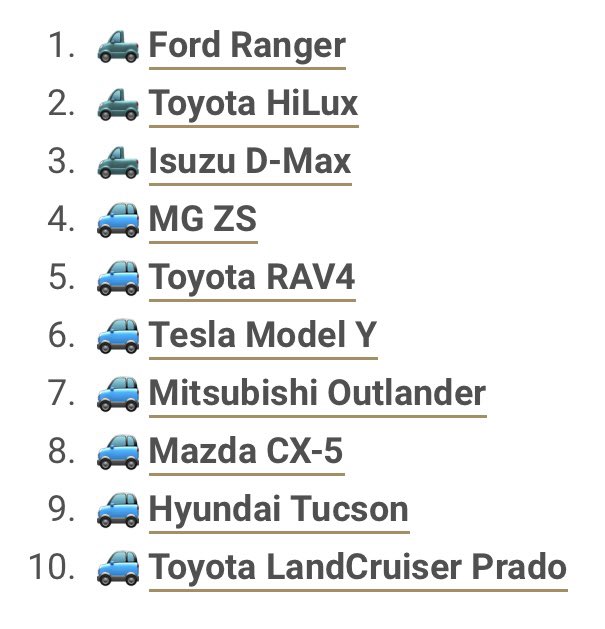
Other groups, jostling for status. Much better cars objectively too, I think, but that’s not what’s shifting the market. It’s always status, humans are social creatures, almost exclusively. Even experts are driven by expert status hierarchies. /15
And that’s why I think many have given up here, recognising none of it is getting us anywhere much, just posting new data every day and screaming ‘why?!’ into a void. You don’t build alternative communities in that way. It’s not a conference. So what can you do? /16
The conservatives have a head start of over 70 years. So…not a lot, fast. They already bought or built all the big communication networks that irrigate populations with the required messaging, every day. They built these platforms, which pulverise anything collective. /17
Into thousands or even millions of teams or gangs, endlessly fighting with each other to absorb all off that anger and deflect it to no purpose at all, except more likes and more revenue, for the platforms. The first thing Trump did when losing the Presidency was build a new…/18
…social media platform. These people are showing us exactly what the true battle is. A social media platform won’t reconstitute a public, but it’s heroin for constituting new emperors and messiahs. My advice for what it’s worth is always to just do what Spinoza did. /19
Understand. Only understanding sets humans free. Not just data about Covid, understand why that data won’t work, to stop Covid. REAL understanding. If things are not going well, understand why not. Don’t just protest, the conservatives couldn’t give a shit. /20
It’s a bitter pill for instant gratification, but understanding is all that ultimately changes the world, because it’s our only access to reality. And reality always wins. Even against emperors. If you have true understanding it can go viral, fast. It will energise. /end
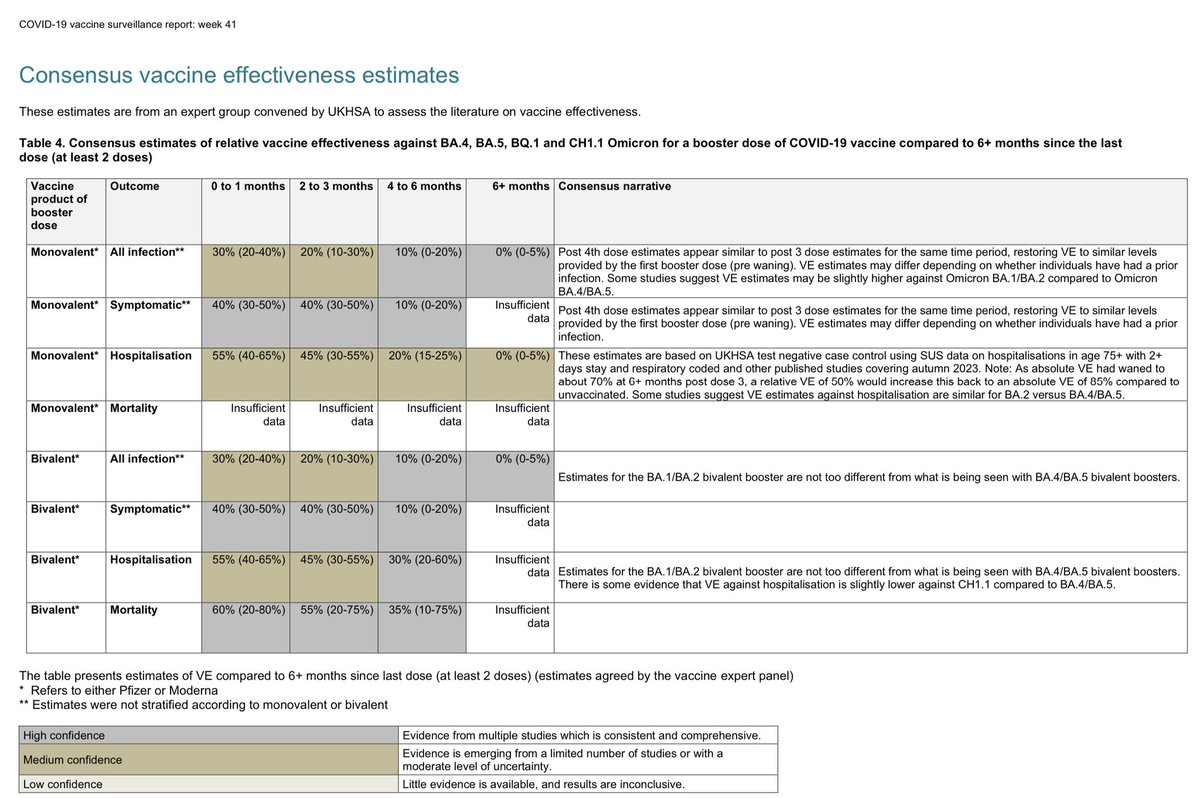
I hadn’t realised the UKHSA was still doing these quarterly reports. Imagine using a vax-only public health strategy, with those VE numbers. Appalling? https://t.co/3MMtNSkCcJ https://t.co/qKWs3WHVzF
Been talking with a senior academic about Covid, who insisted the danger is over and it’s time to move on. It finally emerged they believed the vaccines stopped Covid, deaths and transmission. ‘Like our other vaccines’. Had not a single clue about Covid vaccines. /1
This is what politicians do, tap into known experiences people have, in this case with other vaccines, to misdirect. So many are like this, completely unaware the Covid vaccines are not even close to being ‘sterilising’ and require additional measures to be fully effective. 2/2
For 7 years we put our entire lives on hold and redirected all economic activity when Hitler invaded Poland. And this, FAR more dangerous? Normal life continues. The ‘economy’ is the Toxoplasma Gondii of human societies, the pathogen that makes us ignore all risk and threat. https://t.co/UamLd9GRUd
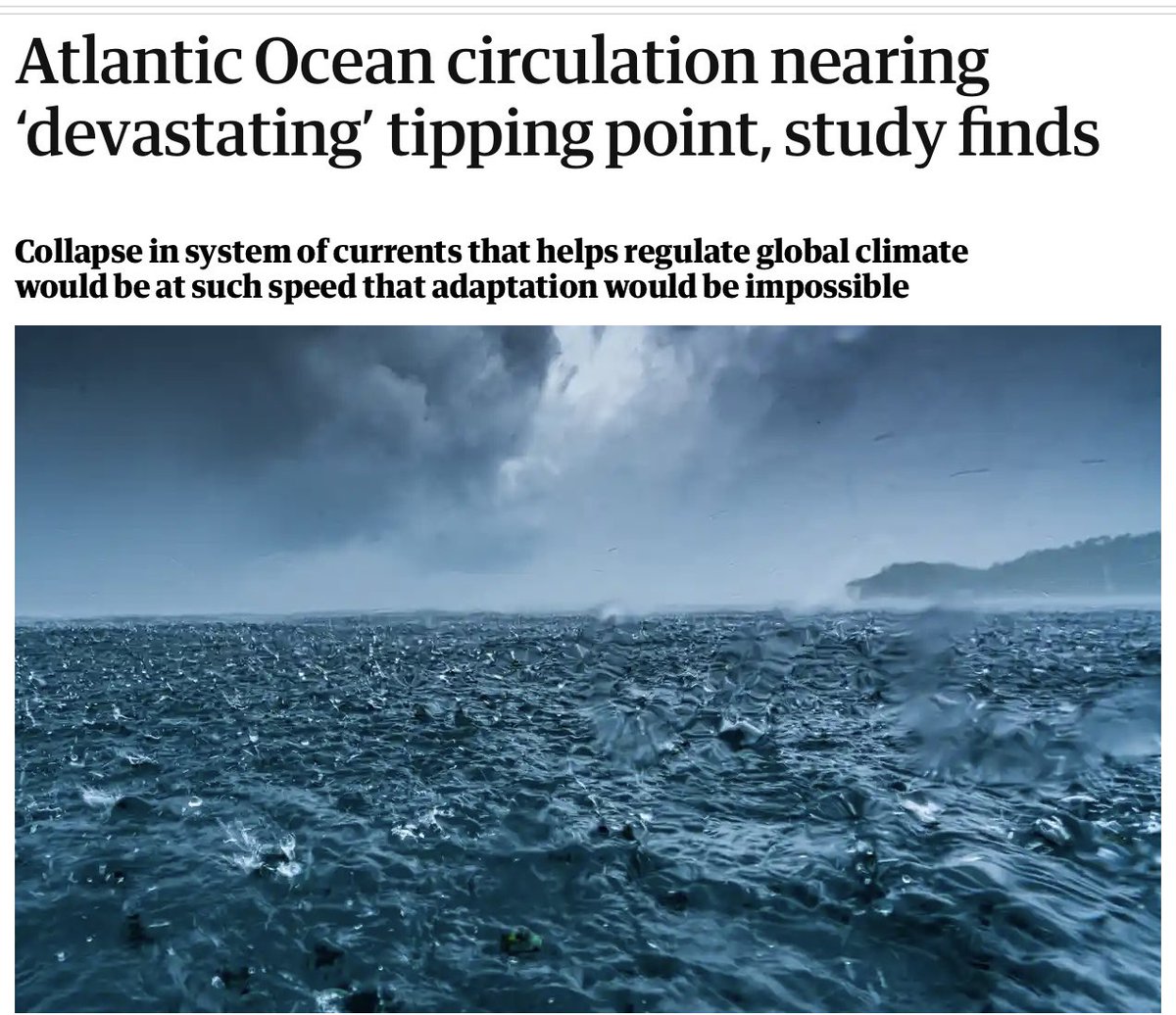
How political narratives infect science. The hygiene hypothesis in my understanding isn’t about missing necessary infections, it’s about lack of exposure to microbes that help develop immune function, but not by infection. https://t.co/uKhYhre6d0 https://t.co/F8bwktABmI
And as Nobel prize winners like Elinor Ostrom have showed, compulsion and regulation *create* workable ‘markets’. They’re not restrictions on them. https://t.co/yU42qoOjvI
Imagine hitting the campaign trail to advocate for higher inflation and higher costs of living. People would think you were unhinged. But you can lead rallies to undermine action on the greatest threat to humanity in history, and it’s just normal populist politics. https://t.co/CJHF4WO3GE
Captures everything wrong with a social media-governed world, in one image. https://t.co/lfTpT1YhIe
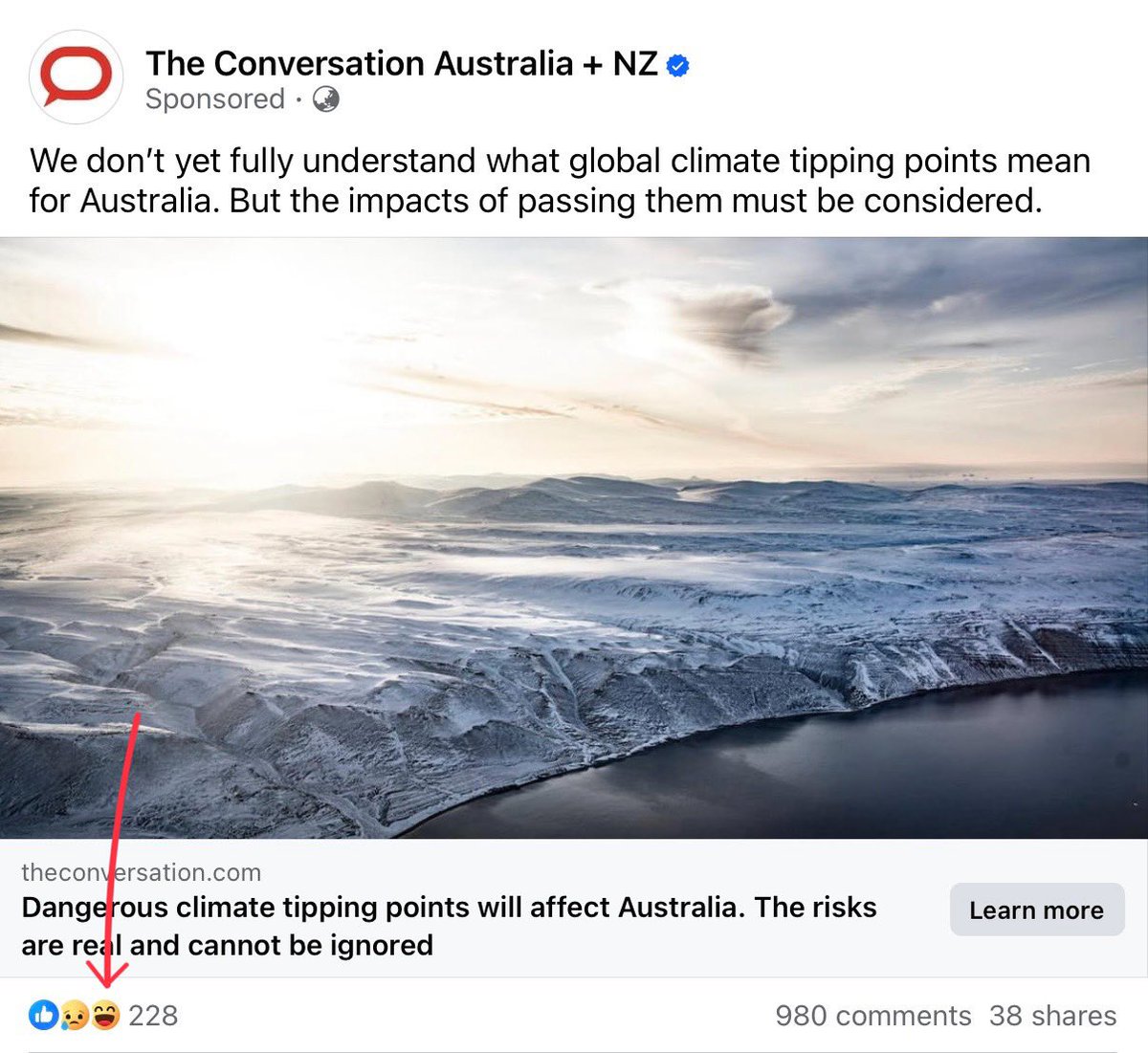
Brought to you by…elections. Because what’s popular must be the best thing. https://t.co/qSyg6ObFCl https://t.co/GqP1y5tluB
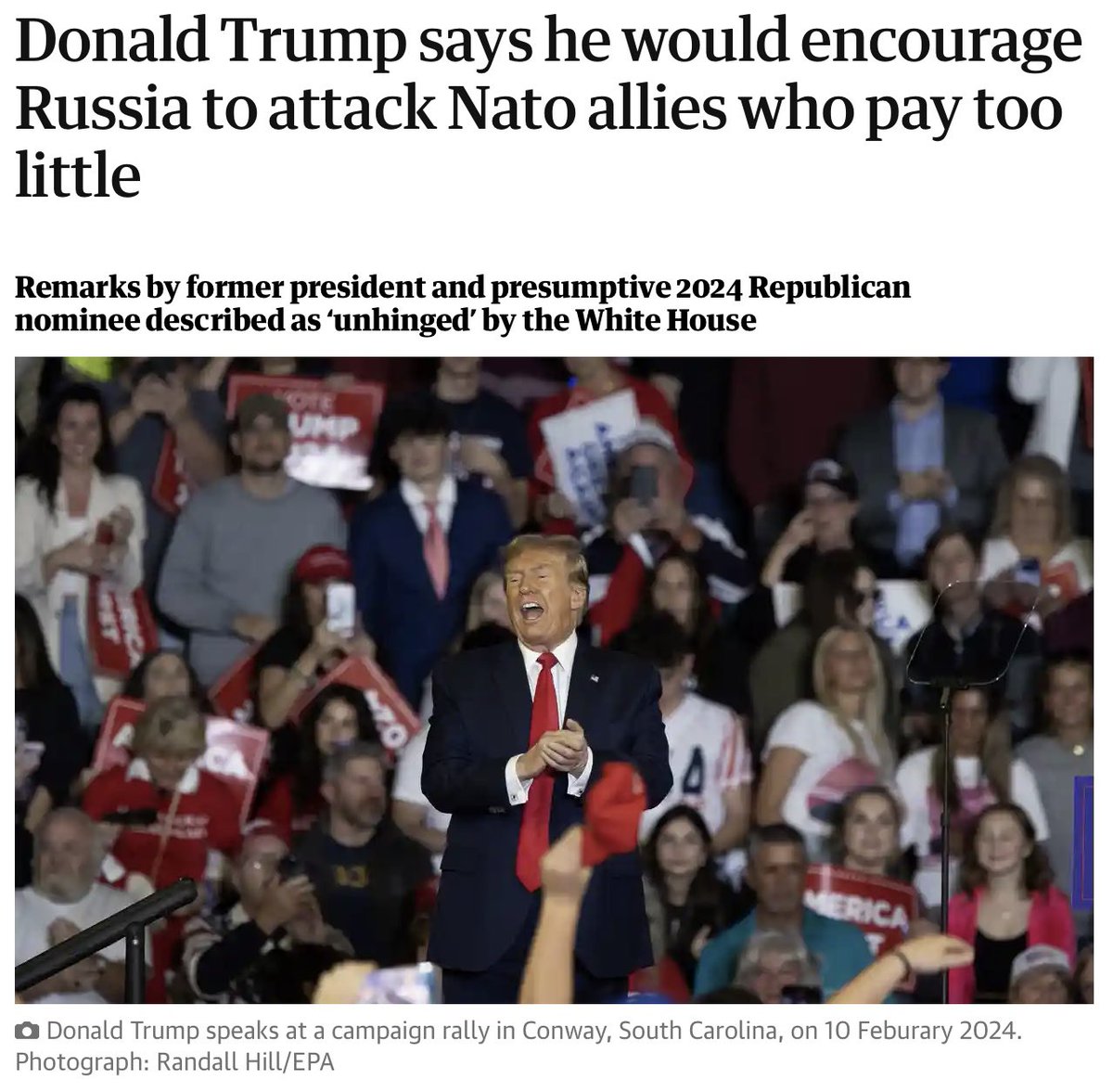
If you feel like much of what happened at school was pretty dumb and only a handful of people ever called it out, welcome to adult life, 2024. Social media is school life, for all ages. An economy of likes. Popularity. https://t.co/OHcVOUSXr3
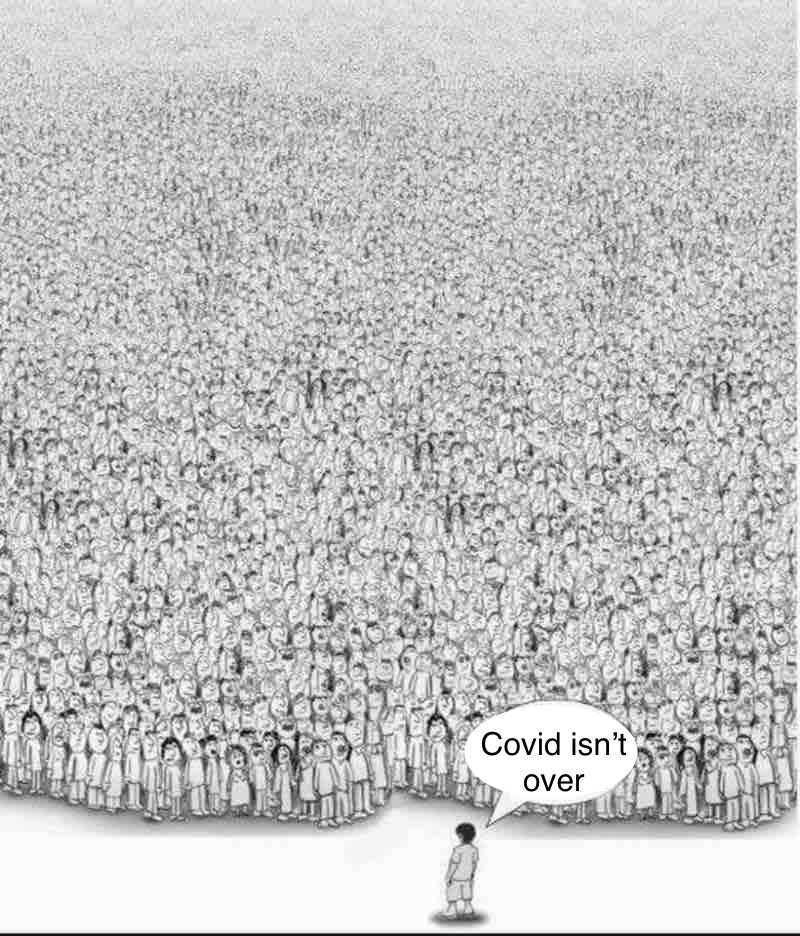
When people have an electrician or plumber around to do repairs, do they stand around to laugh at them and tell them they don’t know what they’re doing? We’re not lacking information. We’re lacking respect and trust. https://t.co/HE1nF32lG7
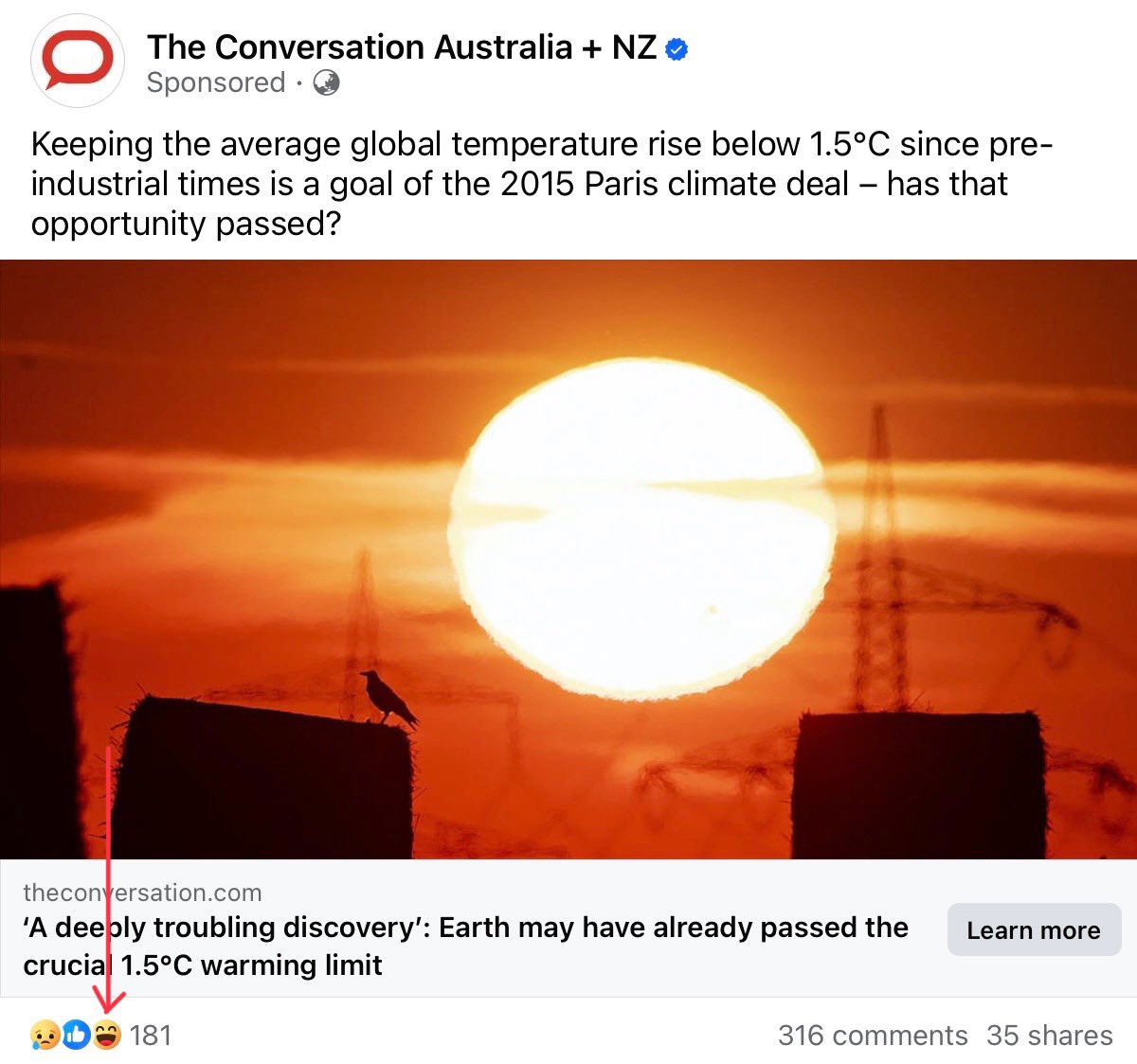
Progress would be us watching the melodrama of political ambitions, and saying ‘don’t care, what are you doing to fix actual things?’ And for political journalism to focus on those actual things. It won’t happen. We’re addicted to the team sports. https://t.co/Pnratg3lnf
‘Balancing’ Covid action against the economy became 0% action against Covid, 100% action for the economy. Similarly, ‘hybrid immunity’ became ‘just get infected’, minus any vaccination. As with climate action, the endgame is - do nothing. https://t.co/cEhURmHbxA https://t.co/VB8EdZ3Soq
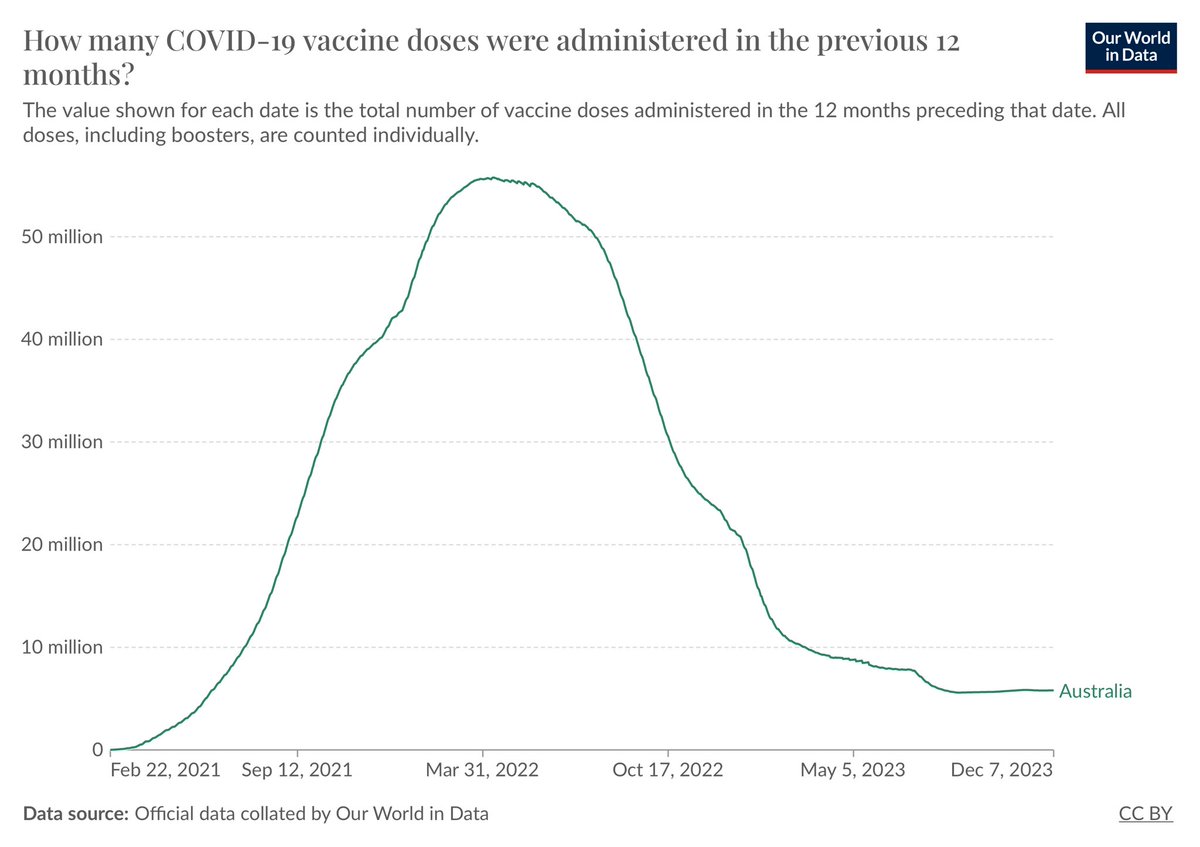
Pre-Covid nobody wanted to live with colds or flu. Our Covid strategy was based on an already dysfunctional public health situation, that tens of billions was being spent to try to fix. https://t.co/SRJRVRfY2x https://t.co/eFlq7eR6Nv
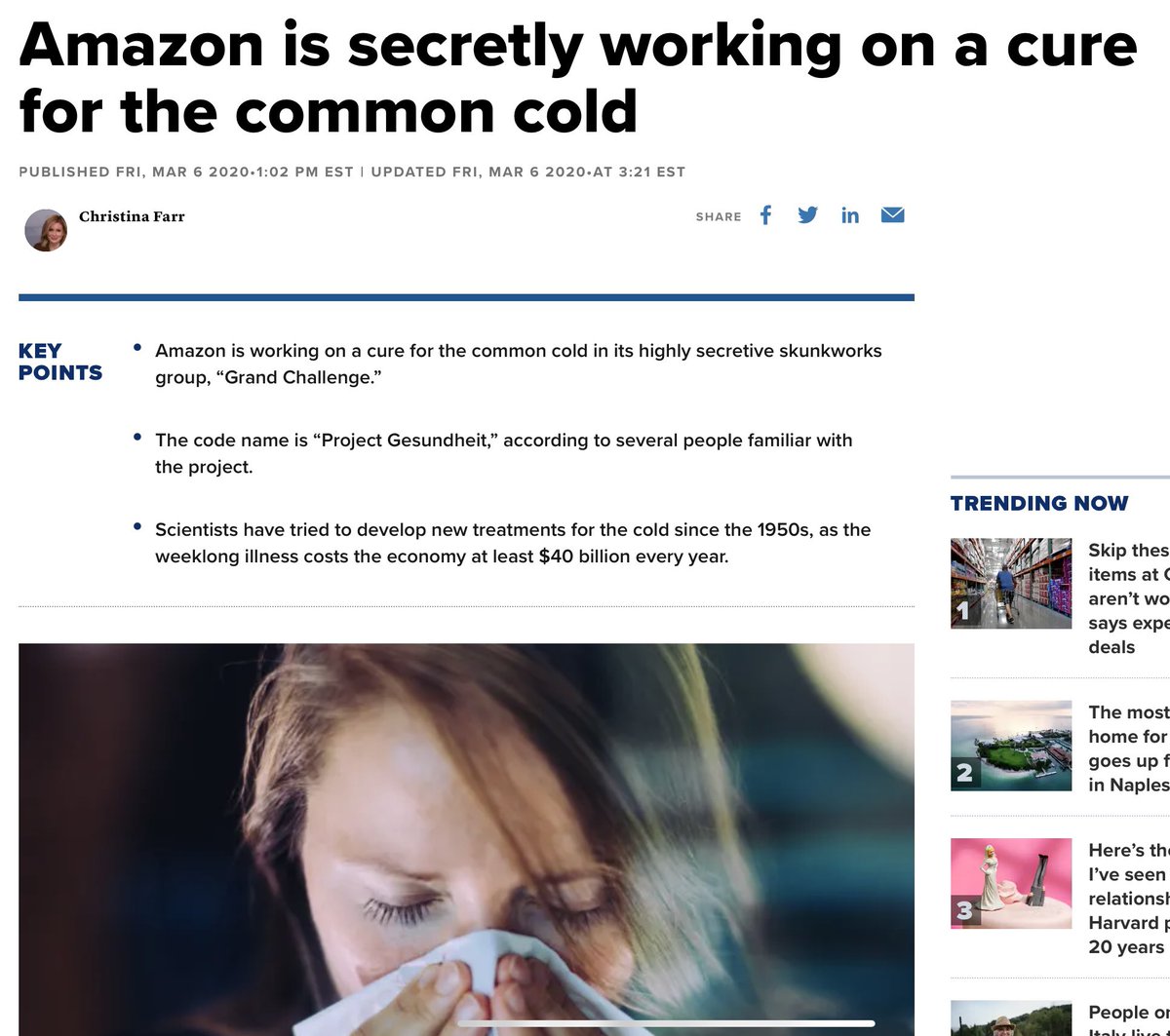
Pathogens often follow a similar pattern to human societies. An invasion stage, with a lot of deaths, as pathogens fight to occupy territory (our bodies). Followed by a long occupation stage, where casualties shift to ongoing chronic effects. (Data: https://t.co/OH9vBOjYVT) /1 https://t.co/4qu1SdZ26a
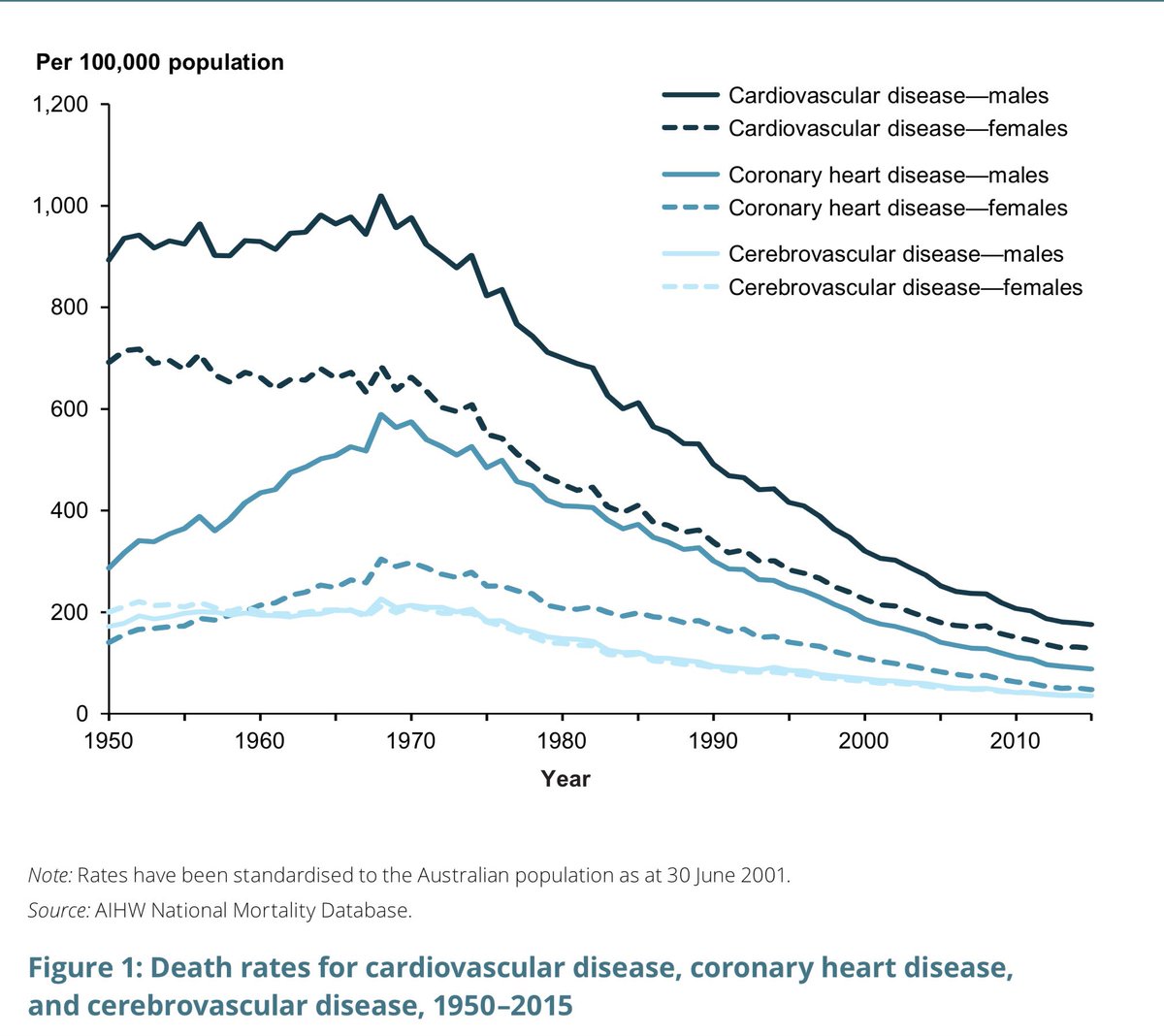
I’ve Tweeted before about the infectious origin hypothesis for the epidemic of heart disease in the 20th century. Heart disease followed an epidemic disease pattern, which research suggests was new to that century. /2 https://t.co/fhseCOhZCm https://t.co/hkE3bPVdkY
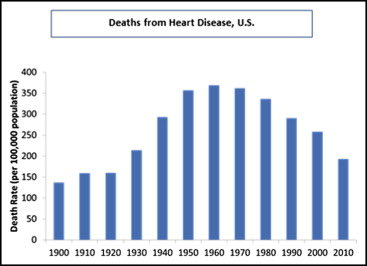
Deaths peaked in the 1960s, and have been declining ever since. In the late-1960s, more than half (55%) of all deaths in Australia were due to cardiovascular disease. That figure is now below 30%. I wanted to raise this again, for a different reason. /3
Right now obviously we’re in that invasion phase, with a big spike in acute deaths, now beginning to tail off. We’re celebrating that tailing off as the defeat of the pandemic. That’s because our focus is always acute disease. Heart disease shows the terrible error of that. /4
The acute infectious disease event(s) that potentially triggered the 20th century epidemic of heart disease - some say the Spanish Flu - certainly killed a lot of people. But the chronic after-effects of those initial infections have been calamitous and ongoing. /5 https://t.co/h7sZgg0RHa
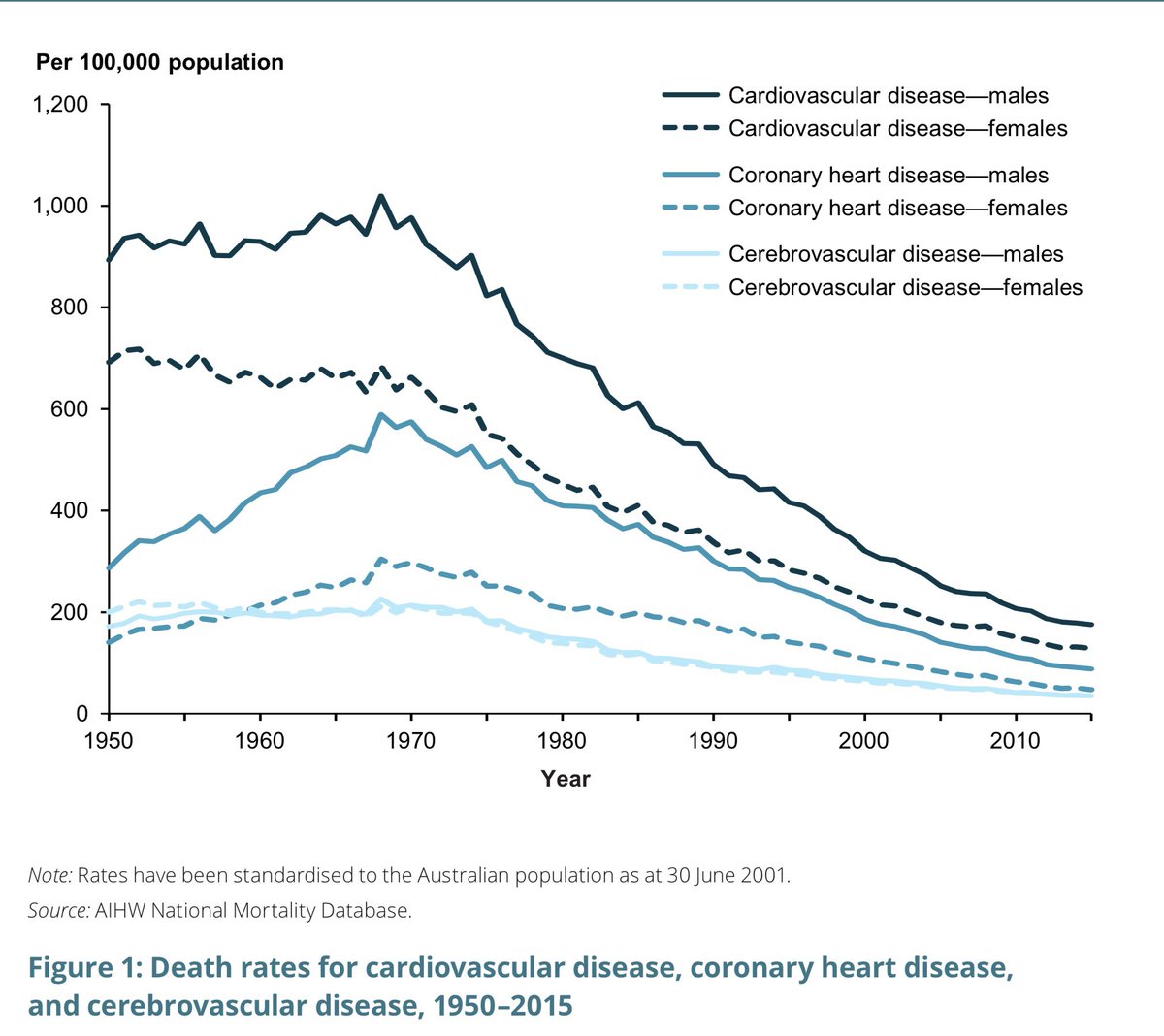
As I said, in Australia more than half of all deaths were down to heart disease, by roughly mid-century. That’s an *enormous* number of dead people, over decades. Far, far more Australians died of heart disease than ever died of Spanish Flu and other earlier acute infections. /6
It’s the chronic impacts that kill at the population-level, not the acute. While we celebrate victory over Covid, it’s not only possible but likely we’ve just entered the occupation stage of its impact. The real killing fields. To bring it back to the human society comparison…/7
Note that in colonial societies, where aboriginal peoples are invaded and then occupied, health outcomes for the aboriginal population rarely do anything except plummet, for generations afterwards. We’re biological creatures, pathogens are the same. /8
Let them invade, and while the eventual settlement phase will appear less damaging and more peaceful, in reality the deaths accelerate enormously, just in a form that is less visibly connected to the original invasion. History teaches us nothing. /end
Insurance is the last line of risk management. Politicians are doing none at all, and now have the gall to ‘grill’ insurers when they won’t cough up for the climate clusterfuck politicians have made. https://t.co/LKsny4d4dI
Brilliant initiative. And it would have been even without a pandemic, enormous numbers of days are lost across society to airborne infectious disease, every year. Air quality in general is also appalling in many locations. https://t.co/BnAFsA5DhC
“However, I think we really need to rethink our strategy of just relying on everyone to catch Covid repeatedly as our only strategy.” Yep, it’s not a strategy. It’s having no strategy, dressed up as a strategy. https://t.co/FS254tyMvs
The hijacking of public health by politics is nowhere clearer than in the bloody-minded reluctance of expert vaccine advisory bodies to recommend vaccination. Politicians won’t allow an advisory committee to exist now that doesn’t tell them what they already want to hear.
Even vaccine brands are team sports now. I’ve watched the Nova vs mRNA debates from the sidelines. I’ve had a mix of both. Ultimately only the anti-vaxers win with this nonsense. https://t.co/DwjIbEuZgi
The bizarre thing about the pushback on building ventilation, is that it’s been heavily regulated for decades already. Adding additional air quality requirements is not revolution, it’s tweaking. https://t.co/kUi674uas3
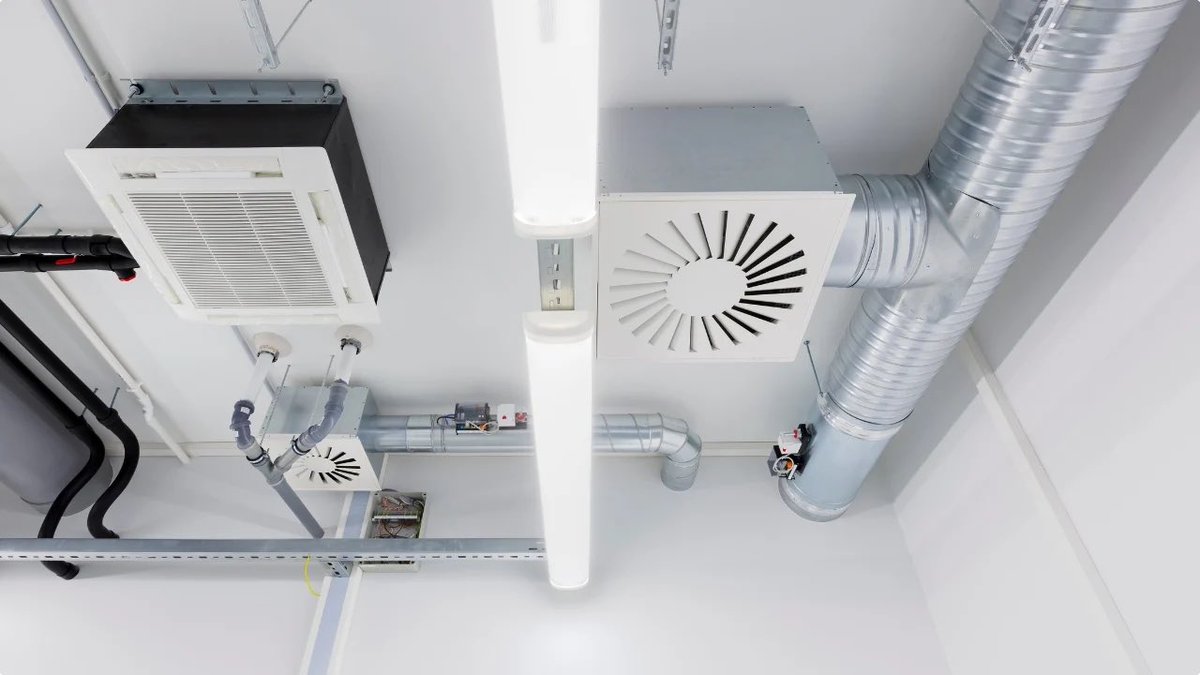
Lots of sick Covid people away today. Two of them nearly full-term pregnant. That's good for the baby, right?
'Protecting the vulnerable'. Was always spin, like 'finding the right balance' i.e. do nothing. https://t.co/h5R4q5CVfP
I spent a bit of time over the weekend reading research literature on hybrid immunity. Specifically for Covid, but also any other reference to it. A very contentious topic, and reading the literature you could come away being convinced it's an unproblematic thing. /1
Reading Christina Pagel's assessment for the UK over their Christmas period, you could believe that population immunity is building, most of the metrics suggest a great improvement on previous years. And maybe that is what's happening. /2 https://t.co/G3t72GIboG
As a layperson looking in, to see very smart people on both sides of this debate offering detailed arguments, it's extremely difficult to make sense of it. Purely on logic grounds, there's the obvious (and likely deliberate) conflation of individual and population immunity. /3
Not my area of expertise, but in my understanding this is where there seems to be some sleight of hand going on. It seems uncontroversial to say that an individual's immunity can build over time, through a combination of infection and vaccination. /4
It's another thing to claim that this creates a population-level effect, any sort of herd immunity, where the virus encounters enough hybridly immune individuals to slow its progress. All often discussed , I know, but often glossed over as well. /5
Because an individual's immunity trajectory can be so varied, through the timing of any infections and vaccinations, and the need to get some sort of coordination in time of this immunity across a population to create a herd effect, it's hard to see how any of this lines up. /6
How you get herd immunity, using hybrid immunity. Unless you spend a long time (generations?) vaccinating and infecting everybody, so that maybe a threshold of immune protection is reached. Except we're not vaccinating everybody, and those we are aren't doing it regularly. /7
It's not even clear whether hybrid immunity as a strategy adopted by multiple countries is intended as a herd immunity strategy as well. The public narratives often suggest that, but it's more implied than explicit. And yes, lots of memes to say hybrid immunity doesn't exist. /8
Though the literature clearly suggests otherwise. Suggesting that individual hybrid immunity leads to herd protection seems more the sticking point. Or maybe governments don't even care about herd protection, they think individual hybrid protection is the best we can do. /9
But again, it's not really clear, and probably deliberately not. It seems as many have said more like an attempt to fob people off with vague associations with ideas of herd immunity, to make them feel like this will eventually free the community from constant infection. /10
But again, not my area of expertise. How do we explain what seem like clear descending rates of severe illness and death at the population level, in places like the UK and even here in Oz? We've already killed off most of the dry tinder? 'Reaping'? /11
Leaving a constant sea of infection that will never resolve, but which may kill fewer people? People who were likely not going to get seriously ill or die anyway, in the acute phase of Covid, so what appears like growing immunity may just be fewer 'vulnerable' victims? /12
Though in an ageing population that pool of vulnerability should actually be growing. My own thinking about this literature over the weekend made me think about the things we can't know. For example, we might say we have some degree of population/herd immunity to influenza. /13
But how long did it take us to achieve that, if it's true? How many died and were maimed getting there? Public health statistics don't go anywhere near far enough back to answer that, surely. Other experts say herd immunity is only ever a vaccination outcome. /14
I think mostly because of the timing considerations I mentioned above, getting widespread immunity at roughly the same time, to slow and prevent spread. That seems uncontroversially logical to me. And influenza clearly still has epidemic and pandemic outbreaks. /15
So any population-level immunity will only be useful provided the pathogen hasn't mutated significantly. When it does, you're back to square one. I still don't know what it all means, but doubt that any immunity strategy that involves 'natural' infection makes sense. /16
Because of the completely contingent nature of those infections. We do seem to have locked in a strategy of permanent infection and illness, with our individual hybrid immunity our only defence against it. /17
And because many aren't getting vaccinated, it really is difficult to see how this is hybrid anything, anyway. Just more political spin to excuse doing nothing. A pandemic is still defined in terms of number of infections, by my reading. Not by what they do to people. /end
Looks like Victoria is going to need some 'Leftie' power to get through the day. https://t.co/egApqJB1gi
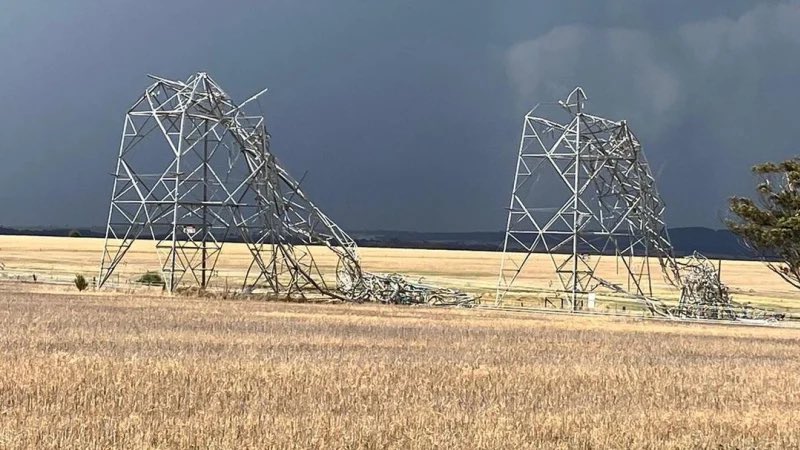
Current wholesale price for electricity in Victoria, where its largest coal plant has gone down? $16,600/MWh. In South Australia, with its renewables? -$86.12. They're paying people to use it. Meanwhile the LNP is probably somewhere in Don Quixote mode, yelling at windmills.
@EricIdle if Springsteen and Dylan can sell their catalogues for millions, why not the Pythons? Guessing they had to weigh up if the rationale for owning the work was to make money from it, why not just take the money?
The power of climate. It’s the poles and wires that make overly centralised electricity generation a problem. Go households, create resilience by distributing generation across the entire grid. Also the fastest way to drive prices down. https://t.co/9zT5VAKm1s
The housing crisis is one of our greatest social issues. And it’s easily fixed, if we drop all the econo-babble about supply and demand and just build cheap houses. Pretty much all of our problems would go away if we ditched ‘the economy’ as a framing of them. https://t.co/whyMC5zBZE
Scabies alerts now in schools. Amusingly this is one ivermectin may actually help with. Data shows scabies had a resurgence with the pandemic. Another mystery.
We spent 150 years taming many of of our infectious disease threats. 4 years of free market fuckwittery is unravelling it fast. https://t.co/nC6Ug72zs4
The double-climate/Covid special. Friend back from a holiday in Queensland. Spent most of the holiday isolating as family tested positive after arrival. Then humidity was 100% and temperature high-30s outside, so didn't want to go out anyway. Living our best lives.
I asked somebody the other day if wearing a mask was more of a hassle than hanging over the toilet bowl projectile shitting and vomiting. https://t.co/fDFrvlu9Uv
A thought experiment. If Covid mutated to a high-mortality variant across age groups, that the current vaccines couldn’t help with, what do we think governments would do?
Hybrid immunity. Infections + lies. https://t.co/3Oj3s0dsuQ
Wow, huge. https://t.co/Vfswlw4iZD
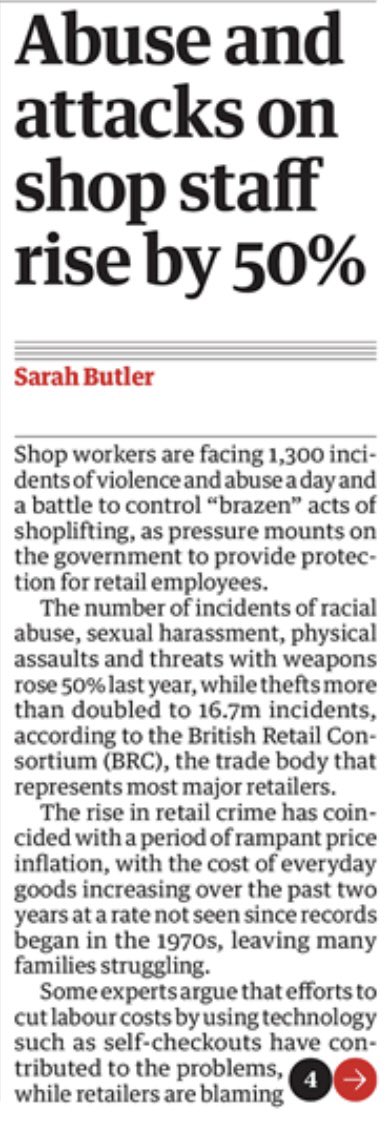
UK Guardian. 70 years of pulverising everything public leads to an each to their own slugfest. Our societies are falling apart. That was the plan, again the libertarians never denied they don’t believe society is even a thing. https://t.co/wOgWb4cTyr
Michel Serres wrote of how noisy the body is, and how not hearing that noise is normal functioning. Social media is a pathology, surfacing and mobilising noise that societies need to be sub-audible.
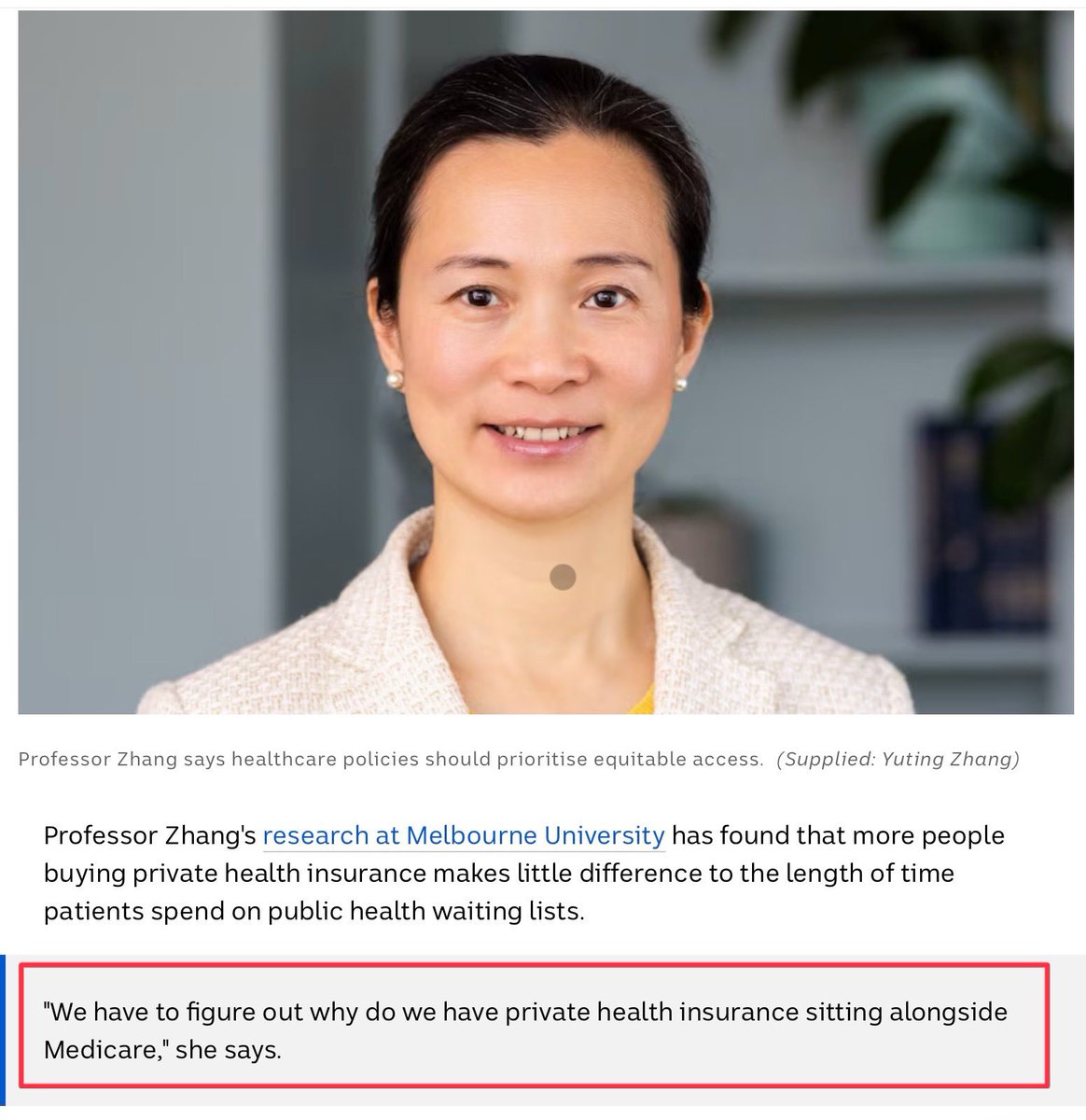
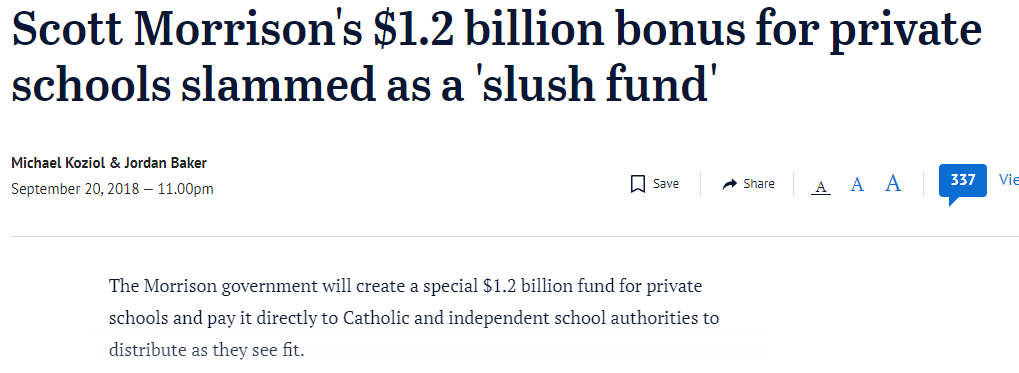
Won’t need to phone a friend here. It’s the conservative way to undermine universal health care slowly. Also, let’s stop calling it private health insurance, billions of public dollars fund it every year. Ditto for billions to private schools, same strategy. https://t.co/ZaL8OM8pPY
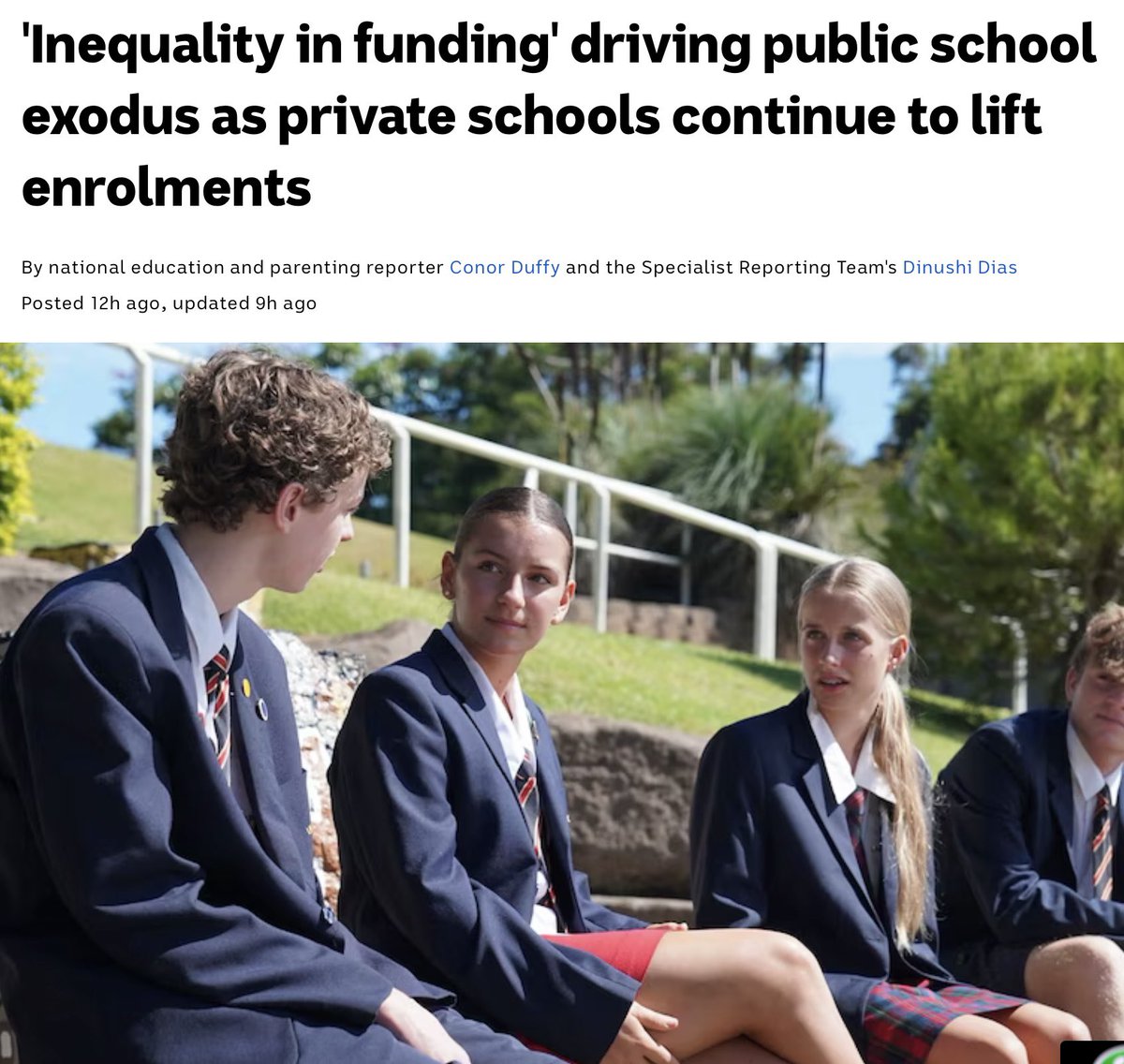
This isn’t a funding question. It’s a status question. The answer is always social. Comprehensive education was dismantled in Australia by turning education into a status rivalry. People will bankrupt themselves to try to climb this status ladder. /1 https://t.co/3QStneRMwV https://t.co/Q4W4rSo0Zv
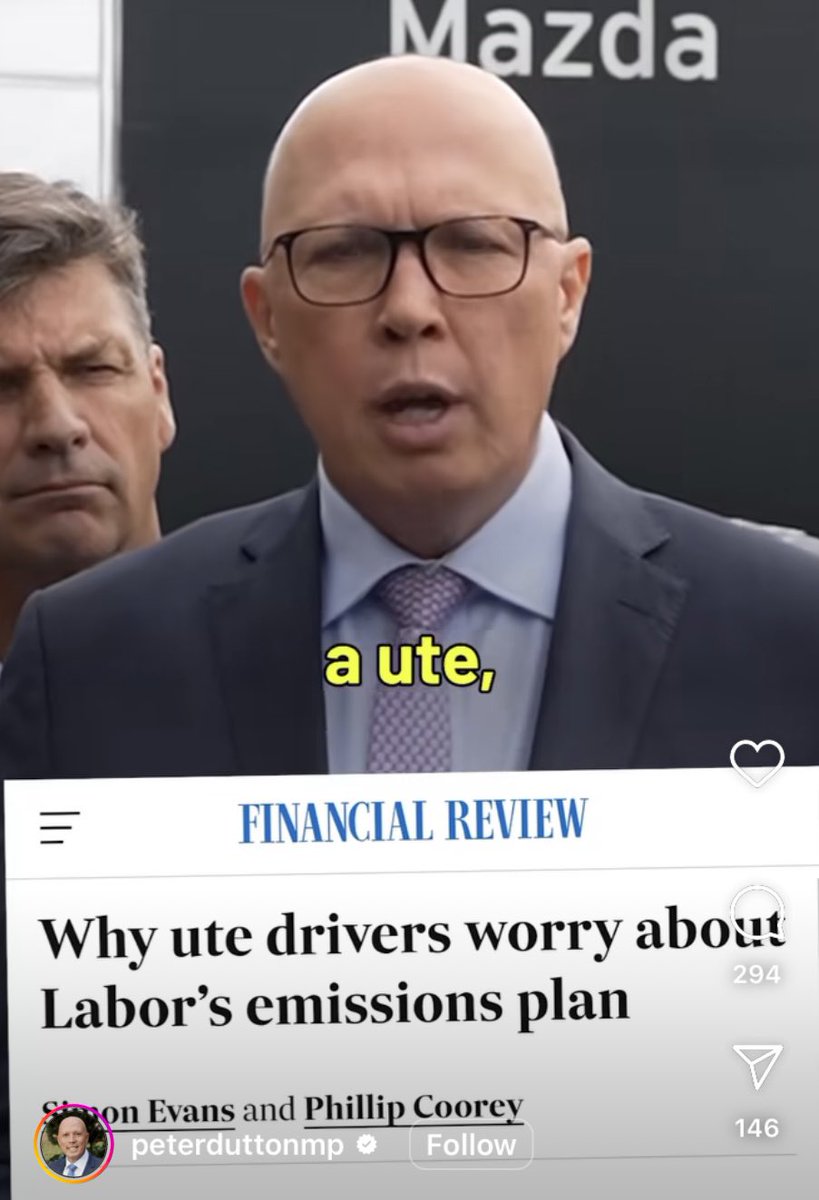
The same mechanism with cars. Petrol and diesel are hugely more expensive than at any other time in Australian history. But Australians are shifting to gas-guzzling utes and SUVs because those are the current status vehicles. Dutton knows it. Societies run on social status. 2/2 https://t.co/MIcOEf9N8c
Democracy’s lethal weakness is the elected dimwits at the top of it, who turn all brilliant policy and necessary action into a popularity contest, for votes. You can’t vote your way out of the problems voting causes. Elections are a failed mechanism. https://t.co/H7cgSugDxf https://t.co/P6VaVqjfUY
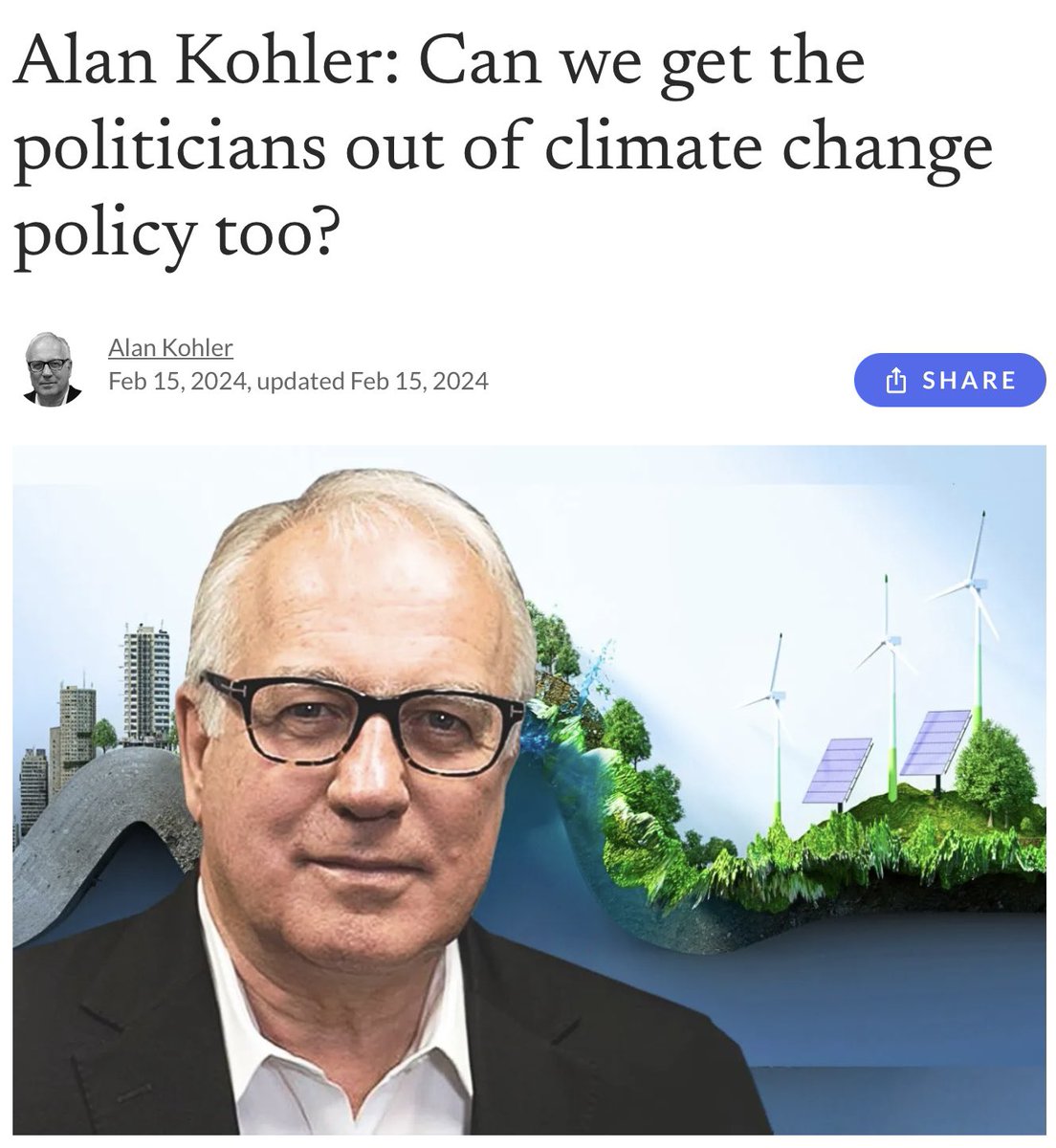
If @NGruen1 is a fan of random lot citizen juries, you know you're on the right path. https://t.co/X2Ls4MuTwn
We need a graphic designer to capture the dog chasing its own tail nature of hybrid immunity. Where you infect everybody, to try to create population immunity, and the act of infecting them facilitates evolution of new variants.
A culture obsessed with pulverising anything social into libertarian bits creates a continuous urge for collective attention. You need guns for gun deaths. But the tragic motivation for mass shootings seems more about creating a public effect, in a land without a public. https://t.co/ROWjeYGL6l
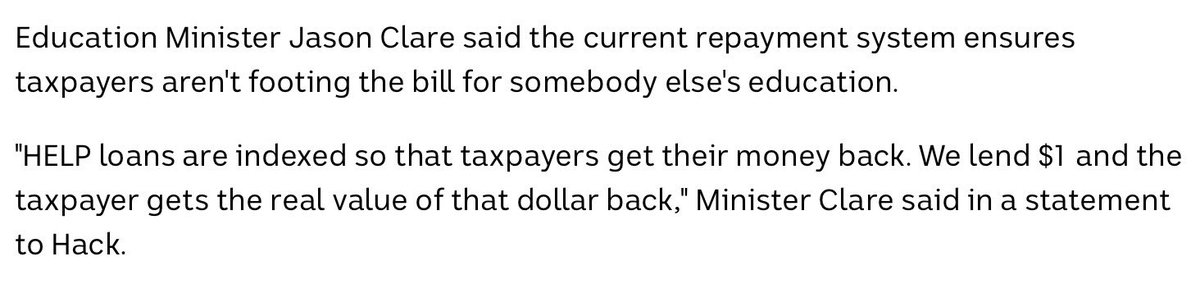
This is a LABOR minister. Saying that all the benefit of education goes to students, so all the cost should as well. A LABOR minister. A LABOR EDUCATION minister. Whitlam would be spinning in his grave. #auspol https://t.co/0AIhV6Dpsd
I may have just missed it, but I was waiting yesterday for somebody to headline this as ‘Albanese finally manages to get somebody to say Yes’. https://t.co/aNGa1dLuL6
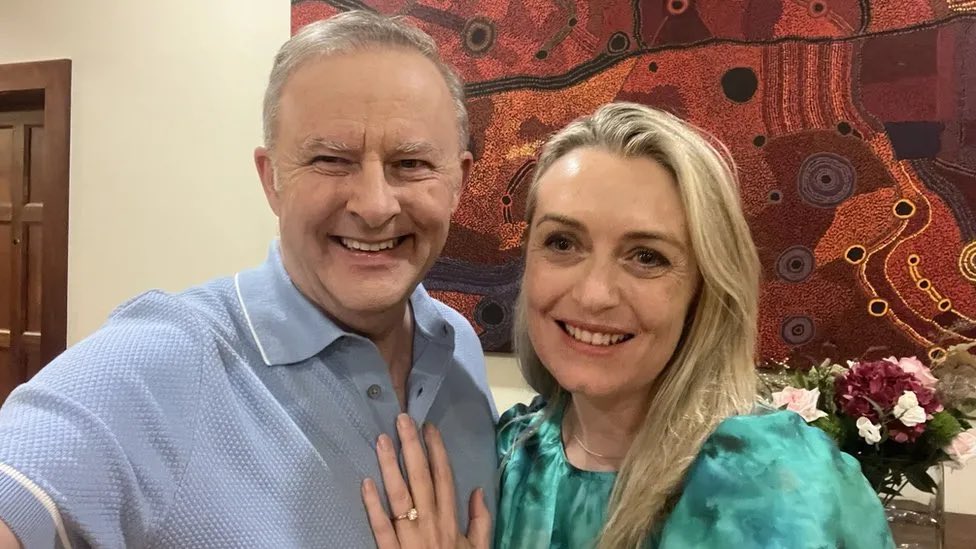
Democracy and markets are opposing forces. Democracy is decisions made for a collective of people. Markets prioritise individuals. It’s why conservatives invented them, to undermine government. Ironically they’re regulated into existence BY government. https://t.co/Qqpv52rUyo
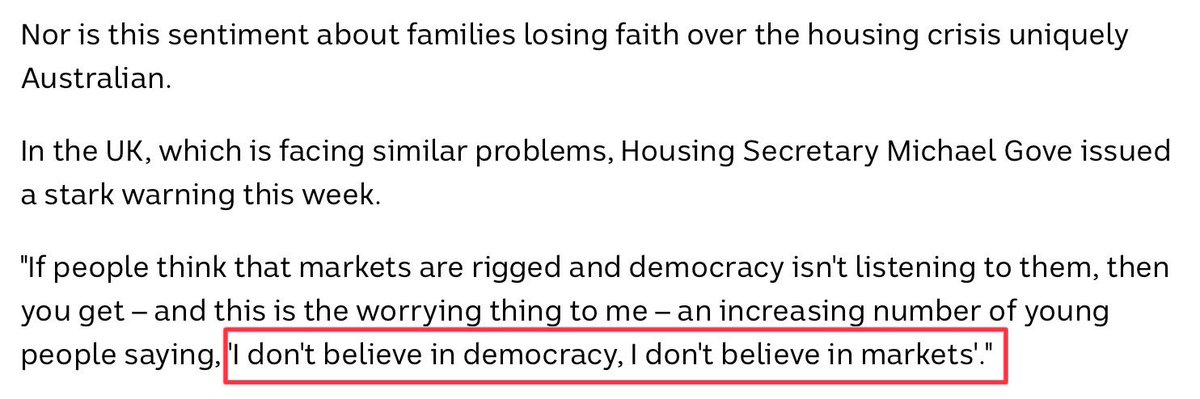
The common wondering we do about why nothing is being done against existential threats. Have Tweeted about how this is due to the removal of the administrative construct of 'the public', invented in the late-19th to mid-20th century. But there's more to see here. /1 https://t.co/f4um7rl0Kp
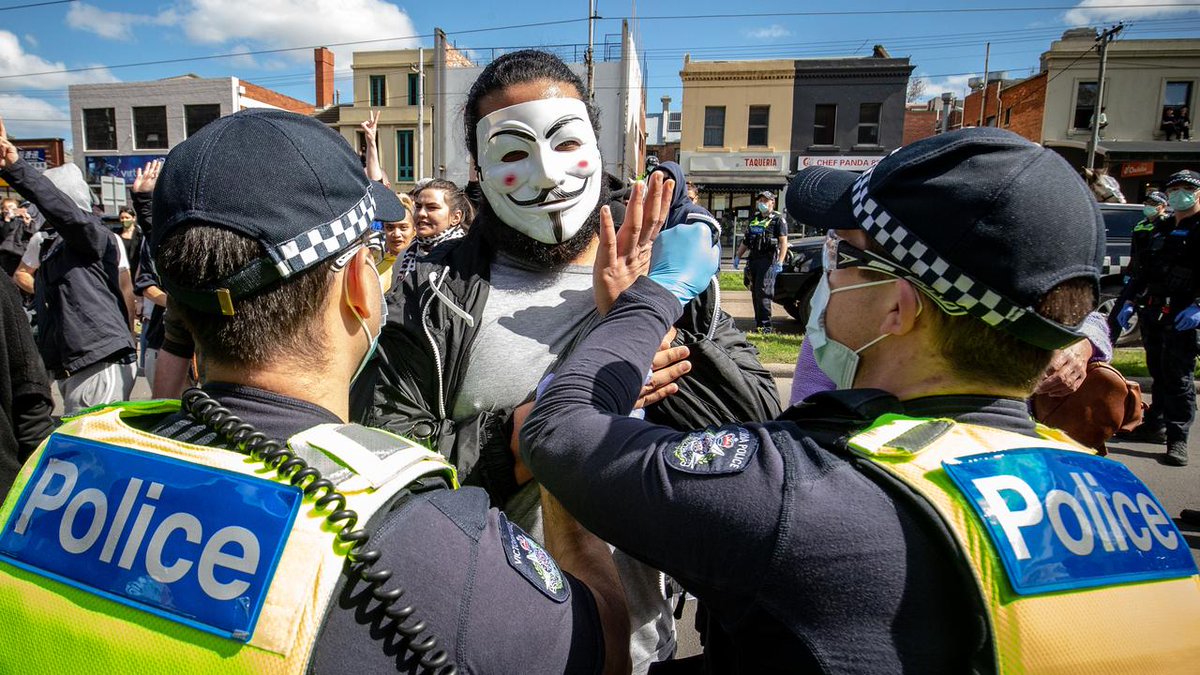
Because the absence of that space of 'we', a collective space to address collective problems, is like a vacuum, the thing nature abhors. Societies can't function without it, no matter how much libertarian ideology likes to pretend. So what do people do? /2
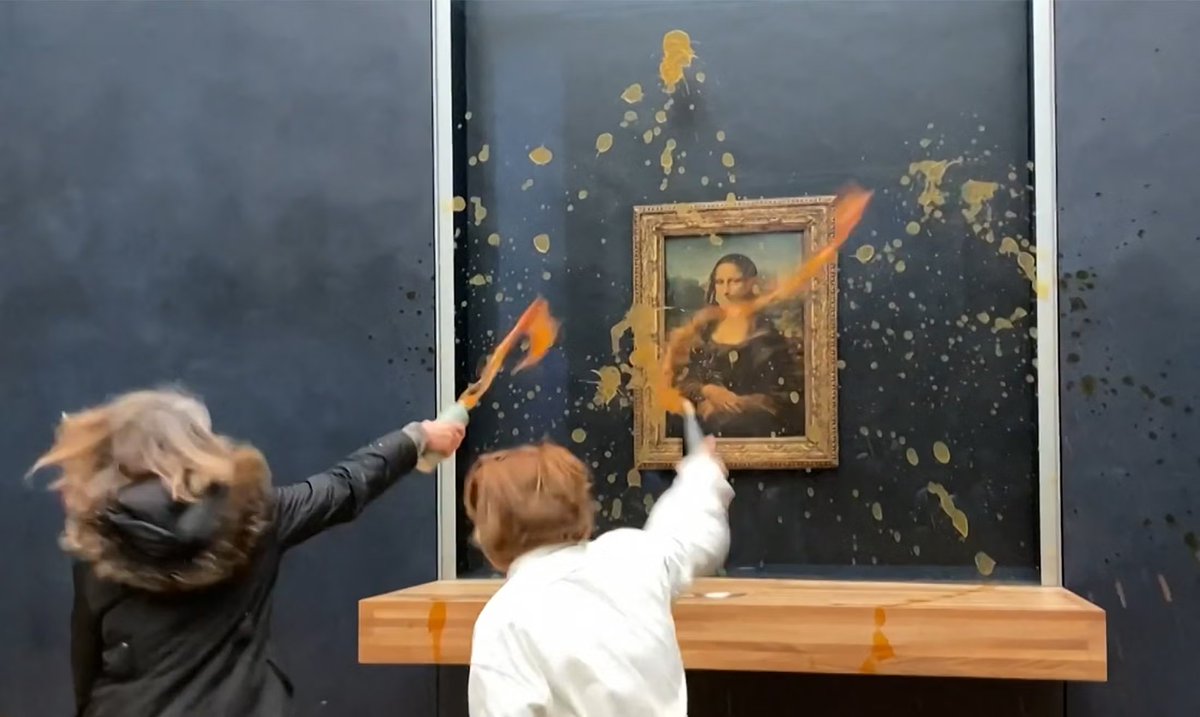
They try to create their own public space. Through things like protests, acts of extreme violence (mass shootings for example) and/or violation of accepted norms. The thinking being that 'the people' are unaware, and this will make them aware. /3
To shock 'the people' into a collective attention, on some issue. Except it doesn't work, because 'the people' isn't a thing. It's just a collection of individuals with no necessary connection. /4
The public is not just the eyes and ears of the population. The public is an administrative construct, created by thousands of officials, to manage collective life. The politics of symbolism tends to just create an inflation of symbolism. /5
More and more extreme symbolic acts, to try to force a public back into existence. But you can't turn 'the people' (a nothing) into a public like that. A public is continuous organisation, and analysis. /6 https://t.co/icmESQahGQ
It's what dreaded bureaucrats create and maintain, every day. Continuously assessing our collective life and designing and implementing ways to support and strengthen it. The politics of symbolism is really the arse-end of libertarianism. Its endgame. /7
And the continuous assault on 'red tape' and bureaucracy is why the 'we' has disappeared. All that pesky due process IS the ongoing calculation and tweaking of our collective interest. /end
That this wasn't done years ago already shows how damaged democracy is. And the easiest way to remove all lobbying? Don't run countries using popularly-elected politicians, beholden to donors. https://t.co/dVzHAyHI03
This is the inflation we should be worried about. #auspol https://t.co/zHWbVuNejf
That shift since 2021, to say that peoples' social relationships (often described as their 'mental health') have to be balanced against their risk of infection. Public health was invented to create a clean PUBLIC space, so that balance wouldn't be needed. https://t.co/MyK7XbYlCF
Superbugs should be a wake-up call for the ‘living with’ pathogen idea. We’ve been living with these bugs for generations, and they’ve only become more lethal. Both ‘natural’ infection and treatments have only made them more virulent. https://t.co/7BSUOK0mD2
@arijitchakrav shared this paper with me, it’s a ripper. Looking at the high-wire act of hybrid immunity, modelling how that thin line could collapse in a ‘gray swan’ antigenic drift or shift. I was struck also by the way spread is the true mass killer. https://t.co/zFsYr67HA0
A person who is vulnerable to Covid catches it from those who aren’t as vulnerable. The safety needed for the vulnerable is therefore the safety needed for everybody.
A lot of people who swallowed the living with viruses slogans ask ‘what else can we do?’ We can do what we’ve always done, throughout all of history. Stop diseases spreading in communities. That’s it, it’s not tough to understand. https://t.co/bJt6U7tOD1
We need to take back control of the overall narrative of this pandemic. That we’re now living with Covid because anything else was impossible. That outcome, that surrender, was planned from the start and succeeded. It was politics, pure and simple. /1 https://t.co/esYY1cLbE0
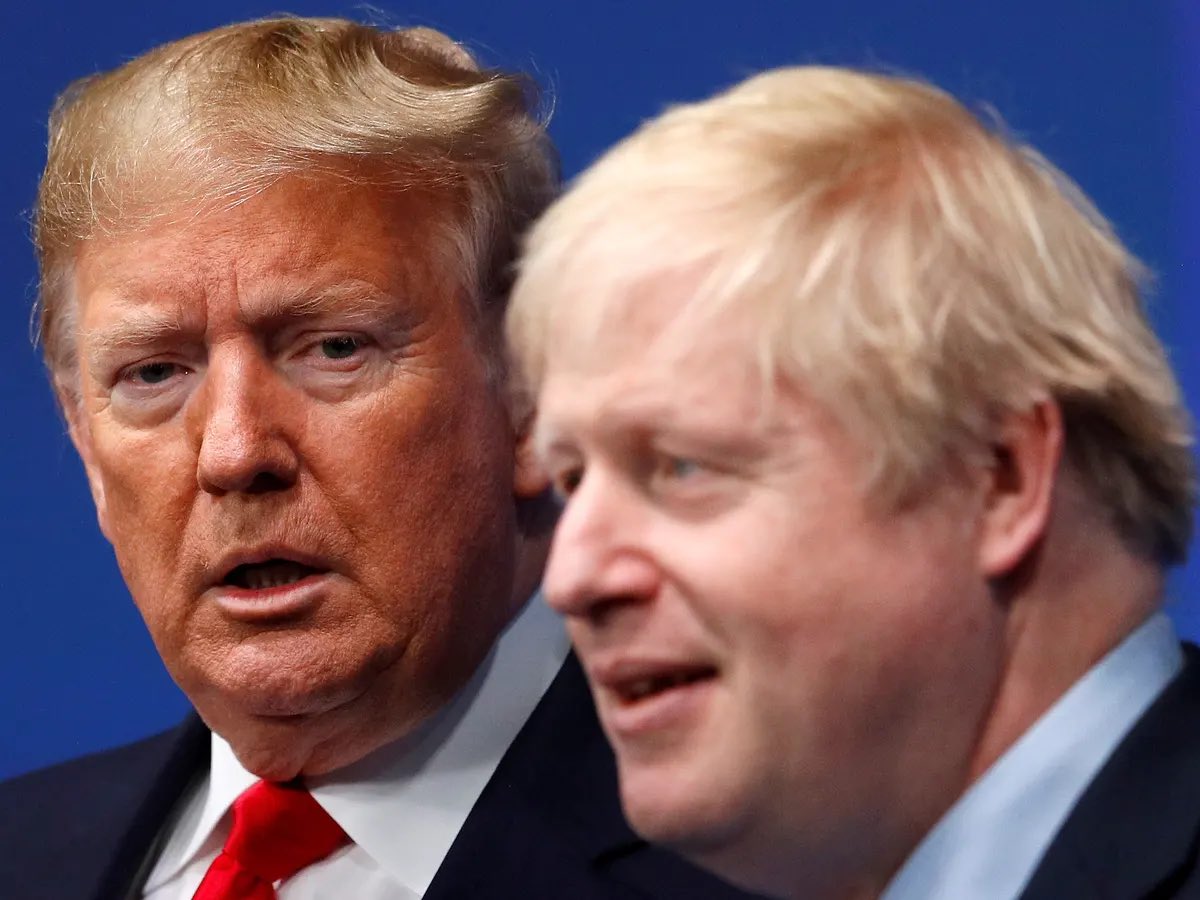
The history is clear. At the beginning of this pandemic both the US and UK refused to do basic public health, because of leaders and their parties whose political libertarian views were fundamentally at odds with anything public at all, including public health. /2 https://t.co/BrWdkhE2ye
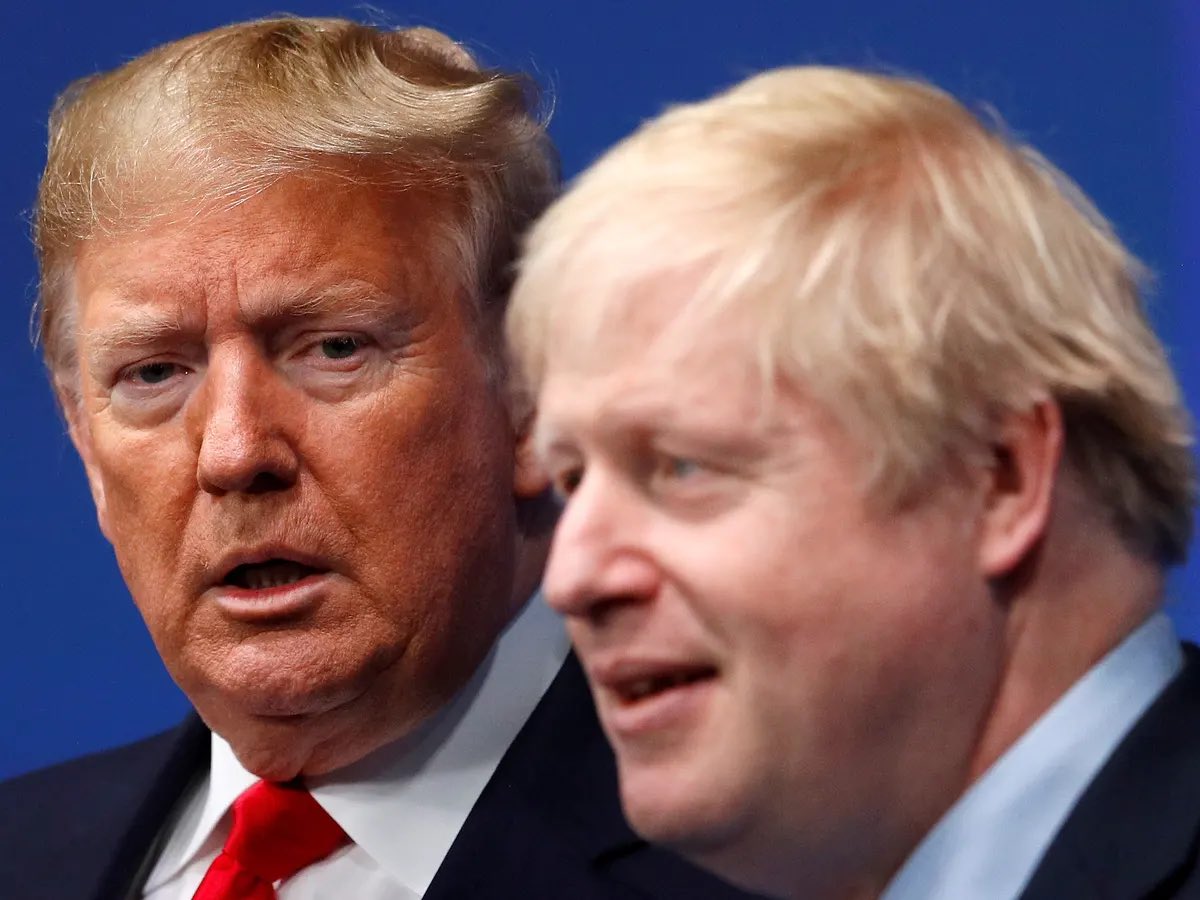
While nations like China, Australia and New Zealand activated standard public health strategy, of control of spread of infection, in the US and UK, the true vanguard of public health vandalism, parties in power continuously resisted any such action. /3
That resistance seeded the global pandemic, filling aeroplanes with Covid and spreading it globally. That period in the red circle was why we’re now living with Covid. Oz and NZ (and other countries) completely flatlined with cases, while the US and UK were breeding the virus. /4 https://t.co/HMGI5jnjKu
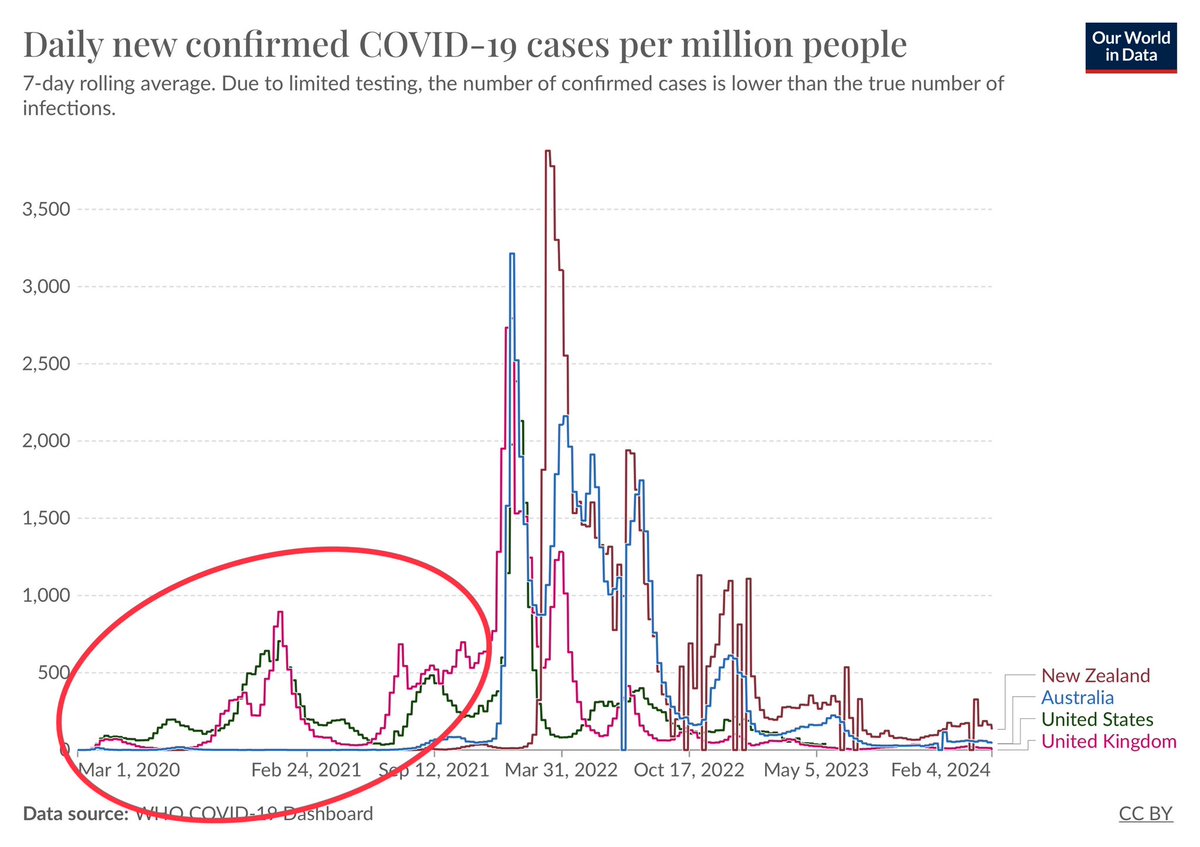
And you can see that breeding, how it created multiple epidemic explosions of cases. None of this was inevitable, if these leading Anglo powers hadn’t chosen to lead the destruction of public health practice, the virus, like SARS-1, could have been geographically contained. /5 https://t.co/3xXvBvElAT
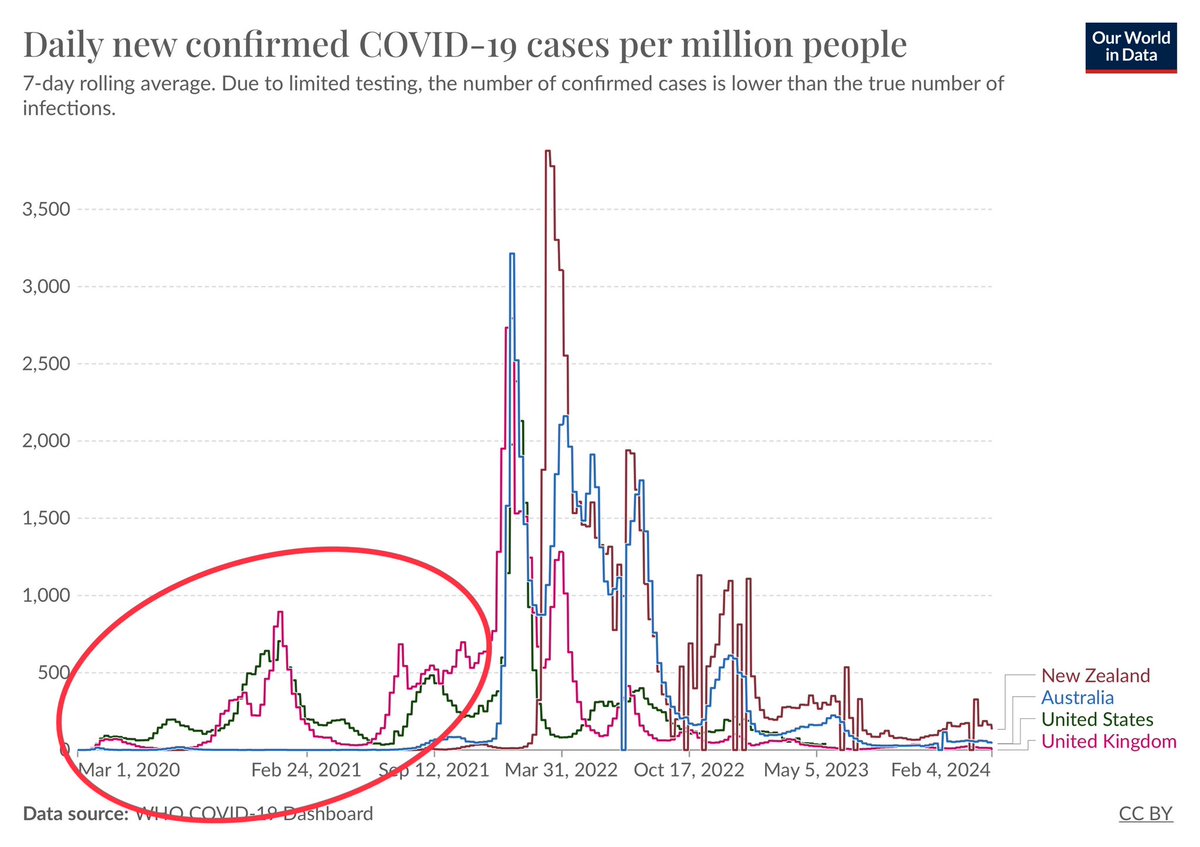
It could have been controlled, the world would not have had a tsunami of infection to then try to deal with. Blame should always be focused back on the politics in play here, and its bastardisation of public health basics, mostly with slogans. /6
How modern libertarian attack politics always works, cheap slogans to bind people together, while the public infrastructure that had actually coordinated their collective lives is dismantled. The pathetic eagerness to describe Covid as ‘just like (seasonal) flu’. /7
When of course novel pandemic pathogens are nothing like seasonal infection. But that’s slogan politics, grab a piece of known experience and extrapolate it well beyond anything that’s real. It’s exactly like fires, if you put them out early and fast, they don’t spread. /8
The completely dysfunctional politics of the UK and US, failed States now collapsing on nearly every social measure, created this pandemic. Not the virus. Accountability must still come for this hijack of basic democracy. /end
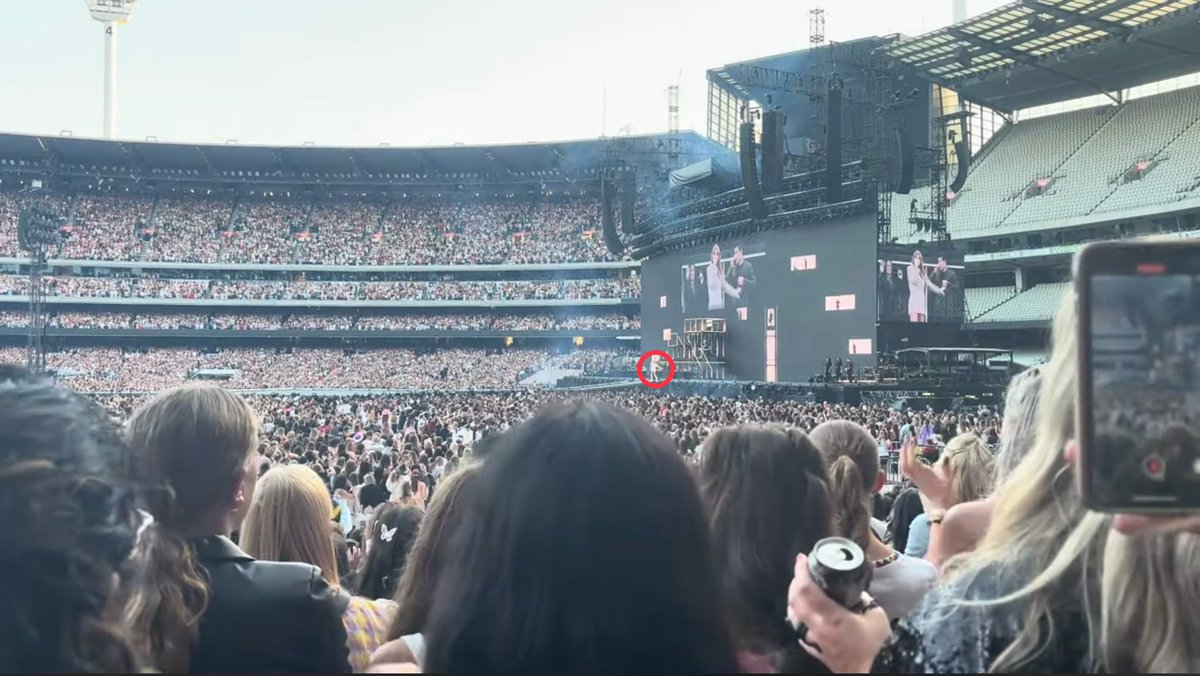
Mass enthusiasms aren’t about the apparent focal point of that enthusiasm. They’re barely even visible. They’re about people looking for opportunity to act collectively. The fewer chances they have to do that in everyday life, the bigger the mass enthusiasm events will be. https://t.co/mdCTptL0Bv
The basic public health fact that every family in every community has a touchpoint in a school? That’s where the most mixing happens? Adults don’t need to go there, the kids bring it home? That’s been the only uncontrollable entry point for Covid to our home. https://t.co/kcnRNt5giQ
The old normal pretends living with Covid saved it. All it did was accelerate every way the old normal was already broken. That’s what pandemics have always done, acted as accelerants for the collapse of broken social systems. Only strong social systems beat pandemics. https://t.co/nCZ8UX5fdA
There’s a total disconnect between popular political ideas and the reality of how societies work. The ISS is a good way to see the disconnect. Our politics is dominated by the idea of ‘economies’, (apparent) markets of individuals exercising their individual freedom of choice. /1 https://t.co/lsEvMAbzet
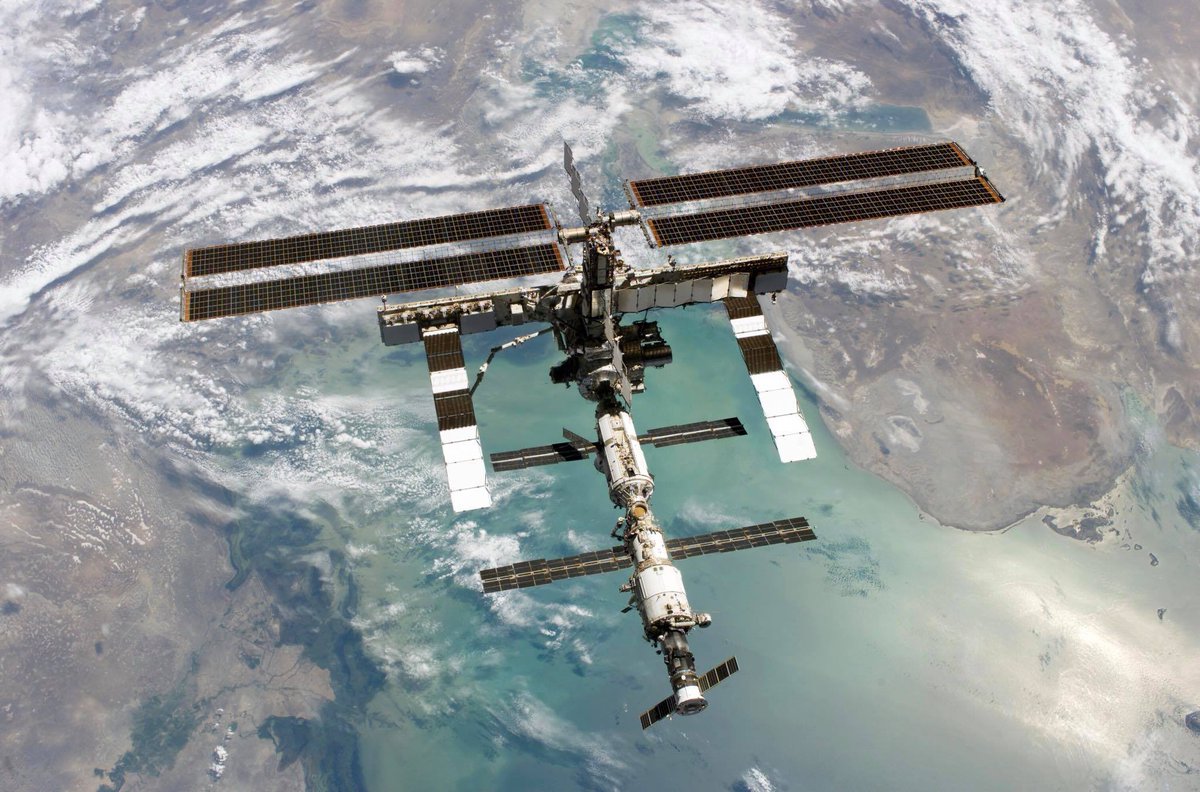
But in reality, humans have never acted more socially, collectively, than they do right now. We’re just looking in the wrong place. The ISS took 3 million people-years to build, 26 billion work hours. Compare that historically. Great Pyramid of Giza? 400,000 people-years. /2 https://t.co/jaHYAniFJg
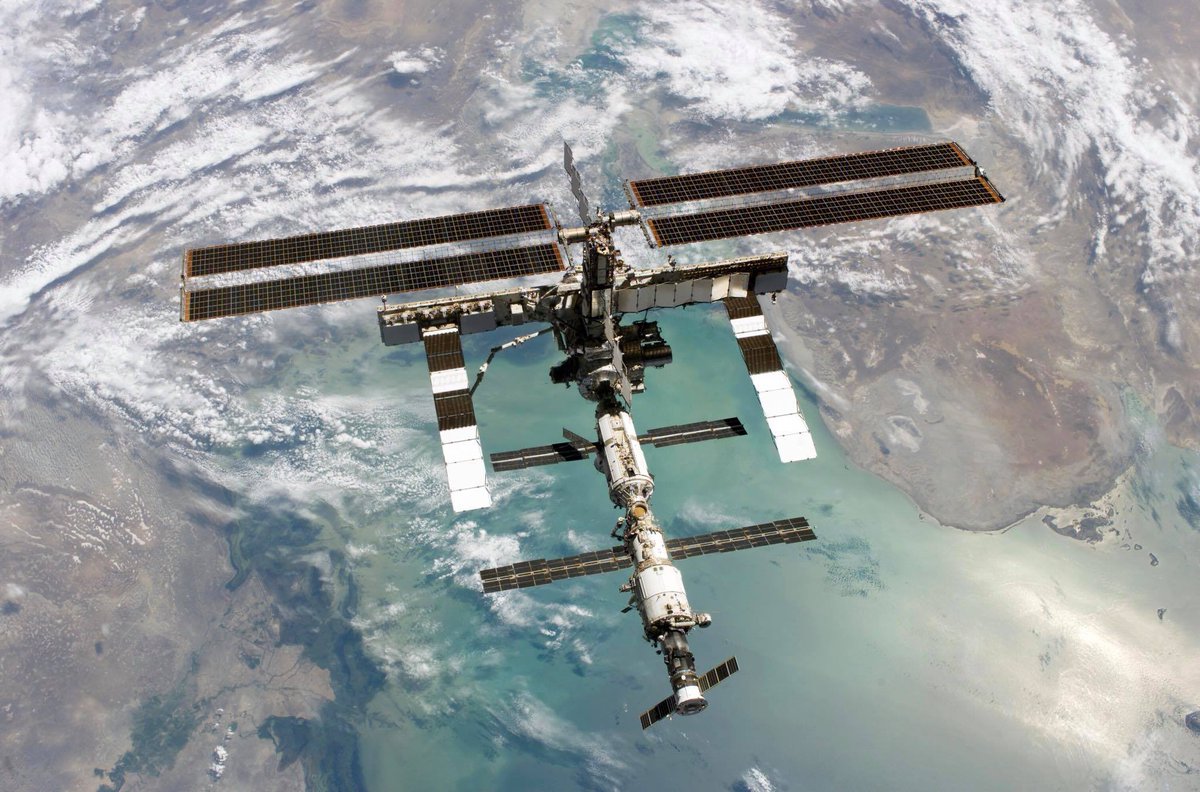
The Coliseum in Rome? 100,000 people years. The ISS dwarfs those earlier collective projects, and what’s more the ISS is a fully international collective effort, unlike those earlier projects. It requires cooperation at an historically unprecedented scale. /3 https://t.co/Y3fzGKzWb1
As @EdConwaySky and others such as the magisterial Bruno Latour said (for decades), the social operating systems of our lives are MATERIAL. Not the hot air of debate and politics. It’s our vast socio-technical systems that are our collective weaving together of social bonds. /4
That’s what not only keeps the lights on, it’s what binds us together, socially. I’ve Tweeted multiple times about this being the secret to the longevity of Roman civilisation too. It built things, and in doing that it bound its people to each other, socially. /5 https://t.co/2Y7M7zJb5o
What I call Reality Politics is the recognition that it’s this material reality of our lives that is the only really important thing for us to look at. Opinions and ideologies are, quite literally, just hot air that float over the top of the actual reality of our lives. /6
Team sports, just getting in the way, arguing over things that have quite simple material solutions that are opinion-agnostic. As Latour once called dit, an object-oriented democracy is what we need. Reality-based politics. /end
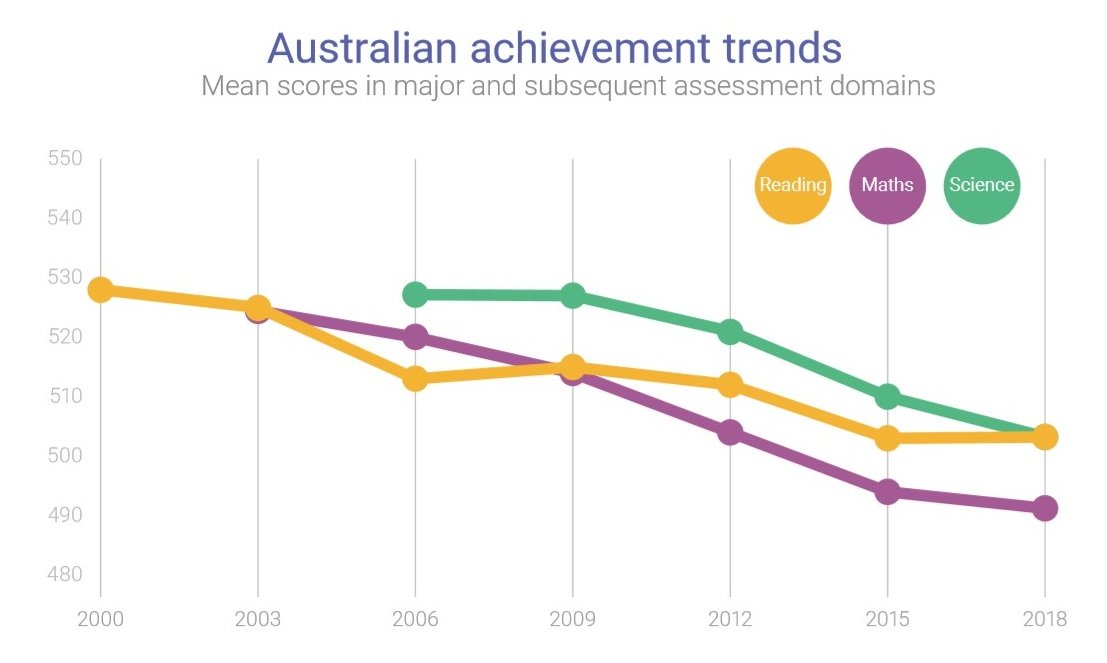
Australia's educational performance was in free fall for years before Covid. Pandemics are accelerants of existing problems. That we couldn't do something as simple as mandate open windows and HEPA filters when schools re-opened remains a public policy crime. https://t.co/LubklgtvBg
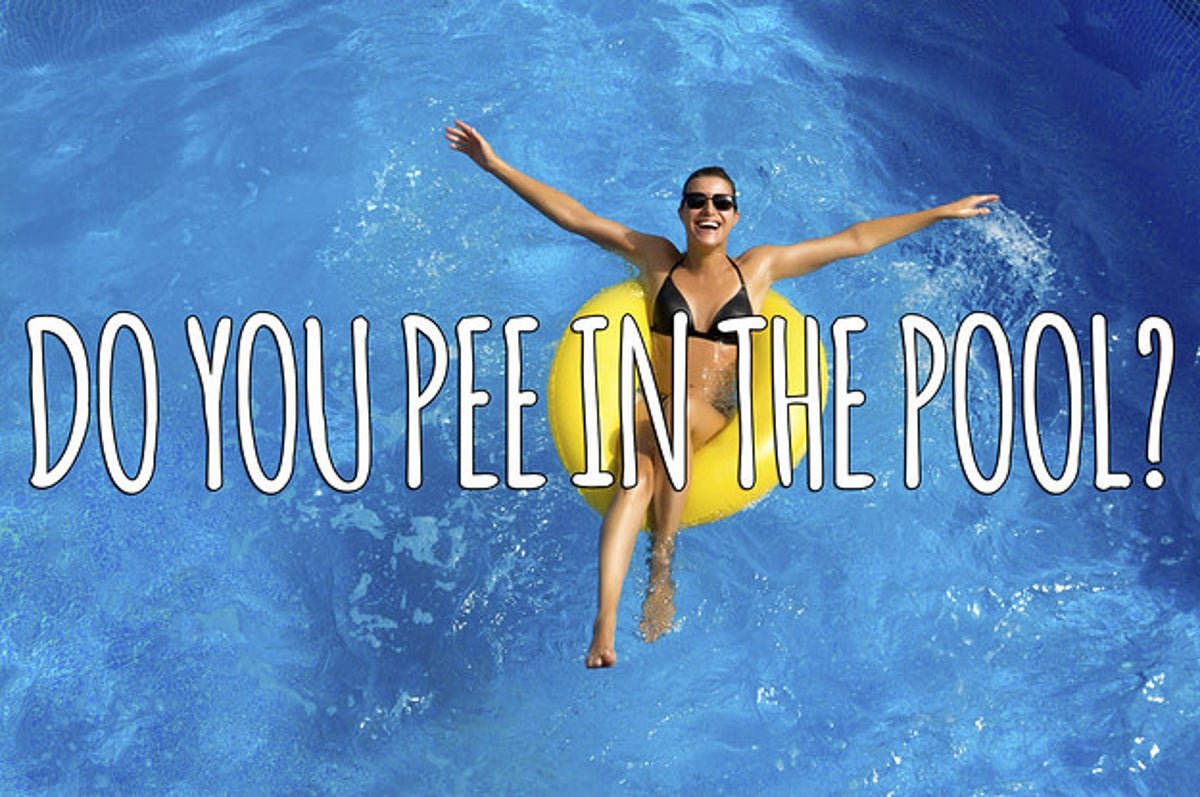
In a personal responsibility pandemic, casually allowing yourself to get infected and spread it to others is the same as pissing in a public pool. You can't fence the piss off to only one section of the pool. Your infection is everybody's infection. https://t.co/DByAbrul6h
My wife and kids are part of the cascading health and social problems that are still multiplying from shoving teachers and kids back into schools with zero Covid protections. The big push is on to prevent any future public health action of any kind. https://t.co/Y7azDOjoNx
Covid minimisers have decided to launch an assault today on Covid action using schools and lock-downs as their framing. Here's how Australian schools were performing internationally (PISA), from 20 years before the pandemic. Government incompetence, not lockdowns. https://t.co/tSeMUgnLCf
Children as spreaders of respiratory infection described as a 'Dickensian' slandering of them!! Public health began around the time Dickens died (1870), I've marked the spot with a red arrow. People were fed up with losing their kids to infectious disease. 2024 is the new 1870. https://t.co/z35tPupmgS https://t.co/o80PSRQYbx
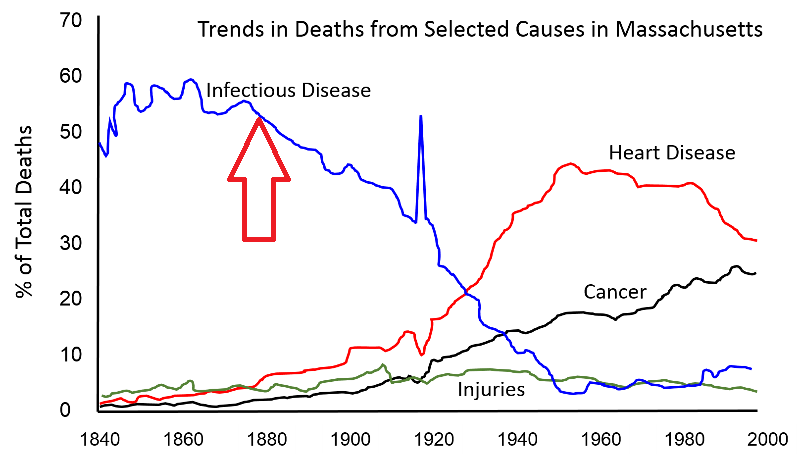
I'm still happy to bet that most of our chronic diseases will be found to have an infectious origin. And that 'living with' the infections is what does the damage. Nothing violates a body more than infection. https://t.co/MDNcxHNm68
This is how seductive seeing society as an economy is. I don’t actually think more competition is the answer to grocery prices. That’s part of the mythology of market economies, that they operate via competition, adopted by all sides as an unproblematic baseline. /1 https://t.co/gvCVdlpM54
Notice we actually have to *regulate* to get competition. Market theory suggests this should be the default state, unless regulation (‘red tape’) interferes. But competition only ever exists through regulation. And even then, what does it achieve? /2
It breaks up the economies of scale in business, which is what actually can lead to things becoming cheaper. It pulverises established scale to feed this fantasy of market competition. We set up competition regulators, to enforce competition. To regulate it into existence. /3
Because, the fantasy goes, this will make things operate as optimum markets. Things that are supposed to be a default state, which red tape regulation gets in the way of. We see it with private health insurance, such a hopeless product that government legislation is used…/4
…to force people to take it up, so somebody’s ideological wet dream of competition is fulfilled. Meanwhile, prices for health care keep going up. Something only single-payer (‘universal’) health care has ever managed to reverse. And what’s single-payer health care? /5
A ‘monopoly’! The worst evil in a market economy. Except it’s the only thing that drives prices down, through economies of scale. ‘The economy’ is layer upon layer of completely contradictory bullshit. /end
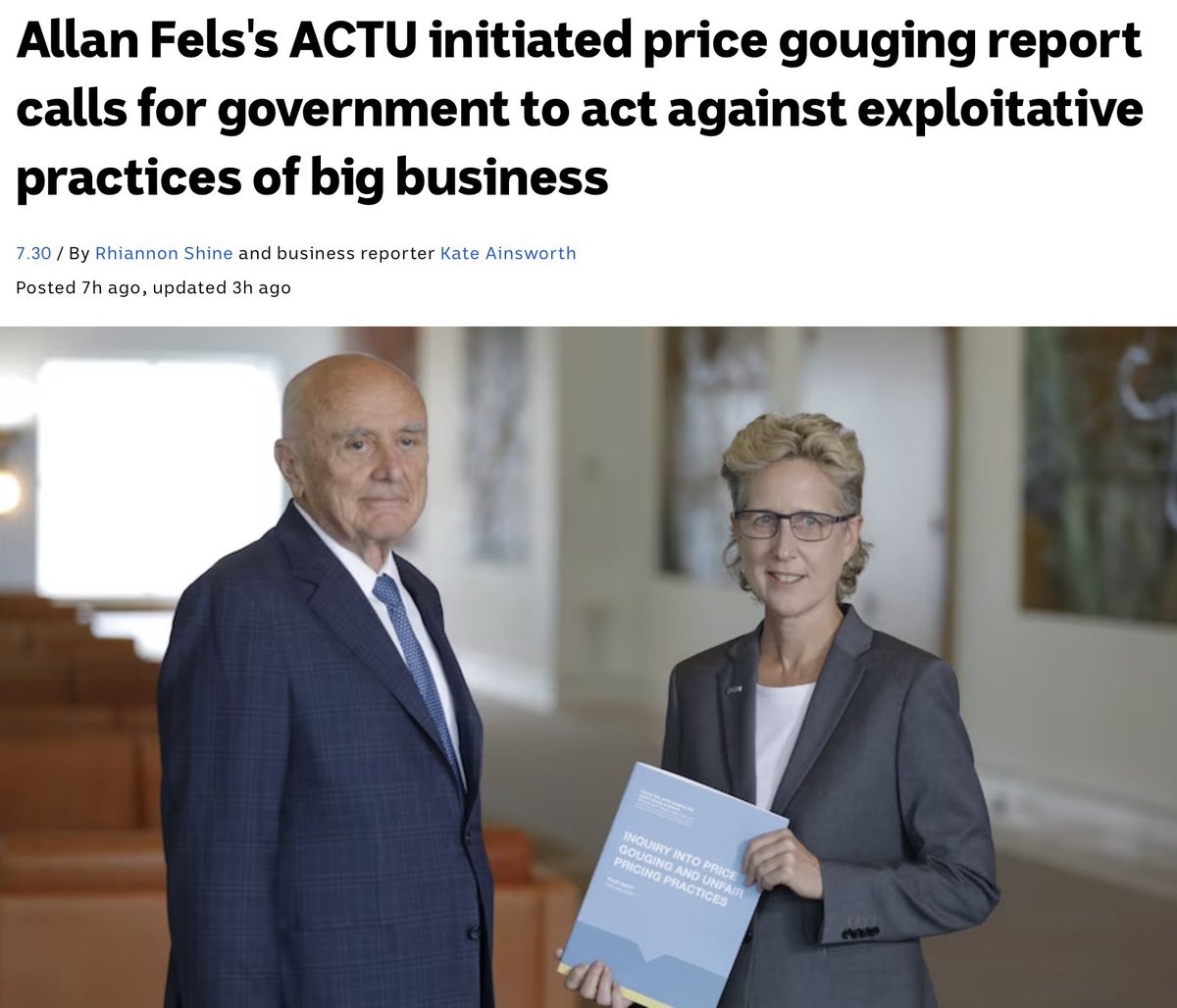
4 Corners excited some last night because it went into bat for their team. The ‘big corporate market power price gouging’ team. Except none of it made sense. Nobody asks how you get power in a market, which is supposed to be a mechanism to get rid of it. /1
Or why everybody doesn’t just go to Aldi instead, which is cheaper. Nobody forces anybody to shop at the evil duopoly. Nor to bank with the Big 4 banks. But most people still do. None of this is explained. At one point the story talks about how low prices for fruit and veg…/2
…are destroying growers. But this ran obviously against the narrative of price gouging, something again that wasn’t noted or explained. No analysis, just re-hashing the daily team sports of public debate. It made people FEEL good, on some teams. /3
Nobody asks why we need regulation, legislation and regulators, to enforce competition, something that the fantasy of markets says is the default way humans behave, if unregulated. Or asks why in markets like housing lots of competition creates exponential price *increases*. /4
We don’t think, we emote. Everything is The Ashes or State of Origin (more ‘duopolies’) for us, team sports. We LOVE big battles between two teams, like Coles and Woolies. That’s why they exist. And why most still shop there, even though it’s cheaper down the road. /end
Awaiting the latest Flat Earth Covid minimisation garbage after yesterday’s global wet dream on schools and lockdowns. Again. I suggest the know-alls from yesterday actually go teach in a school for a while, where they can test their confected fantasies against reality.
We have people who actually work in and study schools who have disproved that lockdowns caused major harm to students. In fact in many cases it was the healthiest they'd ever been. Whereas right now they're a constant sewer of infection. https://t.co/IQEgyMxxma
Time to revisit actual expertise on school closures and pandemics. So tired of people freelancing on this topic whose only experience with schools is having been a student there decades ago. https://t.co/sxPAo8nsbg
In the past 20 years, Australian students' performance on science was a year behind the international benchmark. Maths was 2 years. Literacy 1.5 years. Covid exposed the pre-existing problems in the system. https://t.co/TuLBqvfJAw
It's not lockdowns that damaged schools. You need to look pre-pandemic to see where the problems began. https://t.co/NGUggoezjY
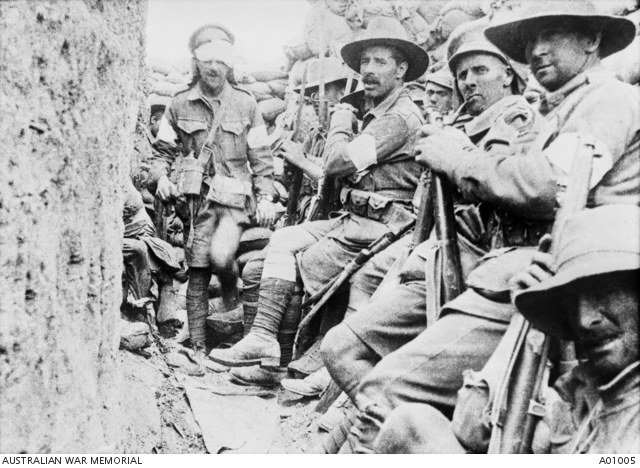
Between 3 and 4 times as many Australians have died of Covid since introduction of government policy to allow continuous mass infection, as died at Gallipoli. We commemorate the latter, often as an example of ordinary Australians sacrificed to incompetent leadership. https://t.co/PST7cTGrYE
Reading true expertise leaves you feeling satisfied that you’re learning something, in this case about the gaping holes in the idea of hybrid immunity. Thanks to @DavidJoffe64 for the reference. https://t.co/aoOC7ImmLT https://t.co/x9olVVBJ2b
We’d laugh at the idea of personal responsibility floods or fires. It’s well past time we laughed as well, a laugh of real anger, at the idea of a personal responsibility pandemic. https://t.co/Y4opEvPp76 https://t.co/wyHgBJRD6K
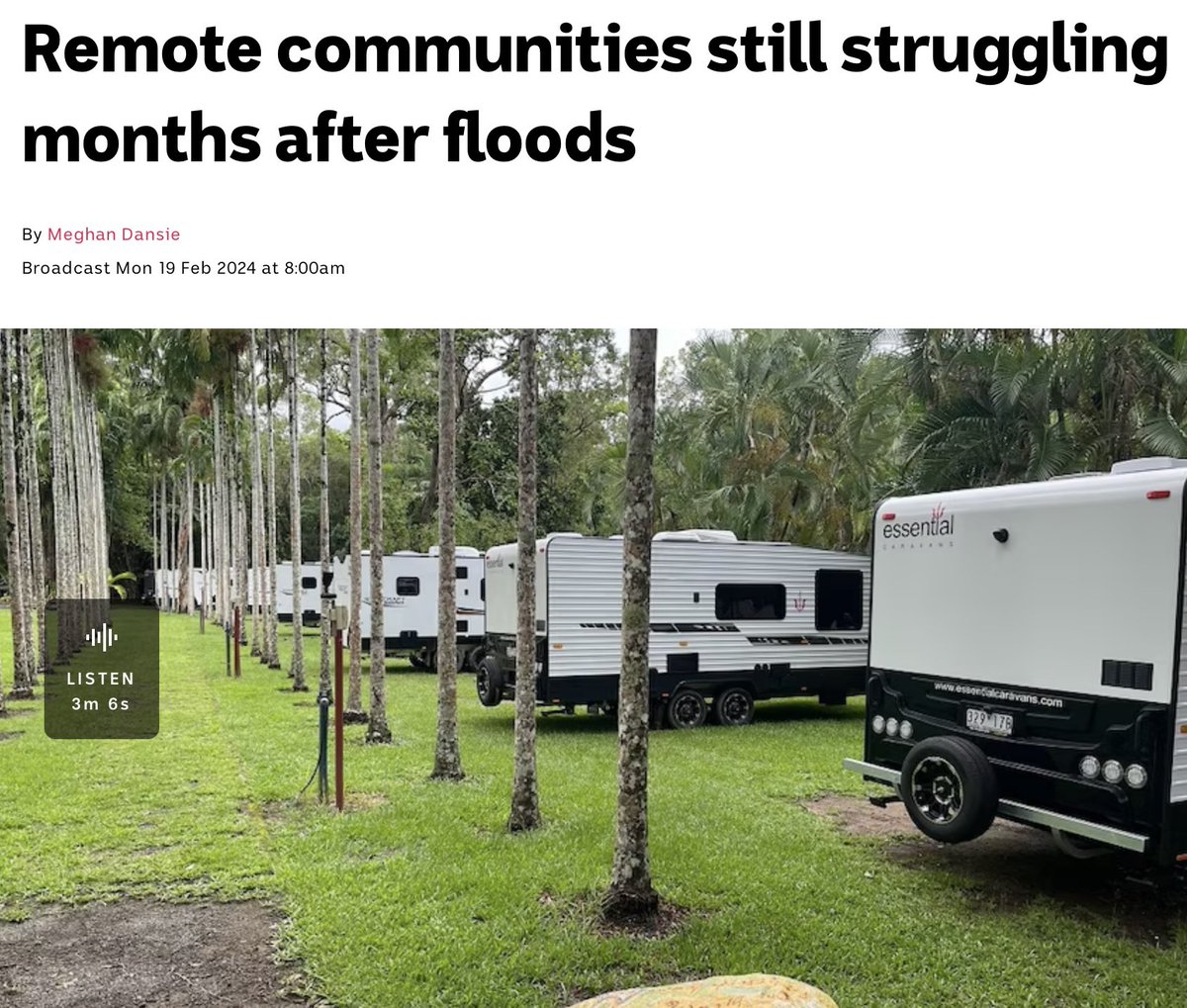
Even without climate change, it's astonishing we've persisted with internal combustion engines for so long. The technology is absolute rubbish. Grossly and irreparably inefficient and polluting, noisy and far too many complex moving parts. https://t.co/hpVDWigvbR

Exactly what's going on. The old normal is a train wreck, and massive propaganda machines are now churning out old favourites about lockdowns to deflect from the disaster. https://t.co/CobRwwQIc5
A friend just telling me about his first ever Covid infection, right now. I asked where he caught it. In hospital, caring for his father in the last week of his life. Well done NSW Health, icing on the cake in this sad week for him.
No living thing has ever taken on evolution, and won. https://t.co/cW1LhL5Qki
Public health is an ecosystem of ideas, practices and behaviours. Dismantle it in one place, and it unravels everywhere else. https://t.co/fOrGCAu2jL
It's taken a pandemic to show that peoples' beliefs and actions are shaped by their peers. Not by institutions or expertise. Humans are social creatures, they imitate others as a guide to how to think and live. Why social media is so dangerous. https://t.co/hFoOHiq7Oi https://t.co/UN8YUc4mNG
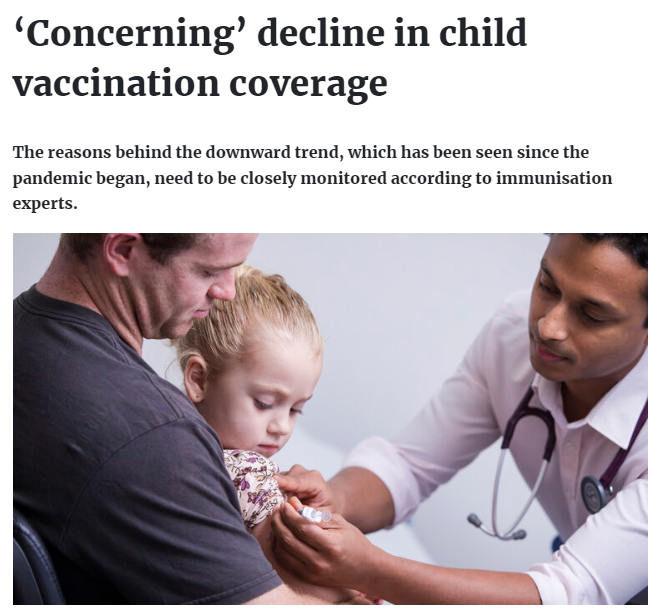
Here’s the team sports in plain view. They got their scalp, victory! A program I thought almost completely lacking in any insight into the actual problem, apart from repeated droning about ‘price gouging’, itself another team sports creation. We’re blind to our obsessions. https://t.co/VDz1cjG6o3
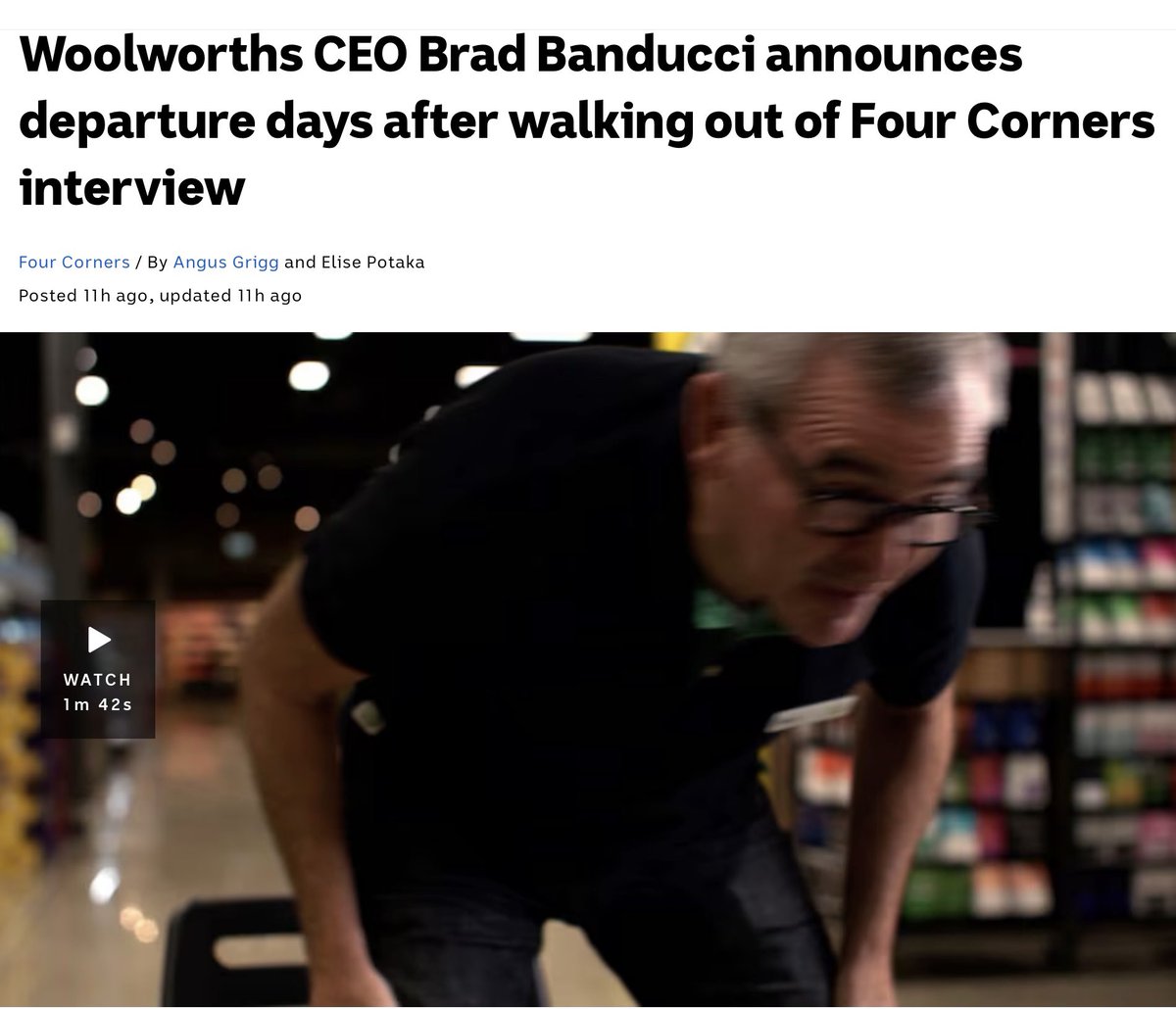
Happening everywhere, climate events destroying public infrastructure. Authorities completely overwhelmed by the damage. Meantime communities, whose spending patterns show dominant emphasis on private consumption like travel, dining out/take away and entertainment, mobilise…/1 https://t.co/GcwBiizcnK
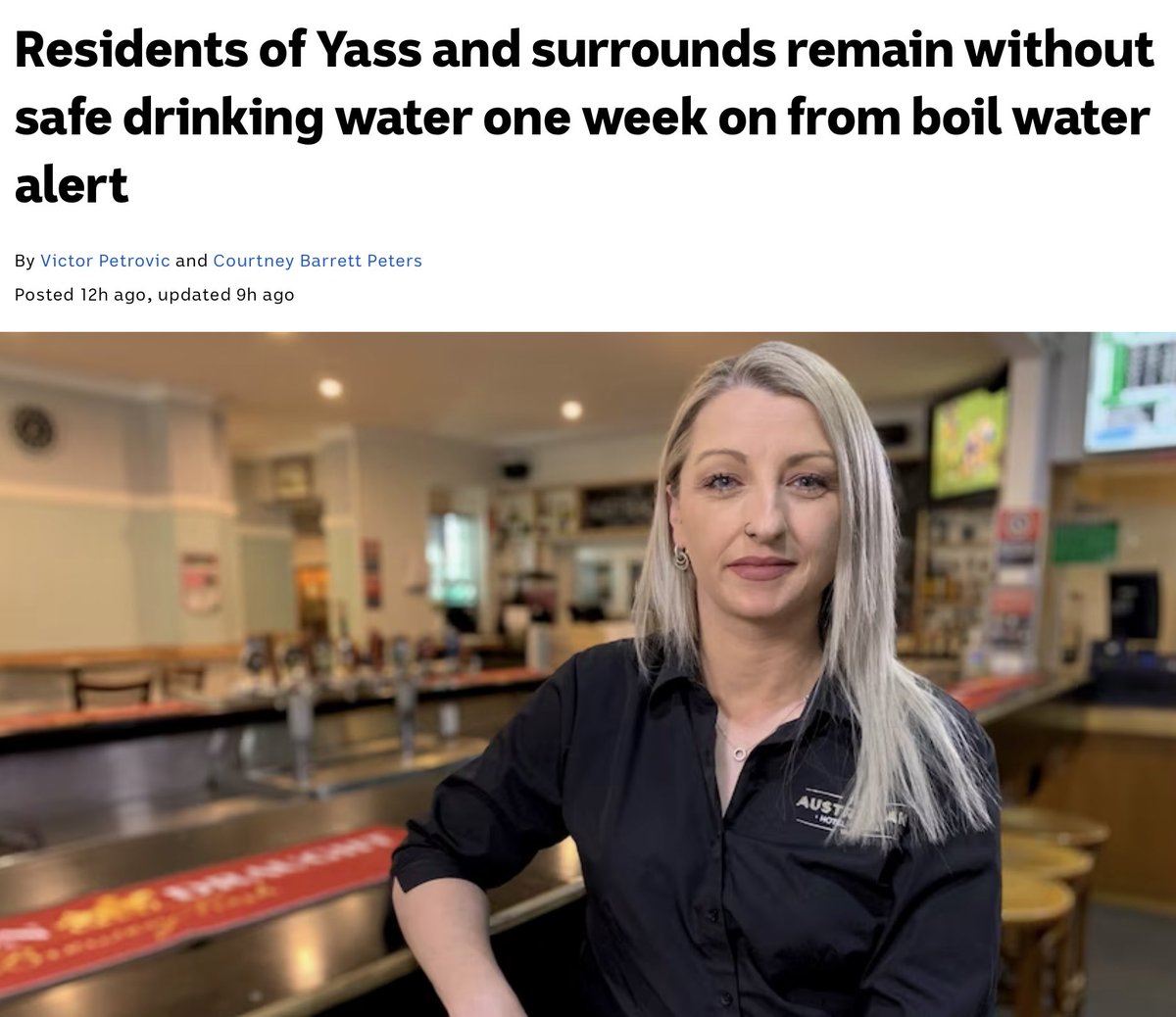
…on social media with ridiculous imported US/UK libertarian fantasies about their freedoms being impinged because they might be asked to shift their spending towards common resources again. Have a look at how little is committed to public resources, in household spending. /end
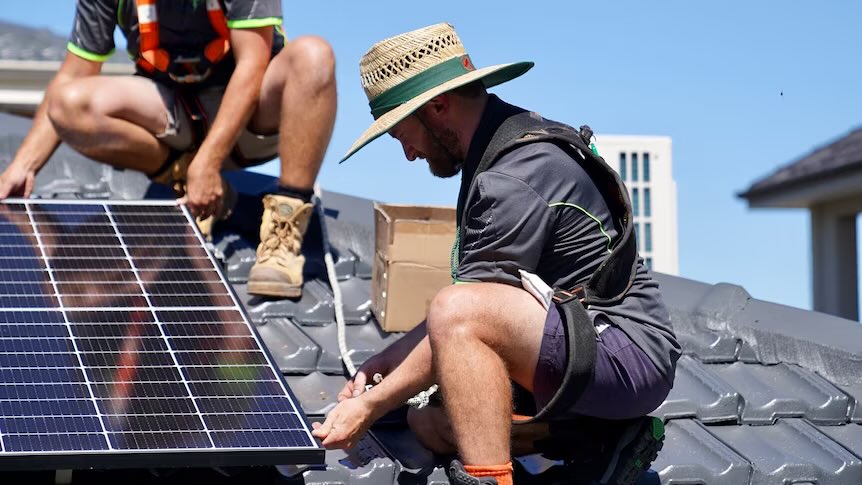
Power is power. As in energy is also political power. Today’s power hierarchies are mostly fossil fuel hierarchies. Adding solar to your home is easily the most revolutionary political act you can take. On all issues, including Covid. Covid minimisers are fossil fuel funded too. https://t.co/y6gZIL5J7J
Do we think the local 'missing school is worse for kids than infecting them with dangerous diseases' loons anticipated sending kids to school with measles too? I'm sure they'll line up behind it. https://t.co/9zWLQL3TMD
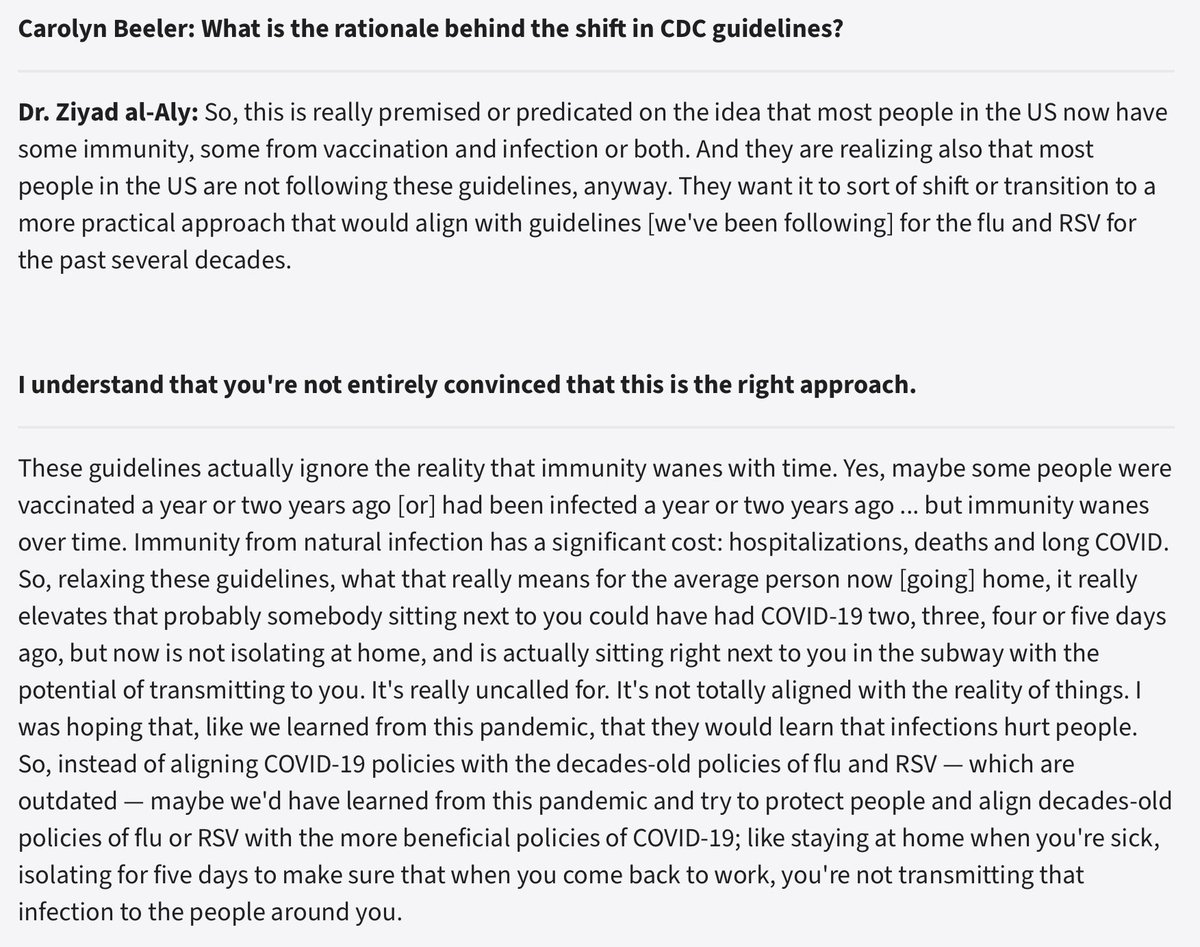
The huge number of summer infections again makes laughable the attempt to shoehorn Covid into a winter seasonal cold and flu narrative. @zalaly's suggestion to make Covid experience the new cold and flu baseline as well in terms of public health actions is excellent.
I already saw somebody say thank goodness it's only Florida. Measles won't cross State boundaries, hey? Whatever happens in Florida, stays in Florida? You do you? https://t.co/ETKw1EbzEu
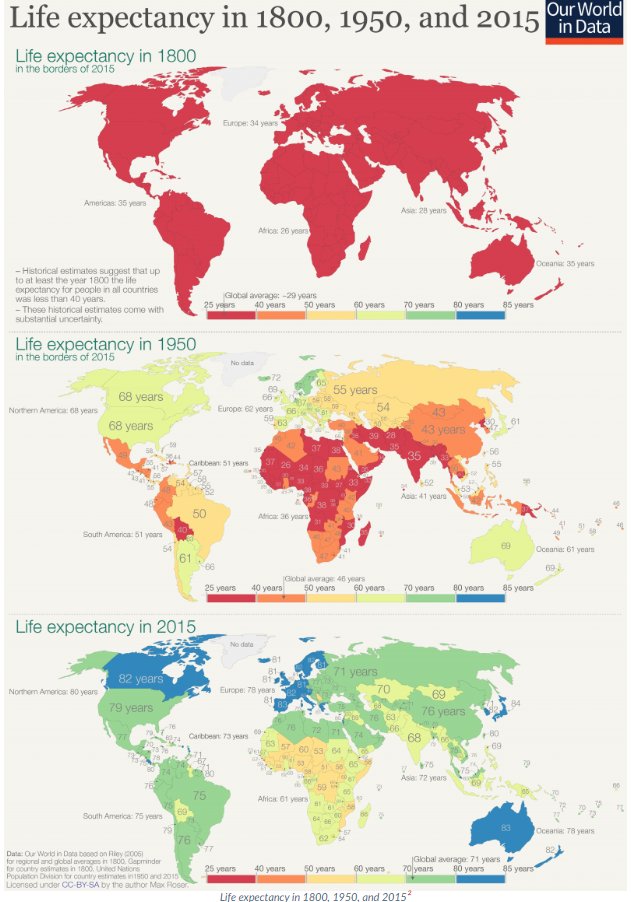
Surely the greatest achievement in all human history has been the staggering increase in life expectancy since the mid-19th century. Nearly entirely due to control of infection. This is what 'living with the virus' spits in the face of. People should be in jail. https://t.co/dswycQUbkI
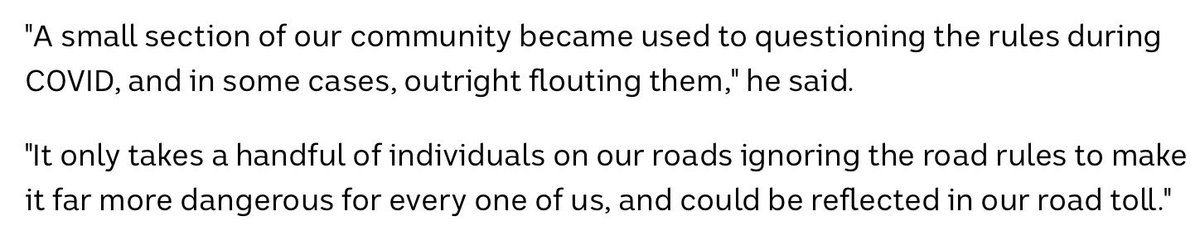
The old (understandably) checking out of the shit-show. Leaving workforces not only short of staff, but also knowledge and experience. https://t.co/wRflqOIxUi
Brilliant thread from Cory. I’ve noticed this about Google search, it’s nothing like what it used to be. All of these platforms begin with vaguely social-looking functionality, and end as a cesspit of targeted ads. https://t.co/XVAaLWcovs
Ignoring basic public health for Covid was clearly going to damage our approach to all infectious diseases. The required habits to defeat pathogens are common to all of them. Weaponising those habits as restrictions on freedom has broken what we do for all infectious disease.
Let’s reframe all the immunity debt stories as ‘hey we managed to stop a lot of infectious disease from circulating between 2019 and 2022. How could we continue that?’ Rather than ‘the poor kids missed their infections.’ https://t.co/mjp1bncjHX
The assault on public health with Covid was a fundamental shift in all social behaviour. Public health is a social technology. Cookers used the pandemic for recruitment and massive strategic expansion. We’re seeing the result everywhere. https://t.co/bEYRYRoedR https://t.co/ekpvNrRYlv
The all-out assault on Google search by search engine optimisation (SEO) marketing is a story that should be front page news. In a world where we outsource expertise to the web, Google Search is our gatekeeper. If it becomes compromised, social collapse accelerates hugely. /1 https://t.co/lkqfnQTQhq
I was thinking about this yesterday after reading Cory’s thread. While it’s possible to see this as the sort of monopolist behaviour that’s a bit of a cause célèbre right now (with supermarkets in Oz, for example), I think this is a deeper problem. /2 https://t.co/XVAaLWcovs
The IT industry has always been a political libertarian Trojan Horse. Many of its biggest companies openly espouse libertarian philosophies and missions. While they disintermediate existing social processes and then monetise that disruption. The answer isn’t about monopolies. /3
It’s about that first theft, the disintermediation. The replacement of existing social institutions with products from the IT industry. This ‘cold, hard reality’ was discussed by the ABC this week. /4 https://t.co/qkbsqdwMCs
Much of modern life is now completely dependent upon IT firms to function at all. And that has brought all of the possibly impossible problems of cybercrime with it. It’s classic capitalising gains and socialising losses. /5
Just one more global wrecking ball from the American Dream factories, a society now (but not previously) so incapable of a sense of collective anything that everybody there tries to make the mega-app that will let them dominate the world. /6
Without social cohesion, the best bet for somebody in the US is to build enough wealth to hopefully be able to create a gated community for themselves. The technologies invented to try to do that often rely upon predatory hijacking of existing social processes. /7
Which are then re-routed through the technology, and monetised. That’s the cold, hard reality discussed in the article this week (above). These marvel-products of Silicon Valley export this libertarian culture to the countries who adopt them. /8
Entire nations and the global community become incapable of functioning at all, without filling the revenue coffers of major IT firms. And as icing on the cake, some create social media platforms. /9
To allow communities in every country to ‘mobilise’ every possible flavour of toxic bullshit, in full-on assault on the country’s existing gatekeeper institutions. Cooker culture. The US has exported its domestic civil strife to the rest of us, using these technologies. /10
And yes, these technologies can also do staggeringly wonderful things. I love them too. But by not understanding them socially, we’ve crippled our societies, many of which now barely function. And why would we be surprised? /11
Political libertarianism is not just anti-society, it doesn’t believe society exists. That’s the endgame we’re now living inside. /end
This is where I don't blame even motivated members of the public for being confused. This update would leave you feeling like hybrid immune heaven is imminent. Christina is anything but a Covid minimiser too. Which narrative do you believe? https://t.co/3o8SBPZuiq
Somebody slept through the early pandemic. https://t.co/zvSZzR9oSS
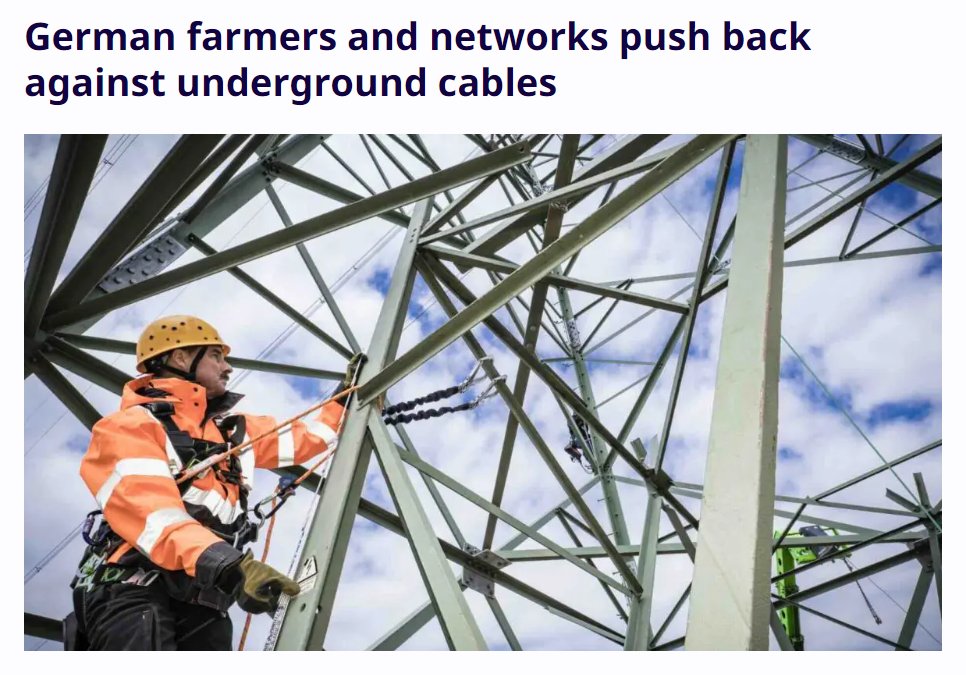
German farmers want the opposite of Oz farmers, because there government *wants* to bury the cables (opposite of here). Reveals that in both cases it's really about anti-renewables, which in turn is about opposing "Lefties" and "Greenies". Team sports. https://t.co/bVnwBihec1 https://t.co/RgBvP0kFCD
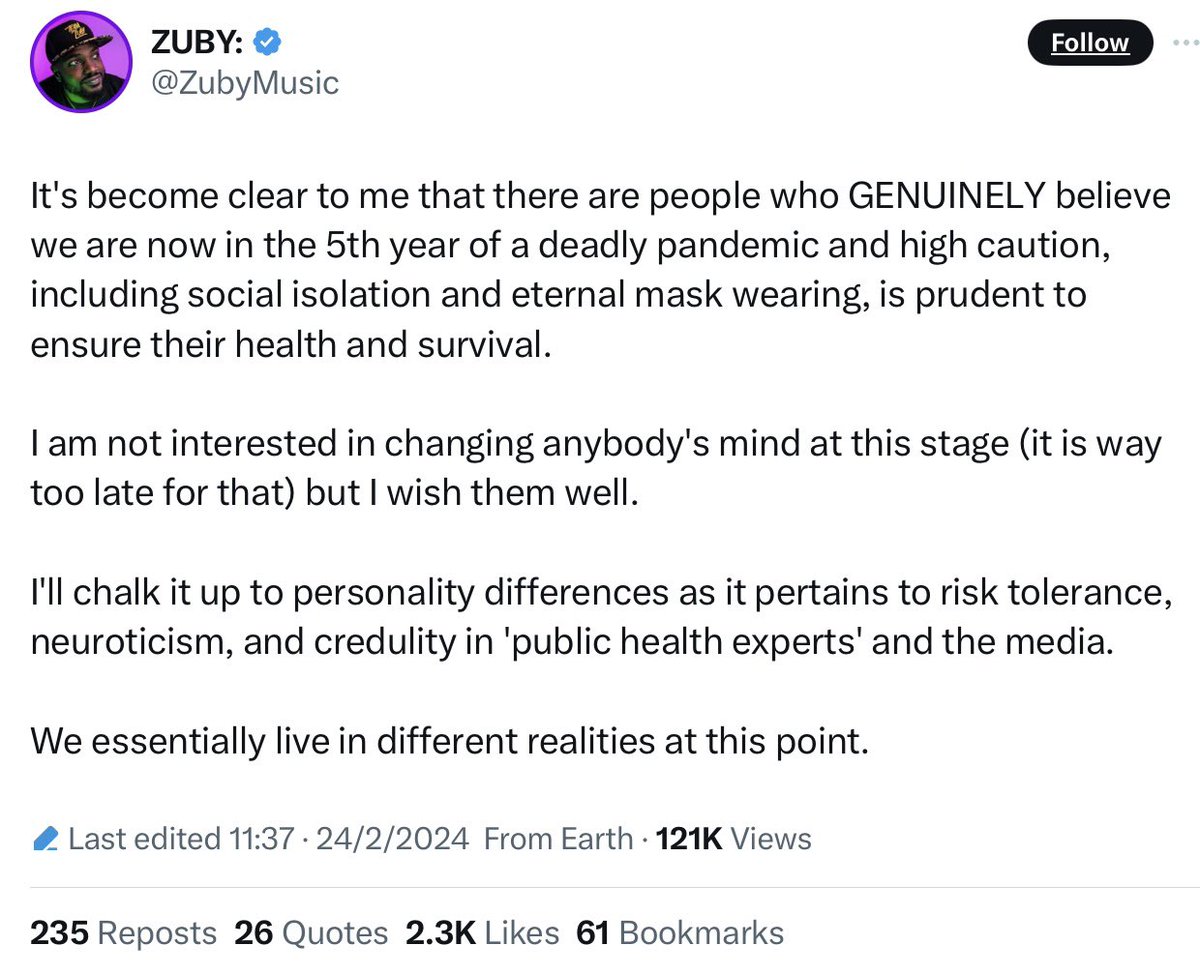
Allowing measles to spread is genius with a hybrid immunity strategy, given that it can wipe your immune memory.
Forgot to add this immune amnesia can last 2-3 years, by all accounts. https://t.co/S1egtw1mae
@Mark_Butler_MP @acmadotgov I'd be very curious what you think about this. https://t.co/yt7Ti1ZfDg
Church v State is the defining framework of most Western history. It’s not clear why we thought it was over. https://t.co/PlVHHYTgwG
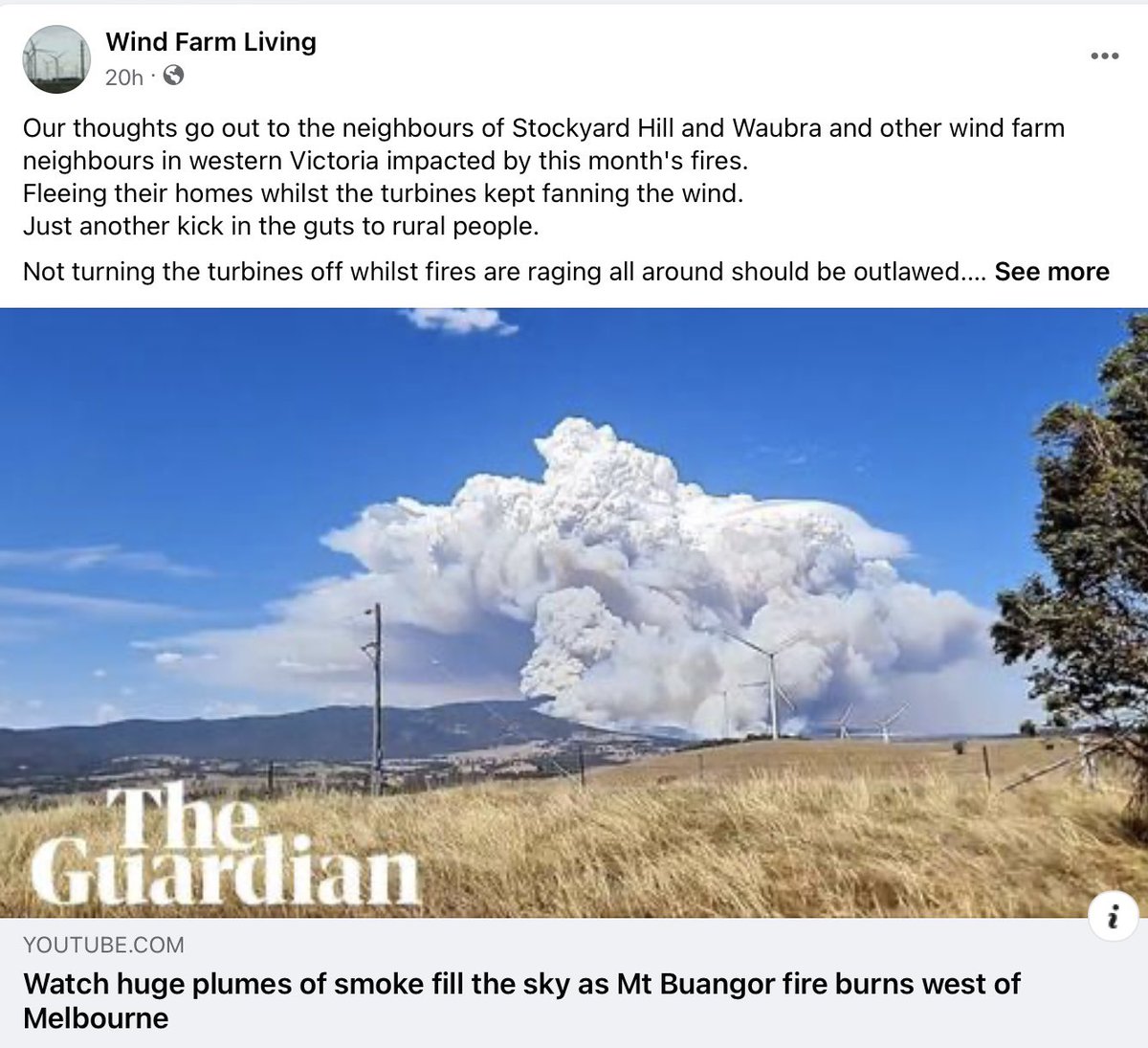
Just one more example of the angry stupidity that social media is driving deep into all communities. Windmills ‘fanning’ fires. Societies are collapsing, and unable to move in any direction, with every confected grievance mobilised using social media to obstruct any action. https://t.co/zXdUYVmo5T
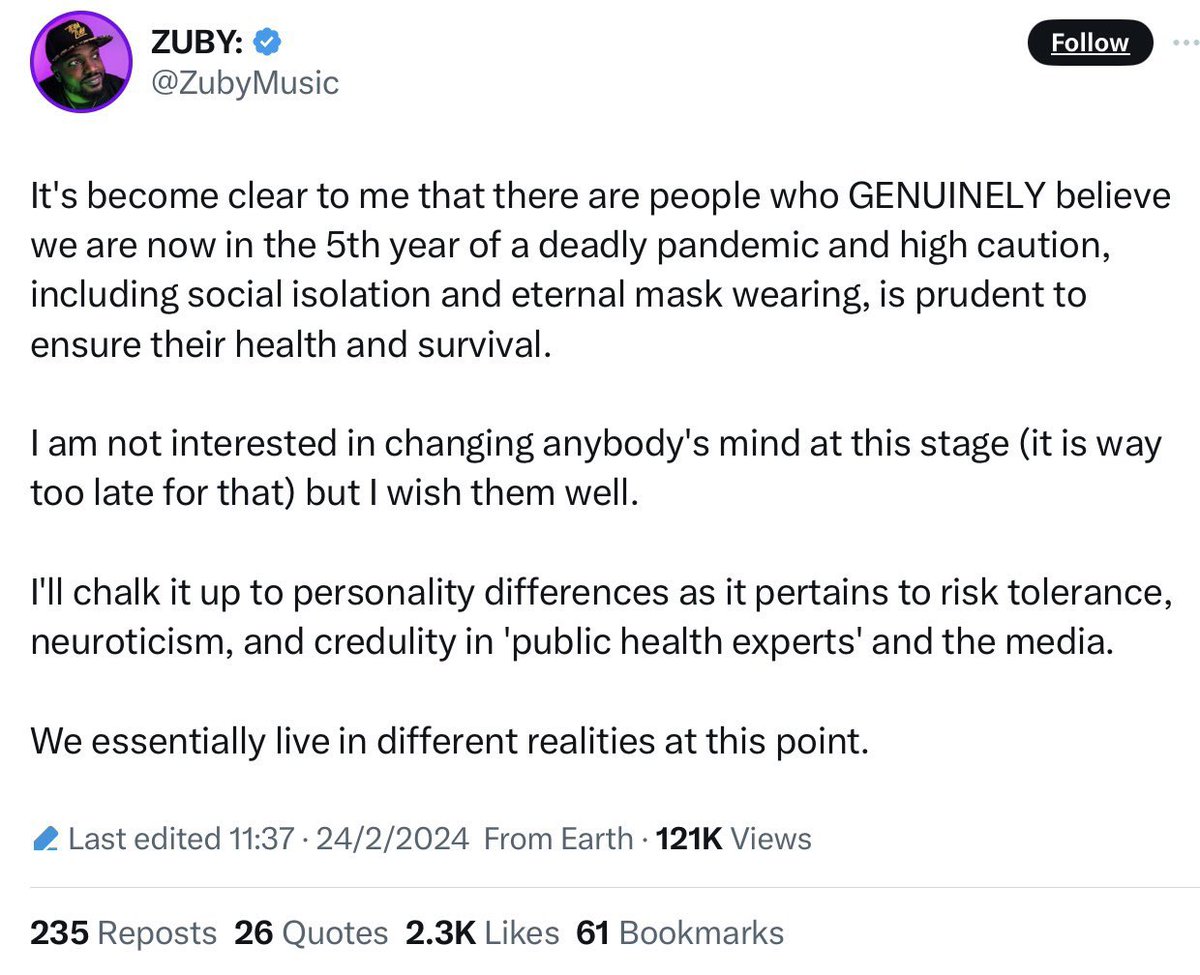
Unsurprisingly the vulnerable, whoever that is, can’t be separated from the rest of us. That’s why we invented public health, recognition of that fact. https://t.co/78Q0fCLVc7
As an experiment I re-Tweeted this, a Tweet I have no agreement with in any way. I discovered I can’t now undo that re-Tweet, though I can for others I re-Tweet. Is this a blue tick thing? https://t.co/r22sYgpn3Y
3 busloads of Australians dead from infection in aged care, in less than 2 months. Even 20 years ago this would have been a national scandal, front page news. You cannot set the bar any lower. https://t.co/sFKw7oLDOY
The realities of reaping. https://t.co/IMPHfC0cxE
A pandemic is defined by NUMBER OF INFECTIONS. People can pretend it’s over because their acute infections seem to be causing them little harm. While those infections continue, it will never be over. The definition recognises the long-term lethality of continuous infection. https://t.co/648wNWLdkt
Three have been many outrageous slogan-driven violations of public health in this pandemic. But to me the most fundamental violation is one that is still not spoken about enough. That we’re simply ignoring what a pandemic actually IS. We allowed politics to re-define it. /1 https://t.co/XDS0KMbsDP
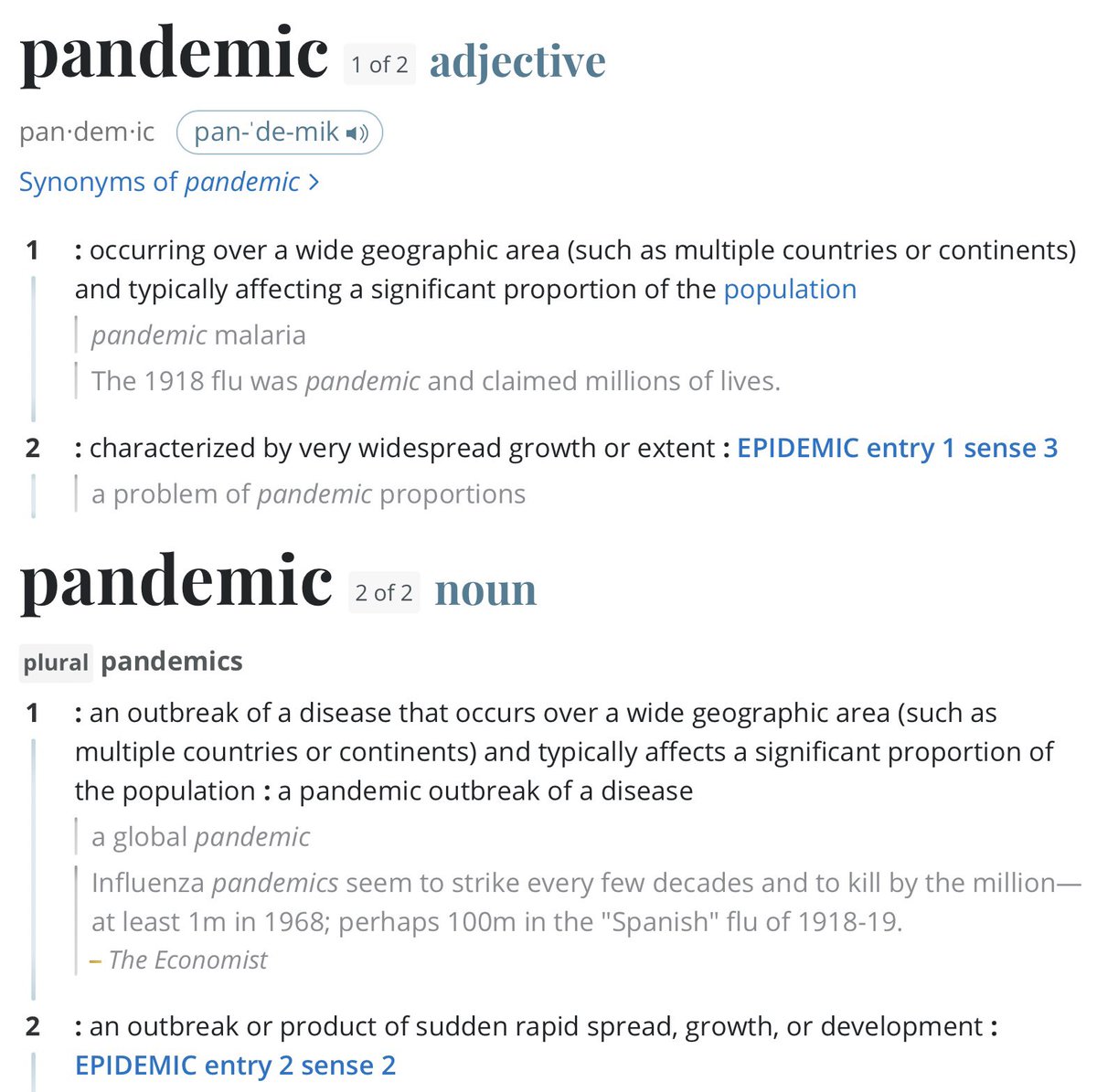
Look up as many definitions of a pandemic as you like. They talk about *infections*, and the extent of infections. A pandemic is about INFECTION. Infection is the damaging thing. Not the acute effect those infections have on people. Not even mentioned. This is the swindle. /2 https://t.co/thwW8jsUGp
Politics decided to simply ignore this definition, with its long history of public health expertise built into it recognising how dangerous *infection* itself is, and replace it with a calculus of severity. And a cynical calculus, that allows millions to still die. /3
Because it can always paint that as a ‘minority’ of ‘vulnerable’ people, in the total population sense. Despite it being millions dead! Using this logic, neither of the world wars was a serious event, because they killed only a small fraction of the global population. /4
This is worse than Orwellian, it’s total sociopathic lunacy. The invention of the concept of the public wasn’t about proportions, it was about connections. If you’re killing any number of people with an exponentially spreading virus, your entire population is under assault. /5
Because societies are connected. They’re not individuals or even groups living independently of one another. The hysteria over ‘lockdowns’ showed this inter-connectedness, stopping anything stops everything. You don’t need to lock-down a population to show this. /6
If all of our truck drivers for example decided to down tools, society would grind to a halt. It’s all connected. Same for teachers, police, water and sewer workers, or electricity workers. It’s all connected. This is why the definition of a pandemic is about *infections*. /7
Exponentially spreading infections. How dumb do you need to be to think that making your entire population continuously sick, with infections, is anything but collective suicide? And that’s not even taking evolution into account. /8
The fact that all of this continuously spreading infection allows the infectious agents to continuously evolve, to evade immunity. It’s basic public health, this is why uncontrolled infection leads to eternal epidemic waves. Infection is the key. Not severity of disease. /9
Because that severity will become orders of magnitude worse, if you don’t stop the infections. You make everybody sick, and trigger long-term chronic system collapse. All because we’re saying black is white, and ignoring the definition of what a pandemic is. /10
Instead of simply saying we need to prevent spread, which *is* our most fundamental public health task, we need to also say a pandemic is defined by number of infections. We can’t allow reality to simply be defined way for political convenience. /end
Daltrey honest here that Covid is a major factor for acts on tour. Like other major acts there also seems to be zero care about fans becoming infected. Living with Covid is a charade. https://t.co/uvj4fDHaZR?
One of the most common and dangerous myths about democracy is that the majority of voters are a ‘sensible centre’. This ignores the Overton Window idea. You can shift the majority of the population to believe almost anything you like. They’re living with a pandemic, right now.
I find trained immunity a far more interesting phenomenon than hybrid immunity. Have been getting every vaccine I qualify for, for any disease. And varieties of Covid vaccines. Chronic disease is infection-driven, I’m certain. h/t @DrJohnWagner https://t.co/nB6XZirE5z https://t.co/RArz0BOLOv
At a time when collective action is almost non-existent, we have the strange apparently counter-evidence of huge masses of people acting in a coordinated way. Thoughts on living in a ‘majority’ society, and why it isn’t anything like a public. /1 https://t.co/T6yV8rBTTx
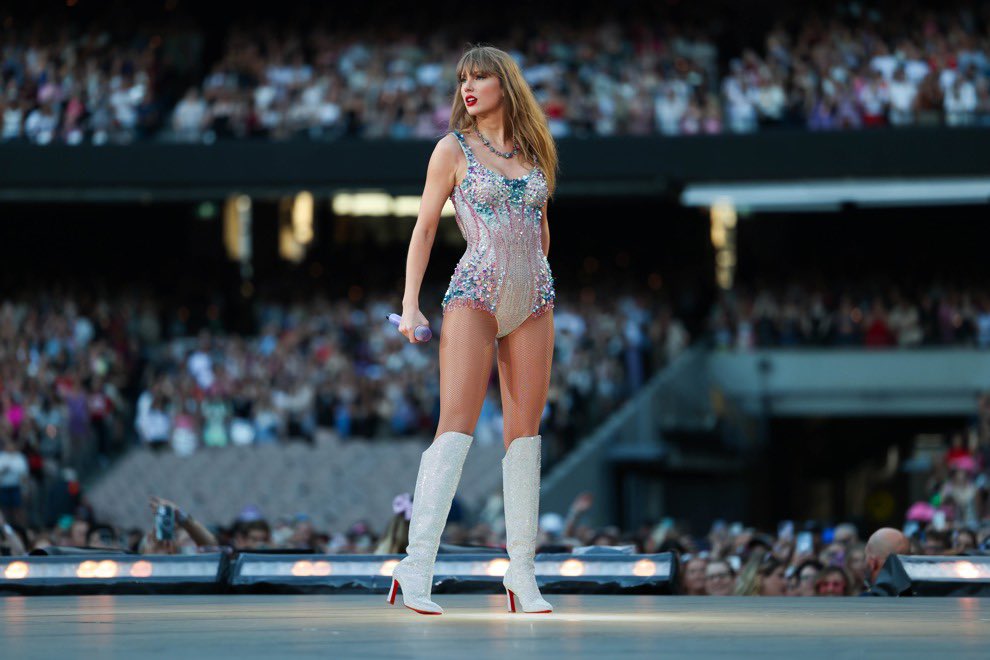
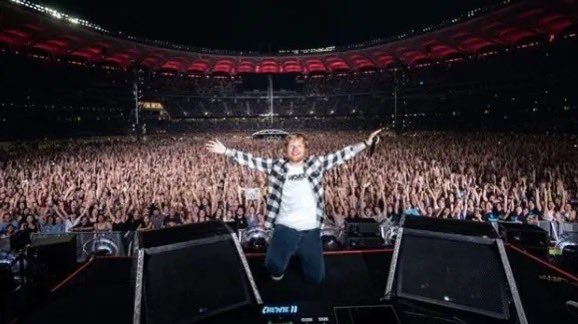
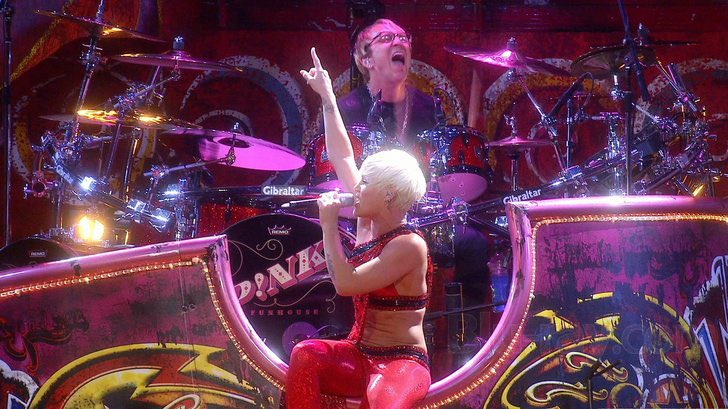
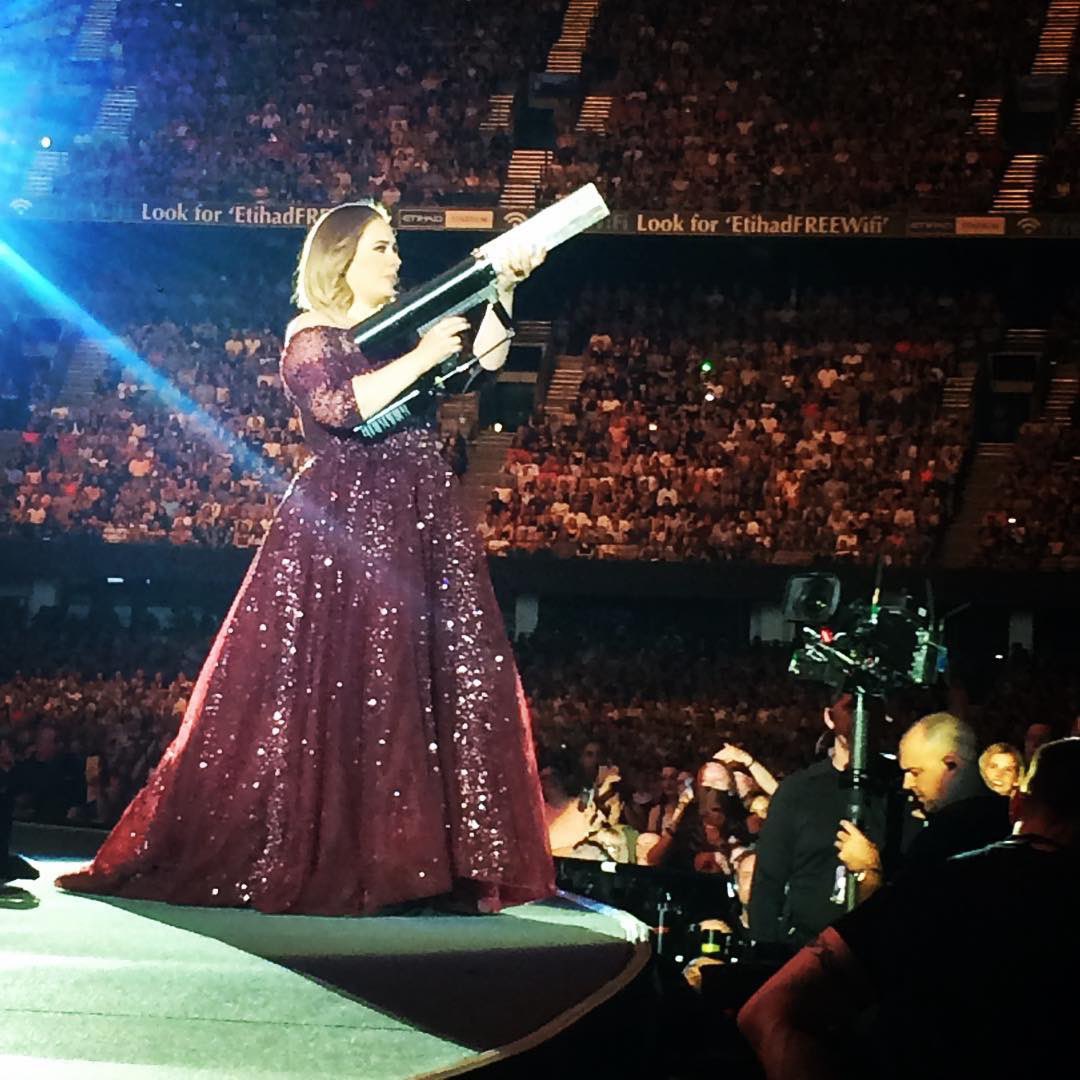
These huge social phenomenon rock/pop shows are a common modern example of mass belief and action. Australia for example regularly goes ‘Beatlemania’ for visiting acts. Obviously for The Beatles, but earlier for Billy Graham, then ABBA, Pink, Ed Sheeran etc. etc. /2
These aren’t a public though. What unites these huge population-level waves is a focus on a performer. Not a focus on anything public or community-focused. These crowds are said to *be* a community in some way. And rusted-on fans can act in community-like ways, over time. /3
But these mass events are fleeting. We forget the previous Beatlemania, like how quickly we forgot that Adele appeared to hold the country in a trance on her last tour. Ed Sheeran sold even more tickets than Taylor Swift. Etc. Passing fads and fashions. /4
Socially though the mechanism is interesting. We latch ourselves to any opportunity to create huge crowds, to experience crowd events. Elias Canetti wrote about this. He thought crowds allowed us to discharge our fundamental aversion to being in close proximity to others. /5
Canetti believed being touched was a fundamental violation for people, unless controlled by them. Walk up to strangers and start touching them and I guess you’ll experience directly the possible truth of that. But the crowd dissolves that violent aversion. /6
So these mass events allow us to physically mix with others in ways that release some of the tension of maintained separation between ourselves and our fellow humans. The mosh pit is this taken to its extreme limits. It’s not a public though. /7
It’s fundamentally anonymous, for starters. It creates no lasting collective connection. Once the crowd disperses, the feeling passes. And while it creates a type of collective action, the focus of that action is almost entirely arbitrary. /8
The crowd is as likely to burn a stadium down as to do anything useful. A public is not just a collection of people like this. A public is a calculation, an ongoing assessment of collective need and its satisfaction. It’s something bureaucrats invented and maintain. /9
That’s their job, to assess collective need and satisfy it as much as possible. That need is not the majority expression of want or desire. Take Covid as an example, where minimisers continuously argue that because the majority of people are ignoring it, it’s over. /10
This is populism, not a public. The fact a group of people desire something does not in any way make that thing a public good, for those people. Going to Tay-Tay won’t fix any potholes in roads or upgrade our power grids. Actual collective need - a public - is not a majority. /11
Elections make us think that, and also this is why most assume democracy IS elections. But a public and a majority are chalk and cheese. There’s no necessary alignment between those two concepts at all. You can’t assess public need with popularity. /12
It has to be analysed, data has to be collected, continuously, and acted upon. How we interact collectively is often invisible to us, only data shows it. We build bigger roads for example, because that seems an obvious way to reduce traffic. /13
But roads create traffic, and bigger roads create bigger traffic jams. Induced demand. None of this is visible or obvious if you use a popularity/majority lens. If you’re one of those in the minority who still take Covid seriously for example, and avoid infection, take heart. /14
The fact the majority of people aren’t doing that means nothing at all about the wisdom of their choice. We’ve all been to school, how often were the popular crowd smart in any way? Rarely, if at all. And even in adult life as it used to be, before social media…/15
…turned it into an extension of high school, the ‘cutting edge’ of any field or area of work was always a tiny number of people. Most others imitated each other, in maintaining a status quo, not in advancing things. This is historically normal. Majorities are not ever right. /16
About anything. Because they’re not ABOUT anything, except each other. It’s a social/crowd mechanism, not a facts mechanism. Being in the minority on actual fact-based issues is usually to be on the right side of history. /end
Gigs are one of the ways ‘living with the virus’ was normalised, to give the impression of life going back to normal. Except there are 2 realities at gigs, performer and audience. Performers are spending a fortune on precautions. While their shows infect the crowd. https://t.co/E9YJ6pcHDU
Living with the virus(es). https://t.co/3SNzhiXJlH
Going back in time, one of the main debating points Covid minimisers use is that we couldn't have maintained control of Covid without permanently restricting flights. Two things about that. Transport in pandemics can be managed with quarantine. /1 https://t.co/1eWLRfZt4Q
Something the federal government of the time deliberately stymied. But even more importantly from a global perspective, the only reason flights posed such a great risk is the refusal to control basic spread in other nations. Not because the virus was uncontrollable. 2/2
These aren't questions for popular vote. It makes as much sense as asking people to vote for different types of stent to use in a blocked artery. https://t.co/ESRSIPwMPz
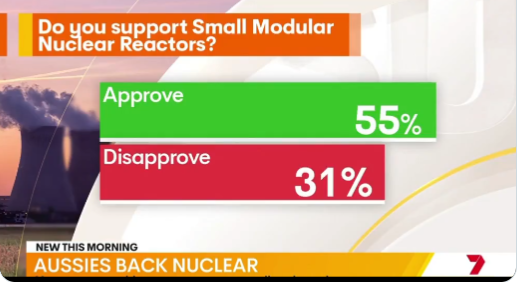
Rock stars love a good cause. Unless it costs them money or adulation. They need to question their huge role in normalising the lie of living with Covid. Especially when they live in protected bubbles, while their shows mass-infect fans. https://t.co/PC5o9LD1me
Not one teacher absence during lockdowns and remote learning. The bullshit about Covid and schools all comes from people who haven’t set foot in one for decades. https://t.co/mDqM8kAkx5
Nobody talks to the actual schools and teachers. The useful idiots who speak on schools instead don’t know a thing about them. https://t.co/6p9OOQUqaq
We’ve had two Covid infections in the family. Both courtesy of the education system. None of the rest of the family were infected, due to simple measures taken at home. So simple that it highlights the ‘couldn’t give a shit’ non-existent WHS in education and other work settings.
Australians are used to ‘conditioning’ the air they breathe. Have been for decades. And their attention shifted to clean as well as cool/warm air, well before Covid, because of bushfires. Clean air for Covid taps into something we were already doing. https://t.co/Kb9fsHyeml https://t.co/MFc7SU4X1M
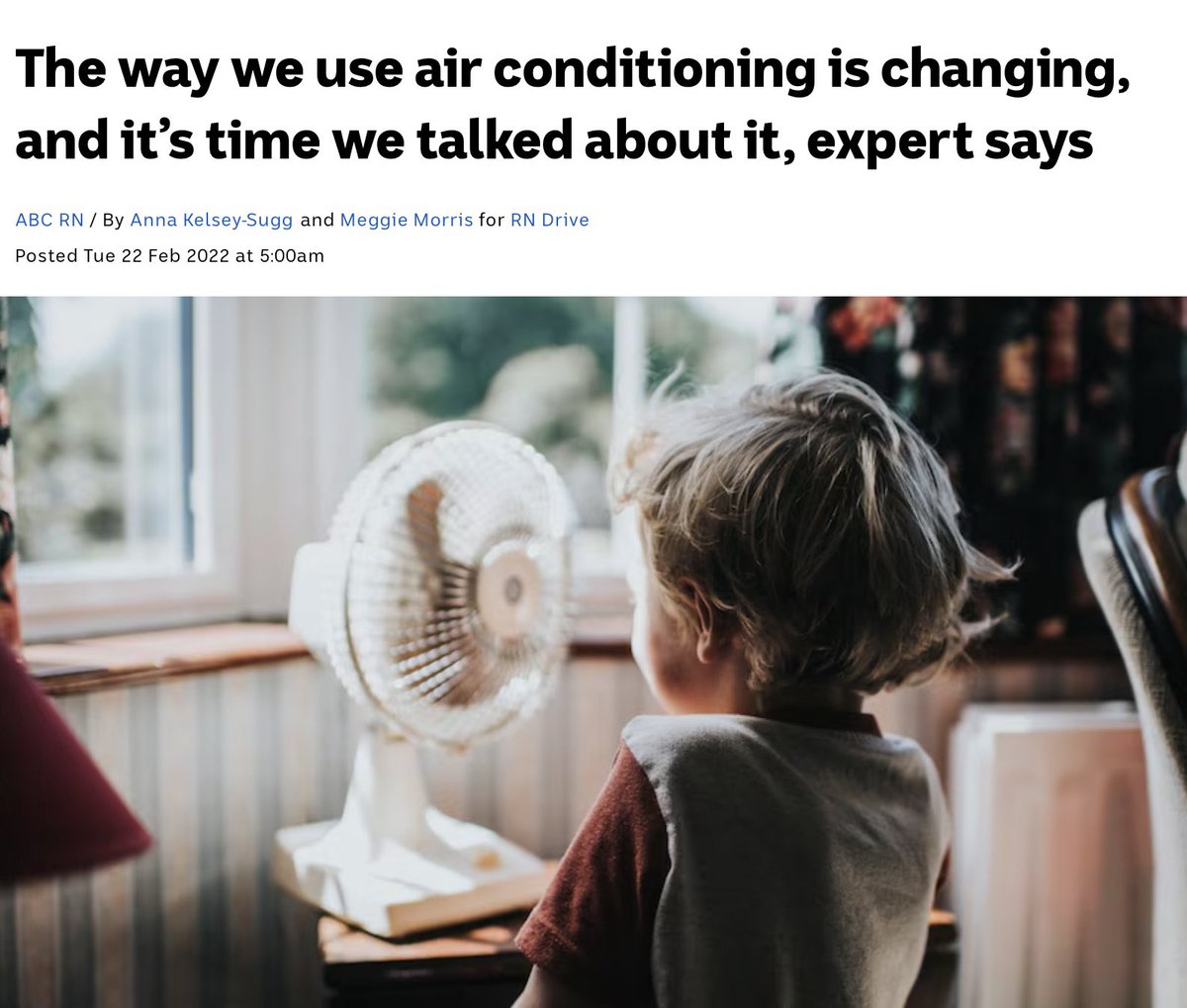
Those mocking clean air movements are fighting against a trend that was underway well before the pandemic. Reality-based politics, people, ignore the hot air from the pay-per-view idiots. https://t.co/BmhUWoouX7 https://t.co/Ev4ikMHQ7k
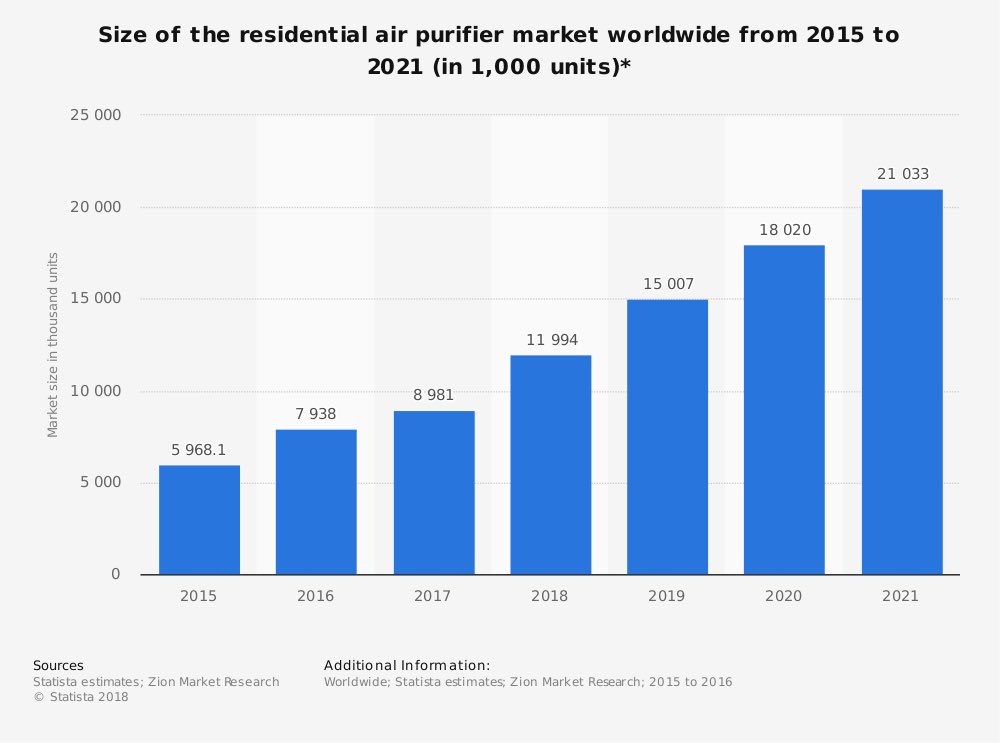
Thoughts/data on these? https://t.co/npKicOX3L7
Such a dramatic contrast with the drivel celebrity Covid minimisers drip feed to the public every day. The pandemic will not go away if we ignore the definition of a pandemic, as the number and spread of INFECTIONS. https://t.co/pi7ck2VojB h/t @DALupton https://t.co/wKkwjKc0oZ
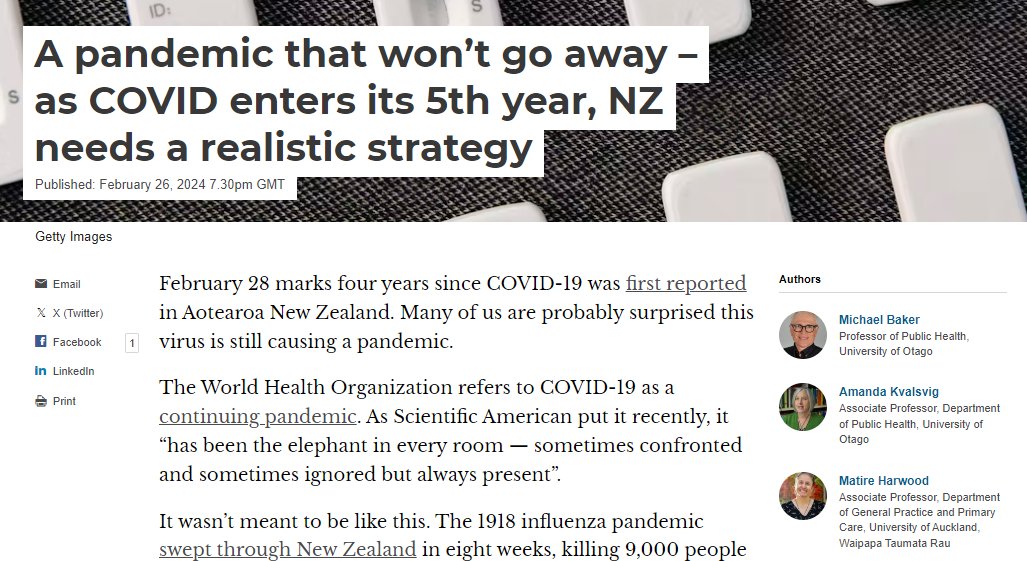
If your office environment had CO2 readings of between high-500s and mid-700s, and you also used an air purifier at your own workstation, would you mask? Curious how people do their risk assessments.
Maybe an economist can explain why floor coverings/carpet don't drop significantly in cost? Had that drop already occurred much earlier in history, it being an extremely early technology? https://t.co/4lD5XEVnTK
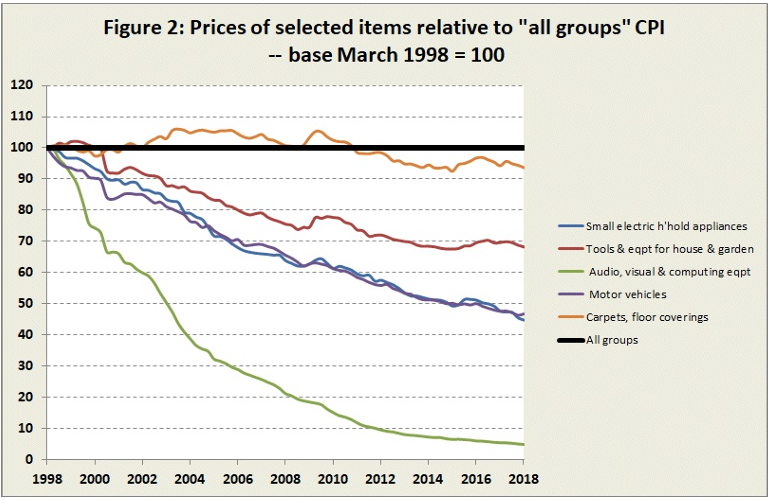
From: https://t.co/JB0CnO6ufC
4 DEGREES. Why are societies not on a war footing? Who cares what the economy is doing? https://t.co/eRBHEKcFtq
Watching the Welsh leg of the UK Covid inquiry, and a woman describing her husband early in the pandemic, falling at home and breaking his leg. And pleading with her not to call the ambulance, because he feared contracting Covid in hospital and dying. Which is what happened.
Senior doctor at the UK Covid Inquiry in Wales, a sufferer with Long Covid long before it even had a name. Saying that the critical need is to be mindful of the long-term impacts of acute infection when dealing with a pandemic.
Exploring risk. The RHS of this diagram is now mostly not operating. But neither is much of the LHS, for most. Personal responsibilities crystallise out of shared framings and priorities. There are no easy answers for how to manage a pandemic, from here. /1 https://t.co/nBw7VkfODj
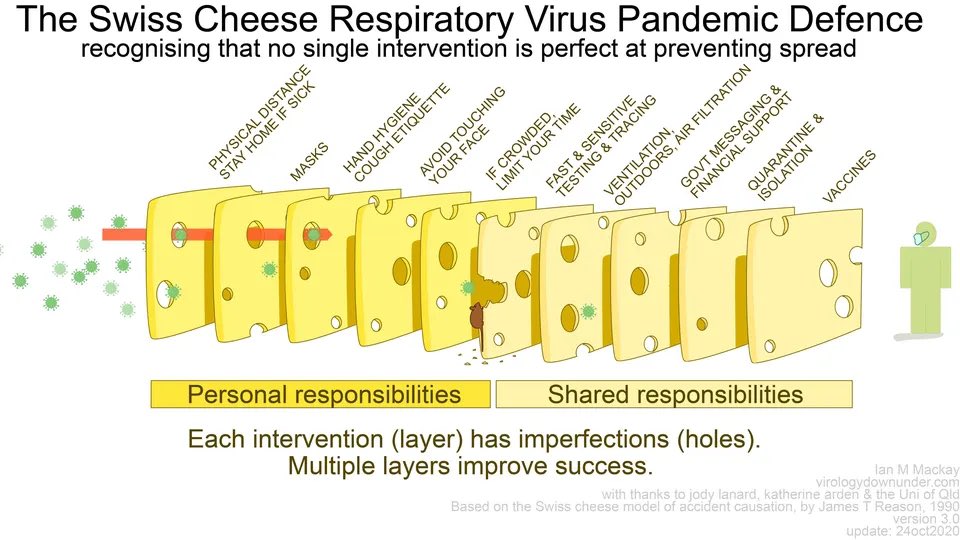
As individuals we can try to add as many slices of personal responsibility cheese as we can afford and maintain. But for how long? A decade? More? The rest of our lives? Recognising also that this creates a profound change in our social arrangements as well. /2 https://t.co/tTM1gEgEMf
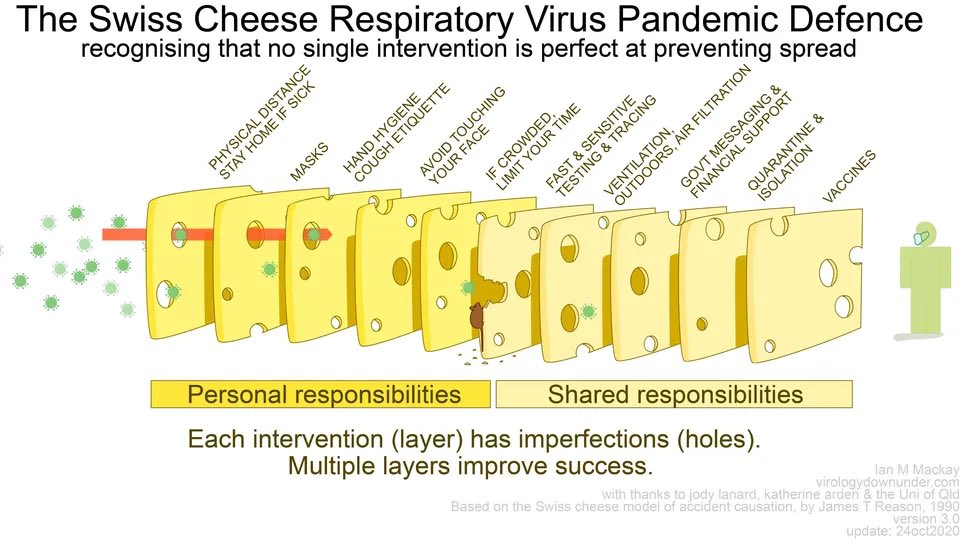
Most of our friends and even families are not doing this. So we’re making a decision about whether to alter our relationships, perhaps even permanently. My sense is this diagram made sense at a time when all of the slices of cheese were more or less in place. /3 https://t.co/AmA8lD34cE
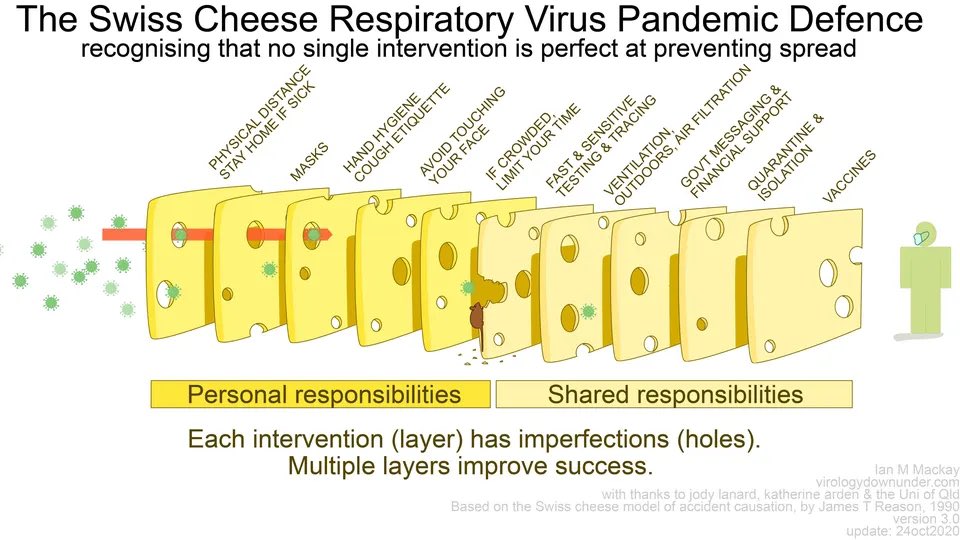
I’m less convinced it can operate with only half the slices of cheese, or even less. As above, personal and shared responsibilities are not distinct. The personal and the shared are mutually defined. Some of us do our best to devise our own Covid strategies. /4 https://t.co/3c0r37m6q0
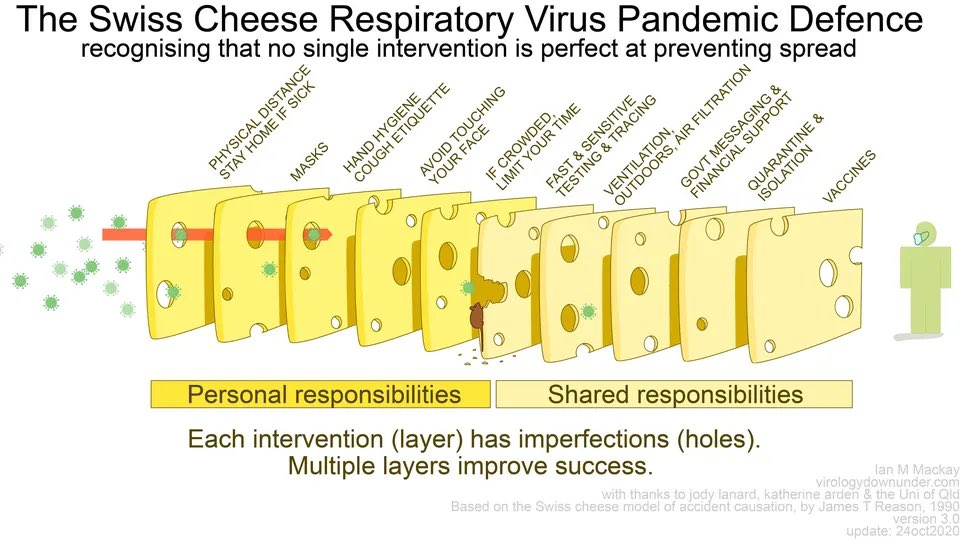
But again, this is akin to a type of survivalism now. You have to confront the idea of creating an almost mini-society of your own, to pull it off. Public health interventions are social interventions, not medical interventions. How many years will people commit to that? /5 https://t.co/vWlFgCjuEe
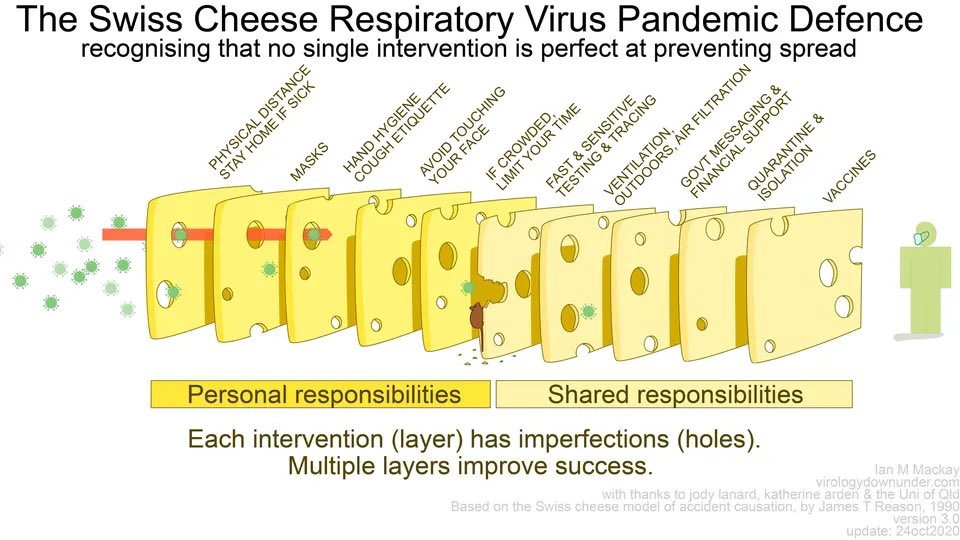
This is also absolutely not to argue for ‘living with the virus’, in that surrendering way. It’s not to suggest there’s any simple answer at all. It’s to suggest that much more is in play here than simple slices of cheese i.e. individual interventions. /6 https://t.co/gzkqzOdYLT
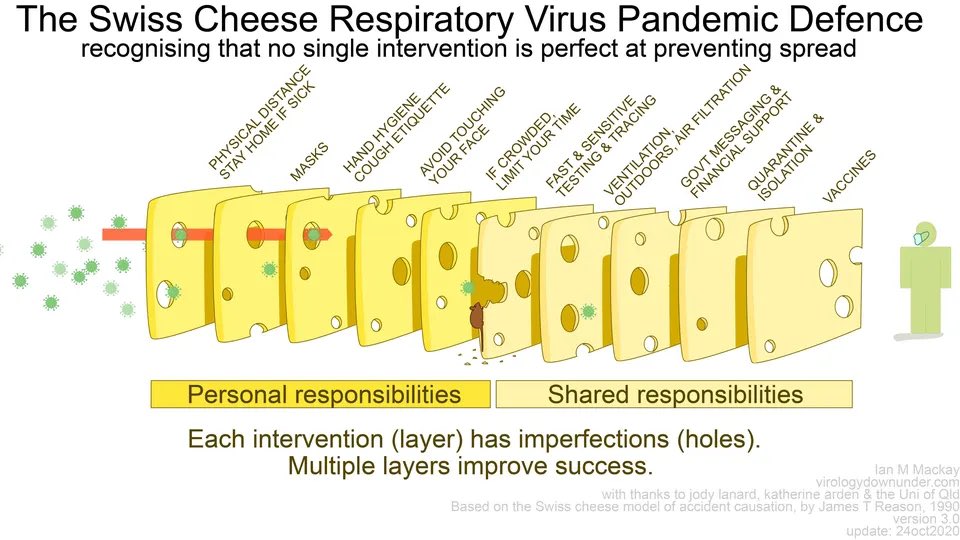
What I see is social media doing what it always does. Taking the slices and turning them into symbolic team sports battles. Is that person wearing or not wearing a mask? Are you for or against clean air? For or against lockdowns? Etc. /7 https://t.co/UZRmHMofwf
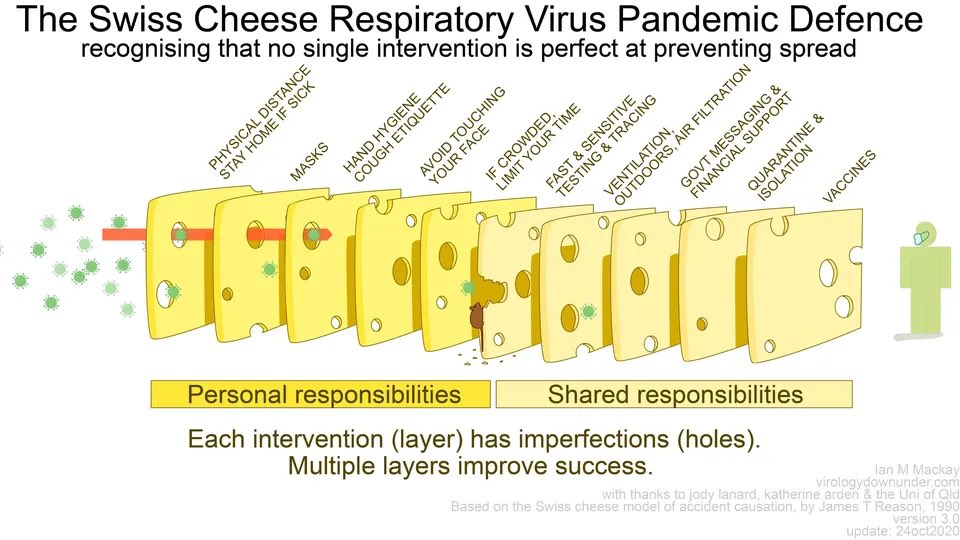
The more the whole edifice collapses, the more strident the symbolic battles become. Nothing is working, so the resultant anger is invested in increasingly furious touchstones for appropriate Covid action, that are just individual slices of cheese broken off from the rest. /8 https://t.co/KRzlBeBIGO
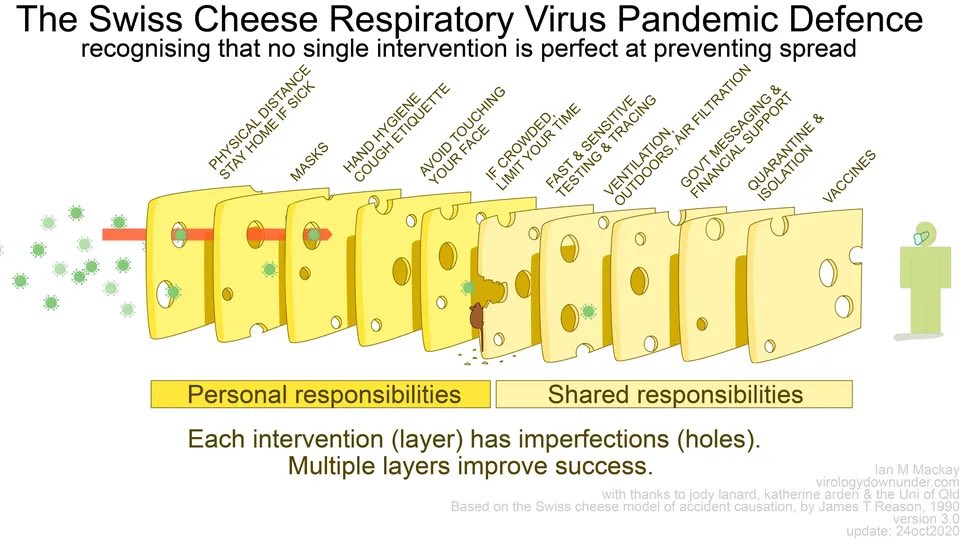
We’re re-discovering what life was like for most of human history, when there was no public sphere to handle collective problems, often invisibly to us. It’s not the same as saying there is no collective life now, though. All life is always collective. /9 https://t.co/ulp9sVOHFO
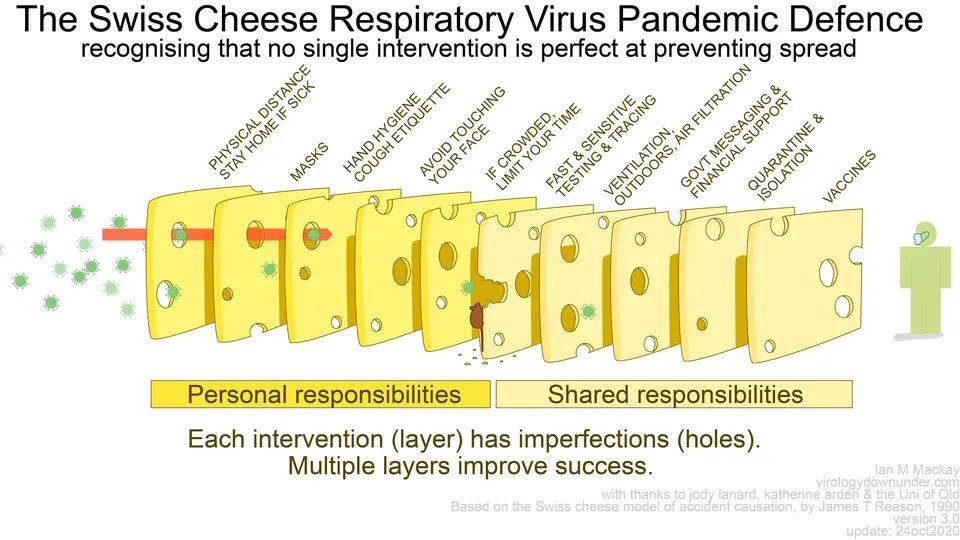
The personal and the shared are mutually defined, not two things. I have solar panels and a battery, for example, for my personal use but which also has collective impact on the country’s power grid. It’s not two things. Our individual acts always derive from shared origins. /10 https://t.co/FkjuPKYjJn
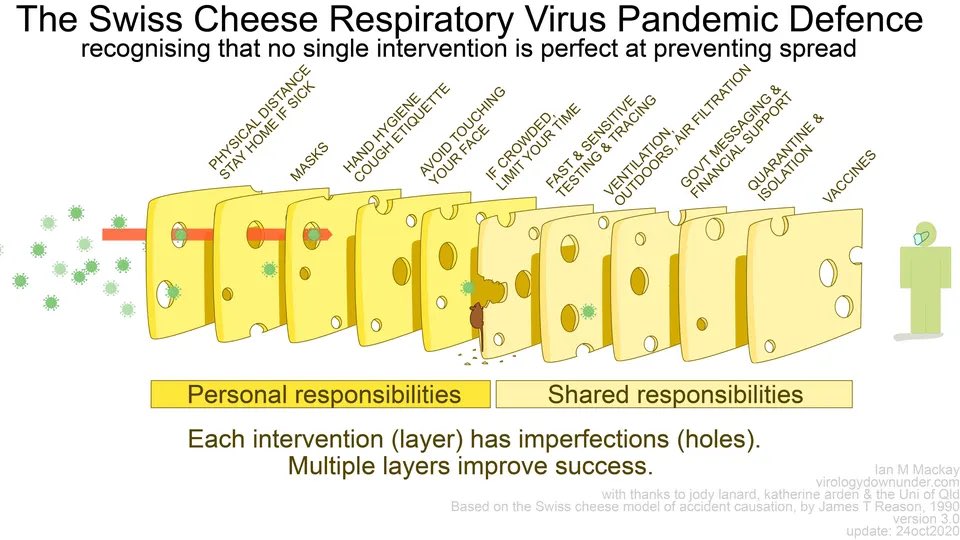
Including the language we speak. What varies throughout history is the degree of coordination of all of our individual/collective acts. If as an individual you avoid Covid infection, you’re possibly saving thousands of lives. You’re interrupting transmission chains. /11 https://t.co/GWmmRMlicq
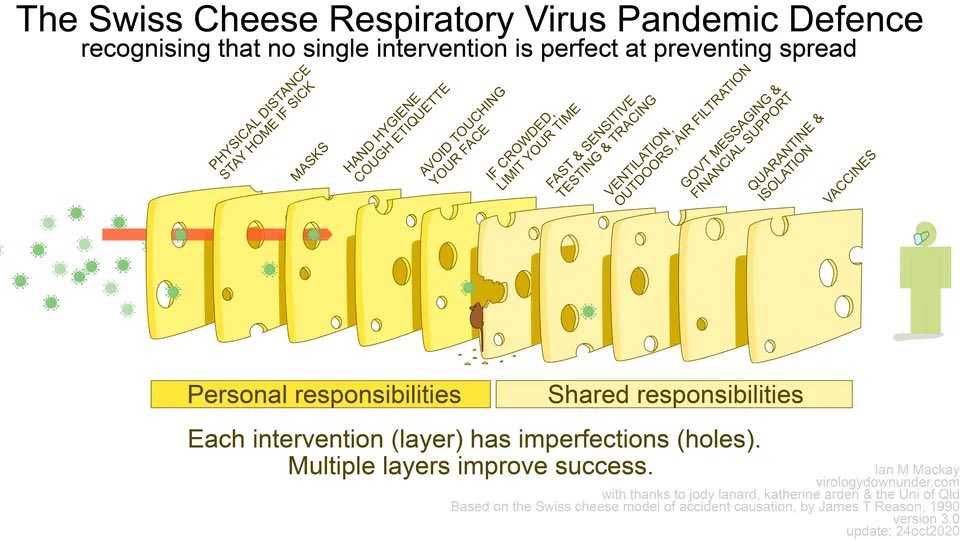
But how long can you keep doing it, alone? Again because it also means re-writing your entire social life. These are the questions that are coming for us all. There are no easy answers. For me, we need to stop the process of team-sporting the individual slices of cheese. /12 https://t.co/P69E5vFrFo
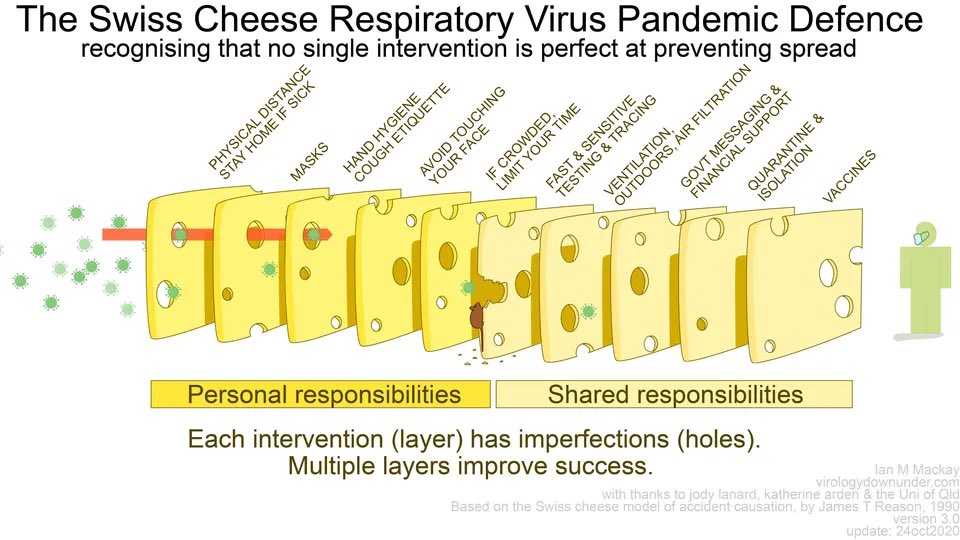
Progress won’t be our degree of fanatical commitment to this or that Covid measure, and the strength of our angry denunciation of those who aren’t meeting a symbolic level of commitment to the same. We’re going to need an appetite for a lot more ‘shit happens’ in our lives. /13 https://t.co/rqdzJJafP8
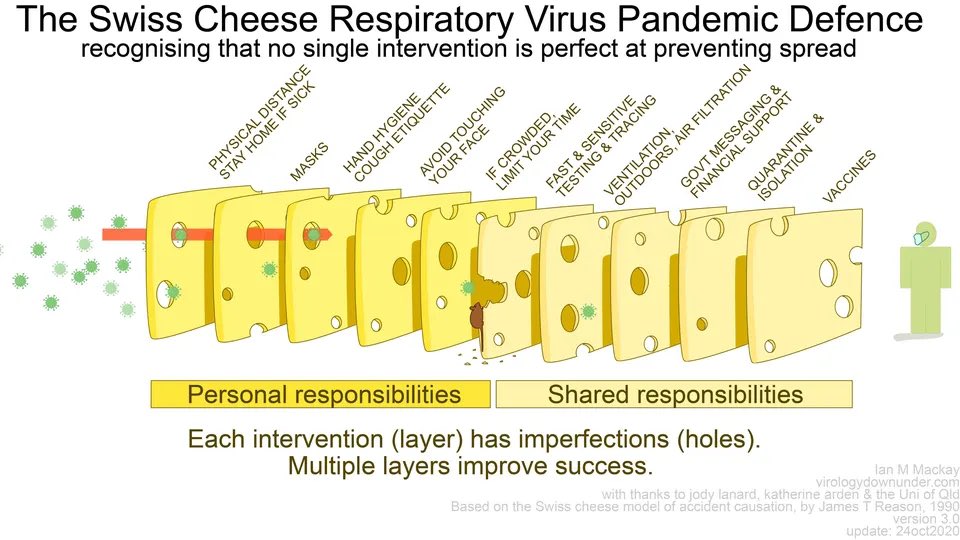
Because for most of the world’s population, this has ALWAYS been life. Lots of shit happens, that shouldn’t. Our beautiful public sphere that cleared away a lot of that shit is terminal. Only catastrophe put it there, and only catastrophe will likely put it back. /14 https://t.co/AmtL0cXhsv
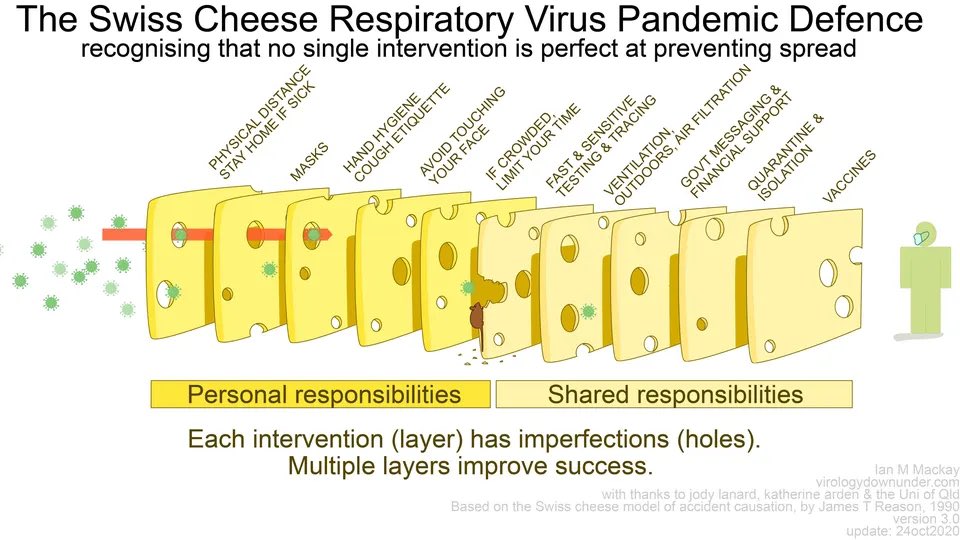
In the meantime, those who want to keep fighting may need to be more nuanced in how the devise their risk management strategies. Each person’s situation may be quite different, on a whole range of measures. Their health history, work set-up, social relationships, etc. /15 https://t.co/mGT0pjaZi3
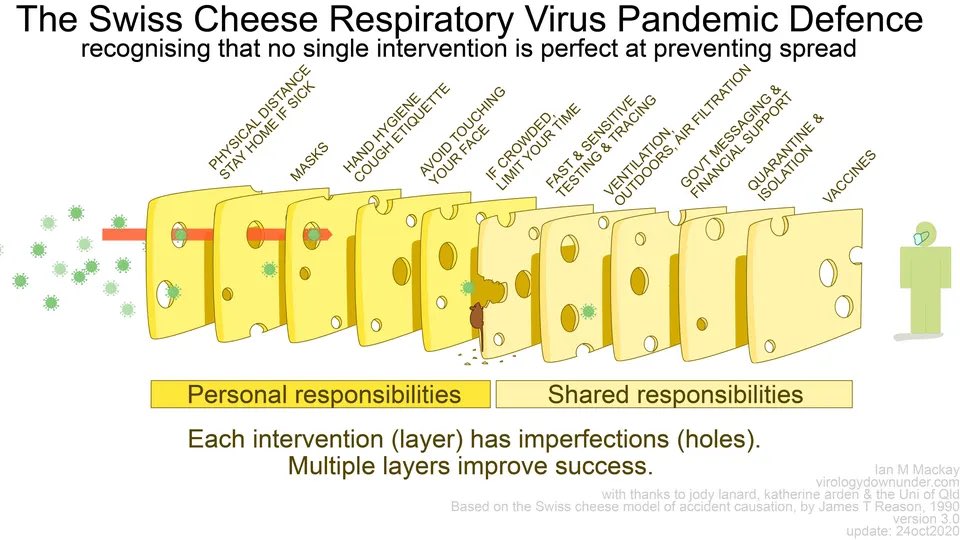
Whether they mask all the time, or find ways to create pockets of relative safety that also protect wider social relationships. Whether they devise ventilation strategies with cheap equipment that can be introduced almost invisibly to home and work. /16 https://t.co/xRc0A4ClO2
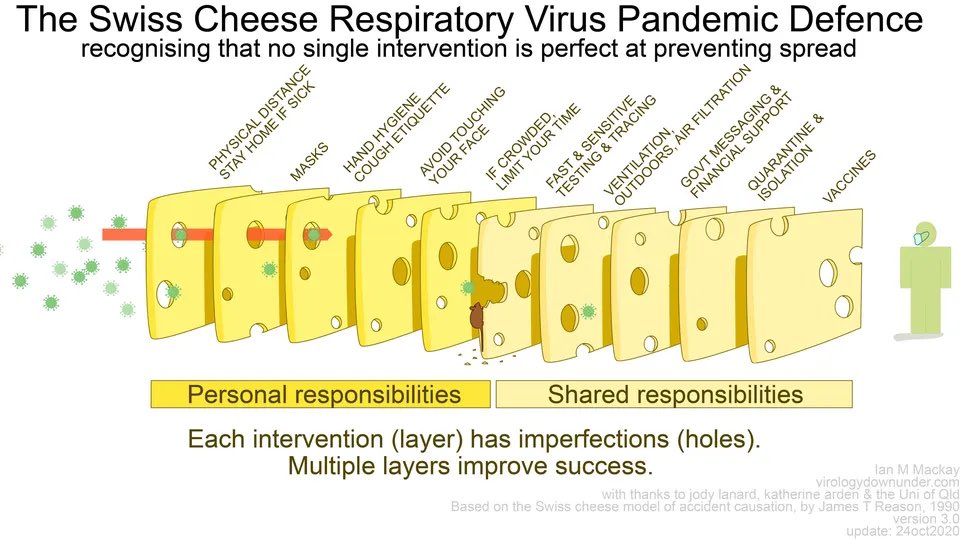
There is no must-do list of things. Public health was invented to remove the need for this sort of individual calculation of risk, but it’s not realistically going to be re-adopted any time soon, on current trends. We can try, but also plan for when that may not work. /17 https://t.co/tsA8AUHpBC
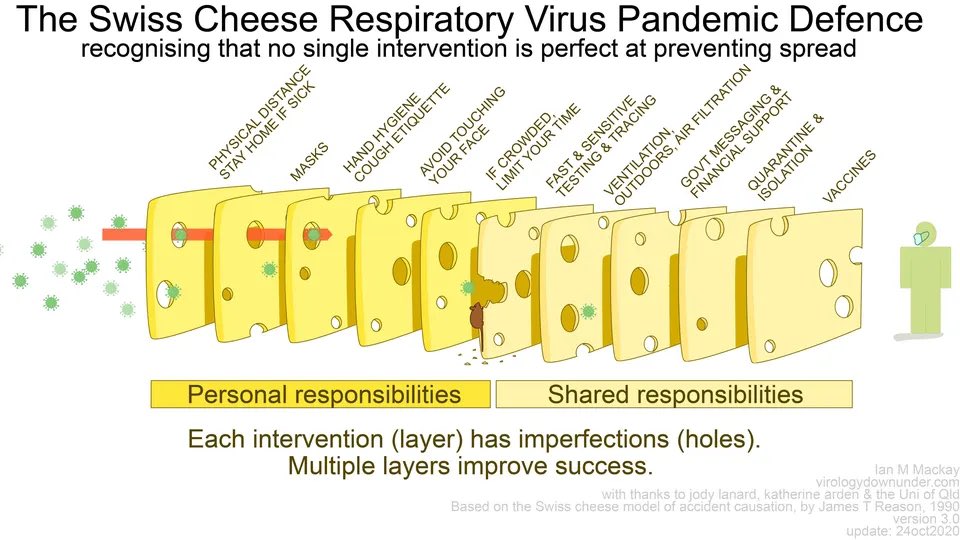
Above all else, I say we need to stop thinking social media methodology for addressing problems, i.e. constructing teams who then fight ruthlessly over how many angels fit on the end of a pin, will fix anything. Righteousness only makes platform owners rich. /18
This is life in a post-public world. Which is life as it has been for most of human history. The public was a short, gloriously successful project for about 150 years. I for one will keep fighting to save it. But I’ll also think strategically about that failing. /19
About how to shape my life and that of my family for maximum safety without surrendering at the same time to survivalism. I don’t want to live in a bunker, though I will use more elements of bunker life than I would have 20 years ago. /20
It’s how most humans have had to negotiate life not just in history, but also right now, in most of the world. We lose sight of it from inside rich Western democracies. For many even inside these democracies, that’s been life, always. /end
The only people not taking personal responsibility in this pandemic are political and business leaders. What happens when you privatise a pandemic. https://t.co/17SIy69l4Z
Rooftop solar is the way people should be thinking about Covid. The collective grid-level effort is lagging, but you can create energy independence and make money using your own roof. That will also have powerful impact on the wider network, rooftop solar is a huge disruptor. 1/2 https://t.co/Mn1m9KTGVy
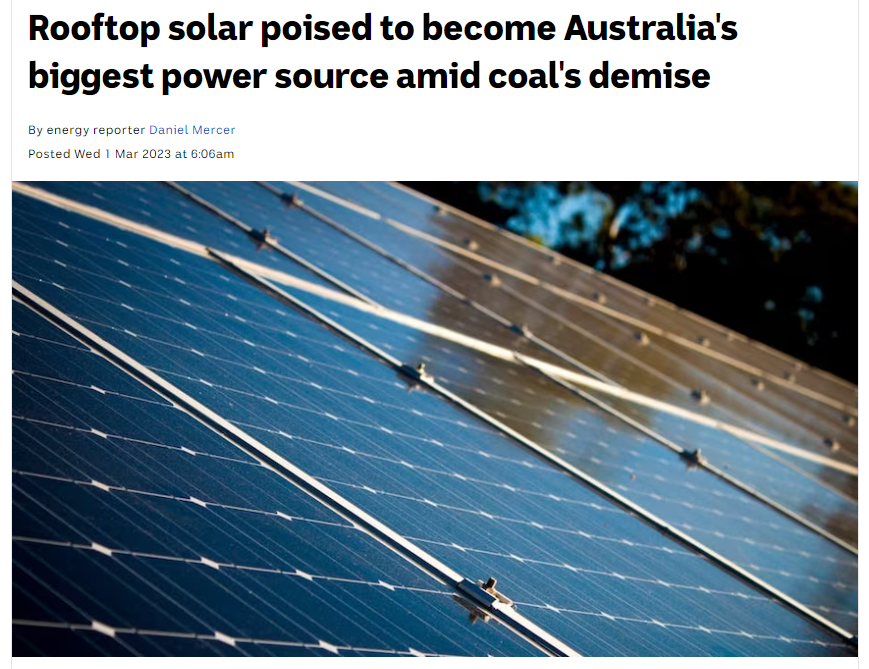
For Covid, again the government/business-level effort is hopeless. But you have significant capacity to tweak your individual safety. And that has explosive network effects, every transmission chain interrupted can save thousands from becoming infected. 2/2
A colleague today. “Aren’t you worried you’re damaging your immune system by wearing that mask all the time?” Slogans kill.
It’s always the area under the curve that’s the biggest killer. https://t.co/U0EfQ67VLe
The irony of life today is living under a political belief system of extreme individualism, which in reality is the exact opposite, societies driven by a pathological social conformity. Libertarian leaders run obsessive mass-cults, with nothing individual about them at all. /1 https://t.co/yb9ZhlsJw3
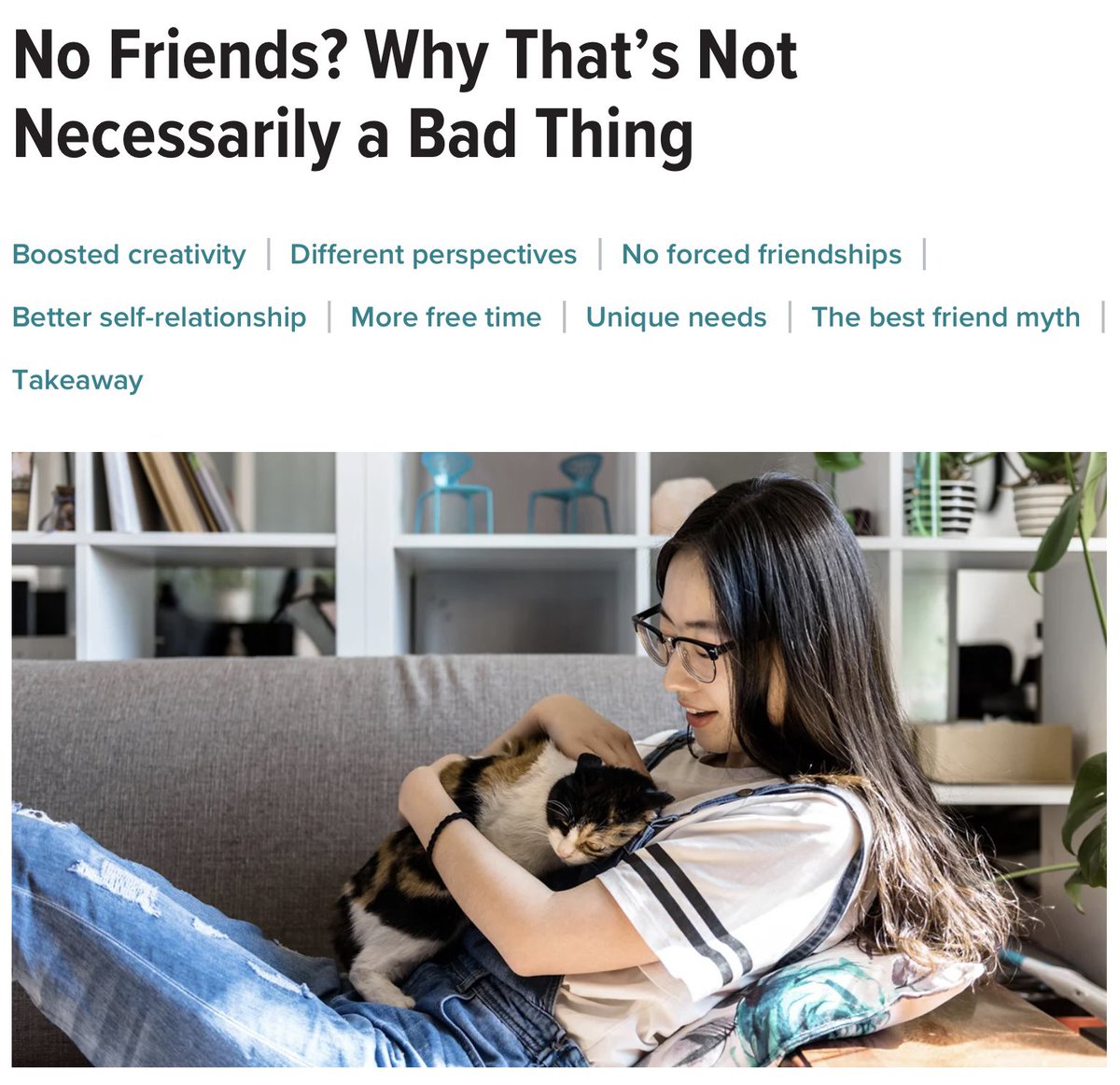
If you’re a ‘Covid cautious’ person (what used to be called a grown-up), you ignore the freedumb movements, which paint lemming-like slavish devotion to a social conformity as individual freedom. Easily spotted by the unanimity of belief freedumbs share. /2
Because you likely did years of what this article talks about. Cultivating a strong and resilient individual identity. It may have made you feel an outsider at school, and therefore also now in adult life, which is just a giant high school. /3 https://t.co/e2CCnoGEUR
‘Mental health’ has been weaponised in this pandemic as the supposed result of people being denied their social connections. Of course things like solitary confinement can damage people. But anything we’ve experienced during Covid is a long way from that. /4
And the hilarious irony of libertarians making this claim, the people who apparently worship individualism, now saying denying people the society they also say doesn’t even exist is a suppression of their freedom. It’s a con. /5
Nothing is more slavishly social than libertarian belief. It’s a cult of lemmings, all obediently regurgitating the same slogans every day, policing non-compliance. You’d think they’d celebrate people wearing masks as them exercising their individuality. /6
Of course they don’t, they run a social conformity police state through social media of harassment and bullying of anybody who doesn’t conform with their own ideals. It’s bog standard school bullying, terrified of non-compliance with a group ideal. A cult. /end
The common populist disdain for the ‘unelected’. Because for populists only the popular i.e. the elected in this case can be true and real. Which is the exact opposite of actual reality. Things that are true are usually deeply unpopular. https://t.co/SXxc9qAh4r
The 'free market' LNP boosted this industry to undermine universal health care. It's not 'private' insurance at all, it's subsidised every year with billions of public dollars. The free market has already decided it's a dud. Let it collapse, use the billions for Medicare. https://t.co/CjjoMT9c3i
Just told a senior manager I'm not attending a 5-day training event with people from all over the State, with zero Covid mitigations. Hopefully I'll still be gainfully employed when this conversation is over.
It's still not 100% clear if trying to force Covid to behave in a flu-like pattern is due to the institutional inertia of the Department of Health, which is geared for that already, or political direction. Maybe both. https://t.co/nZTAO9MR6S https://t.co/Aj5eOdU6OJ
The sad thing about this wonderful donation is how excited the students are about it. That's higher ed today, where the excitement of learning is replaced with the excitement of not going bankrupt to get a degree. https://t.co/BXhu43hDk6
Different country, same shit. The strategies are shared globally. Renewables spoil the view of the monocultural wastelands of modern agriculture. 'Pristine viewscapes'. Those bales of hay must be thousands of years old. https://t.co/UGycGtKYmL https://t.co/4yibtiHc61
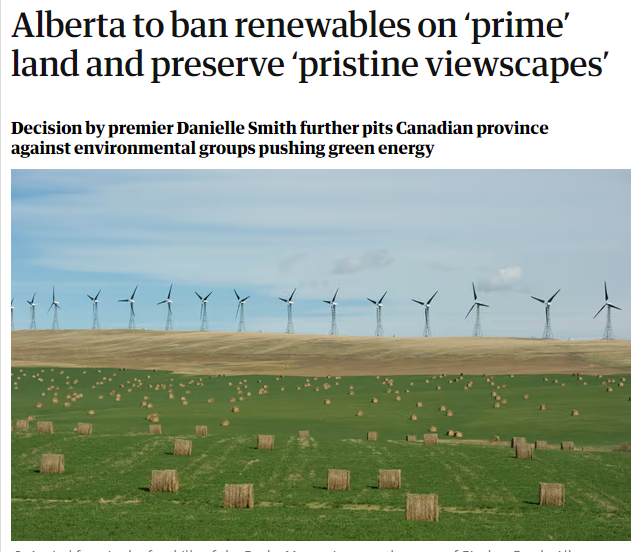
I read this and couldn’t find anything resembling an answer to the question posed in the title. Members of ATAGI. What have I missed? https://t.co/uUOn4DL2MA
Another 6-pack immune system here folks. Ripped and ready. https://t.co/MCjbmNFITF
Before social media existed, this sort of thing lived in the fringes, if it existed at all, relatively harmless. Now it’s running the world. Unfiltered, snide, nasty, decoupled from basic reality, and politically powerful. https://t.co/Q6wGmKVh7Y
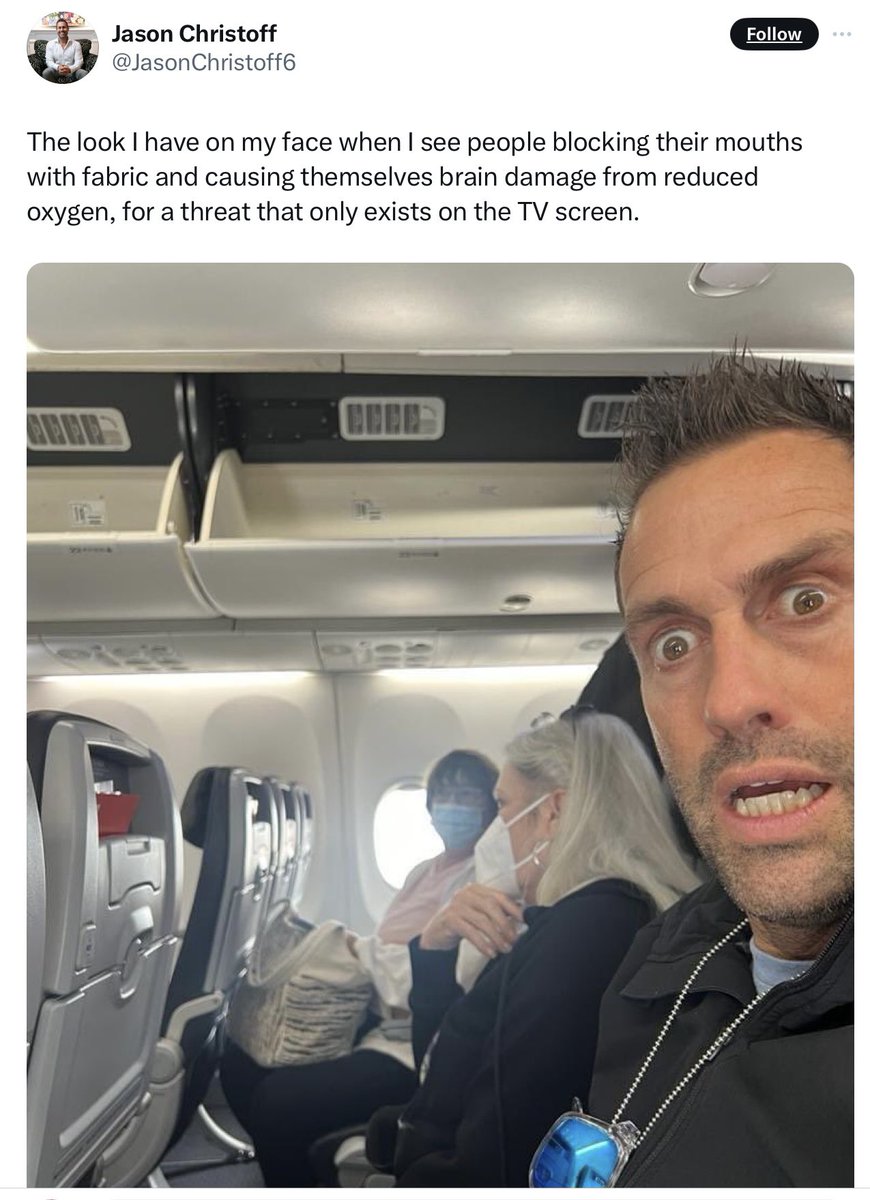
I live a full life. Covid minimisers seem to live on Twitter, telling others how glorious their free life is, stuck on Twitter. https://t.co/ow9zq4XXFc
Mid-2022. In 2024, I guess we can conclude that any attempt to control transmission is now gone. If hybrid immunity hasn’t prevented mass infection, when can we expect it to? A pandemic is defined as the number of INFECTIONS. https://t.co/xZDhKymOCT https://t.co/HW0fMZ1frx
The anti-mask folk are the same people who bleat about individual freedom, clearly not happy people are expressing their own, by wearing a mask. It’s basic social behaviour, they’re a cult, enforcing unanimity with the cult. https://t.co/R3kQgJSWkg https://t.co/HHf5jn4WSV
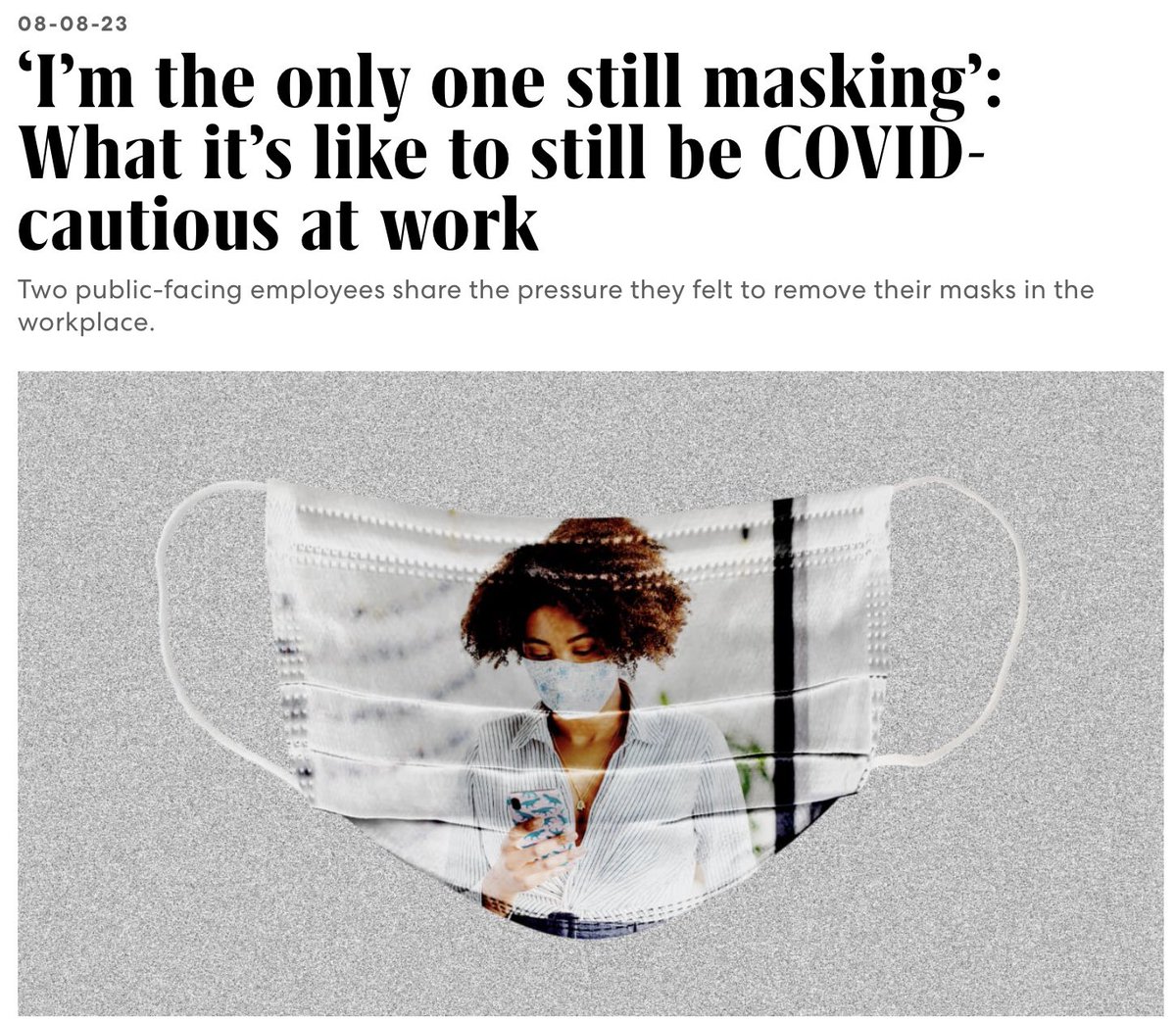
ATAGI mentioned ‘vaccine fatigue’ yesterday. Getting needles isn’t fatiguing. Australia’s Covid vaccination data shows this supposed fatigue began for many as soon as the vaccine rollout started. It’s not fatigue, it’s anti-vax politics, supercharged by political libertarians.
It takes persistence and lots of money to create population-level ‘vaccine fatigue’. https://t.co/Gmj99oEDcE
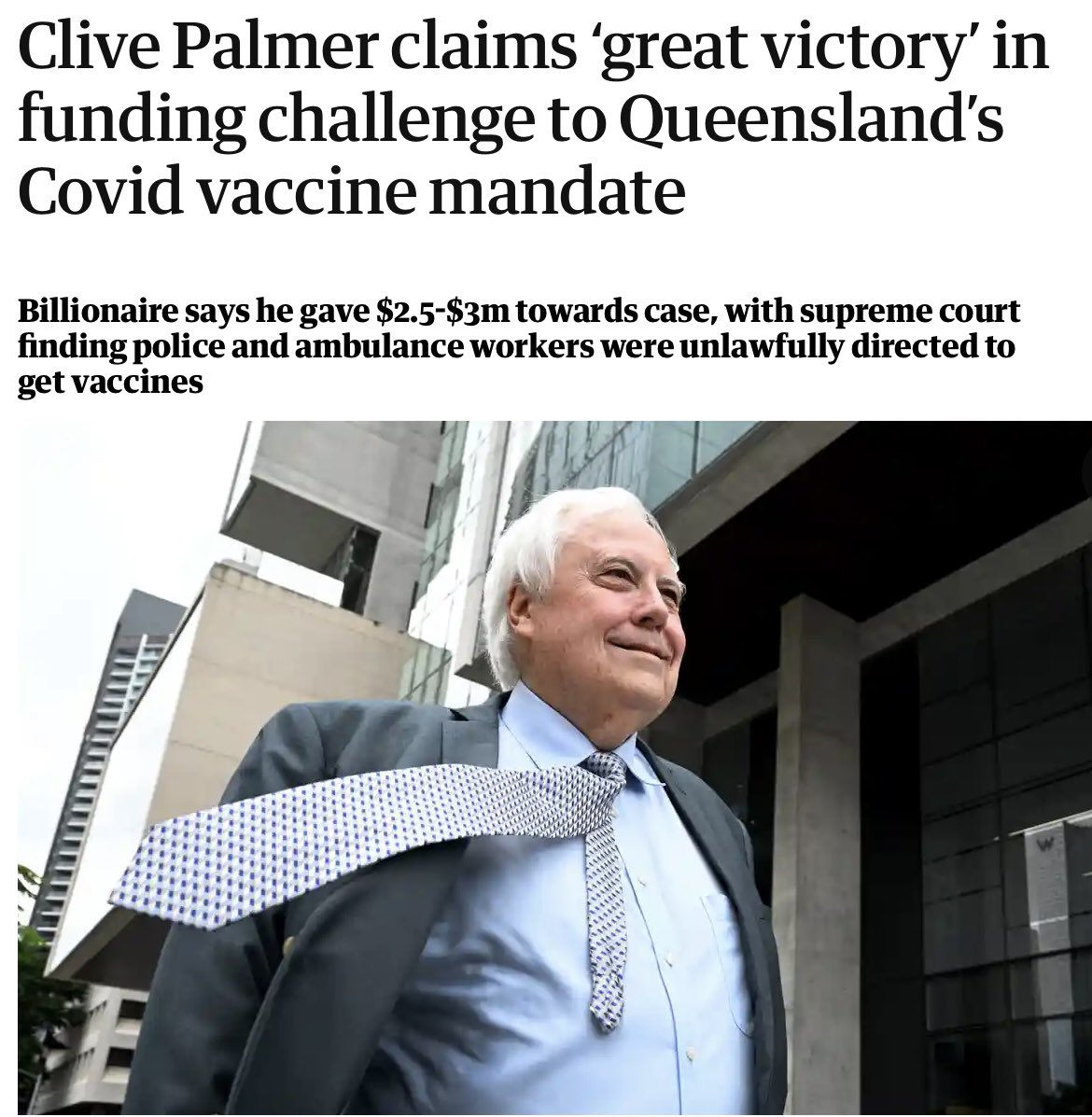
I'm happy for those who believe hybrid immunity will end the pandemic to go out and get infected as many times as floats their (cruise) boats. Happy to be off to the side of the herd, to benefit from the infections they love. But infections aren't going away, are they?