Pathogens often follow a similar pattern to human societies. An invasion stage, with a lot of deaths, as…
Pathogens often follow a similar pattern to human societies. An invasion stage, with a lot of deaths, as pathogens fight to occupy territory (our bodies). Followed by a long occupation stage, where casualties shift to ongoing chronic effects. (Data: https://t.co/OH9vBOjYVT) /1 https://t.co/4qu1SdZ26a
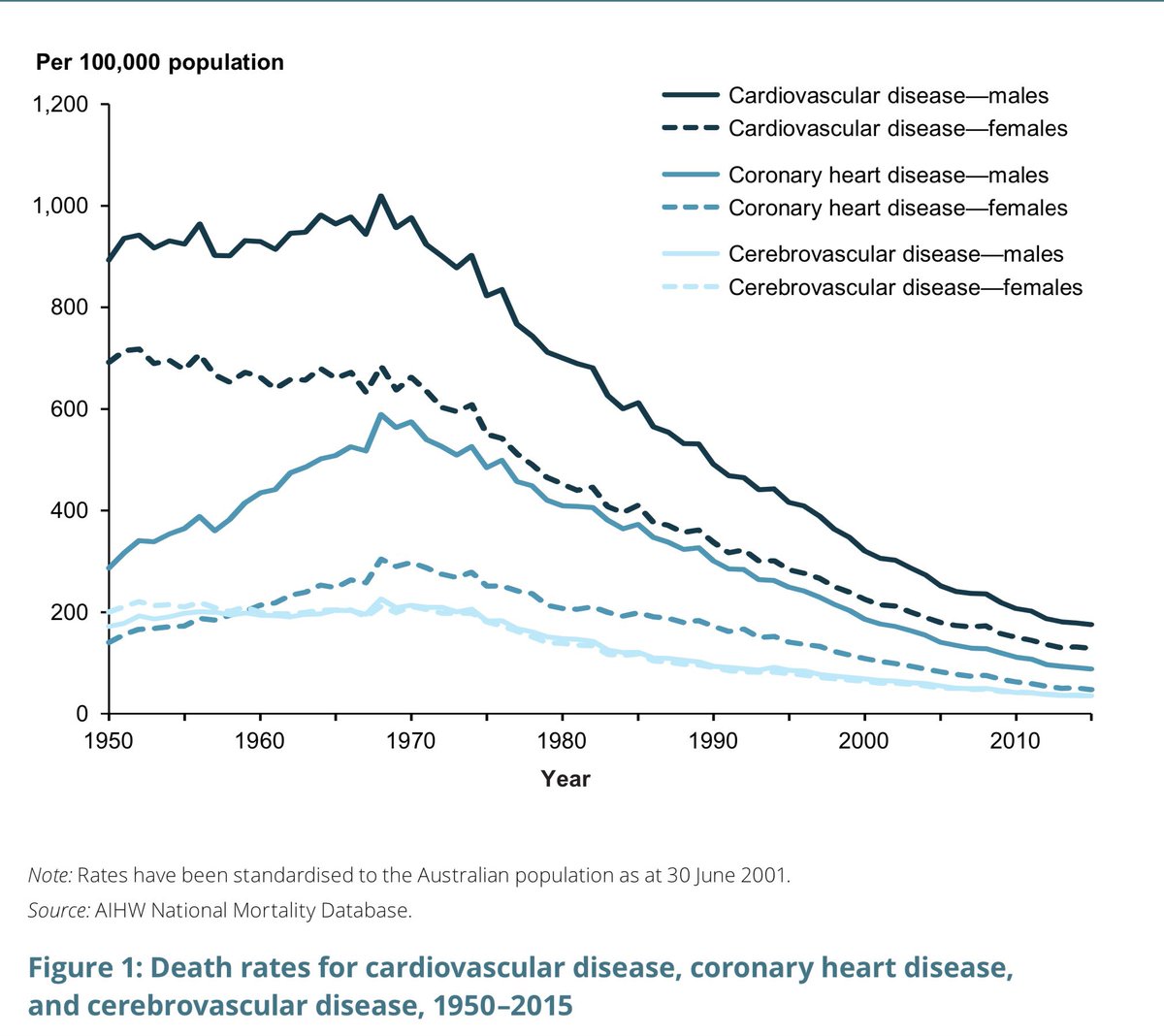
I’ve Tweeted before about the infectious origin hypothesis for the epidemic of heart disease in the 20th century. Heart disease followed an epidemic disease pattern, which research suggests was new to that century. /2 https://t.co/fhseCOhZCm https://t.co/hkE3bPVdkY
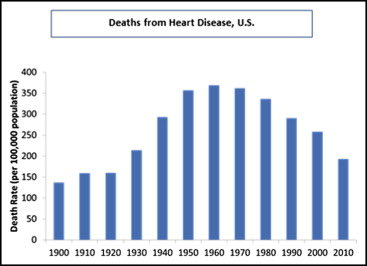
Deaths peaked in the 1960s, and have been declining ever since. In the late-1960s, more than half (55%) of all deaths in Australia were due to cardiovascular disease. That figure is now below 30%. I wanted to raise this again, for a different reason. /3
Right now obviously we’re in that invasion phase, with a big spike in acute deaths, now beginning to tail off. We’re celebrating that tailing off as the defeat of the pandemic. That’s because our focus is always acute disease. Heart disease shows the terrible error of that. /4
The acute infectious disease event(s) that potentially triggered the 20th century epidemic of heart disease - some say the Spanish Flu - certainly killed a lot of people. But the chronic after-effects of those initial infections have been calamitous and ongoing. /5 https://t.co/h7sZgg0RHa
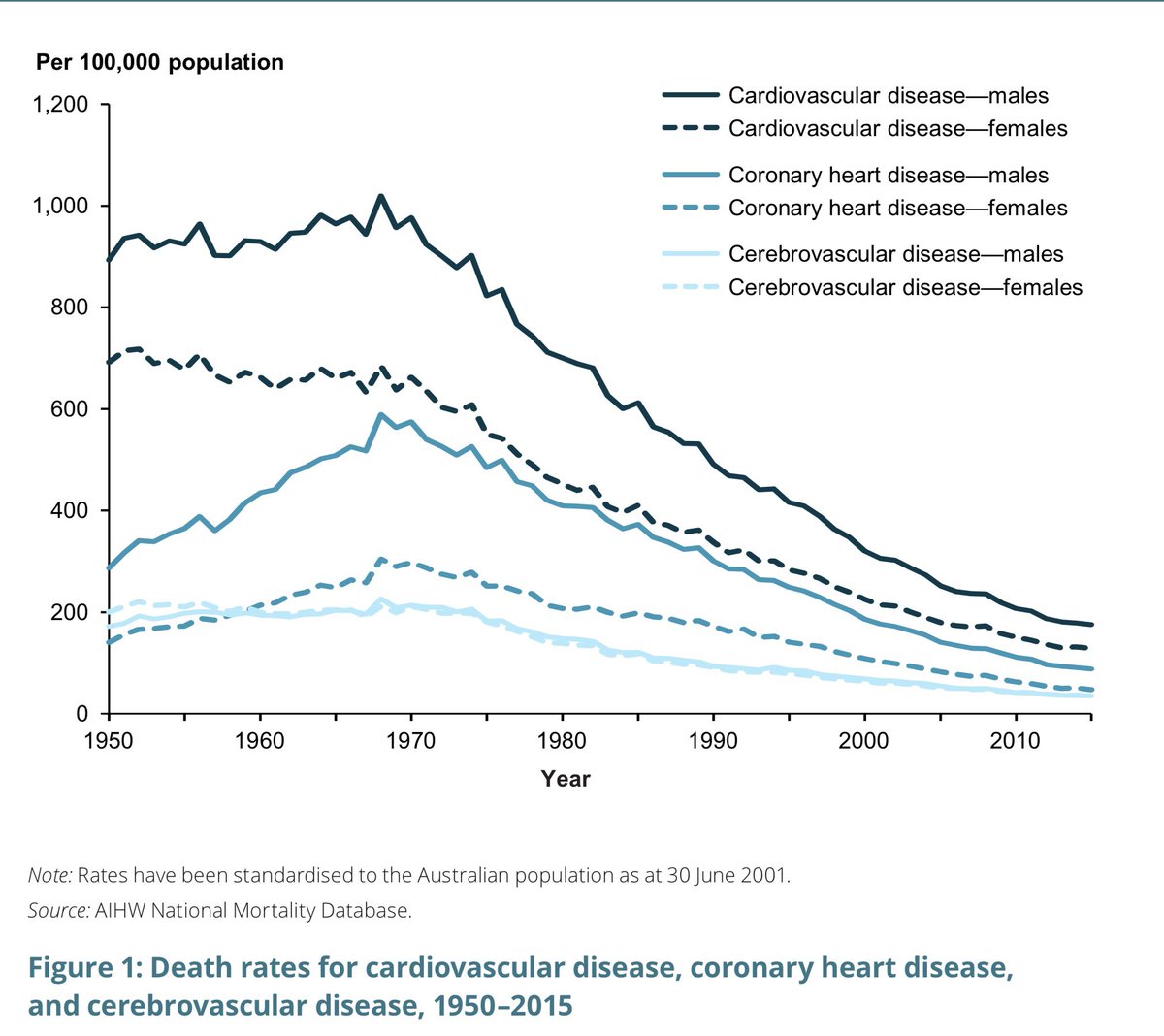
As I said, in Australia more than half of all deaths were down to heart disease, by roughly mid-century. That’s an *enormous* number of dead people, over decades. Far, far more Australians died of heart disease than ever died of Spanish Flu and other earlier acute infections. /6
It’s the chronic impacts that kill at the population-level, not the acute. While we celebrate victory over Covid, it’s not only possible but likely we’ve just entered the occupation stage of its impact. The real killing fields. To bring it back to the human society comparison…/7
Note that in colonial societies, where aboriginal peoples are invaded and then occupied, health outcomes for the aboriginal population rarely do anything except plummet, for generations afterwards. We’re biological creatures, pathogens are the same. /8
Let them invade, and while the eventual settlement phase will appear less damaging and more peaceful, in reality the deaths accelerate enormously, just in a form that is less visibly connected to the original invasion. History teaches us nothing. /end