At a time when collective action is almost non-existent, we have the strange apparently counter-evidence of…
At a time when collective action is almost non-existent, we have the strange apparently counter-evidence of huge masses of people acting in a coordinated way. Thoughts on living in a ‘majority’ society, and why it isn’t anything like a public. /1 https://t.co/T6yV8rBTTx
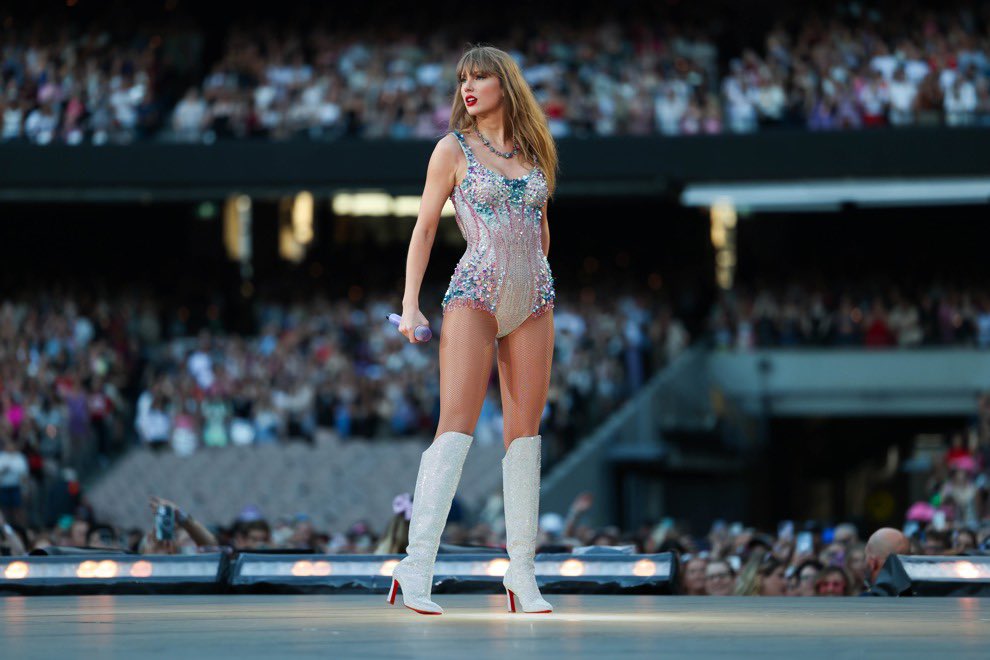

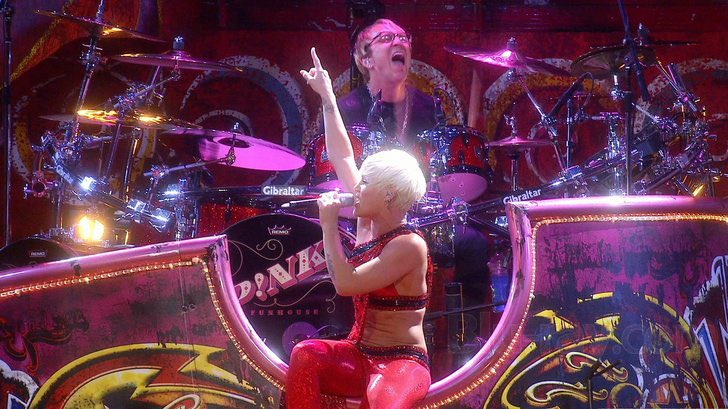

These huge social phenomenon rock/pop shows are a common modern example of mass belief and action. Australia for example regularly goes ‘Beatlemania’ for visiting acts. Obviously for The Beatles, but earlier for Billy Graham, then ABBA, Pink, Ed Sheeran etc. etc. /2
These aren’t a public though. What unites these huge population-level waves is a focus on a performer. Not a focus on anything public or community-focused. These crowds are said to *be* a community in some way. And rusted-on fans can act in community-like ways, over time. /3
But these mass events are fleeting. We forget the previous Beatlemania, like how quickly we forgot that Adele appeared to hold the country in a trance on her last tour. Ed Sheeran sold even more tickets than Taylor Swift. Etc. Passing fads and fashions. /4
Socially though the mechanism is interesting. We latch ourselves to any opportunity to create huge crowds, to experience crowd events. Elias Canetti wrote about this. He thought crowds allowed us to discharge our fundamental aversion to being in close proximity to others. /5
Canetti believed being touched was a fundamental violation for people, unless controlled by them. Walk up to strangers and start touching them and I guess you’ll experience directly the possible truth of that. But the crowd dissolves that violent aversion. /6
So these mass events allow us to physically mix with others in ways that release some of the tension of maintained separation between ourselves and our fellow humans. The mosh pit is this taken to its extreme limits. It’s not a public though. /7
It’s fundamentally anonymous, for starters. It creates no lasting collective connection. Once the crowd disperses, the feeling passes. And while it creates a type of collective action, the focus of that action is almost entirely arbitrary. /8
The crowd is as likely to burn a stadium down as to do anything useful. A public is not just a collection of people like this. A public is a calculation, an ongoing assessment of collective need and its satisfaction. It’s something bureaucrats invented and maintain. /9
That’s their job, to assess collective need and satisfy it as much as possible. That need is not the majority expression of want or desire. Take Covid as an example, where minimisers continuously argue that because the majority of people are ignoring it, it’s over. /10
This is populism, not a public. The fact a group of people desire something does not in any way make that thing a public good, for those people. Going to Tay-Tay won’t fix any potholes in roads or upgrade our power grids. Actual collective need - a public - is not a majority. /11
Elections make us think that, and also this is why most assume democracy IS elections. But a public and a majority are chalk and cheese. There’s no necessary alignment between those two concepts at all. You can’t assess public need with popularity. /12
It has to be analysed, data has to be collected, continuously, and acted upon. How we interact collectively is often invisible to us, only data shows it. We build bigger roads for example, because that seems an obvious way to reduce traffic. /13
But roads create traffic, and bigger roads create bigger traffic jams. Induced demand. None of this is visible or obvious if you use a popularity/majority lens. If you’re one of those in the minority who still take Covid seriously for example, and avoid infection, take heart. /14
The fact the majority of people aren’t doing that means nothing at all about the wisdom of their choice. We’ve all been to school, how often were the popular crowd smart in any way? Rarely, if at all. And even in adult life as it used to be, before social media…/15
…turned it into an extension of high school, the ‘cutting edge’ of any field or area of work was always a tiny number of people. Most others imitated each other, in maintaining a status quo, not in advancing things. This is historically normal. Majorities are not ever right. /16
About anything. Because they’re not ABOUT anything, except each other. It’s a social/crowd mechanism, not a facts mechanism. Being in the minority on actual fact-based issues is usually to be on the right side of history. /end