April 2018
Complete text-bearing Facebook records from the export.
Snarge. The collision between animal mobility - animobility - and the accelerated speeds humans use when they travel. Those accelerated speeds are bought by mining time itself - to get the energy we need for them, we have to use reserves that accumulate over millions of years. https://aeon.co/essays/what-roadkill-says-about-the-insatiability-of-human-speed
Into our second month of autumn, and temperatures for the next week all forecast up around 30. Ridiculous, and because people hate the cold they think it’s lovely weather. We’re doomed.
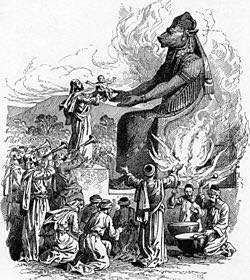
Moloch, a Canaanite god. Worshipped in Carthage, by some accounts, in the form of a giant bronze statue, which was heated to red hot, and children were then thrown into the statue as sacrifices. Barbarism, you might say. The ‘modern world’ has gone past this sort of mythology. But...it’s likely that we have never been modern, and that the desire to strip myth and sacrifice from our lives will never work, it continues to this day. For example, over 1.3 million people die in traffic accidents every year, worldwide. That’s over 3000 people a day. We might think the Carthaginians are barbaric idol worshippers, but like them we know these people will die in cars every day, and we see vehicles and travel as so important that we carry on regardless. How is that different to throwing children into the red hot statue? Genuine question. (And not an argument to get rid of cars, more to say that the way we live doesn’t change from era to era as much as we might think.)
Viral 'challenges' seem to come from gym/fitness/workout culture. What could go wrong?
Institutions, especially unions, are the answer to the world's problems. Brilliant read, institutions are the answer, not voting or swapping leaders. Institutions, always institutions. "Although income stagnation is certainly one culprit, another, perhaps still more important, is the decline of the civic organizations and social institutions that help people feel connected and efficacious. Service fraternities, volunteer clubs, youth groups, churches, political parties, widespread military service, unions, and the rest—in their prime, all fostered social interaction and face-to-face collaboration, cultivating a sense of social cohesion even when times were much tougher than they are today. Among those institutions, none matter more than unions."
One of the things I do in my professional life is work with these guys to help explain why education doesn’t work for most students. I think they’re the only people who have really understood the problems in education, and what’s more they’ve put it into practice - when they implement the ideas, everybody learns, at a high level, not just the ‘bright’ kids. ‘Ability’ is education’s way of explaining its own failings, ‘the kids that failed just weren’t smart enough’. Actually, education wasn’t smart enough, not the kids.
What gives life meaning and purpose? Does it have meaning and purpose?
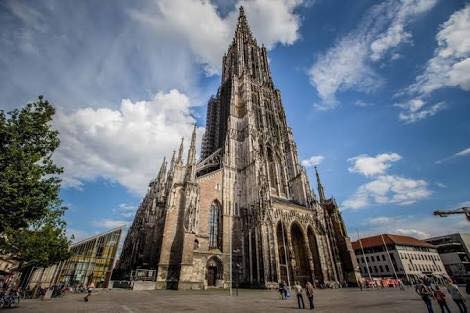
This is Ulm Cathedral. Still the world’s tallest church I think. It took 500 years to build. I think there’s an important lesson there, we’ve lived in a selfish age where life and what’s important is increasingly defined within an individual’s lifespan. The idea of starting a project that might take generations to build would be unusual for us today. It’s another way we’ve forgotten how institutions are the real centre of human life. Institutions carry humans from one generation to the next, without them life has to be re-made with every generation. There are wise theologians who say we’ve misunderstood immortality as individuals living forever, in body or spirit. What lives forever is humankind itself, through its institutions.
You only have to look at the way neither major political party will touch this topic here, and all media commentators laugh at it, to see just how much banks have everybody who counts in their pocket.
We can be very pious about money. Nothing can set off moralising faster than money. Root of all evil, etc. But I think money is very misunderstood. It was humankind’s attempt to give us a way to measure what is valuable and exchange things. The criticisms it gets relate to the fact that it can’t always do that in nuanced ways. But the pious reaction goes in the wrong direction - it’s not that we need to reject money, we need far MORE ways of measuring value, to add to it. Money was just a first step in the right direction.

Another example of Brian May’s genius. Not the solo itself, which is beautiful, but how May managed to design a guitar and rig which achieved the impossible. Instead of the usual opposites of a ‘clean’ sound and ‘overdriven’ sound, May found a way to create a continuum from one to the other, at every point along the way. And with infinite sustain, a guitarist’s Holy Grail. Notice how the solo starts with a clean sound, and then with a small nudge of the volume knob the guitar suddenly is in that infinite sustain space. And finished with a power chord where you can hear how much more harmonically rich the sound is than standard guitars, which tend to sound buzzy and electricky at that overdriven stage, with almost no link back to the acoustic qualities of the instrument. You can hear every note in the chord, again often seen as impossible for overdriven guitar. It irritates me a little when people call all of this ‘the Brian May sound’, as if it’s just some idiosyncratic sound. Makes as much sense as saying everybody who plays a Telecaster or Stratocaster is looking for the ‘Leo Fender sound’.
There are amazing things happening with sound. Even neurologists are using it now therapeutically. Binaural beats, EDMR, binaural microphones (got some of those myself), to name only a few. Listen to this with eyes closed and with headphones/earphones, for as long as you have time to. It’s precisely designed to place you into a state of profound openness and relaxation and peace. Stuff like this is why my love of music is changing into a love of sounds more generally as I get older, sounds that are in many ways so much more complex than music. https://m.youtube.com/watch?v=lKG1Q3bwNUA
Hardly anybody uses an architect. They cost you a lot of money, they rarely take responsibility for budget overruns (which they specialise in), and there’s often an arrogant dislike of the customer, whom the architect often sees as clueless. And the buildings are often very expensive to maintain. The field is dominated by wanky theories of design that don’t have much connection to the experience of the people who will live or work in the building.
‘Life’ - do we really know what it is? “We see this intertwined co-evolution of the geosphere and biosphere,” says Hazen. “Life begets rock, rocks beget life.”
Notice how we tend to see freedom as freedom *from* something? As if we are more free if we have fewer connections, rather than more. It’s the paradox of freedom, we are usually more free the *more* we form relationships with other people and things. A walking stick gives freedom, it doesn’t take it away. If you have a network of friends and colleagues, your life will usually be easier. Etc. The great lie of modern politics is that freedom is about individuals, not the relationships they form to give them freedom. Even tax is a freedom, without it try driving on a road. You can reach a tipping point where you’re too connected, too committed to other things. But I think that happens when the connections weren’t genuine relationships, not mutually beneficial.
“The conditions of the microscopic world produce creatures of stunning intricacy. Ironically, it’s a lack of complexity on the part of our own eyes that keeps us from seeing it.” Microorganisms are far more complex than human beings, but we would normally reverse that and say humans are the most complex living things. I think it’s another of the great myths.
Do you believe in God? If you don’t, have you just replaced God with laws of nature? Providence is the belief that there is something ‘above’ our lives, shaping them and giving them purpose. It’s easy to see with religion, but just as common in something like science, or economics. 'The economy' is not a thing, for example, though many people talk about it as if it is. That's Providence, in another flavour. Is Providence the hardest belief to crack?
I haven’t been as unoutraged* since Adam Lambert started singing with Queen. (*made up word. This is around the 10th new lineup for Fleetwood Mac in its history.)
You really can’t ever know another person. But what if we changed the way we framed this - what if people aren’t there to be ‘known’, they’re there to be interacted with? People are always what they do, not what they say. When we don’t do anything with people, we open up that gap that allows us to be shocked when their ‘true colours’ emerge. But would we have seen those colours a lot earlier, if we’d spent more time relating to them? On the flip side, do we spend way too much time pondering who we are ‘inside’, when who we are is what we do, not what we think? Trying to find yourself in what you think is probably a black hole, with no way out except getting back out into relationship with people and things.
Why is Israel Folau telling gay people to go to hell ‘free speech’, but criticising him for saying it isn’t?
Can we organise that Channel 9 keeps the cricket, but gives the netball back to Foxtel? Foxtel did a brilliant job with the netball, Nine has buried it on their secondary channels and isn't even showing half the games.
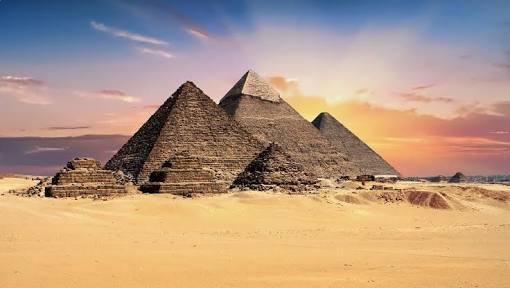
“For millennia we have been seeking the secret of the Pyramids...one Indo-European civilization and one Semitic one loved the light, Greece and Israel, developed to revelation by the Word; one Semitic civilization and one Indo-European one loved the darkness: Egypt and Rome bury in stone and bind tightly...From Athens and Jerusalem, we have learned, breath, spirit, voice, and logos, writing and the lifting of veils, the knowledge revealed by speech or texts; from Rome and Egypt, we still don’t know the discreet act of burying, concealing, silence and blackness, the closed box, the object... Our knowledge arises from the day and the night, from transparency and opacity, from manifestation and secrecy. We only recognize half our knowledge; we only assess a half-knowledge. What remains is the black, the enveloped, the object-related...The secret of Rome or that of the Pyramids is kept well by knowledge itself. The more multiple treasures are pulled out of the tombs so as to make them shimmer beneath the sun, the less is known.“ Michel Serres, Statues.
Always surprised that people think it is, particularly with the passions they show for their own favourite art and artists. And in every genre of art, there is a canon - a list of artists people generally agree are the ‘greats’. Nobody is in charge of that canon, it emerges from the collective judgment of everybody. People know what’s good and what isn’t.
Joshua Lederberg was a Nobel Prize-winning biologist who questioned our ‘war’ on germs. He was one of the biologists who realised that we need to look at germs as part of an ecology, rather than always trying to kill them. And that germs don’t actually have much to gain by killing us, we’re their hosts, they need us to survive too. That last insight alone changes fundamentally ideas about anti-bacterial practices and vaccination. His most famous summary of ideas is at: http://www.univie.ac.at/hygiene-aktuell/lederberg.htm
I still puzzle over how Facebook, the ultimate ‘social network’, became something so overwhelmingly focused on individuals posting about themselves. Have never had much luck getting many to agree that this is contradictory.
Ever had a blocked sink drain? The best two pieces of advice I ever got on blocked drains was to: 1. always go with the plunger first, you’re much more likely to shift things with physical force than with chemicals. Some of the new plungers have extra oomph, like the one pictured 2. use hot water and detergent. Not caustic stuff like Draino. Detergent is designed to do one thing really well, dissolve grease and fats, and that’s going to be a major part of most blockages. So plenty of hot water and detergent flushed down that drain, as you plunge and afterwards, and on a regular basis to keep it clear.


Here’s Facebook stating the problem of my post yesterday, in their own words. They want the platform to be more interactive, rather than passive. More social. http://www.news.com.au/technology/online/social/facebook-scientists-pen-blog-to-hit-back-at-claims-the-social-media-giant-is-ripping-apart-the-social-fabric/news-story/8b0e4273c1d5296619f02f9f1dcb934c
Happy Birthday Mel :) Is it that famous birthday number I won't name?
On average we use a metaphor every 10-15 seconds, when speaking. Why? I reckon because nothing can be defined without reference to something that it's 'like'. It's why we have dictionaries, for example, definitions of words tell us other words that the word we're looking up is most like. Dictionaries are full of metaphors. Our own identity is the same. Nothing can be defined, including ourselves, without reference to the relationships it has with other things. James Geary (see him speak below) wrote a book called "I is an Other", which covers similar themes. The phrase I is an Other comes from the poet Arthur Rimbaud: "I is another. If the brass wakes the trumpet, it’s not its fault. That’s obvious to me: I witness the unfolding of my own thought: I watch it, I hear it: I make a stroke with the bow: the symphony begins in the depths, or springs with a bound onto the stage. If the old imbeciles hadn’t discovered only the false significance of Self, we wouldn’t have to now sweep away those millions of skeletons which have been piling up the products of their one-eyed intellect since time immemorial, and claiming themselves to be their authors!”
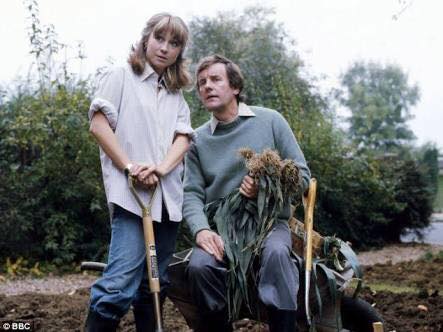
Anybody else love The Good Life? One of those wonderful 1970s TV shows, about leaving the rat race, with the Goods (in the picture) deciding to be self-sufficient. As I got older though, I wondered how healthy the desire for self-sufficiency is. And now I run a mile from this sort of thing in real life, if you follow the history of every movement that goes ‘back to nature’, towards self-sufficiency, it ends badly. Why is this? I think because it stops us fixing the lives we’re living as a society, and instead gives us an escape from it, where all the same problems are then just transplanted somewhere else. Like how our countryside gets eaten up by ‘tree-changers’, sick of the filth and noise and crowding in the cities. But then our countryside just ends up full of filth and noise and crowding, nobody stops and fixes the actual problem.
The mythologies of small business. I don't actually have anything against small business, what I don't like is the mythologies around it, which this article talks about and traces back in time. There was no such thing as 'small business' before there was 'Big Business'. Just as there was no 'countryside' before there were cities. The much bigger thing this is about is one of my passions - institutions. Very nasty people created the small business mythology as a way to undermine society's institutions more generally. And they mostly got away with it. https://aeon.co/essays/what-does-small-business-really-contribute-to-economic-growth
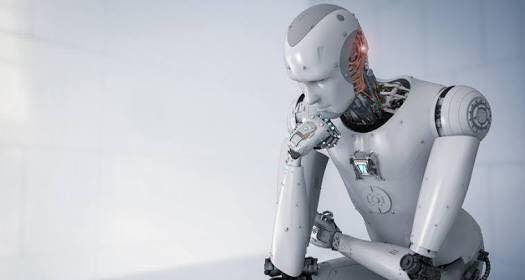
I think by far the most interesting thing to come out of artificial intelligence and robot research is the changes it forces in our ideas about thinking more generally. For example it was only when people tried to build vision for robots that they realised our ideas about vision are hopeless. I love that more recently, researchers realised that nothing can think if it also can’t FEEL. And not separately - they don’t mean add a ‘feeling chip’ to the thinking chips. They discovered that thinking and feeling can’t be separated. Which changes so many of the assumptions of all of neuroscience and psychology too. When you ‘think’ you are feeling too, but not separately, they’re the same activity. There is no ‘feeling centre’ in the brain, not in the amygdala for example, as often thought, feeling/thinking involves all of us acting together at once.
Happy Birthday Aunty Bev! Have a fabulous day.
This is the photo that should be used every time a news story says a fire is 'suspicious'.

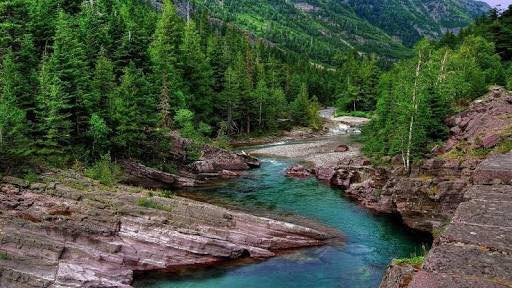
Not a chicken and egg or one hand clapping question. Does a river shape the countryside it flows through, or does the countryside shape the river? And if you say ‘both’, does that really work?
Increasing numbers of researchers, including in cognitive science itself, are realising that ‘thinking’ is actually not something that happens in our heads. It’s a set of practical skills that extract constants and invariants from our experience, using tools. ‘Smart’ people are usually those who are good at extracting these invariants, in seeing patterns in things, that’s all. Most of our classification of intelligence actually measures aptitude with using certain tools, like writing and reading. https://www.newyorker.com/magazine/2018/04/02/the-mind-expanding-ideas-of-andy-clark
A theme for the day. "All the processes we attribute to brains and computers alone might fill the world. In the same way that the legs code the program of walking, unknown information is inscribed in the patterns of grains of sand as the wind tosses them on an empty beach; the frenetic interconnections of the internet and the spoken world are thrumming in a field of grass. The thinking machine thinks; it has its processes and its functions. And the world of inert objects might think too, in slow and strange ways which we can only borrow for a moment, and which disappear again into what sounds like silence."
A perennial. If smacking a child is the same as hitting a child, does that mean kissing a child is the same as sexually harassing a child? https://www.dailytelegraph.com.au/rendezview/smacking-is-just-another-word-for-hitting-and-who-hits-a-child/news-story/6a30d897e2bf6ac2f4b5572117f4653d
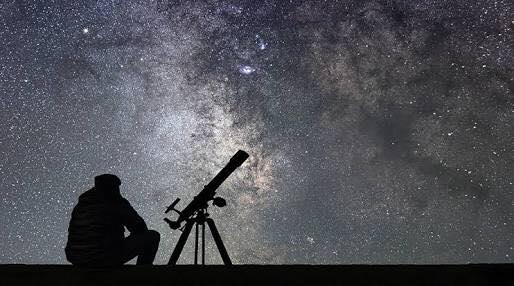
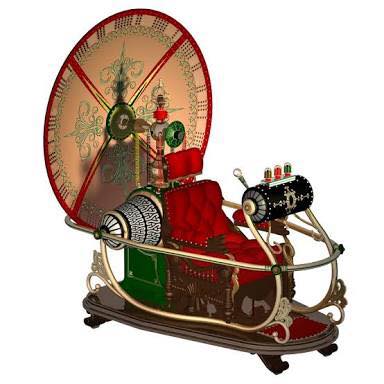
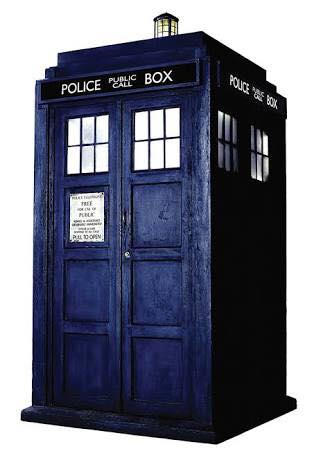
A telescope helps you see things that are ‘far away’. So it works with space. But if you point it to the stars you’re seeing things that happened anywhere from 1 minute to billions of years ago. So a telescope is a time machine. Time and space aren’t separate things - ‘far away’ means both distance, and time (how long it takes to get there). What if all machines are actually time machines? A car will get you from A to B a lot ‘faster’ than walking. Faster means time (you need less time for the trip). Suddenly you have more time in your day to do other things. The car created that time - machines don’t just take you back ‘in’ time, they create time too. (Also why fictional time machines, from HG Wells’ to the Tardis, misrepresent what time is.)
So...the finance industry are crooks. Who knew? I wonder if Scott Morrison describing our banks as "some of the best capitalised in the world" is a splendid own-goal. And while on the bleeding obvious bandwagon: https://www.smh.com.au/lifestyle/life-and-relationships/boozy-mum-culture-might-have-gone-too-far-20180419-p4zan3.html
Just wow.
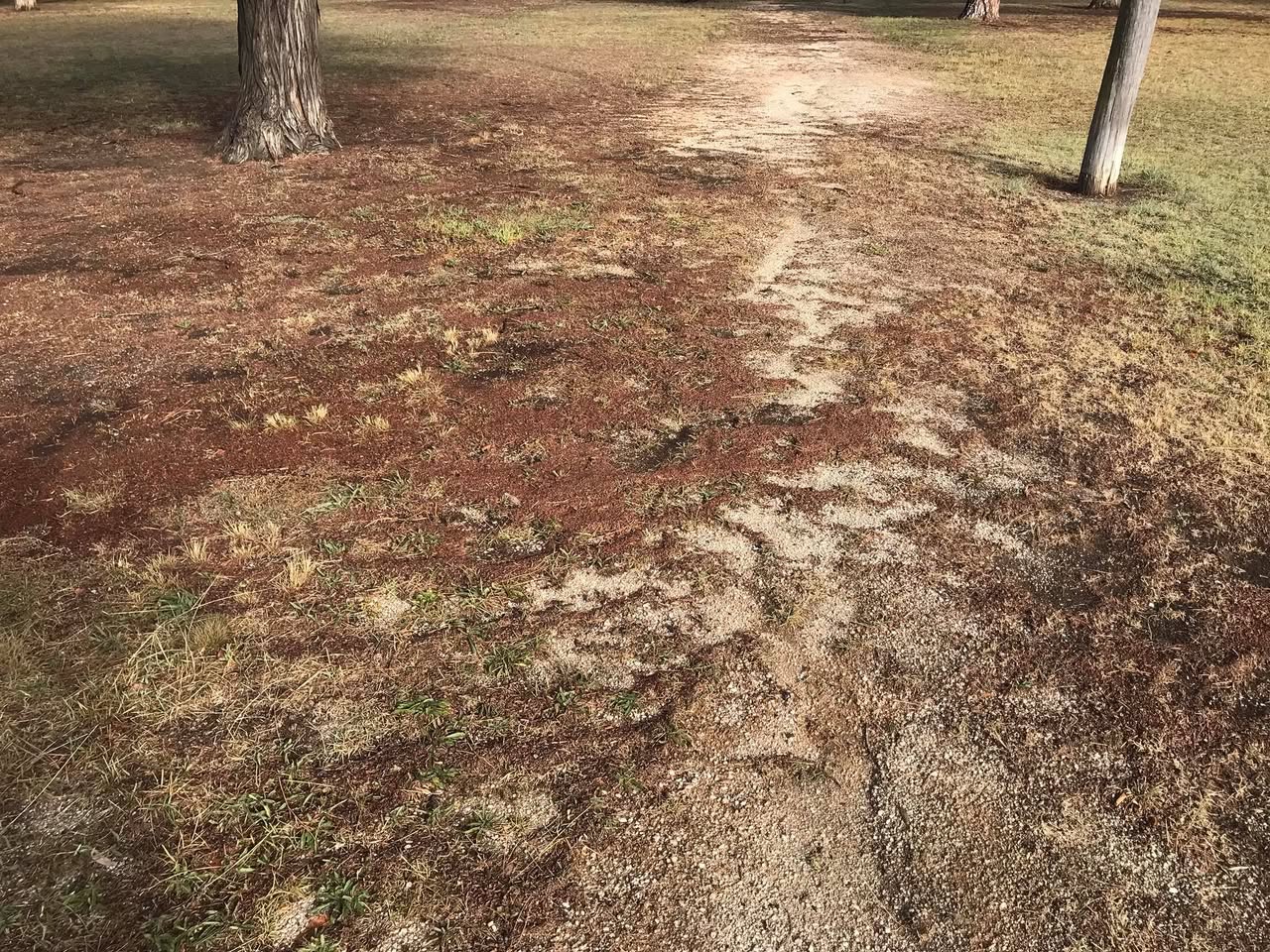
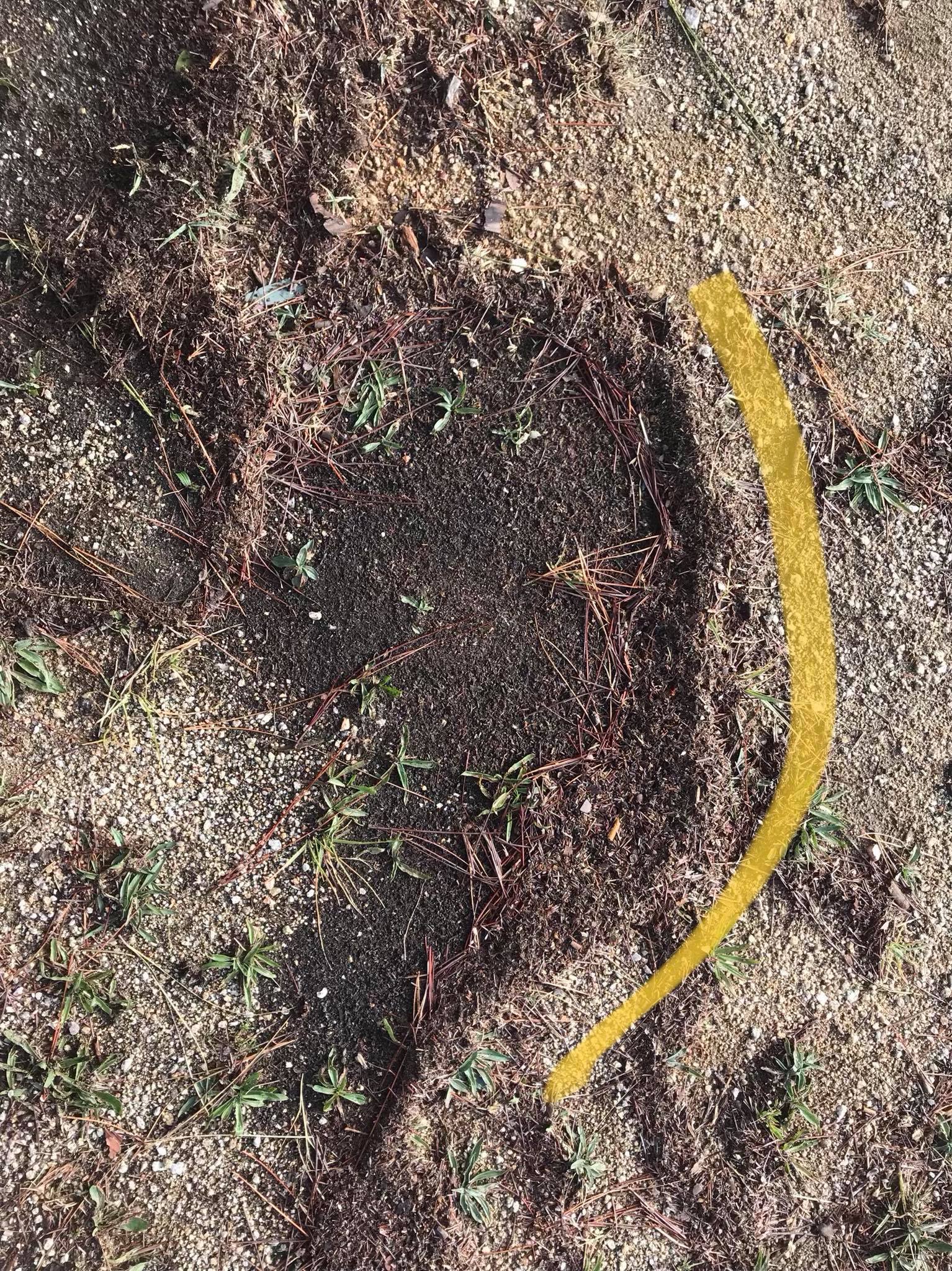
I post this every year because it’s wonderful, to me anyway. The wonders under our feet we don’t always notice. First picture is a man-made path through a park, on my way to work. After recent storms, a lot of plant matter has blown and been washed across some of the path. Second picture shows though how this is far from some random process. The forces of the water and wind interacting with the plant matter shapes it into semi-circular dams (the yellow line), behind which silt starts to build up (the black stuff). In that silt new plants germinate and grow. This is how grass and other plants spread by themselves, you can see these little islands in any piece of self-sown grass. The area will feel bumpy until these little dams fill completely with soil and the grass has fully grown. Life isn’t just ‘living’ things like plants and animals. It’s the way all of these components interact.
“He has tried to destroy our institutions, one by one, undermining the judiciary, the press, the intelligence agencies, the universities. You look at every one of our major truth institutions, he's trying to undermine them. Our system of checks and balances." Joseph Stiglitz, looking in the right direction.
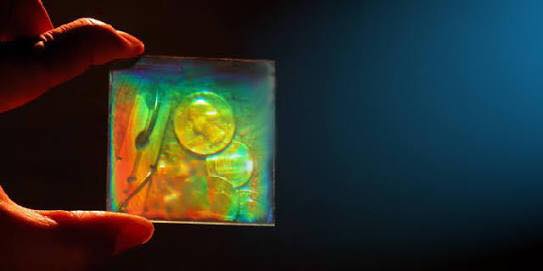
We’ve often understood reality using photographic metaphors and analogies. Like we get a ‘picture’ of it. But reality is much more like a hologram than like a photo. If you smash a hologram plate, every piece of the smashed plate still has the entire hologram image visible in it. Reality is a bit like that, I think, all of it is in every grain of sand, as the saying goes, it’s not bits and pieces.
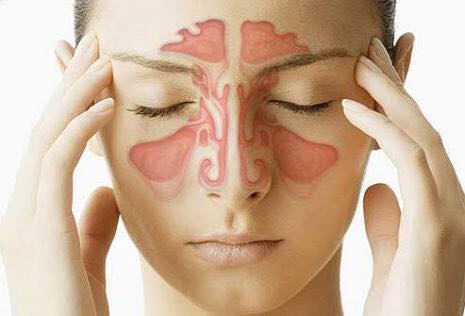
Do you know somebody who suffers from sinusitis? There’s a modern epidemic of sinusitis, so many people suffering from it and not finding relief. I have a guess as to why this is happening, our air quality is so bad and this is creating problems in our sinuses, the first port of call of breathing. And also the growth in asthma cases. Air quality matters, we’re very casual about it.
Tony, always the man for the big end of town. Notice that he's diagnosing what happened with banks as being a fault with the regulator. The banks apparently aren't responsible for their own misconduct, the fault was with the regulator for not finding it and stopping it. "What were the regulators doing to allow all this to be happening? And that's the thing that keeps occurring to me every time I read fresh revelations." Mr Abbott told 2GB radio on Monday. "My fear is that at the end of this royal commission, we will have yet another level of regulation imposed on the banks when, frankly, what should happen is, I suspect, all the existing regulators should be sacked and people who are much more vigilant and much less complacent go in their place."
Sometimes news stories from the past make super interesting reading. 2014, Tony Abbott was PM. http://www.abc.net.au/news/2014-05-15/budget-2014-funding-cut-to-asic-business-regulation/5453816
If somebody asked you to define ‘we’, what would you say? (And yes, just the one e, thank you.)
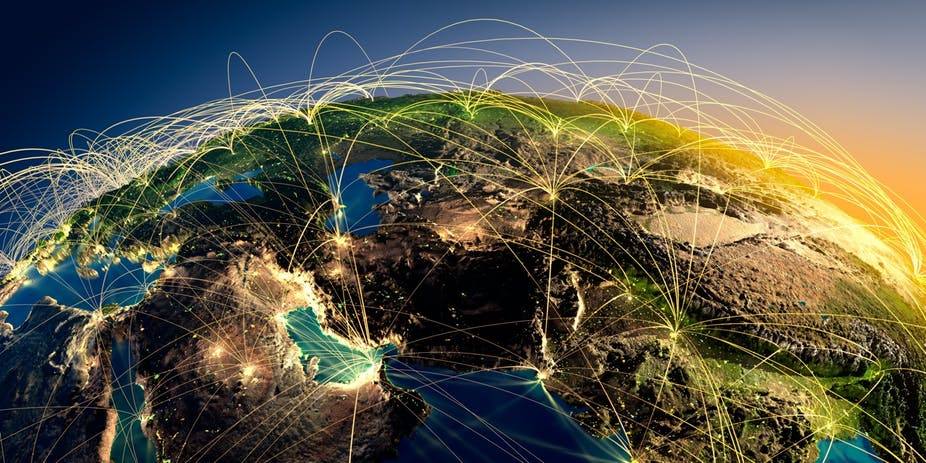
My main reason for being on Facebook. It brings knowledge back to life. "If we were traditional knowers or information processors, we would gather evidence, listen to arguments and their justifications, and arrive at knowledge, in that order. But the Web is messier and more looping than that. We read backwards and forwards in time, remembering what else we've seen from this person and from others...We are not out to grab another handful from a preexisting container of knowledge. Rather, we are using conversation to develop ideas and truths and grand fictions. We are showing one another how the world looks from our perspective - a truth of the body. We are doing so because we care about the world and our place in it - a truth of the body. We are doing so with the urgency of passion - a truth of the body... Defining knowledge in the traditional way - true statements that we're justified in believing - is like explaining sex in terms of its ins and outs without ever mentioning that it feels good." David Weinberger
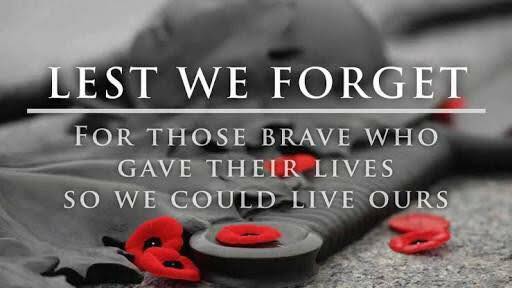
At school we had to sing the hymn, based on Kipling’s Recessional, from which ‘Lest We Forget’ comes. Do people still sing it in schools? It doesn’t have the meaning we give it today, as shown in the picture. It’s maybe an irony that we’ve forgotten what Lest We Forget means. It means lest we forget the primacy of God, a forgetfulness of which human wars are one symptom. Kipling drew from Deuteronomy, “Then beware lest thou forget the Lord which brought thee forth out of the land of Egypt". It’s worth reading all of the lyrics of the Recessional. Anzac Day for me is about not forgetting that war is hell and evil. We need to honour those dead men and women, but we need to do much more. To truly honour them, whether you’re religious or not, we have to remember that their lives were worth more than the petty human squabbles which led to their deaths. If we didn’t forget this, we would be much more angry about every new crop of young people we send to war to be killed. But we aren’t. We did forget?
“Part of the problem is that we expend far too much effort comparing our behind-the-scenes reality with everyone else’s public highlight reels, posted in envy-inspiring terms, meant to catch our eye and make us wish we had that person’s life. What we forget is that social media posts are like snapshots: Here’s a happy photo of us at that wonderful event. We don’t usually take pictures of daily chores, fights with spouses, and children throwing tantrums. That happy snapshot doesn’t represent an entire life. But for some reason, we take internalize these snapshots and wonder why our own lives are not as seemingly perfect.” https://www.huffingtonpost.com/ritusharma/our-curated-lives-the-ins_b_5711825.html
One of life’s precious jewels I think, right under our noses. Life-changing. Takes a few words to describe, sorry. What is awareness? In simple physical terms we often think it means ‘I am aware’, meaning ‘me’, up here in my head, is aware of what’s happening around me. But as meditators know, it goes much further. You can drop that ‘me’ point and be aware of everything around you, and all of you - your body, your thoughts - at the same time. Try it if you never have, see if you can be aware of everything around you, and all of you, including your thoughts and feelings and emotions, simultaneously. Hard at first, because we’re so used to isolating out bits of this continuum one at a time - we think we’re like a torch, shining on things around us a piece at a time, when in fact reality is like bright sunlight, everything bathed in light at once. If you get good at that, you’ll notice that ‘me’ changes fundamentally. Rather than being the central viewing point on the world around us, where we look and see and hear outwards and inwards, all outside and inside become the one connected field or space. Your identity becomes that awareness, rather than a separate thing looking *out* at things. Even your thoughts are part of awareness - your thoughts are NOT ‘you’, you can be aware of your thoughts in the same way you can be aware of a car driving by. You’ll also notice that becoming aware of pain or emotions in this way profoundly changes your relationship with them. They stop being ‘my’ feelings or my emotions or my thoughts, and become events in that wider field of awareness. You start to directly feel and experience them as connected to everything around you, your life and problems become connected events in your wider experience of other people and things. But your biggest challenge will likely be thoughts, because we grow up deeply, habitually convinced that we are what we think. So we get trapped in what we think of as ‘inside’ ourselves, in our thoughts, when in fact there is no inside, it’s all a single, connected field of awareness. It’s an illusion, and the most powerful one, we split the field of awareness into two bits - me here, the rest over there. But in reality, it’s all one connected space.
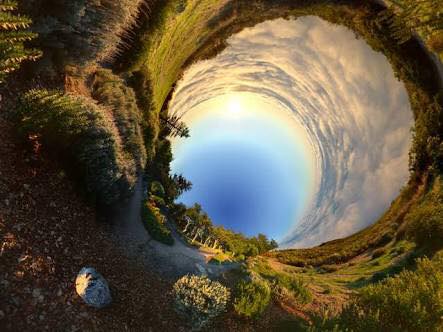
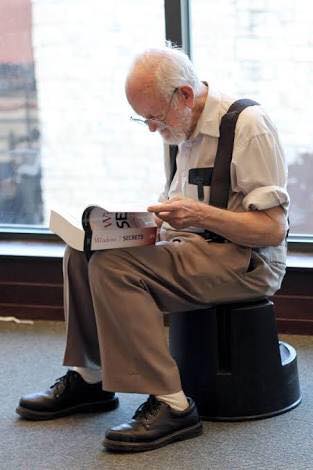
Reading is one of those universally loved things. But does it have a dark side? I think so, in a few ways. 1) Books created the idea that knowledge is separate to human beings who use it. It’s ‘in the literature’. The idea of a library where knowledge is stored, rather than knowledge freely circulating in everyday life. 2) Books helped create the illusion that we are separate to the world around us. Reading fosters what we call introspection, as an act reading promotes an experience that suggests we have an internal world separate to the external world. We lose ourselves in the worlds of texts. It is in some ways a profoundly anti-social act. 3) Following from 1) books also helped create the fiction that the ‘truth’ of things is somehow separate to things themselves. It favours the creation of mysteries, elites and cults, because it takes the locus of meaning outside our shared lives and places it into a separate world of ‘knowledge’. Knowledge becomes a protected space with access rights. 4) Books helped to create the fictional split between mind and body. Look at the picture, reading strongly encourages immobility, our ‘bodies’ tend to slump underneath us as we read. Our ‘minds’ are the things we see as dealing with this apparently separate knowledge to be found in text. The web and social media are reversing all of these trends, making knowledge revolve around people and their lives again rather than the other way around. But a kid who spends their day online is somehow seen to be doing a less healthy thing than a bookworm: kids’ online lives are profoundly social, much more than reading.
Have been playing guitar for more than 40 years. And now I realise I should have been doing it with the door open.
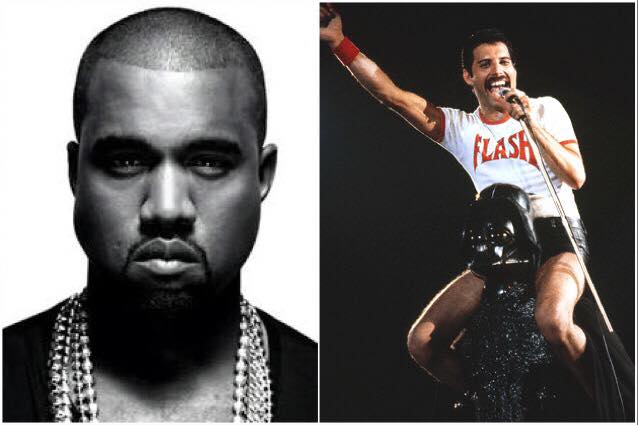
Here’s a paradox I think, the more diverse and undefinable a person is, the more individual they are. Individuality and ego are opposite things. Freddie Mercury had an enormous personality, his individuality was like a supernova star, no matter how much people tried to understand the man, the answers only generated new questions. He was completely uninterested in himself, questions about him as a person always drew total blanks - his individuality changed from day to day, he followed his passions and changed who he was, constantly. ‘Freddie’ was not a thing that had real boundaries or could be defined. Kanye West has a huge ego. Everything revolves around him, he is enormously interested in himself. “I think what Kanye West is going to mean is something similar to what Steve Jobs means. I am undoubtedly, you know, Steve of Internet, downtown, fashion, culture. Period. By a long jump." An ego is the opposite of being a real individual. To be individual means to be constantly engaging and changing.
“No human collective can exist without an object. There is no object without a collective, no collective without an object. The political animal is a fiction. The group floats wildly; it settles for a short time only by means of an object...the more animals live in collectivity, the more they are forced to build things outside their bodies, outside their group.” Michel Serres
“But this is not, or not really, an article about speed, or cameras, or even cars. It is about the rise of the antisocial bastards who believe they should be allowed to do what they want, whenever they want, regardless of the consequences. I believe that while there are many reasons for the growth of individualism in the UK, the extreme libertarianism now beginning to take hold here begins on the road. When you drive, society becomes an obstacle. Pedestrians, bicycles, traffic calming, speed limits, the law: all become a nuisance to be wished away. The more you drive, the more bloody-minded and individualistic you become. The car is slowly turning us, like the Americans and the Australians, into a nation that recognises only the freedom to act, and not the freedom from the consequences of other people's actions. We drive on the left in Britain, but we are being driven to the right.” https://www.theguardian.com/uk/2005/dec/20/politics.publicservices?CMP=Share_iOSApp_Other
“Besties” is the source of terrible suffering amongst kids of school age. Old-school teachers would actively discourage kids having ‘best friends’. It’s a difficult topic, but the bestie phenomenon is buried deep in all stages of life. Even corruption in business and politics is a bestie thing. What we call mateship, the same. It’s actually a very exclusionary thing, and I don’t think it’s just recognising that a particular person is more important to you than another. A ‘bestie’ goes beyond that, it’s like ring-fencing a relationship. “Maybe this — to not be entirely defined by another person — is what it really means to be an adult. Maybe it's not about crediting just one person as to making you who you are. It's about having relationships with a variety of people who aren't exactly the same and who constantly challenge you in different aspects of life.”
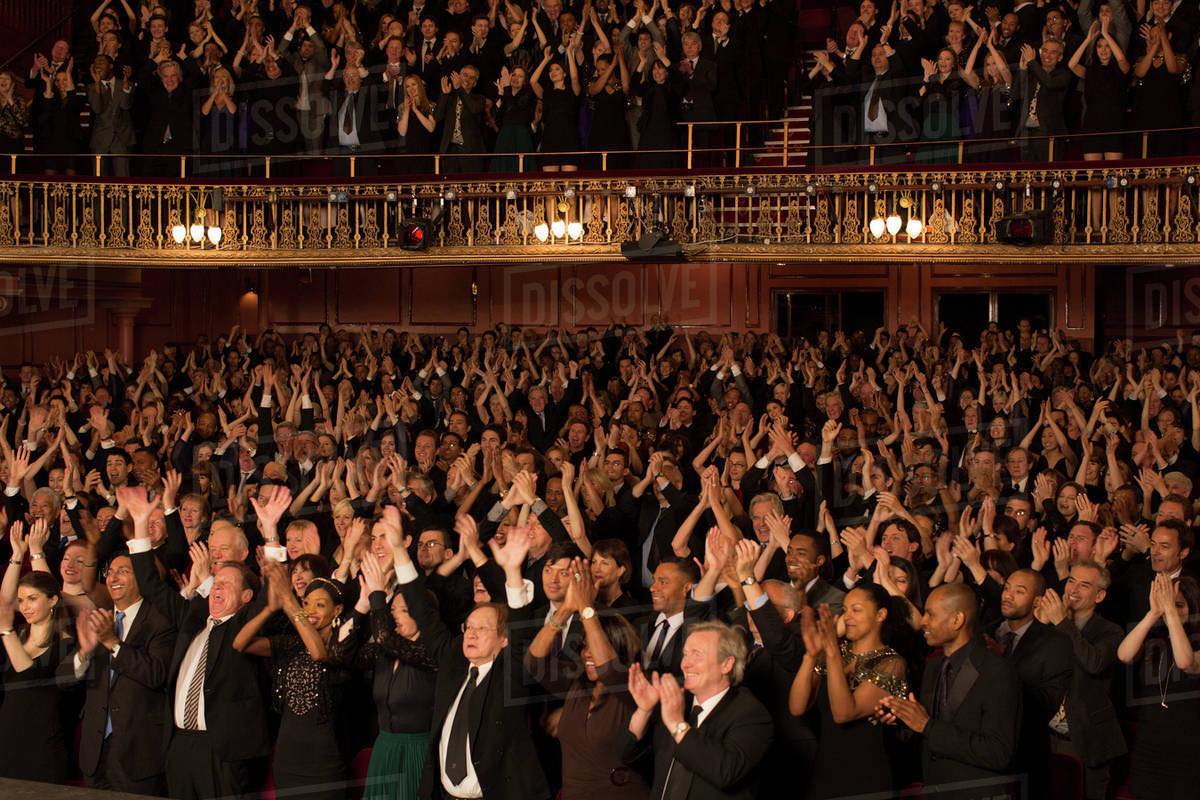
Applause is a curious thing, when you stop and look at it. The crowd at an event periodically clap their hands and sometimes yell or whistle or stamp their feet etc. The origins of this are probably anthropological, in deep human time, it replays the constant negotiation between the crowd - all of society - and those who want to lead or in this case entertain the crowd. The crowd is silent up to a point, to let the performer (or leader) do their thing. But the applause is a reminder of who’s really the boss here, the crowd takes over the space again momentarily, to praise but also remind the performer or leader who owns the space. Crowds sometimes get ‘out of control’, and that’s exactly the point. As a performer or leader, you are in their hands, please them or it’s going to be trouble.
This trend has been clear for a while. ‘Grown-ups’ who are still essentially teenagers. Obsession with bands and music, with consumer goods, with fantasy fiction and films, with binge culture, grown-ups having ‘besties’, constant comparison through social media of each other’s lives, an obsession with the body beautiful and personal appearance, and overwhelming sentimentality (everything is either a tragedy, or the most awesome thing, ever). Some say it’s because we live in an anxious age, and this ‘Peter Pan’ effect is a defensive response to the anxiety. Or maybe the cause and effect is reversed - maybe not growing up is why society is becoming an anxious place.