October 2025
Complete authored posts and demonstrable self-threads.
While world leaders aspire to be new Kings, the wider population dreams of buying old aristocratic homes and palaces. Not to occupy them, as kings. But to provide luxury services to guests. A servant’s fantasy. ‘Service’ industries dominate. Not much changes in history. https://t.co/uc6LKWHm9b
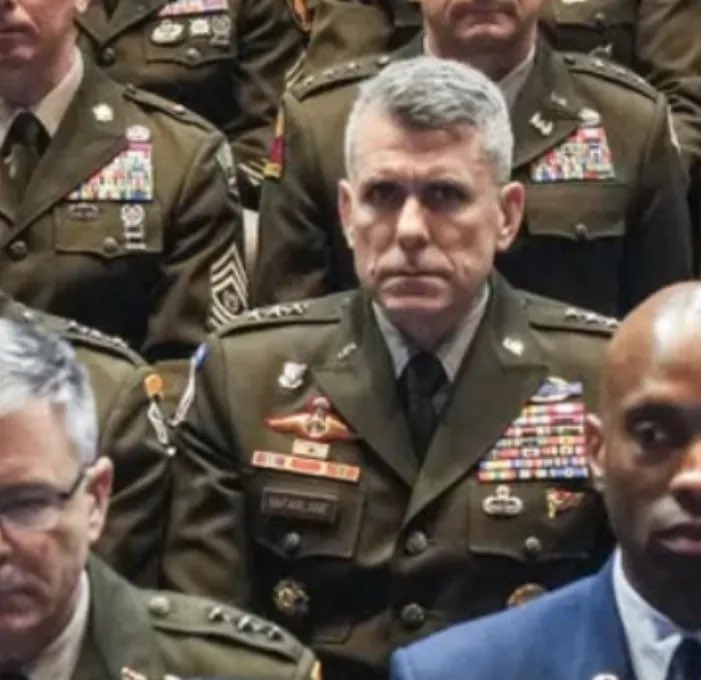
In any coup, the outcome largely depends on how the military perceive the coup leaders. The total silence in this room makes you wonder at what point they may consider the Trumpian clown car as a threat to national security. https://t.co/42psvJ0HoG
Given that most public thought these days seems to be just re-hashes of Hollywood movies, this is what Trump and Hesgeth’s trashing of their most senior generals made me think about this week. https://t.co/ZSB8oZpgjn
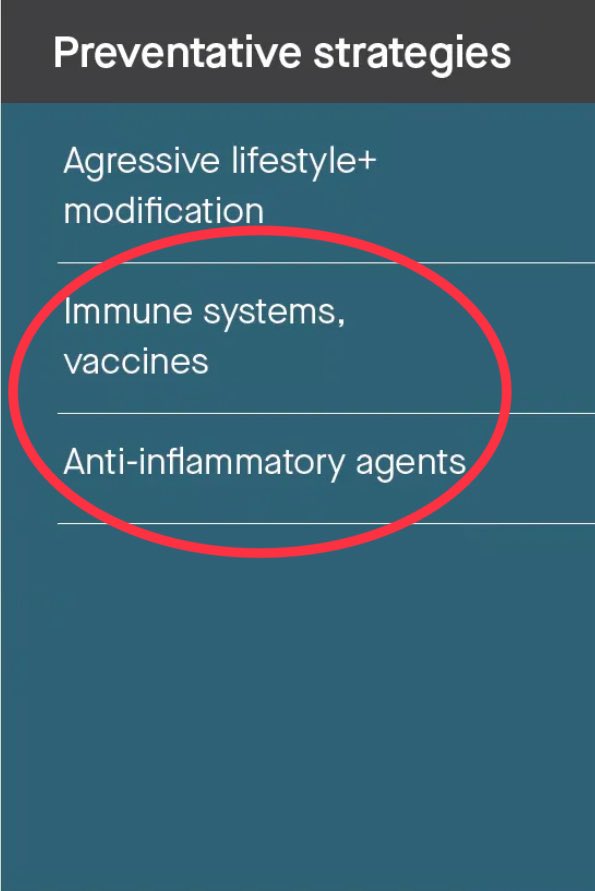
Eric Topol here discussing the failure of preventative medicine in the past 75 years, with the exception of vaccination. And how AI is turning that around. One thing stood out for me. https://t.co/VqW9NOQg3i 1/2 https://t.co/7FyxOooYC2
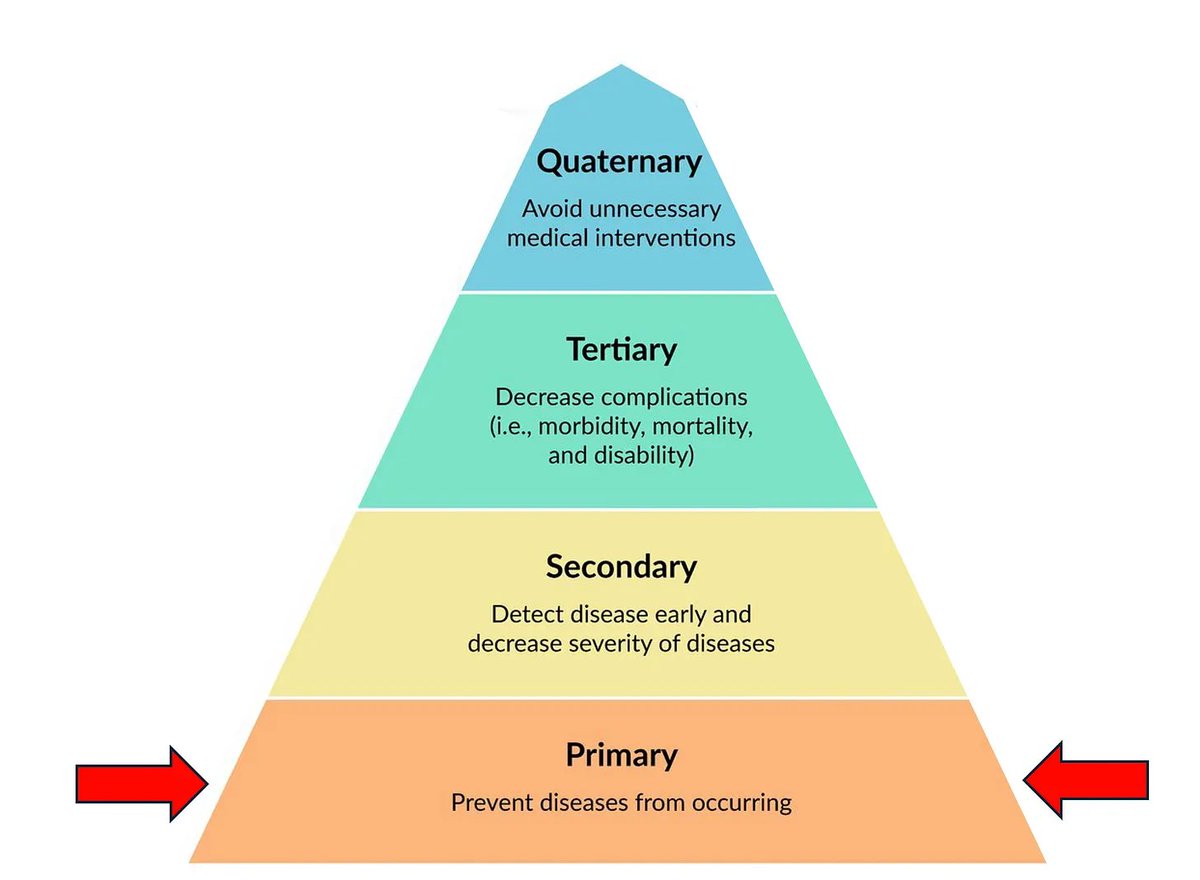
2 of the 3 suggested strategies centre on infection. Inflammation is poorly understood, but some researchers say persistent infection may be implicated there too. Add ‘avoid infections’ to ‘lifestyle modification’, and it’s a 3 from 3 clean sweep. /end https://t.co/8dPl5dsoJF
Sharing recent NY advice about masking for Covid, a friend said there was no way their kids would be wearing anything over their face that restricts the flow of oxygen to their brains. The propaganda works.
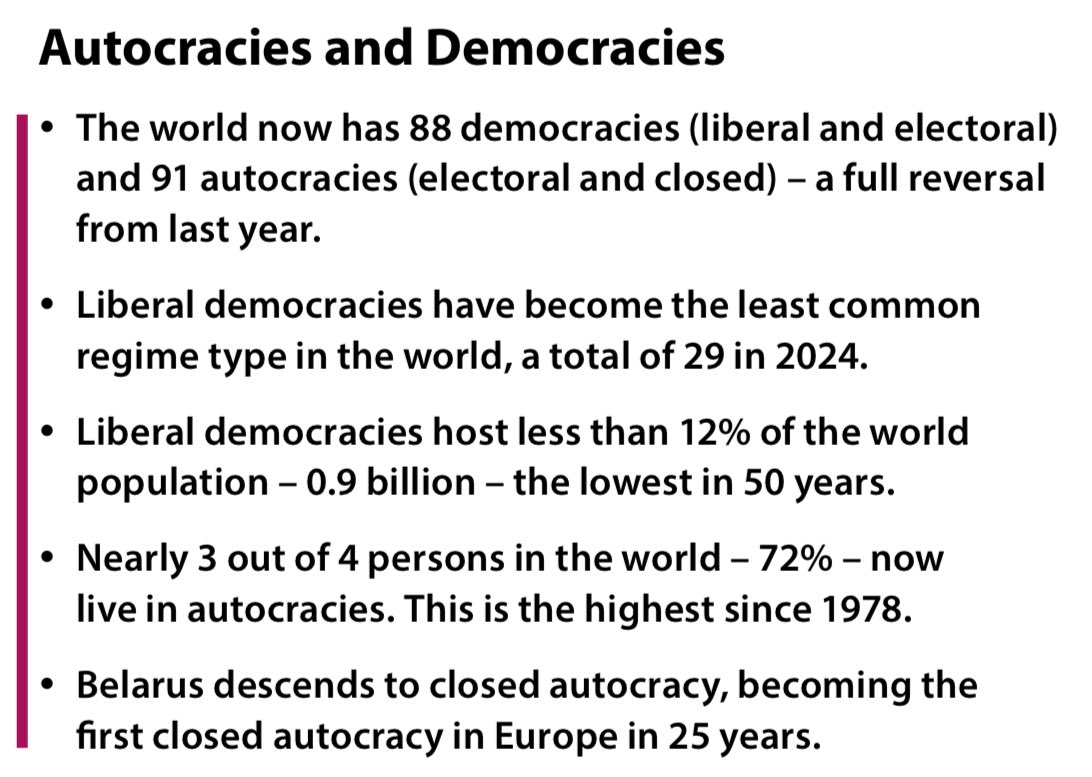
Trump is just the pointy end of a long-term trend. Democracy is failing, everywhere. Not because it’s under attack. But because we never understood what it is. I’ll share more from the V-Dem reports. https://t.co/TN3kUYwW0i https://t.co/cOwK8TgCDZ
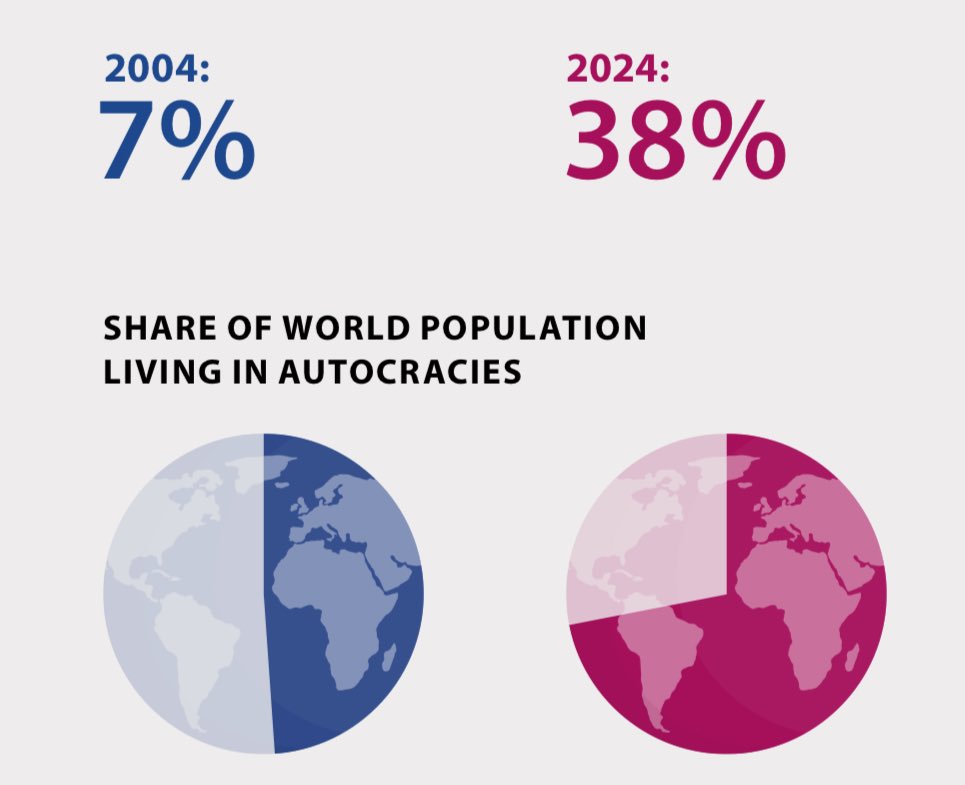
So either a tiny minority is incredibly skilled at global-scale suppression of the ‘will of the people’. Or the will of the people has always been a horseshit idea. Hitler loved the term. https://t.co/PuxgoTSvHS
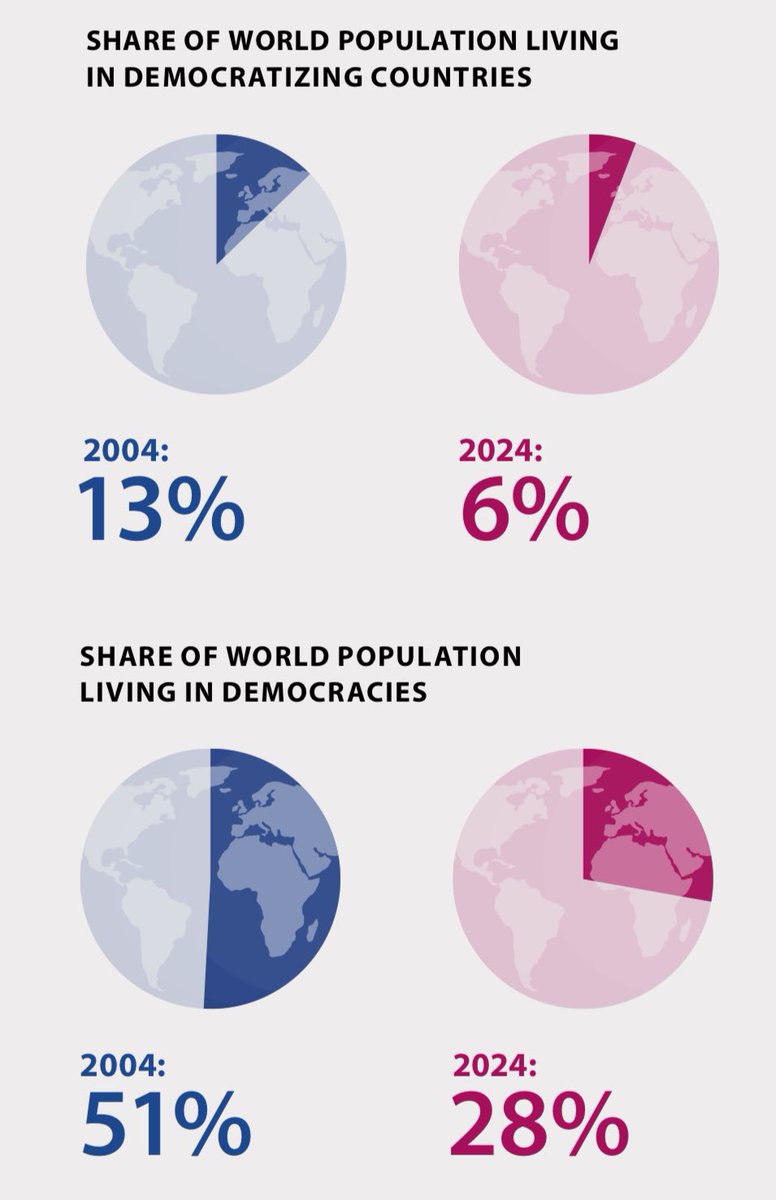
Let’s ditch all the idealistic claptrap spoken about democracy and freedoms. And focus instead on why, socially, humans overwhelmingly seem to want hierarchical societies. ‘Autocracy’ is a loaded word, born of the idealistic claptrap. https://t.co/TN3kUYwW0i https://t.co/HWUpzf27PJ
The more people vote in the US, the worse ‘democracy’ gets. Socially, this makes perfect sense. Using idealistic claptrap, it’s totally bewildering. 1/3 https://t.co/YUj7Fbq9Qz
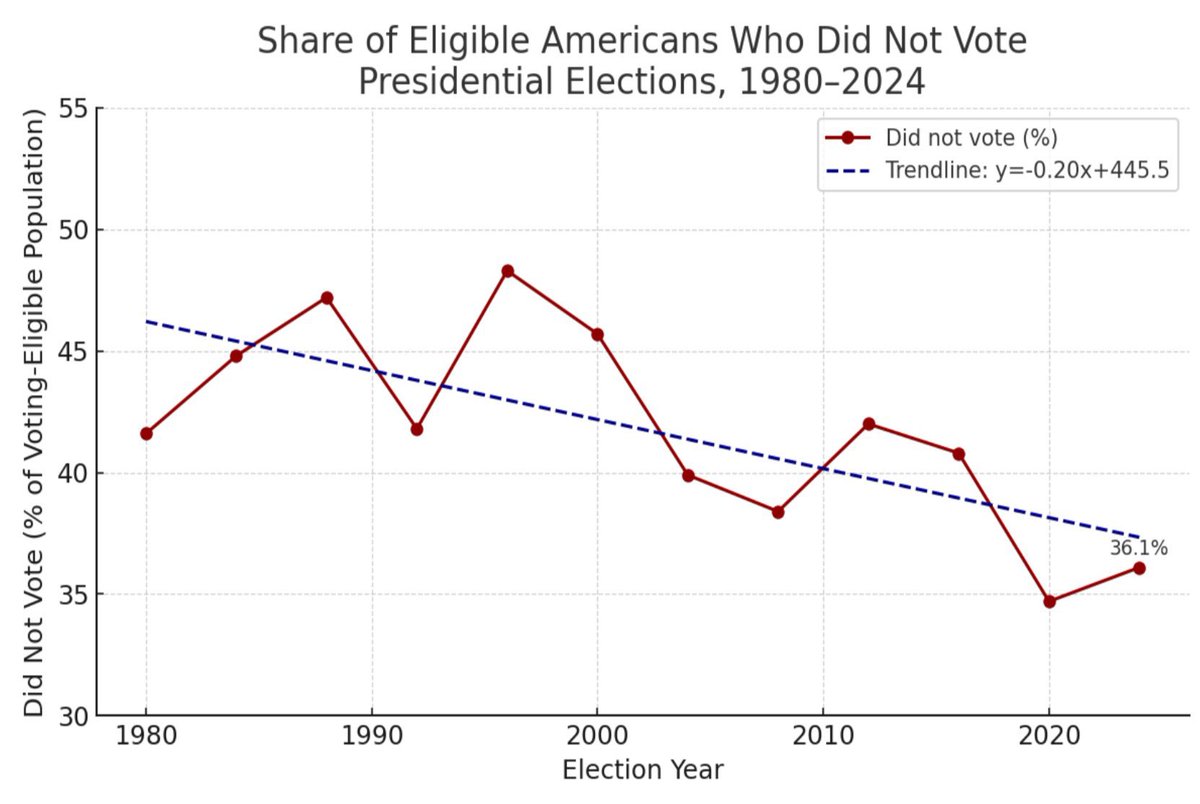
Socially, power in society has shifted to ‘the people’, mobilising on social media. What are they producing with that power? Autocracy, authoritarianism. Or at least those are the words we use, through our idealistic claptrap filters. 2/3
Societies are reproducing the same social form they have for thousands of years. Monarchical hierarchies. Our inability to live or think outside the present moment of social media status games makes this invisible to us. A little bit of history makes it obvious. /end
The imminent arrival of ‘daylight saving’ time, which saves no daylight, fucks circadian rhythms and transforms Spring mornings into dark winter mornings, is another reminder that knowledge never runs societies. Status runs societies. Stupidity usually has the highest status.
Fossil fuel energy is the root of our status quo. Feel the magnitude. In just the 50 years between 1970 and 2020, estimates of profit to the oil industry and oil nations are over US $50 trillion. That’s nearly $3 billion profit per DAY. Every day, for 50 years. https://t.co/N6Ylapu5KT
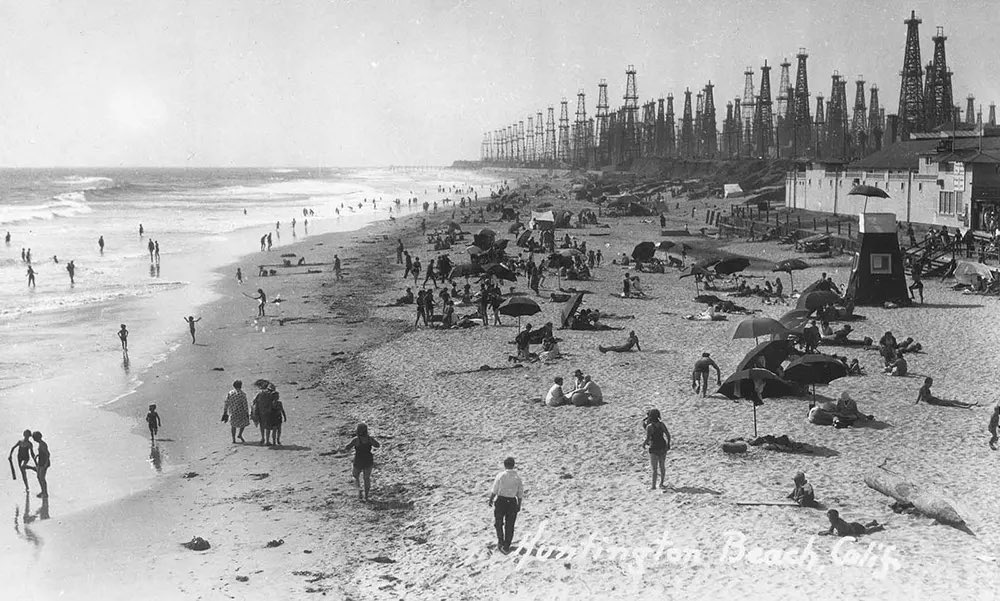
It’s almost a truism that to have a revolution, you need to mobilise a lot of people. Renewable energy challenges that. Putting solar panels on your roof can to a considerable extent free you from fossil fuel dominant hierarchies. You don’t need to mobilise others. /1 https://t.co/rZtEmlEQRc
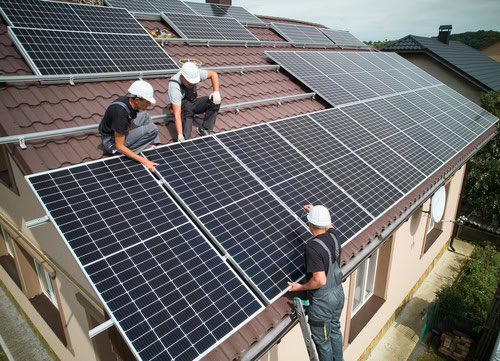
It’s an example where the objective, material reality of the world overcomes the usual treacly bog of social relations. Status and power has resided in fossil fuel energy for so long, that offering a delocalised energy source is revolutionary, even for individuals. /2
Why I still maintain that you can try all the activism to maybe mobilise people, to overcome the problems we face. But none of it will have the impact of electrifying your home, powered by your own solar. It’s not just about cheaper, cleaner energy. /3
In a world where energy has been the currency of status and power for so many decades, nothing will collapse those hierarchies faster than changing your individual energy use. And it gets even better than that. Because all hierarchies connect. /4
By freeing yourself from fossil fuel hierarchies, which you can to a large extent do with your own solar and electrifying your home and vehicles, you’re knee-capping *every* existing hierarchy in society. Not just in energy. The Covid deniers, the ‘fascists’, etc. etc. /5
All of them have an umbilical cord to fossil fuel energy, in some ways. As Rousseau said, a society has all of its habits at once. Humans are almost completely incapable of taking their focus off other humans. We’re social animals. But here material reality triumphs. /6
Because the existing status quo is so fundamentally bound to fossil fuel energy, the capacity to bypass it *individually* is a new type of revolution. You can be free in a couple of days, without storming any Bastilles. You don’t need to convince or mobilise others. /7
Humans left to themselves will just fight each other for status, every day. But when status attached itself to the material reality of the world, through adoption of fossil fuels, it also left itself wide open to *material* revolutionary upending of that status. /8
By anybody, with a material alternative. Get solar, electrify your home and vehicles. That will change the WHOLE world, very fast. Activism won’t. /end
Anybody spotted ‘focused protection’ happening, anywhere? Imagine having a model of society where people live in independent bubbles, where nobody crosses the bubbles. That’s the GBD. The Great Bubble Delusion. https://t.co/WEy3herpdX
Meanwhile the Anglo powers, including Australia, are spending hundreds of billions and re-writing defence strategy, to take on the ‘threat of China’. It must be the threat of ‘authoritarian’ rule. Unlike the freedom loving Trump and Farage. https://t.co/hxQb1rOOAJ
In most democracies, inequality is now rampant. By not recognising the central role of status in societies, with idealistic nonsense about ‘the people’ running everything, we’ve given status uncontrolled leeway to do what it likes. https://t.co/AuQdt19a3A
Zoom out of the idiot daily social media team sports, and this graphic will help you see 'end of the Anglo empire' very clearly. https://t.co/CRIqinqC08
Conceptual leaps drive scientific progress much more than RCTs. I’m firmly with those who believe infection is likely responsible for most chronic human disease. We may be seeing the hypothesis tested in real time, right now. What a thread. https://t.co/IpD4DPJXkE
We can keep getting up every day, looking at the deteriorating state of the world, and dust off our tired old explanations of the vast masses of people being stupid, and overcome by a tiny handful of authoritarians. Or we can focus on the eternal currency of human life. https://t.co/YXJdMtfZYV
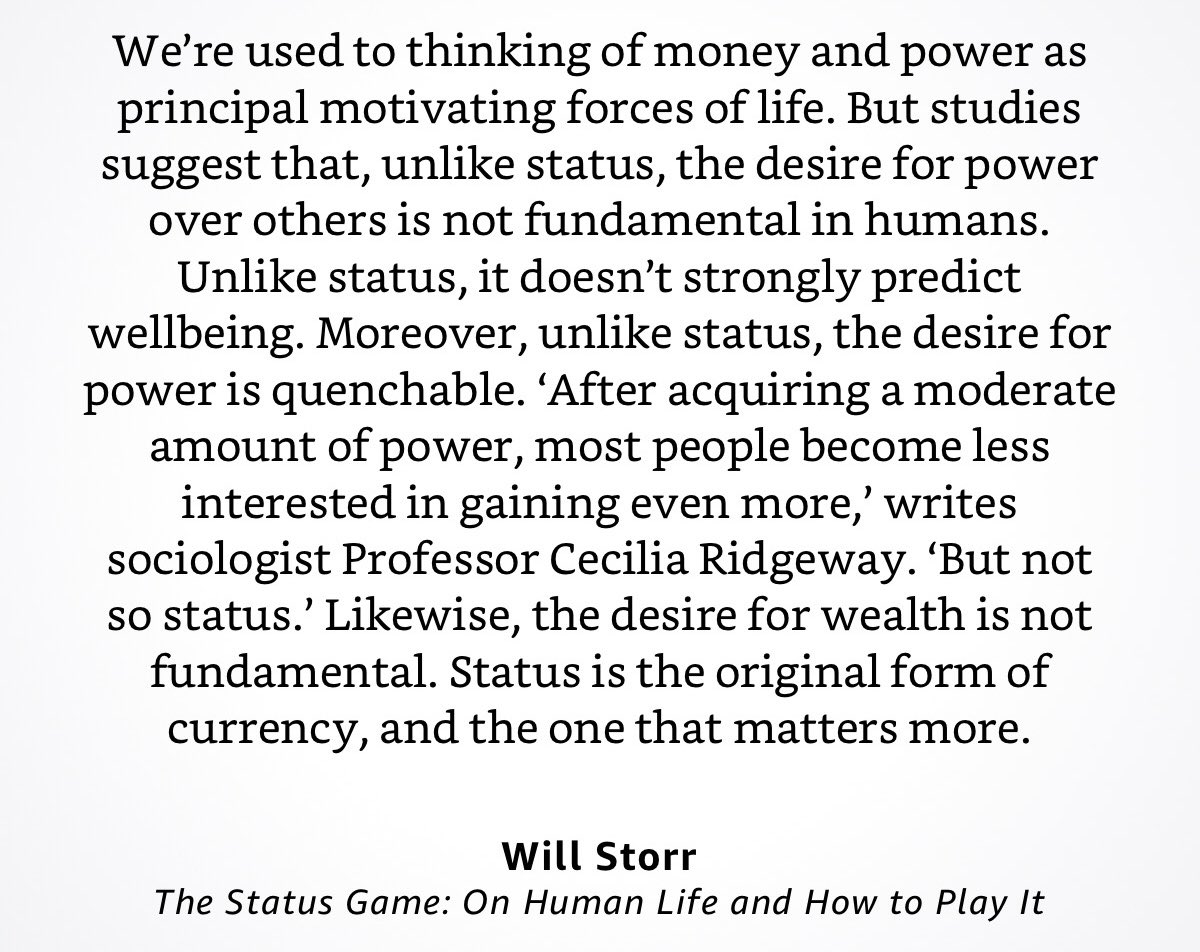
The truths of life are neither popular, or unpopular. The whole continuum of popularity is a status continuum, not a truth continuum. What is unpopular is just popular to another team, in the social melee. Popularity and unpopularity are two sides of a single coin. /1
The most catastrophic belief about democracy is that it’s an aggregation of what is most popular. ‘Majority rules’. Popularity has no connection with the material reality of the world. It’s entirely a currency of social status. /2
Populism is just marketing. Anything can be marketed, made popular. You can convince millions to ‘live with’ pandemics, or that international travel is actually enjoyable and doesn’t destroy the places you visit. Anything, really. Hitler was popular. /3
Democratic elections are only popularity contests. Why all democracies have been in free fall on the measures of their health since universal suffrage became the definition of democracy. It was the identity politics of its day. Status games. /4
The Greeks, who invented democracy, would have laughed at the very idea of what we call democracy today. We think we’ve improved it, modernised it. It’s run aground on all the problems the Greeks saw. /5
True social progress is progress on the material foundations of life. As Latour said, we don’t have ‘object-oriented’ democracies. We have status games. What is empirically, materially true is what is true. The rest is just a pissing contest, for status in social groups. /6
Civilisations that survive put material well-being at their core. Mostly engineering of various kinds. Civilisations that flame out quickly are ones that fight over ‘ideals’, over the status of groups. Over the identity of people. /7
Building stuff isn’t ‘tools’, it doesn’t just give you ‘stuff’. It’s the way societies that survive weave their social bonds. Those bonds are non-human and material much more than they’re human. /8
Once you bind daily social life to the building and maintenance of material things, you sideline status. Status makes nothing work. The building and trade of things is what creates civilisations. Material things, responding to material needs. /9
Imagine a re-formed democracy, where the daily team sports over status of ‘Left’ and ‘Right’ was banished until all the material needs of a society had been met. Just imagine that. Those material needs aren’t Left or Right. They’re just material needs. /end
Status is the organising grammar of social life. It evolved to reduce violence and coordinate cooperation. Social life unregulated by status is pure, endless violence. Which is what you get if you allow ‘the people’ (i.e. nobody) to run societies.
‘Authoritarian’ nations now are the only ones left building anything much, at scale. Others wallow in fantasies about ‘markets’ of free individuals generating civilisation spontaneously. All they generate is eternal violence. The fight for status. https://t.co/eZZHeAtiYj
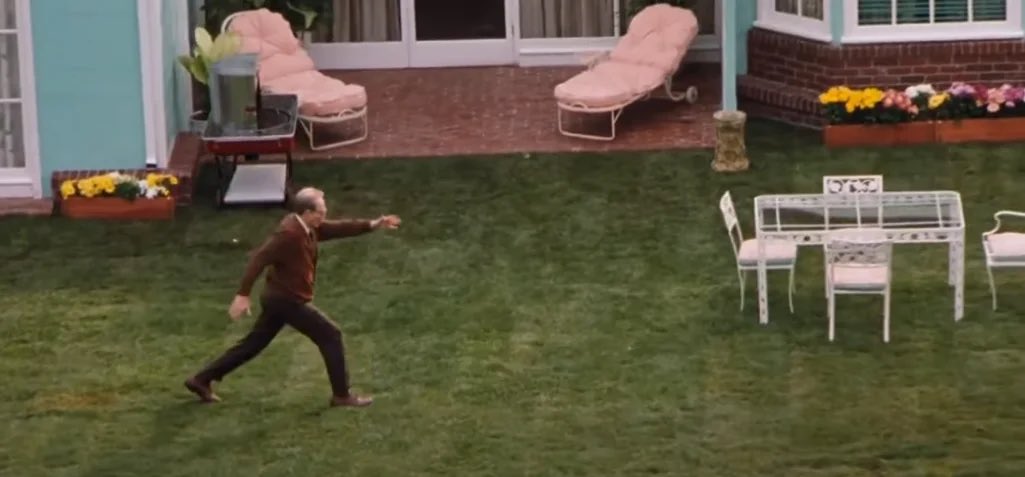
In Blast from the Past, Christopher Walken’s character, locked away in an underground bunker since a false alarm nuclear strike decades previously, re-emerges. And plans another bunker. How I see the ‘Left’, ‘Right’, ‘authoritarian’ Cold War narratives that still dominate today. https://t.co/foNrbH5A5l
AI can be remarkable. I test it occasionally in areas that are my area of expertise, and what it can do in almost no time at all stuns me, literally gobsmacked. Humans mostly don't think, and never have. This is a liberation of thought. Not a total liberation, but a liberation.
Kate grew up in a boarding school. Social media is creating the disconnect. Not devices. https://t.co/gUUVvqjUXG
America is falling apart not because it’s been hijacked by tyrants, but because its culture was constructed to see anything that comes between a man and his God as a tyranny. ‘Tyranny’ is the lowest of low bars there. It’s pretty much everything. Why everyone has a gun.
‘The vulnerable’ is a political strategy imported from free market zealots. The idea we should all take ‘personal responsibility’ for everything, even the most basic public services, with a few crumbs (that never arrive) allocated to the worst impacted. https://t.co/7jvAuwcuUp
The passion for ‘accountability’ is also the greatest weapon used by modern free market zealots to bury public administration in eternal processing. The idea lots of FOI increases ‘trust’ in public institutions is bizarre. FOI is the culture of distrust, in these institutions. https://t.co/LfKNDEV6wz
You can flood the world with as many facts as you like. I still see this every day, on multiple topics. If you don’t shift to actually understanding how societies work, you’re pissing into the wind. They don’t run on information. They run on status.
We stopped the world twice in the 20th century to fight two world wars. Over trivialities, compared to this. Humans fighting humans. For status. That’s all societies will do, unless catastrophe is present. Not imminent, present, total disruption to lives and threat to life. https://t.co/QczQ6TnPiD
We are all FACHIDIOTS unless disaster is already upon us, forcing immediate emergency coordination of all of our diverse fachidioten expertise. Emergency does the coordination, everything else will just be turned into status games, to promote our various statuses/specialities. https://t.co/0b6YN0EC8g
Nobel Peace Prize: Don’t Care Wars: Don’t Care Left, Right, democracy, autocracy: Don’t Care Culture and identity wars: Don’t Care Travel: Don’t Care Economies: Don’t Care Collapse of civilisation and ecosystems, by burning millions of years of energy in only 300 years: Care
I see the false dawn of apparent ‘hybrid immunity’ in the UK has been rudely interrupted. Christina Pagel says Covid there is obviously ‘not seasonal yet’. Why (serious question) would we think it will ever become that? https://t.co/qKRucIrkUM
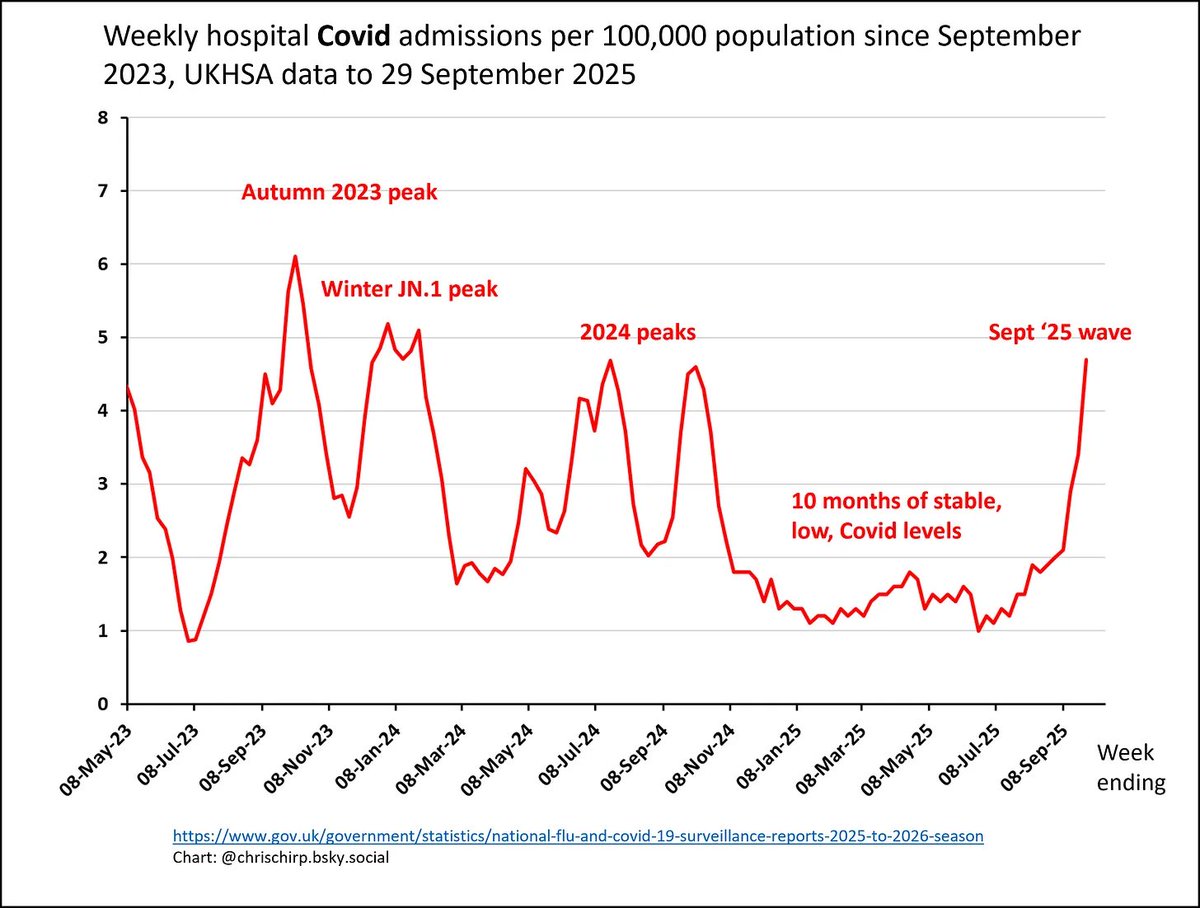
As @DavidJoffe64 and others point out, it’s not that Covid stopped being an epidemic disease. It’s that there’s now so much of it that the model isn’t always ‘waves’ of infection, it’s a ‘tide’ of raised and lowered (always elevated) infection levels. With crashing waves. https://t.co/Q4fLZUvyTY
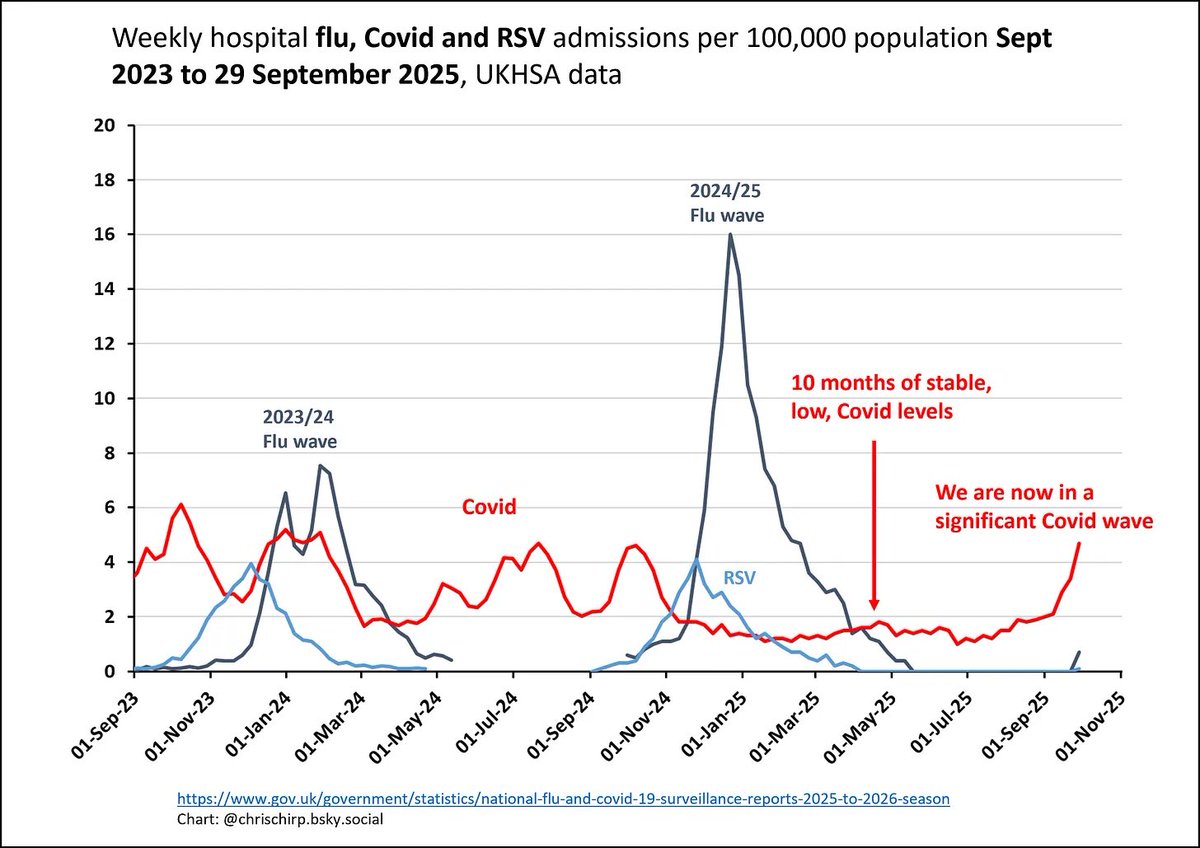
Those who advocate for ‘hybrid immunity’ against Covid simultaneously advocate for the withdrawal of both eligibility for and even access to Covid vaccines. There isn’t anything ‘hybrid’ about immunity, without vaccines. The real strategy is ‘do nothing, infect the lot’.
We know the Great Barrington Declaration was sponsored by the American Institute of Economic Research (AIER), a libertarian free market think tank. Also a climate change denial group. The declaration didn’t even pretend to do the things it promoted. See my green bits. 1/4 https://t.co/LpAEjPUbqE
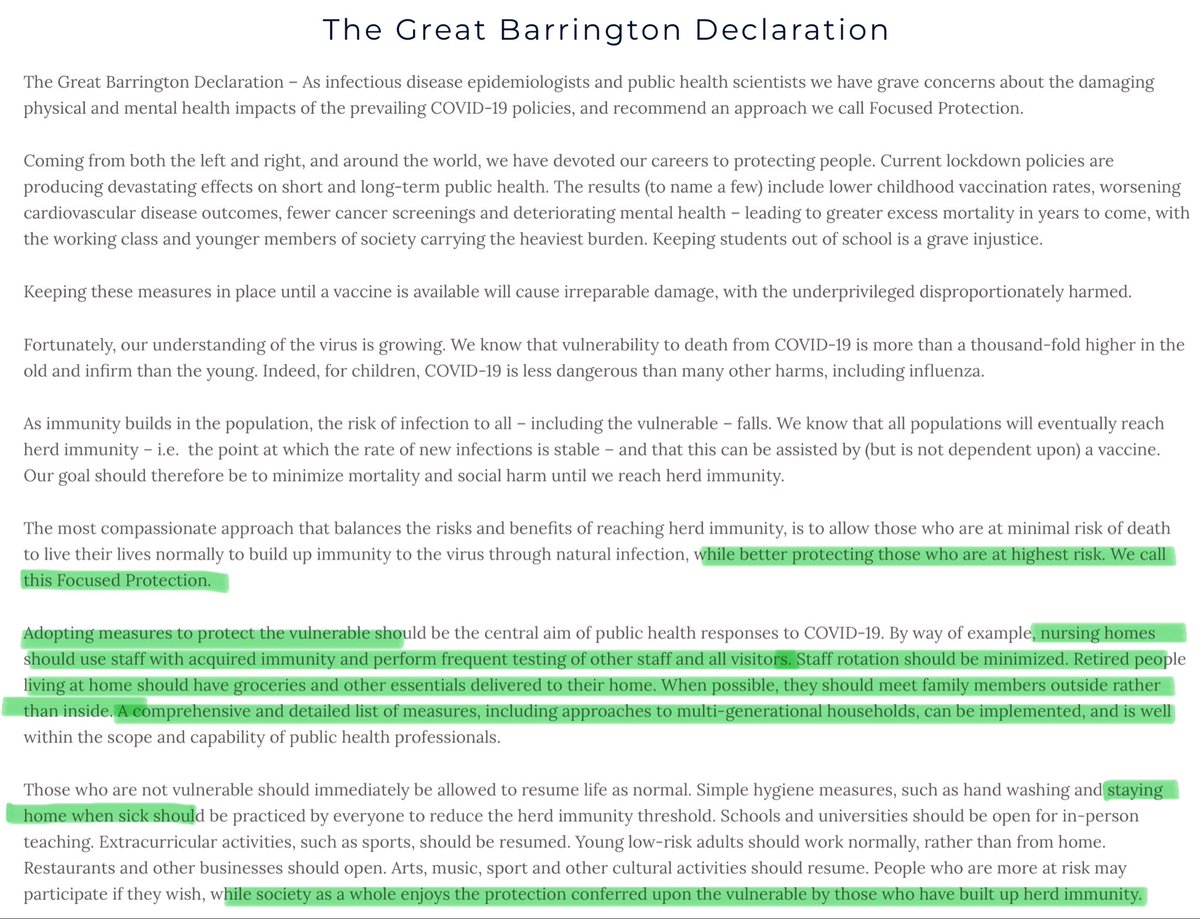
None of these crumbs from the public health table the free marketers thought might sell this public health horseshit was ever intended to actually happen. It’s just infections, infections, infections. It’s not a strategy. It’s no strategy. That was the point. 2/4
It’s like climate change denial, also a libertarian/free market passion. The intent is to destroy ALL action. ‘The vulnerable’ is a specious smoke screen, they couldn’t give a fuck about anybody vulnerable to anything. Except the rich, vulnerable to taxation. 3/4
Read this declaration and you will see the public health ‘strategy’ now in play for Covid, in most countries. Our health ministers and leaders should be asked why a half-page free market wet dream was allowed to replace a century of public health infrastructure. /end
My belief is we’re blinded to the real social things driving our societies by our obsessive focus on the daily team sports of ‘politics’, really just the names of teams in the same social melee. But here’s a rare window into the engine room. /1 https://t.co/LpgPbG9MGK https://t.co/2yrKeUxYSh
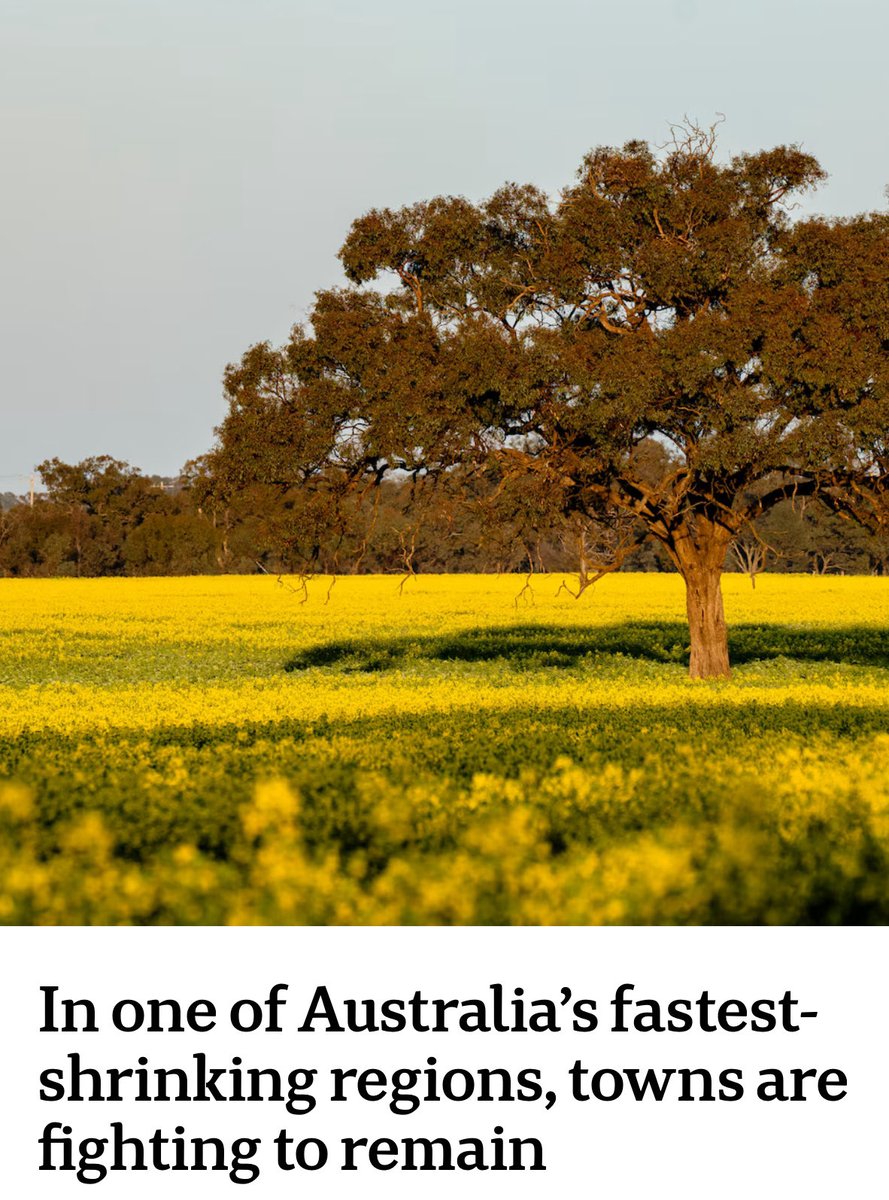
The idea of the ‘country’. Or the bush, as Australians like to call it. To paraphrase John Clarke, that place they like to pretend they live. Here’s the thing. There is no such thing as ‘the country’. Understanding why will reveal more ground truths of our cultures. /2
If you look at the history of pretty much every country town in Australia, for example, you’ll find the same thing. These were early extractive industries for the cities. The place they went looking for ‘resources’. Mostly farming and mining. /3
The fact these areas were sparsely populated by the farmers and miners created the fantasy that they were living an entirely different form of life to their city cousins. But they weren’t. Again, they were just extracting ‘resources’ from the land out there. /4
City/country is a fake divide. And you can see that in real time right now, in the article, how country towns simply disappear, once their extractive industries close up shop or stop employing anybody. Some try to stay alive becoming tourist destinations. /5
Transforming their towns into frozen-in-time theme parks for bored city dwellers looking for something to do in their time off. And/or gentrifying the towns, to replicate some of that exclusive leafy green feel of rich suburbs in cities, for less money. /6
Which mostly just floods the town with hipsters, who create nothing except expensive coffee, food and haircuts. Let’s get to the deepest cultural point here. /7
As old imperial cultures, by definition we never live IN the landscape. We never *inhabit* it. We live ON it. It’s only a resource to be plundered, to be returned to the centre of the empire. That’s what empires do. /8
We live inside maps, generated to facilitate transport of these resources. We then turn the rest of the world into the same, and make those locations our ‘bucket list’ of ‘places to see’. Like aristocratic youth on their eternal Grand Tour. /9
Just look at how much of our obsessive travel culture is about creating opportunities to generate selfies for our socials feeds. We never leave home, travel is just more fuel for our status games in our social groups. /10
Most of the ecological catastrophe of modern life is this simple, social/cultural fact. We have NO IDEA how to live IN a landscape. Only on it. We bulldoze most of it away to make room for our homes, which we then bid as casino chips in housing markets. /11
Longer term this means extinction. The landscape is all that ultimately sustains us, as many Indigenous peoples figured out over thousands of years. But how you do you live in it, rather than on it? /12
We pretend that means buying a big 4WD and churning it up on our wankpanzer Crocodile Dundee fantasies, of getting back in touch with our country. Just more theme park culture. Dundee is like the Elvis of landscapes in Australia, the white guy re-branding black culture. /13
Or the ‘back to nature’ crowd, worshipping the mess out there now as some holy object. Both at total arm’s length from actual habitation with the landscape. /14
There are no simple answers. It took our own Aboriginal culture thousands of years to create the landscapes we took off them. We idiotically thought they were ‘wild’ landscapes. They are now. Much of it a desolate wasteland. /end
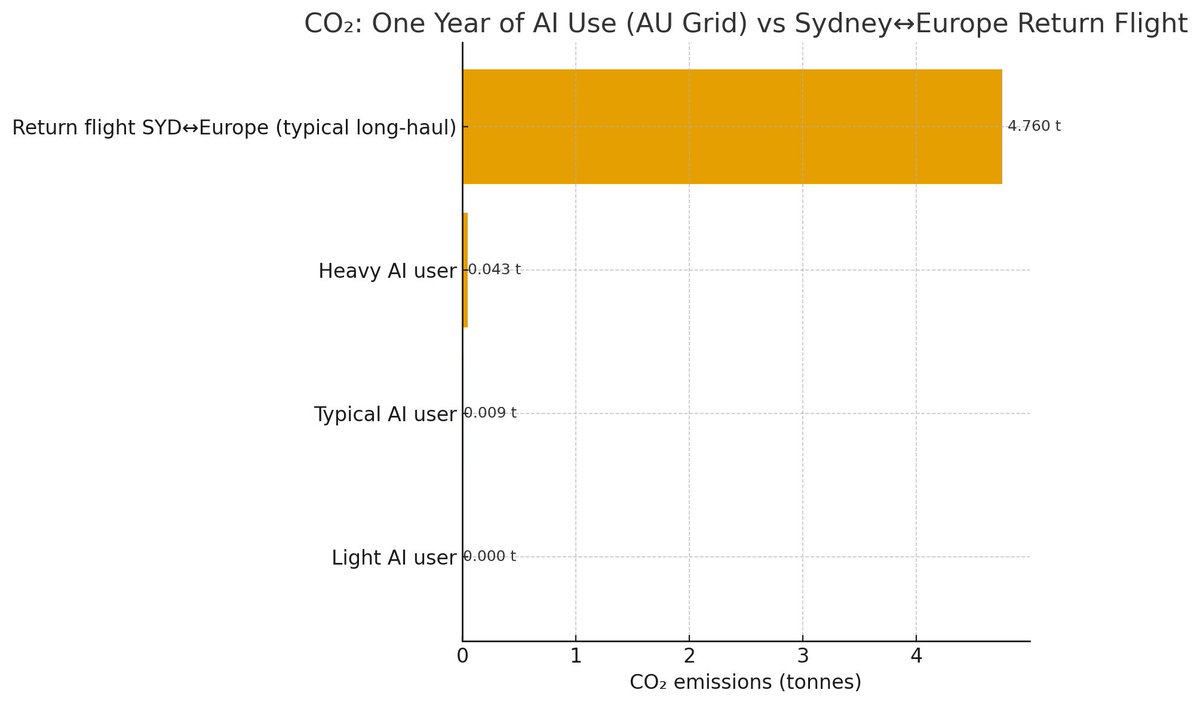
The energy and environmental impacts of AI are a common narrative now. It’s funny how we never question the real elephant in our cultural room. Recreational travel. On energy it’s bad enough, but let’s see CO2 emissions. /1 https://t.co/egInLJkT00
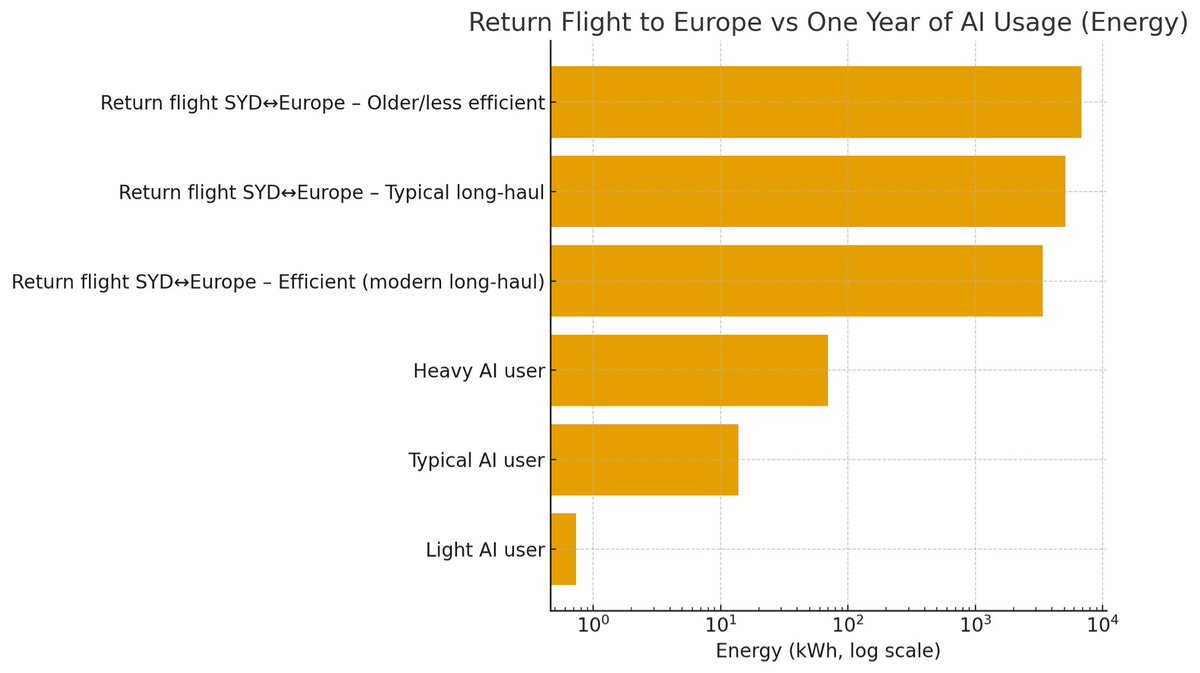
Ouch. This is *per person*, not per plane. /end https://t.co/RjCulWA7l8
As an engineer, often when I see people debating combustion versus electric cars, I think it’s worthwhile to point out to them that combustion engines from an engineering point of view are pieces of shit. And always have been pieces of shit.
I wonder if developing vaccines that took the acute edge off Covid infection, might end up leading to far more deaths in the multi-generational longer term, through the impact of widespread chronic disease. The vaccines needed to be used as part of a control program.
A revolution introduced fossil fuels into societies. We think the ‘market’ will drive them out. The true nature of the market as a defensive shield of bullshit to protect the status quo becomes more visible every day. It’s even worse than that. /1 https://t.co/uNvwD8R4wL https://t.co/gcPbeTJyLO
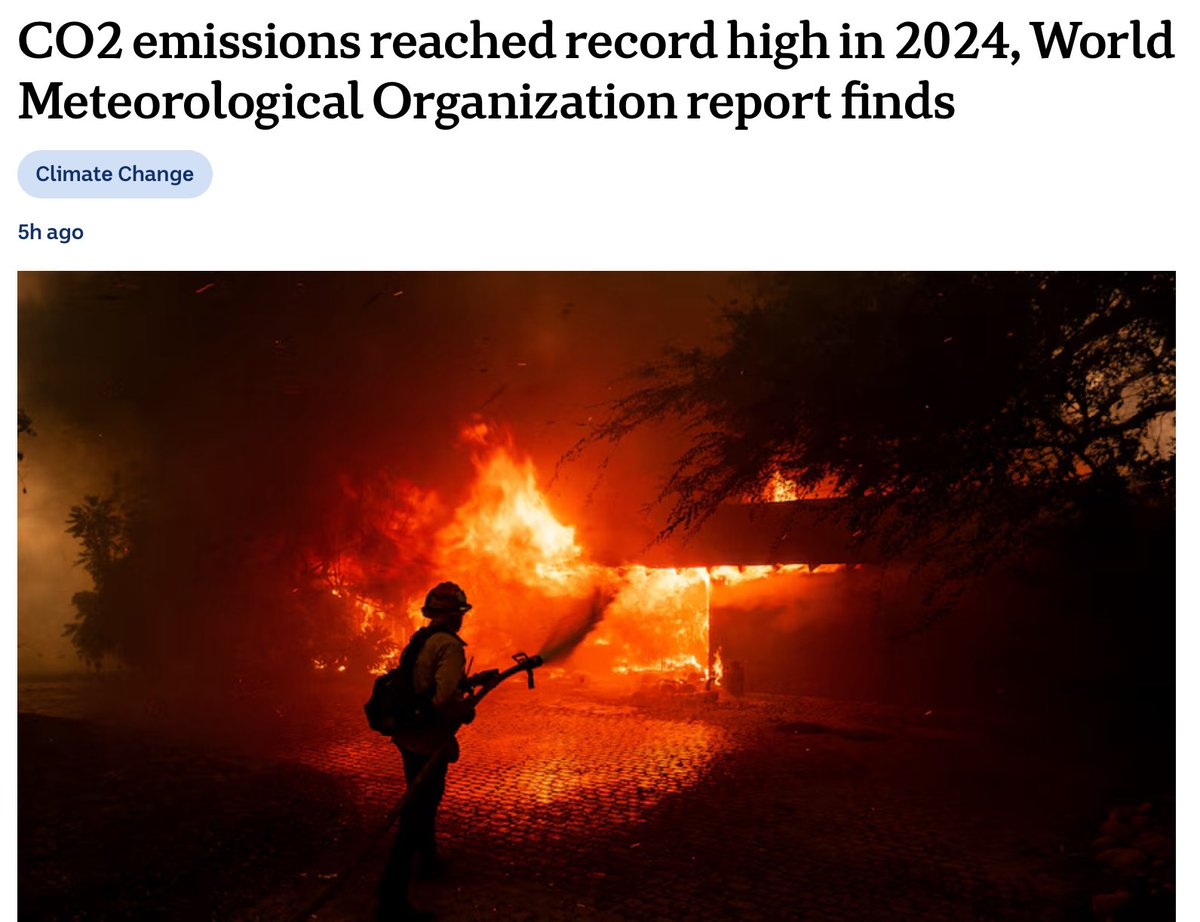
The market is the SAME idea as ‘democracy’, as popularly conceived. The idea that entire populations left to their own devices spontaneously create civilisation as we know it. ‘The people’ as the basis of democracy IS ‘the market’ as the basis of economic life. /2
It’s the same lethal, catastrophic delusion. What do populations do if left to do whatever they like? They do what humans always do. They create status hierarchies. They don’t create democracies, or markets. /3
Climate change is uncontrolled because ‘the market’ is being used to try to address it. You can’t make up just how stupid that idea is. That we have to incentivise ‘the people’ to move towards the needed climate action. /4
That’s not how the Industrial Revolution worked, that introduced fossil fuels. It was a REVOLUTION. It smashed all existing social status hierarchies. Only a revolutionary shift can do the same for renewable energy-based culture. /5
Leaving it to ‘the market’ only turns climate action into fodder for the status games played by the existing status quo. Both ‘sides’ of our idiot politics believe in this nonsense. /end
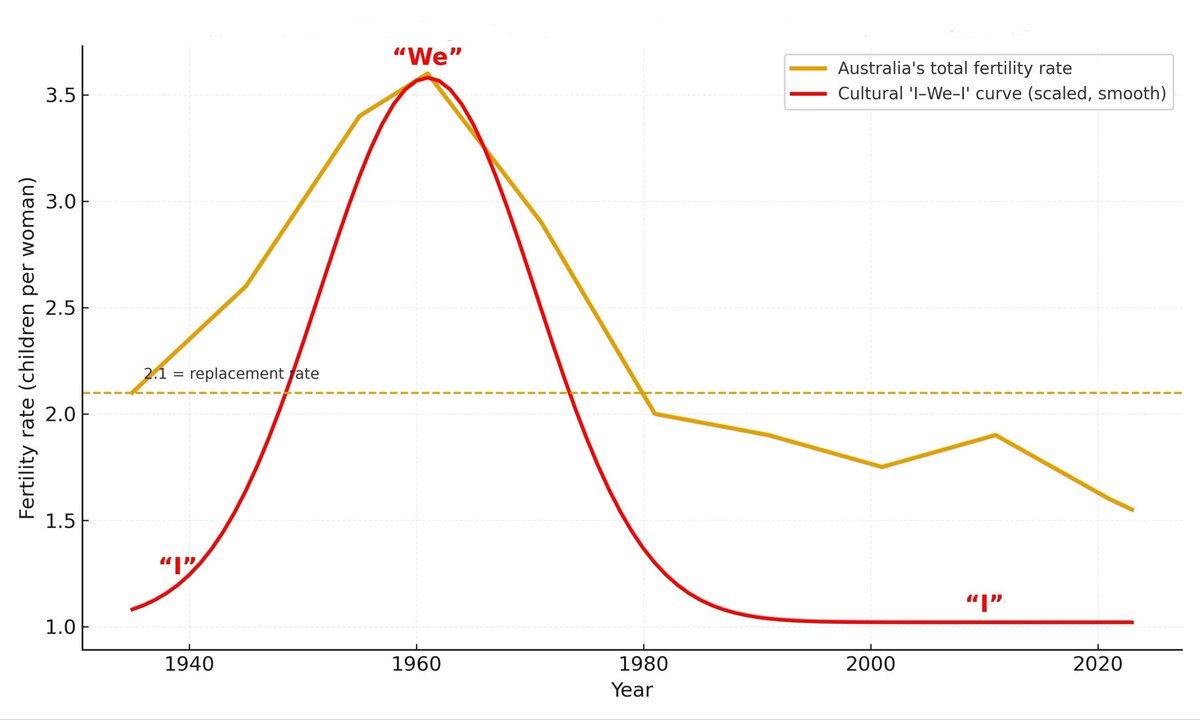
When you superimpose Putnam’s observations on the shift between “I” and “We” cultures, and the fertility rate. Kidult culture doesn’t like children. They get in the way. Adolescence replaces all other life stages. https://t.co/rdC5pWfvXZ
AI can do extraordinary things. Unfortunately much of it is birthed in a grifter US culture, where the dream is to escape the Earthly public squalor of libertarian life, with fortunes beyond the dreams of Midas. https://t.co/bpgxOSXbwA https://t.co/1DdtMXovCd
All major powers are defined by founding popular revolutions. We saw the catastrophe that was for France, Russia and China. We refuse to see it for modern Western powers. Revolutions substitute Kings with populist tyrants. Populist tyrants are Kings without checks and balances. https://t.co/7N1Kt4D7ga
This is the critical recognition, that it’s not mis- or disinformation we’re battling. The true target has always been trust. Trust is a proxy for status. Societies don’t run on information, they run on trust for those with enormously diverse expertise to run them. https://t.co/mgpnQFMEnp
America’s founding refusal to acknowledge the role of some form of centralised status hierarchy to lead social life has led to what we see today. Everything is just a type of gang warfare, between rivals looking to occupy the ‘No Kings’ void. https://t.co/SFimT48FCI
US libertarian culture creates the mess of Trump. American politics only takes hold in other Western democracies, whose methods are mostly alien to the US, where populations are pre-groomed by social assault weapons like social media. Also largely a product of the US.
Watching academics and public intellectuals, disillusioned with the inability to change the world through social media posts, retreat to Substack to monetise their work. I went to leave a comment on one and got the alert “comments only for paid subscribers.”
I often post about how all meaningful and significant change in societies comes only from catastrophic disruptions. Historically, wars, plagues, natural disasters. Everything else is status games, dressed up in various costumes. But there is another disruption to see here. /1 https://t.co/3AYc7pGjri
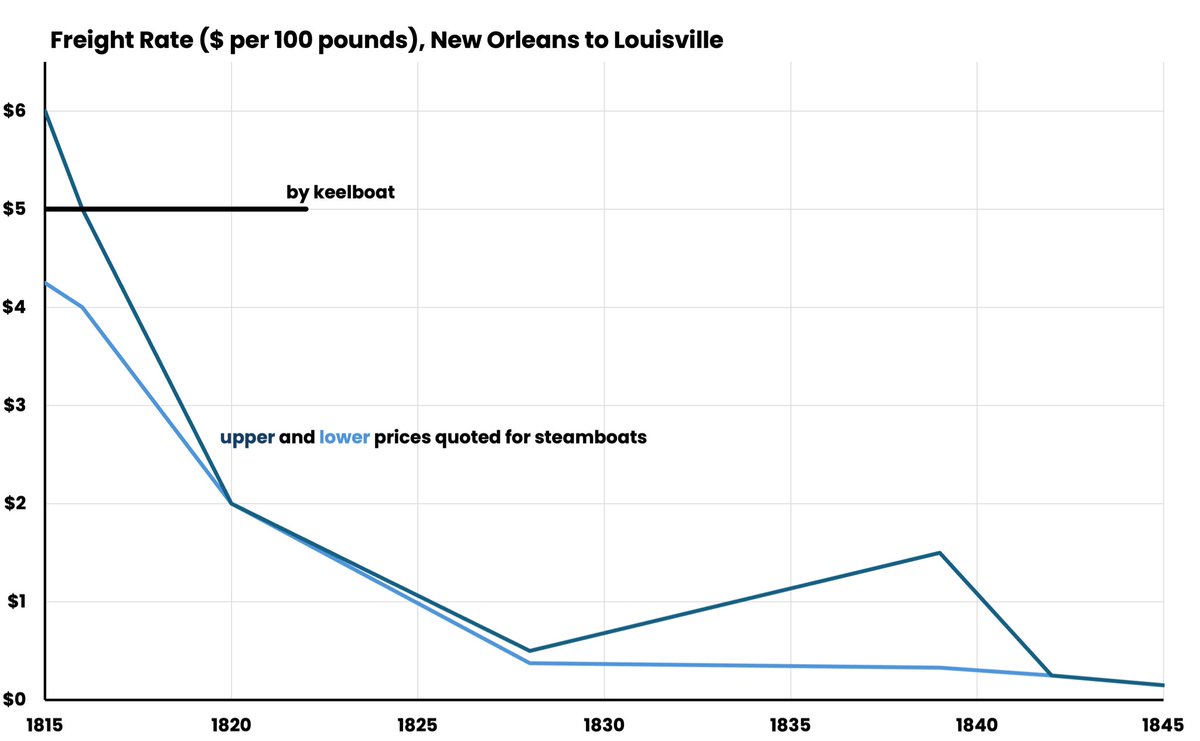
The one Tony Seba for example often talks about. Where the force of an innovation itself is so immense that it overpowers the status quo. His “10x” rule. If something is 10 times cheaper and better functionally, change is inevitable. Like keelboats vs steamboats, in the US. /2 https://t.co/Tae8Qjk4uD
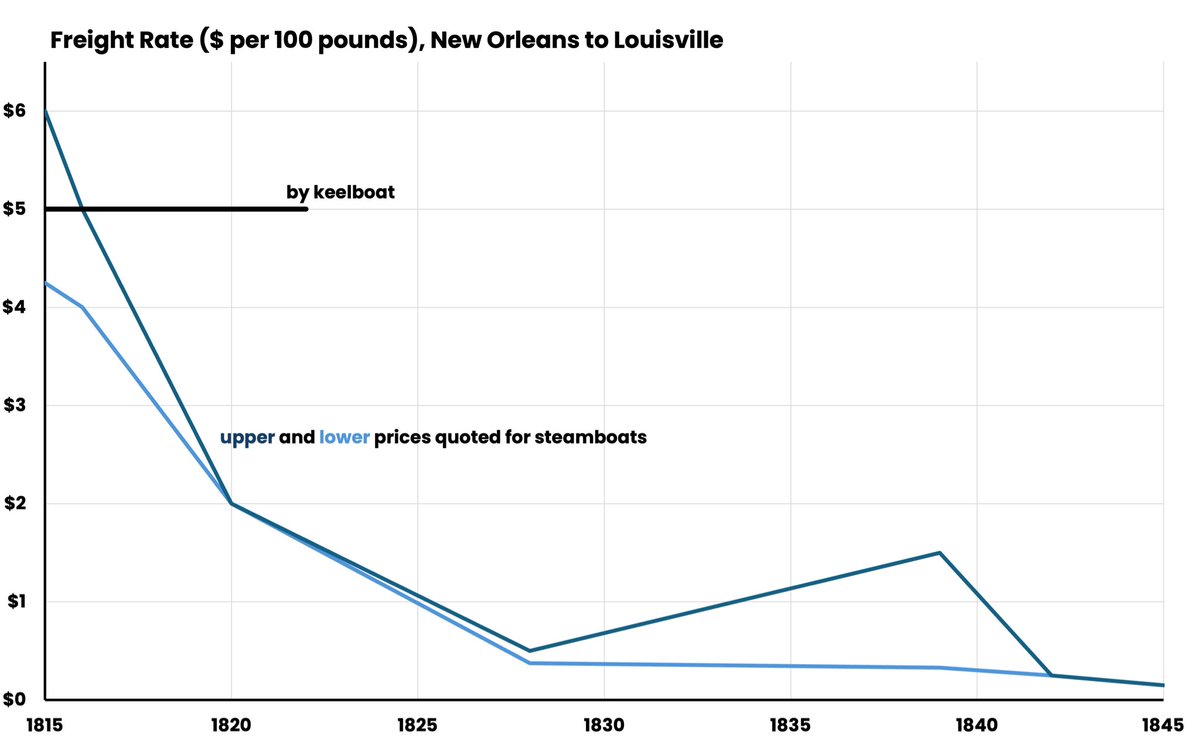
Just think about that. Something needs to be 10 times better and cheaper, to overcome our socially-driven status quo. That’s the force of social conformity. Overcome again only by something non-human, but in this case less destructive than a war or plague. /3
Renewable energy and EVs for transport are either at or approaching this 10x limit. At that point peoples’ beloved opinions become completely irrelevant. A revolution occurs, smashing the status quo. /4 https://t.co/IOP4gntoH5
Give up the belief that ‘the people’ (never defined) ‘debating’ each other all day is democracy and progress. That’s all status games. Jockeying for positions in the existing status quo status hierarchies. Engineers change the world, when disasters are in short supply. /end
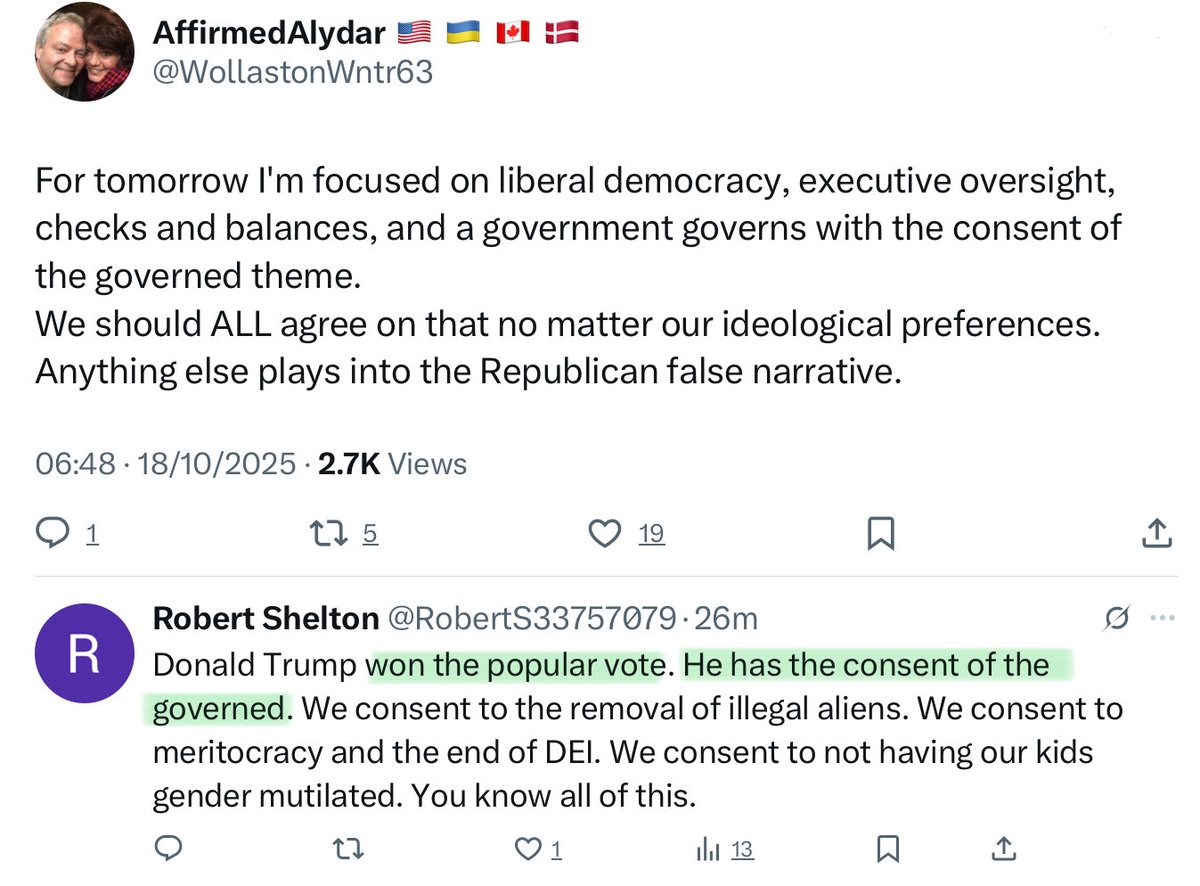
Checkmate. If you first define democracy as ‘the people’ (never defined) running the show, and then measure their ‘will’ using a popularity contest (elections), you get Trump. Trump isn’t doing an authoritarian takeover. He’s the logical, inevitable outcome of the ideas. https://t.co/5sm3RnDzzo
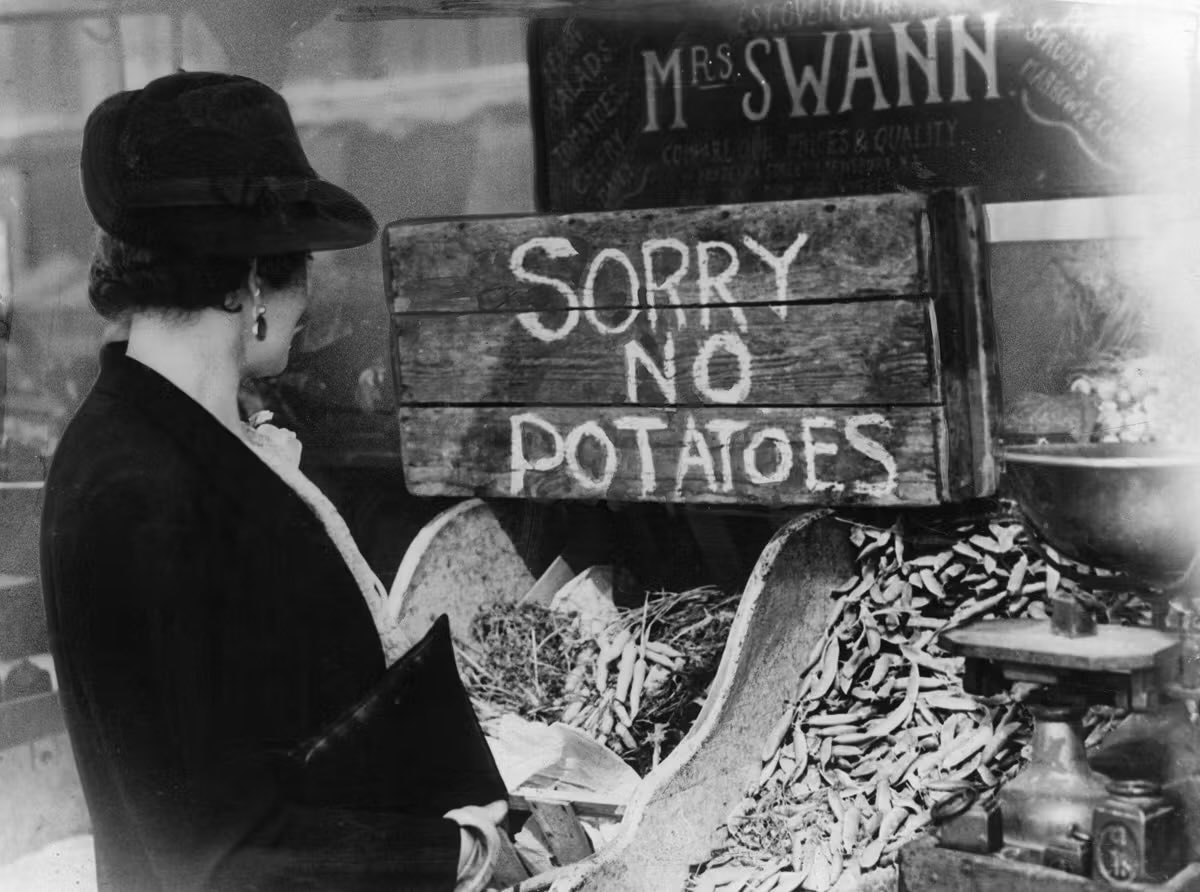
Rationing in Britain continued until 1954. 15 years of immense hardship, struggle and death. Now we can’t even shut down restaurants and OS travel for a few months to beat a pandemic, without our adolescent cultures becoming hysterical. https://t.co/k8nmkpmrcy
Democracy was never about ‘the people’. Ever. It always was feudalism with checks and balances installed to limit the power of the King. We then began calling those checks and balances ‘democracy’. This is basic history, have a look. /1 https://t.co/q60Ulono64
Those checks and balances were about buttressing the power of the royal court. Of the ‘aristocracy’, as we’d call it today. All societies are run by status. Status itself is run by the highest status people and groups. Kings and barons, and modern equivalents. /2
Centuries down the track those checks and balances on royal power are so far removed from modern historical memory that we’ve simply forgotten what they are and where they came from. ‘Democracy’ always was just putting limits on the powers of the King. /3
It’s a fight at the top end of societies, at the tip of status hierarchies. Because the rest of society works for that top end, the victories for either side of that battle will impact the rest of us, in good and bad ways. So we think this must be a ‘people’ centred thing. /4
That’s a fundamental, catastrophic error. The people (whatever that means, there is no such homogeneous group) benefit from the checks and balances only insofar as the barons they work for benefit from them. What if the barons and the King get chummy? /5
Welcome to 2025. Where our modern barons, our corporate titans and influencers, schmooze with the Kings of the day (Prime Ministers, Presidents, or actual kings). No need for those pesky checks and balances when schmoozing is the order of the day. Thus their collapse. /6
Fuck ‘the people’ now. No noblesse oblige operates in modern corporate aristocracies. They’d just as soon replace you with AI and robots. So ‘democracy’ is dying, everywhere. It has been for decades, we just ignore it. And not because of ‘authoritarian’ takeovers. /7
All societies are ‘authoritarian’, in the idiot way we use that word. Because they all run on status, and status is hierarchical, with a King or equivalent right at the top. Democracy is just when the barons and the King are at war with each other. /8
That is literally all it ever was. Throw in some catastrophic disruptions like world wars and plagues and economic depressions, smashing status hierarchies in the 20th century in particular, and you can feel like ‘democracy’ was in the ascendancy. ‘People power’ at last! /9
Utterly delusional. Not just because it’s not what actually happened, but because it could never happen anyway. ‘Popular sovereignty’ is an oxymoron. Governance bootstrapping. ‘The people’ will always do what all people always do. Fight for status. /10
Just like their barons and Kings. They join teams, headed by their higher status leaders in every field of life, and battle other teams, for supremacy. Imitating one another, to create team cohesion and strength. Why Girard called the basis of society ‘imitative rivalry’. /11
Another day of dreary scrolling through more of these status team sports, accusations of ‘authoritarianism’ and “No Kings” protests. That last one is funny. Like the US ever gave up Kings. The US President is the most royal figure in the world, and has been for decades. /end
#Insiders it’s not really access to rare earths that is the strategic advantage. It’s the capacity to process them, at scale. Only China has that.
Social media shows that in the absence of institutionalised change i.e. people employed to implement something every day, 365 days per year, there is no progress in public life. Only daily fads and fashions. Public life as a continuously shifting set of fleeting ‘trends’. https://t.co/hxtoBYdp6F
Just more performative ‘trending’ instead of public life. Even with its own hashtag. Public life is institutional, not people flocking to the streets. American culture has always been hostile to institutions. Both Left and Right, in modern terms. The culture is the problem. https://t.co/FZuMFArqHk
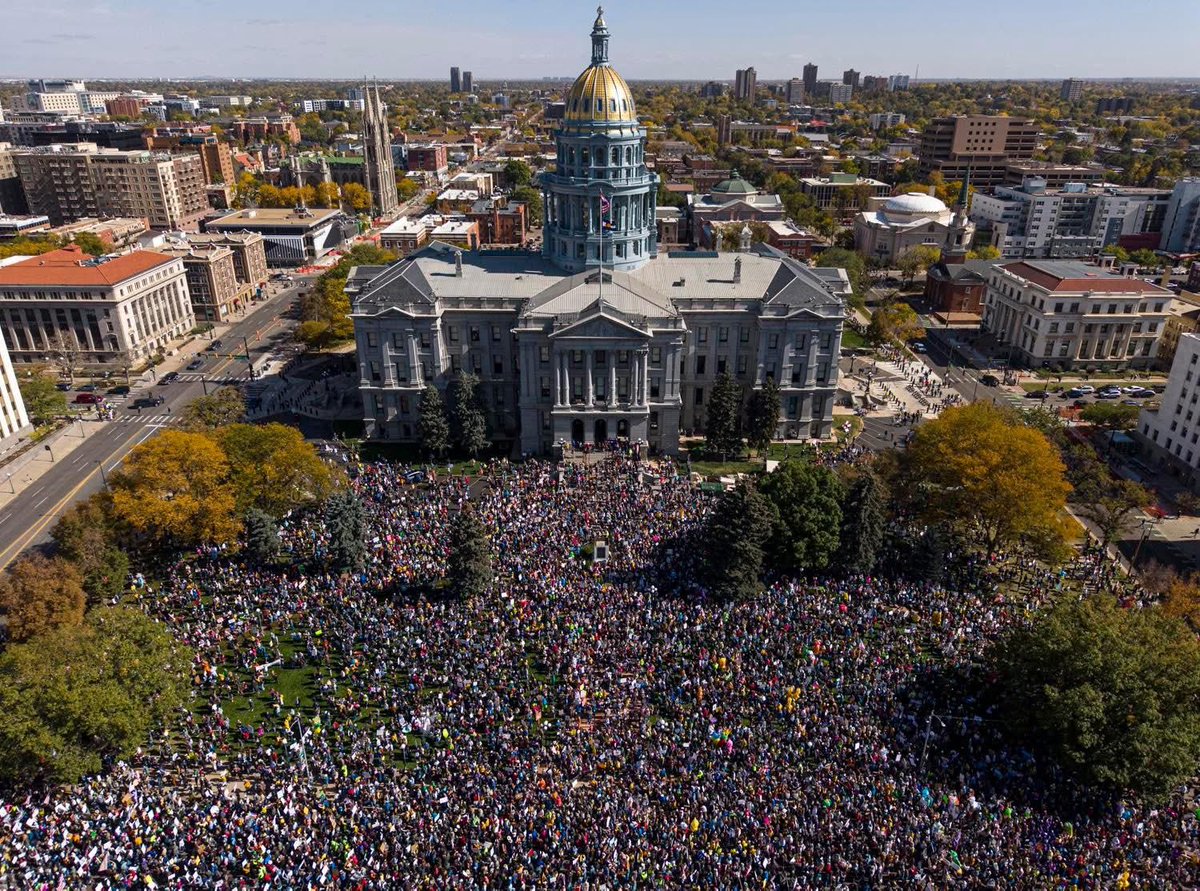
In my town years back, a tradesman was burned while working on a shop renovation. He was taken to hospital, feeling OK, and asked when he would be allowed to go home. Doctors said he wasn’t going home. He was going to die from his burns. 1/2
I remember that story when thinking about ‘living with’ pandemics. How the social media-led obsessive focus only on present moment trends and therefore only acute Covid impact has blinded us to what’s been done. You can’t uninfect bodies. Only time reveals the damage. /end
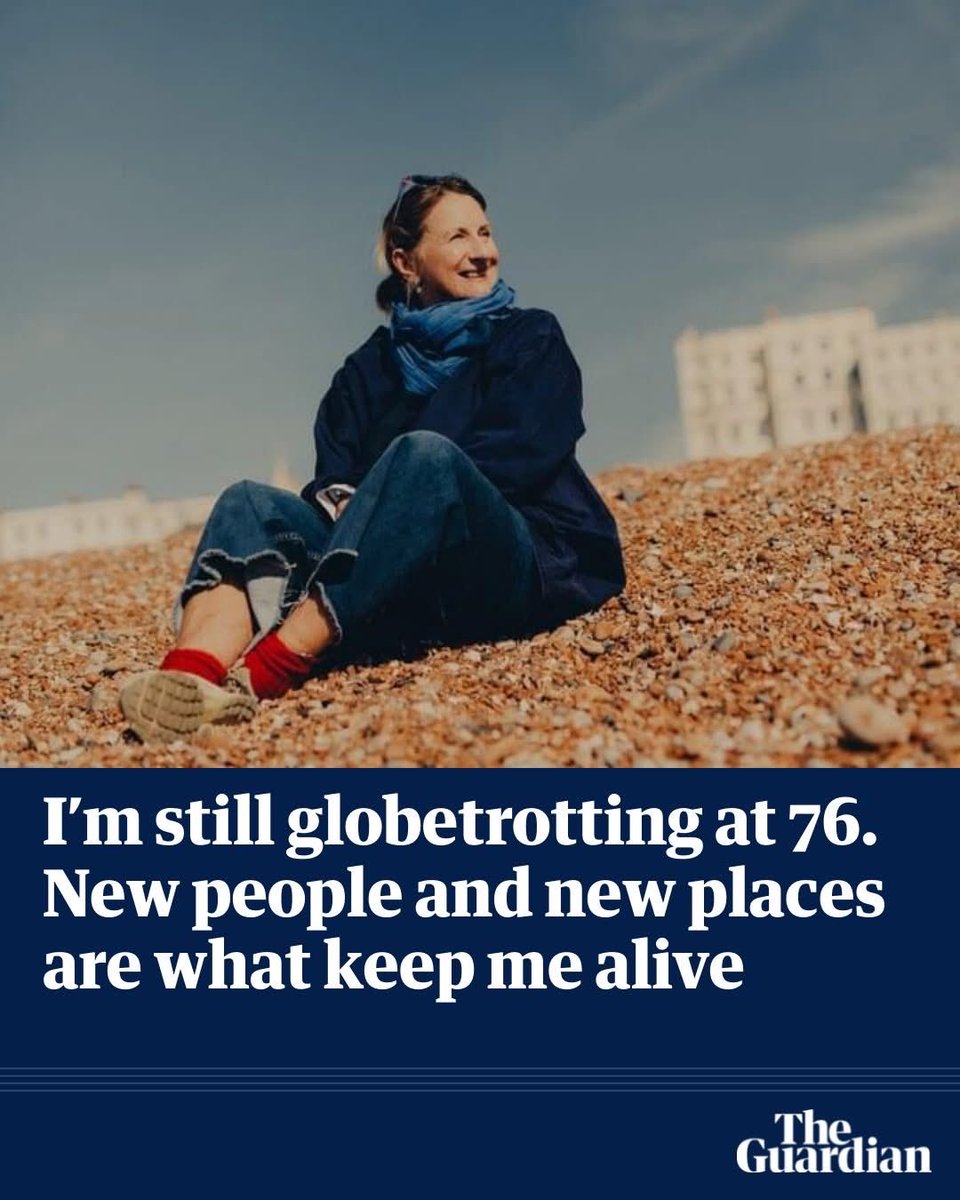
In cultures that last, the experience of age is plugged back into society, guiding it. In kidult cultures, the aged live a permanent adolescent gap year, using the wealth we concentrate in that age group, away from those raising families and doing the work of the nation. https://t.co/09WR7N9I6N
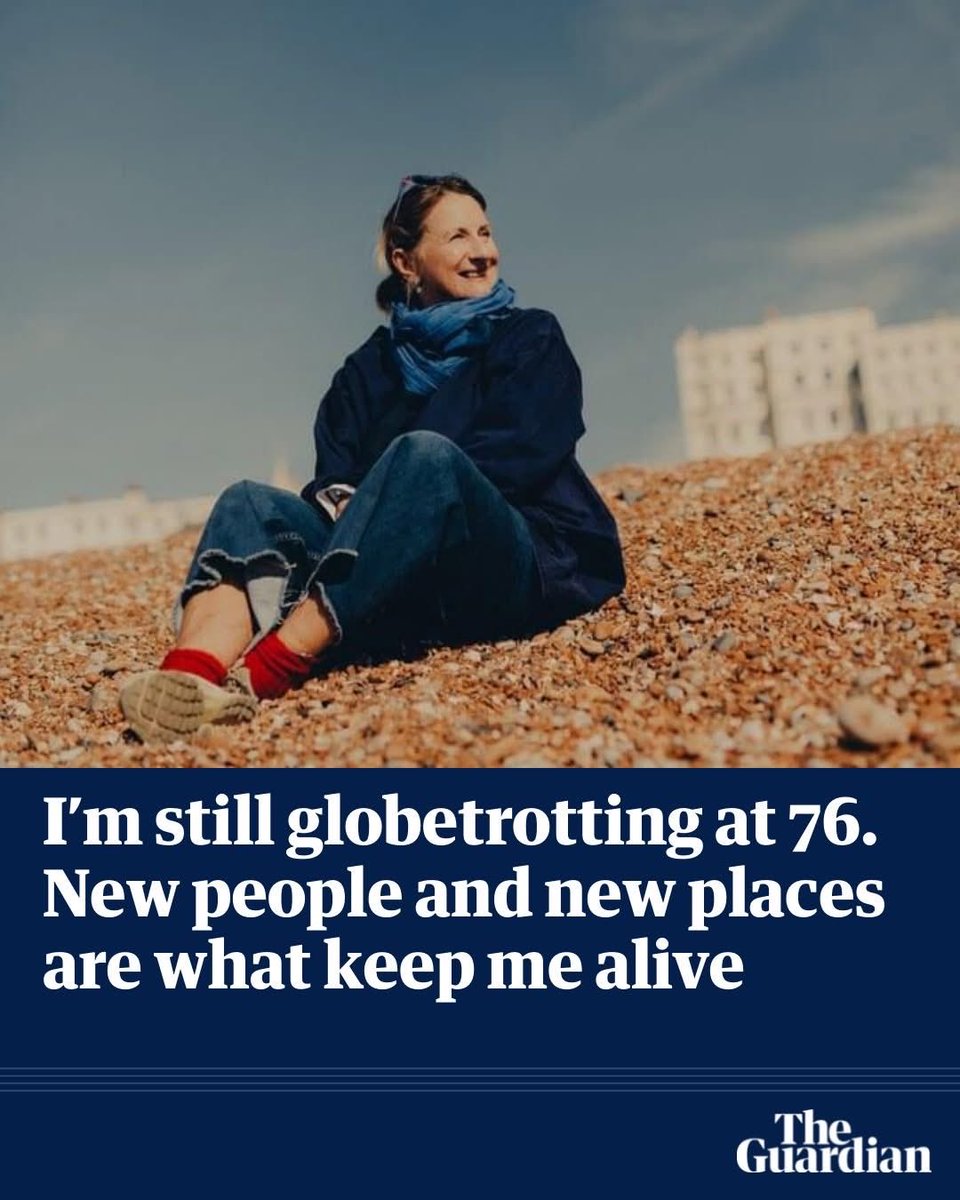
In cultures that reformatted adult life as a giant high school, retirement is now when you finish school and go on your ‘gap year’, travelling the world. We should see the utter perversity of this as a social and cultural model. But we don’t. We think ‘politics’ runs societies. https://t.co/w14eHcRXKE
Those who work with knowledge for a living tend to assume that’s how society works too, people thinking and processing facts. Societies run on status. On people imitating those with higher status, in teams, battling other teams for supremacy. Even science works like that. https://t.co/lojcTQeD1x
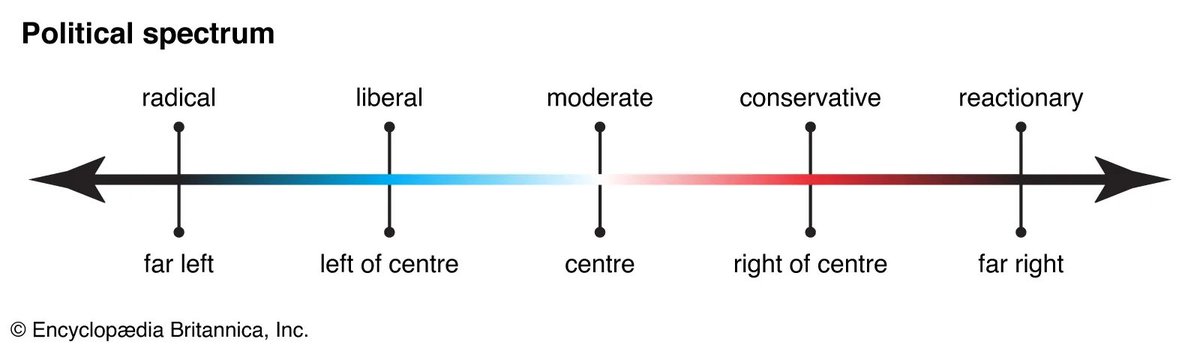
The political centre is a myth, an entirely relative position, defined by the constantly shifting extremes on either side of it. Our adolescent culture can’t conceptualise life as anything except a battle between two teams. https://t.co/UAvS816iEw
This is our framework for understanding the entire world. We’re trapped inside this team sports bubble. Every point on this spectrum is only a status/identity-based team, battling for social position. All of the positions are also entirely relative. 1/2 https://t.co/YXZhd58r5T
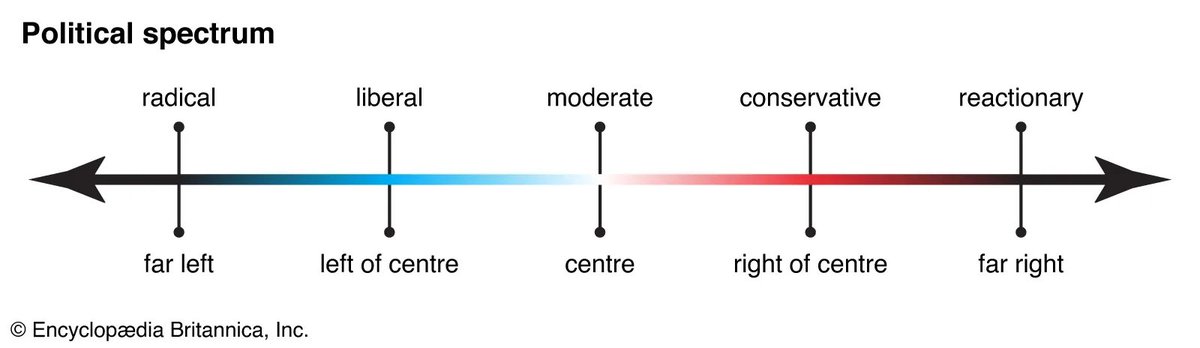
What is ‘far Left’ today was ‘moderate’ only a few years ago. Etc. None of these points represent anything in reality except a provisional set of alliances, in opposition to other points on the spectrum. It’s entirely self-referential. /end https://t.co/yuEdMourk7
It’s amazing that change in human societies always follows the same mechanism, and every time we act surprised. Every significant change requires either an external or internal existential threat to the status quo. It is never about information or knowledge or rationality.
Lord of the Flies was a great window into our assumptions about how societies work. The idea that without wider social life, we become savages. In reality this is completely backwards. We know from real life experience: https://t.co/pgzVhVym2J /1 https://t.co/A8PmGsSljm
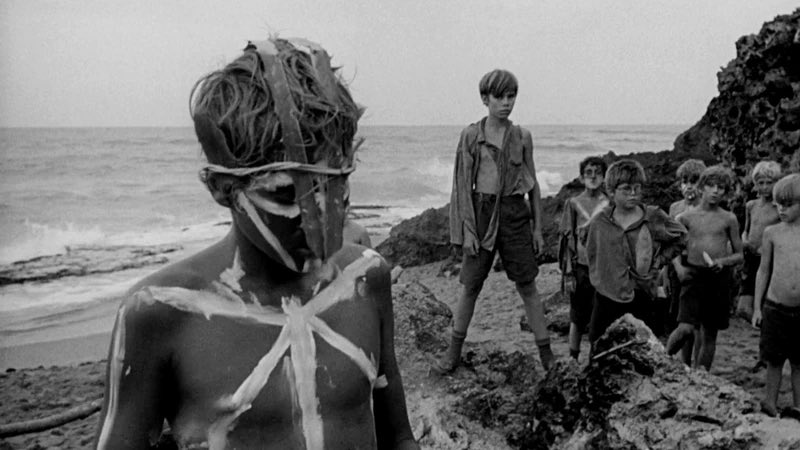
The actual experience is that humans, when faced with existential challenges, as these real boys were, are more united than at any other time. It’s when they’re separated from existential threat, in social environments, that they become most dangerous and violent. /2
We live in a teen culture, structured like a giant high school. 9.5 out of 10 people you ask would tell you that socialising is the key to a happy life, and ‘loneliness’ is the worst fate. That’s high school culture in a nutshell. In reality sociality is always violence. /3
The violence of imitative rivalry Girard wrote about. Do we not remember the continuously contested space of adolescence and high school? The constant fight to ‘fit in’? The more social we make adult life, the more it becomes high school life. The battle for status. /4
In societies that live actually inside social media, the violence becomes endemic. Ask anybody who does a public-facing job right now about the dramatic escalation in aggressive behaviours. Or drive on any of our roads. /5
Violence is not just physical assault. It’s aggression, rivalry. Who doesn’t feel the growing tension of that every day now, on both public and personal life? Who doesn’t see the signs in businesses saying ‘abuse won’t be tolerated’? /6
The history of civilisation itself is the history of the restriction of sociality, the deliberate suppression of crowds. Not (as we like to think) as part of various tyrannies or authoritarian schemes, but because without those restrictions blood flows like rivers. /7
You can see this all in real time on social media. Watch how previously unproblematic projects in your local area become battlegrounds for warring social media groups, who weaponise it for their imitative rivalries. Adult life is learning to be less social. /8
To learn to be resilient and true to your individual nature, rather than adjusting everything you think, feel and do to ‘fit in’ with social groups. The more we socialise everything, the more we destroy adult life. And the more violent and less resilient we become. /end
Work from home is a classic example of how only catastrophic disruption to the status quo enables real social change. Without the pandemic there was not a snowball’s chance in hell it would ever have taken off widely.
Popularity is the currency of populism, which is Western culture today. In populist culture, the only revolutionary is the person who thinks or does unpopular things. Not opposite to what others think or do, that’s populism too, creating a new team in populist team sports. /1
Unpopular things will be met less by resistance or outrage, than by silent incomprehension. You are literally checking out of all of the popularity-based status games. You are on no team. Trying to ‘mobilise’ nobody. /2
Thought in a populist culture, and look around here today if you don’t believe me, is entirely about apportioning somebody to one or other team, and then battling that team with another team. The content of belief becomes irrelevant. Identifying the team is the only game. /3
The same team can have fundamentally opposite beliefs in a very short period of time. Witness the Trumpians in bed with the old Soviets right now, their Great Leader games. Again, the content of belief becomes irrelevant. It’s only about team sports, battles for status. /4
How many truly unpopular things have you thought or done in your life? Not just contrarian things (which have their own teams), but where you escaped the teams entirely? Where you were almost a lone voice, and your social status became either void or a laughing stock? /5
That’s the only path to truth. Nobody will reward you, most will think you’re insane and ignore you. You won’t register in their team battles. But as Spinoza said, this is the only path to knowledge, and through that to the only genuine joy to be had in life. /end
A free press is one of the checks and balances we use to define democracy. Again, look to history. Their origin is the battle between kings and their barons. They were never about ‘the people’. When the Kings and barons align, there are no checks or balances. https://t.co/wLXEPR2NyQ
As with autonomous driving technology, one of the assumptions that amuses me is that without AI (or tech in general), some human, somewhere, is checking all of the data. Humans are mostly bone idle. Motivated by status and confirmation bias. https://t.co/1UXpR56syh
Progressives constantly call for the people to rise up, working from the ‘bottom up’. Meanwhile conservatives create populist kings, and decimate progressives politically. Time to abandon the myth that ‘the people’ is even a thing, let alone some agency that runs countries. https://t.co/ZeHK5ppLAC
Public health professionals, what was the last pathogen that was offloaded onto the populations’ immune systems to control, rather than controlling spread of the pathogen through the community? Are we looking at unique, historically unprecedented bullshit today?
Without exception every person I meet who talks up the idea that ‘the people’ run democracies: 1. has never actually worked in any form of governance, and 2. has never met the people they advocate for. https://t.co/UCCLbDC6FR
It took a single day for rare earths to become the new team sport red meat. When you think ‘the people’ or ‘markets’ (hilariously, the same thing) run societies, you turn everything into perpetual battles for social status. Everything is pulverised, for the team sports. https://t.co/6ss0MYI9wP
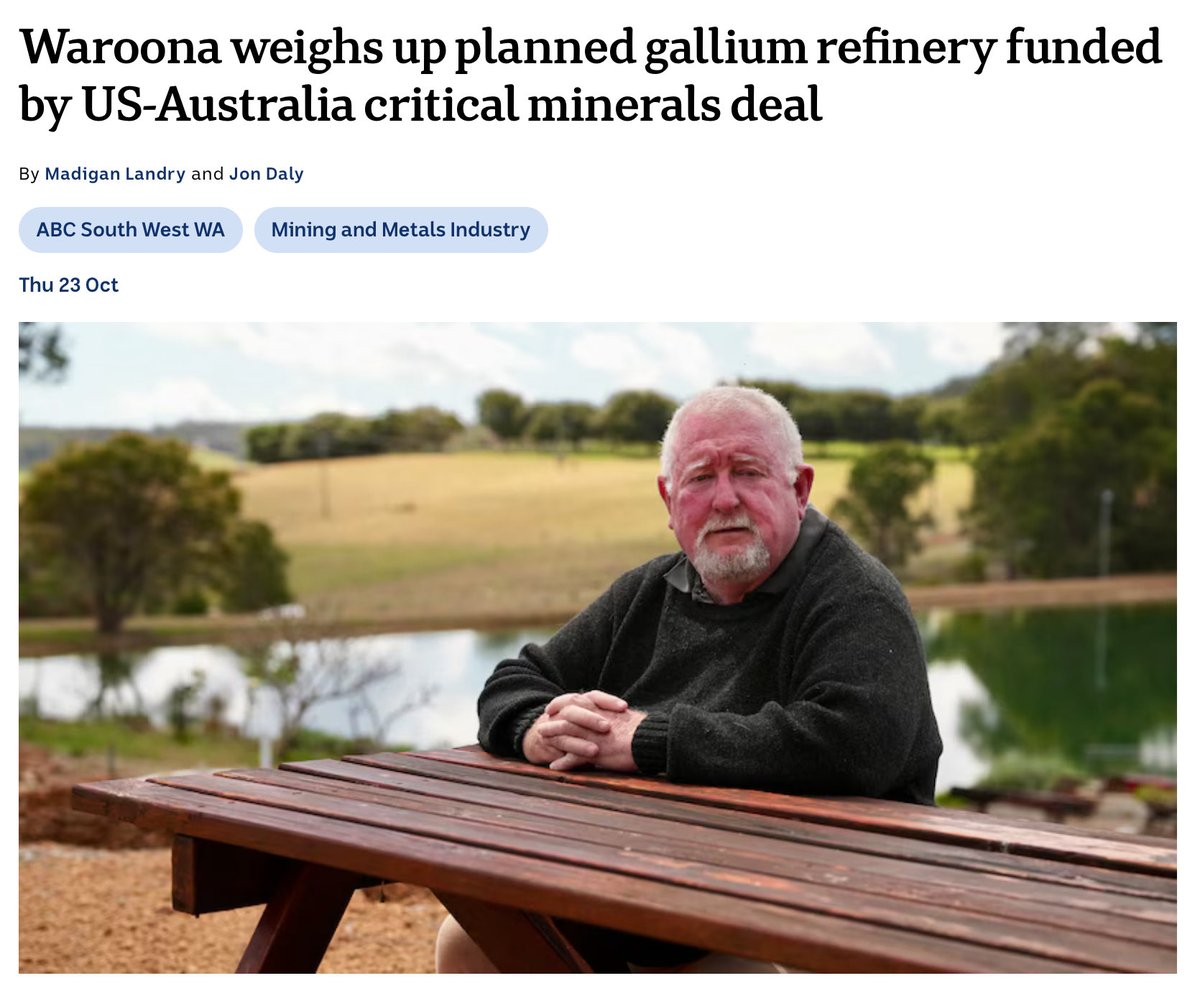
The idea of a free market in economics is *exactly* the same as the idea of democracy as the sum of the views of millions of individuals. In both cases the fiction is used to allow uncontrolled status-driven empires to be built. Oligarchs, populist tyrants, influencers.
Thinking of the importance of institutions, remembering the very many fine minds who fought the pandemic here, who have simply disappeared. Often to other platforms. Disappeared from public life more generally, on Covid. ‘Trending’ can’t replace institutional memory and action.
It was Edmund Burke who saw human institutions as humanity’s past and future, folded into the present. As humanity’s memory, its capacity to act outside the present moment. We need him again today, in a time where only what trends is real. For about 10 minutes. /1 https://t.co/P4iZxDi8Nl
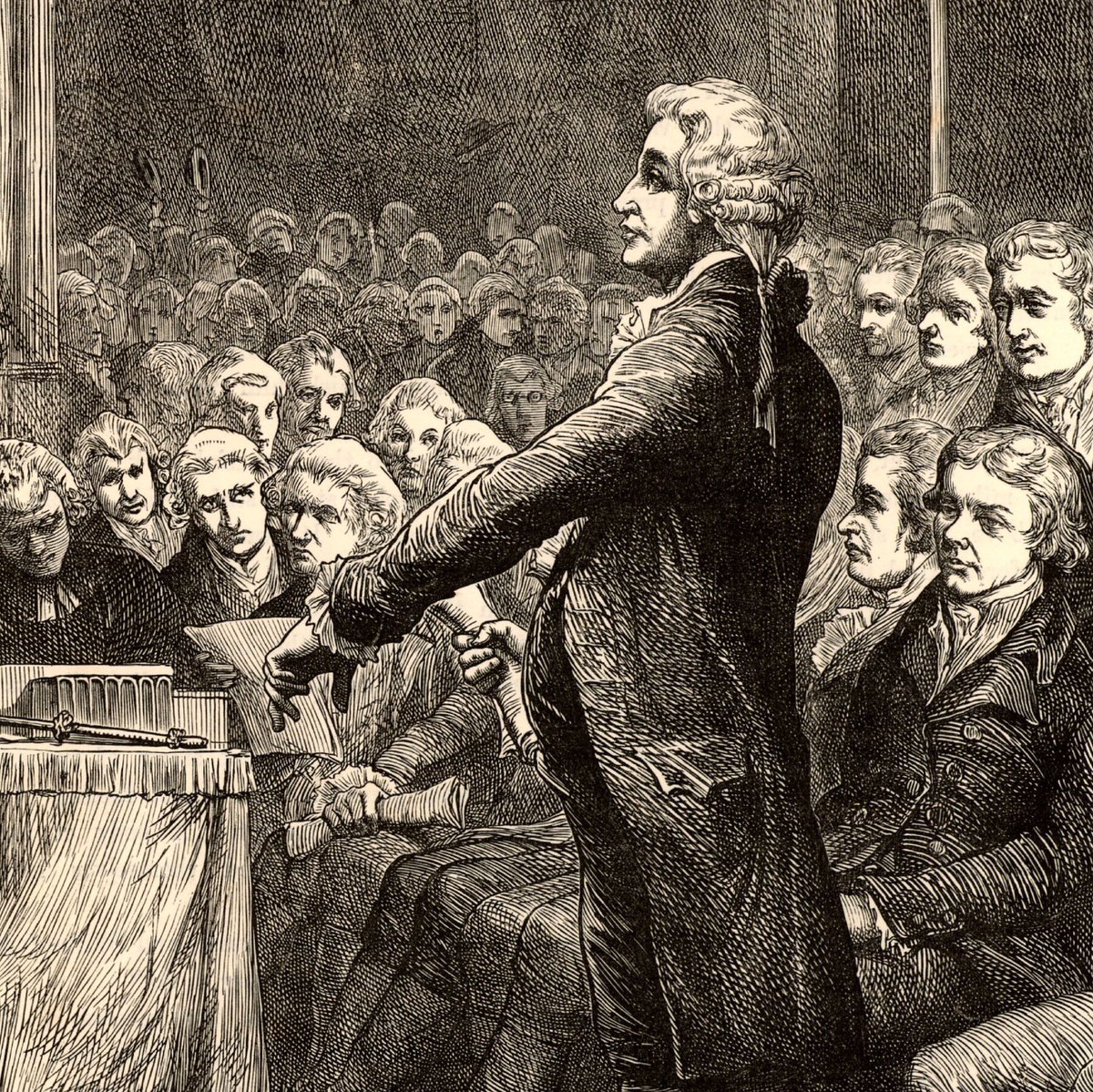
Burke described how institutions evolved, like living things, they’re the customs and traditions that survive the test of lived reality over many years. They’re what survive that lived reality. They’re the hard-won lessons of repeated human lives, acting in the present. /2
They’re like a combination of society’s autonomic nervous system and memory. If destroyed they don’t get back up again, just as making a species extinct can’t be reversed. Only reliving centuries or millennia of the same brutal experiences might produce something similar. /3
I often post here about how only catastrophes shift societies meaningfully. They do that by generating institutions. New customs and habits that act against the status quo. Which then act autonomically into the future, guiding future generations too. /4
We live in such an adolescent culture now that our idea of change is trying to get things to ‘go viral’. Like selling yo-yos. ‘Mobilising’ people behind trends. It’s all ephemeral. Only multiple lived generations facing challenge generate lasting institutions. /5
The institutions that emerged after WW2 that led to the greatest peace and prosperity in human history, for much of the 20th century, are what we mistake for normal life. They’re absolutely exceptional, historically. Rarer than dodos. They invented ‘we’, ‘the public’. /6
A we often mistaken for the same adolescent culture protesting, either out in the streets or now on these platforms. Mobilising everything. The public is an institutional construct. Without institutions it simply ceases to exist. /7
From about the 1970s, humanity’s battles for social status went to war on these institutions. Both ‘Left’ and ‘Right’. The Left called them ‘the establishment’, the Right ‘red tape/bureaucracy’. All adolescents in an adolescent culture. Teams. playing status team sports. /8
Fake enemies, both playing the same status games, both gorging themselves on humans’ true delight, the fight for social position. Burke saw that revolutions are what these status battles produce. Revolutions that destroy institutions. /9
Russia and China never really recovered from their people power moments, in the 20th century. But we forget that the West had its own, later in the century. It’s countercultural revolution. When teenagers took over the West. /10
That’s why to this day Western life is still that giant high school, with rival teams battling for status in the schoolyard. When that massive demographic blip of teenagers hit adult life in the 1960s, they had no idea what to do with it. /11
An adult life pulverised by two world wars, a great depression and a pandemic. The teenagers had strength in numbers and fatally damaged adult institutions. So they remade the West as a literal giant high school, culturally. It’s all they knew. /12
Watch us in the West every day, the perennial culture of complaint, teenagers grounded by parents or teachers. Our response to all problems the same. ‘Protest’. No idea how to intervene in the material reality of our lives. The institutional basis of our culture, gone. /13
Our collective autonomic nervous system and memory destroyed. Only technologies bind us now, through the discipline they impose by their construction and upkeep. Everything else is team sports, for status. /end
John Anderson, on public health. “One aspect of the COVID-19 pandemic and lockdowns was the emergence of a sense that essential freedoms were somehow gifts to be bestowed by government, rather than rights inherent to the people.” /1 https://t.co/SszaJBfe1u
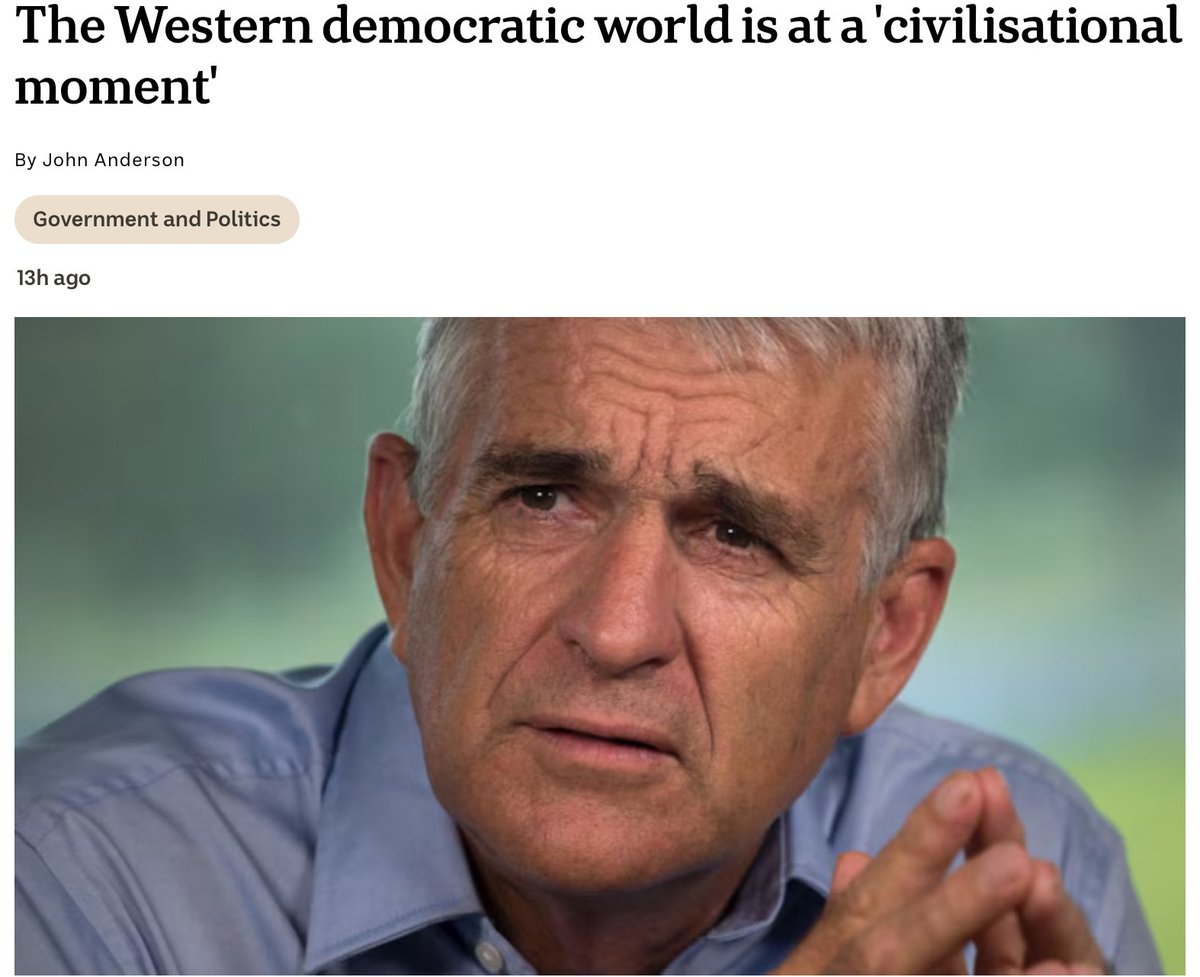
“It revealed a troubling nonchalance about the principles of civil liberty that were so hard-won in the history of Western liberal democracy and should not be easily discarded.” Anybody with even the faintest understanding of history should recoil in horror here. /2
To oppose public health to freedoms and liberties is beyond the pale. The ‘lives and livelihoods’ bullshit we’ve heard throughout Covid. As if those are TWO things! You have no livelihood, without a life. /3
Civilisation itself is the control of infectious disease more than any other thing. The Old Testament is all about plagues. They knew, then, where the battle lay. Human life expectancy doubled in the past century through the control of infection and infectious disease. /4
Humans have no native, individual rights. No ‘essential freedoms’. Those come only from ‘collective’ life. Social life. Without social life, we’re all just Robinson Crusoe on his island. It’s our collective life that GIVES us *individual* freedoms and liberties. /5
There’s no binary here. We are freer the *more* we are bound to others in collective responsibility. It’s called economies of scale, division of labour. Otherwise again you’re on Robinson’s island, trying to avoid eating sand and drinking salt water. /6
The greatest progress by far in civilisation came with the control of infectious disease, only at the very latest hour of history, in the past century. That modern conservatives went to war with the public health that did it is a sign of how dangerous they are. /end
Noah Smith. Funny how the worm is turning in understanding the deeper social transformations in play. But he ends with: “ I predict that the new age of kings won’t last.” The age of kings never ends. /1 https://t.co/K9UkkQP0Ux https://t.co/xw0O2Jgiyc
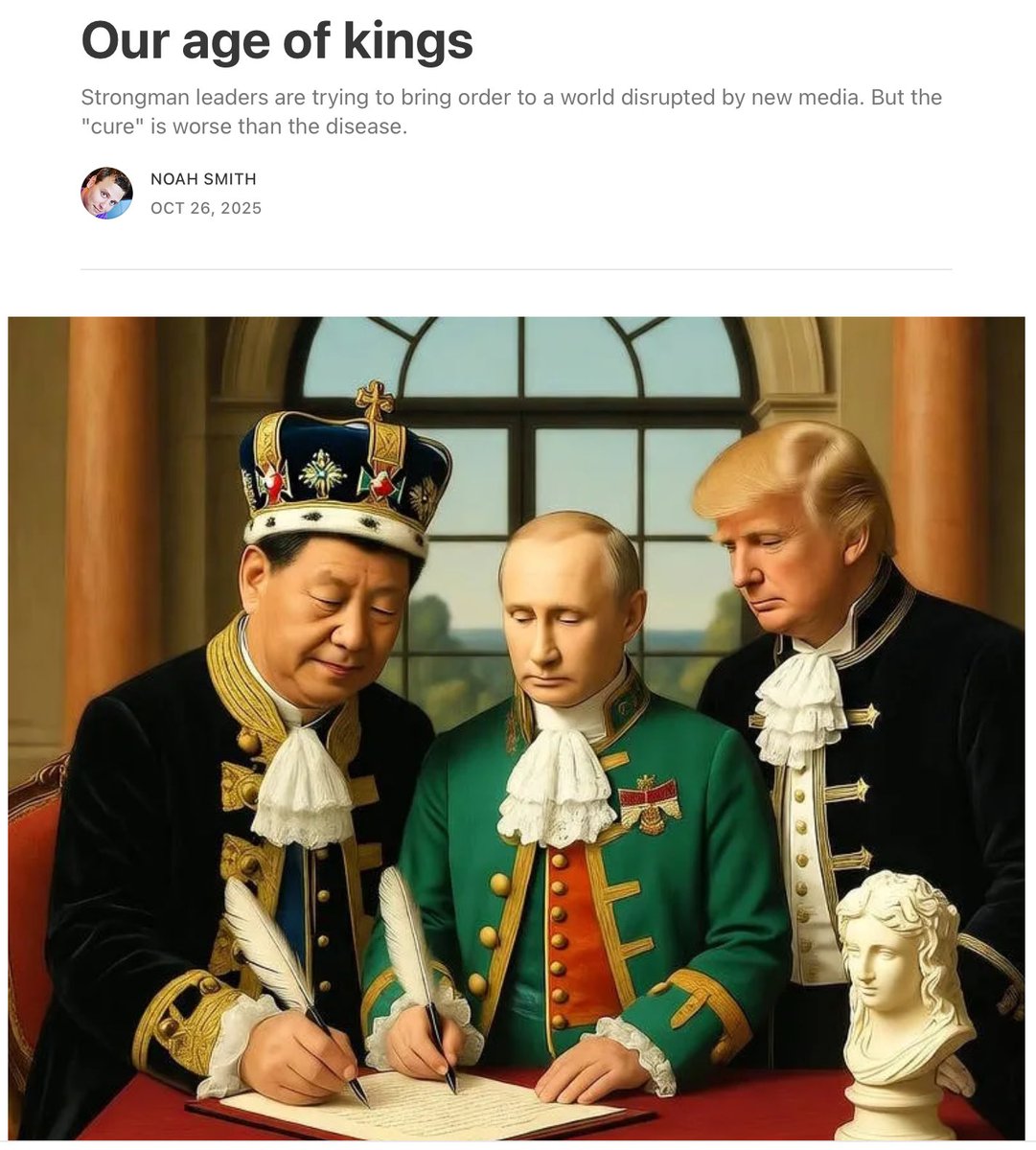
Most of Noah’s piece is a window into the terrible mess American thought and life is, when it comes to understanding how humans live collectively. This idea that ‘the people’ are the real game, constantly thwarted by kings and other tyrants. The American delusion. /2
I genuinely invite everybody who believes that guff to spend a week on a switchboard at their local council, or in any public institution. To get a taste of ‘the people’ firsthand. It’s idealised nonsense. People are so many flavours of batshit crazy. /3
And righteously crazy, convinced their way is the only way. The idea people left to their own devices are freedom-loving peaceniks is hilarious, and totally out of whack with the empirical reality of collective life. All people, at all times in history, do one thing. /4
They look to protect and promote their own status, at the expense of the status of others if needed. If you take away Kings and other more stabilised status hierarchies at the centre of societies, people will invent new ones all over the place. That’s Western life today. /end
Control over infection was the decisive event in all human civilisation. It more than doubled life expectancy, within a generation. It was mostly engineers, asked to fix a material problem. Clean water and sanitation, largely. Now let’s ask them to do the same for air. https://t.co/nNjqhnwnXE
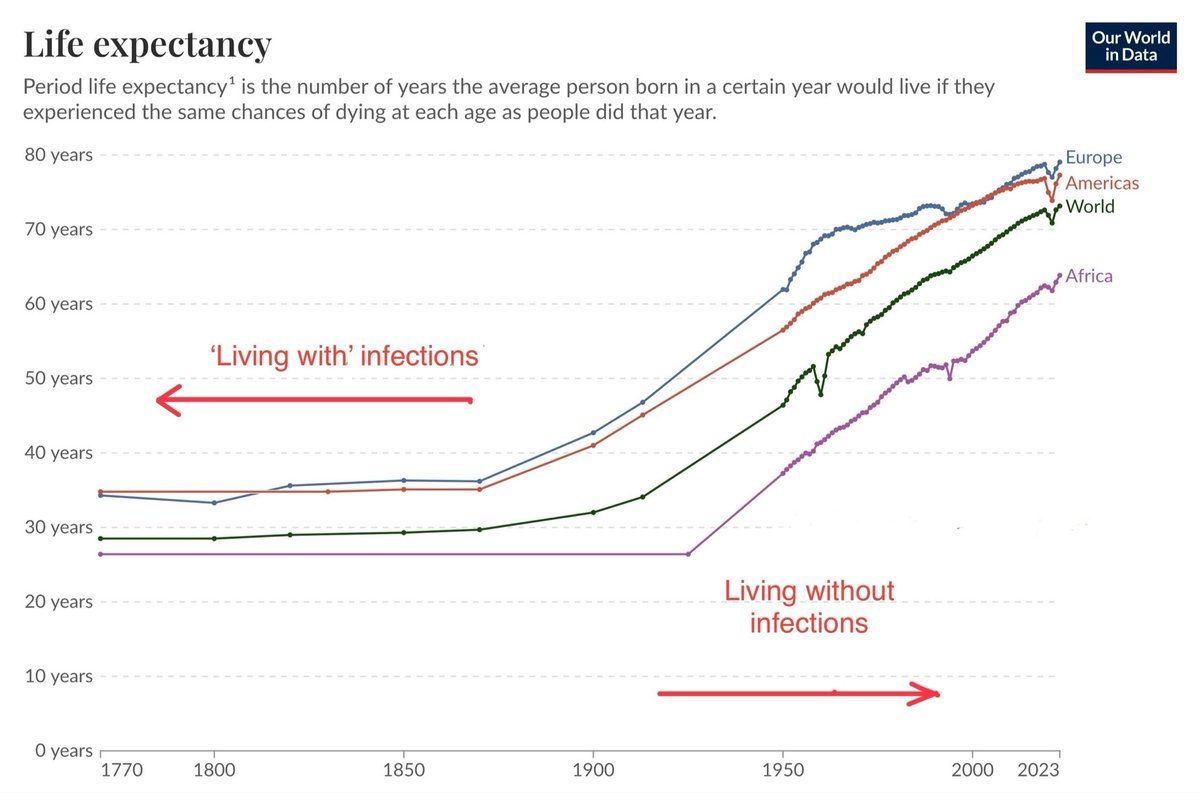
The thing about public health targeting clean air is, we were already doing it. This was a major victory in many countries, including Oz, only 20 years ago. Covid should have been the spur to target respiratory disease too. What happened instead needs more thought. /1 https://t.co/sHW7rMqpfz
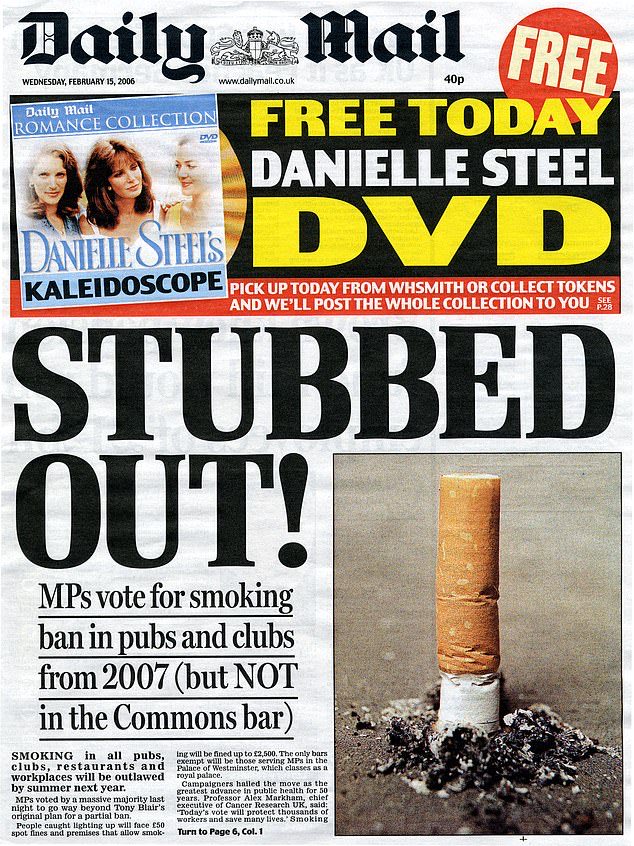
The insane missed opportunity of Covid is that in most countries, there was enough remnant public health DNA still left to begin the pandemic with a sane response. The emergency phase. Now often attacked as the ‘lockdown’ stage, by muppets acting for the status quo. /2
Many times I’ve pointed out that the dreaded ‘lockdowns’ were completely at odds with the hysterical response to them. Mostly libertarian targeted and funded protest. The disruption was much less than the deliberately engineered hysteria about it wanted to let people see. /3 https://t.co/OOWJQhPAXD
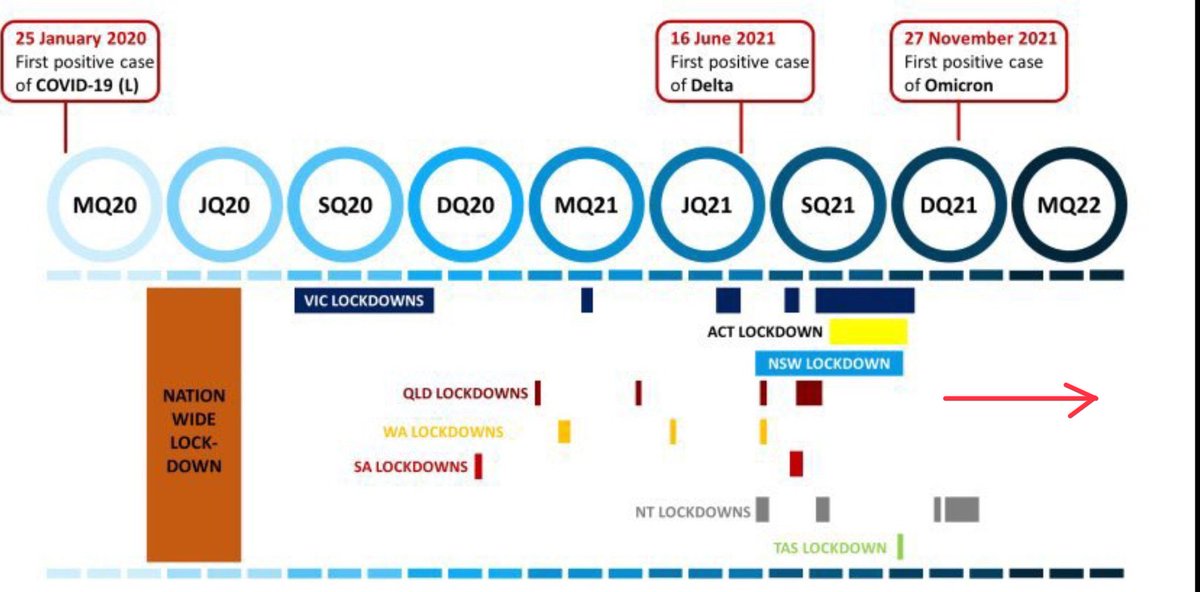
That hysteria-led response to the public health response created an abomination. We jumped straight from the emergency phase of pandemic management, to ‘personal responsibility’ public health. A concept as fatuous as fascist flower arranging. /4
Sanity would have been using that emergency phase to plan and begin to implement widespread measures to clean indoor air. To begin the CONTROL phase of the public health response. A control that would then continue in perpetuity. As we do for all other serious pathogens. /5
Instead our kidult, adolescent ‘free market’ governance privatised the pandemic response, as it had already privatised (and mostly destroyed) education, transport, water, energy etc. If you wanted public health, you’d now have to do it and pay for it yourself. /6
Unfortunately many who do actually understand this then just revert to the idiot Left v Right, ‘neoliberalism’ blah blah status games of free market politics, to try to fix it. They play status games. But it wasn’t ‘capitalism’ that killed public health. /7
Capitalism isn’t even a thing, all societies are 100% social. None of the -isms are real. Public health was shafted by uncontrolled status games. By societies that take all of their framings for existence from adolescent, school life. They’re now giant high schools. /8
It’s obvious to see the evolution. Just quickly again, compulsory schooling created two cultures - child and adult - where previously there’d been just one. Then as children flowed out of these schools, they remade adult life with the only culture they knew. School culture. /9
The whining, protesting resistance to public health was just teenagers of every age resisting being told what to do. About anything. All of our adult culture now derives from adolescent, school life, if you look. Everything we give fairy tale names is just that. /10
It isn’t Left v Right, those are just schoolyard gangs. It isn’t capitalism v socialism/communism. More gangs. It isn’t democracy vs authoritarianism. Just more gangs. All fighting for status. /11
Adults now are kidults. Their entire way of seeing and understanding the world derives from their lives inside schools, battling for status against other teens. Our own cultures are always mostly invisible to us. Like water is to fish. /12
You can’t change culture quickly, alas. We’ve completely forgotten, as a culture, how to adult anything. Just look at the attempts to do basic things like install wind turbines. Nothing but whining, obstructive complaint. /13
Even the best-intentioned are powerless to even conceive of a way forward that isn’t just complaint, mixed with ‘mobilising’ people in viral campaigns. Just more high school life. Getting things to ‘trend’. Like the shoes you wore to school. /14
Understanding that all societies are 100% social, and nothing else, also means realising that all that ever shifts a (social) status quo is catastrophic disruption. Just ask any young person trying to buy a house now. They know all the ‘managed’ responses are bullshit. /15
Things are going to have to break, catastrophically, to restore adult life. Millions have already died from Covid alone, with minimal impact on the teen life we live now from cradle to grave. You have to understand culture. Social things. /end
When democracies removed Kings and their aristocratic courts, humans just reinvented them all over again, with different names. Status runs societies. This isn’t oppression, this is the default state of human social life. It creates itself. https://t.co/EzpmSJmbIp
Parliaments/legislatures began as bodies Kings were forced to consult when imposing taxes. They were part of a ceasefire between a King and his court. They were never about ‘the people’. And now they aren’t again. Democracy itself never was about the people. https://t.co/N7o9Qn2NR5
It was only the catastrophes of the first half of the 20th century which gave ordinary people access to housing for the first time. Prior to that, housing and land were the exclusive prerogative of the rich and powerful. /1 https://t.co/duu6W8p27j
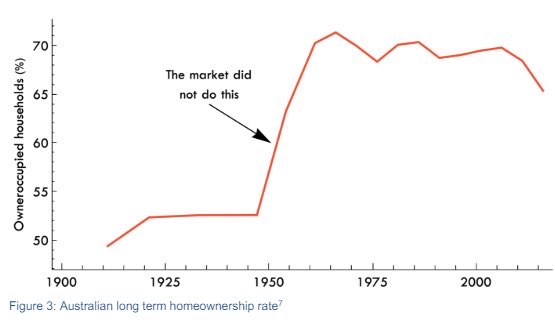
There’s even more to see here. The idiot debates today about market versus public provision of housing ignore that there was no such thing as a market, until government intervened. Nobody owned homes, except for a tiny number of the elite. /2 https://t.co/ZrpofJXoGG
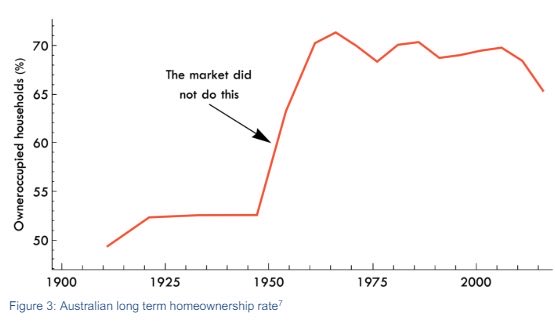
The idea of the market, or the free market as it’s sometimes called, is a political fiction designed by the same elite sections of society to dismantle government regulation of their activity. Humans never act in the way that market theorists describe. /3 https://t.co/wMPpOBzdsm
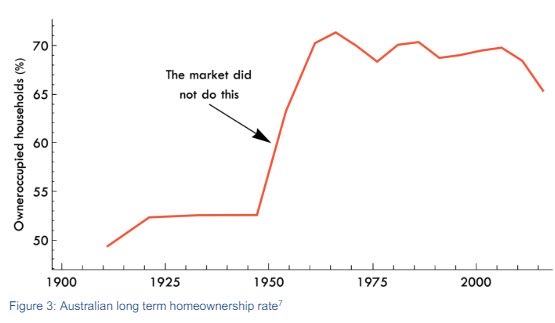
Housing just one more example of how societies run on status, and all that disrupts the status quo is catastrophe. Housing globally now is ridiculously unaffordable. With the absence of pressure from catastrophic disruption, it’s returned to being a high status marker. /4 https://t.co/5pGrGtwwVl
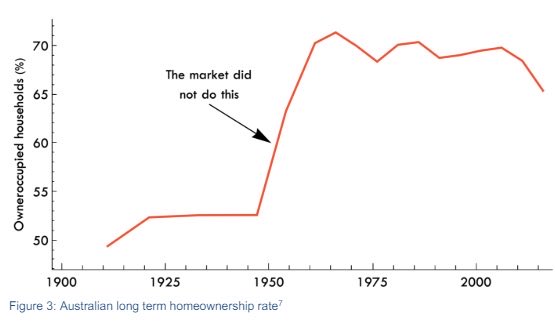
I’m sure Cameron Murray posted this graph originally, acknowledgements. /end
For most of modern history, you or I as ordinary people would have been peasants. So why aren’t we today? Only catastrophe really changes societies. The Black Death killed up to half of Europe. That destroyed peasantry as a way of life. /1 https://t.co/IwsS2GL5Lm
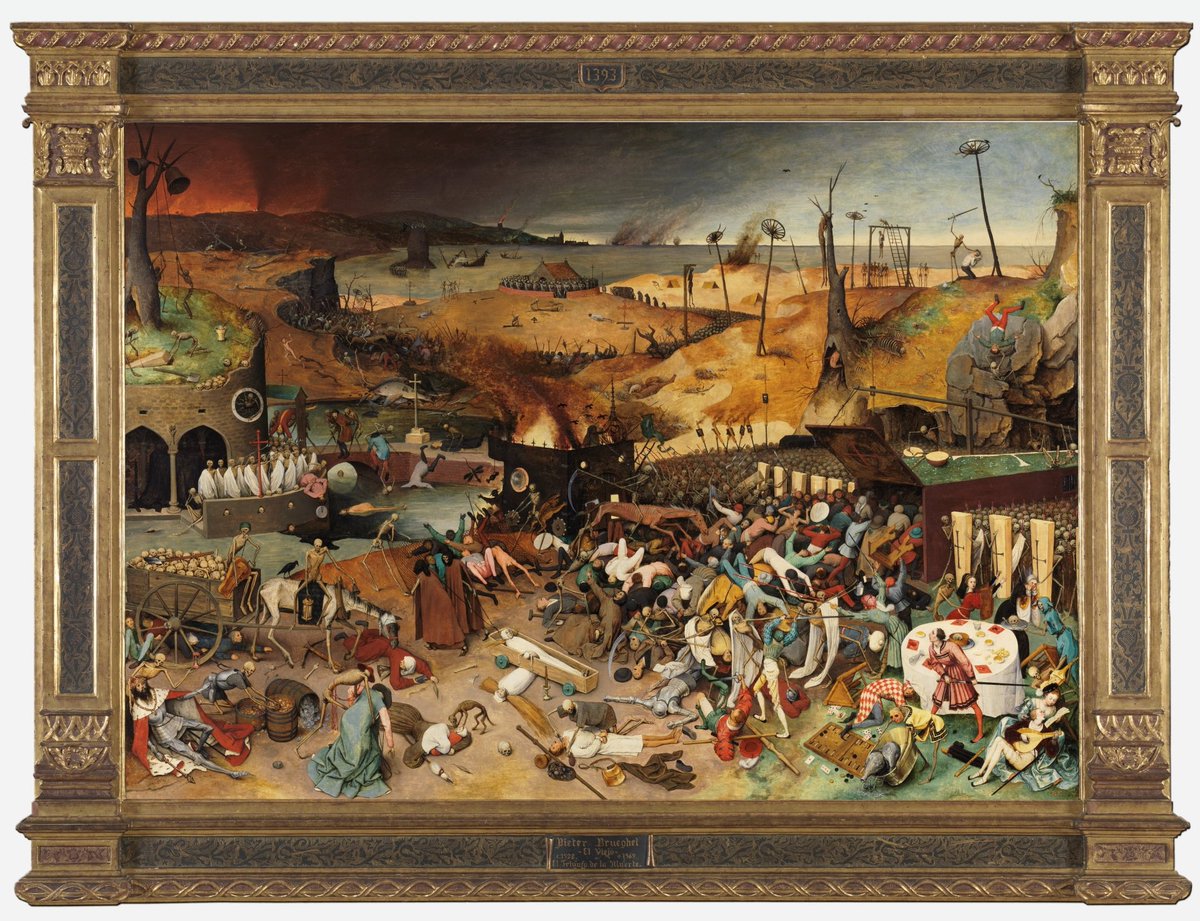
There was such a catastrophic loss of peasant workers that those that remained suddenly had the upper hand in negotiations with the landed gentry. They became mobile, paid workers, rather than indentured slaves. /2
This was such a threat to the existing status quo that Edward III issued the Statute of Laborers, in 1351. To try to rein in this new power of laborers. It’s only very short, have a read: https://t.co/O3yJc6ihmw /3
He failed, and from that failure our lives as modern workers began. It’s why you and I are no longer peasants. We saw the same thing with lesser impact, with Covid. The vaccines saved the status quo’s bacon. /4
Work from home is one of the only victories for ordinary working people that came out of Covid, and the pre-existing status quo despises it and is still trying to rein it back in. Again, only catastrophe creates meaningful change in a society. /5
The civil rights victories in the mid-20th century and in the early 20th century are often evoked as evidence that ‘people power’ was triumphant in these most modern times. Look more closely and you’ll see that catastrophes preceded all of them. Wars, plagues, pandemics. /6
For example feminism made apparently large gains in the 20th century, often attributed to protest and other activist action. Many historians will tell you that it was mostly the killing of so many men and the diminution of their influence that opened the door to that shift. /7
To shift a status quo, you first have to destroy it. It will never give up status on its own. And a status quo is all of us, not just ‘elites’ oppressing ordinary people. Take away those elites and ‘the people’ will recreate them, in quick time. /8
Why when we got rid of most kings, the people in ‘democracies’ quickly replaced them with Presidents and Emperors, and today with a variety of ‘influencers’. Status is to human society what gravity is to the material world. /end
The most entrenched delusion in Western culture today is the idea that travel is anything except a remnant of imperial colonialism. Turning others’ homes into theme parks to tick off on our ‘bucket lists’. The old aristocratic Grand Tour, at scale. https://t.co/JQZpg7cP9L
Protecting the vulnerable. https://t.co/TKRRHrg5NS
Most people are objectively stupid, and we are all stupid outside our usually very narrow areas of experience and expertise. And somehow aggregating that great mass of stupidity is supposed to be democracy.
I give up trying to find people who can step out of the daily team sports of populism. Aristotle said the middle class is the key to a stable democracy. It runs democracies. Without it you get a tyranny of the rich or poor. https://t.co/HrlcyJbkZP
Populism is described as a political strategy of appealing to ordinary people against elites. My definition of populism is any governance system that uses popularity as its main currency. That includes Western electoral democracies. Popularity is toxic to civilisation. /1
And in reality, the first more restricted definition of populism will show you nearly always the same elites who are the fake target of the strategy, running the campaigns. It’s a con. They know popularity is just marketing, and easily gamed. /2
All of these basic questions about governance were discussed exhaustively by the Greeks, when they invented the idea of democracy. Populism is so entrenched now that the historical memory of public debate is about 10 minutes. We fight for a democracy of ‘the people’. /3
Never defined. Or for ‘public’ centred governance, without again a single clue what a public even is. The public of democracy is categorically not ‘the people’, as America would have us believe. That’s its toxic belief system introduced by Puritans escaping Europe. /4
The public is a *construct*. A continuously modified construct, by public *institutions*. It’s institutions that create a public, and through that, democracy. Not some undefined amorphous mass America currently appeals to, of ‘the people’. That people never rise up. /5
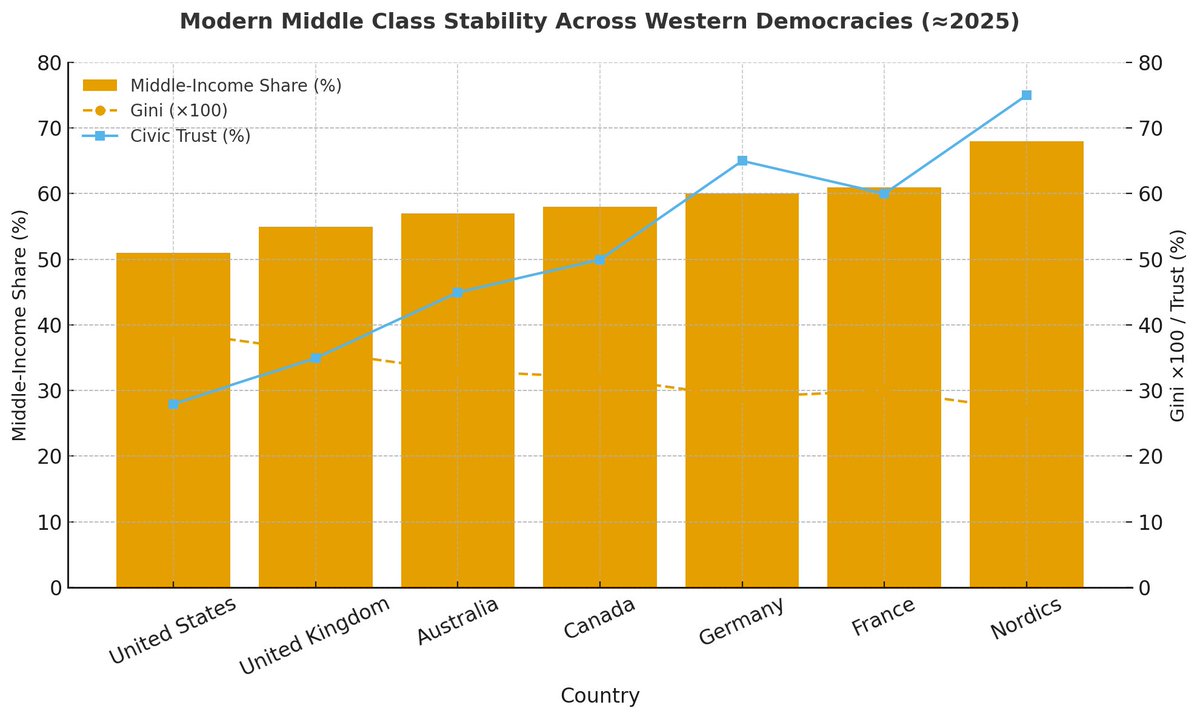
Aristotle knew that democracies work when institutions are staffed by what we now call the middle class. They do the basic work of keeping a country’s lights on, managing peace and prosperity. The US has a weak middle class, and therefore weak institutions. /6 https://t.co/cvxMtNzAzW
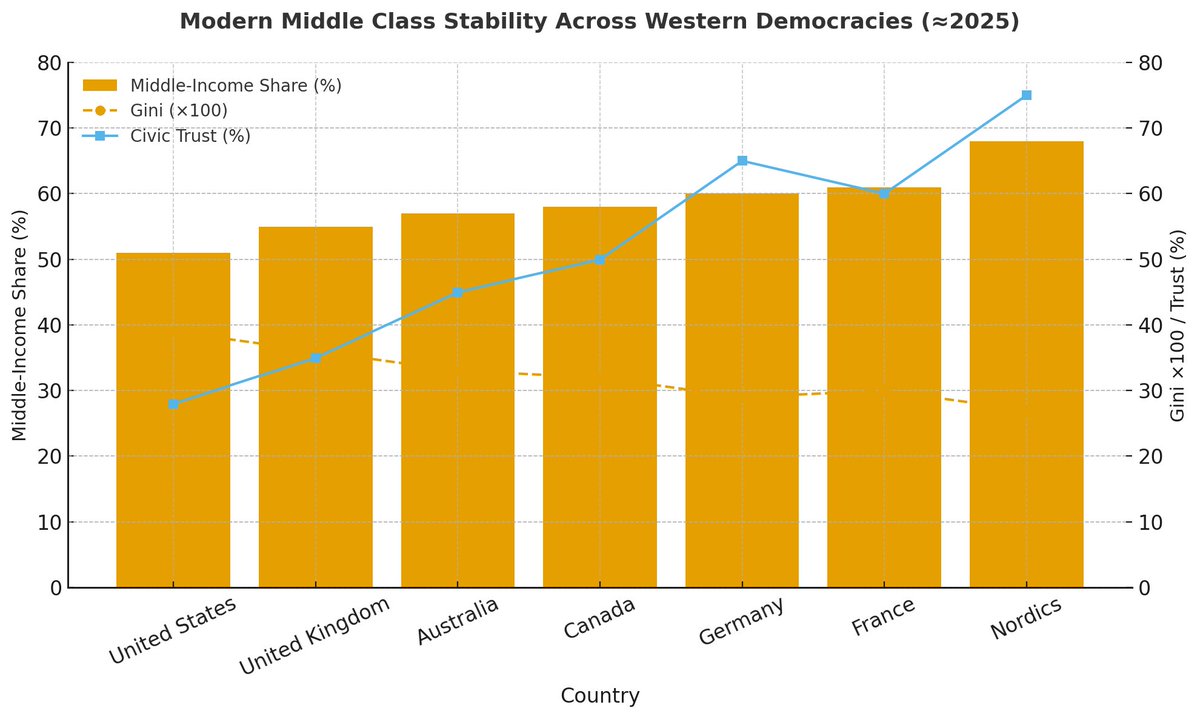
Which is why it lurches between tyrannies, of the rich and poor. Between oligarchs and populist influencers. There’s no strong moderating, mediating middle class layer, running institutions that create democracy. The data tells the story. /7 https://t.co/t4nI4F3BfH
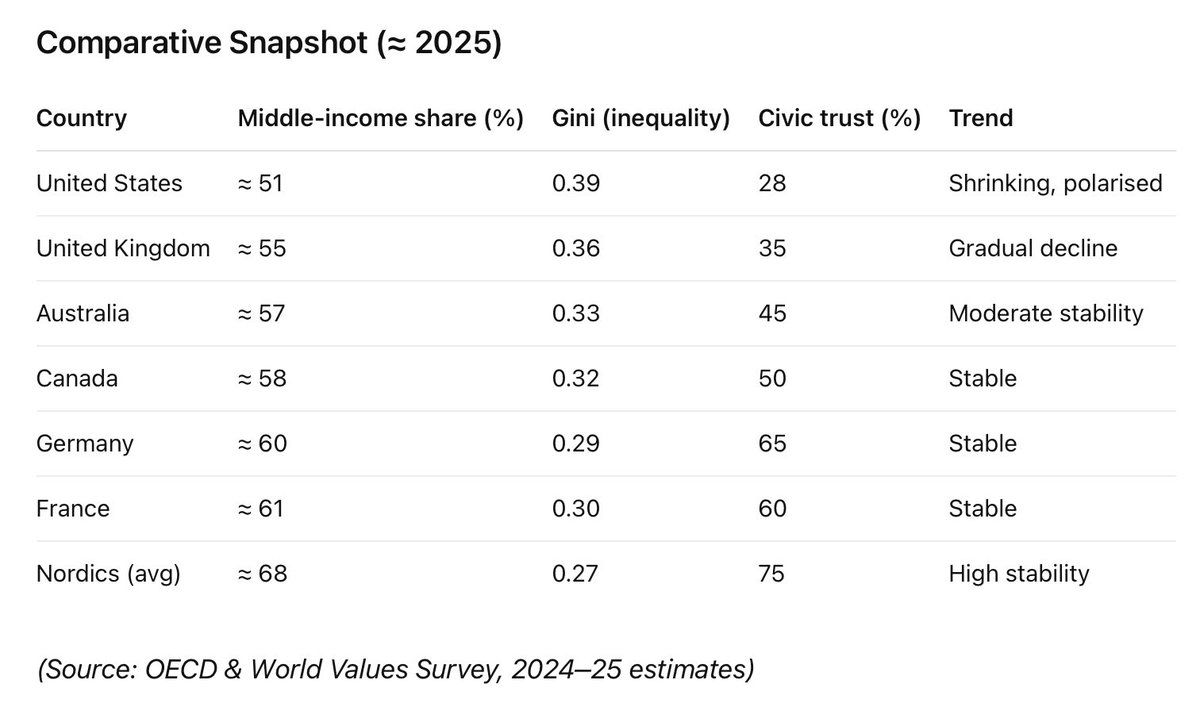
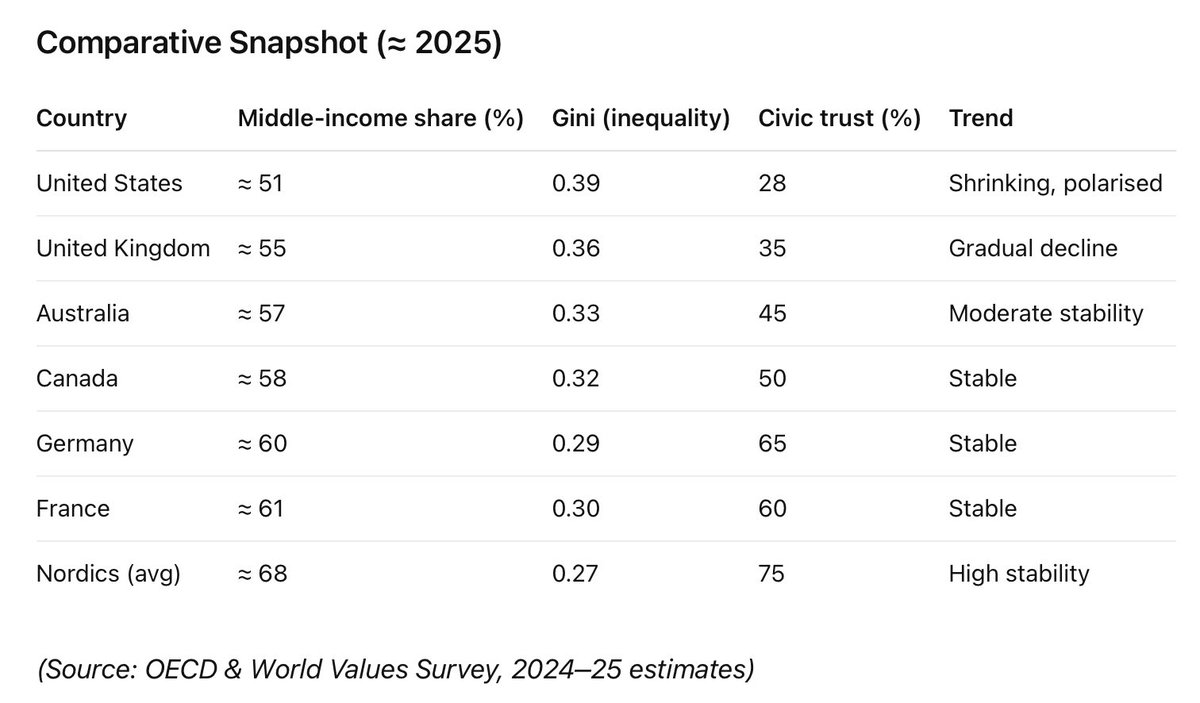
It’s plain to see here that the greater the emphasis placed upon strong institutions and a middle class to staff them, the better the democratic outcomes are. Both the US and UK have historical hostility towards this fundamental truth. They’re both in decline now. /8 https://t.co/YfJqeXaGrJ
I can only encourage people to not be persuaded by these idiot platforms, themselves mostly of US origin, into adopting the cultural practices of this hostility, which we’ve seen decimate basics like climate and Covid action. It makes societies eat themselves. /9
A healthy democracy isn’t ’the people’ consuming vast quantities of information every day, trying to run the country themselves. It’s those same people paying little attention to those details at all, delegating them to trusted institutions to manage. /10
‘But the institutions are corrupt!’. You’ll hear Americans and Brits say this, because of that historical cultural hostility to institutional life. (The Brits don’t even have a written constitution.) Or others will evoke failures of things like public health, in Covid. /11
Those failures were engineered, and have been since the 1970s, with the institutions white-anted consistently as ‘red tape’ and ‘bureaucracy’, again mostly through influence from the hostile British and American anti-institutional culture. /12
Burke knew it. Aristotle centuries before him knew it. Institutions create not only democracy, but the public itself. The public is not and will never be ‘the people’, as just some mass of protesting folk in the streets. That’s just a mob. /end