It was Edmund Burke who saw human institutions as humanity’s past and future, folded into the present. As…
It was Edmund Burke who saw human institutions as humanity’s past and future, folded into the present. As humanity’s memory, its capacity to act outside the present moment.
We need him again today, in a time where only what trends is real. For about 10 minutes.
/1 https://t.co/P4iZxDi8Nl
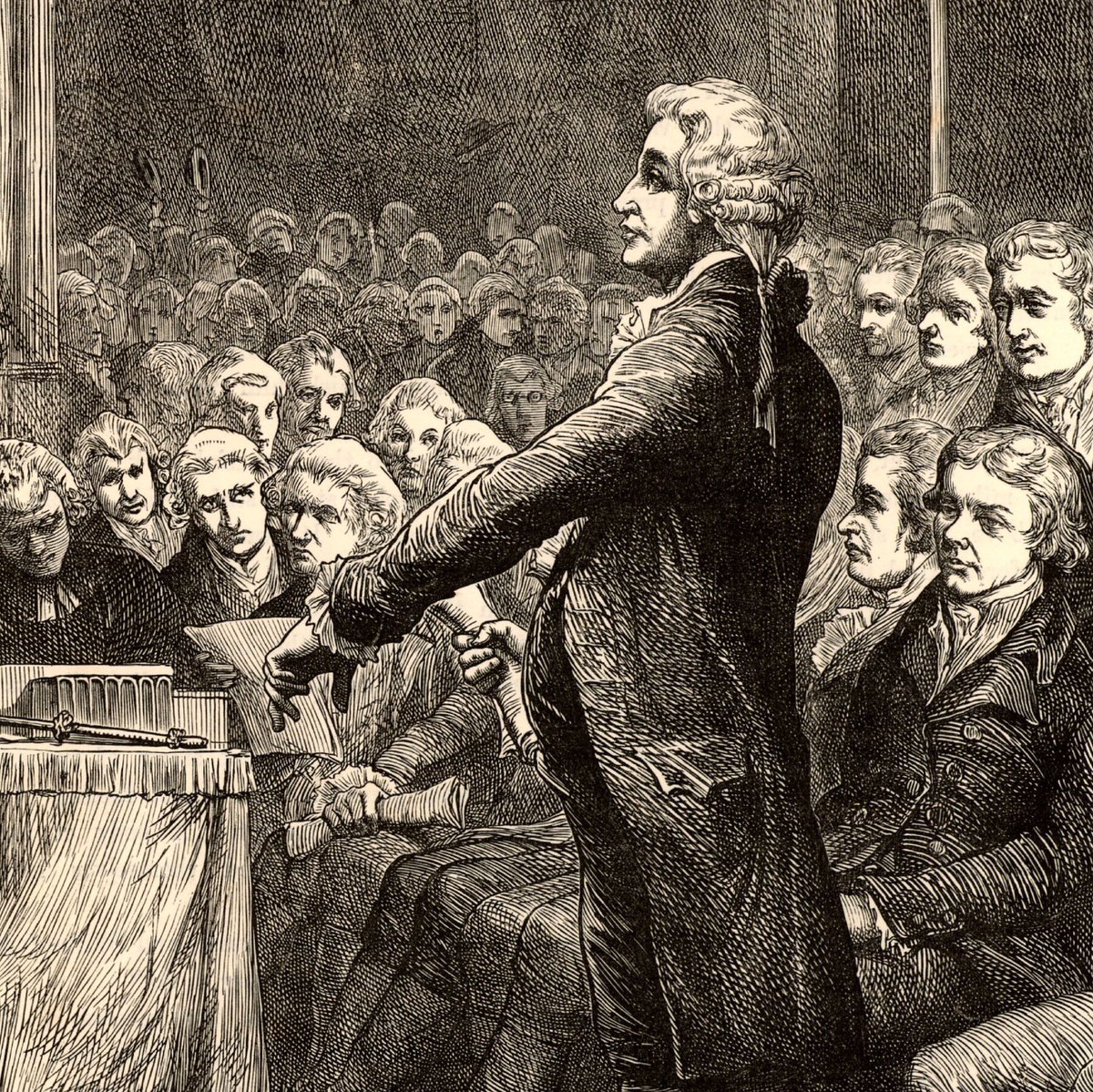
Burke described how institutions evolved, like living things, they’re the customs and traditions that survive the test of lived reality over many years. They’re what survive that lived reality.
They’re the hard-won lessons of repeated human lives, acting in the present.
/2
They’re like a combination of society’s autonomic nervous system and memory. If destroyed they don’t get back up again, just as making a species extinct can’t be reversed.
Only reliving centuries or millennia of the same brutal experiences might produce something similar.
/3
I often post here about how only catastrophes shift societies meaningfully.
They do that by generating institutions. New customs and habits that act against the status quo. Which then act autonomically into the future, guiding future generations too.
/4
We live in such an adolescent culture now that our idea of change is trying to get things to ‘go viral’. Like selling yo-yos.
‘Mobilising’ people behind trends. It’s all ephemeral. Only multiple lived generations facing challenge generate lasting institutions.
/5
The institutions that emerged after WW2 that led to the greatest peace and prosperity in human history, for much of the 20th century, are what we mistake for normal life.
They’re absolutely exceptional, historically. Rarer than dodos. They invented ‘we’, ‘the public’.
/6
A we often mistaken for the same adolescent culture protesting, either out in the streets or now on these platforms. Mobilising everything.
The public is an institutional construct. Without institutions it simply ceases to exist.
/7
From about the 1970s, humanity’s battles for social status went to war on these institutions.
Both ‘Left’ and ‘Right’. The Left called them ‘the establishment’, the Right ‘red tape/bureaucracy’.
All adolescents in an adolescent culture. Teams. playing status team sports.
/8
Fake enemies, both playing the same status games, both gorging themselves on humans’ true delight, the fight for social position.
Burke saw that revolutions are what these status battles produce. Revolutions that destroy institutions.
/9
Russia and China never really recovered from their people power moments, in the 20th century. But we forget that the West had its own, later in the century.
It’s countercultural revolution. When teenagers took over the West.
/10
That’s why to this day Western life is still that giant high school, with rival teams battling for status in the schoolyard.
When that massive demographic blip of teenagers hit adult life in the 1960s, they had no idea what to do with it.
/11
An adult life pulverised by two world wars, a great depression and a pandemic. The teenagers had strength in numbers and fatally damaged adult institutions.
So they remade the West as a literal giant high school, culturally. It’s all they knew.
/12
Watch us in the West every day, the perennial culture of complaint, teenagers grounded by parents or teachers.
Our response to all problems the same. ‘Protest’. No idea how to intervene in the material reality of our lives. The institutional basis of our culture, gone.
/13
Our collective autonomic nervous system and memory destroyed.
Only technologies bind us now, through the discipline they impose by their construction and upkeep. Everything else is team sports, for status.
/end