March 2023
Complete authored posts and demonstrable self-threads.
Students were never told to go sit in the library when they had colds and flu. Covid exceptionalism, anyone? https://t.co/wjVpQK3pv5
Australian politics is communitarian (look it up). Not capitalist, socialist, Left or Right. All through the climate war decades, Australians ignored the BS and went about installing an entire new national electricity generation system themselves. https://t.co/I1UMyEicAk
Jazz is a bit of an enigma in some ways, it escapes easy definition. Which suggests there’s maybe something being missed. And maybe that something extends to a lot of the problems we have around identity and politics. Bit of a 🧵. /1 https://t.co/kAa4lUFE4U
As the article says, a lot went into the melting pot at the origins of jazz. Obviously multiple streams of African-American music at the time, but also a cross-pollination with classical, through the influence of Creole musicians. Without question jazz was a new style or…/2
…genre of music, one developed by African-Americans. But I think it was more than that, in a way that makes it an even more significant invention. To use an example from rock music, Queen’s guitarist @DrBrianMay is always credited with developing ‘the Brian May sound’. /3
Without delving into that sound too deeply, it’s of course flattering to have a style/sound attributed to you by name. But in another way it downplays the achievement, May squared a few circles in rock guitar. Most importantly to reject the distinction…/4 https://t.co/nxaU0QGjxn
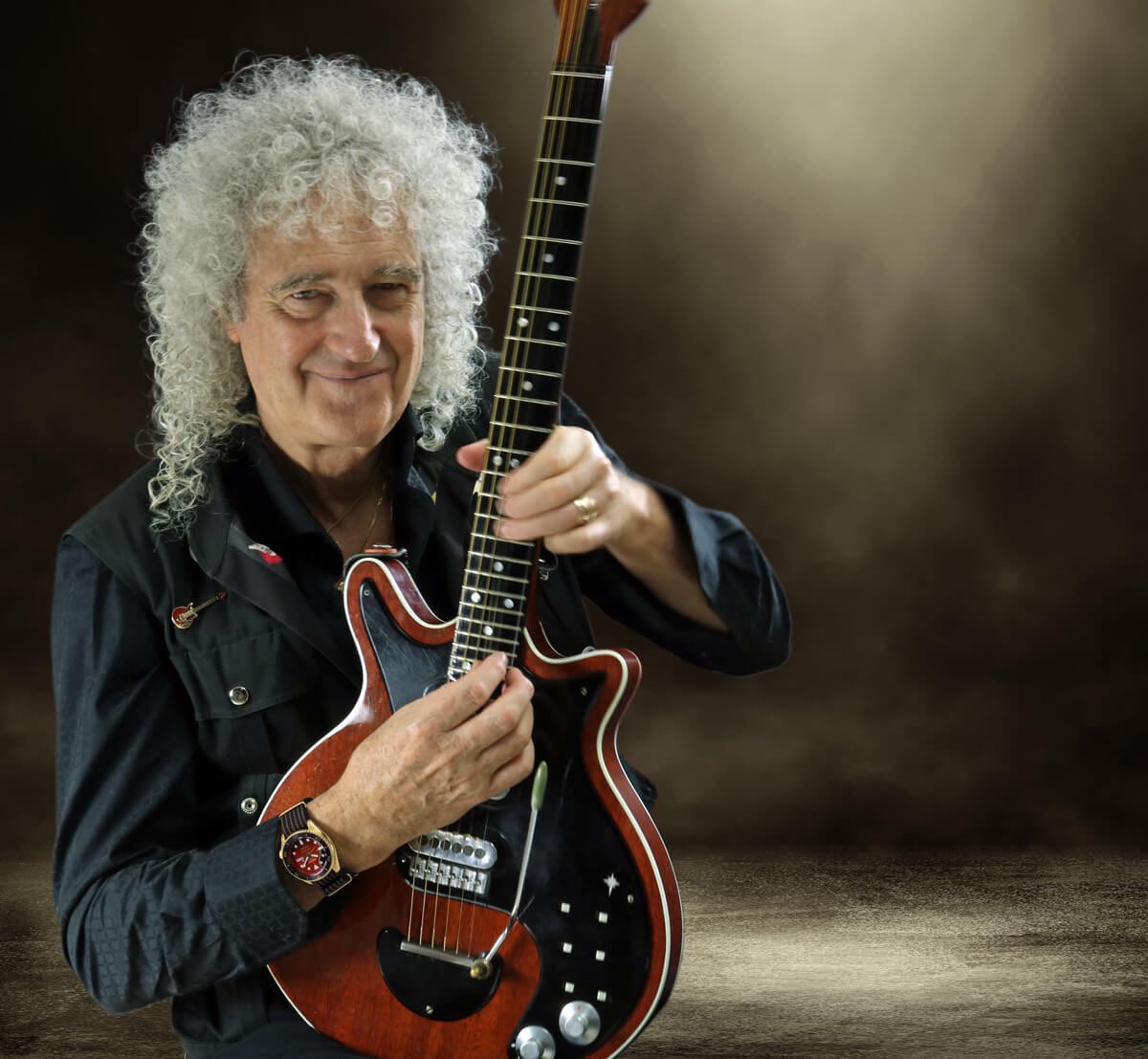
…between a clean and overdriven sound as some form of binary, and replace it with a continuum where you get the overdriven tone but with clear articulation of all of the notes, even with quite complex chords. And to get an almost infinite sustain, with a beautifully pure…/5
…single note tone, like a voice (May often describes his playing as trying to emulate a voice, which I think is a perfect description). So to get back to the point, while all of this is the ‘Brian May sound’, it’s much more than that, it’s major innovation in rock guitar. /6
And that innovation is often missed in attributing all of that to some form of idiosyncrasy instead, like it’s just a particular quirkiness of Brian’s, rather than a major step forward for all rock guitar. And sometimes jazz seems a bit like that, to me. /7
A major evolutionary leap in music itself, often marginalised as just another style or genre. I want to suggest that jazz is also just music, but music played better, by better musicians. It’s like a culmination of many streams of music, into a more sophisticated form. /8
Maybe most easily (and probably too simply) described as the convergence of composition and performance. Improvisation, such a core component of jazz, is that convergence I think. A great jazz musician composes in real-time, during performance. /9
It’s the pinnacle of music, to be able to do that well. It takes phenomenal talent and huge amounts of hard work to be good at it. I sometimes use the clip below when trying to explain this to friends, the extraordinary @bmarsalis playing with Sting. /10 https://t.co/9g6CFeBSTH
For jazz purists this maybe isn’t vintage Marsalis, but I like the example because it demonstrates the cross-genre argument. Listen to the lines Marsalis plays, they’re all counter-melodies to the main melody, effortlessly harmonising with that melody, with other melodies. /11
Melodies composed on the spot, by Marsalis, to play (literally playfully) against the main melody. Counterpoint, contrapuntal lines, like JS Bach. Counterpoint is sometimes considered the highest of all musical skills, a not small reason Bach is often considered the greatest…/12
…of composers. But Marsalis is doing it here, in real time, on the spot. When you listen to soloists in other traditions, or even less accomplished jazz musicians, the solos so often follow patterns and formulas that are familiar to the musicians, some scale pattern. /13
Patterns their fingers and minds know, rather than an artistic response to the moment. But here the solo is a melody, perfect in itself, but also at the same time playing against the main melody in ways that make them respond to one another, like a conversation. /14
That’s phenomenally hard. Genius. Reminds me of the story of how Horowitz, who was always intimidated by Art Tatum, composed a piece he thought would be difficult for Tatum to play. And then Tatum not only played it with relative ease, but also improvised on it, on the spot. /15
That’s not just ‘jazz’, that’s a genius musician. It’s music, played better, by better musicians. The work Marsalis and the rest of the Blue Turtles band did with Sting was another case in point. Sting’s songs of course provided the bedrock, but the jazz musicians took them../16
…and immediately and effortlessly transformed them into new songs, every time and every night they played them. A sort of continuous invention and reinvention of the songs, in real time, every time they were played. You can call it jazz or some hybrid fusion, but to me it…/17
…was music, but played better, by better musicians. The best musicians. You could have used country players, or classical, or whatever, and come up with a different interesting fusion. But it wouldn’t be that real-time continuous invention, that convergence of composition…/18
…and performance, that you get from jazz. Jazz takes other musical styles and transforms them into continuous invention. So while it is a style or genre too, it’s also more than that. Mozart for example loved to improvise, there are stories../19
…of him improvising in concert or for friends for 20 minutes or more at a time, with that same sort of endless invention you can hear in Marsalis’ playing. Genius does that. /end
The 50-year long assault on taxation, under cover of libertarian nonsense about freedom, had one clear goal. To relieve the wealthy of their social obligations. This thread is a home-run of numbers to ram the point home. https://t.co/rrGuYDOyjH
More evidence of how ‘the economy’ shapes society. Note that with Auspost’s troubles, at no time does even the ALP shift from the cost-recovery model in its thinking. It has to be run like a business, the conservatives win again. https://t.co/kSUprGakFW
Failing to meet child safety standards is pretty much every school in Australia right now. They’re nearly all Covid incubators. https://t.co/ukPPUZ0war
The hubris of the idea that humans decide reality. That a win over Covid will be defined as a win for the ‘Left’ or the ‘Right’, in an election. Covid couldn’t care less. It doesn’t even occur to many that it may not be us who defines the terms of the armistice.
‘Alarming’. We better do nothing, that’s worked so far. Or just ask pilots to look out the windows for other planes. Or pilot, singular, sorry, I forgot they’re moving to single pilot planes, because all of the pilots are sick or retired too. https://t.co/V5pyECtbmG
The job is the basic unit of the ‘economy’. And now that the economy has replaced society, it’s also the basic unit of society. ‘Jobs, jobs, jobs’, remember a PM saying that? A job is much more than a way to organise work. It’s a way to structure (and destroy) a society. /1 https://t.co/rog30umDd1
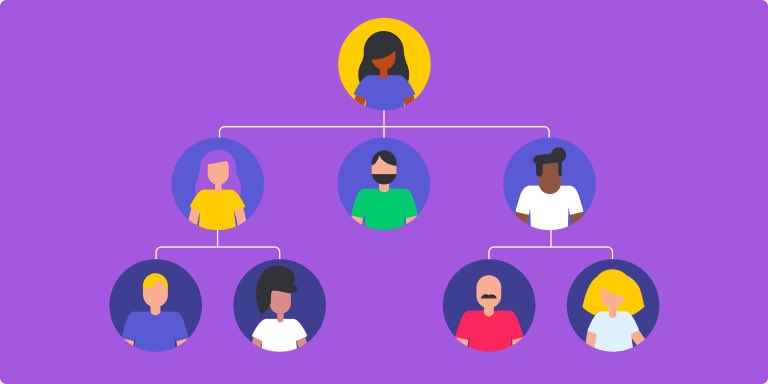
No Big Brother needed, if the way of organising society is now mostly business, then how business is organised is how society is organised. To even exist or survive, you need a job, jobs are what allocate society’s common-wealth. I don’t think that’s factored in enough in…/2
…understanding why we struggle to solve major problems, like climate change or Covid. Our agency as a population is splintered into millions of jobs, answering to hundreds of thousands or more employers. We have limited power or agency to effect collective…/3
…change, because our energies are dissolved across those hundreds of thousands of workplaces. But more than that, it becomes almost possible to solve any complex problem, because even if we were going to by allocating them to all of those businesses to somehow solve (and why…/4
…would they, their bottom line is always going to be their main consideration), there’s nothing about those problems that lends itself to a neat packing up into millions of separate jobs, to solve. Each job and business will look at the problem from the perspective of…/5
…the specific work they do, which may have little relevance to solving the major collective problem at all. For Covid, you get a handful of businesses, like Big Pharma, mask manufacturers, sanitiser makers etc. with direct relevance to the pandemic. But nearly everything…/6
…else in the ‘economy’ has little relevance at all, despite the problem to be solved impacting every single person, in every one of those businesses. Thus the claim we need to ‘balance’ the economy against Covid action, because most of the economy has nothing to contribute…/7
…at all, to an event that threatens the entire society. Societies that transform all of their social relations into economic relations, into jobs, are therefore woefully lacking in resilience. No collective effort is possible, because even with the best intentions, the…/8
…most people and the businesses they work for can do is to keep spitting out the rubber ducks and cat toys and TV sets that is the work they do. Most of which will have no use at all, in an emergency. Without a collective focus not just to emergencies but to the…/9
…everyday work of society itself, you castrate your capacity to respond in any way at all to even extinction-level threats. And that’s what the economy is, and was always intended to be. A way to pulverise anything collective or social, into tiny job-sized bits. /end
(*im*possible that should say)
50 years of ‘there is no such thing as society’ politics is producing (wait for it, you won’t guess) - no society. We left it far too late to try to reverse the same sort of disastrous social collapse we’re seeing in the UK, US and now here. https://t.co/FoLNlTmdU8
In the debate about whether Covid came from a lab or a wet market, I’ve always come down hard on the side of it coming from organising society as an economy. So that keeping coffee shops and travel agents solvent takes priority over sheltering from a lethal virus.
I post the numbers sometimes, but Karen does it with smart things added. Who knew an endemic disease came in epidemic waves, hey. https://t.co/wkOVbF8qSX
More than a year after letting Covid rip, the obvious (and relatively contained) ‘vulnerable’ still not protected. Probably because you can’t, in a modern society where everybody is connected to everybody else. https://t.co/m8EoM53Hjb
"It is just assumed that the free market will look after things and we will have vets wherever we need them but that is not the case." Another victim of ‘the Economy’ fantasy. Society is falling apart. And remember, that was the actual plan, to destroy it. https://t.co/J3jdPlaxIo
The super fight shows two things. 1) How even the most basic common sense measures are stymied by electoral popularity politics. 2) That status drives societies. Aspiration. That this decision isn’t immediately hugely popular shows that. https://t.co/uN2dxttnCj
The reason I don’t show much enthusiasm for mobilising behind causes is because I think it misunderstands how societies work. Petitioning elected representatives in various ways is the fantasy mythology we were all fed throwing up about how democracy works. It’s not. /1
‘The people’ doesn’t exist. Of course there are millions of people, but they don’t act as some sort of cohesive group. The public is different, that exists. But it had to be created, constructed. During the fight against social collapse in the late-19th and early 20th…/2
…centuries, from plagues and wars, we invented ‘the public’. But the public also isn’t some cohesive group. It shifts with every issue. 50 years ago the public backed comprehensive schooling. Now it overwhelmingly backs private. ‘The people’ was actually a concept invented…/3
…by the fascists in the 20th century. It has no similarity with the public at all. Authoritarians even today talk about the people whenever they want to create an impression of having a ‘mandate’ from the population for doing something. The public though just means the…/4
…consideration of the impact on the inter-connected social lives we live, for any proposal. It’s like ecology, for politics. It’s overwhelmingly created and maintained by the ‘public service’ (it’s in the name). Copying from the Chinese, the Brits invented the public service…/5
…to do this work, of managing those inter-relationships in implementing public policy. And no, it doesn’t mean handing over control of the country to the public service either (what many say to me, regurgitating spin from the political libertarians). It does mean letting…/6
…them ‘run’ the country, for about 99% of the time. That’s their job. We’re seeing with the Robodebt RC just how much populist, elected politicians make that job a nightmare for them. You do need a mechanism to make sure this running of the country is always focused on the…/7
…public good. Currently we use elections to try and do that. They’ve failed, utterly. They’re far too easily gamed by popularity politics, which is really just marketing. The people who sell things for a living have found it ridiculously easy to transform elections into…/8
…easy access to government power and social control. We can put much better processes in place (sortition, for example) to replace elections. But we also can’t forget that politics is also mostly about power. We’re not all sitting around a table calmly deciding the best…/9
…way to do all of this. We’re fighting for status and control. Societies run socially, and social groups operate using social conformity and status. Those who have status and control aren’t just going to relinquish it because somebody comes up with a good idea. /10
Why I’ve Tweeted a lot of times about how we made progress in democratic politics only for the very sad reason that existential disasters overwhelmed the status hierarchies of that time, in the late 19th and early-to-mid 20th centuries. Then, since the 1970s, those…/11
…hierarchies invented an ‘economy’ and fought back, stripping away most of the gains. How do we slow and even reverse that hijacking of decades of true democracy? Not by mobilising the people, again that’s a fantasy construct invented by the fascists. But by doing the…/12
…relatively small job of removing electoral-based popularity politics from the public service. Restoring due process. Of course the populists won’t have a bar of losing their social status, so it’s much easier said than done. Only two things may actually bring it about. /13
A total existential collapse of society, from an external threat, like a plague and/or war. That worked in the last century. So far Covid hasn’t done that, but it’s too early to call. The other is one I also Tweeted about, the sheer social-technical complexity of modern…/14
…societies will force change. Without that change they will cease to function. No matter how many populist windbags claim to be able to shape reality to their will, at the end of the day that doesn’t keep the lights on or the planes in the air. I suspect the…/15
…idea we have that we can mobilise change is profoundly naive. It’s the viewpoint of privileged societies, who are used to politics doing things for them. But that politics came from disaster, not from mobilisation by the people. /end
Society is structured using high school as a framework. Not as Left or Right. Imagine the geeks and nerds petitioning the cool kids for changes. How do you reckon that would go? Politics is social, and social is status. https://t.co/8uHKt8WdWB
We began the pandemic thinking epidemiologists would cut through political Covid spin. But it needed the actuaries to do that. https://t.co/VZpy2mdfK1
Meantime in the UK, we’re literally at the ‘let them eat cake’ stage of social collapse. But tomatoes, not cake. Grow ‘em yourself, the supermarkets are empty. https://t.co/Zgf0QLBo6I
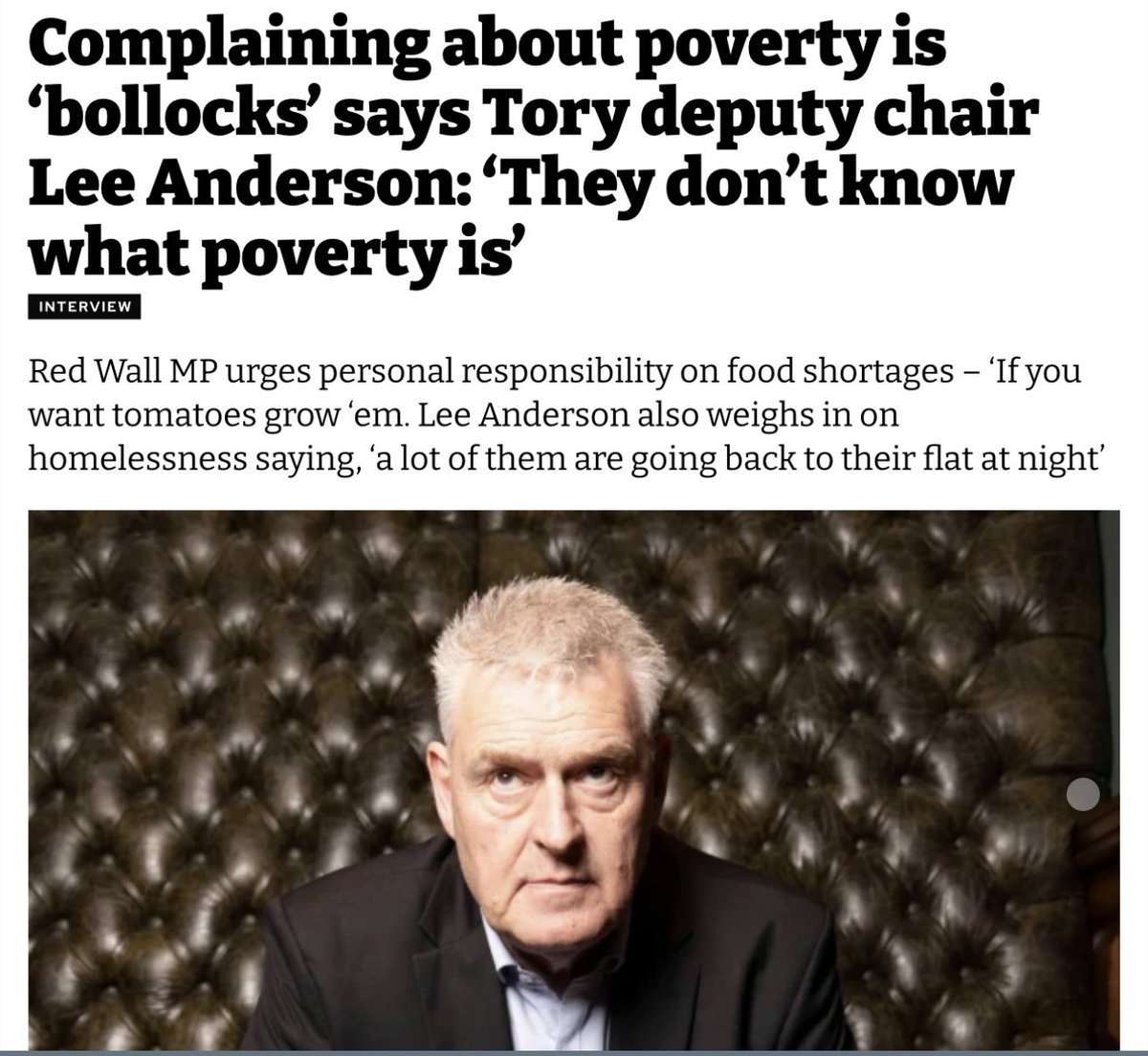
Notice ‘personal responsibility’ used here again. Take personal responsibility for empty supermarket shelves.
But he won an election. That’s the only test we use to select the people who decide whether we live or die. Popularity. https://t.co/YycBzhz59X
The much more interesting question is - what’s the opposite of ‘authoritarianism’? https://t.co/HyRkRCXoHu
NSW copied this scheme. People will remember the vouchers. Designed to break down psychological and emotional resistance to being infected. Sold as helping the economy. https://t.co/TS5ZShTws5
Great piece showing the power of talking about the specific, rather than generalising in stats. The lethal stupidity of government-sponsored dining vouchers in the middle of a pandemic, and the tragedy they helped produce. https://t.co/h33rovsIoS
A common idea is that societies or groups are the sum of their parts. Like adding millions of identical points, to create a whole. Or instead we say ‘the whole is greater than the sum of the parts’. But neither of those ideas explains groups, of any size. /1 https://t.co/yHedumpO25
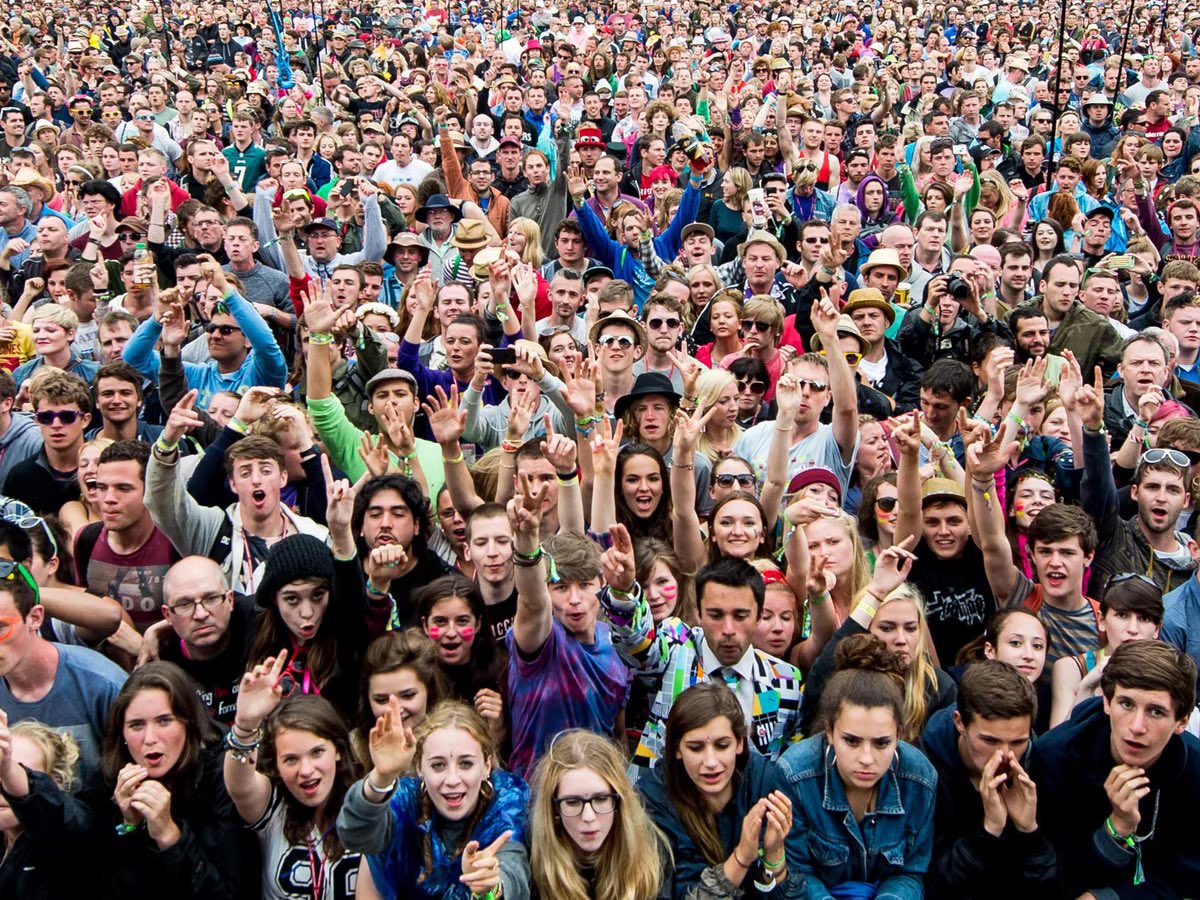
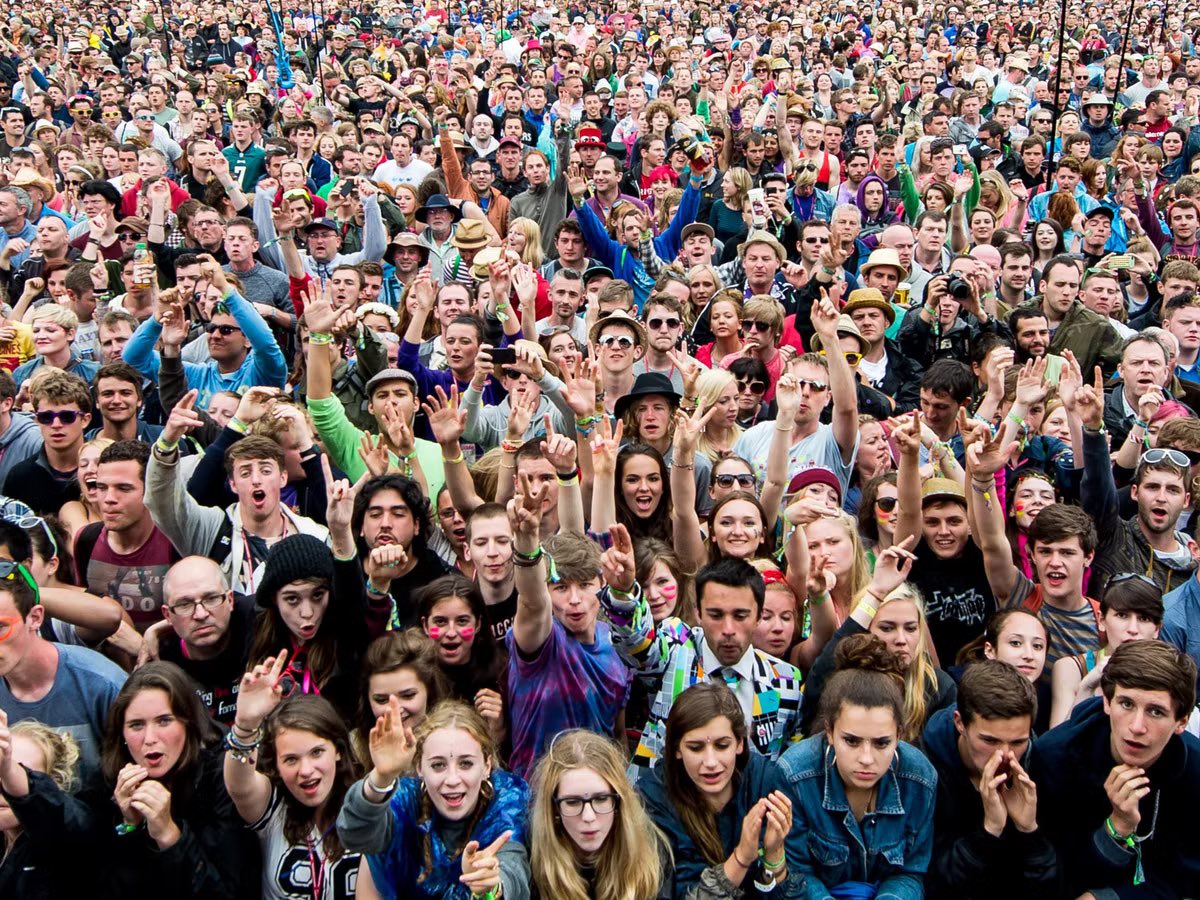
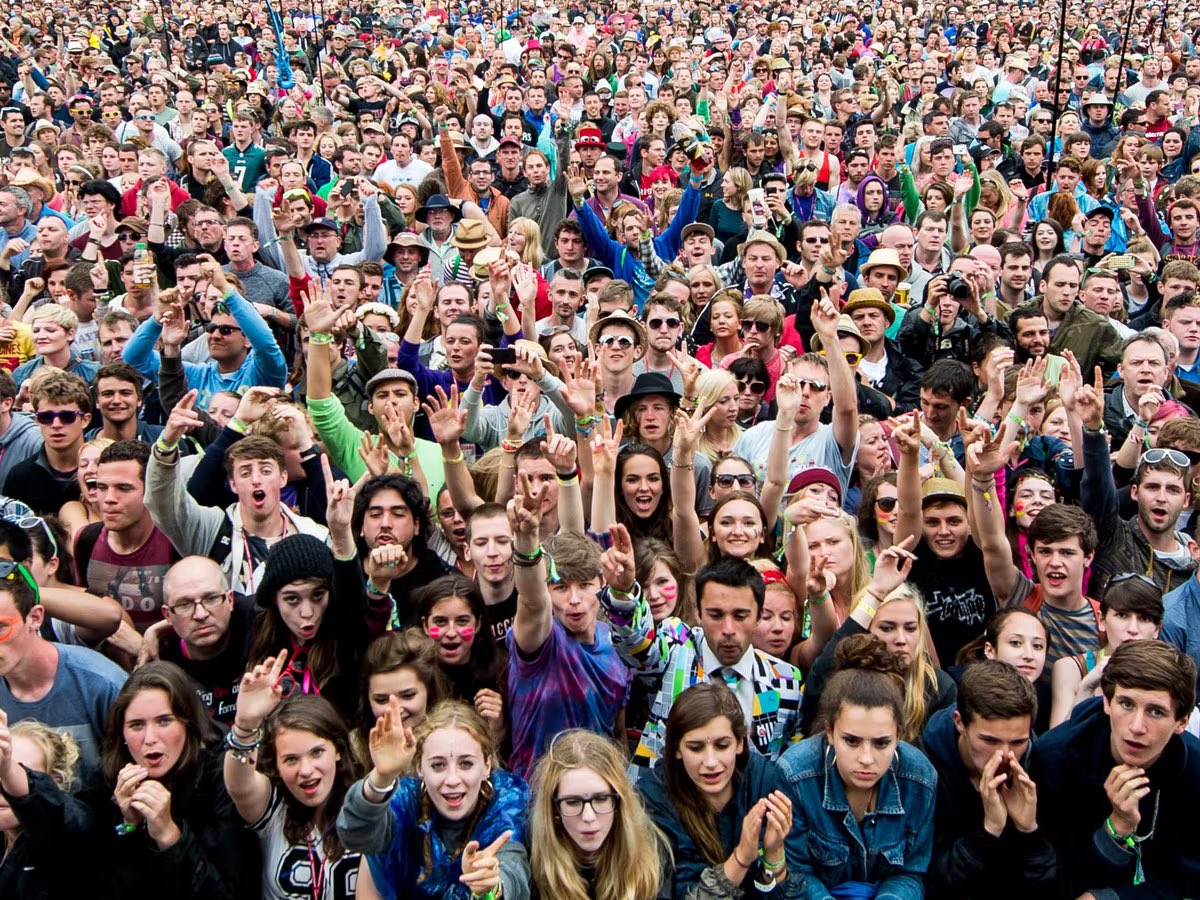
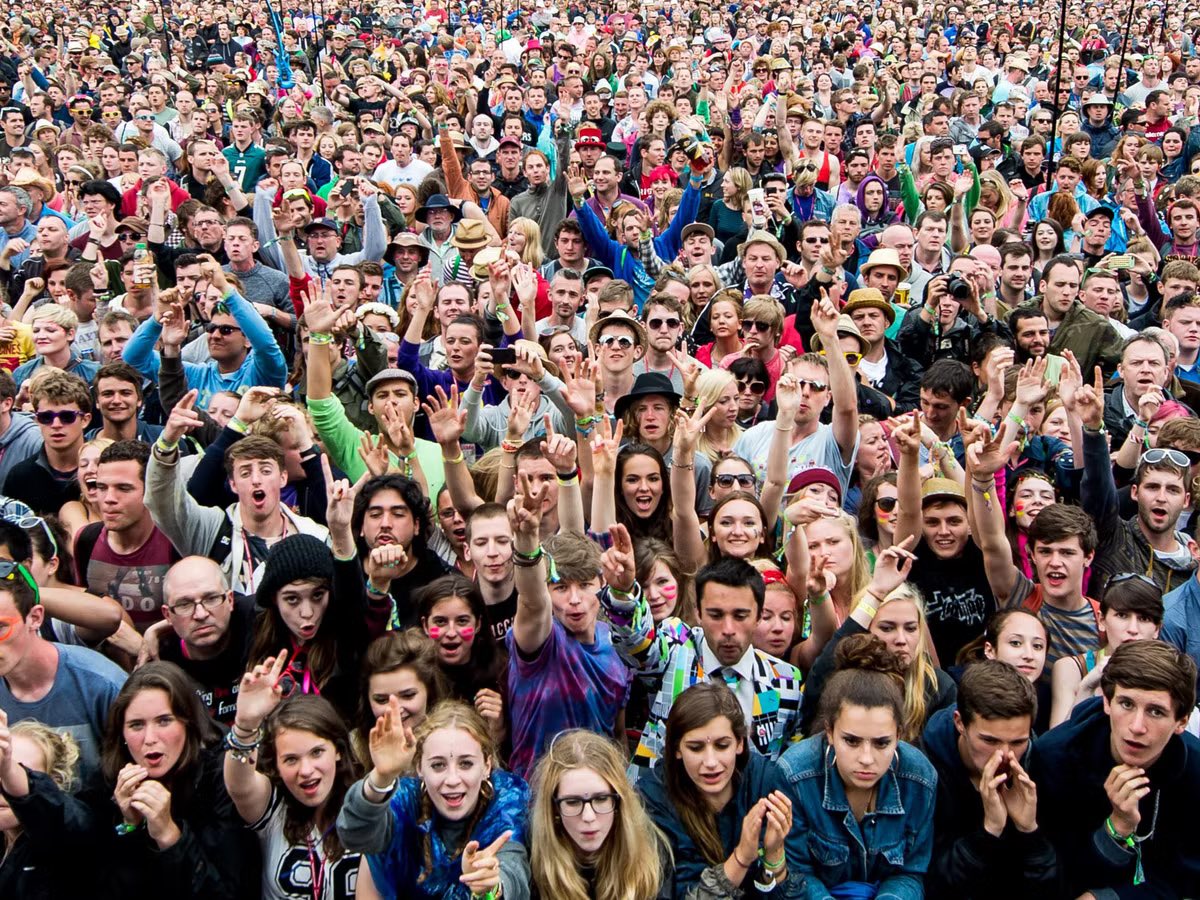
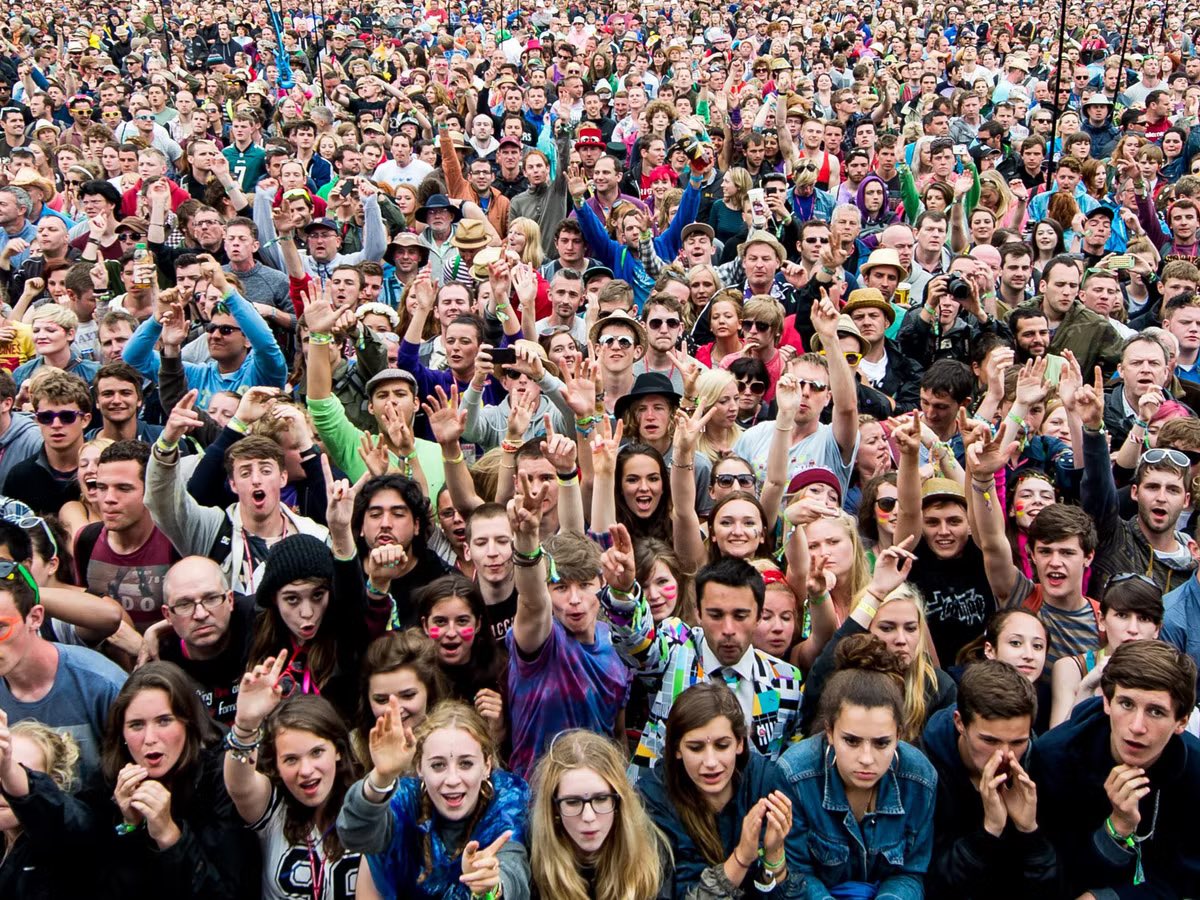
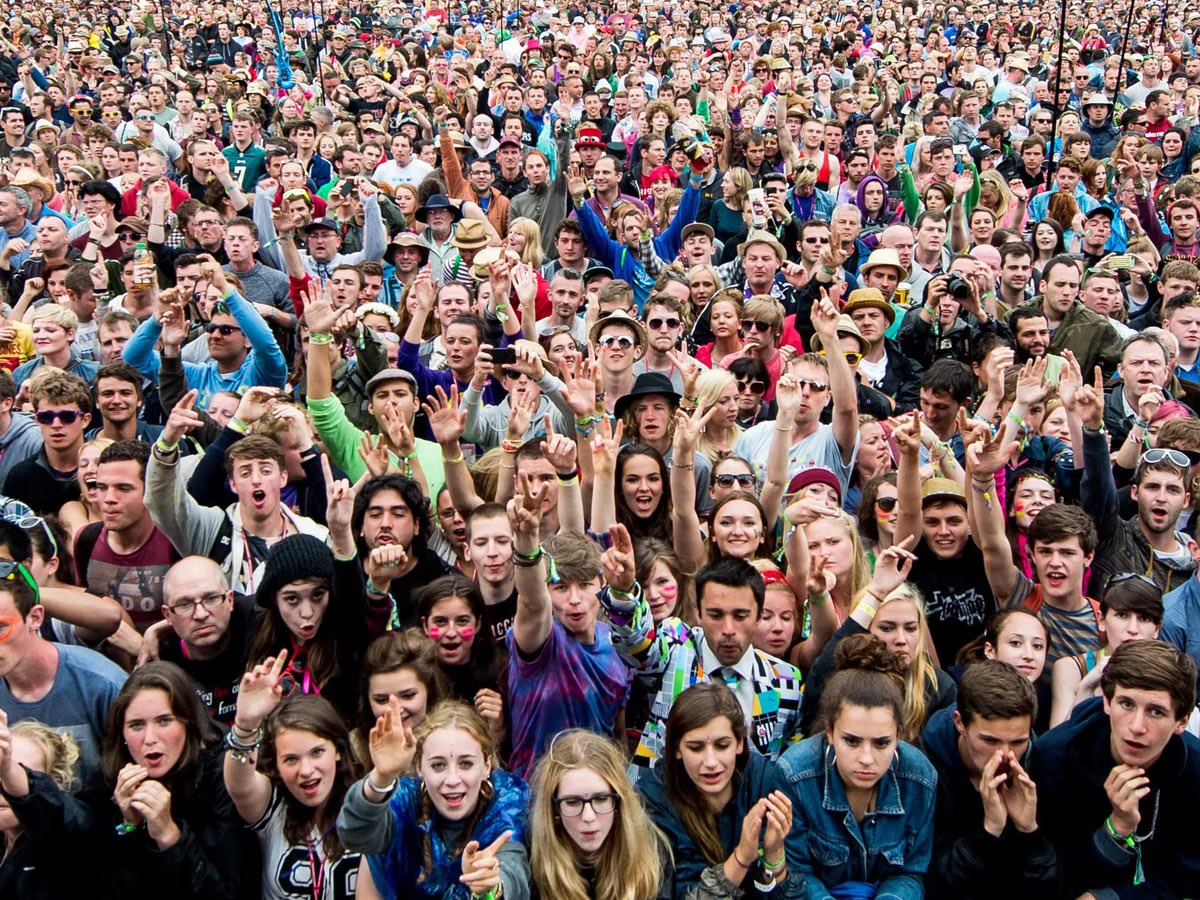
Any crowd picture shows the actual truth. Look at the faces. Every one completely individual. People act for their own individual reasons. There is no group mind. The fallacy of much thinking about groups, societies and politics is that individuals and groups are two things. /2 https://t.co/ryJKaNeR0w
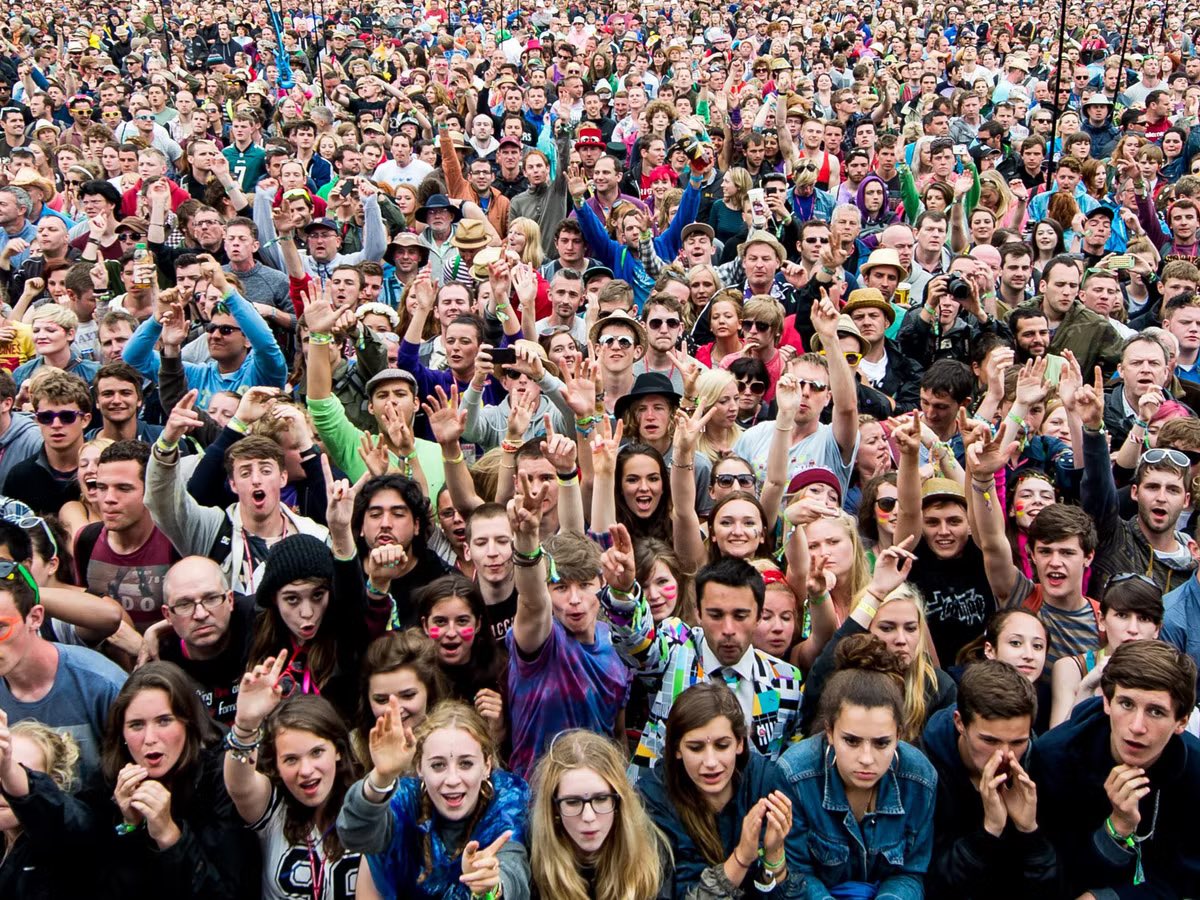
They’re not. The secret key here is to stop trying to make wholes from parts, by pre-defining the people as parts. Each person is already a whole. By which I mean you don’t get a group or a society by adding up lots of individual characteristics, as an aggregate. /3 https://t.co/DWQFznRaH8
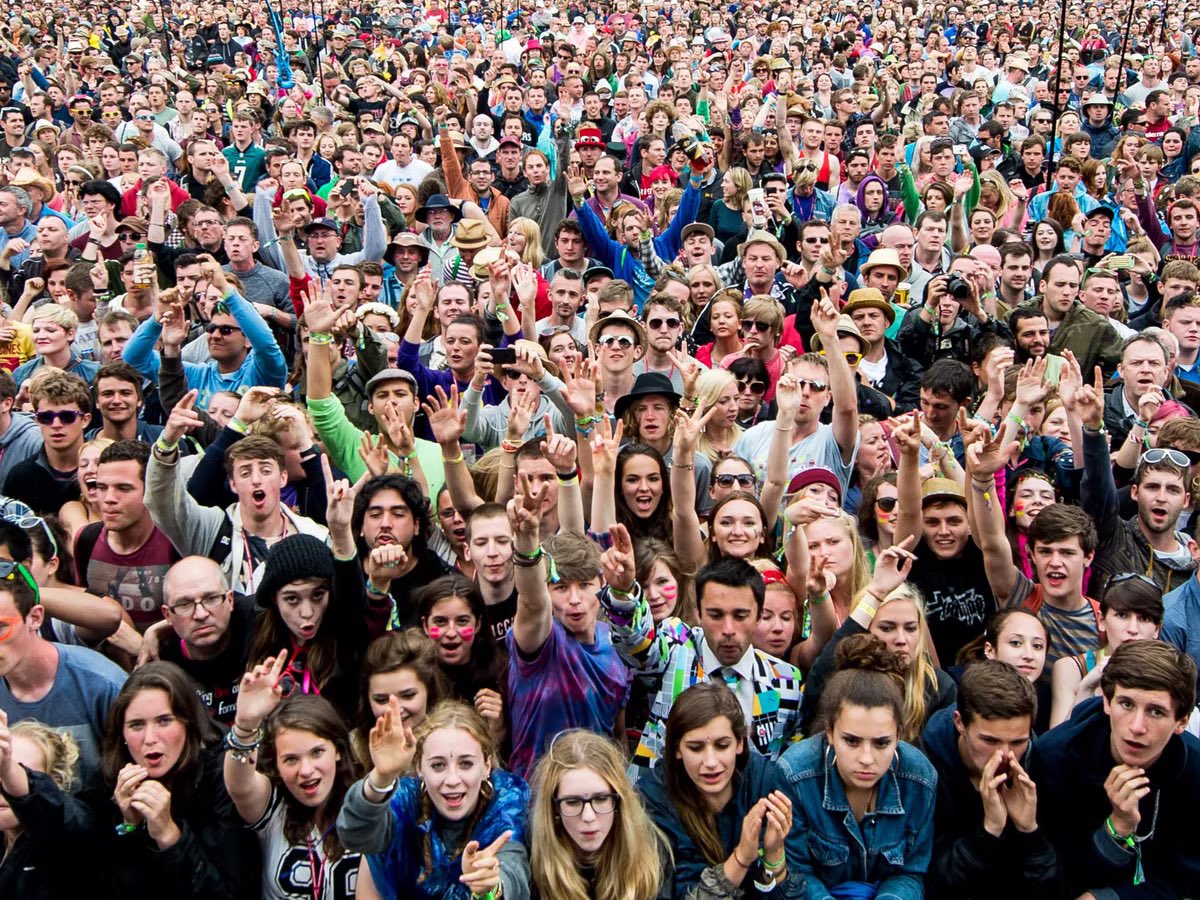
Each person in that crowd has a view of how the WHOLE society works. Not one-millionth of a view, and adding another 999,999 views then gives you a society. Groups of people of whatever size coordinate to act as a group when these *whole* views overlap in some way. /4 https://t.co/j3n2AOv6Oe
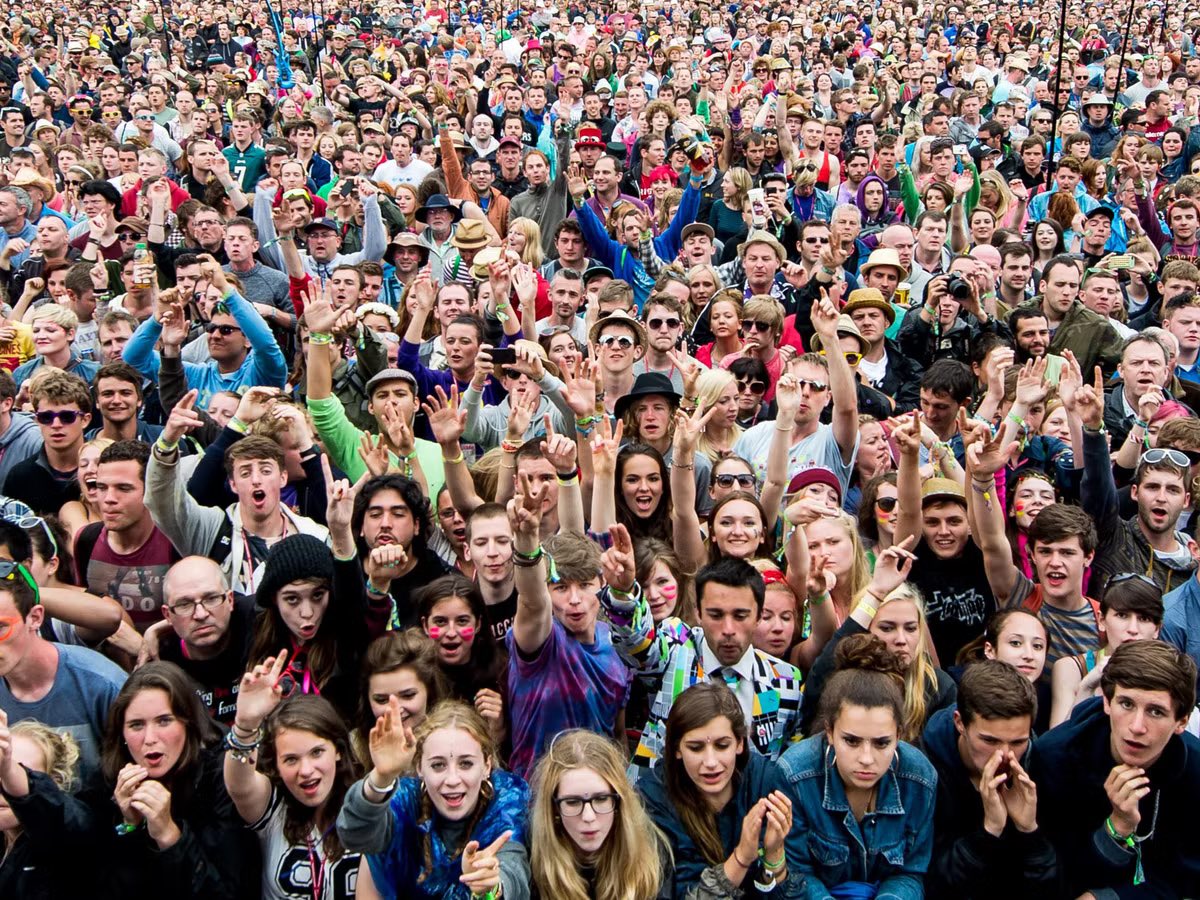
It’s more like set theory, than counting. Each person is a set, and that set is all of society, from the perspective or viewpoint of that person. When they act together, each person in the group does so for their own reasons, which in turn are created by their assessment of…/5 https://t.co/DF5iL0MDl3
…how the decided action fits in their whole big picture view of how society works. Nothing is added up here. A group is not the sum of individuals, there are no parts or wholes in that way. We are each a universe in ourselves, all of reality refracted through the…/6 https://t.co/uMJlIlEGSR
…individuality that is us. That’s why there are no individuals or groups. Individuals are all of reality already, seen through a particular viewpoint. And groups don’t add people up, they’re overlapping narratives shared between all of these unique worldviews. /7 https://t.co/Hhgv5xgSUE
Each person a monad, as philosophers say, not a point. This matters because in our politics for example, we’re always playing tug of war between individual and group focus. But if that distinction isn’t even real, it changes politics hugely. Most of the battles between…/8 https://t.co/nQ0YUPVTOu
…Left and Right turn out to be based on a fiction. Maybe more on that another time. /end https://t.co/roasCXiyiW
Again, the late 1970s was when everything changed. That’s when ‘the economy’ (‘markets’) began replacing society in earnest. We don’t need to debate these things, the empirical evidence is there in lights. Markets are a fantasy. https://t.co/iePN7vvDCx
Can only imagine how many ended up with Covid huddled in these mass shelters. Societies have a choice right now, to take back control from the sociopath libertarians, or to collapse. https://t.co/KAT65ngkGQ
“But the premier's press conferences have become a bit like that — no matter what is asked, the economy is the answer.” You won’t find a clearer empirical proof that ‘the economy’ was invented to bypass all social and political issues. https://t.co/e2m9IpC4cH
One of my favourite pages to refer vax-and-forget people to is the list of control guidelines for infectious diseases, in NSW. Many members of the public are not aware these controls even exist, or that they’re applied 365 days of the year. /1 https://t.co/hEZMzhkW6Z
There is technically no such thing as a ‘sterilising’ vaccine, that prevents infection forever. Some work against infection better than others (HPV, measles for example), but none of them eradicate a pathogen on their own. They’re *always* surrounded by other controls as well. /2
Have a look at the list, measles still has a (detailed) control guideline, despite having what we often (incorrectly) call a ‘sterilising’ vaccine. These controls need to be continuously applied, every day of every year, by public health staff. The idea that we should get…/3
…vaccinated, and then do nothing else except get repeatedly infected year after year? You won’t find that in a SINGLE guideline listed here, for any pathogen. The fact we’re doing that for Covid is 100% politics, 0% public health. It’s a disgusting joke. 4/4
‘The poor’ don’t see themselves as the poor. They see themselves as the equal of the rich, but unlucky and obstructed. They don’t want pity or help, they want to not be thought of as low-status citizens. They learn that in high school, we all do. The failure of progressive…/1
…politics over the past 30 years has been to take a statistical socio-economic measure of wealth, and turn it into an identity. The poor don’t want to be defined by their lack of wealth, it rubs salt in their wounds. Every single election, here and in countries overseas,…/2
…in that past 30 years has seen progressives pitch to the poor in that ‘help’ way. Which to the poor sounds patronising, it fuels their anger at being seen as second-class. That’s how the conservatives won them over, by pitching ‘aspiration’ to them. /3
Which won’t help them. But it’s *much* smarter politics. Progressives need their own aspirational story, to respect the people they’re trying to help. The poor are less into bringing down the rich than they are into being LIKE them. They want status. High school! 4/4
In the UK, making the whole country sick forced record absences at work. The freedom-fighting libertarians are having none of it. Health checks at work to make sure you’re not making it up. Where they go, we follow. https://t.co/HPwmMpXsrW
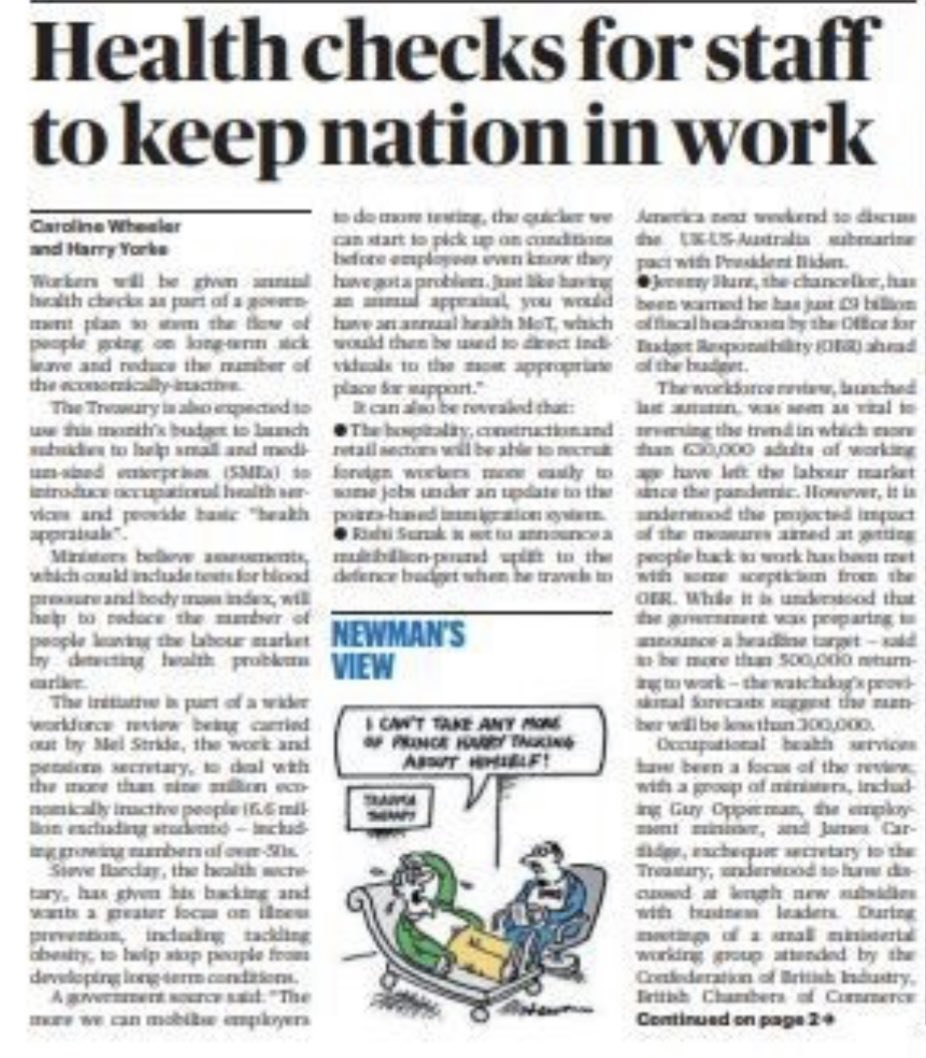
Apologies for the blurriness of the image, it’s tomorrow’s Sunday Times front page, so no high-res version available yet.
As one journalist commented, you can’t even get in to see a GP in the UK right now. How they’re going to manage annual health checks for 33 million workers as well? A fantasy.
Read this. How popularly elected fatuous idiots destroy societies, by undermining the expertise that is supposed to actually run them. Utterly disgusting. Flood damage is caused by the corruption of these fatuous idiots, in bed with property developers. https://t.co/Xtgs2WhaEr
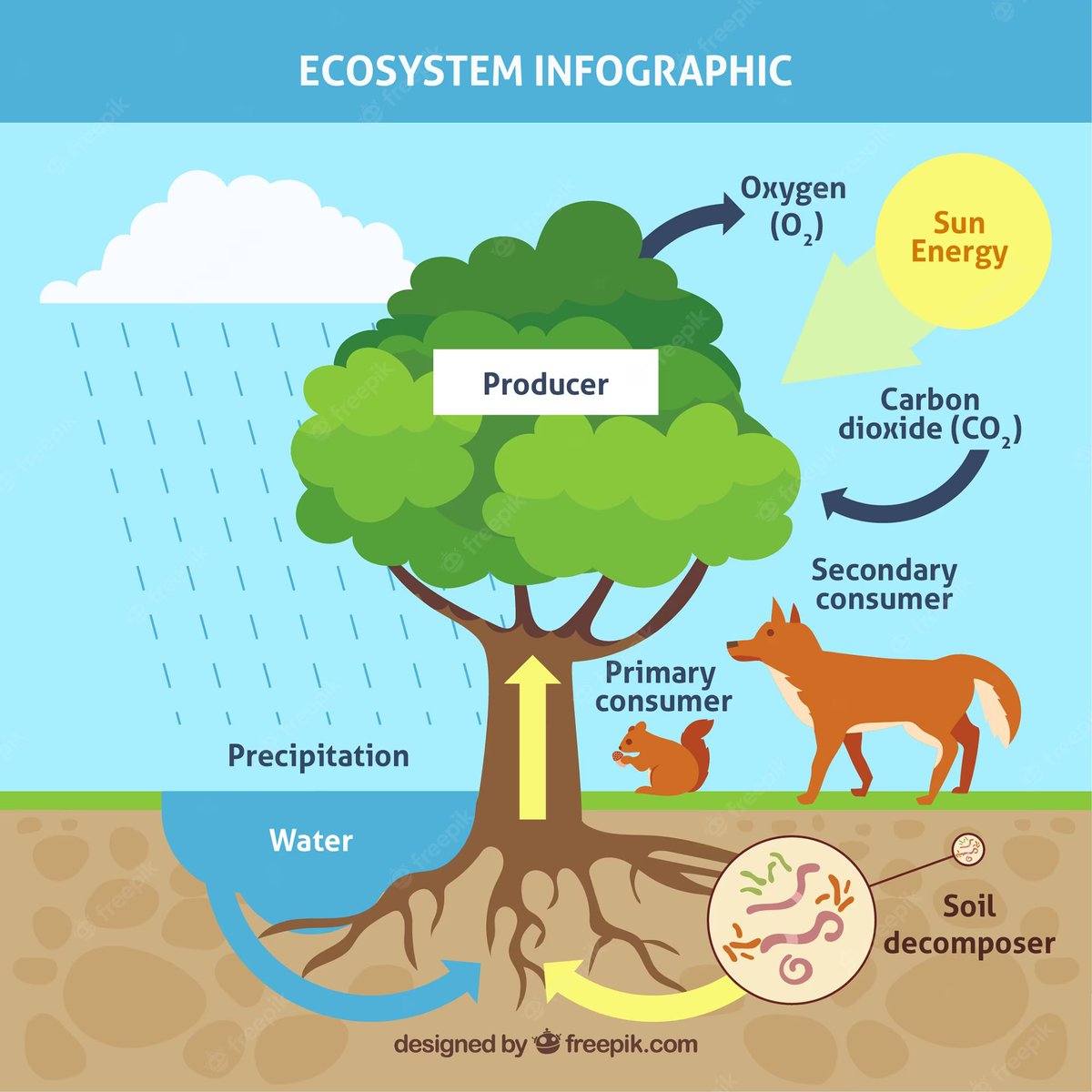
Politicians treat vaccines as medicines. Others treat immunity as a dialectic between pathogen and human/vaccine. But infection is an ecosystem. All public health measures, including vaccines, work long-term only if they can create an ecological stability. https://t.co/HNMXMXYZLy
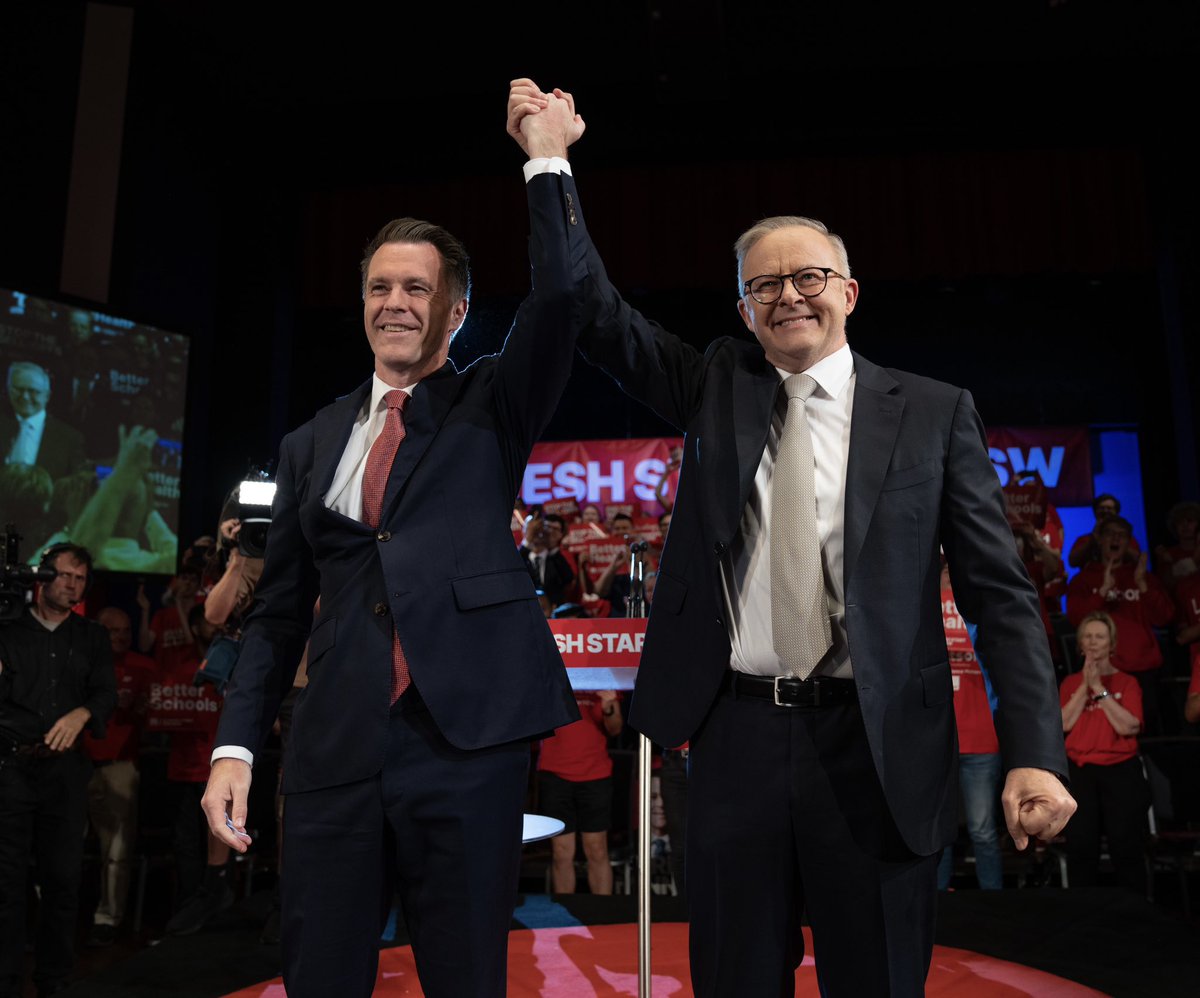
Better than the LNP. My cat could run a country better than the LNP, who don’t even pretend they want to. They want to shut government down, they’re honest about it. But the ALP just as enslaved to the framing of ‘the economy’. Elections won’t change that. https://t.co/i9dHbkPpkP
In the power industry, when demand significantly outstrips supply, they carry out ‘load shedding’ i.e. turning off the power to users. Letting the elderly die so the rest of us can go back to meaningless jobs for the economy, is Covid load shedding. https://t.co/BgIMUF6OxM
The world isn’t run or saved by Left and Right politics, or by the politics of identity. It revolves around engineering, and the materials it uses to sustain us. Narcissistic culture wars aren’t aware of this, which is why @EdConwaySky’s new book will be a perfect corrective. https://t.co/diaLE1MQLq
Friend did a first aid course recently. Was told by the trainers that masks were making people drop like flies, with cardiac arrest.
Not clear to me that any of those things will do much to keep kids healthy. https://t.co/gEZBwdrBsZ

Always a critical thread, with each update. Imagine a team of leaders overseeing the death of 20,000 Australians in a year, and it’s not the biggest story every day. https://t.co/xRABNyENws
Quotes that trace a shift. “the unconditional surrender of microbes”. Dwight D. Eisenhower “Children born in the next decade would no longer face the ancient scourge of pestilence”. JFK “The future of infectious diseases will be very dull.” Macfarlane Burnet & David White. /1
This was early-to-mid 20th century political attitudes to infectious disease. The US Surgeon General a decade after JFK’s quote talked about closing the book on infectious disease. I think Paul Ewald says it well: “The twentieth century has left us with a clear message:…/2
…it will not be enough to just try to find a drug to use as a lethal weapon against the pathogens of our future. We must understand why they are the way they are, and use this understanding to manage their evolution.” (From his ‘Plague Time’ book.) /3
The ‘normal’ that’s being rammed down our throats now with Covid, of mass and continuous infection, to try to create herd immunity, wasn’t the normal those great leaders were talking about. It was the first stage of the gradual collapse of that effort. Again, as always from…/4
…the 1970s onwards, the time when old hierarchies began to claw back power from the public, that had been shifted during WW1 and WW2, and the Spanish Flu. Suddenly infection became common again, part of a ‘natural’ and ‘normal’ life. ‘Living with the virus’ began a long time…/5
…before Covid arrived. It was what humans did for most of history, for all pathogens, until those years from the late-19th to mid-20th centuries, when for the first time national and global efforts were mobilised against them. But also this isn’t just about politics. /6
It’s about paradigms. While there were lots of fast gains during that birth of public health, the gains have hit a plateau in our lifetimes with more money than ever devoted to medical research and treatment, but more marginal gains in morbidity and mortality. We’ve made…/7 https://t.co/yJuDmtmuFP
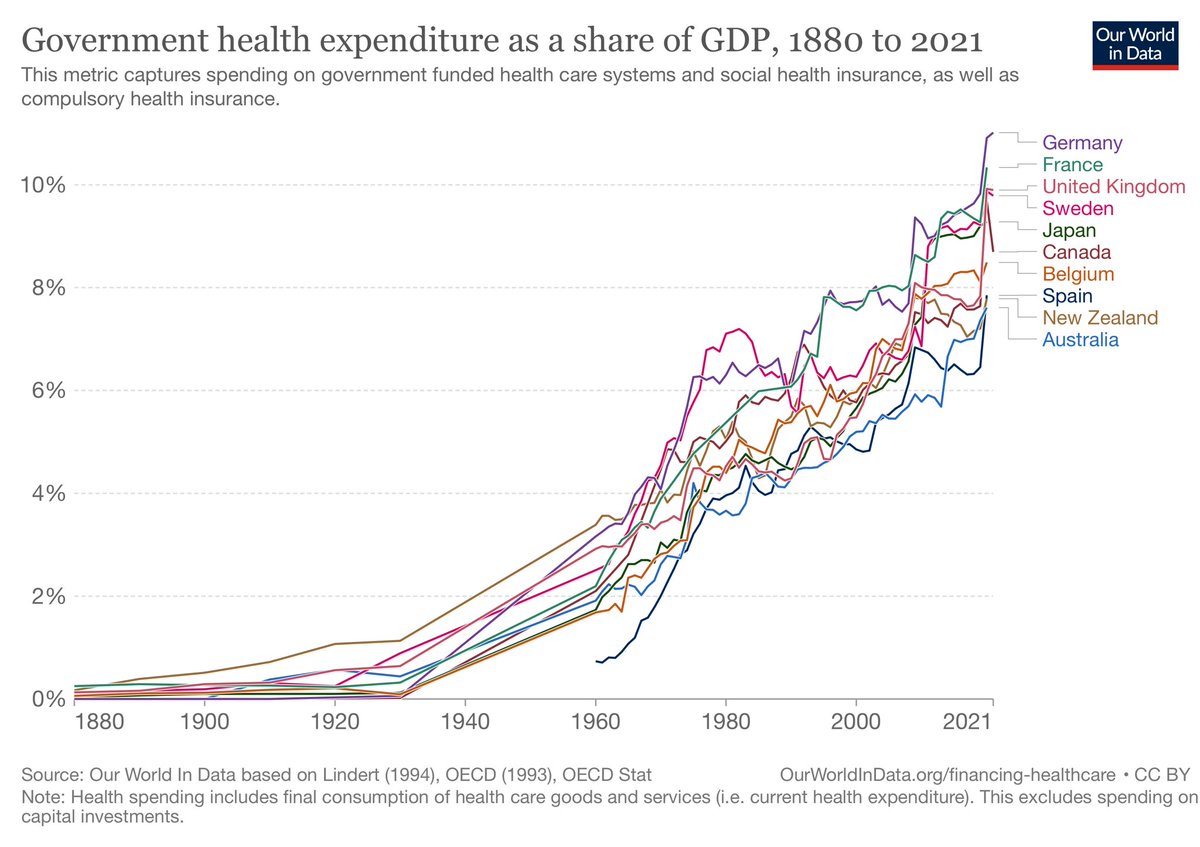
very few gains against chronic disease, and the major gains we have made suggest (as Ewald does) that the paradigm we’ve been using has been wrong. Those major gains have nearly always been the finding of the infectious origin of a chronic disease. /8
When that infectious origin has been found, often curative treatment and prevention has been possible for the first time. Vaccines of course, though progress there has slowed considerably since the last century. Microbes are not a one-trick pony. /9
They live in ecosystems, with us, and they evolve constantly. Political libertarianism has encouraged a medicalisation of infectious disease, but it’s much, much more a question of the entire public ecosystem, of our societies. As Ewald argues (it’s a superb book), there are…/10
…often very simple and very cheap ways to modulate not just infection and disease, but also the virulence of those infections. That’s a crucial thing, because microbes will always vastly outnumber us. The idiot politics today suggests this means we should just ‘live with’…/11
…them, and that’s true. But not by letting them just infect us repeatedly, without changing any of the conditions in which we and they live. That’s a recipe for sick and dying populations, and the reversal of life expectancy gains. /12 https://t.co/FgtlFhnrOL
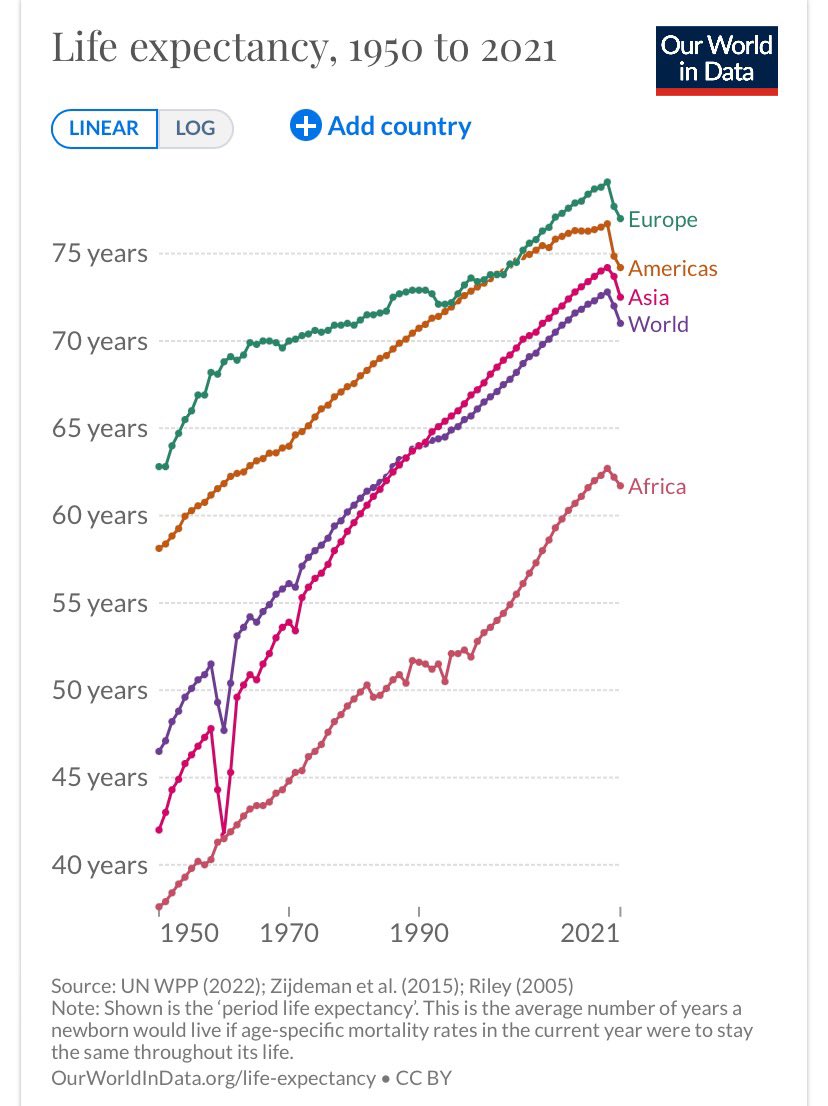
It’s no surprise that the same politics that refused to consider ecosystem/ecological thinking in addressing environmental damage and climate change, is also refusing the same thinking with Covid. For them we’re each an ecosystem of 1, which is ridiculous. Also no surprise…/13
…that ‘Big Pharma’ came out of the ‘land of the free’, a major proponent of medicalised infection, because a drug saves having to change the actual conditions of your society. Like making battery chickens gorge themselves on antibiotics to reduce infection. /14
See those original quotes. This is not the US some of us still remember, magnificent in its ambition to do public things. It’s the Wormtongue-infected US (and UK) of the post-1970s libertarian lunacy. The small-State fanatics, who are really just the pre-20th century elites…/15 https://t.co/jPb87JRnmd
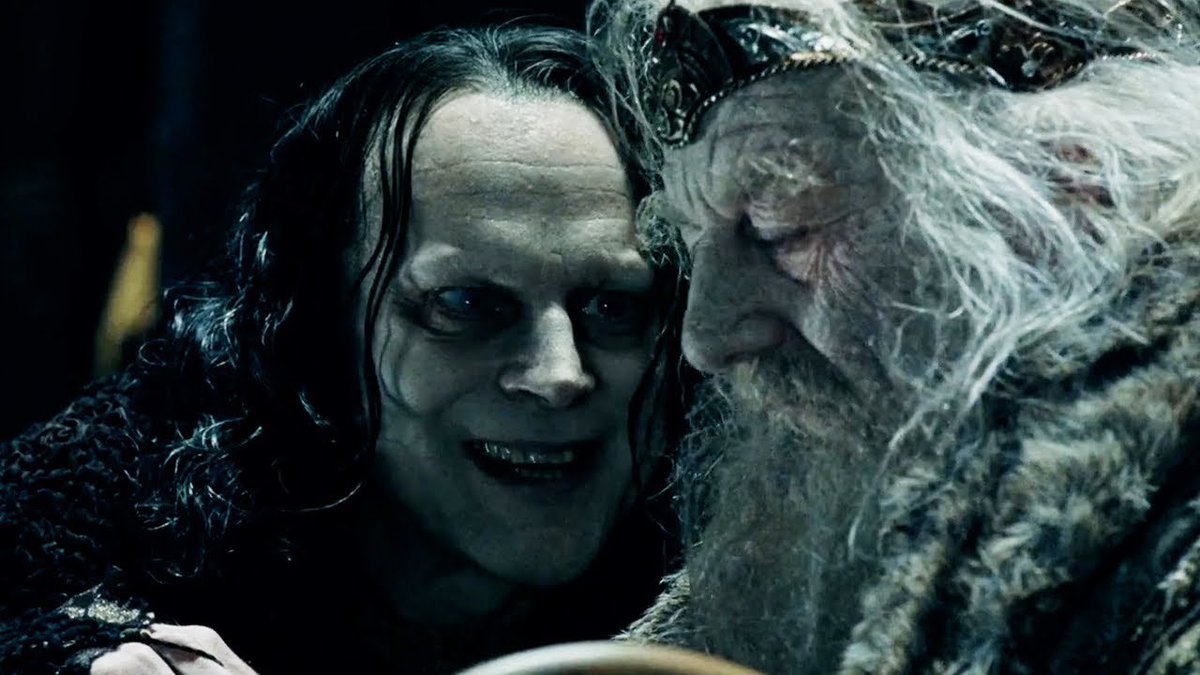
…trying to wrestle control back of society from the public. Infection has always been by far the greatest source of human morbidity and mortality. These wormtongues are making it that again, after several decades of revolutionary progress. But science also needs to shift. /16
It’s in a rut. Infection has become normalised, and its chronic impacts are not getting the same funding as treatments for the chronic diseases those chronic infections are likely causing. Infection is THE biggie, in human health. We should never, ever accept it as normal. /end
‘The economy’ caught red-handed. “The RBA is attempting to curb price growth by reducing the capacity of households to purchase goods and services, reducing demand and making it harder for businesses to hike prices more.” Let that sink in. /1 https://t.co/PKyYUxHbiZ
Businesses charging too much money will be fixed by bankrupting their customers, who already have none. We could regulate the actual cause, business, but that would betray the only function of the economy. To protect the nobility, a.k.a. ‘business’. Welcome back, feudalism. 2/2
If your weather forecast consistently predicted snow in the middle of summer, you’d go elsewhere for advice, hey. But like a dog returning to its own vomit, Australia keeps returning to the same ‘keep calm and do nothing’ advice. https://t.co/wrvYdVnrqs
If you stand about 6 or 7m away from it, you can *almost* make that classic epidemic shape look like an endemic straight line. If helps if you’re short-sighted and squint at the same time. https://t.co/fIVW8lCdYP
From @EricTopol. I remember looking at annual costs to the bloody ‘economy’ of influenza, pre-Covid. It ran into the billions, in Australia. Clean air is one of the best ROIs imaginable for modern economies. https://t.co/vO1hktEItE
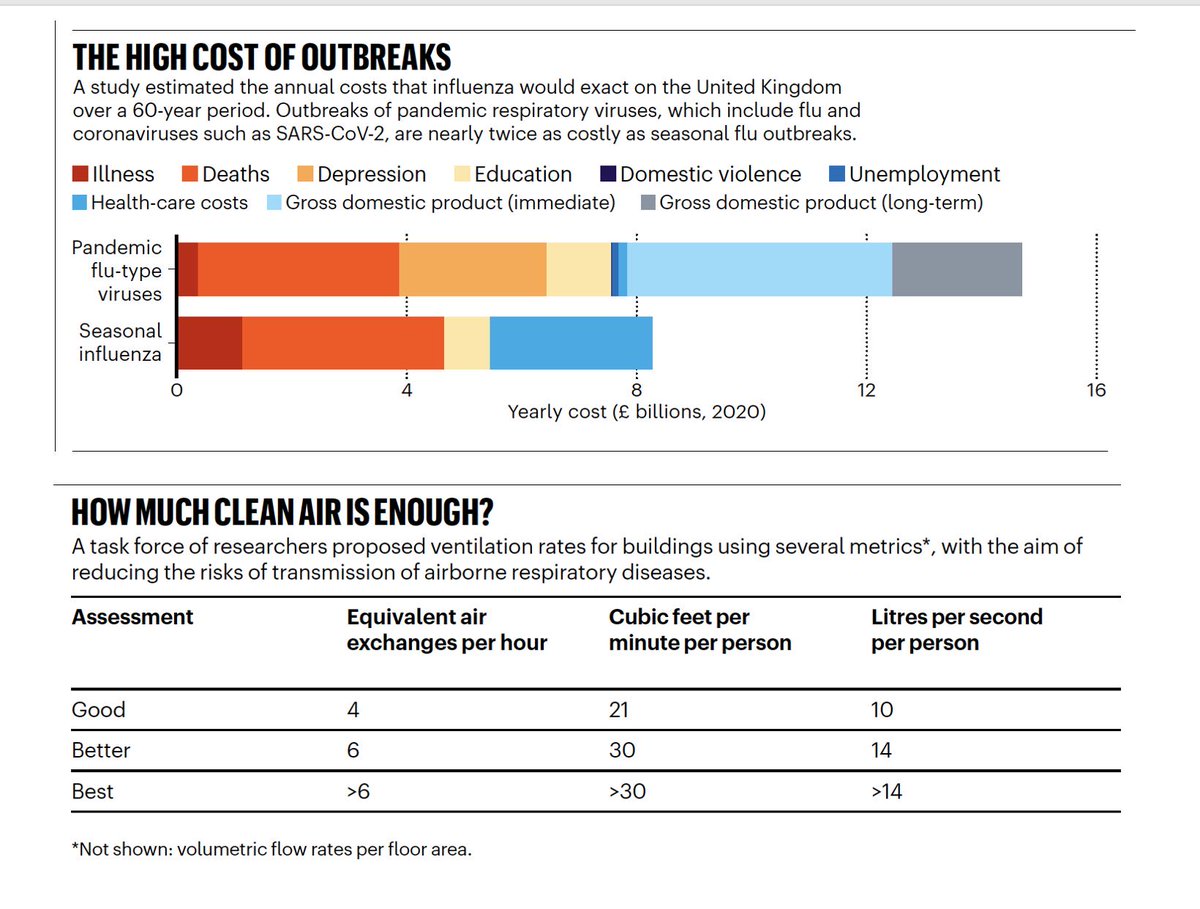
Clean air beats most *pedagogical* interventions, for improving educational outcomes. https://t.co/sMy6C6eL34
Longer article on installing air filtration in classrooms. The increase in educational performance the equivalent of cutting class sizes by one-third. One for politicians AND unions, at a fraction of the cost of standard pedagogical solutions. https://t.co/ZjbhjBhORb
The UK government is in electoral trouble. So it’s using the Australian way, to drum up votes. They all swap strategies, we’re using their let it rip Covid strategy. (They literally do swap strategies, often they hire the same consultants.) https://t.co/fJuCvoHE0T
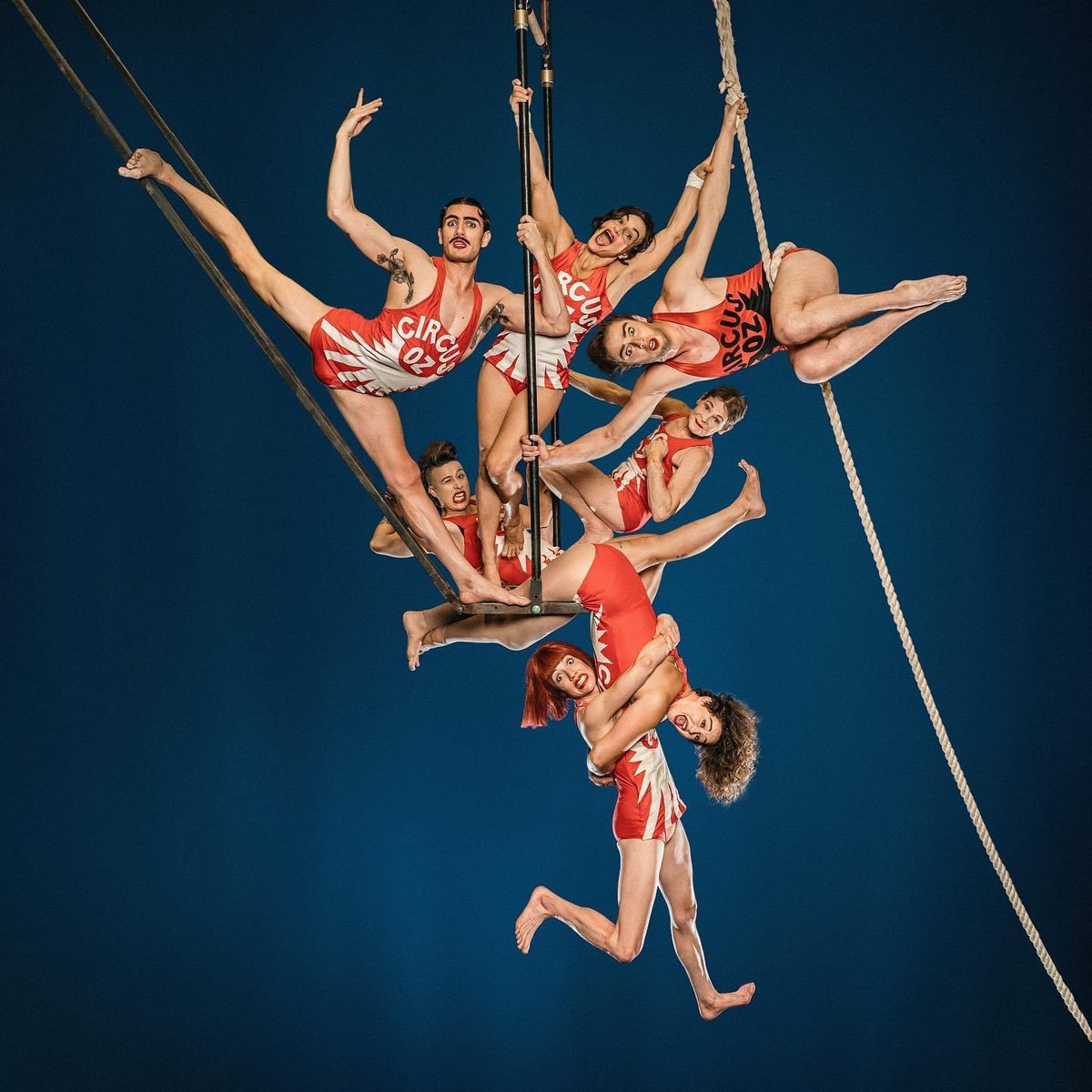
Hard to beat this as a promo shot. Love Circus Oz. https://t.co/daz6NFCYGR
What’s the current thinking/data on minimum exposure time for transmission of Covid? Obviously highly contextual too, indoors vs outdoors, degree of immunity etc. But just any current research or thinking.
A big call, possible endemicity. This is where the public have every right to be confused. Some experts say endemicity with Covid is literally impossible. Others swear it’s happening. Eric is a calm voice, so he’s not fighting any wars here. What to believe… https://t.co/lRPHYu8hgv
lol. Boom. https://t.co/zqGtCtzRCv
It seems early-year predictions of it being a mild, pandemic-ending year of Covid have become endemic.
Maybe the greatest enabler of social breakdown we’re now living is the IT industry. Not much is said about it. As social systems have been degraded through decades of individually-focused politics, rushing to fill the void left by that destruction has invariably been IT. /1 https://t.co/hoZ0QkUPll
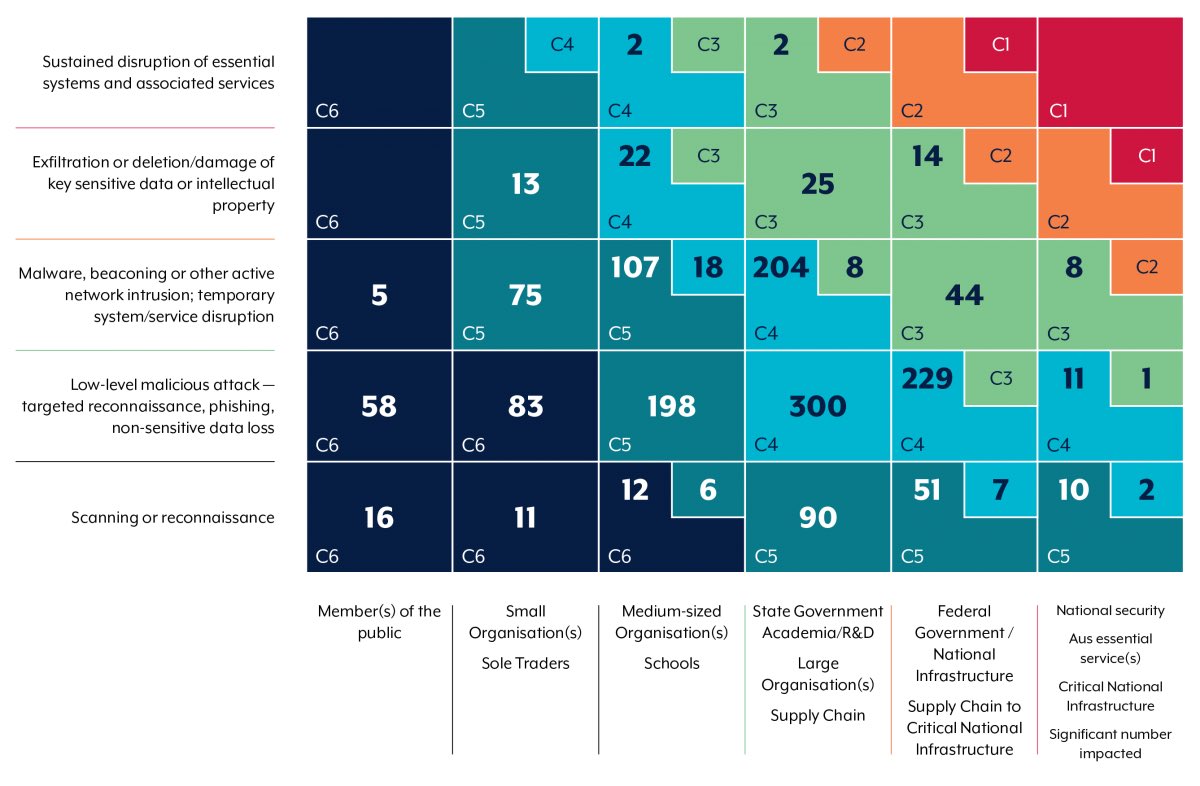
And in fact that’s also in some ways putting the cart before the horse. Because that industry is one of the champions of that degradation, much of the ‘Silicon Valley’ expansion in the past half century has been deliberately aimed at replacing our social structures. /2 https://t.co/I8eJ4kwKYu
So many of the ‘tech giant’ innovations of the past 50+ years were launched with utopian aims. The technology was almost incidental to the wider social project these giants had in mind, of remaking society. ‘Disruption’ has always been the banner under which this ‘innovation’…/3
…has been launched. Of course the invention of printing and books massively disrupted society centuries ago, all new communications technologies do. So we’ve been here before. Information is an ecosystem in a society, as much as food and transport and housing is. /4
But as always, when you hear words like disruption and innovation, always look for somebody trying to get rich, by supplanting somebody else who is already rich. And the great IT revolution gave certain individuals wealth on an unprecedented scale. Richer than entire nations. /5 https://t.co/2n2vQhrr57
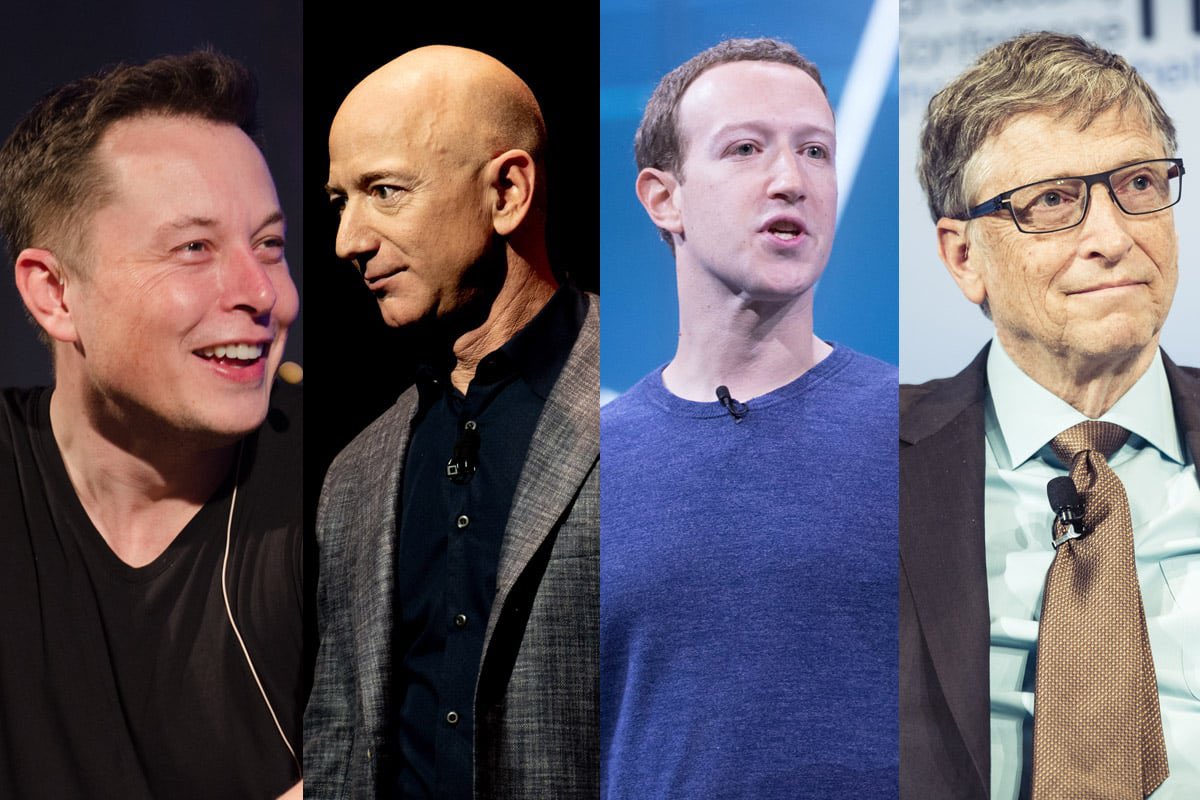
Which happened with printing too, no doubt. But at least there the shift was absorbed fairly quickly into social institutions, who took that new technology and made it work for them. They already had print/texts, prior to mass printing, they knew what to do with it. /6
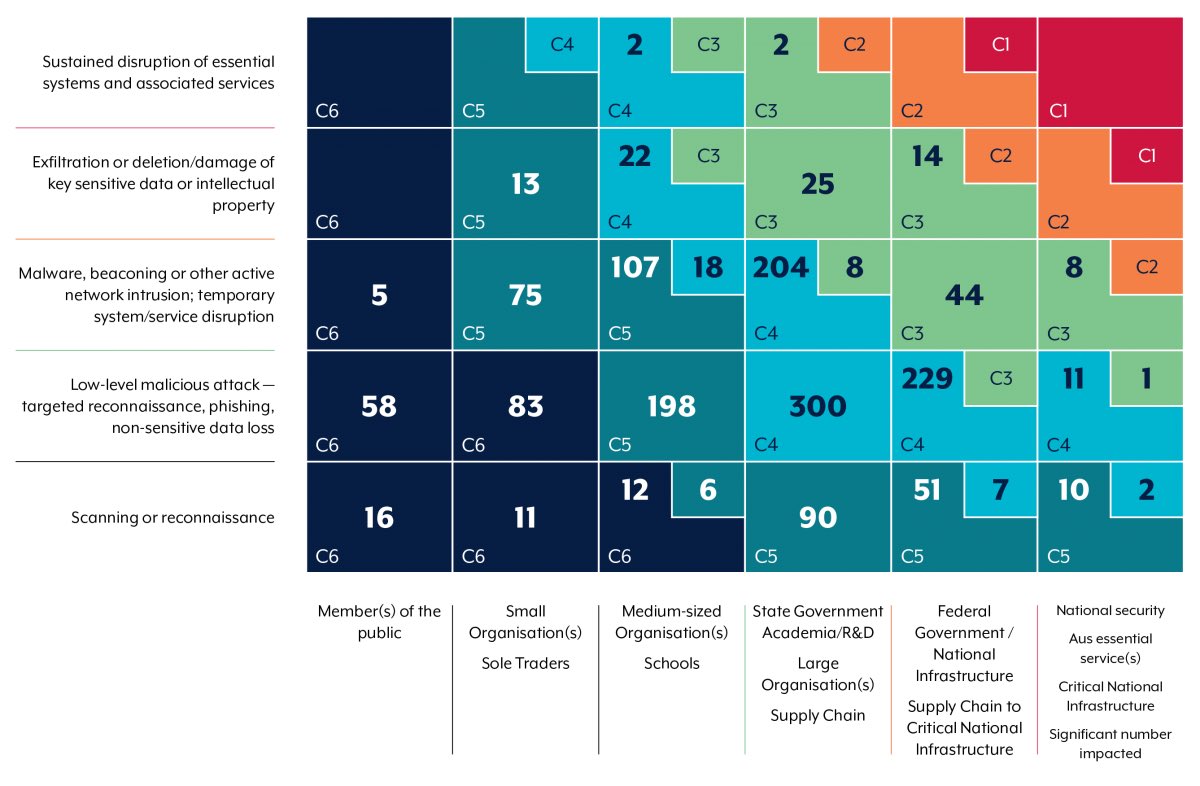
Returning to my original graphic, the ACSC Annual Cyber Threat Report 2020–21 (https://t.co/NeDEal74l9). Read along that bottom axis, the institutions most under assault from cybersecurity threats. Key institutions to running our societies. Cybersecurity is growing at an…/7 https://t.co/LJFNWI2yby
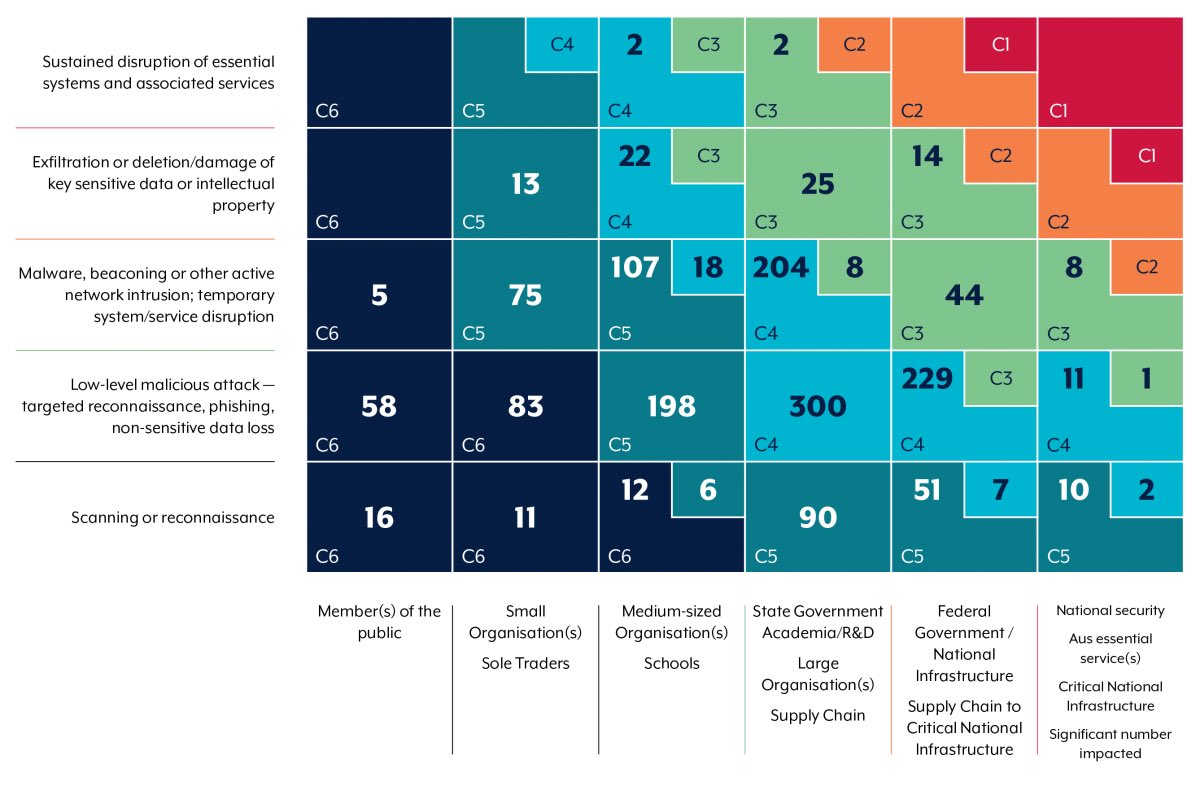
…alarming rate, and it’s inevitable given the profoundly libertarian worldviews that surrounded the creation of the technologies themselves. If you launch technology with social disruption front of mind, you will get social disruption. /8 https://t.co/zgcCacn0Z7

Perversely, the laughably bad security built into IT systems over the past 50 years makes the industry even richer, selling cybersecurity solutions. Capitalising on the rubbish they’ve created. The industry has always been contemptuous of the user,…/9 https://t.co/hvHLmLNTb7

…often called the ‘l-user’ by IT support staff. The whole philosophy and culture of IT is about disrupting everybody, and Steve Jobs made Apple’s fortune by reacting to that. As Douglas Adams said, if you’re calling something a ‘technology’, you’ve already failed. /10
It should be something that ‘just works’, seamlessly. Like a traffic light. Or washing machine. But there’s many more billions to be made by disruption, by destroying social institutions and replacing them with technologies owned by you, the tech billionaire. /11
You corral that entire social, complex ecosystem through your product, and monetise us as we go through the turnstiles. Social media the same, built on a laughable philosophy of ‘the people’ driving societies, under cover of more laughable politics of ‘free speech’. /12
Every day we come here, to try to mobilise some of our societies back. But these same technologies actively mobilise their destruction, much faster than we could ever mobilise a counter-offensive. /end
Deans and course designers may want to use the evidence of the pandemic to restrict admission into infectious disease medicine and biostatistics to fewer sociopaths in future.
A child under the age of 10. https://t.co/NPmLRB06j0
In words, ‘we’ll have that JobKeeper money back, thanks peasants.’ https://t.co/u8Fsf9qR0O
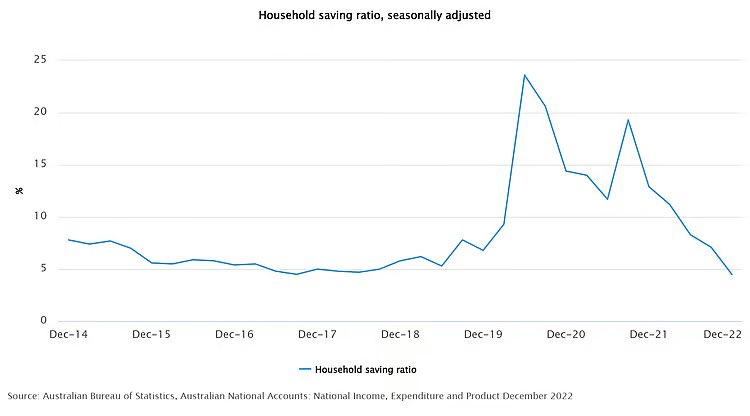
Regional Australia will need an additional 11,000 GPs in the next decade. 50,000 teachers are projected to retire between 2020 and 2025. This is what running your society as a free market economy for 50 years does. No planning, no investment in the public.
A notable feature of modern conservative politics is that it has no real policy agenda at all. Just this one, the stripping away of the infrastructure of everything ‘public’. Like I often say, it’s the new/old feudalism. You can’t unsee it. https://t.co/DZE1WO4mI6
Word. Whole thread is excellent, though I disagree we need to ‘educate the public’ more. We need the public involved a whole lot LESS in most things. They’re only involved because our institutions are under assault. https://t.co/W38Jef6ENo
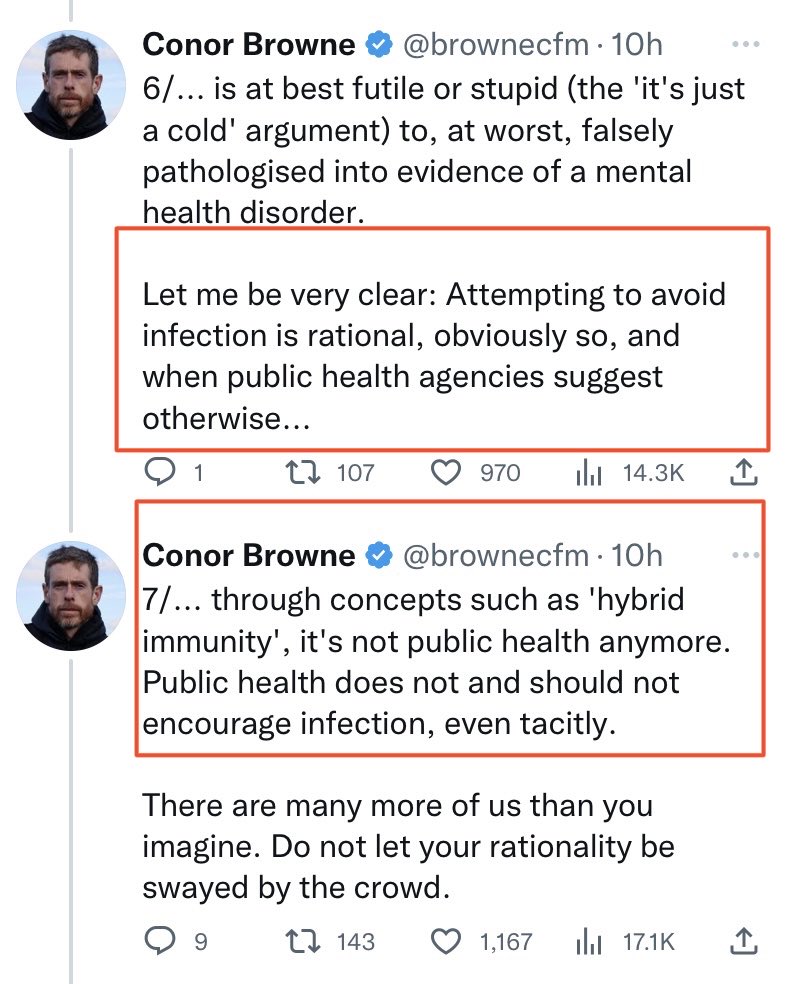
Such beautiful clarity, shorn of all of the team sports of social media. Reality-based, grown-up reasoning. We need a lot more of it. https://t.co/VAH9OYTC4j
It’ll be no surprise that I think ‘the economy’ is hokum. If (as I believe) it’s just people, I’d predict that the countries who will flourish throughout this century and into the next, are those who aren’t in retirement homes. The yellow-orange-red countries have had their time. https://t.co/Vslmyfsd9Y
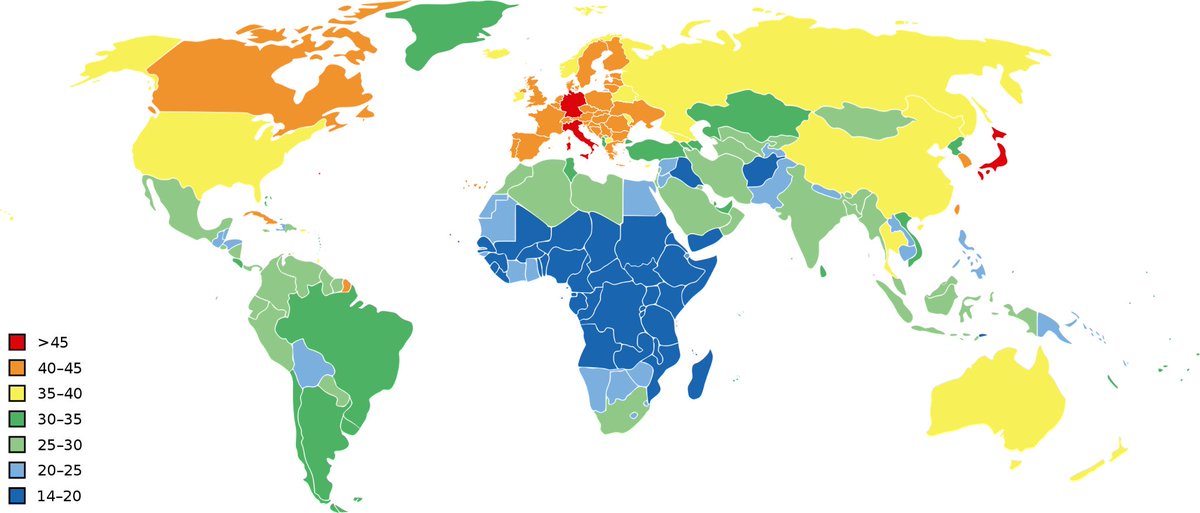
Graphic got cut off. These are median population ages. CIA world facebook.
*Factbook, bloody auto-correct
I like that the actuaries have forced at least some sort of acknowledgement of the magnitude of what’s going on. Nobody else has been listened to. https://t.co/pYwP2wHUyT
Great piece. My two cents, much of the resistance to further action is from the anti-government crowd. And from pollies worried about cost. But much (most?) of what needs doing is basic WHS. That’s already legally required, it’s not new. Business pays. https://t.co/SeSptXrYQp
@CrabbBrendan @profmiketoole great piece, and my two cents!
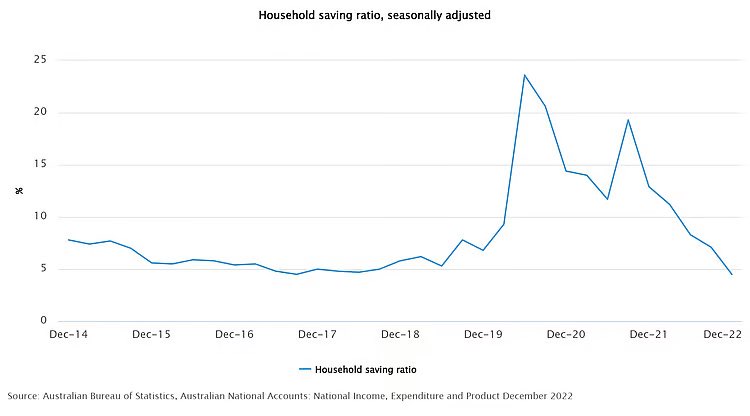
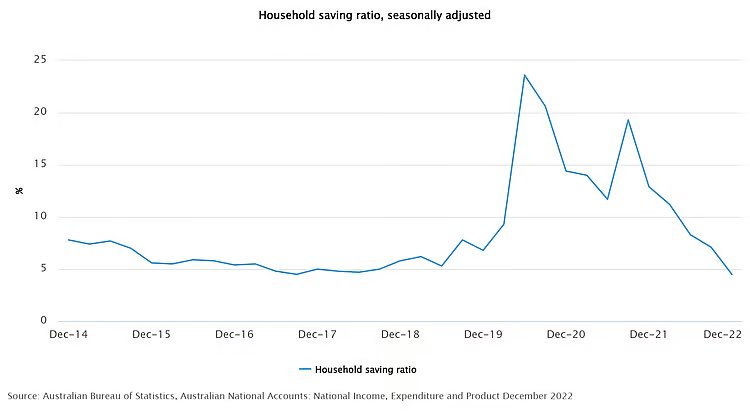
This graph tells a very different story, depending on how you frame it. Right now we’re so habituated to modern economic political framings that we tend to see it as a graph about welfare. About government ‘aid’. But reframe it and you’ll see an entirely different thing. /1 https://t.co/8RDk27ASrb
One of the main reasons humans invented government was to distribute resources more equally in a society. You see, we had a ‘free market’ already, before we had governments. It didn’t work, the most ruthless people hogged everything for themselves. We forget that government…/2 https://t.co/bdQhSYvp3F
…was a SOLUTION to terrible problems. The idea that it’s some tyranny imposed on people is offensively stupid. People invented governments because they solved problems they were unable to solve themselves. Find a country without a government, it can’t be done. /3 https://t.co/a7gYlfT8O4
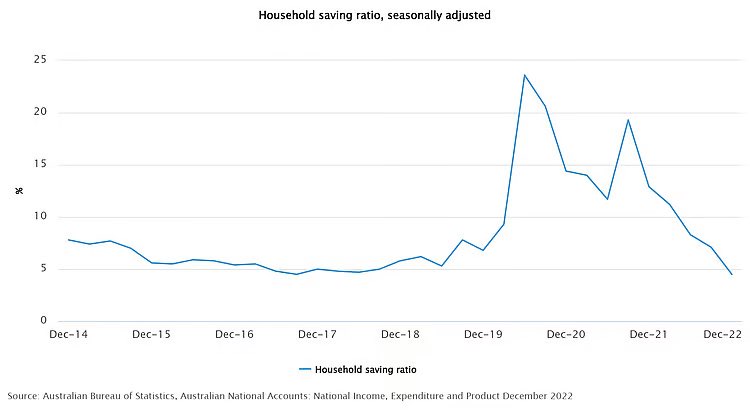
I often invite political libertarians to go and find a country free of government, rather than trying to strip away government in the comfortable and peaceful societies they’re already living in. They don’t, because they can’t. But enough on those morons, the reframing? /4 https://t.co/YedxmQRcZX
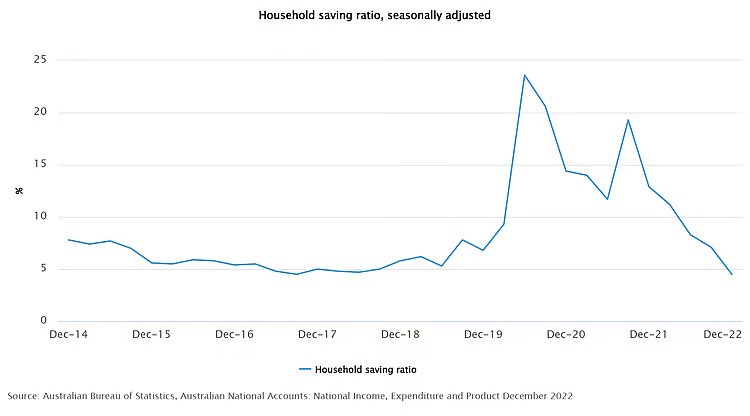
What happened in the pandemic here in Australia, in 2020-21, wasn’t government assistance. It was a redistribution of government priority in Australia, back towards ordinary people. The sort of thing governments were invented to do. Hundreds of thousands of people who’d…/5
…been living below the poverty line, suddenly weren’t for the first time in their lives. Excess deaths were negative, we were the healthiest we’d ever been. We need to see the pandemic not as an interruption to normal life, but as the ongoing collapse…/6 https://t.co/zFa3QQvPY3
…*of* that ‘economic’ life. Of the fantasies that sustain it, of markets and individuals. Of the idea that society is a budget, and that what’s in the bank determines what we can do. ‘We’ can do anything we bloody well like, including without using money at all. That was the…/7
…heist of the past 50 years, to remake society as millions of ‘jobs’, so that peoples’ lives were completely dependent on an income from those jobs to even survive. Living, basic living, suddenly had a ‘cost’. Why don’t we laugh more at the phrase ‘the cost of living’? /8
Who are we all paying, to be allowed to live? Simple question, the answer explodes the whole farcical set of myths ‘the economy’ hides behind. By stripping away collective things and making us all beholden to hundreds of thousands of employers, in jobs, making rubber ducks…/9
…and toilet deodorisers, the whole immensity of life is shrunken down to a weekly pay packet, without which you’re destitute. You can’t all stay home to shelter from a threat, because then nobody makes the rubber ducks and toilet deodoriser. The humanity! /10
Covid is a repeat of the the late-19th and early-to-mid 20th centuries, as I’ve Tweeted about a lot. Not just a pesky virus come to visit, but the fundamental breakdown of a social structure run on idiot ideas that were always going to collapse. The economy. Markets. /11
‘There is no such thing as society’ idiocy. All blatant smash and grabs by old elites who have never recovered from the invention of public life, through government. They want their peasants back. /end
Inflation/cost of living driven by high energy prices. Desperate need for emissions reduction. The answer is obvious. Electrify households. Households already built massive solar PV. Now subsidise them to electrify all of their appliances and transport. @GriffithSaul https://t.co/YyEYP2U9aW
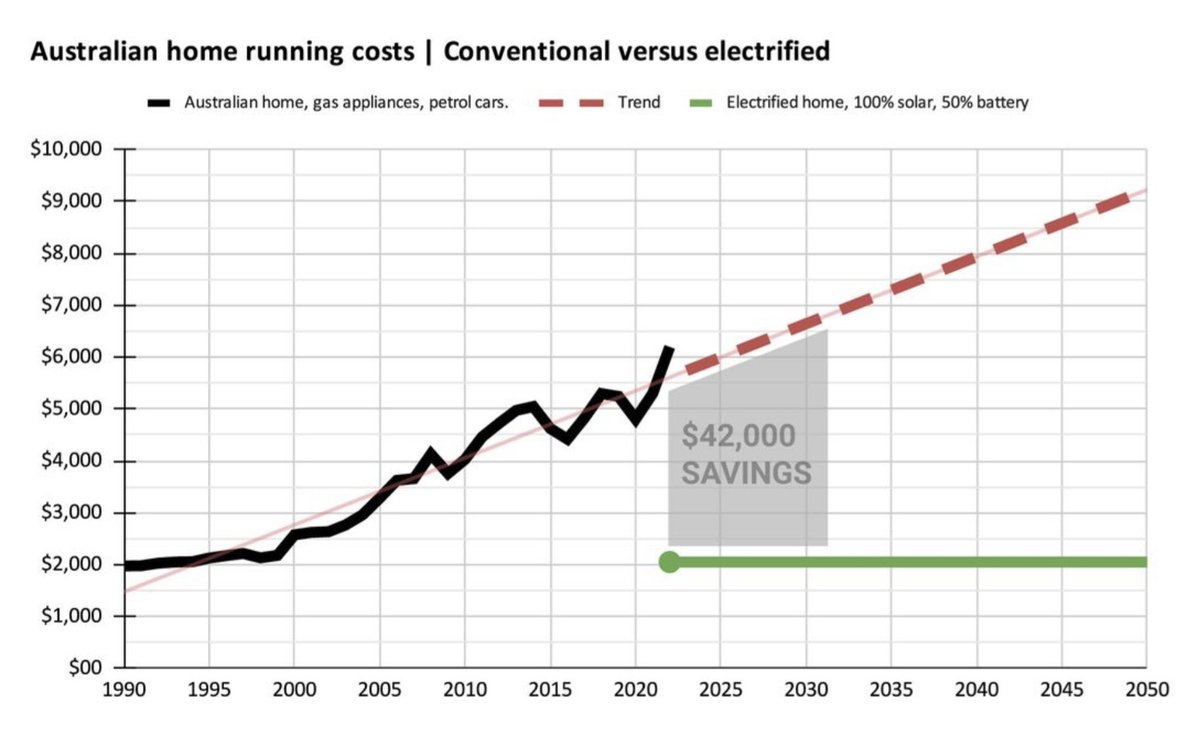
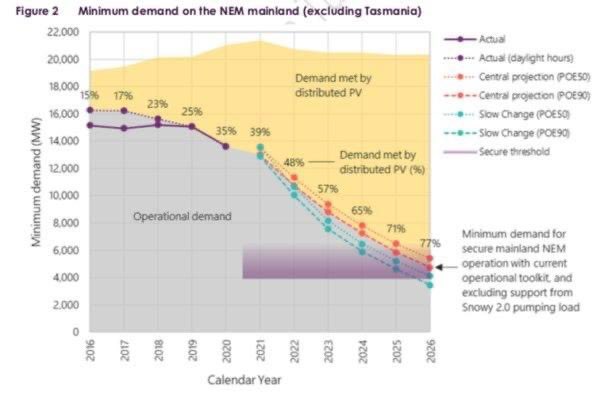
We won’t beat Covid by assuming the way out is for popularity Prom Kings and Queens in parliament to suddenly act. We need to change one fundamental belief we hold ourselves too, for change to happen. About the ‘local and the global’. Solar power can show us the way. /1 https://t.co/2SBJBOGUwD
The binary of local/global is another modern fiction. It’s dominated our politics for decades, or even longer. I’d trace much of it back to the Peace of Westphalia in 1648, the approximate birth of modern nations. The thing that’s always forgotten about that moment in history…/2 https://t.co/YxqfrkyUIX
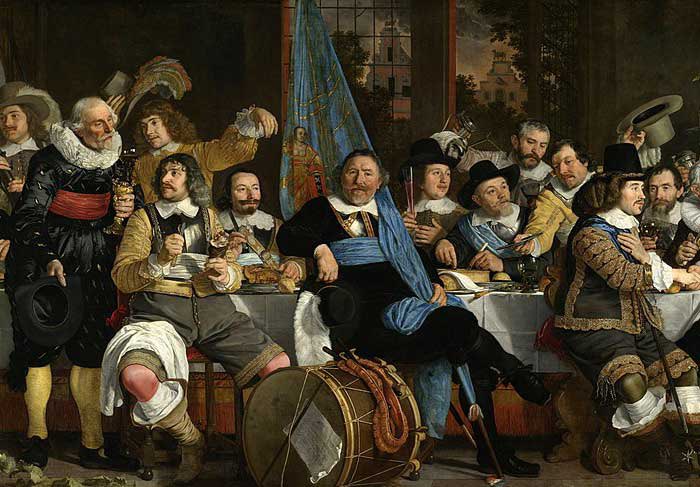
…is that the ‘international’ community (the global) came BEFORE the ‘national’ (local) sovereignties - countries - that flowed from it. The international came before the national, the complete reverse to just about everything you’ll read about international relations today. /3
We even call our attempts at internationalism the ‘United Nations’. As if you become international by getting all nations to unite. It’s hilarious really, that we’ve forgotten that we spent most of our history already international, and the ‘national’ was added later. /4 https://t.co/dy2AAOLrdb
The national always was just a sop to various warring parties, to give them a bit of territory, to shut them up. Like giving your kids a room each in your house. Nobody says the house is a united agreement between the bedrooms. /5
This framing of parts and wholes is (for me) THE defining mythology of modern life. We’re convinced that to ‘act globally’, we have to aggregate or mobilise lots of different local things, into a collective global thing. Pish posh. Before coming back to solar, look around any…/6
…small country town. You’ll find cars from Korea, Japan, the US, Europe etc. An internet connection to the entire planet. Fuel from the Middle East. Jobs funded by companies based in a city somewhere else, or on the other side of the world. Etc. What’s ‘local’ about it? /7
Everywhere is universal, international, already. The Peace of Westphalia may have given warring humans the idea that the world is divided up neatly into sovereign independent territories, but reality never was. And it still isn’t. Now, back to solar. In Australia we’ve…/8
…followed a boring, predictable script on climate change seen in many other countries led by popularly-elected clowns too. At least 30 years of stalling, at that level, globally and nationally (the national is also the global, for each locality in a country). /9
But again, look to reality, not to that pathetic spectacle of popularity. In Australia, for most of that time, the community has ignored all of it, and completely replaced the national electricity generation system. Not by protesting or petitioning the elected dunderheads,…/10 https://t.co/HRUxQK0srI
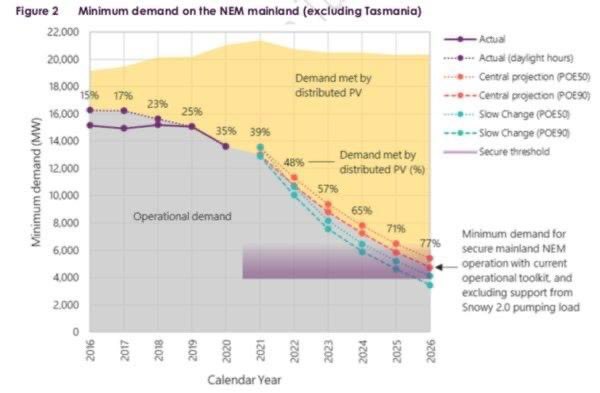
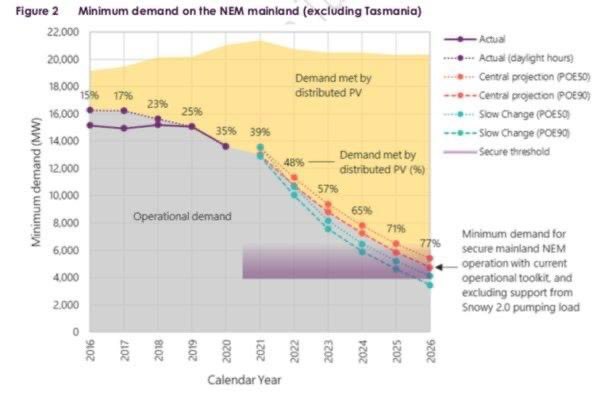
…but by installing solar PV panels, on their houses. There’s a tsunami of energy coming from those panels, as the graph shows. It will overwhelm the grid as early as 2025. (Remember the popularity politicians blathering about ‘supply’ for decades? We’re swimming in supply!) /11 https://t.co/owDe8ewhmw
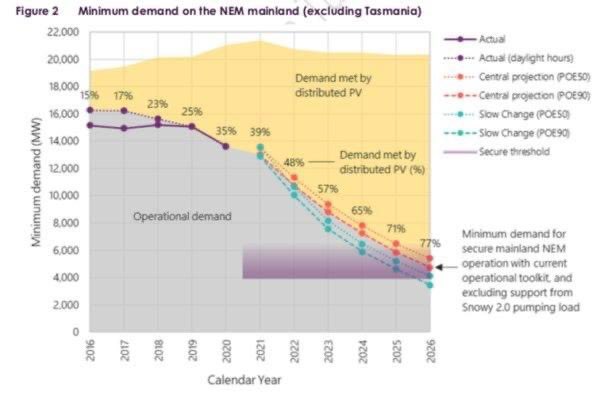
The important thing is that ordinary Australians mostly didn’t do this out of any passion for ‘thinking globally, acting locally’. They did it to save on their energy bills. Their actions weren’t ‘local’ actions, because energy was already national/global. They were acting…/12
…’globally’ (if we must use the word) the whole time. Just as their car purchases shaped world ‘economies’. No need to wait for anybody to aggregate anything, to create a global effect. Everything was already global, the distinction isn’t real. /13
The exact same thing is true for Covid. I’ve sometimes criticised the way we look at Covid data/charts based around these same categories of locals and globals. But Covid itself has *always* been ‘global’, from Day 1 of the pandemic. Not because it’s happening everywhere…/14
…in the world at once. That’s the old ‘united nations’ idea of global or international. Covid has been universal from day 1 because all of the activities we all do, every day, are already that too. The cars and energy examples. If I act like a Covid minimiser and…/15
…happily infect my family, friends and community, that infection could end up anywhere in the world, in a very short time, killing people there. Our lives are already interconnected, across all of those scales. Just by preventing infection in yourself and in the people…/16
…immediately around you, you’re doing ‘global’ Covid work. At every scale, in your region, State, nation, internationally. Those are all mythical demarcations anyway. I watch so many people on Twitter tagging senior politicians, pleading with them to end the pandemic. /17
And of course they’re critical to making that happen. But not because they’re the only way to ‘act globally’. We all act globally, in everything we do, and we always have, every day. It’s a trick, to make popularly-elected twits seem more important than they actually are. /18
They’re important only for providing a scaffold for each of our own, individual global actions. As they did when providing subsidies to have solar panels installed, in Australia, which triggered the energy tsunami. But our actions were already global, even without that. /19
The scaffolding just made it easier. As mandates do, with mask wearing and other anti-Covid actions. I like many others never stopped masking, with or without mandates. Our actions were entirely ‘global’ that whole time. We didn’t have to wait for others to mask, for that…/20
…to be true. That’s the myth, that you only get mass, collective action by adding up millions of individually isolated people and their actions. Baloney. Every single person is already universal, their actions can’t not impact every one of these mythical scales. I’ll finish…/21
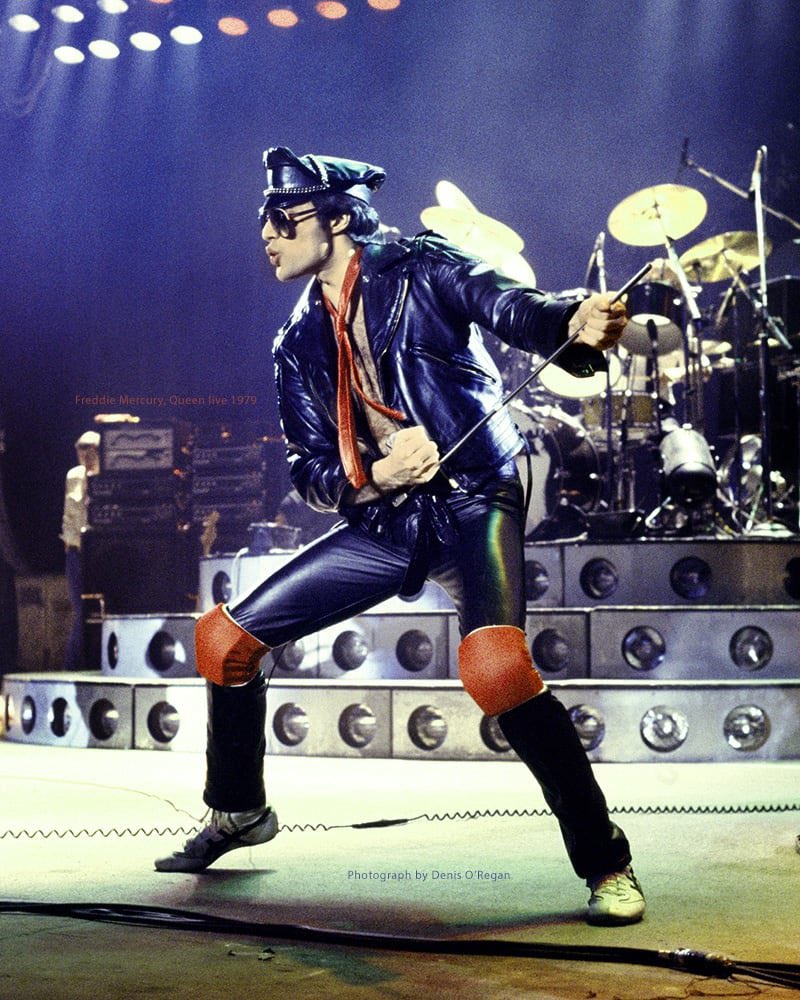
…with another practical example of this. Obviously my profile pic refers to Freddie Mercury, and his success can be traced to his profound understanding of the ideas in this thread. When Queen began, they avoided the traditional (assumed) route to stardom. /22 https://t.co/F6xOYkqRxM
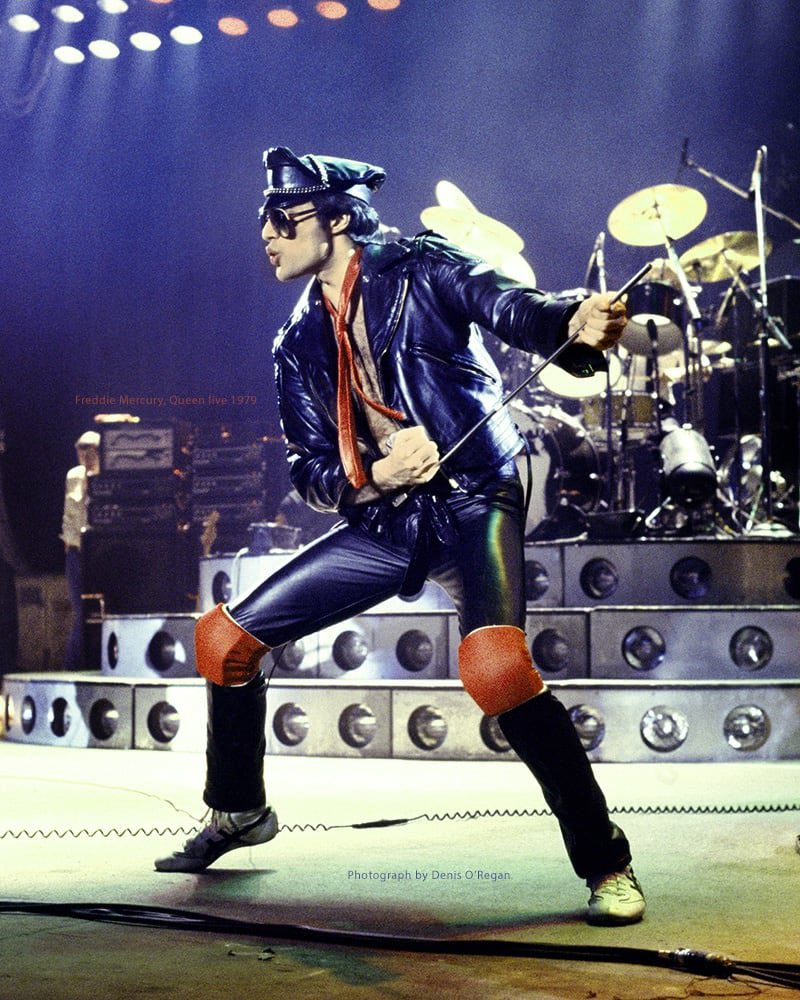
Of playing your ‘local’ (there it is again), the local pub and club circuit. They bypassed that entirely and played full concerts, immediately, within the limits of their budget. Like Puss in Boots, a profound tale, they rejected all the scale nonsense. The rest is history. /ends https://t.co/gkZONLIwQb
The AUKUS submarines are an Anglo Judeo-Christian last performative gasp, circling Asia, which is busy building the new world. Often for us, outsourced. #InsidersABC
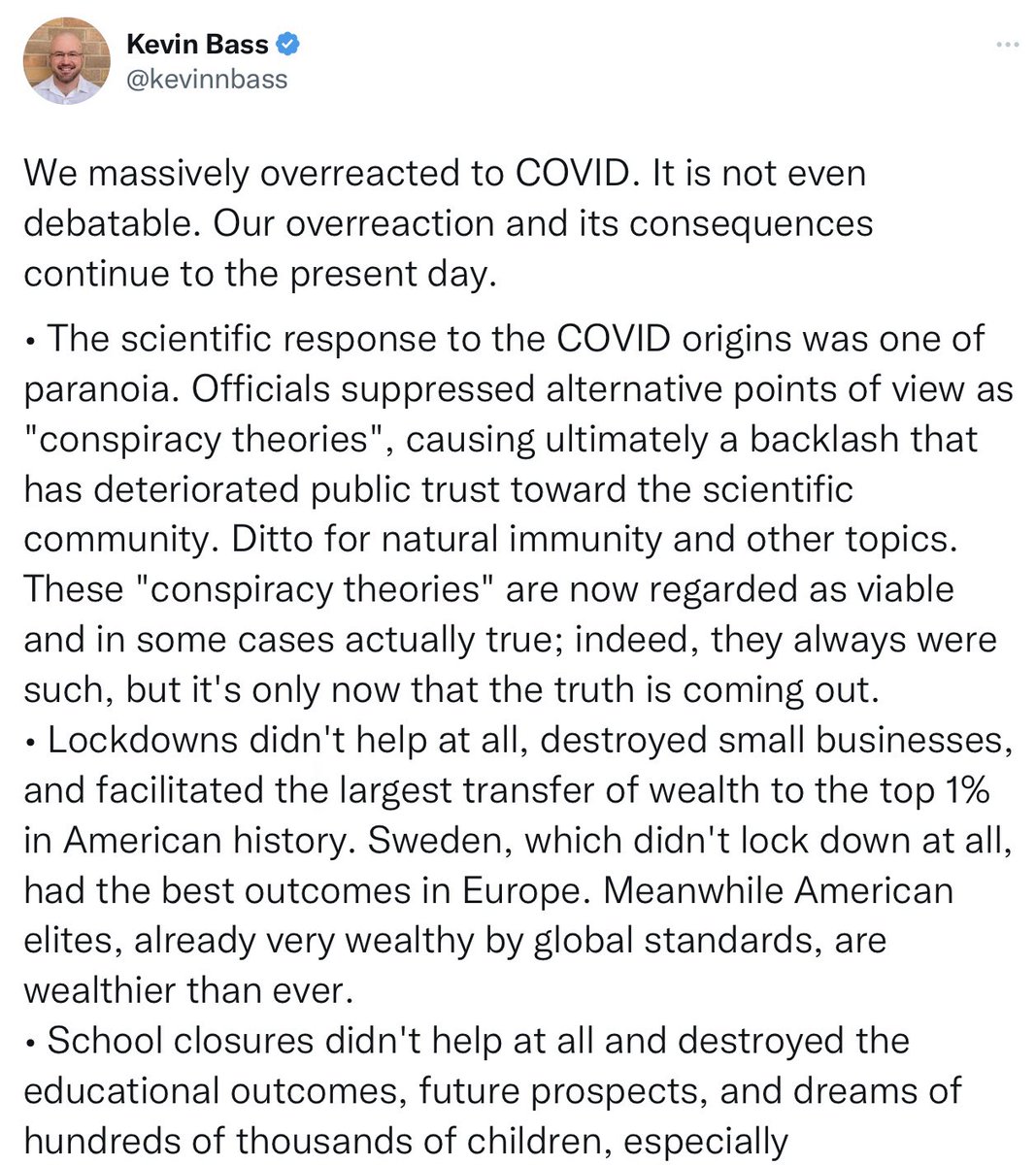
There was another whole scroll-screen of this, guessing it was screen-shotted in? Way beyond 140 characters. It didn’t get any better on screen two. https://t.co/4xNOeeZkO1
This will be an interesting dataset to watch in 2023. Covid 1, economy 0, in 2022. https://t.co/mgzD9XjH5K
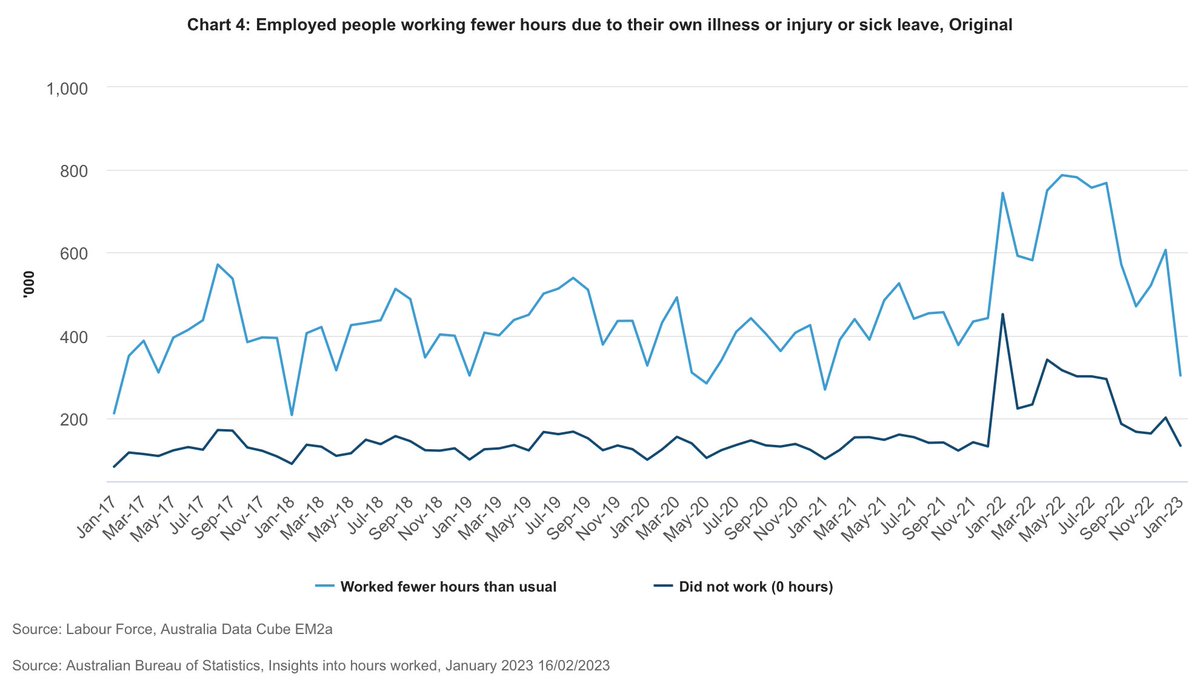
Covid is by far the greatest death toll from a natural disaster in Australia. Most of that is 2022. Nearly double the deaths of the second greatest disaster (Spanish Flu), and still climbing. Between 3-20 times more than any other disaster in the top 10. But there’s more. /1
8 of the top 10 death tolls are for infectious disease outbreaks. You’d think that history would trigger immediate risk management at the emergence of any epidemic or pandemic. Instead we got free market politics. To this day some seriously stand up every day and call damage…/2
…to the economy the great tragedy of the past 3+ years. Sociopathic is the only accurate word to describe that. I Tweeted this morning what the crazy belief that the economy is somehow separate to people produces. Lose-lose. How’s that ‘economy’ looking right now, anybody? 3/3 https://t.co/UqxfybvOkR
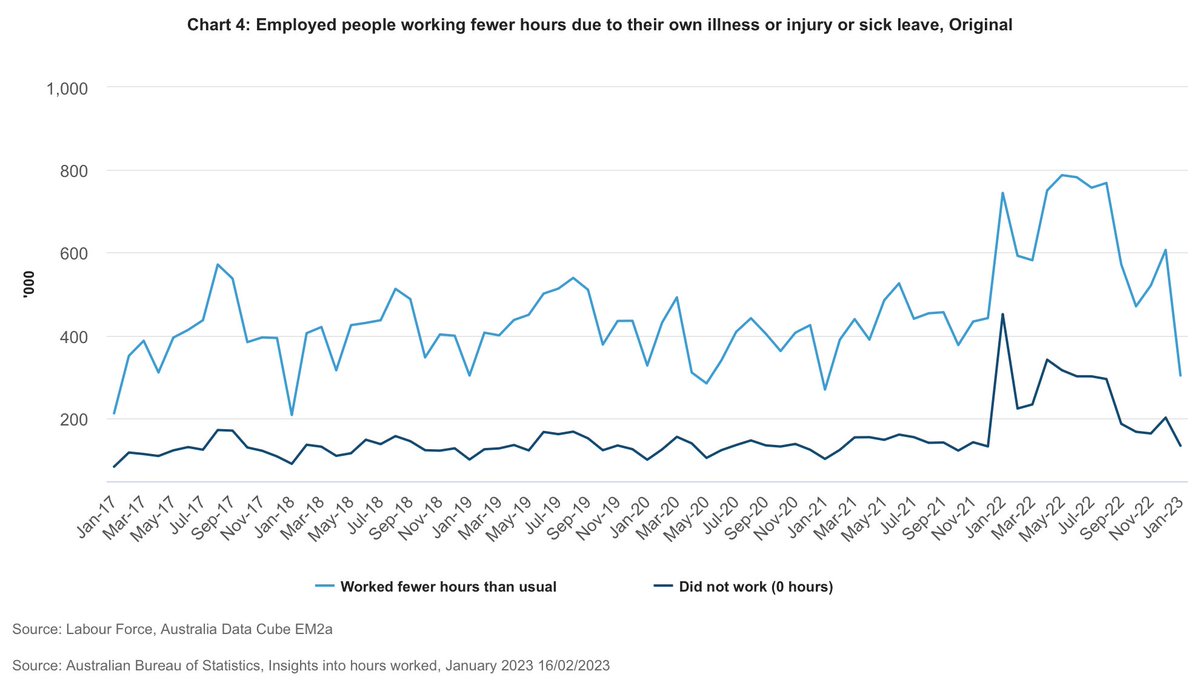
This is what those who called loudest for freedom from Covid protections do every day. Talk about Covid on Twitter. All day. Every day. There’s a panic about it, they can’t move away from the light. Trying to convince themselves I think, not us. https://t.co/7nCS1kHaJf
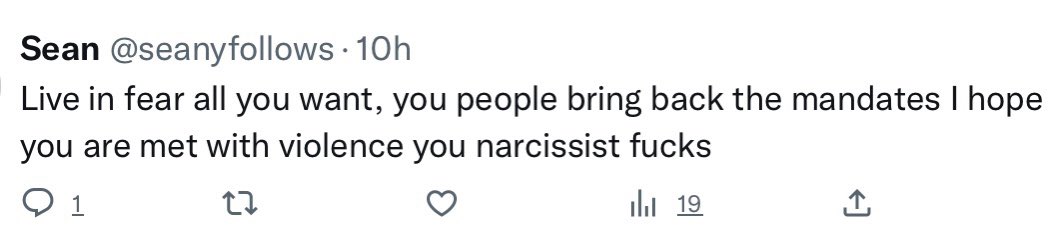
This seems a big deal, right? Let’s all sit back and see how creative the Infinite Covids can be. https://t.co/I7GFz9y2eC
In today’s minimiser maths lesson, a school excursion can either use cars, or a bus. On the trip a car or the bus crashes, killing 3 children in each scenario. Which is the greater tragedy? Minimisers? The car, because the 3 dead on the bus are part of a much bigger group.
“The level of damage that’s been done to population health [during Covid], it would be as if everybody suddenly decided to take up smoking in one go.” https://t.co/liMQMODStY
Watching the Rich Hybrid Immunity Awards red carpet. Are rock stars or movie stars more contemptuous of the public, in a pandemic? I think rock stars infect more of them. Swooping into towns, filling stadiums with fresh hosts, trousering millions and moving on. https://t.co/f3dogheUbt

The actuarial analysis is proving too hard to minimise. So they’re playing the (wo)man now, not the ball. You can smell the fear. https://t.co/kbcmxxd7vP
Society is a high school. This is what we abandoned public health to do. Our moonshot. https://t.co/xf3C7VlW9H
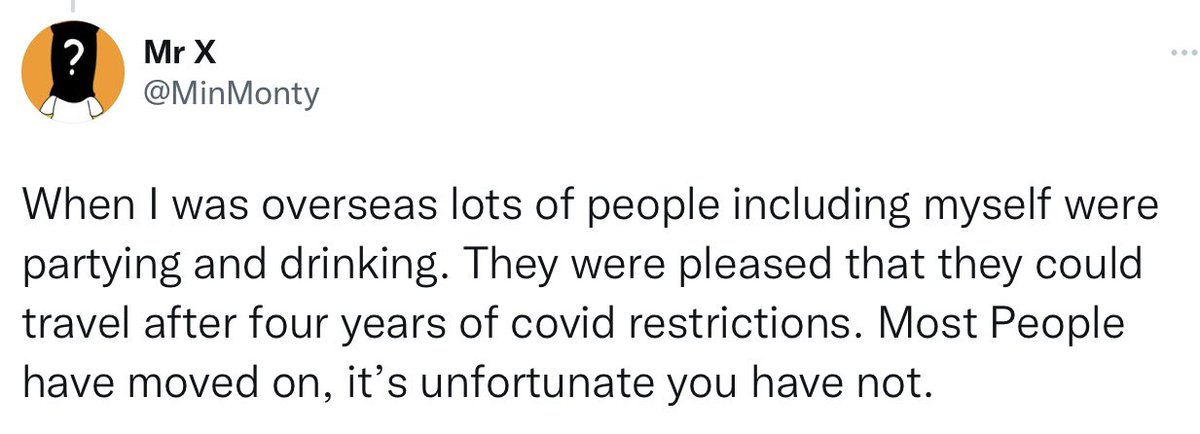
In this glorious era of personal choice and responsibility, every activity my family might want to do has the same outcome. Get infected. That’s not choice. Nowhere is safe.
The astonishment that society won’t fight a pandemic is maybe a deeper pain. The disappearance of purpose from lives, except you do you. Party, drink, travel, curate your online persona. The hollowing out of civilisation. Who could care less about their job now? Ennui.
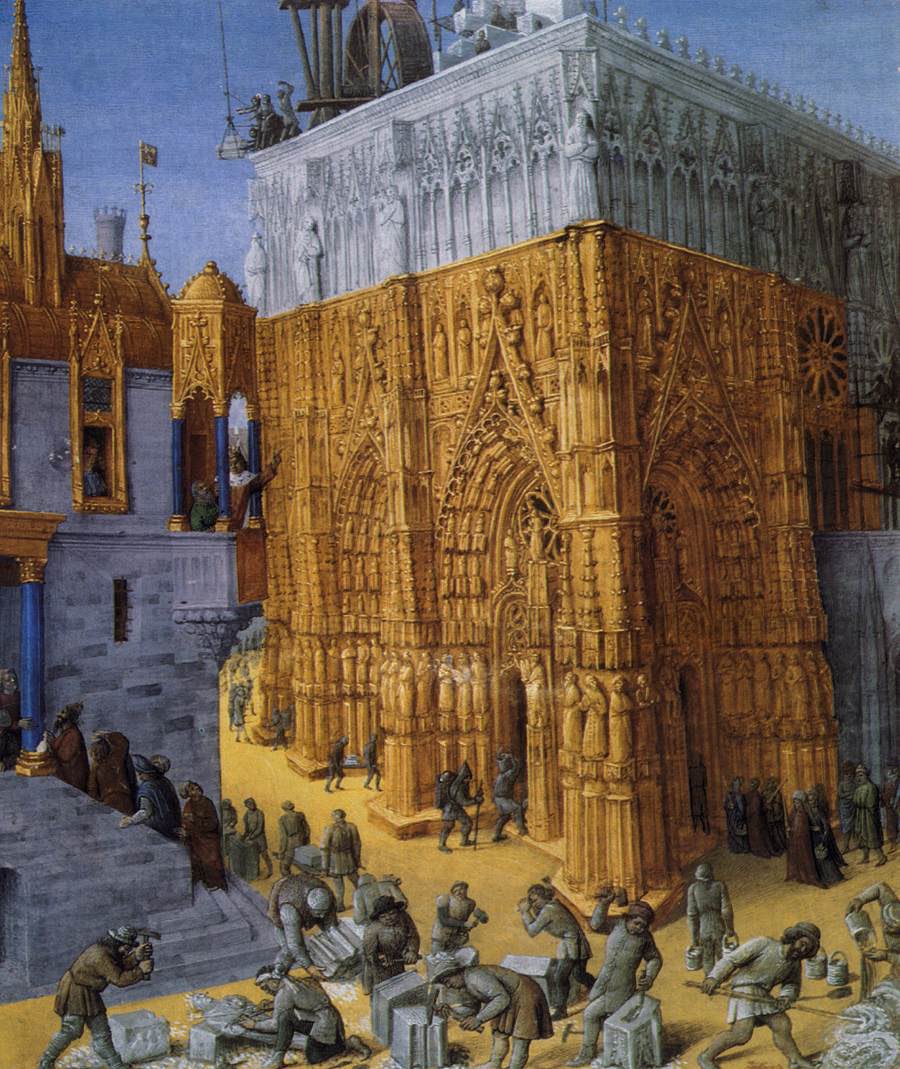
Cathedrals. Sometimes they took 50 years, or even more, to complete. Multiple generations of masons and other craftspeople worked on the same job. What’s our equivalent today? What are WE all working towards, collectively, for society? Rather than just ‘living our lives’. https://t.co/4q4H2c5RQk
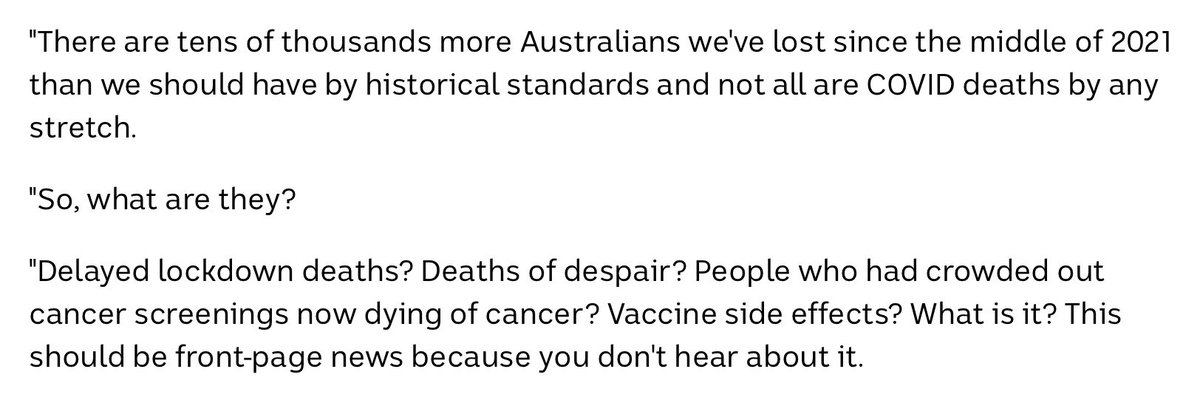
Gigi Foster, Q&A last night. The politics of the economy will always refuse to acknowledge that letting everybody catch a lethal virus will kill lots of people. https://t.co/grVenzsWJY
‘The economy’ really means ‘everybody doing whatever they like’. That’s what the market supposedly is. Which then magically builds airports and hospitals, high quality schools, and controls infections. And we reckon Flat Earthers are crazy.
The only way to get off the roller coaster, is to get off the roller coaster. Going down the waves is what propels you up the next one. https://t.co/BoN0xjsdRP
Committing the budget to impossible sums has the (not accidental) benefit of providing cover for further gutting of public services. It’s a death cult, wrapped in flags and bibles. https://t.co/Kvca1tn0a9
From the PwC ‘What Workers Want’ report. 1) Employees rank pay and well-being as the top drivers attracting them. 2) Almost half of Australian employers have no intention of updating their employee value proposition to attract talent. They don’t even do WHS.
As always, Yes Minster got there first. Buying nuclear deterrents. https://t.co/qNsoGsYbad
How the hell does @OmarHakimdrums have only just under 7000 Twitter followers, in 10 years? Come on people.
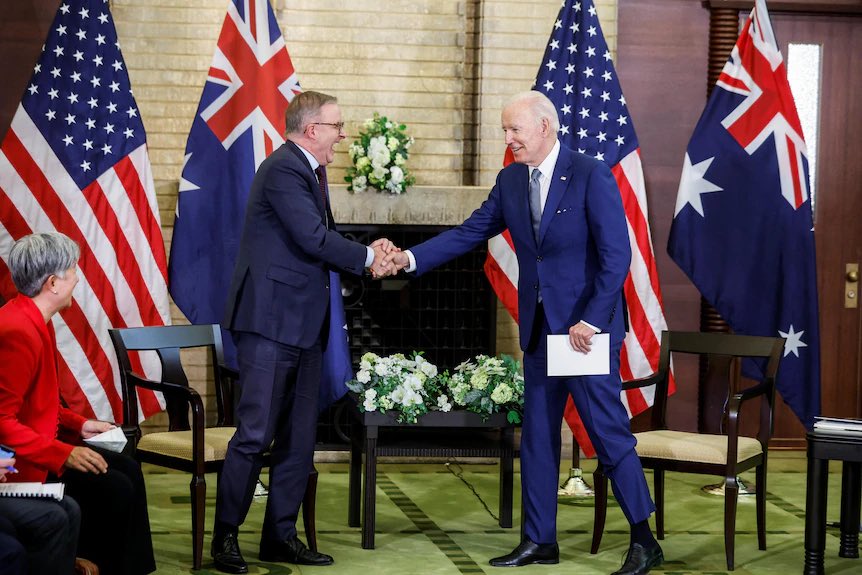
Fawning, embarrassing. Like teenagers meeting Harry Styles. Imagine Keating looking like this? Never. Even Biden looks a bit embarrassed. The LNP were even worse. And it’s the same with corporate leaders, like Gates. This is what selecting leaders by popularity produces. https://t.co/e11jZC2jk2
The rise in the ‘cost of living’ is a reminder that all that created the illusion in the past 20 years of ordinary people being looked after, was a mountain of personal debt. Not a coincidence that zero action on Covid is happening at the exact same time as that money runs out.
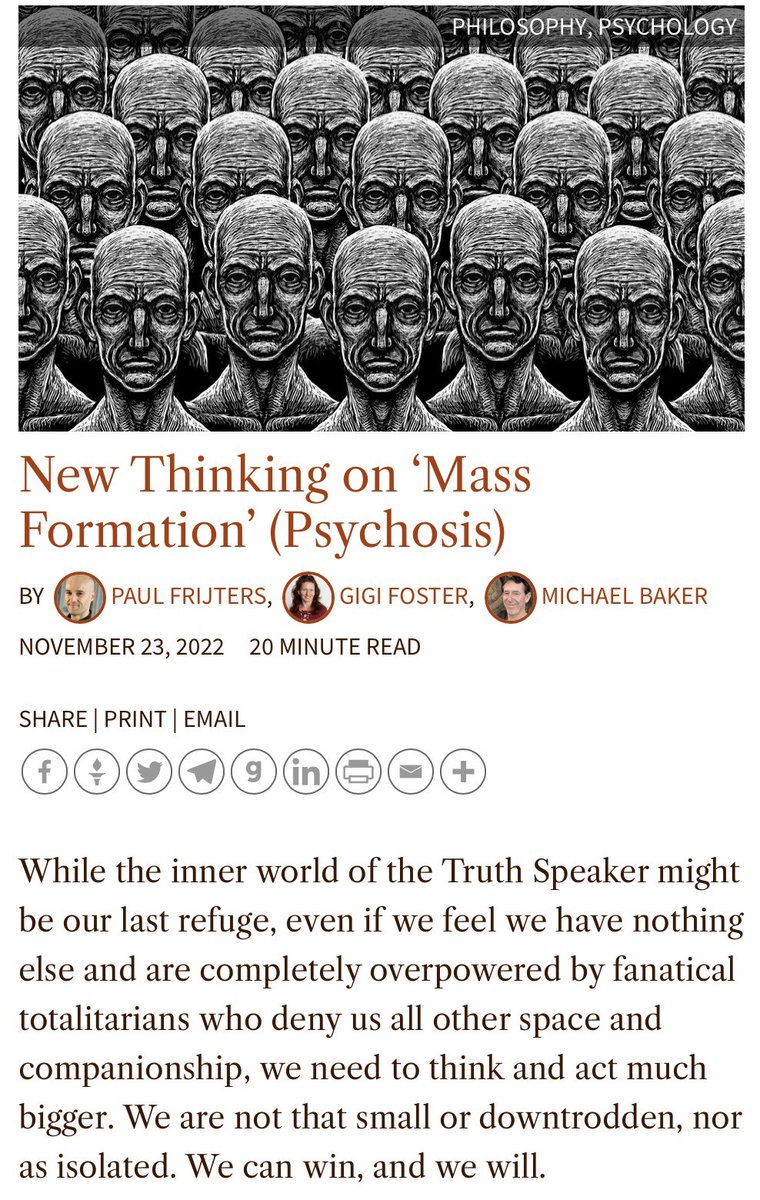
Gigi’s war on ‘fanatical totalitarians’ over at Brownstone is something to behold. There’s more too. Do the media teams who invite participation from scholars do any basic backgrounding beforehand? Check them for GBD and Brownstone links? And explain what those groups stand for? https://t.co/SFFEqmligl
Yes broken. In plain sight, ‘there is no such thing as society’. Only once in the entire history of most societies has it been any different. In the period between the end of WW2, and the early 21st century. /1 https://t.co/aAIJvrcRk2
The invention of ‘the public’. The war on the whole idea of the public launched in the 1970s by the conservatives has returned us to the historical normal. The invention of ‘the Economy’, and the ‘market’, cover for old-style feudalism. That’s what we’re living right now. 2/2
It’s not the planet, Earth, that contains the only known life in the universe. It’s the atmosphere, itself created by living things. That tiny, thin blue line. Unique in our known universe. Sustains us, shields us from asteroids and meteors, filters out harmful EM radiation,…/1 https://t.co/HywvcikORm

…creates a livable temperature in a universe of frigid, perhaps unlimited cold expanse. Air. Anybody damaging air is not only humanity’s greatest sociopath, but the universe’s too. Both climate and Covid are about badly damaged air. Time for reality-based politics. 2/2 https://t.co/5MJZSY8Hyz

The populist pygmies who lead us today, compared to these giants from our own lifetimes. The LNP must not believe its luck, having the modern ALP falling over itself to implement LNP policy. https://t.co/vU0jXuFg92
I’m no military strategist, but Keating’s point about land wars today - that only true ground invasions lead to overthrow of countries - seems sound? And the idea of China sending enough troops to even contemplate that over 8000 km of ocean is ludicrous?
Sometimes hybrid immunity feels like the arguments for more guns. Rather than address violence, arm everybody against it. Rather than reduce infection, ‘arm’ the immune system more. https://t.co/xiQcb57RsK
The only thing that’s free in a free market is labour. https://t.co/rp0fcoCvC4
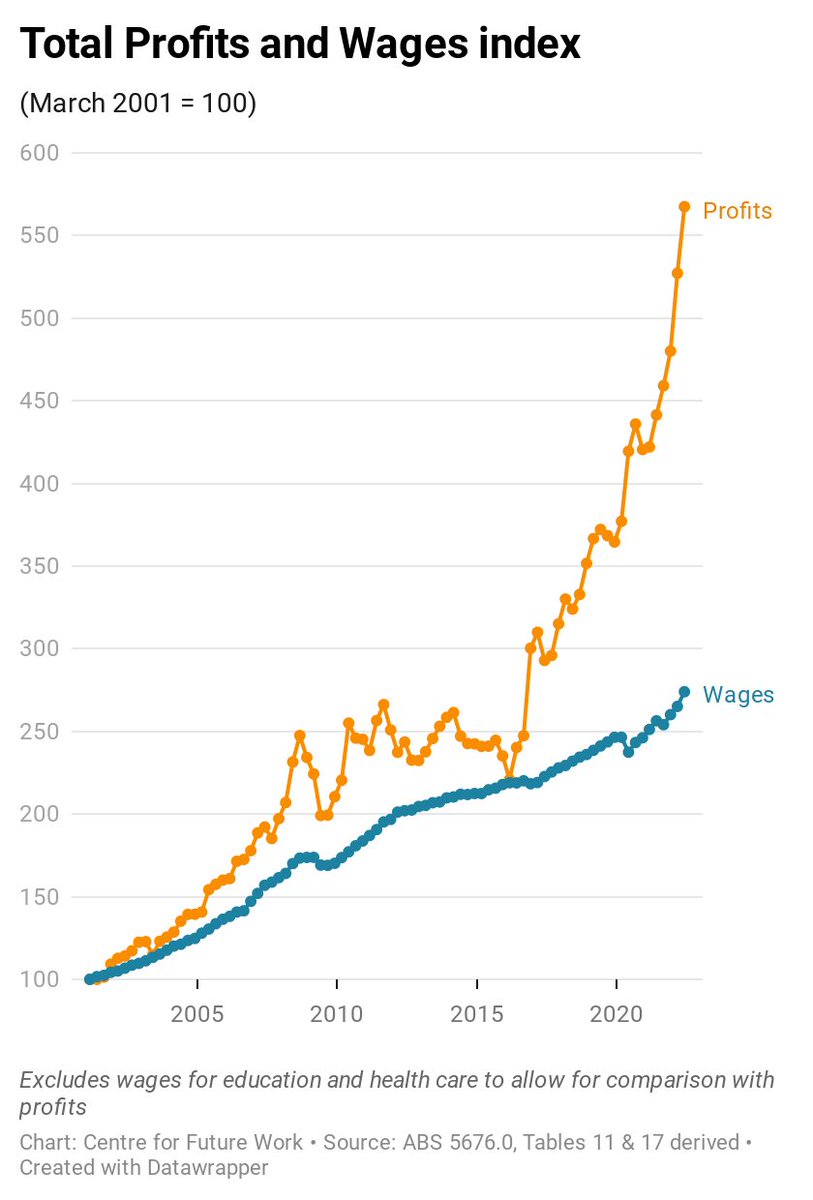
Another way the economy crowd hijacked politics and societies, is to turn budget nights into some sort of sacred ritual. Look through your family album and see if you can find any shots of ‘mum and dad putting together the family budget’. https://t.co/FkysJ8ihTY
Most local government areas in Australia are starved of money to provide basic resources. While we give hundreds of billions in tax cuts, and to buy the US a missile delivery platform in the Indo-Pacific. Those lunacies aside, a thought experiment. /1
The average vehicle in Australia is costing about $5000 a year to fill with fuel right now. Do some rough sums on vehicle numbers in your postcode. Multiply by that $5000 figure. You should be talking tens to hundreds of millions of dollars, per year. /2
Imagine that money retained in the community, every year. What else it could do, if not sent offshore to oil suppliers. The electrification of our lives joins a lot of dots that currently look disconnected. 3/3
Week 7 of term now, and very little visible Covid in school this term so far. Very few absences at work either. World data (cases fairly meaningless) suggesting a similar quiescence. Who knows. https://t.co/Y5eFibm6Ai
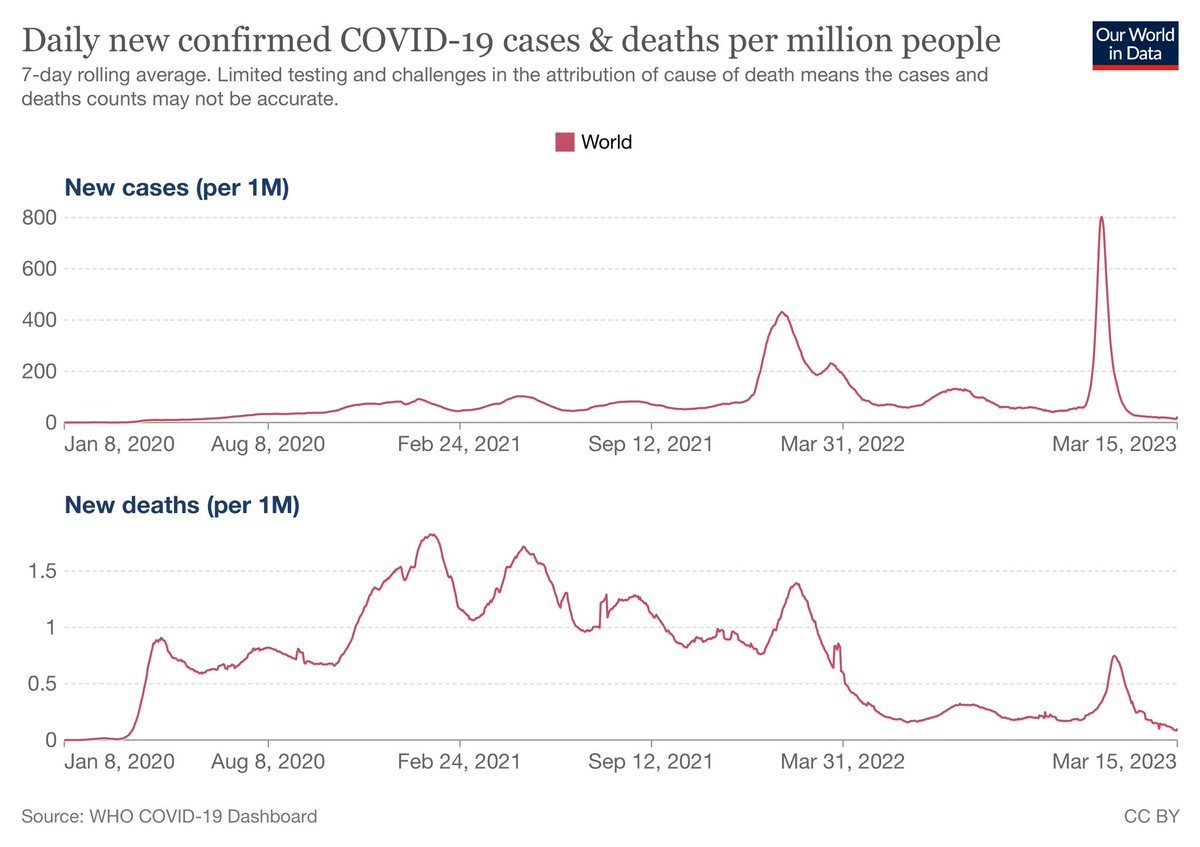
The disastrous myth that societies are market economies continues to destroy them. And to stop them fighting a pandemic. Until the complete nonsense of markets and economies is called out, nothing will change. Elections are pointless theatre. https://t.co/CnWKqzvrFx
Keating’s description of Penny Wong’s wearing of leis and handing out cash as not foreign policy but more a ‘consular task’ is a brutally accurate observation. Public policy is dead, completely overwhelmed by grown up fairytales about economies and budgets.
It already collapsed. Replaced by a market economy. 50 years ago. We’re much, much too late to this party. (The market economy is pretend, masking basic feudalism.) https://t.co/0qmRLF8398
Albo’s problem is that he wants to be liked. He wants to be Hawke, nationally adored. But Hawke achieved that on the back of major policy reform. While both Albo and Biden target ‘division’ in politics, as if the problem is people just not being nice to each other. /1 #auspol https://t.co/aJfpe56xgb

There is a way in which this is also smart politics. Conservatives use continuous outrage and crisis as a way to energise apathetic voters. It’s why they fund FOX News and tabloid newspapers. It’s strategic. So taking the sting out of that continuous outrage is good politics. /2
But you have to DO something too. On top of that. So far the ALP term has been dominated by the waving through of continued inaction on Covid, and budget-destroying nuclear subs, both key planks of the LNP’s strategic arsenal. Doing that in a friendly, ‘bipartisan’ way only…/3 https://t.co/7gWDghVzmd
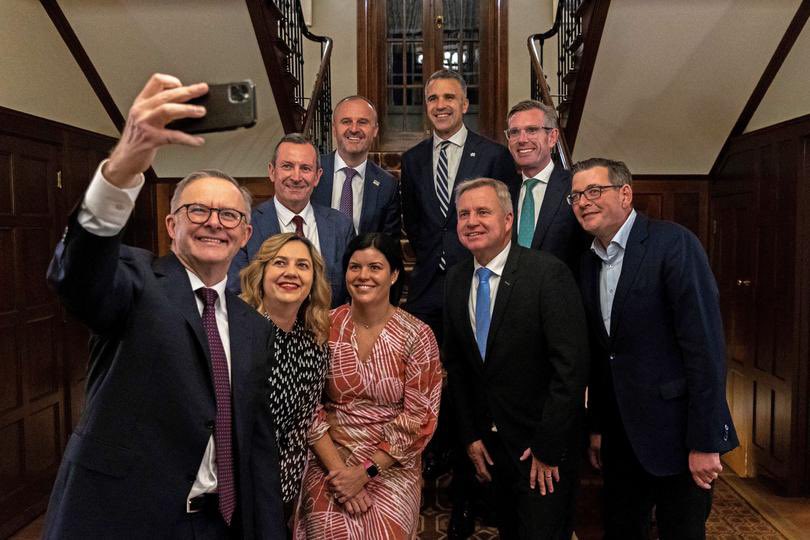
…accelerates the LNP’s strategic objectives. Then we have Jim Chalmers talking about values-based capitalism. Which just means adopting the entire fantasy of society-is-an-economy, the major conservative strategic weapon of 5 decades, and adding warm and cuddlies to it. /4 https://t.co/mXAPpekOIU
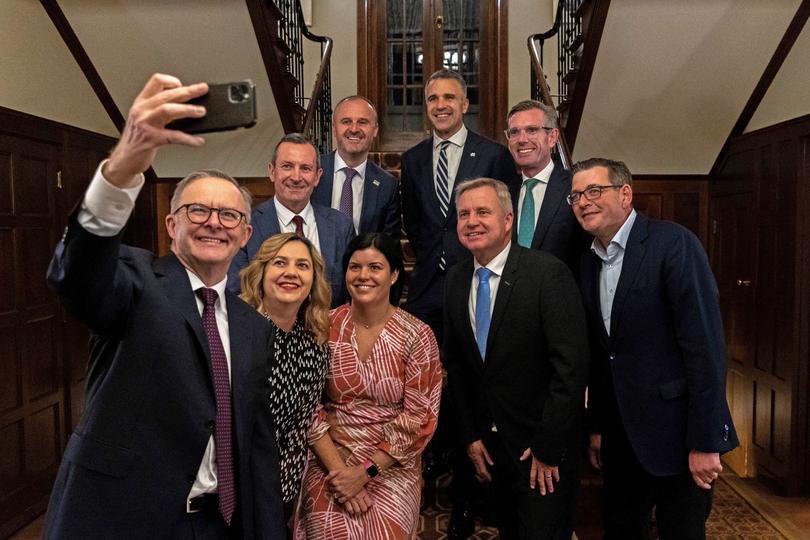
Again all it achieves is making the toxic conservative agenda more palatable to ordinary people. Yes it’s very hard to escape all of those conservative framings, of society as an economy. They’ve been building them for 50 years. Try and push that too far and you’ll have…/5
…the LNP opposition heading out to the GG to ask for another dismissal. To hit them where it really hurts, a task Keating understands as the ALP’s core platform, you have to use strategy. Be like the LNP, just blatantly lie about your true objectives, and introduce all…/6
…sorts of weasel metrics which actually destroy the thing you praise in public. Like private health insurance rebates (designed to destroy Medicare), or postcode-based school funding (designed to destroy public schools). Praise all the things the conservatives praise, but…/7
…reframe all of them and white-ant them with clever strategy. The ALP has only one job, and that is to destroy utterly the conservative hijacking of democracy, and its replacement with a fictitious ‘market’. That was conservative strategy, the market, the ‘economy’. To hide…/8
…its own hijacking of democracies. You can’t just come out and say ‘down with the economy’, again that’ll get the GG out for another dismissal. You destroy the whole farce in other ways, strategically. With rat cunning, and mongrel. Not niceness. /9
The reason the country is ‘divided’ is because it’s NOT divided. A tiny handful of parasites are hoarding all of our common-wealth. To just address the anger that causes, by being nice, and to do nothing about the underlying cause, is criminal incompetence. /end
The market at work. Paying over $1/litre for water, which you can get out of any tap for almost nothing. Obviously we needed a market to drive prices down, because free water was too expensive. https://t.co/VbxvoELO4L
The ‘market’ always fails. Maybe it isn’t real. https://t.co/tNFp7kHapS
What feels more dangerous, living in an ‘authoritarian’ country, or in a country where everybody is their own authoritarian? https://t.co/O2f45Cu2li
You can see why we’re in trouble with Covid, with the reporting of Keating’s Press Club interview. Nearly all of it focused on the interpersonal dynamics of the ALP. Team sports reporting. No attempt or capacity to discuss the actual issues he raised. They wouldn’t have a clue.
Hmm yes, ignore that Tweet of mine from yesterday about possible quiescence. https://t.co/3jLvWW4Hl3
@bmarsalis thoughts? https://t.co/yyAwYdLUql
The projected money on nuclear subs for Australia is about 13,000 times the money allocated (on a competitive grants basis, across multiple infrastructure categories) to Australian schools to fix their ventilation.
Banks are always ‘too big to fail’, in economy land. But we can afford to infect the entire globe over and over, with a virus. Let the banks go to the wall, and save the people instead. It’s the law of the market they say they live by. https://t.co/nH0Y4tHzmE
There is still hope in the Press Gallery. One still dares to play the ideas, not team sports. Most of them little more than gossip columnists for their far too cosy relationship with politicians. https://t.co/SEmHY050l4
It’s worth unpacking just how ridiculous the idea of the ‘market’ is. Both of these sets of people occupy the same global ‘market’. By current economic politics, it means they both compete equally. The whole thing is such an obvious con, a whitewashing of existing differences. https://t.co/NrzcQACv1N
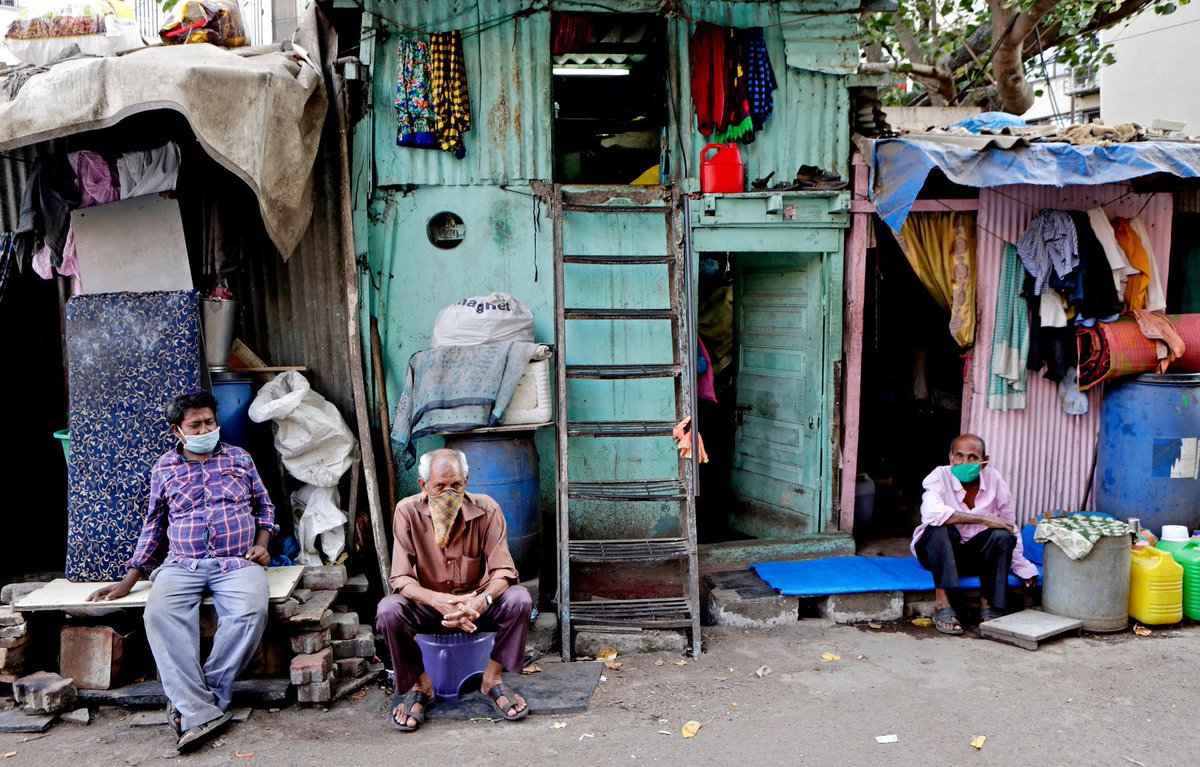
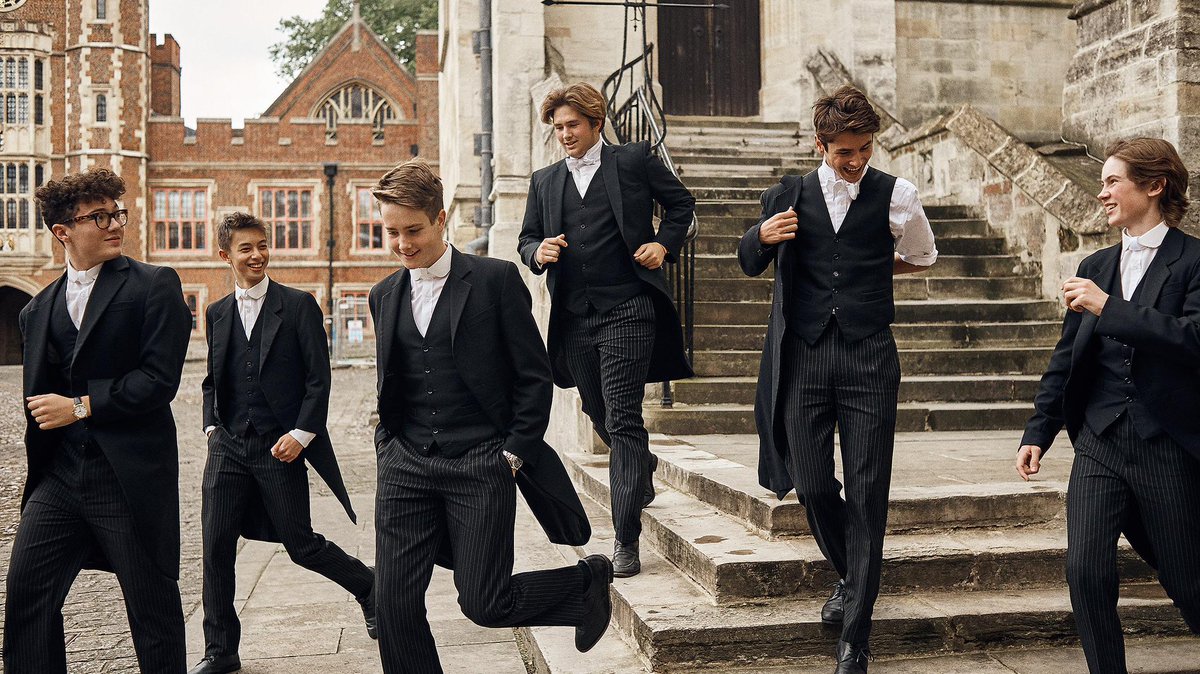
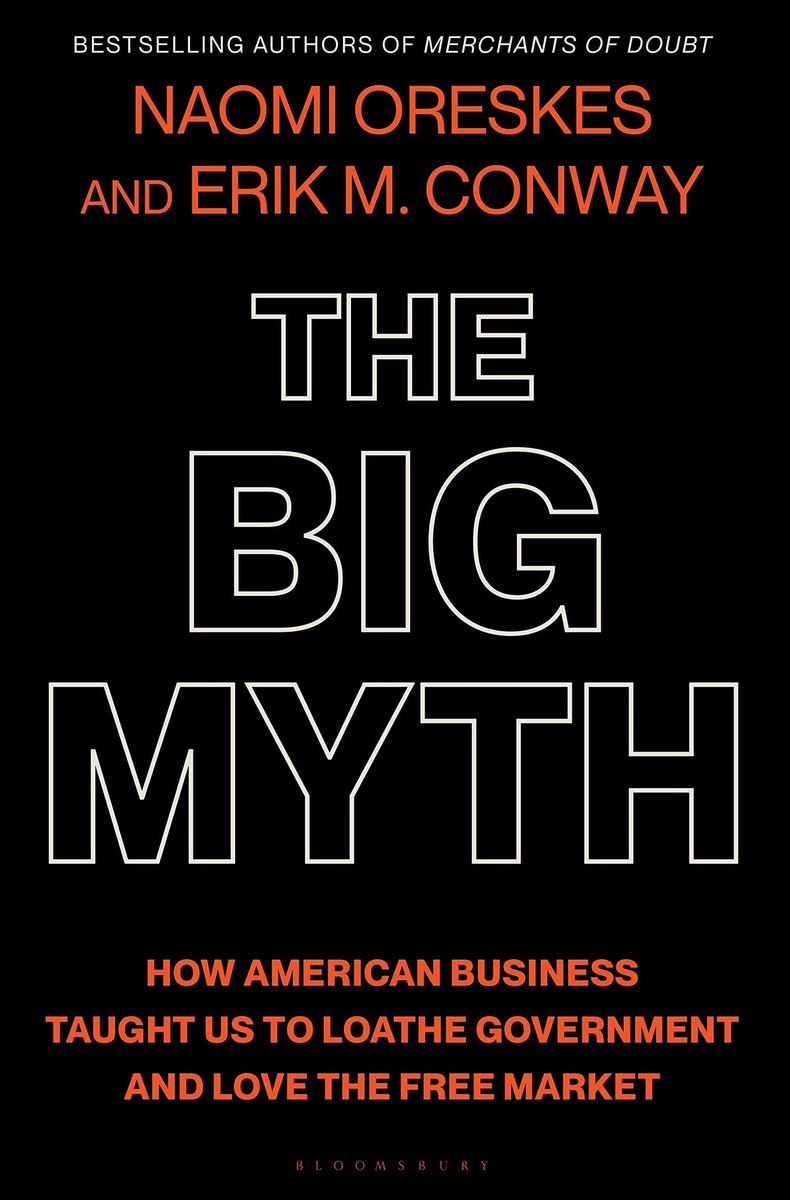
Thanks to @RichardfromSyd1 for alerting me to this one. Haven’t read it yet, but I obviously Tweet a lot about how the market and the economy itself are myths. Deliberately constructed myths. To replace society with old-style feudalism. https://t.co/Zzwp3EhNDu
As evidence that we’re in the midst of a deliberate reversal of social progress from the first half of the 20th century, the 1.15 million dead from Covid in the US is less than the 1.5 million who died from workplace injuries there in the early 1900s, *every year*.
It’s a shame that F1, whose formula has been broken for years, has managed to rejuvenate itself by becoming a TV soap opera in the US. Fix the formula, so drivers get to actually race. https://t.co/cXx2ro1BwJ
The history of how the invention of the ‘public’ from the late-19th to the mid-20th century was deliberately unwound is a fascinating one. Much of it happened in the US, in a coalition between corporate and church interests. We’re living the endgame right now. Short 🧵/1 https://t.co/RuW96zJQ8j
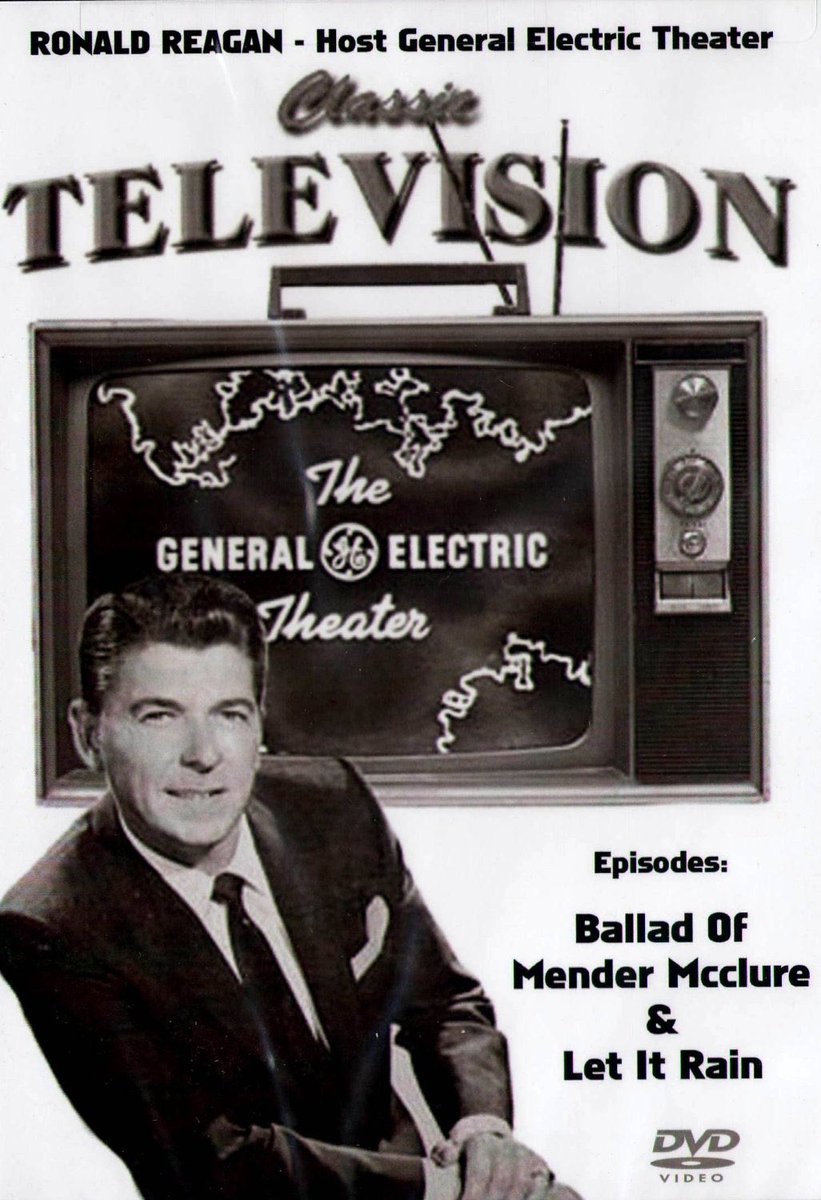
Corporates wanted to wind back the whole regulatory apparatus of public life, because (they believed) it got in the way of them doing business. Conservative Christians wanted to wind it all back because the centuries-old battle between Church and State has never gone away. /2 https://t.co/WMu7m5P991
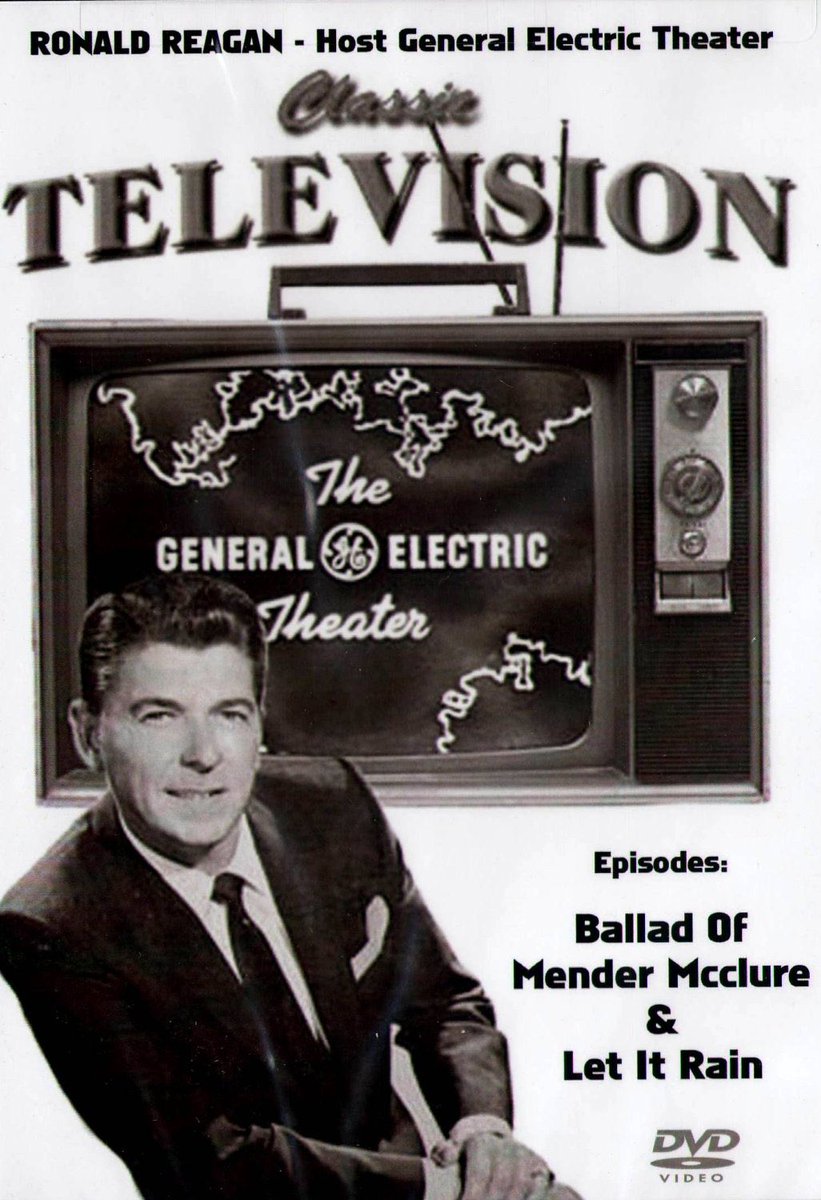
And so to Ronald Reagan, and The General Electric Theater. GE ran a TV series, stories of free enterprise and individualism. The softening up of the public, a new social narrative about the restriction of government and the freedom of individual enterprise. The true function…/3 https://t.co/7fq7eVVNVz
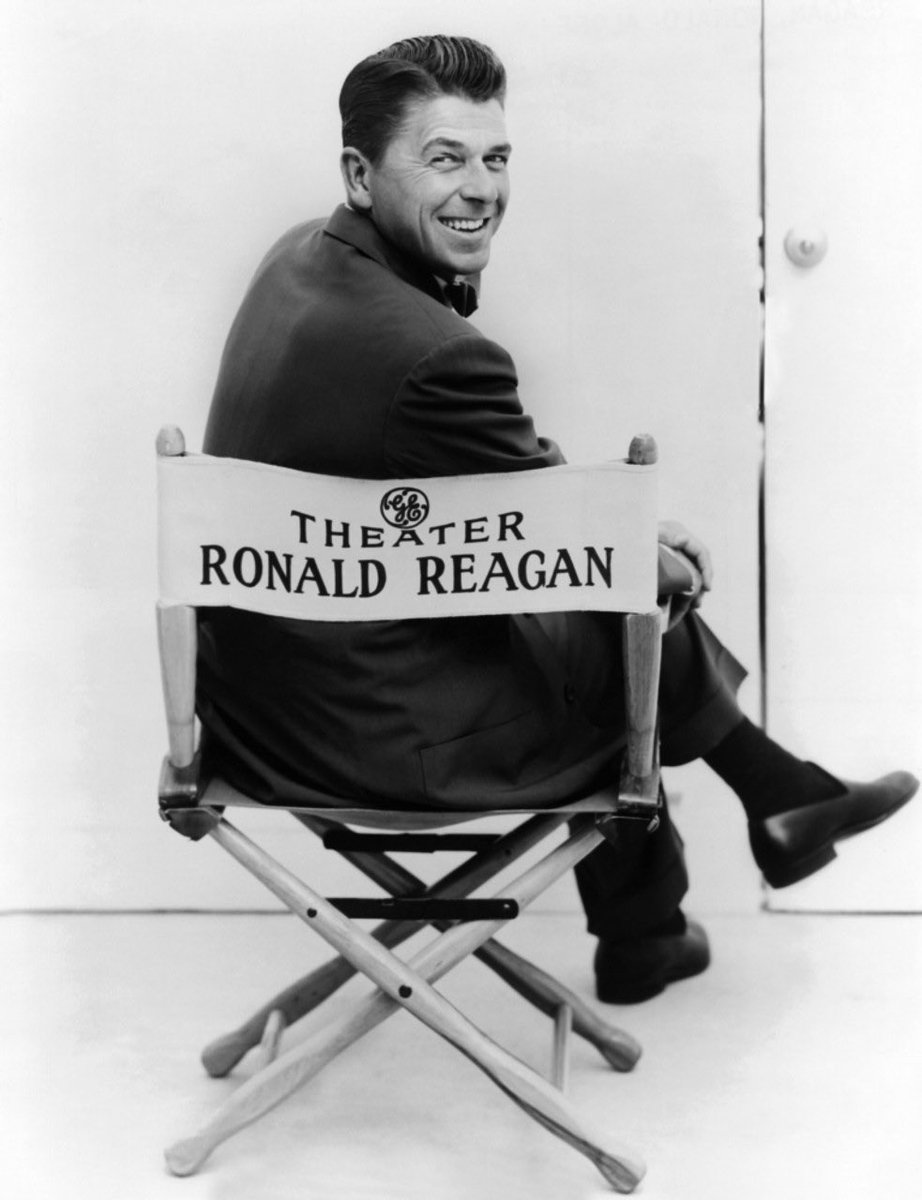
…of this theater was revealed by Reagan’s monologues introducing each episode, but also by extensive speeches given in schools and other institutions. You’ll note here that this is nearly 3 decades before Reagan would go on to become President of the USA. /4 https://t.co/443bYmDJrt
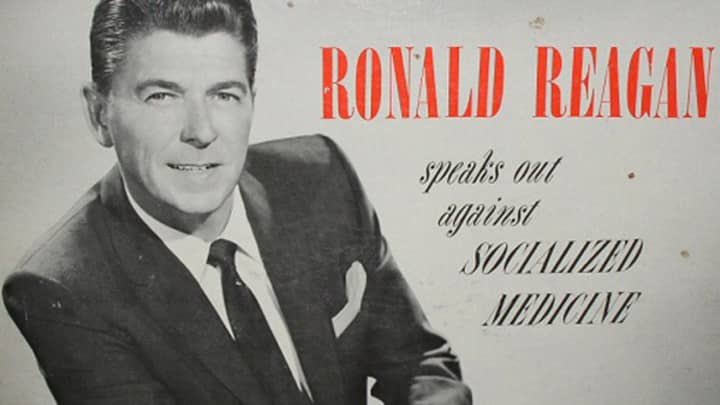
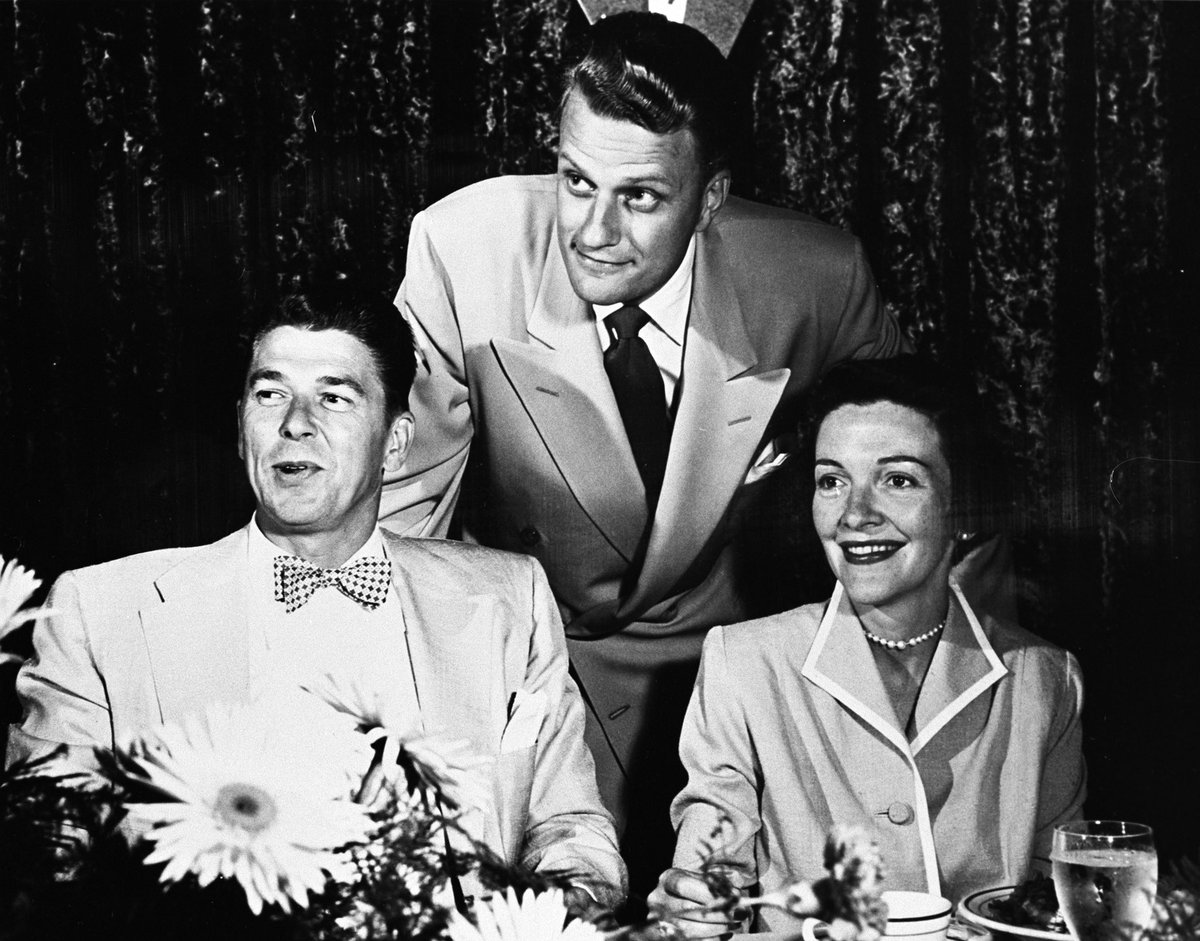
The people who plotted the downfall of public life, of the idea of the public entirely, play a very long game. Here’s the Reagans with a constant friend and ally, Billy Graham, showing the close nexus between corporate and church, in this mission to remove the public sphere. /5 https://t.co/nI6xkZ68xA
Here’s Reagan presenting Graham with the Presidential Medal of Freedom, in 1983. The movement to remove the public sphere, beginning in the 1950s, accelerated in the 1970s, and really exploded in the 1980s, steered by Margaret Thatcher and Reagan. /6 https://t.co/GkZW0w0XjL
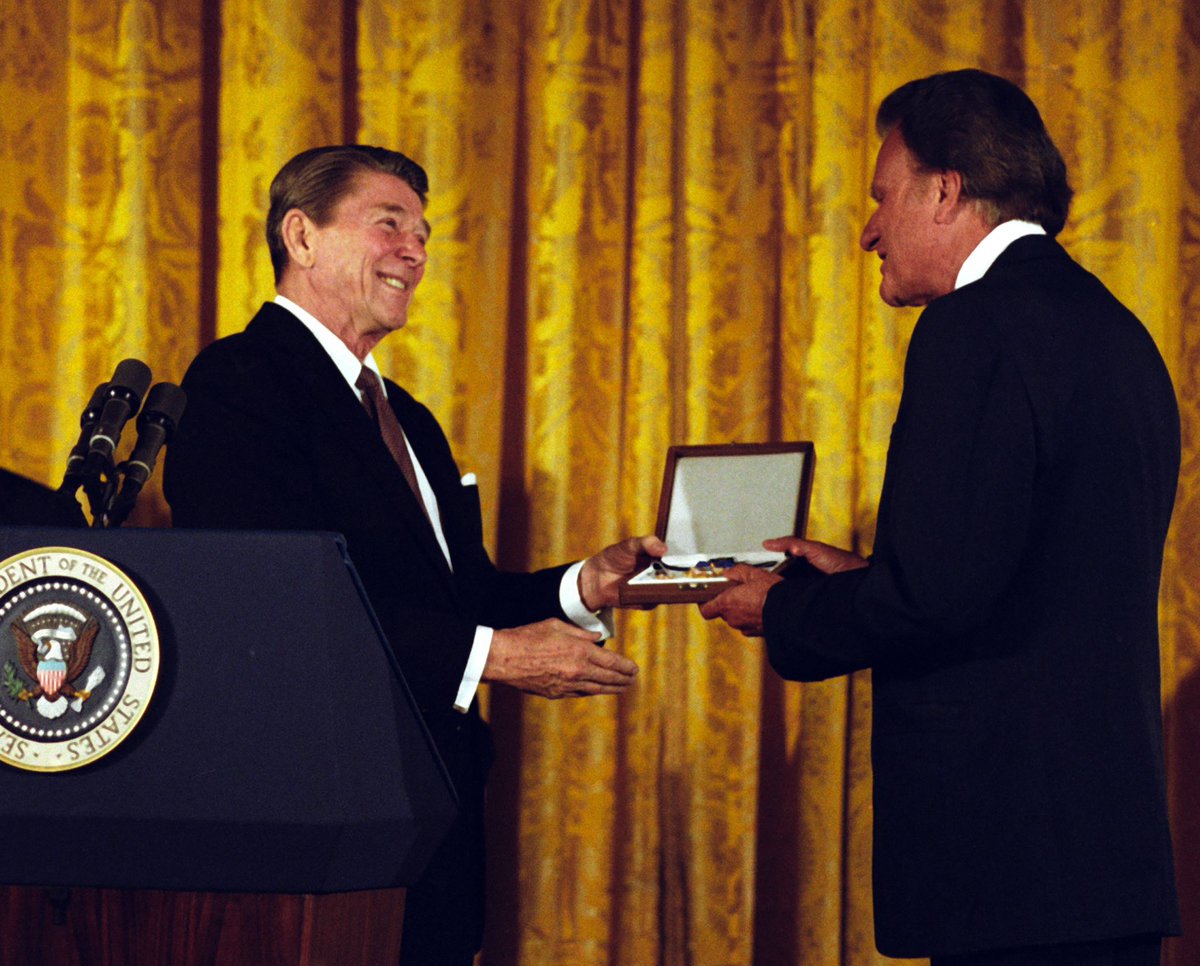
Again corporates engineered this to free themselves from regulation of their business. While conservative churchmen had always despised the State, seeing it as a usurper of their control over societies. This was also a time when the ‘think tank’ was invented, generating…/7
…continuous free market propaganda, and feeding it into public media networks, which had increasingly been acquired by these same conservative interests. Elections became a sideline, as this great propaganda machine pumped out continuous free market ideas. /8
Societies that had until the mid-20th century been strongly supportive of their governments as critical players in their prosperous and free societies, were now becoming openly hostile to these same government processes. All deliberately engineered. /9
Societies became economies, free markets, by which was meant (it’s never really defined, because it’s nonsense) individuals freely interacting, to produce the optimum outcome, for these individuals. Government and regulation is what (they say) gets in the way. /10
We all know these ideas, because all of our democracies have been hijacked by them, since the 1950s. But it was a long game, which is one reason I often sound like a killjoy, saying who we elect is mostly irrelevant now. 70 years of bedding down an entirely different…/11
…framework for society itself can’t be overturned with elections. The reason Albo for example is limited in what he can do, is because he inherited a society that already thinks of itself as an economy. Everybody does, of all political persuasions. Including Albo. /12
The reason we can post graphs all day showing the magnitude of the public health disaster we’re in the middle of, with Covid, and it makes little difference, is because in an economy there is no public. And thus no public health. Public health is one of those pesky…/13
…regulatory things that gets in the way of the ‘economy’. There is no simple or easy way out of this, we’re 70 years behind in this race. We need to restore societies, and the ‘public’, as the drivers of our lives. To expose ‘the economy’ as our greatest ever myth. /14
The depth of this myth is revealed by even saying that, how everybody, from all sides, jumps in to defend it as some sort of foundation of everything. It’s what allows us to ‘afford’ to do other things. We’re repeating 70 years of propaganda. My only hope is one I’ve…/15
…Tweeted about before. That the sheer socio-technical complexity of modern societies will overwhelm this longstanding fantasy. You can believe everything you like. It won’t keep a modern society’s lights on. /end https://t.co/2Y7M7zIDfQ
You cannot elect your way out of an economy.
Nuclear subs. Like a week-long episode of Utopia. #InsidersABC
Those who say renewables don’t work ‘when the sun doesn’t shine and the wind doesn’t blow’, also don’t suggest we use them when the sun does shine and the wind blows. We live in a sloganocracy.
Still amazes me that we’ve gone 70 years not even noticing that the idea of a market economy is almost the exact opposite of the idea of democracy. https://t.co/aZwPILHPCW
Reality-based politics. Elected numpties and defence hawks hypothesising war with the country who builds pretty much everything we use, and supplies the raw materials for nearly everything else. https://t.co/8P1q7lqaJa
Australian society, strip-mined by foreign resource companies. With the laughable royalties then vacuumed up by older Australians. A society is a ‘circle of life’, intergenerational. An economy is just plundering, of this social wealth. https://t.co/sGJTNqx3Bz
Western nations progressively gutted their own manufacturing from the 1970s onwards, and replaced it with ‘service industries’. Service is just a modern word for being a servant. The poor always ‘went into service’. https://t.co/VlfKCCWyLJ

Not sure I need to add a narrative to these two charts. The West outsourced most of its meaningful work of building things to cheap, poor countries. Then forced its own workers into ‘service industries’, mostly low-paid menial work for the outsourcers, to enrich their lifestyles. https://t.co/j20MyOhP7e
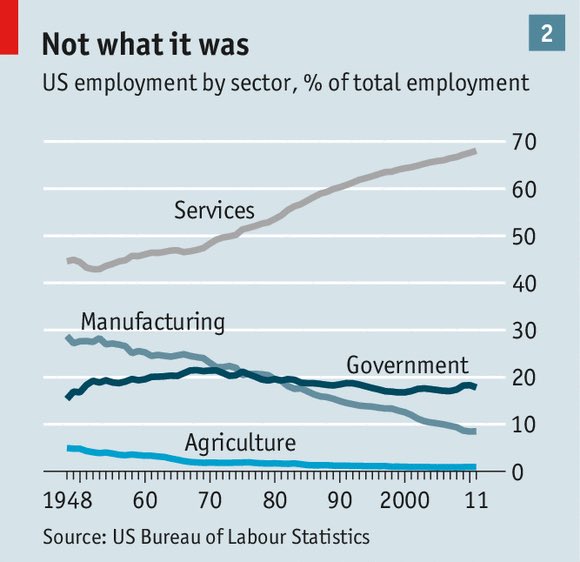
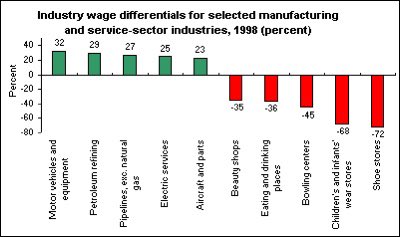
There’s something so uniquely stupid about the West re-invoking the Yellow Peril. https://t.co/xhXxRScFhH
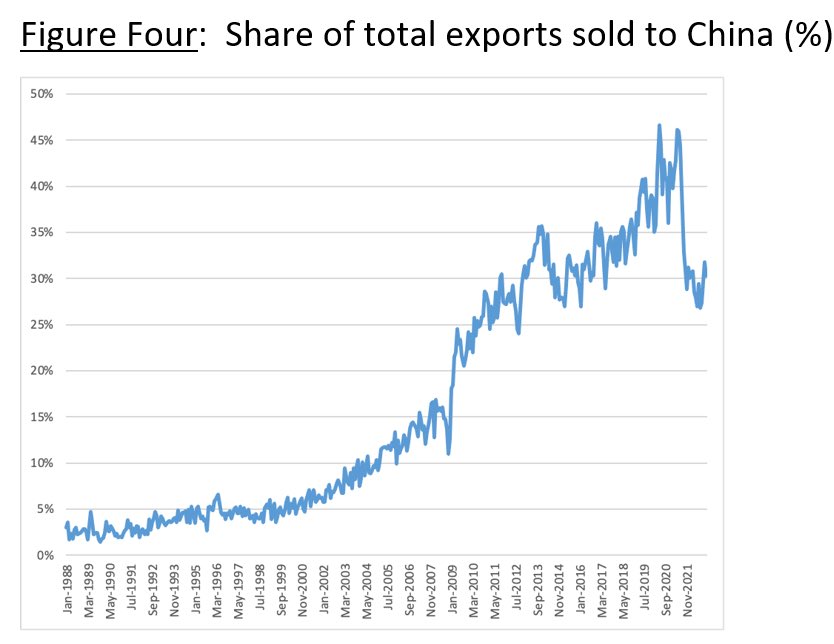
The path to saving societies won’t be through the idiot team sports of Left and Right, or the identity politics of using social collapse as a platform to express our individual grievances. It will be through rapid engineering works. We know the problems, we know how to fix them. https://t.co/DuMpzFqXyi
The only thing that keeps the fantasy of societies as economies (i.e billions of isolated individuals in a market) going is the finance system. Banks issuing new money through loans. Those loans keep 8 billion market customers afloat, as their collective wealth is plundered.
From the late-19th, through to the early-to-mid 20th century was when humanity invented ‘the public’. From the 1950s onwards, social elites started stripping it away again. We’re living in the final stages of that tug of war. From: https://t.co/O5lphhfGqs… https://t.co/gVQLdH0kq2
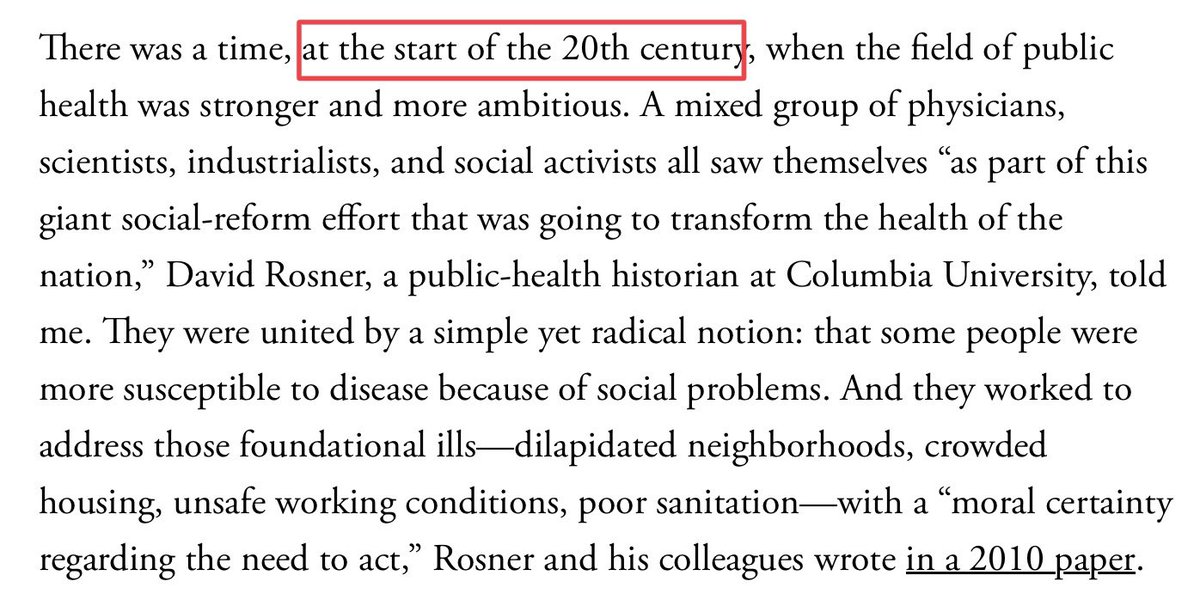
Superb. Modern economics is mostly complete bullshit, as is its ‘economy’. You can strip it all away very easily, and wonder how you never noticed the Emperor was never wearing anything. https://t.co/9eMaQJhWMZ
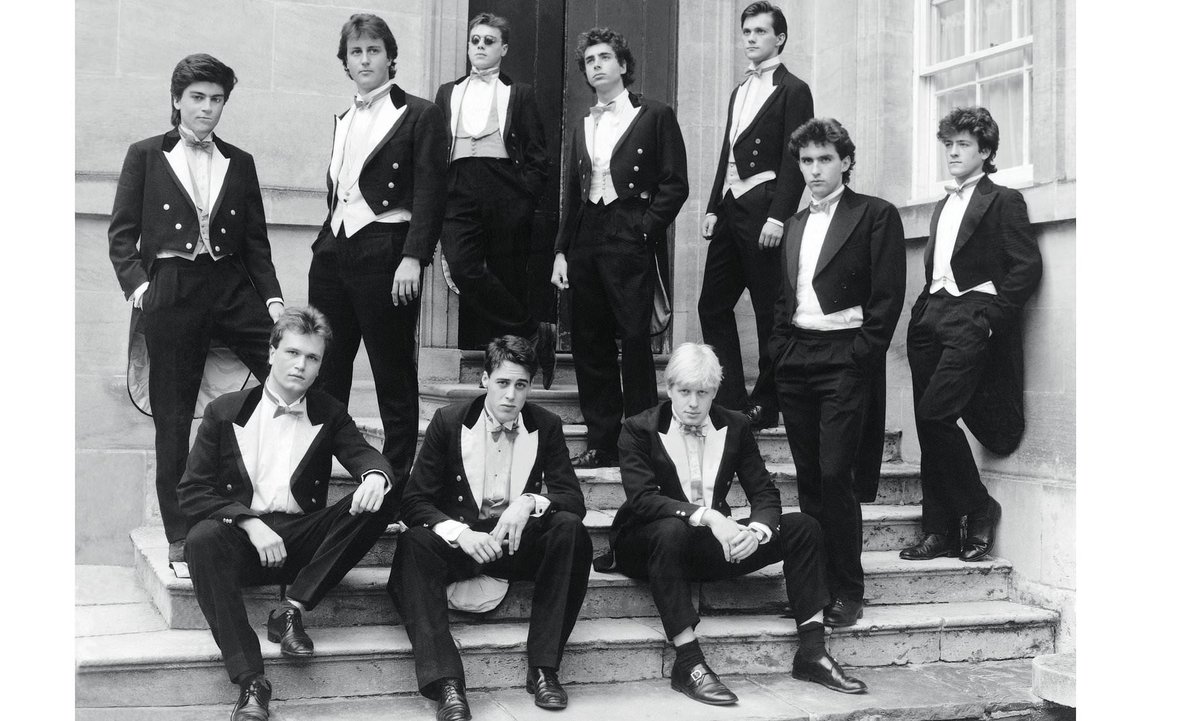
This is the class of society that invented the economy. The market. What do you reckon their motivation was? https://t.co/fDo8N7vjK3
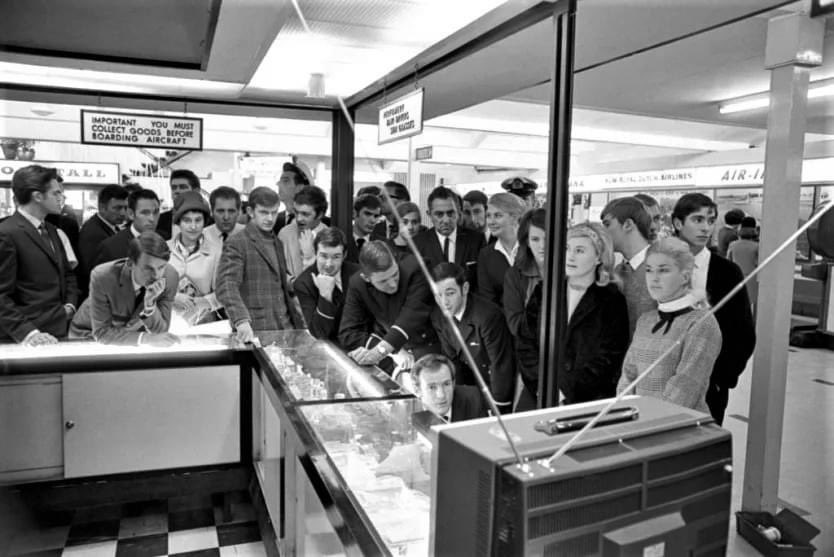
People huddled around a single TV at Sydney Airport in 1969, to watch Apollo 11 on the moon. What was the last ‘moonshot’ you can remember society pursuing? The accelerated destruction of the public began just afterwards, in the 1970s, and with it the idea of collective goals. https://t.co/GtJl0YQXPq
Another founding myth of ‘the economy’. Budgets, and debt. For decades conservatives have been able to strip away social programs, under cover of supposedly protecting the federal budget. It was always motivated nonsense. https://t.co/hlD8nhTZsO
The shift to a market-economy fractured all collective attention and energy into millions of disparate ‘jobs’. Any sense of a larger social project was lost. Reality isn’t fooled. It’s now presenting us with an invoice for that 70-year fantasy. https://t.co/9GKruXHfaA
Great thread for those who believe in the service economy. As Cory says, the real process has been transferring value ‘from those who make things for a living to those who own things for a living’. https://t.co/o4kyY2CI6I
The Block, and the surge in interest in luxury. I’ve argued that what we call an economy is really a trick, the replacement of the public sphere with a fictitious market of free-floating individuals, interacting. Driven by a sophisticated understanding of social psychology. /1 https://t.co/g0NcLOlX6F

In reality societies are always driven by one thing - conformity, and status. People aspire to be like higher status people, in whatever group, of whatever size. They conform with that status-driven mechanism. The removal of the scaffolding of public institutions to level out…/2 https://t.co/HKUNh1IXnr

…the massive gap between the haves and have-nots, a removal which is what the concept of the economy was designed to do, means the only way for that aspirational status mechanism to function is the emulation of status, in our individual lives. Enter luxury, stage Right. /3 https://t.co/EtfdjLzyqj

Go into massive levels of personal debt, and reproduce the luxury lifestyles of higher-status individuals, inside your own homes. Private opulence, public squalor, as Galbraith once said. You may have also noticed a massive upsurge in European luxury cars, Audis and BMWs…/4 https://t.co/6q5MEIYm0A

…and Mercedes, even in regional communities. All part of the same mechanism. John Howard once said he imagined an Australia where a Rolls Royce drove past, and people said ‘I want that to be me’. That’s the Australia we’ve arrived in. Public squalor, personal (debt-funded)…/5
…aspiration. If you have a go, you’ll get a (debt-funded) go. Conservative politics is smart, it knows how to tap into this social psychology that actually drives societies. Progressive politics has no idea, targeting ‘the poor’ in deeply patronising ways, not realising that…/6
…the poor hate being poor, hate being seen as lower status in that way. It’s why it’s been child’s play for the conservatives to win them over, with aspirational nonsense. Look around and you’ll see the increasing passion for luxury, which grows in inverse proportion to…/7
…wider social decay. Service industries falling over themselves to offer the greatest customer service, the most granular and enriched customer experience. Whether it’s coffee shops, or software platforms disintermediating social processes, or outrageously glamorous watches. /8
All designed to make the buyer feel like the higher status person they want to be. Whether they can afford that or not. And in most cases, the answer is definitely not. Welcome to the end times of the economy, where we watch social collapse from the luxury of our own homes. /end https://t.co/JNnYJycnfz

The end of cheap money and cheap fossil fuels. The two biggies. Brace position. https://t.co/3xVF19GtjV
People were far too busy not caring about a pandemic at the same time. https://t.co/fcdN6RsrI0
Myths are much more dangerous than lies.
What’s the the timeline for replacing elected dimwits with AI bots?
Making the excellent point that the dominant work of societies has shifted from agriculture, to manufacturing, to IT, to finance. IT began the split from reality, a massive enabler of what Graeber called 'bullshit jobs'. Finance is BS on steroids. https://t.co/VcvpLQ9Kz1
Something minimisers could learn from the IPCC report is the humility of grading assertions on a continuum of confidence (low - medium-high-very high). Minimisers have been certain since Day 1 of the pandemic that to do nothing is the right thing to do. It's sclerotic thinking.
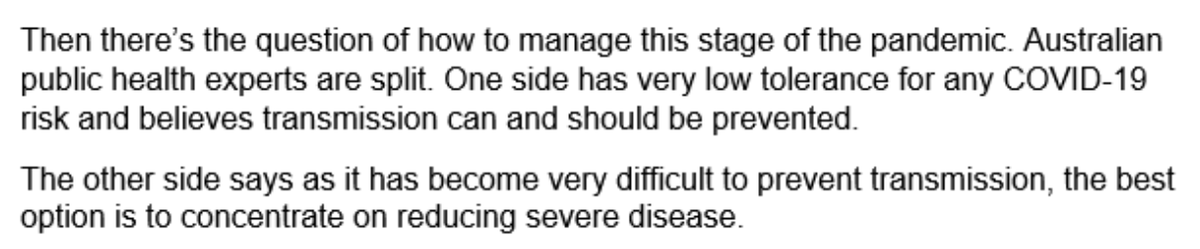
From today's Fin Review. The usual binary, where there isn't one. Nobody is saying remove transmission, it's not eradication. It's controlling it enough that you also then control the amount of severe disease. And also chronic disease. Like we do for most pathogens. https://t.co/QMrVFwEdyi
Of the 22 registered Covid deaths in NSW this week, 4 were at home, and had a Covid diagnosis prior to death. What situation may produce that? @KarenCutter4?
I'd always assumed we'd just wear them until we had the virus under control. I'm a bit old-fashioned like that. https://t.co/3mjl4ns3RE
We’re at least 30 years too late. Governments won’t fight Covid for the same reason they won’t fight climate change. The transformation of societies into economies, complete decades ago. We missed it. No amount of health data has even the tiniest hope of shifting that.
I don’t spend much time now appealing to elected leaders to do anything at all. They won’t, the jobs they take on are little more than following a few economic indicators on a spreadsheet. Go against ‘the economy’ and they’re toast. So what can we do? /1 https://t.co/Ya1czHoSJp
50 years ago, during another crisis and at the birth of the ‘economy’ as we now know it, some retreated to various versions of self-sufficiency. Escaping the social world almost completely. The problem with this approach is, to go ‘off the grid’, you need a grid. /2 https://t.co/CMOWGzGQcc
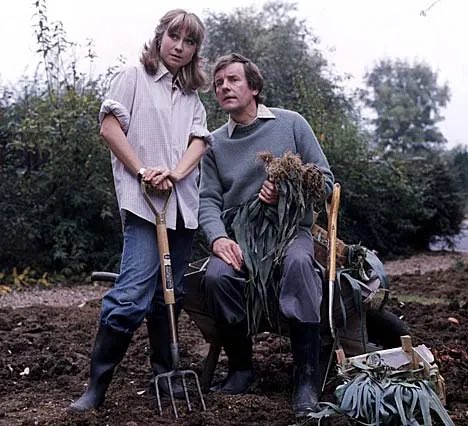
Preppers or survivalists rely upon a wider society to be able to survive, despite their beliefs. They don’t do their thing in the middle of Afghanistan, or Yemen, just as libertarians tend to reside in comfortable, rich social democracies. Sometimes when the stupidity of…/3
…mass uncontrolled infection gets to me, I remember Archimedes, working on his geometry right up until the point where a Roman soldier ran him through with a sword. Most of us grew up in that incredibly rare time in history where that sort of thing didn’t…/4 https://t.co/VV9KTbshj7
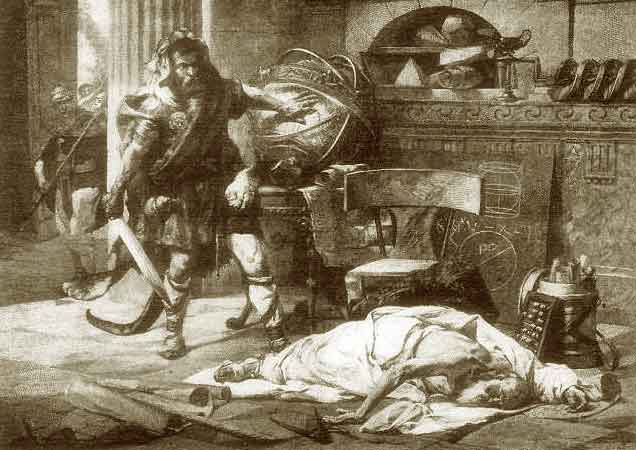
…tend to happen, because we collectively built that miracle of history, ‘the public’. A recognition of the profound inter-connectedness of all of society, and all of the infrastructure that coordinated and maintained that inter-connectedness, what we tend to call the State. /5
Those who follow me will have seen me trace the gradual destruction of that miracle, since the 1950s, using a new invention, ‘the economy’, a strategic ruse designed to reintroduce the much older social pattern from most of human history, feudalism, under cover of…/6
…pseudoscientific gibberish from modern economics about equilibriums and markets. Which, stripped of the mumbo jumbo, is really just ‘leave things as they are, don’t meddle with them’, the perfect recipe for entrenching inequality and existing fiefdoms. /7
In some ways we have to accept that battle has been lost. The fact we’re not even bothering to fight a pandemic, and for decades prior to that climate change, Tier 1 existential threats, gives the game away. We’ve returned to the lives that most of history has experienced,…/8
…until about 1950. We can plead and protest, but we’re talking into a void, the ‘public’ sphere is (probably) terminally damaged. This might sound like fatalism, but for millennia humans lived lives in this void, often happily and achieving magnificent things. /9
How they did that is my secret sauce for where we go next. One of the tricks of economy politics is to introduce a false binary between local and global. We (they say) have our individual sovereignty, and our regional and national sovereignty, and then when you somehow add…/10
…all of those little sovereignties, you get the ‘global’ world. All completely backwards, historically and logically. The binary is another economic myth. Designed to remove resistance to the stripping away of all of your ‘local’ resources, because ‘globalisation’. /11
Actually resources were never local, we all drive cars made everywhere in the world, consume information from all over the world, eat foods from all over the world, buy consumer goods from all over the world, live with people from all over the world. Etc. /12
Archimedes and the many generations before us didn’t live in ‘local’ worlds. They lived universally, in touch with the infinite, even the cosmos, every day. The idea of the ‘global’ would have made no sense to them. If you travel through regional and remote Australia, for…/13
…example, something should jump out at you. Often the very first building old communities constructed was the local church. It doesn’t matter if you’re religious or not, what this shows is that communities used to ground themselves in the universal, not the local or global. /14 https://t.co/VzFeaumOCR

Archimedes was grounded in the infinite world of forms, in his geometry. The Holy Roman Empire, the DNA of our current Western societies, was grounded in universalism, in a marriage of empire and church. The nations that now sit in the ‘United Nations’ were themselves…/15
…invented by these universally-focused empires. As to what this all means for your life here today, you can restore that way of seeing life and existence, in your own life. Don’t fall into the trap of thinking you’re just one ‘local’ sovereignty, needing to plea with…/16
…politicians and other (you think) global actors, to create change. In my own life, years ago I decided to live like this, focused on the universal, ignoring the local and the global. My family uses the grid, but we’re heading towards energy-independence. /17
Not to live off-grid (the old local fantasy) - the grid is fabulously useful. But to use its scale. Similarly, even though we’re not high wage earners, we’ve been debt-free for years, because we saved and prioritised to do that. We use banks (the financial ‘grid’), but…/18
…we’re not in hock to them. We all live in a social media world, we know that things ‘go viral’ (except viruses, which are puny things obliterated by sunlight and fresh air - only humans make them go viral). We know that you don’t have to navigate all of these fictitious…/19
…local sovereignties to get global impact. The world can change in a day. If we all think and act universally, in everything we do. If our homes stop being just addresses, and become our sacred connection with the universe again. Addresses are the ‘little boxes’ that make…/20
…real estate developers rich. We travel so obsessively because we lost that connection to place that older communities had, with their churches. We stopped seeing all of the universe existing, in each place. We thought all the big stuff was always happening somewhere else. /21
With Covid and climate change, I think and act universally. Not locally or globally. I know the infection I avoid in myself will then also not infect potentially everybody else in my community, and out into my region, nation and globally. It’s all already connected. /22
What I do ‘at home’ every day is already a universal act. The power I generate myself changes the national and global landscape of energy. The example that gives to friends and families, who are often curious, shapes that same universal world, independent of scale. /23
I’ll continue to call for politicians to do things, but the trap is to assume that’s what really creates change. They have you by the short and curries. They’re much, much more worried about people acting universally, and that then going viral. Instant global transformation. /end
As with 'values-based capitalism', the ALP is just sanding the rough edges off the status quo. Too terrified to confront all of the ridiculous framings the conservatives have introduced over the past 70 years. Being good little gold-star economy bees. https://t.co/TAGQVA8fny
You can't unsee it. An economy, plus 'experience and energy'. That's it. Amazed he called it a 'state', I guess that's a dismantling still in progress. Though not capitalised, so he probably meant the state of being the elected government. https://t.co/RORTamthI5
Some of the the themes I Tweet about a lot. How it took 2 world wars to suppress power structures enough to provide a momentary space for the ‘public’ (though I think the 30 glorious years Cory talks about here were the years the clawback began). https://t.co/Y4LKAbKvlB
Friend at a local government conference says there was unanimity as to the greatest barrier to good governance. The elected body. The same for every level of government. The world is far too complex and technical now for popularity to be confused with democracy.
The fact the government which spearheaded the deliberate infection of Australians, leading to thousands of deaths, is even still in the running in the NSW election, tells you that electoral democracy is useless. Not democracy, which is tremendous. *Electoral* democracy. /1 https://t.co/Y0eIZGFVRS
In the 21st century, the complexity of societies means that there are a whole lot of things societies *objectively* need to do. There’s no reason to refract those things through a lens of any political ideology, of any kind. Those things just need doing, an administrator…/2
Is it possible that even Long Covid is just part of the acute phase of infection? And that the real slow burner here is ongoing chronic infection? How do we measure the setting up of viral reservoirs in bodies? I know it’s been done, can it be done at scale, cheaply? https://t.co/UJoLqKuI2v
Standard conservative tactic, and why they run networks that do nothing but promote outrage every single day. In the US it’s used to get apathetic people to vote, usually for the wrong people. https://t.co/jo7Nw2gfDL
Americans, like the rest of the world and despite all the libertarian rhetoric, follow their leaders. Politicians said the pandemic was over. Most scientists didn’t. The public followed their leaders. https://t.co/xB06AQ2wyl
If there was a manual for social media, Gilles Deleuze’s passage here might be the guts of it. https://t.co/8kY3HN97ow
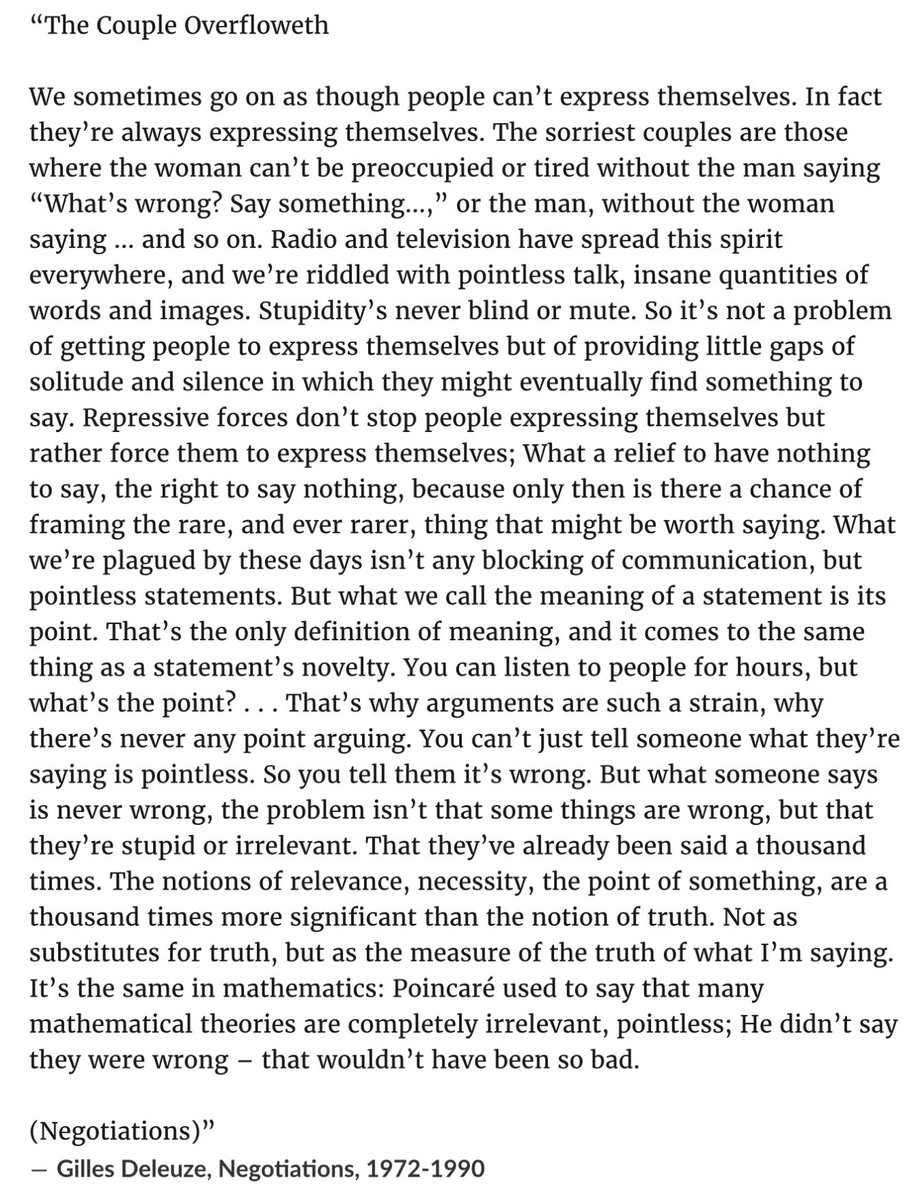
The concept of an ‘endemic wave’ felt a bit like saying a hot cold bath. Who wouldn’t love this to be true. All that seems over is any attempt to do anything. https://t.co/MYZLLKAEPm
I’m calling it early. Covid wins the NSW election.
So the never-elected-as-Premier, who unleashed the worst public health disaster on NSW in its history, is gone. (Yay.)
The entire country now under ALP rule. I don’t think we should discount demographics, which determines so much of what we attribute to politics. The traditional demographic of the LNP is shuffling off the mortal coil.
Chris Kenny on SKY blaming the ‘moderates’ in the NSW Liberal Party for the election loss. Years of the echo chamber of SKY has now sent the entire Australian mainland red. I reckon that’s a better place to look, for blame.
Why does it even need to be linked to productivity? Why can’t society say, this is how we want to live? We can define productivity any way we like. https://t.co/VcI1jGEXP4
In the UK, always a window into our future, food banks now sit alongside ‘hygiene banks’. Because people can’t afford soap or shampoo. “How can you tell he’s the King? He hasn’t got shit all over him.” Feudalism is back. Now called ‘the economy’. https://t.co/l34v58HuRp
The loons over at SKY have decided Matt Kean is to blame for the election loss. The only member of the train wreck NSW Liberals that actually keeps them as an option for sensible, ordinary Australians.
One of Greg Jericho’s charts. Those in the business and political communities who will argue against a 4-day week, saying it must be tied to productivity, have happily ignored the decoupling of productivity of workers from their benefits, for years. Ignore them, fatuous windbags. https://t.co/nDBjhKRykW
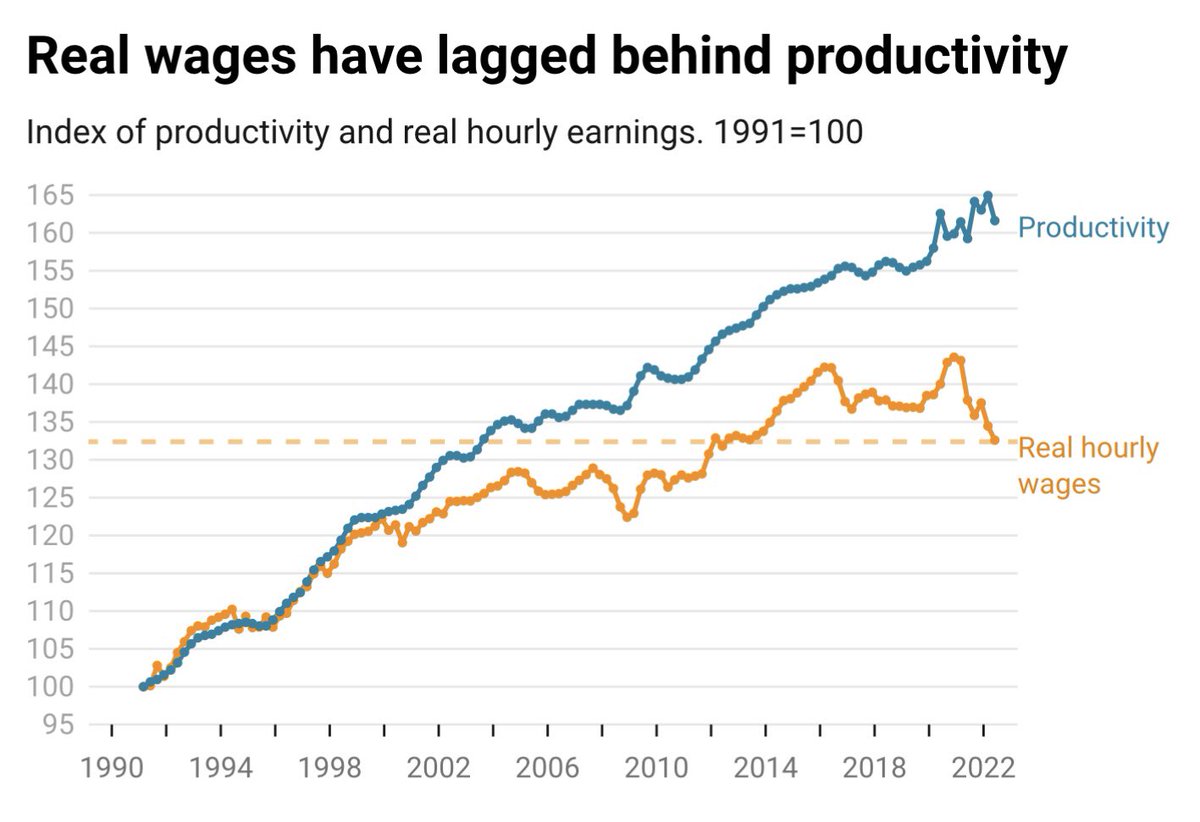
Every 6 years the ABS reports on average weekly household expenditures. The last data is 2015-16, next one is imminent. A few eye-openers into Australian life, circled in red and green. /1 https://t.co/weMO68aeD0
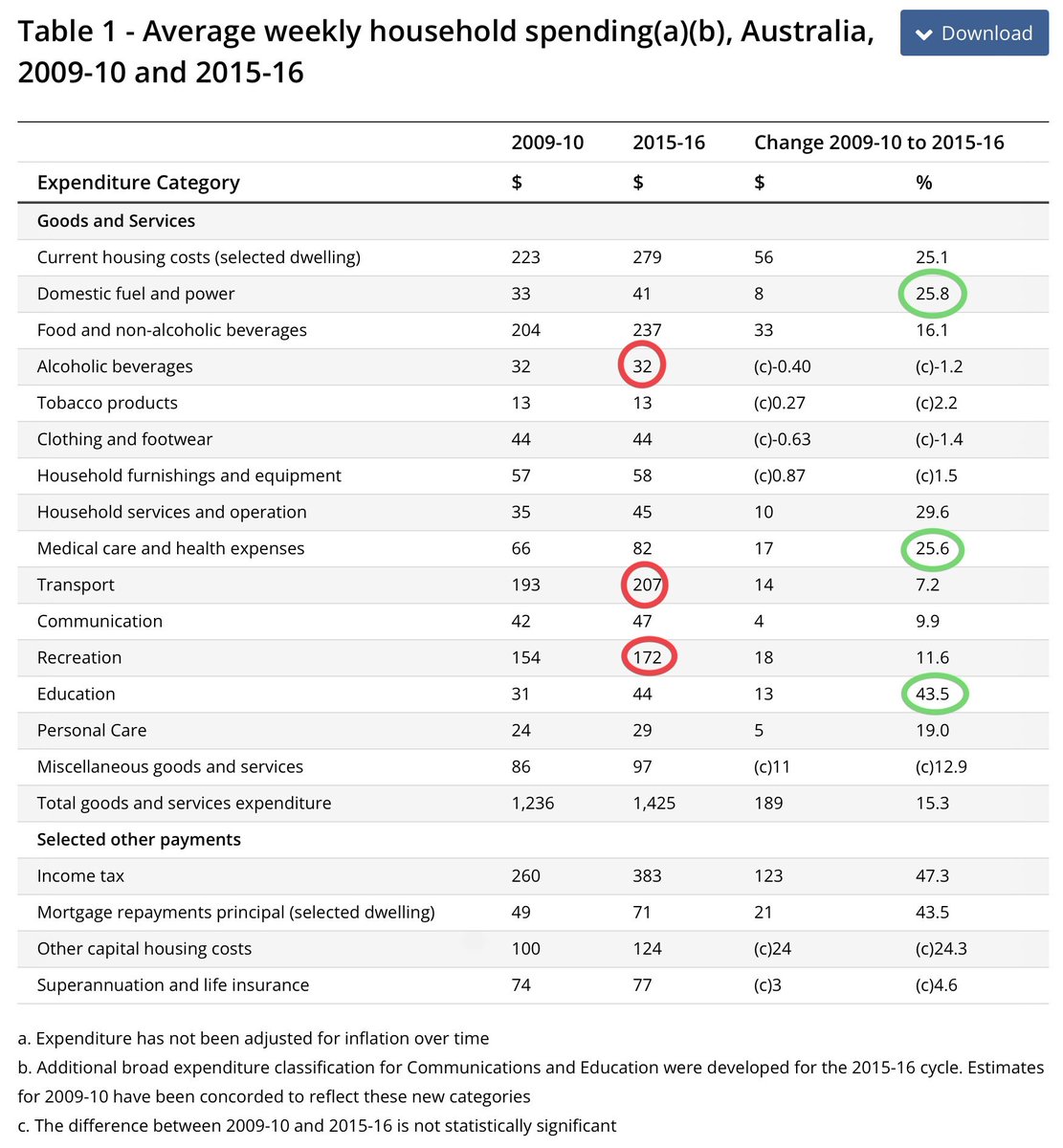
Australians spend as much on average on recreation and alcohol every week as they do on groceries. (In some age groups, it’s more.) Society is a high school. At the same time the dominant tool of the economy, displacement of people, is shown in enormous weekly transport costs. /2 https://t.co/hisZuUFQ8Z
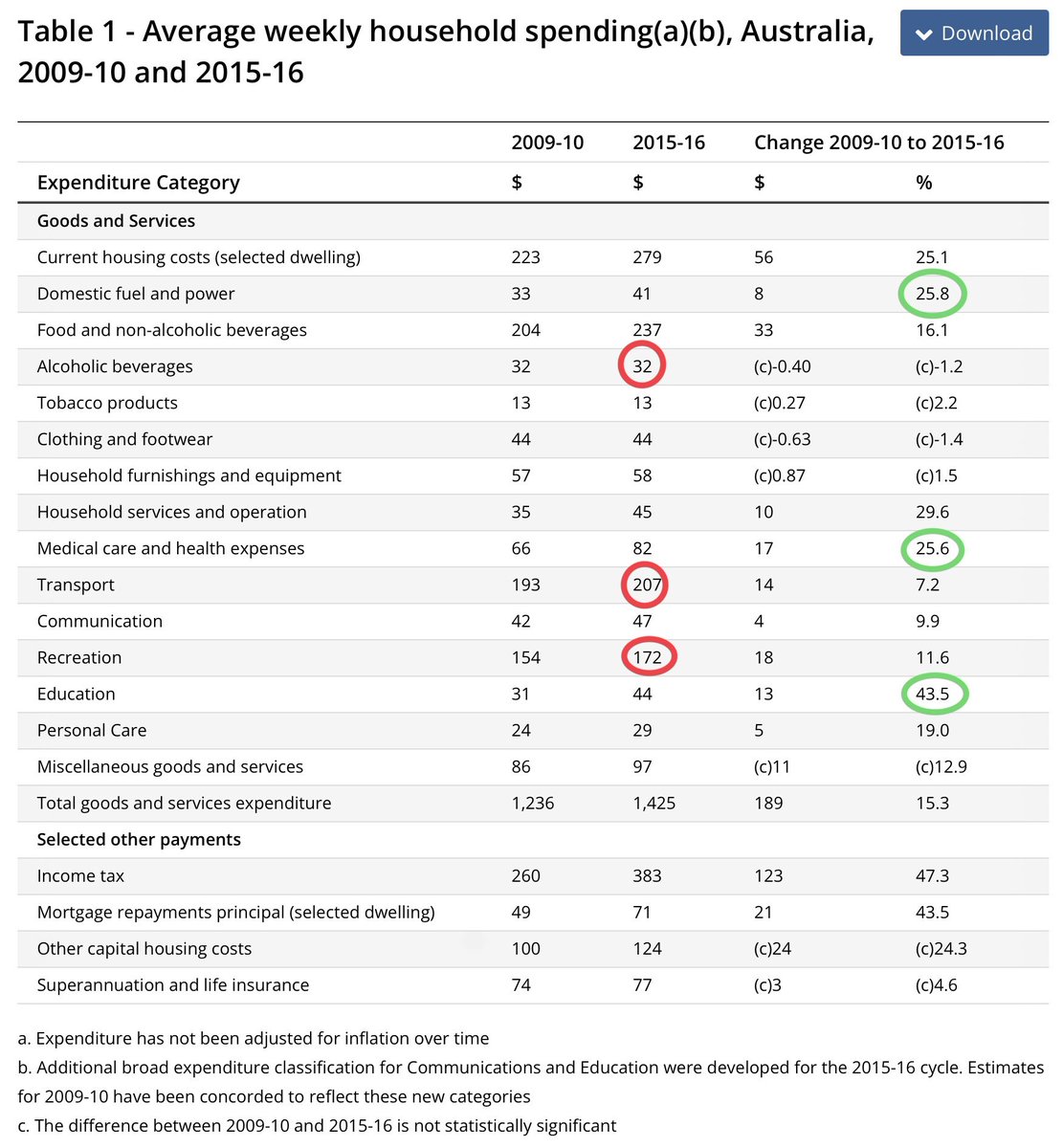
(Transport and household fuel and energy costs would be significantly higher by now, so energy is a growing drain on household budgets.) As for the ‘freedom’ apparently given to us by increasing privatisation and removal of the economies of scale of the State, look at the…/3 https://t.co/JmeK2a7qux
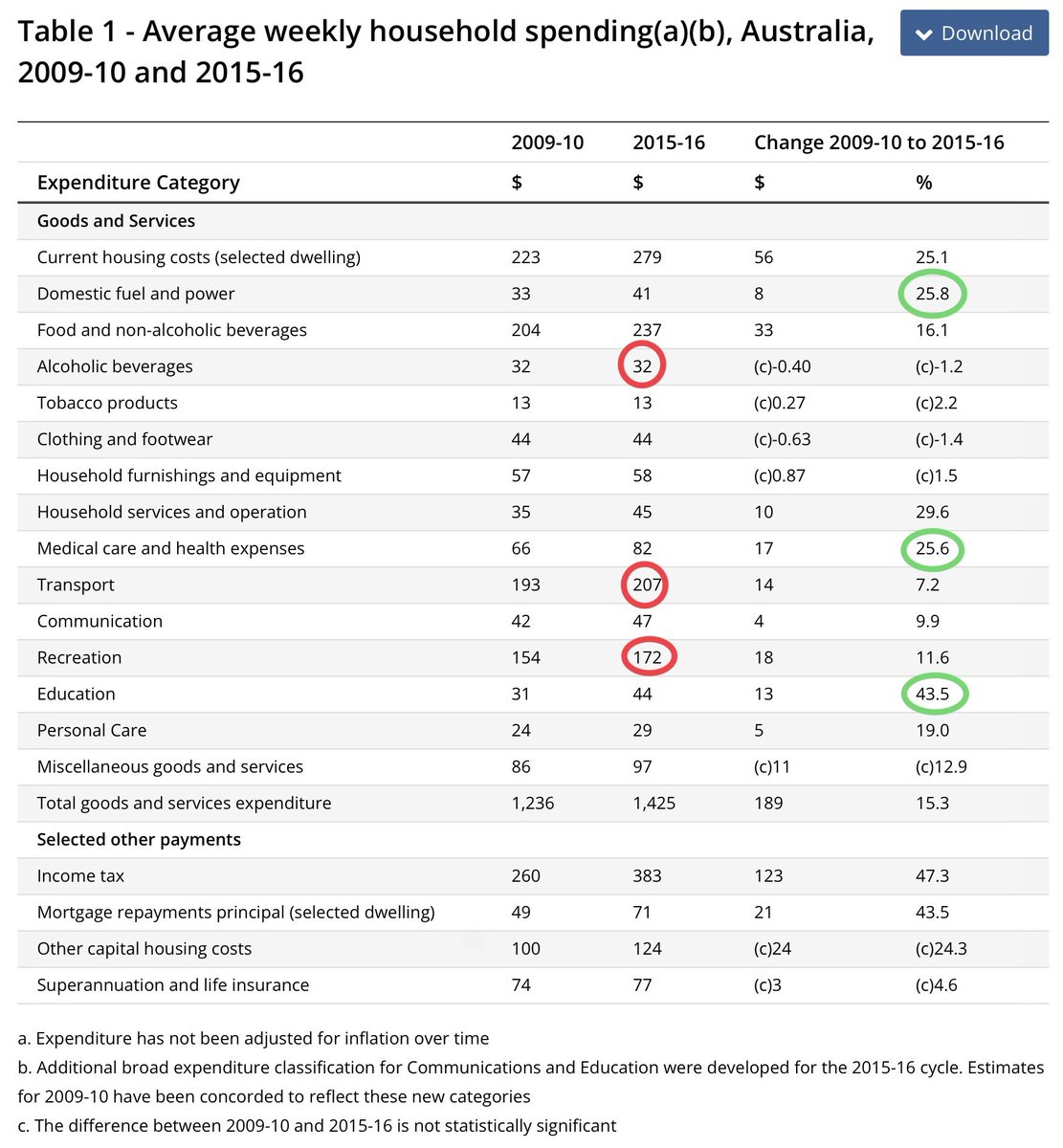
…growth in spending in the key social areas of education, health and energy, in the last column (green circles). Note again that energy component has exploded since this last survey, so is now much worse. All of this paints a picture of households saddled with the weight of…/4 https://t.co/qBI5TKW7x8
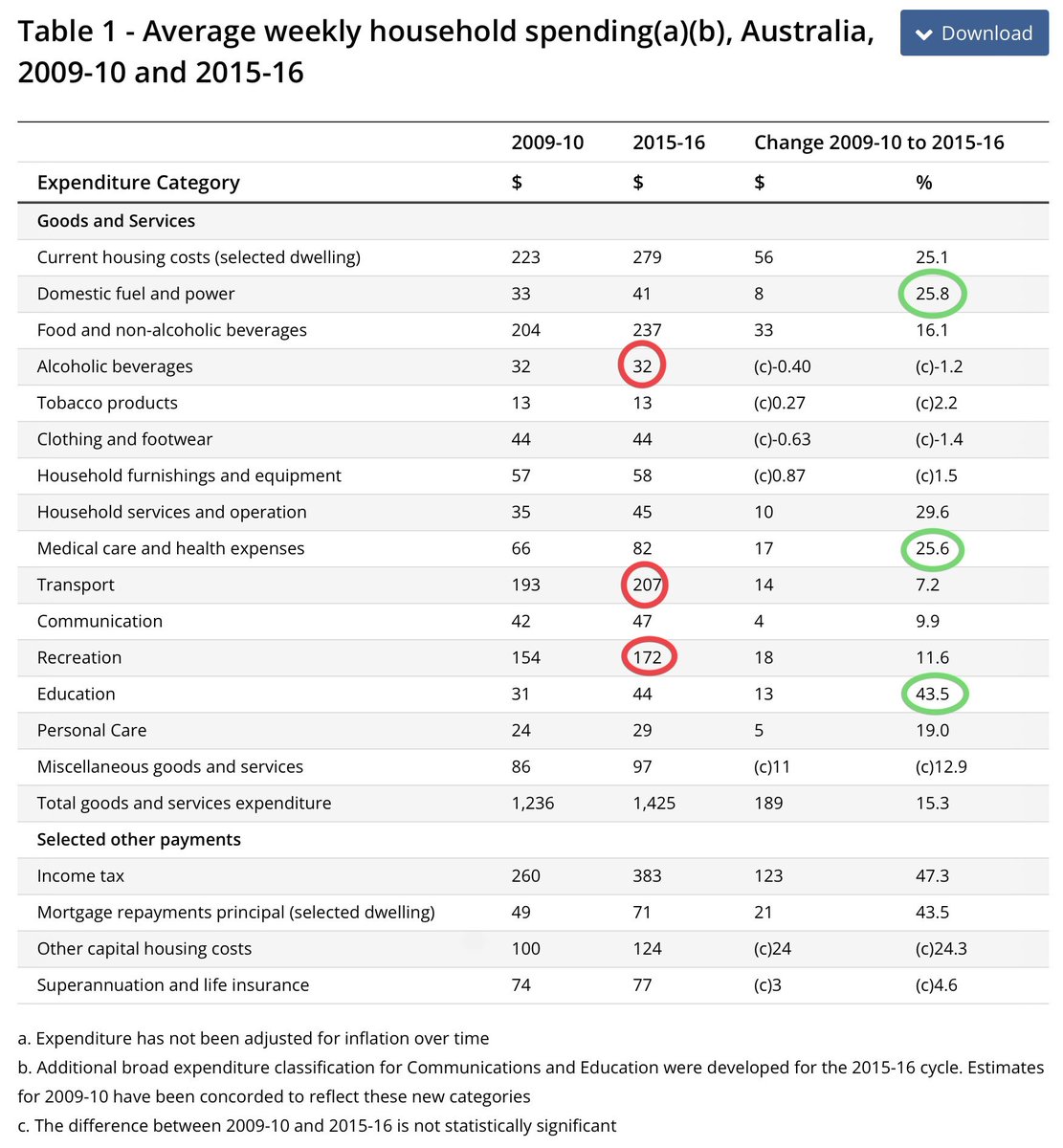
…ongoing cuts to public services by libertarian governments. And them managing this burden like teenagers manage money, spending big sums on recreation and booze. The two are the same phenomenon. The politics of individual lifestyle is the politics of libertarianism. /end https://t.co/8Uzi8QL613
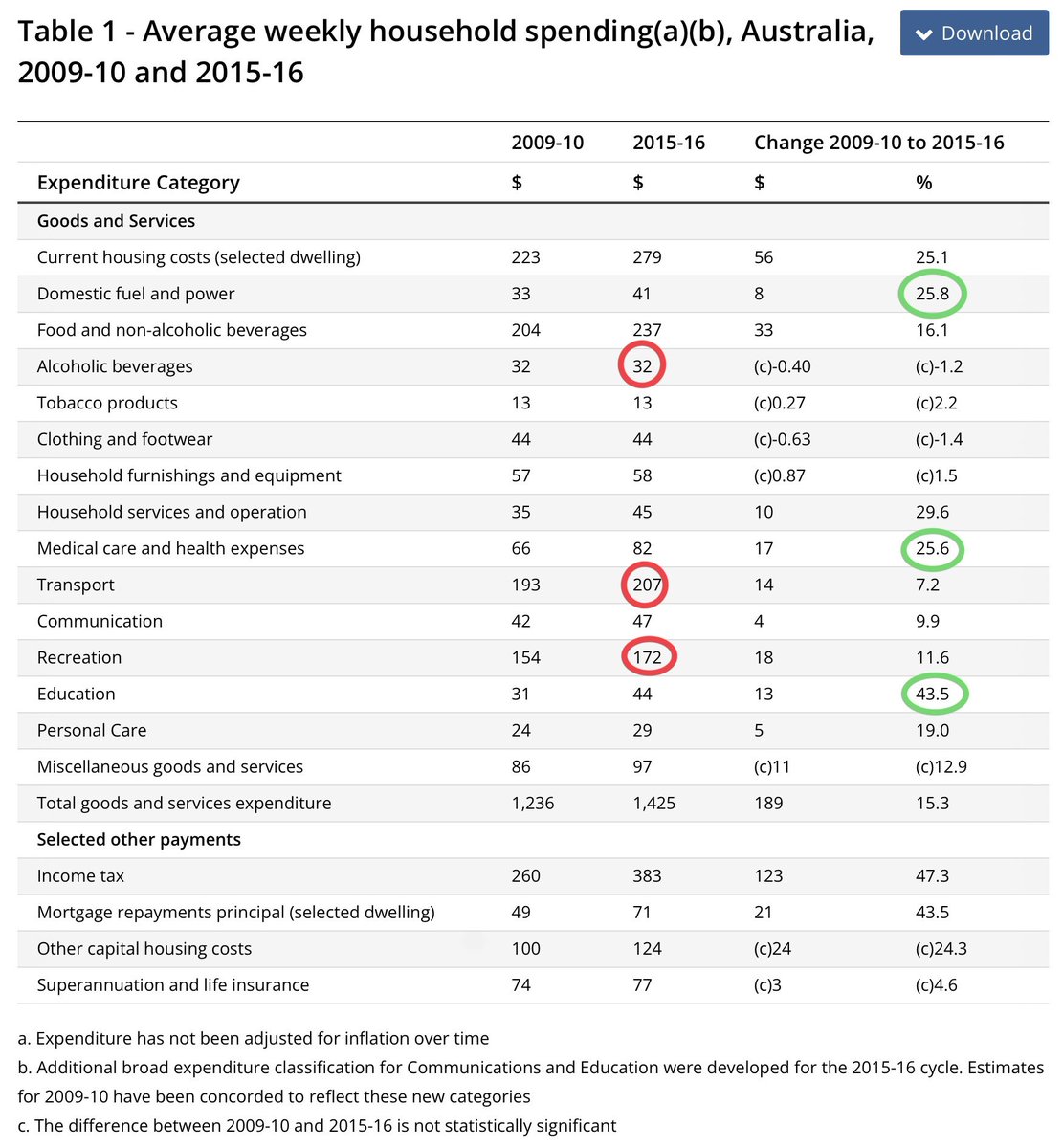
Monetarism in a ‘market economy’ floods the place with cheap money, so there are no consequences for low wages (people can take on more debt), or investing in nothing real, because there’s always more cheap money to bail people out. Until there isn’t. https://t.co/l1Z2BkjvXm
If concerts spread Covid? Simple, don’t go. Except the people who do go turn up in your schools and workplaces, the next day, to spread infection. ‘You do you’ assumes Australia is 25 million separate mini-societies, independent of one another. https://t.co/bhC4Sb9VNm
To clarify, the source Tweet was originally about mass attendance at gigs, Covid spread, and the level of accountability acts have for that spread. It was deleted only because I thought it sounded like it singled out one artist, when the tweet was actually about all of them.
h/t to @DrPops3 for this. This seems kinda huge. https://t.co/UgN6OwswF8
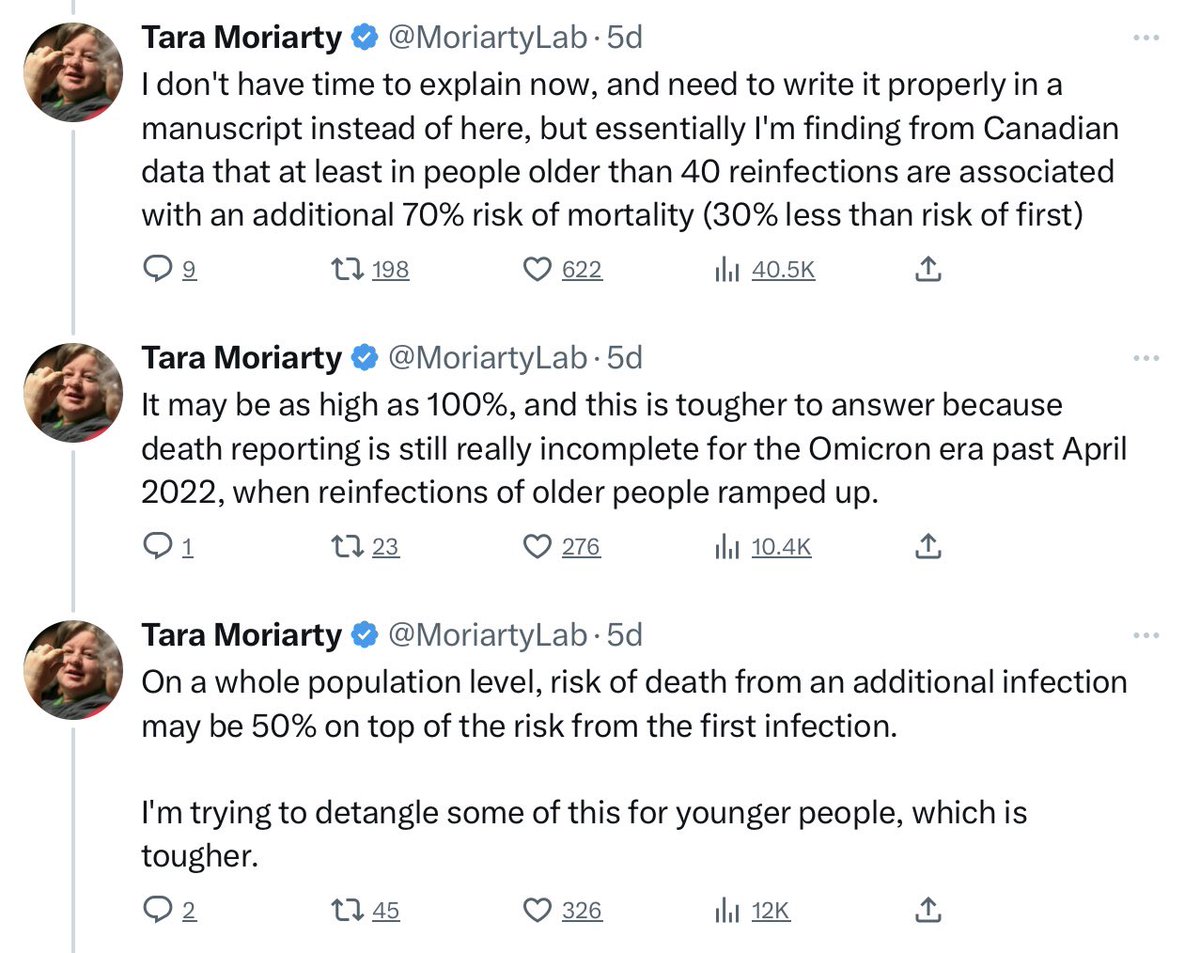
Applying basic risk management. If hybrid herd immunity is possible, better for me to let all the Infinite Covids be infected, and ride their immunity to freedom. If hybrid immunity is impossible, better for me to remain uninfected. Remaining uninfected wins in both cases.
Some blame lockdowns for a whole range of social, economic and health problems right now. Lockdowns only accelerated the collapse of systems that were already broken. What hid those breaks before was insane busyness. Hitting the pause button was the wake-up call.
We fixed the GFC by ‘going households’. Australians re-built electricity generation in this country in the past 30 years at the household level. Electrification of households addresses cost of living as well as climate change. Fast. The ‘economy’ is a dead-end. Go households. https://t.co/R4PVWXNTdq
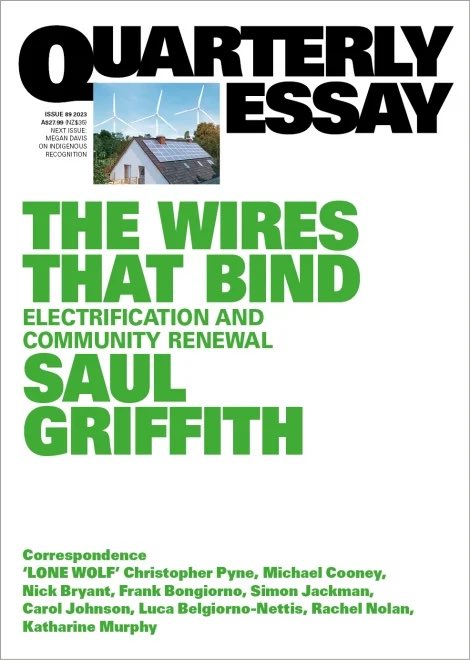
Climate change shows how our current way of running democracy will lead to our extinction. The action needed in the next 5-10 years won’t happen, if we retain a politics based on the team sports of placating human interests. Only a reality-and-outcomes based politics can do it. https://t.co/cfIe6jctjd
The thing that conservatives say is the bedrock of their politics - the family, the household - is also the thing all of their policies screw relentlessly. Attacking wages, working conditions, driving up the prices of these same homes. This is key to everything. Home. /1
The solution to our last economic crisis in Australia, the GFC, was to target these same households. Economy politics always targets support to business, and banks, because that’s why it was invented. It never fixes problems, it just bails out the pirates, ready for their…/2
…next plundering raids. But targeting households caused a dramatic (in size and speed) change to economic conditions. This is because, unsurprisingly, an ‘economy’ does well when people have money, and it doesn’t when they don’t. Shift now to the energy crisis. /3
Australians solved most of it already, over the past few decades. They ignored elected pollies brandishing bits of coal in parliament, and went out and re-built the entire electricity generation system in Australia. With their HOUSEHOLDS. As with the GFC, households drive…/4
…rapid and effective change. If we ignore the usual distinctions between ‘local’ and ‘global’ (another economy-driven fiction), and focus on putting power and resources in the hands of households, problems get fixed. And fast. No need to wait for anything to ‘trickle down’…/5
…from the plunderers. The electrification of households is a good example of how targeting households right now gives massive bang for the buck, driving down household costs while addressing major climate change goals. And creating thousands of jobs. We’re still thinking…/6
…in economy ways, that we need to just update our old centralised distribution system with solar farms and wind turbines, and then we’re done. We need to do that too, but it’s very slow. A household can go full electric in a matter of months, with subsidised programs. /7
Focusing on the thing the economy strips away as a first priority - ‘home’ - look at the fights over working from home, it’s offensive to the economy to grant agency to your own home - fixes nearly everything, because it ignores the fake divide between local and global,…/8
…which economy politics invented to justify continuously displacing people and resources from where people live. They were being ‘globalised’, said to be a necessary thing. Bollocks. The universe exists in every home and backyard. Re-direct our politics there. /end
The gap between discovering multiple sclerosis as a chronic disease, and identifying its infectious origins, was about 150 years. And we think Long Covid is as bad as it might get.
Buying your food at the local deep-frying takeaway is probably now healthier than any cafe or restaurant. Good to know for any of us who want to live long enough to be mowed down by Covid in aged care. https://t.co/rvrioemFcC
The theory that the old are worst impacted by SARS-Cov-2 because they haven’t had a lifetime of immunity-building infections. Or maybe the immune systems of the old are weaker, and succumb more easily to lethal viruses? https://t.co/uMU4Zvtc8M
Given our experience with climate denialism over the past 30 years, why have we spent this pandemic arguing the facts? We already knew that wasn’t going to work. Good people are always miles behind the bad, strategically.
If mammals don’t pass on immunity to their offspring, those arguing for infections to generate immunity are arguing for perpetual sickness? Using ‘we get hundreds of infections in our lifetimes’ as support. Itself just historically filthy air and water. https://t.co/mX3zHhUcGv
Not mentioned in the NSW election was the LNP’s attempts to alter 19B of the Workers Compensation Act. 19B says employees in a long list of ‘prescribed’ employment don’t have to prove they caught Covid at work. The employer has to prove they didn’t. Hopefully 19B is now safe.
The problem with ‘polarisation’ as a concept is that it’s the basis of our democracies. Government and opposition. Prosecution and defence. Contestation breaks through social conformity. Murdoch is damaging because he isn’t counterbalanced by progressives. https://t.co/SdfQP6NZxu
Another modern disguise the economy employs, labour hire. Old slavery, in modern drag. Unsurprisingly massively accelerated under the previous government. And mostly in the ‘service’ sector. It’s pantomime feudalism. Literally, not an analogy. https://t.co/uXNECQ0bvA
Attributing disruption to supply chains in 2022 to Covid infection. But implying this is over. The disruption has just moved into peoples’ lives, still being infected, but with supply chains restored. The ‘economy’ (i.e. do nothing) wins again. https://t.co/4mam6yjSx0
Change the lens. Society is not people processing ideas. Or even doing ‘politics’. Society is what it always has been, people acting socially. Beliefs, facts, and politics are just the raw materials. People are creating and maintaining groups and hierarchies. Status. https://t.co/AayQgn3gEb
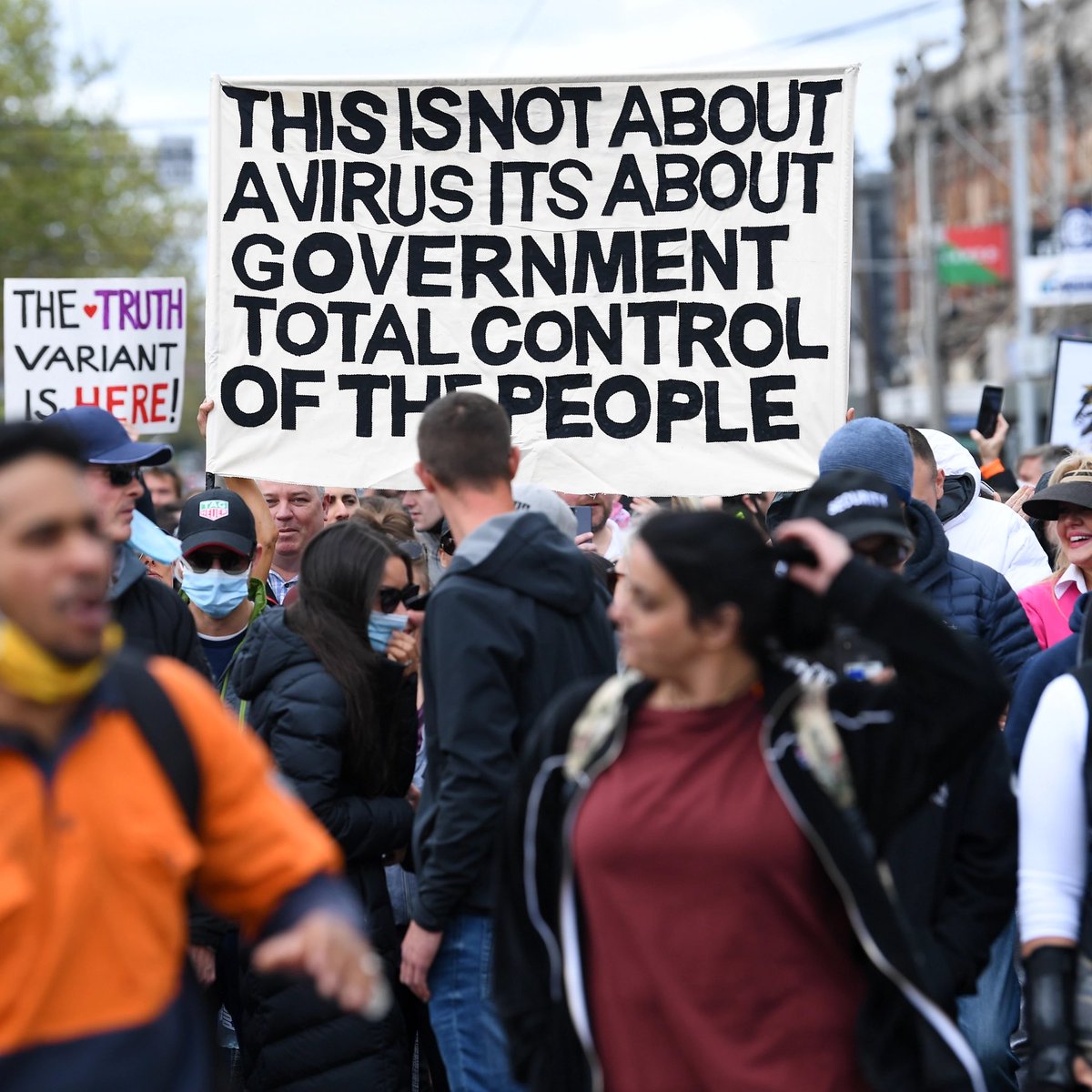
The reason politics looks so ‘polarised’ is because we’re using our social structures to make decisions. That’s what social media has accelerated hugely. Decisions that should be straightforward, practical jobs to get done, now have to detour through the treacle of…/1
…social group dynamics. What I call ‘team sports politics’. Even in my childhood, if Australia needed new infrastructure, an assessment would be made and the most political it might get would be debate over the best of the offered options. Today that sort of decision is…/2
…immediately re-routed by libertarian think tanks and media organisations, and social media, into endless culture war team sport debates that have nothing to do with any of the issues at all. The issues are only totems, for different social groupings in the battle. They…/3
…use them as fodder in prosecuting their own status, in social life. The relevant experts become standard bearers of the different groups, and influencers the same. None of this would happen if we didn’t hold the ridiculous idea that a democracy is run by ‘the people’. /4
It’s run FOR the people. Not by them. That was one of the libertarian tricks, to ‘flood the place with shit’, to bog all change to the status quo down in interminable arguments between warring social groups. Not only does it stall change, it makes them a lot of money, via the…/5
…media networks and social media platforms they own, where all of this pointless and irrelevant ‘debate’ happens. Representative democracy was set up, deliberately, to prevent most of us having to know much about anything at all relating to how the country is run day by day. /6
The fact nearly everybody now suggests otherwise is only a libertarian victory, that they’ve managed to reframe the entire politics of our time in this way. They stripped society away, so now every new bit of broken society triggers some new debate, which tries to reinvent…/7
…some small part of the social coordination the libertarians previously removed. We all argue, all of the time, because the society that used to remove the need to have even a discussion about topics, let alone debates, is gone. The institutional engine room of society,…/8
…that used to run everything professionally and quietly, out of our sight and mind mostly, has been under assault. The libertarians are laughing at us, as the arguments which inevitably follow get interpreted as ‘democracy’ at work. It’s more like a train without a driver. /9
Our social lives and relationships shouldn’t be being used to try to run a country. Social life is all about conformity and status, not about calmly and expertly assessing decisions. /end
Covid still isn’t one of those ‘conditions’? https://t.co/TuohhKriy1
A friend today said ‘why are you still wearing a mask? Do you have Covid?’ Genuinely puzzled. It was nothing to do with Covid, it was all about not following the social norm of not masking. Why was I not doing what everybody else was doing? That’s how societies work.
I would place a large bet that when crunch time comes on tax, the massive boomer entitlements will be ‘grandfathered’ for electoral reasons (if the boomers are still living), and Gen X and younger will again cop it in the neck. https://t.co/BxqzwBpFrt
@EdConwaySky makes the excellent point that climate action isn’t just adding renewables to our lives. It’s an entirely new Industrial Revolution. That’s the best way to sell it to the existing status quo, as a new opportunity to make big money. https://t.co/JtvjHuzBlE
Don’t we all get colds and flu our entire lives, never developing immunity? Aren’t they roughly the same severity, throughout our entire lives? Why did our immune systems get to this point (if the ‘exposure’ theory is correct), and then stop? https://t.co/yV5nY6kYxg
Remember health alerts for other infectious diseases? They never stopped. Brings into stark relief the unprecedented public health vandalism that our Covid response is. https://t.co/v97EAfK2jq
Immunity may be the wrong model to deal with infectious disease. Domestication is the right one, I suspect. There are powerful insights in Ewald’s work. Immunity alone strips away the entire ecological context of host and pathogen. /1 https://t.co/30brCwVuZN
Even all immunity is likely just a meta-stable, ecological equilibrium state between our own microbes and pathogenic microbes. The current fashion for ‘exposure’ immunity, the idiot idea that repeated uncontrolled infection creates immunity, again completely ignores…/2
…the ecological context of the host-pathogen relationship. As Ewald describes in this talk and in his writing, you will get entirely different outcomes, depending on the context of that infection. Often making simple and even inexpensive contextual interventions, like…/3
…fly screens for malaria, or clean drinking water for cholera, will not only prevent disease, it can in turn support milder variants, a domestication of the pathogen itself. Because pathogens will always vastly outnumber us, Ewald believes ‘living with’ them…/4
…is not just allowing ourself repeated exposure to them. (It’s hard to find words adequate to describe the stupidity of that idea.) It’s understanding the specific ecological context of the host-pathogen relationship, and designing a fully contextual response that will…/5
…foster an environment more favourable to lower-virulence pathogens. The more nuanced exposure fans will say it’s vaccine-medicated exposure, but a vaccine is just one of many possible ecological interventions. Vaccines are not pharmaceuticals, they’re ecological agents. /6
The push for clean air is vital, with Covid. But we may need to think even more broadly than that, towards an ecological coexistence with SARS-Cov-2 designed to foster a much lower virulence. That will include contextual measures like clean air, better vaccines, better…/7
…building design etc. It’s economic politics that wants this all to be just a sterile dialectic between hosts and pathogen, mediated by immunity. To be something you can throw a pharmaceutical at, to allow economic life to continue as it is. /8
The whole basis of ‘the economy’ is to de-contextualise everything. That’s what ‘globalisation’ means, stripping away all context, to allow the unfettered flow of money, people and resources through a fictitious ‘market’. It’s a biological fairy tale. It not only creates…/9
…lethal pathogens stripped of their previous ecological resistance mechanisms, by destroying habitat, it then fosters the further virulence of these pathogens by blocking any contextual, ecological measures to try to bring them under control. Zoom out even further, and…/10
…this is public health common sense. Communities with cleaner water and air, less crowding, more light etc. are healthier communities. Health is ecological, contextual. The economy crowd, ignoring this, throw it all back on our immune systems, which are under assault. /end
Mandates give people permission to do the right thing. School camp this week, relented and let our youngest go because into our 4th year of this, didn't want to keep denying them shared experiences. Is now sick. Thanks to the school and government not doing basic duty of care.
thank you
Western kids once had this sort of independence. Before neoliberal/libertarian politics implemented you do you, at scale. It takes a community to raise a child, as the saying goes. The libertarian morons see community as oppression. https://t.co/OCaNRaKHxp
This is a fascinating conversation. https://t.co/JW4BWIvZNo
This is such an important topic. Are infections which cause significant and relatively long-lasting immunity actually rare as hen’s teeth? The two most evoked examples, cold and flu viruses, seem to create little if any immunity. Have a look at this…/1 https://t.co/OddWThavhj
…from https://t.co/mTbzbMXZQ8 I think I’m reading this correctly, infection with these common viruses leads to greater susceptibility to infection, not to greater immunity over time. (@NjbBari3 also an interesting section on viral load dependency). 2/2 https://t.co/rvqvcOedoq
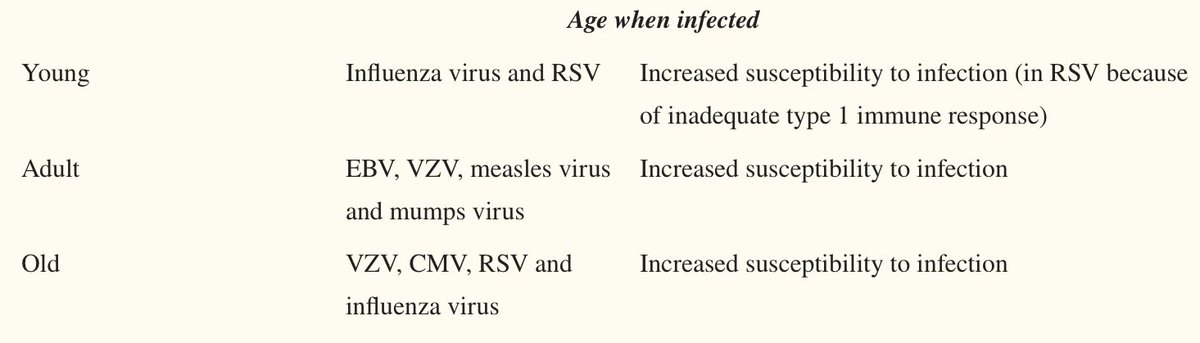
The hybrid immunity idea - what other examples are there of repeated infection causing a cumulative increase in immunity? Infection-derived immunity seems to be an all or nothing thing, not cumulative.
I’d wager he’s not in one of the hospital wards the rest of us are expected to use, where the most likely outcome of a hospital stay is Covid infection. https://t.co/qIEVS7bvcZ
Life in a sloganocracy. Hit me again this week, reading debates about infection-driven immunity, or ‘exposure’ immunity, hybrid immunity etc. In a sloganocracy, what guides community life is no longer government and its associated institutions, but slogans. /1
Slogans designed to make people rally just enough to create some of the social coordination that was lost when the old institutional structures were damaged or removed. Very similar to urban myths, but generated by politicians and their spin doctors. /2
For example, I often talk to friends about the shift to renewable energy. I’ve lost count now of the number who won’t budge on it, because the entire topic for them is reduced to ‘doesn’t work when the sun doesn’t shine and the wind doesn’t blow’. The LNP slogan. /3
It’d be easy to just call them stupid or gullible, but societies have never operated by all of us being expert in everything (that’s another libertarian fantasy). They’re relying on what they’re being given to provide order to their thinking and lives. A slogan. /4
‘Stop the Boats.’ ‘Debt and Deficit’. ‘You need to have a go to get a go.’ ‘Just like the flu.’ ‘We have to live with this virus.’ ‘The economy’. ‘Labor always taxes and spends.’ Etc. Look back on the years of conservative rule, and weigh the number of actual policies they…/5
…introduced (virtually zero), to the number of slogans they introduced (a long list). Slogans are being used to structure a society that was already structured, but is now fractured into tribalisms, rallying around these slogans. The same thing happens everywhere…/6
…’the economy’ (itself another slogan) has replaced societies. You need something to coordinate and order people. So back to immunity. Even within science now you see debates about repeatedly infecting people to build their immunity over time. Immunity as a muscle. /7
A lot of this is again just based on slogans. The vague hand-waving assertion that this is how things have always worked, kids have always got sick and it builds their immunity over time. But if you ask people who say this to provide actual examples, the conversation stalls. /8
What are the viruses and other pathogens we’ve aways all been (allegedly) repeatedly infected with, that led to us moving from severe disease to mild disease, over the course of our lives? Colds and flu? Aren’t they more or less the same severity our entire lives? /9
It certainly doesn’t stop us catching them. Colds often 3 times a year. And these are certainly the vague hand-waving experiences the people who say these things are referring to, because these are the main (almost only?) infectious diseases any of us get repeatedly. /10
This is how a sloganocracy works. Take some poorly defined, vague experience we’re all familiar with, and weaponise it. ‘You can live with Covid, just as we’ve always lived with the flu’. Actually most people I know have rarely had the flu, not because they had it…/11
…500 times as a kid and now they’re immune to it. But because we avoid catching flu, in multiple ways, by isolating the people who have it, vaccinating as widely as possible and having strong and clear messaging about risks, in a flu season. /12
Most people with the flu are too sick to come to work, but if they tried, they’d be sent home and told to pull their head in. Now we can all come to work with Covid, and the greater sin would be to even question it. We’ve been conned. When you see it, you can’t unsee it. /13
Libertarians have removed nearly all public policy and services, and replaced them with slogans and spin. The greatest, master-slogan is of course ‘the economy’ itself. Find any public issue right now that doesn’t have to pass the test of ‘the economy’. Good luck. /end
We’ve always lived with pandemics. (April Fools.)
The US and UK leading the developed world in libertarian economy politics. In social collapse. The fact these damning mortality stats are still dire even without Covid in the US shows the problem was pre-existing, political, and also the cause of the massive Covid deaths. https://t.co/aHUowi8ods