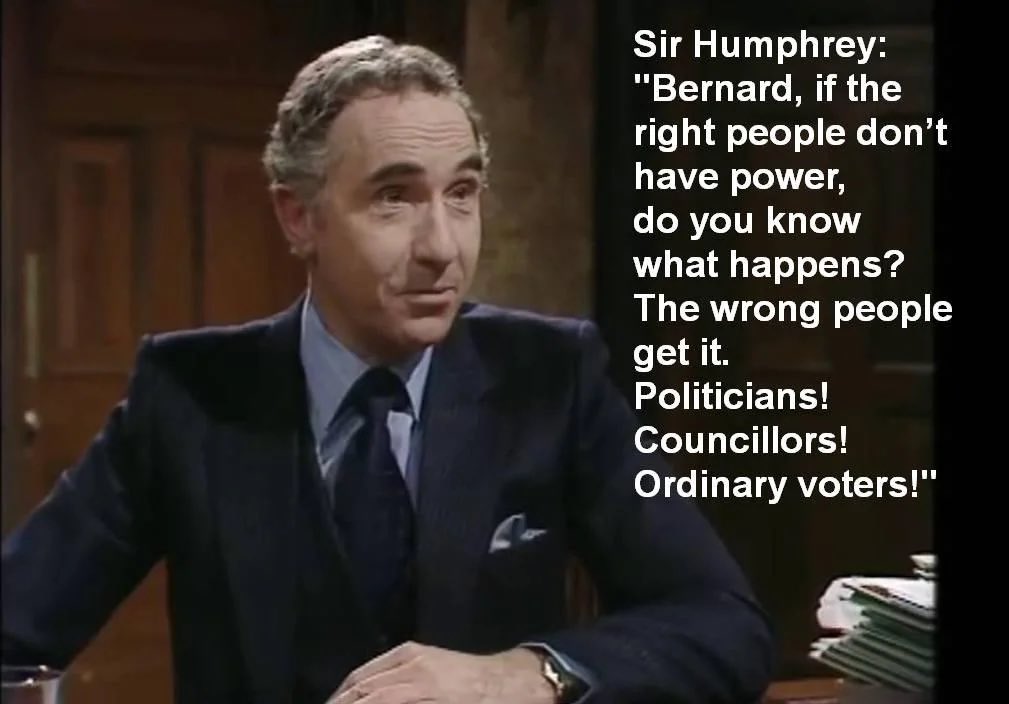
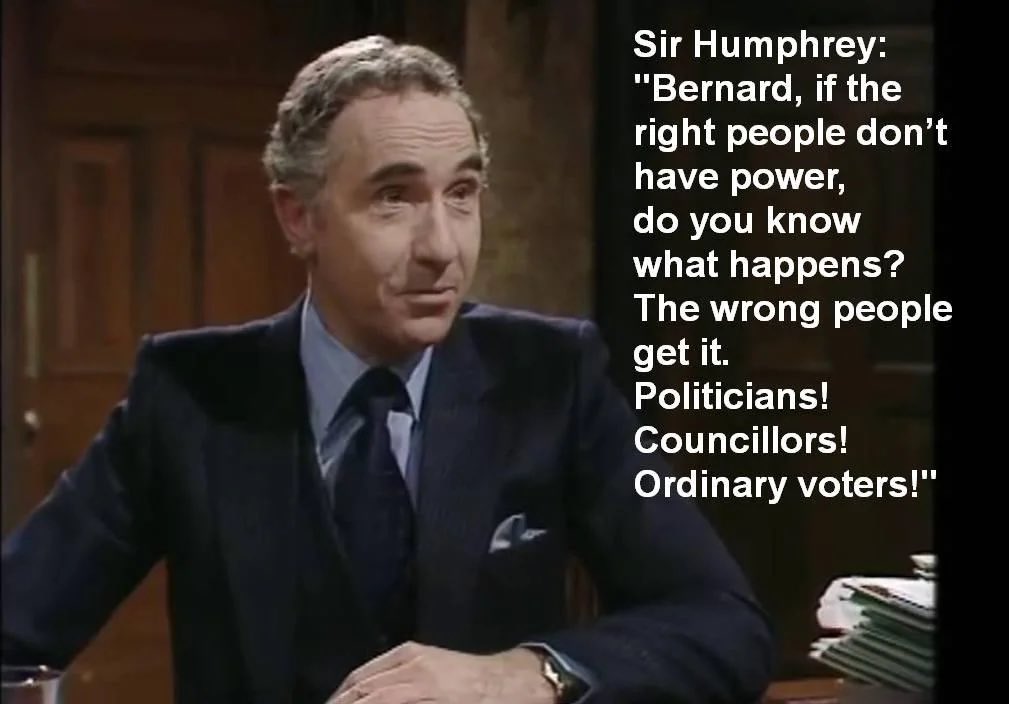
Compare and contrast Sir Humprey here with the revolutionary ‘the people’ narratives coming out of the US and…
Compare and contrast Sir Humprey here with the revolutionary ‘the people’ narratives coming out of the US and elsewhere.
Is Sir Humphrey anti-democratic? Absolutely no. We need to understand the fundamental difference between post-revolutionary societies, and UK society.
/1 https://t.co/EJdYWjktLc
The most fundamental characteristic of any society is whether it’s experienced a major revolution. Not whether anybody is Left or Right, or authoritarian, or capitalist, or any of the other trending terms.
Revolutions are like asteroids hitting Earth. They smash and level.
/2 https://t.co/CDihXUT8Xe
Most major powers in the world today are post-revolutionary powers. China, Russia, the US, France, most Western democracies (the countercultural revolution).
They all have equivalent features, which hugely distort our understanding of democracy.
/3
Their revolutions destroy centuries of customs and traditions, that stabilise and run societies. In the aftermath of the revolution, desperate measures are required to somehow order the social chaos.
So they employ universalist instruments, like written constitutions.
/4
And Bills of Rights, declarations of independence, etc. They’re like Old Testament tablets brought down from the mountain, sacred texts of the new republics. Creeds replace custom and tradition.
But at that they fail miserably. Always.
/5
Customs and traditions are emergent over centuries of human life, they’re what worked before and was adopted as a way forward. Tested by generations of humans in real-world situations.
Creeds are abstract idealisms. And so post-revolutionary societies fight. Always.
/6
Fight over what the idealisms, the creeds, mean in the daily struggles for existence, in ordinary everyday life.
It’s like permanent revolution, everybody evoking ‘the people’ in an attempt to reconcile everyday life, and the creeds.
/7
Which never ends because the gap between the creeds and everyday life is so enormous that no amount of debate can ever close it.
Only continuous living over centuries and generations can figure out how to fit principles to everyday life. Customs and traditions.
/8
So today, we see the US doing what post-revolutionary societies always do. Fight and argue over what their society is even about. Those fights and arguments won’t end, because they can’t.
No universal creeds can replace the evolution of custom over generations.
/9
The UK doesn’t even have a written constitution. It operates still strongly using custom and tradition, which functions to dampen present-day fads and enthusiasm in favour of long-
Revolutionary societies see Sir Humphrey as a ‘bureaucrat. As obstructive red tape.
/10
The misunderstanding is fundamental. Sir Humphrey’s civil service is custom and tradition protecting the society from the whims and fantasies of present-day popular tyrannies.
Customs and tradition are like societies’ autonomic nervous system. Revolutions destroy them.
/11
We’re all mostly living in post-revolutionary societies, still arguing and fighting over how we should live together.
That won’t end. Only the UK knows a different kind of life, and populists there try to stage revolutions. They don’t succeed.
/12
Populism has damaged UK life though, its customs and traditions. All revolution is populism. It’s just one of the last stable societies to resist it.
Populism always prevails in the absence of threat. Revolutions come, and we start all over again.
/end