Once you see that all human life is social, and that the root of that social life is imitation, you can't…
Once you see that all human life is social, and that the root of that social life is imitation, you can't unsee it. But the reason all social life (and thus pretty much all of life) is about people copying other people is counter-intuitive. It's because we're all different. /1 https://t.co/jn0sALPC56
If we were all the same, we wouldn't need to imitate one another, we'd all be doing exactly the same things. It was Gabriel Tarde who dared to be one of the only thinkers to ask - what if the root of all things is difference, rather than identity? /2
Most of our beliefs and knowledge revolve around some form of identity. A = B. 'This collection of things is actually identical to this one X'. Etc. Tarde asked what the world would like like if you didn't do that, if you allowed all things to be irreducibly different. /3
And that's when he realised the fundamental role of imitation. (Not just amongst humans, but in matter itself, a much bigger topic.) To use humans as the example, if we are all fundamentally different, the only way we have to create any order is to imitate. /4
Despite the prejudice we tend to have that to imitate or copy is to be derivative, Tarde saw that we do it because it's the only way you can respect each thing's individual unique character, while allowing it to work with others. Anything else is 'A=B', reductive. /5
'Imitation is the highest form of flattery' sort of captures his insight. To imitate is to retain your own individual sovereignty of self, but allow it to emulate what somebody else is doing, to create a pattern that extends beyond either individual alone. It's a creative act. /6
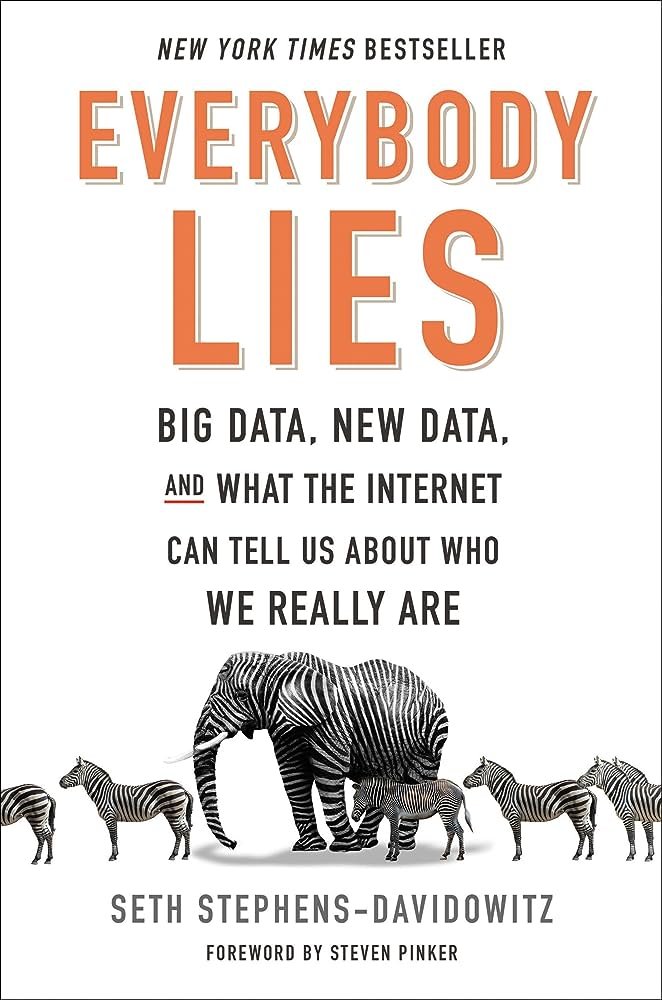
Again, the alternative is to say 'sorry, you're just a derivative of something else, an automaton whose essence is somewhere else'. This book looked at this from the other direction, exploring how everybody lies, all of the time. But it's not so much that they're lying. /7 https://t.co/PPEY4mkQ0U
They're imitating. Meaning they're pretending to be like somebody else, while recognising deep down that they're not. To create order, to create agreement. I've Tweeted a lot about how this imitation then becomes a rivalry, to create status hierarchies. Team sports. /8
A competition inevitably begins, to decide who or what will be the model to imitate. Which fashion, which idea, which trend, which 'influencer'. Humans never act individually, even those who embrace individualism are as fanatically social as everybody else. /9
They just want their team to be the winning team. To be what everybody else imitates. No politics of individualism ever acts in that way, amongst its fans. They're as hierarchical as anybody else, and desperately keen to impose restrictions on you, who aren't on their team. /10
Love and relationships the same, we imitate one another in subtle and not-so-subtle ways, until sometimes a day is reached where the charade becomes obvious. Where the person you thought you were closest to in the whole world suddenly seems a total stranger. /11 https://t.co/bblBzwtoUb

Why does this matter? It matters because every part of human life uses this same mechanism. Love, politics, work, family, friendship, science. All of it. All of it is about imitation. Where roughly 5% of people provide the model for 95% of others to copy and follow. /12
That 95% aren't zombies, they still choose who they want to imitate/emulate. Their loyalty can shift in seconds, as we see in fashions and fads. Right now 95% are imitating 'living with the virus', because it's what nearly everybody else is doing. Nothing to do with facts. /13
Or misinformation or disinformation. Humans don't use information to decide how to act, they use social rules about who they trust, to imitate. If everybody is doing one thing, that will be the reality. 95% of people don't want to stand out from the crowd. /14
That protects societies too, prevents us needing to reinvent civilisation every day. To figure everything out for our individual selves. We trust others to do all the things we don't have time to do ourselves. I wrote this thread to continue a suggested shift in approach. /15
To recognise that change comes from imitation, and if you want people to act and think differently, flooding them with any amount of information is useless. You need to provide them with something to imitate, to emulate. To persuade, to seduce. /16
That's what others who are winning already do, frame things in ways that makes even the most ludicrous behaviour and ideas something others will want to follow. Good people far too often just assume their good ideas will carry the day by themselves. /end https://t.co/i27aFh36KV