We’re obsessed with ‘being there’. Travel is just one aspect of this wider cultural framework. Our…
We’re obsessed with ‘being there’. Travel is just one aspect of this wider cultural framework. Our relationship to place carries with it an assumption of what place means, and for us it means ‘being there’. But it’s not actually clear what ‘there’ is, or if it even exists. /1 https://t.co/wUokBjpSfd
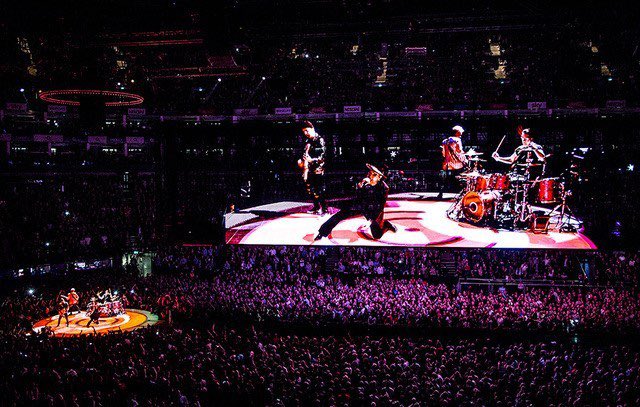
A concert with big screens, almost all shows and sporting events use these now. You go to the concert to be there, and you end up watching much of it on the screen, unless you’re one of a handful near the front. Almost certainly you would see and hear more at home. /2 https://t.co/uDLFW4MsEl
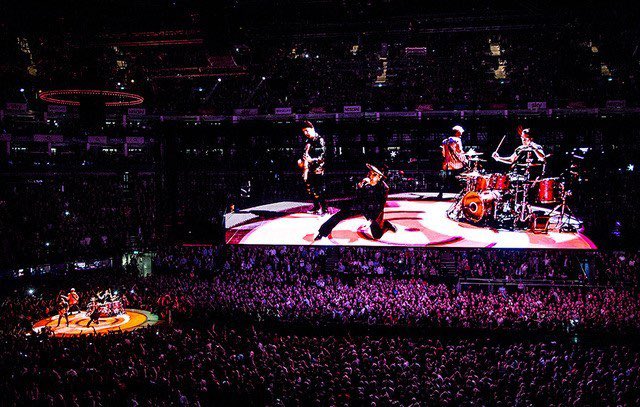
Home watching a telecast of the same event, with multiple cameras, mixed sound etc. What’s important here is the need to have these huge screens at events. It’s an open admission most there can’t see much without it. So who is more ‘there’? Who ‘experiences’ more? /3 https://t.co/b4z0PaKAf6
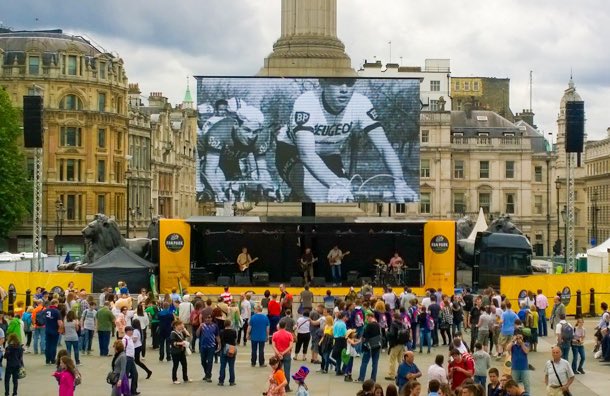
There’s no competition. The people at home with the virtualised event see and hear more, lots more. They experience more of the event, from multiple perspectives. This is where our fundamentalism comes in. /4
Because I bet nearly everybody will say ‘yes but it’s not the same as BEING THERE’. And that’s true, it’s not the same. But in what way is it not the same? In what way is not being able to see or hear most of what’s going on a more authentic way of ‘being there’? /5
Or take travel itself. You can travel anywhere in the world right now, using Google or Apple Maps or their equivalents. Anywhere, places you would otherwise never be able to access, like the peaks of high mountains, or the middle of the Pacific Ocean. /6
And you can experience those places from multiple angles, or elevations, even now in VR. The fundamentalism of place we use says this isn’t authentic ‘being there’. Again though, firstly you could never access many of these places, ever, in-person. /7
And even those you can, why is momentarily having your body in proximity to this place a more authentic ‘being there’ than looking at images and hearing sounds captured there, often from perspectives you can’t even access there in-person? /8
It seems the most obvious thing, that the authentic ‘being there’ is your body in close proximity to somewhere. But that ignores mediation. All of our experience is mediated experience. For example you could meet a celebrity in-person. /9
But an email from them on some topic would bring you infinitely closer to them, to ‘there’, if we mean the essence of who they are. Only a few short lines of text will give you greater authenticity of connection than any number of in-person encounters. /10
A great painting will show much more engagement, reveal much of the true dynamics of a person or place, than a quick photo. It embodies interaction, engagement. And that’s what we forget about place. It’s an interaction, not proximity. A mediated interaction. /11
That mediation can take all sorts of forms. Images, sounds, interpersonal relationships, etc. I like car racing, and can directly compare the experience of ‘being there’ in person, with watching it on TV. Hands down I feel more ‘there’, watching on TV. /12
The number of ways a modern coverage of an event mediates the experience completely dwarfs what you can experience there in person. You go to the track and yes it’s louder, smellier, you feel more adrenaline. But for most of the lap you’re watching the screen. /13
Trying to figure out what’s going on. You see the cars for a few seconds each lap, in-person. Proximity is our fundamentalist passion, the one that drives the entire travel industry. But travelling to a place is mostly a naked, unmediated experience. You don’t belong there. /14
You don’t share any of the mediations locals use to give that place meaning, for them. You’re literally just sight-seeing, the most emaciated form of mediated experience. Yes you can be a traveller who tries to multiply those mediations, by research, by engagement when there. /15
That’s our fundamentalist obsession again though, we’re anxiously, desperately trying to find the most ‘authentic’ presence. We want the Paris we visit to match the Paris of our imagining. But it ends up being a closed loop, between our idea and the location. /16
Why we take selfies there, to say ‘here I am, in that image of Paris we all have’. It’s all much more driven by imagination than experience. I think comparison to human relationships makes this even clearer. We might all desire and admire thousands of people. /17
Most of us don’t try to ‘experience’ all of the people we desire or admire. You’d be locked up for stalking. We admire or desire them, from an appropriate distance. Things we are distant from are only appropriately admired and experienced, from a distance. /18
‘Being there’ in the proximity sense is equivalent to stalking a place. We don’t do it for human relationships, why do we think it’s ok for places? These places are homes. How privileged we are to assume we have a right to just turn up in other peoples’ homes. /19
If strangers wandered into your home right now, I’m sure you’d have something (probably rude) to say to them. It’s our old imperial DNA, ‘the world is my home’. No it isn’t. Proximity is our blind spot, our imperial need to *capture* a place. To ‘be there’, in-person. /20
There are many ways to ‘be there’, many more than just proximity. We realised this for human relationships aeons ago, monogamy is still a pretty dominant model, because promiscuity brings all sorts of complications not conducive to stable societies. /21
We’re incredibly promiscuous, with place. The idea of a monogamy of place is the same as recognising again what ‘home’ means. A commitment to a place, recognising that the grass isn’t really greener everywhere else. That’s our imagination fooling us. /end