Anthony Albanese seems to model himself on Bob Hawke, but to me he seems more like Tony Blair. For both…
Anthony Albanese seems to model himself on Bob Hawke, but to me he seems more like Tony Blair. For both though, longevity was key to their thinking and success. But at what price? Here’s Blair’s 2021 piece outlining his ongoing political thinking. /1
https://t.co/RgvdKUXaWP
I agree wholeheartedly with him that progressive politics globally is an almost terminal mess. That it doesn’t just need to win elections, it has to figure out what it stands for, and why. Politics needs two equally strong opposing sides, and most of the problems we’re living…/2
…right now are the result of 50 years of conservatives having the field almost entirely to themselves. There’s some very good political history written about how that happened, because in the 1960s, the era of Kennedy and massive social change, it felt like the opposite…/3
…was going to happen. That progressive politics was finally on the ascendancy. But conservatives felt that too, and they mobilised and strategised heavily, setting out a program of action that they’re still implementing to this day. They thought genuinely long-term, and…/4
…worked closely with the church too, with its centuries of experience in mobilising populations and mass persuasion. (Just part of the history centres around Billy Graham: /5 https://t.co/DuDrKWQs5S)
They developed extensive ‘framings’ of public issues, frames that shaped all thought and discussion on issues independently of elections. Key amongst these was ‘the economy’, the re-casting of society as a great economic machine, that enabled everything else. To this day…/6
…we’re all still slave to that particular framing. For every critical social question, the answer will always be ‘if the economy can afford it’. The economy was really a projection, of simple household finance beliefs, onto an entire society. /7
One of the key framings conservatives used is based around the ancient Roman idea of the Pater familias. The male head of the household with authority over the extended family. Conservative leadership is designed to resonate with this deep familial authority, to make the…/8 https://t.co/rUO5661HUi
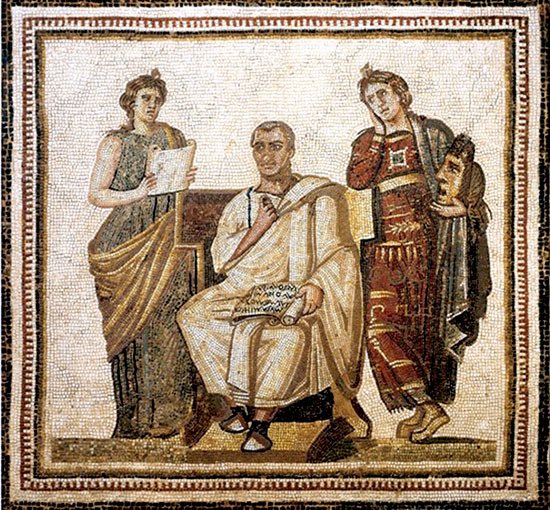
…leader the ‘father’ of the nation. This projection from the family to the nation is also the origin of the idea of the economy, where ordinary household finance of ‘balancing the books’ and ‘living within your means’ now became national principles. /9
Of course as many economists have pointed out, the national finances don’t work like that at all, but politically that’s irrelevant. Those much better ideas haven’t been made to resonate with ordinary people living inside ordinary families, by progressive politicians. /10
So people will slavishly obey the idea that society is just an economy, because how conservatives described that economy is much closer to their own lived experience. Even though it’s a fantasy. And this brings me back to Blair, Albanese and even Hawke and Keating. /11
Blair, Hawke, Clinton and to a lesser extent Keating are the rare standouts in an era dominated by conservative politics. But in each case, how they managed that was also potentially deeply compromising to their own cause. All embraced the economy as a frame for their work. /12
‘It’s the economy, stupid’, as Clinton said. Seeing Jim Chalmers working on ‘values-based capitalism’ recently rang all these bells again for me. It’s difficult not to see all of these leaders as offering not much more than a sort of compassionate conservatism. Captured by…/13
…the framings from the 1970s, and just polishing the rough edges off them. If you read Blair’s essay, you can see it up in lights, indistinguishable from the speeches made by more moderate conservatives today. Seeing ‘technological change’ as some self-propelling force,…/14
…which needs to be steered by a ‘dynamic’ State, responding to individual aspiration and social mobility. All conservative framings, but with a more warm and cuddly vibe. Progressives need to go a lot deeper than just re-clothing conservative framings in this way. /15
Blair is correct that trotting out the old class war concepts of capitalism vs total State control is a dead-end. But his solution of sugar-coating the framings is even more dangerous, because it aligns both sided of politics behind the same movement, which the public has…/16
…complained about for a long time. That it ‘doesn’t matter who you vote for’. If progressive politics wants to dismantle the toxic conservatism of today (which isn’t conservative at all, its success has bred fanaticism), it will need to shift the framing ENTIRELY. /17
To remove ‘the economy’ as the basis of politics. Not to replace all the science and technology which conservatives like you to think is synonymous with it, warning that to reject the economy is to all retreat to Nimbin to sing Kumbaya. Conservatives wouldn’t know how to…/18
…change a tap washer, it’s just more spin. Progressives need to re-energise their great invention from the late 19th century onwards - the public itself. All of society, in interaction. The thing the conservatives explicitly attacked, from the 1950s until today, because…/19
…they knew it was their main threat. John Dewey and Walter Lippman debated this very topic, brilliantly, early last century, the question of ‘what is the public?’ I can highly recommend people revisit this debate, of two brilliant minds. /20
https://t.co/W9RKPxfQDo
The public is a much more difficult thing to understand than we remember. It’s not at all just a count of people, as elections have made us think. Not even close to being that. Until progressive politics understands this concept again, it won’t move forward. /ends