Government activity as a proportion of GDP exploded in the 20th century, due to the rebuilding of societies,…
Government activity as a proportion of GDP exploded in the 20th century, due to the rebuilding of societies, after two world wars, a pandemic and economic depression.
From about 10% at the beginning of the century, to up to 50% by 1975, the peak.
What does this mean?
/1 https://t.co/nMnplbehNy
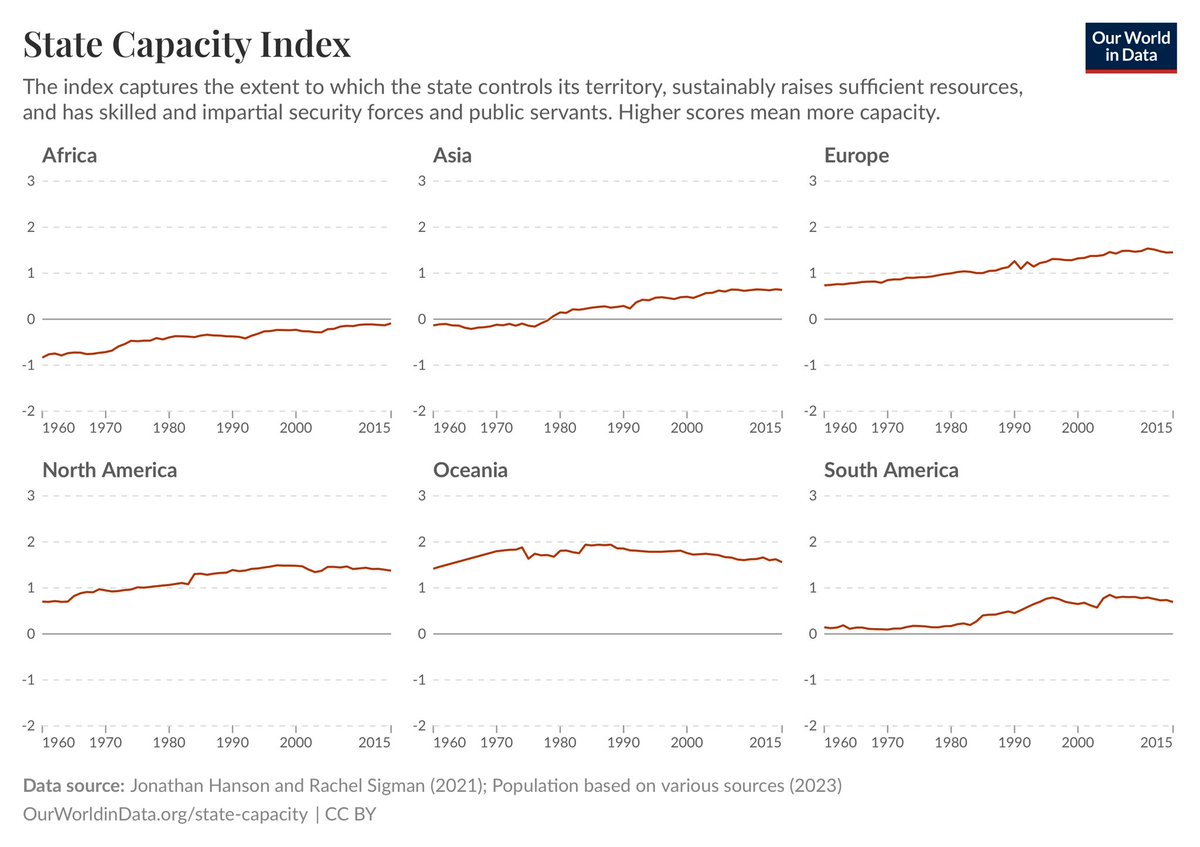
This is the shift I often Tweet about. Towards a ‘we’, a ‘public’. The public is not as populists would have you believe, just a big collection of ‘the people’ (never defined).
It’s a constructed, administrative entity. Constructed and maintained by State capacity.
/2 https://t.co/1m5nFMOOni
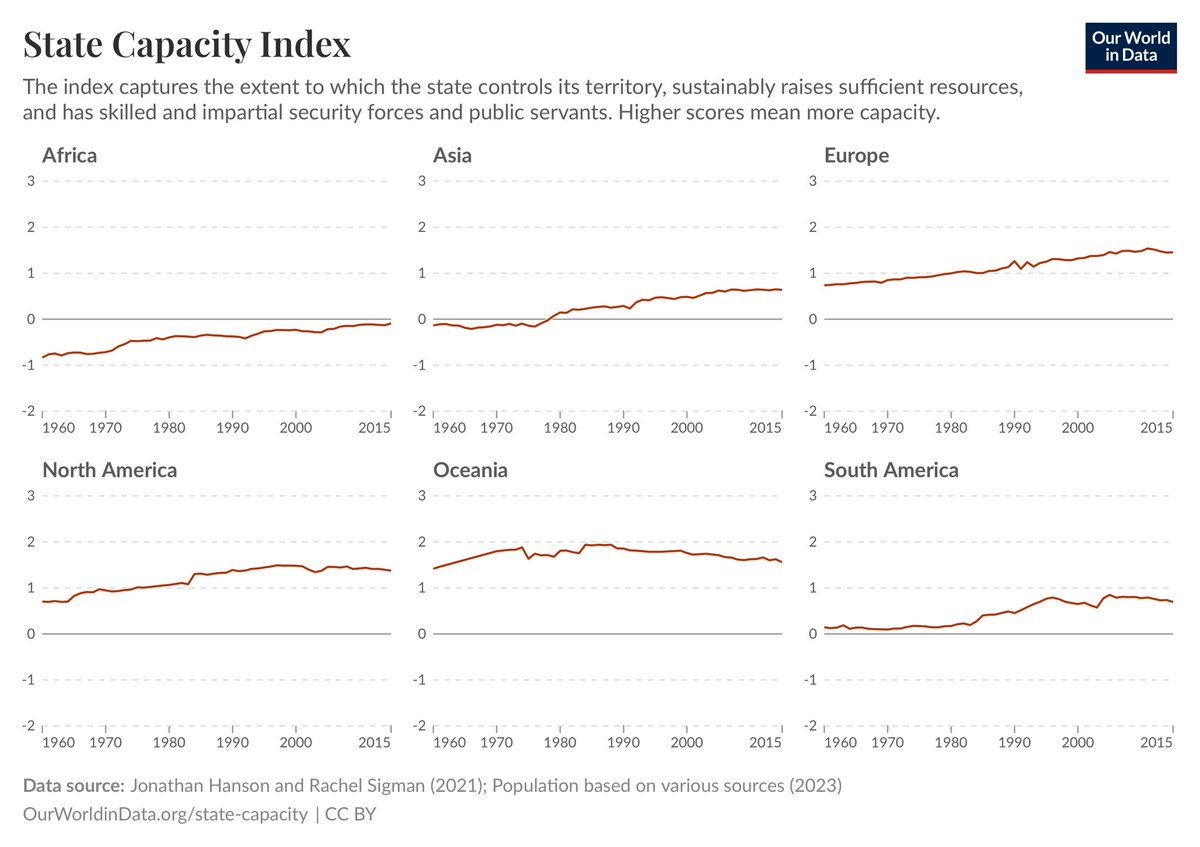
This is the massive *institutional* building we did in that century. Only possible through the almost total destruction of prior status hierarchies in our societies, by those catastrophes between 1900-1945.
It was about surviving, as societies. Status took a back seat.
/3 https://t.co/PpluVkdmbj
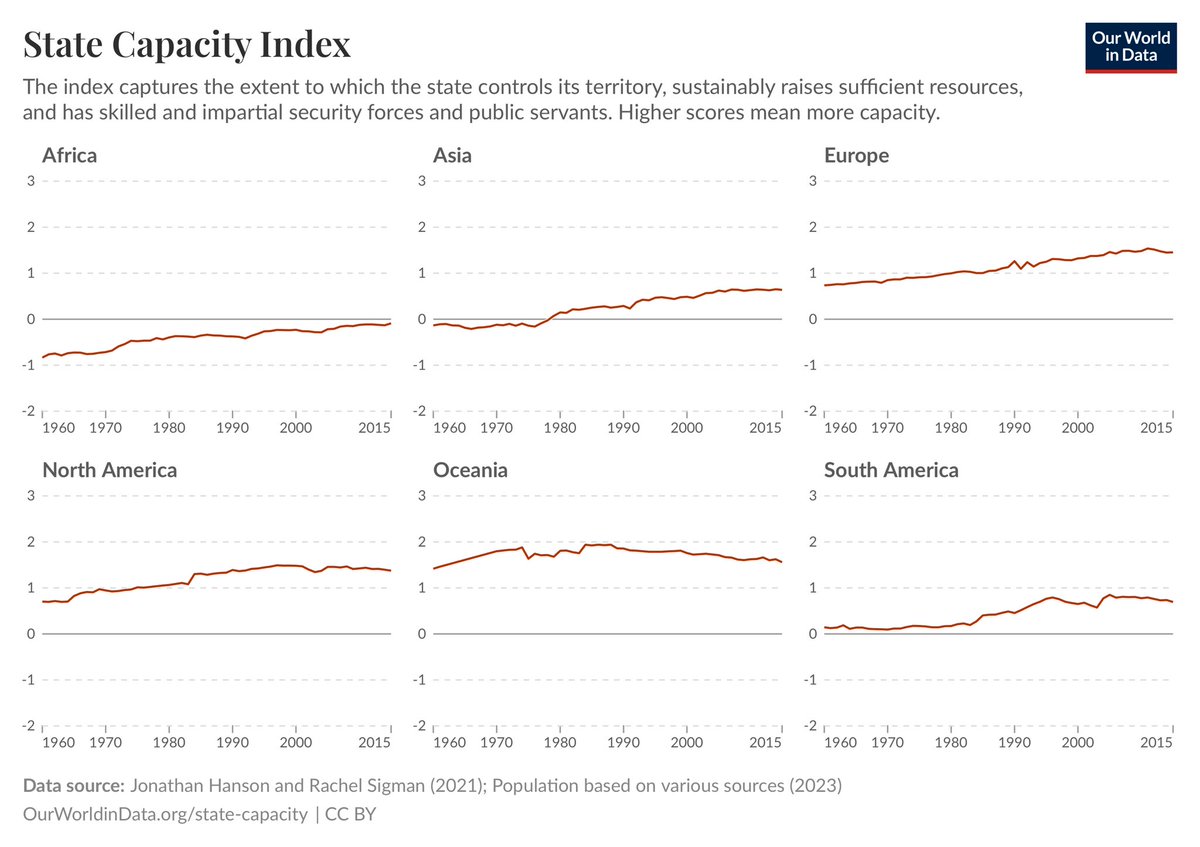
It was this dramatic escalation of State capacity, of public institutions, that created the ‘democracy’ we now attribute to things like voting and activism.
Even the vote only became universal with that demolition of status hierarchies.
/4
1975 is a critical juncture. Where two social movements went to war on this miraculous global shift towards public life.
Two movements that functionally were the same movement, but defining each other as enemies. The two ‘teams’ that have defined life since 1975.
/5
One was older-style status, industrial and agrarian and ‘business’ interests, who invented an entire substitute for societies, to undermine this new State capacity.
They called it an ‘economy’. Run by ‘free markets’. Neither actually exist, they’re political inventions.
/6
The other was the countercultural revolution of the exploding boomer generation, post-WW2. The cultural juggernaut that took their high school culture, and began replacing adult life with it. Anti-establishment culture.
Both movements were really status movements.
/7
Both about battling to make their particular social form of life dominant in societies. Both in opposition to the public-focused life of the growing State capacity.
Both led to life in 2025. Where social media has replaced nations, with continuous imitative status games.
/8
The leader of the free world is entirely a social media creation. He even has his own social media network.
It’s all naked status war now. ‘Culture wars’ we call it. Really just status unbound, uncontrolled by institutional (public) life.
/9
Public policy replaced by what’s ‘trending’. Societies riven by the accelerating shift in those trends, with no coordination or stability, just fads and fashions decoupled from the material needs of civilisation.
Why didn’t State capacity resist this?
/10
I think because it never targeted status. The catastrophes of 1900-1945 held status at bay for a few decades, and the institutions we created then were almost entirely functional.
Status allowed that re-building, because it needed it to survive.
/11
But as soon as that work was perceived to be largely done, by the mid-1970s, it was on again. The historical forever pattern re-emerged. Status runs societies.
And the State couldn’t offer people a meaningful status hierarchy to bed down its achievements.
/12
So they invented their own. Populism was the tool, first in hijacking all governance with electoral mechanisms, which are nothing but popularity contests.
All elected leaders became like the Kings we’d apparently replaced.
/13
But now with tools like social media, the entire population can play status games 24/7. That’s what the ‘identity politics’ of our time means. Entire populations trying to find status and therefore identity, in a culture that offered them no centralised status framework.
/14
Before this you did things ‘for King and God and country’, or whatever the status hierarchy of your nation was (usually monarchies and religions).
The functional State offered no replacement. So people invented their own.
/end