I often Tweet about the 1970s being a pivotal time in the reversing of the public gains of the we-based…
I often Tweet about the 1970s being a pivotal time in the reversing of the public gains of the we-based society, post-WW2. The period 1950-late-1970s, when ‘the public’ was the dominating principle of governance. Rebuilding broken societies.
Housing no exception.
1/5 https://t.co/mBCPkoZXNj
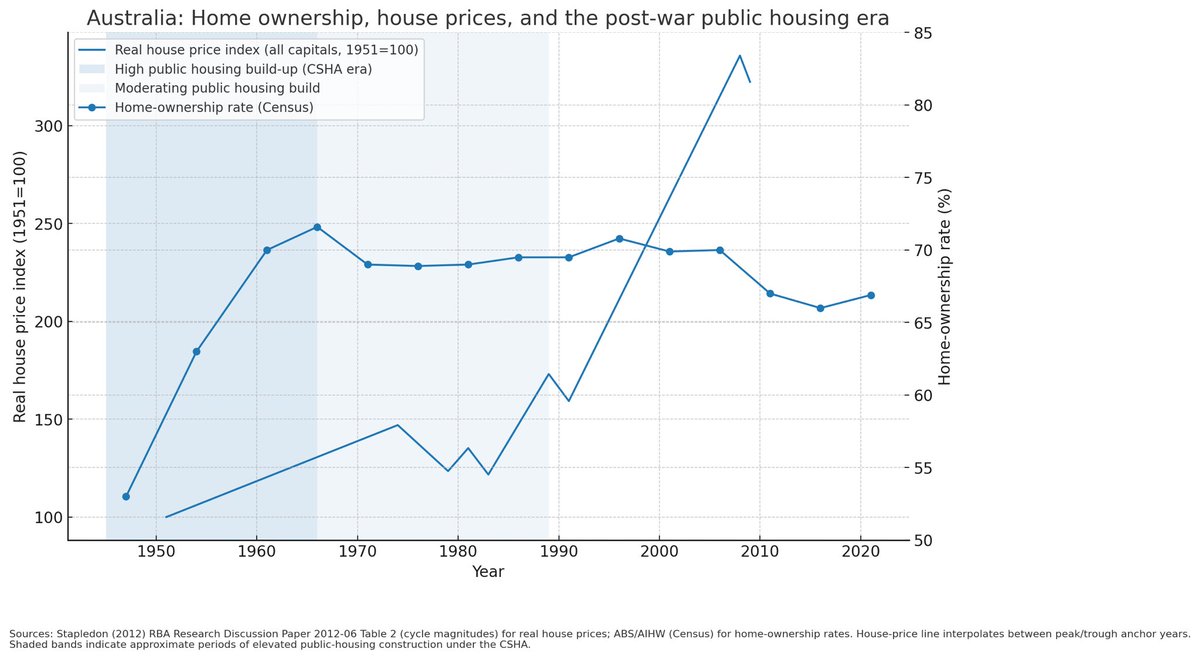
Look at how mass home ownership only emerged with massive government-led public housing programs, post-war. And how that ownership rate flatlined and then declined with the progressive removal of public housing programs, replaced by ‘the market’.
2/5 https://t.co/NVJtdoPuLM
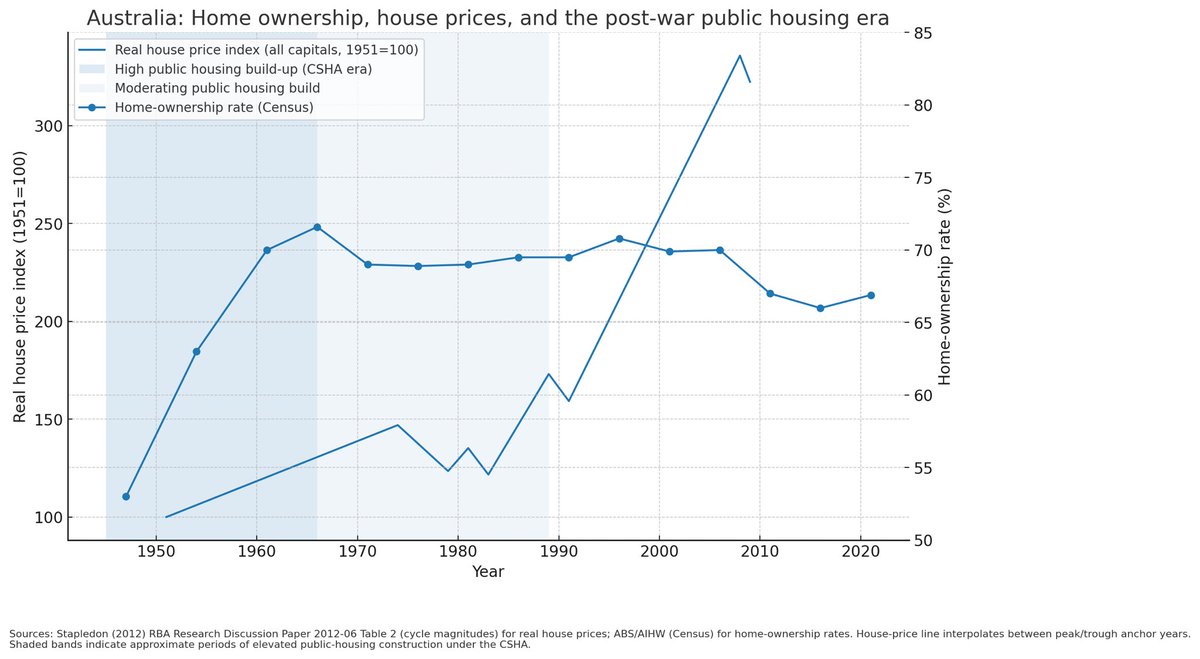
Really just a smokescreen for the resurgence of status as the dominating principle in housing. Look at that price curve, accompanying the flatlined rate of ownership.
The same pattern of reversal of the public good as an organising principle can be found everywhere.
3/5 https://t.co/jcQTJWDcuS
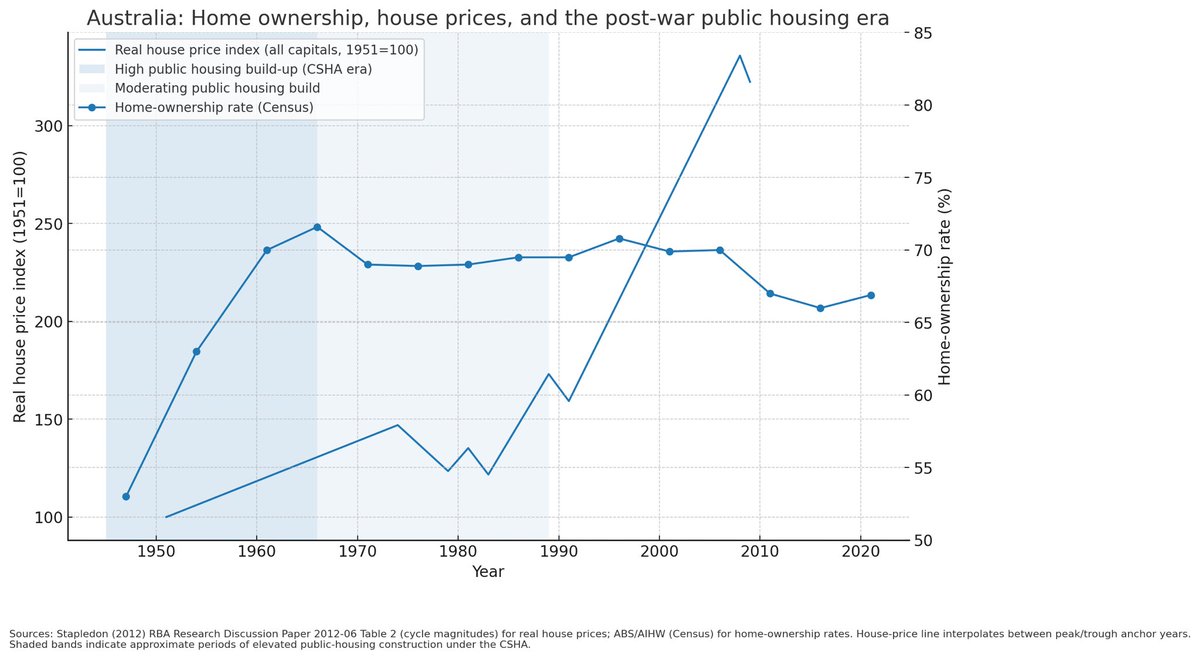
In public transport, health, education, etc. All shifted from being collectively-focused post-war, to individual status game focused from the late-1970s until the present day.
It’s this curve, again. All the economic gibberish about supply and demand is just blah blah.
4/5
Do we not see how the ‘invisible hand’ (supply/demand society) is really just a balls-out con to replace a collective focus with each-to-their-own status games?
Economics has nothing to do with it. It’s all about status, and finding ways to justify its dominance.
/end