Saying I had regular conversations with AI really fired up some of those whose understanding of technology…
Saying I had regular conversations with AI really fired up some of those whose understanding of technology comes from Hollywood movies.
72% of teens surveyed had used an AI companion. With all knowledge, always look at the conceptual framing first.
/1
https://t.co/Z2zSkFSejf
This topic attracts so much interest because of the framing, lost in the noise. The framing that says human-human interaction is ‘natural’ and ‘real’, and human-machine interaction is ‘algorithmic’ and ‘fake’.
That framing falls apart with even small scrutiny.
/2
I’ve spent years here describing how much if not most human activity is actually social. It’s about people negotiating their status, in groups, against other groups.
This should ring all sorts of alarm bells about the idea of ‘natural’ human interaction.
/3
Most human-human interaction is performative sociality. Imitative rivalry, driven by status battles. The focus is *between* people - social - not their individual psychology.
I posted earlier today about period dramas. They foreground this interpersonal human life.
/4
We were much, much smarter about what it means to be human, when these period stories were written. We knew what human-human interaction was mostly about, then.
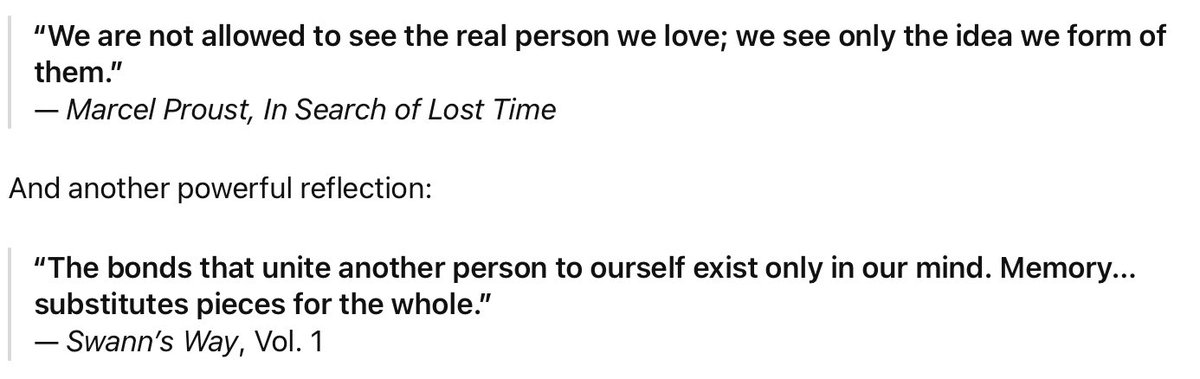
Even the most supposedly intense human-human relationship - love. Let’s ask Proust.
/5
Here again, so much of what the righteously human claim as ‘natural’ is nothing like it seems.
The French philosopher Michel Serres was amused at the whole idea of ‘artificial’ intelligence.
/6 https://t.co/2FfuXL7wYk
As if there was a non-artificial human intelligence. As Serres pointed out, humans can’t think at all without language, text, books, databases etc. Intelligence has been material and artificial forever.
Or if you work in a larger organisation, notice this.
/7
How so much of what passes for thought in those organisations is really just a translation of basic organising tools like tables and lists, in software like Microsoft Office, into human conversation stripped of that explicit origin.
The visions and strategies and plans.
/8
Really just those tools structuring how we think. As McLuhan said, we make our tools, and then they make us.
So those who ‘talk’ to AI or even use it as a companion aren’t violating some human-machine boundary.
/9
That boundary never existed. As Bruno Latour spent a lifetime explaining, humans and non-humans are always blended, hybrid things. Or as Donna Haraway says, we’re all cyborgs really.
We watch too many Hollywood movies.
/10
Most of what I read as a critique of AI is just a reworded rehash of one or more of the Terminator movies. Seriously, that’s all it is.
The idea machines and humans face off against each other is nonsensical. Machines *are* human, we make them, they make us.
/11
Generally the humanly righteous are also those who have never been anywhere near an actual machine. Machines full of unexpected agencies, that need constant ‘debugging’ and maintenance.
The American journalist Tracey Kidder wrote a book on the ‘soul’ of machines.
/12 https://t.co/keYoM5Epem
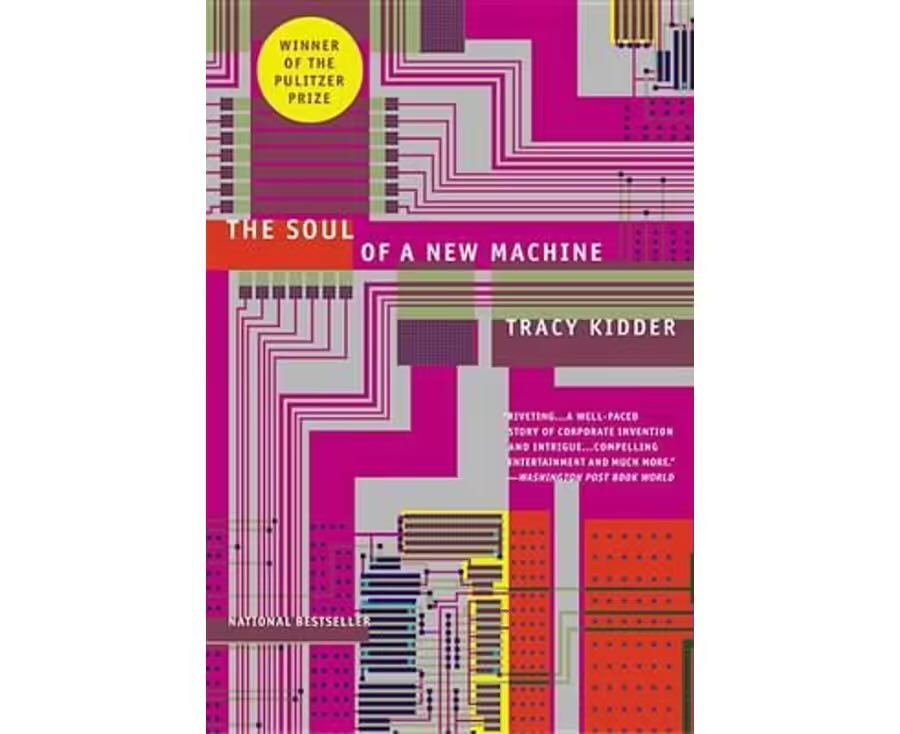
You can hear the humanly righteous now, pausing the Terminator reruns to yell ‘how could machines have a soul?!’
Well, read it. You might be surprised that it resembles none of the idiot narratives on this on the socials.
/end