The most common assumptions about democracy, what it is or even should be, are wrong. Democracy is not ‘the…
The most common assumptions about democracy, what it is or even should be, are wrong.
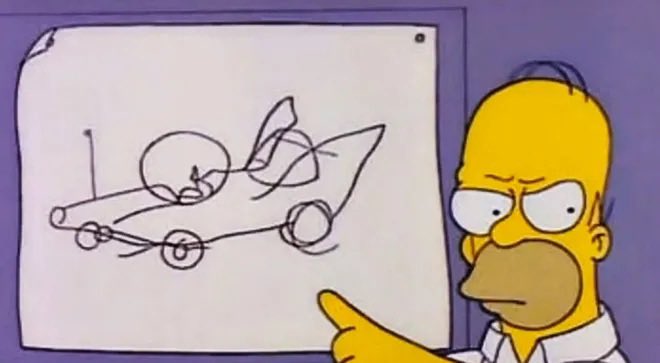
Democracy is not ‘the people’ running societies. That’s populism. That’s Homer’s car, the idea that ordinary people have the expertise to run a country.
/1 https://t.co/DERzCYUH2e
Democracy as we know it was never even designed to be ‘the people’ (never defined) running anything.
Their role is to select others to do that FOR them. Countries are by definition ‘top-down’ and hierarchical. We elect representatives to help operate these hierarchies. /2
Very little is different between the more feudal societies that preceded Western democracies, and democracy as we live it today.
We just added elections, to allow all of us to select who our lords will be. But they’re still lords. /3
At no point do millions sit down to undertake the daily operational tasks of running the country. Their elected representatives don’t even do this.
Their officials mostly do. It’s their job, their specific expertise. The country runs just fine during ‘caretaker’ periods. /4
We live in a populist culture now, where the exact opposite of these civic facts is the accepted norm. We ‘consult’ with ‘the people’ (never defined) on things, like whether we should have nuclear power.
Most of the people consulted don’t have any idea about nuclear power. /5
It’s as sensible as asking the passengers on a plane to fly it. As Walter Lippmann said, most voting boils down to a much more simple process.
If peoples’s lives are going OK, they’ll tend to vote for an incumbent. If their lives aren’t, they’ll vote for somebody else. /6
The public aren’t running anything. They’re making a judgement, usually pretty simply, as to who should be doing that for them.
What do I mean when I say ‘the people’ is never defined? /7
Also simple, what does the phrase mean? Obviously (I’m sure some would say) it means everybody who votes.
But use of it in discussions of democracy always means more. It means a group with agency, in some way. That thinks, feels and acts. /8
So how does that work exactly? Because we all know that in a country, people think, feel and act in a whole range of ways. The moment you remember that basic point, ‘the people’ is over.
All of us never think, feel and act as a group, EVER. /9
Instead what happens is, we vote, and then somebody counts all of the votes and *retrospectively* attributes a ‘will’, a thinking and feeling and acting, to that simple enumeration.
They even call it a ‘mandate’, from ‘the people’.
It’s a con.
/10
This is what Sahlins and Graeber are on about, when they question what ‘popular sovereignty’ means. That’s our democratic ‘system’, popular sovereignty, with the sovereign (normally a King) replaced by ‘the people’.
Except how does that work? As above, it doesn’t. /11
Groups never act as some simultaneous will, thinking and feeling and acting in a unified way. Popular sovereignty has always been a myth.
We never stopped individually following people who we want to lead us. We never stopped having a sovereign, a King. /12
A hierarchy. Democracies aren’t flat, as opposed to hierarchical feudal societies. They’re all hierarchical. If you elect your King, they’re still a King.
They still sit atop your social hierarchies. You didn’t suddenly become part of a group mind, acting with group unity. /13
It also means the expertise to do all of the things a society needs doing remains completely hierarchical. We don’t suddenly become capable of doing everything, as a group.
We each have a specific job to do, and related expertise. Including leaders and their officials. /14
The sewer of these platforms every day, where we pretend otherwise, with people opining about the full range of expert topics in a society as if they have clue.
They don’t have a clue. There is no ‘personal responsibility’ public health. Or anything else. /15
We’re not democratising the vast range of human expertise by letting everybody have an opinion on all of it.
We’re destroying it. Particularly when platforms like these allow anybody to accumulate influencing power, around any topic. Even when they don’t know anything. /16
We don’t need to ‘consult’ everybody when we want to decide whether to have nuclear power, for example. They don’t have a fucking clue. They’ll build Homer’s car.
We have people who know about power and energy. We just need them to do it. /17
Really what modern populism and these platforms are about isn’t the democratisation of anything. They’re about the strip mining of TRUST.
To replace exisiting hierarchies of expertise and trust, with another one, led by popularity. /18
Where medical expertise can be replaced by a popular President asking us to flush our lungs with antiseptic fluid, to beat a virus.
Where social media influencers can peddle nonsense about ‘living with’ viruses, and become famous and given top positions in government. /19
All enabled by the replacement of hierarchies created by expertise, with hierarchies generated by popularity.
Populism pretends to be democracy, particularly in the form of elections. But it’s just a new, simplified, lethal hierarchy.
/end