We inherited a framing of religious questions from the Enlightenment, in the West anyway. That religion was…
We inherited a framing of religious questions from the Enlightenment, in the West anyway. That religion was just one other way to know the world. Like an inferior science, based on ‘belief’ and ‘faith’.
That framing is the same idea that societies run on information today. /1 https://t.co/rAAUt5zabL
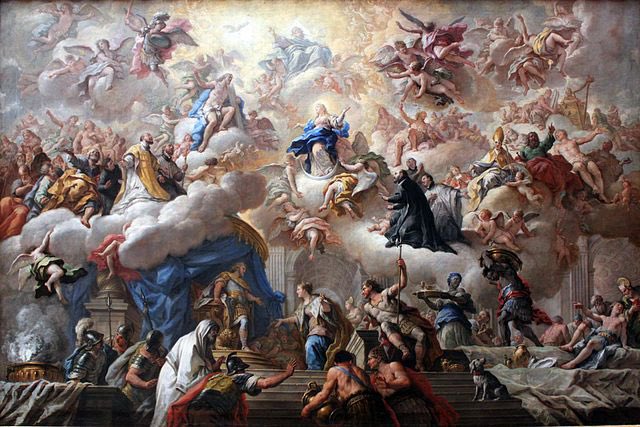
Societies have never run on information. People who follow me know I believe they run on one thing alone. Status.
The status (and thus identity) of people, generated through their membership of ‘teams’, in competition with other teams. /2
With that alternative framing, what has religion been for us, as a culture?
Something very different. Of fundamental importance. Religion managed status games. /3
To take the perpetual violence of our status team sports, and short-circuit it by displacing our status hierarchies.
By making status transcendent, inaccessible to any team. By taking away any argument as to the pre-eminence of any team. /4
By making ALL teams equivalently void. That’s what the ‘Gods’ have always done in cultures. Short-circuited violence. Suppressed the team sports.
I know that immediately some will regurgitate another Enlightenment trope here. /5
‘Religion is what causes all of the violence!’ They see wars between competing faiths, and forget that in the 20th century alone entirely secular States slaughtered over 100 milllion people, in wars. /6
They blame religion for this because religious people and cultures seem to have strong beliefs, that lead to conflict. Those opposing them believe themselves to have open, ‘free’ belief systems, a perpetual contestation of ideas. /7
I often quote Planck’s observation that science itself only progresses when an existing generation of scientists dies, as counter-evidence.
Humans will play status games, team sports, unless they are forced not to. /8
Religion is the only human activity that has ever regulated status games for meaningful lengths of times. And yes, it’s failed at doing that in all its own ways as well.
Churches reintroduce the status games, internally, for example. /9
There are no utopias. But if your underlying framing is that no human or their team can ever achieve the highest status in life, you’re doing as well as can be done.
The Enlightenment loved to believe ‘facts’ could play this role. /10
Planck was just one of many who discovered that facts never speak for themselves. Science is intensely hierarchical, as status-driven as any other human activity.
This brings me to period dramas. /11
I was trying to understand why these can be such compelling viewing, even today. For me it’s something quite specific.
They remind us of a time when language had power. What you said in those earlier times was both intensely considered and could have immediate impact. /12 https://t.co/ikOmDkUnf7
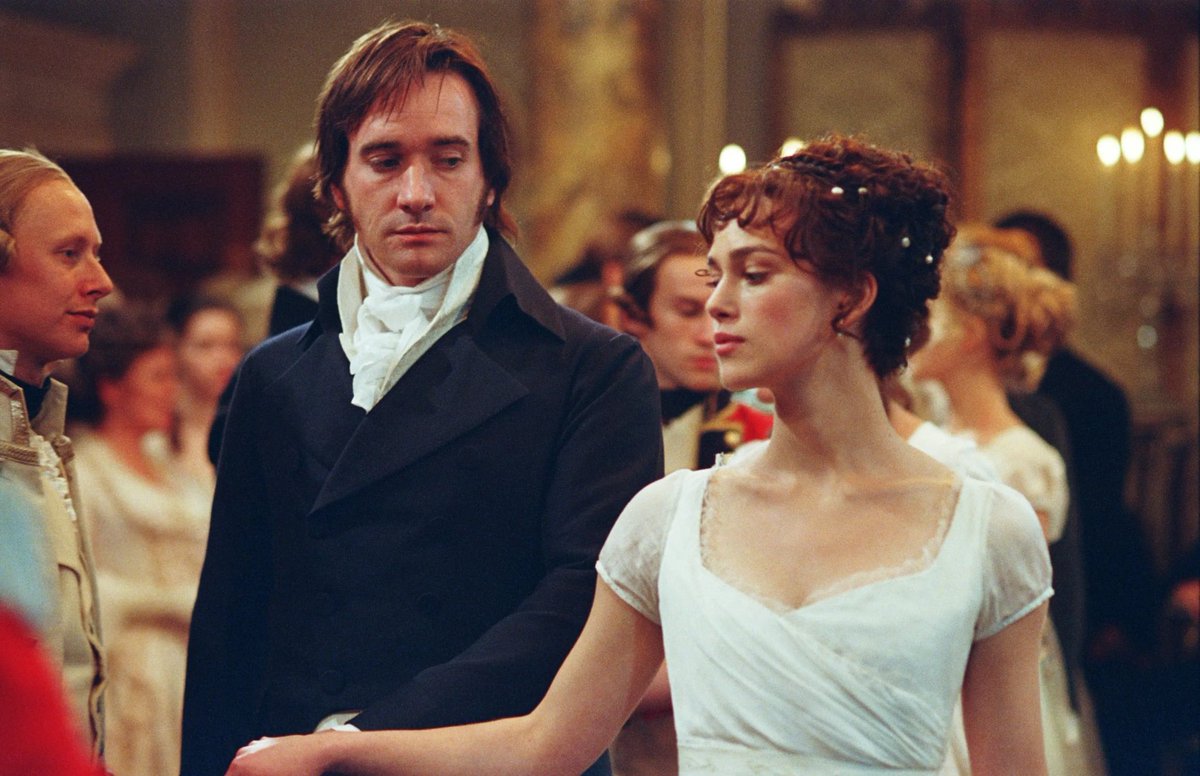
Calling somebody a fool was a profound social act. Today in our ‘free speech’ era, language is almost completely powerless. We’re all increasingly free to say whatever we want.
None of which will have any impact, on anybody. /13
That’s because language only has power to the extent it’s used as part of a stabilised status hierarchy. That gives you ‘right’ and ‘wrong’ and ‘scandalous’ things to say.
It becomes an actual currency of life. Good period drama shows us a world we’ve forgotten. /14
Characters in period dramas are hesitant in what they say. They consider each word carefully. That underlying hesitancy of culture itself is now gone.
That hesitancy was the continuous negotiation of status, within a stabilised hierarchy. /15
A hierarchy that also embodied a clear set of ideas around what were good and bad things to do. That’s what religion brought to our earlier societies. We can argue about the relative merits of those good and bad things, that’s a distraction. /16
The particular moral codes. Often hijacked by human status games, within churches and communities. But what mattered was the interplay of moral codes with social life, through status hierarchies.
/17
The whole idea of ‘manners’ was part of it. Often mocked today as some sort of artificially stuffy formalism, imposed on people. But really a sophisticated set of social mechanisms to facilitate social life.
Again interwoven within status hierarchies. /18 https://t.co/5lmhFNrEQd
This platform is a perfect crucible of a world that arrives, when manners disappear. A world without stabilised status hierarchies, based on at least some assessment of what is good and true.
/end