On a visit to northern NSW, it was difficult to not wallow in the gobsmacking beauty of the Australian…
On a visit to northern NSW, it was difficult to not wallow in the gobsmacking beauty of the Australian countryside.
But it also triggered thoughts, about place. /1 https://t.co/9cXVQjGuZa
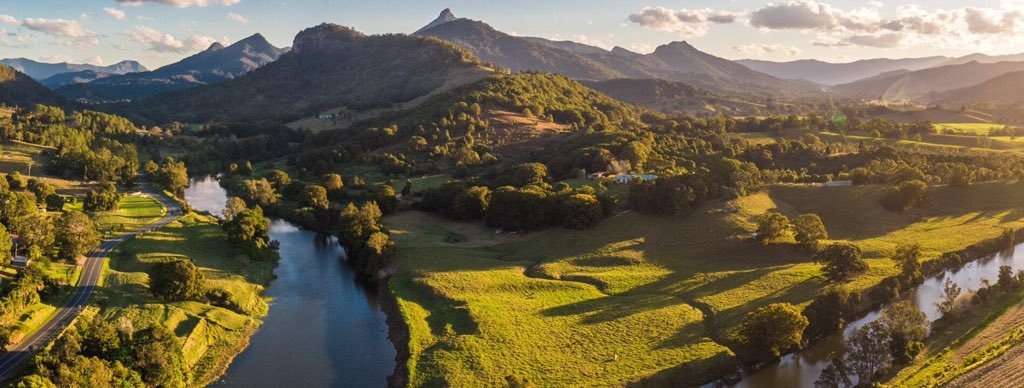
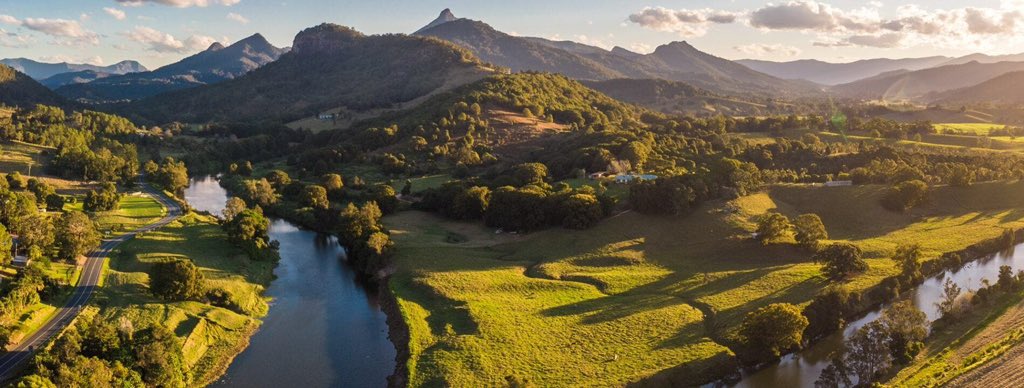
When confronted with a view like this (photo: https://t.co/es4zEK9YPw), what’s the appropriate response? It brought into sharp relief that Australians, like many developed peoples, are tourists in their own landscapes. /2 https://t.co/ONMY2fysiZ
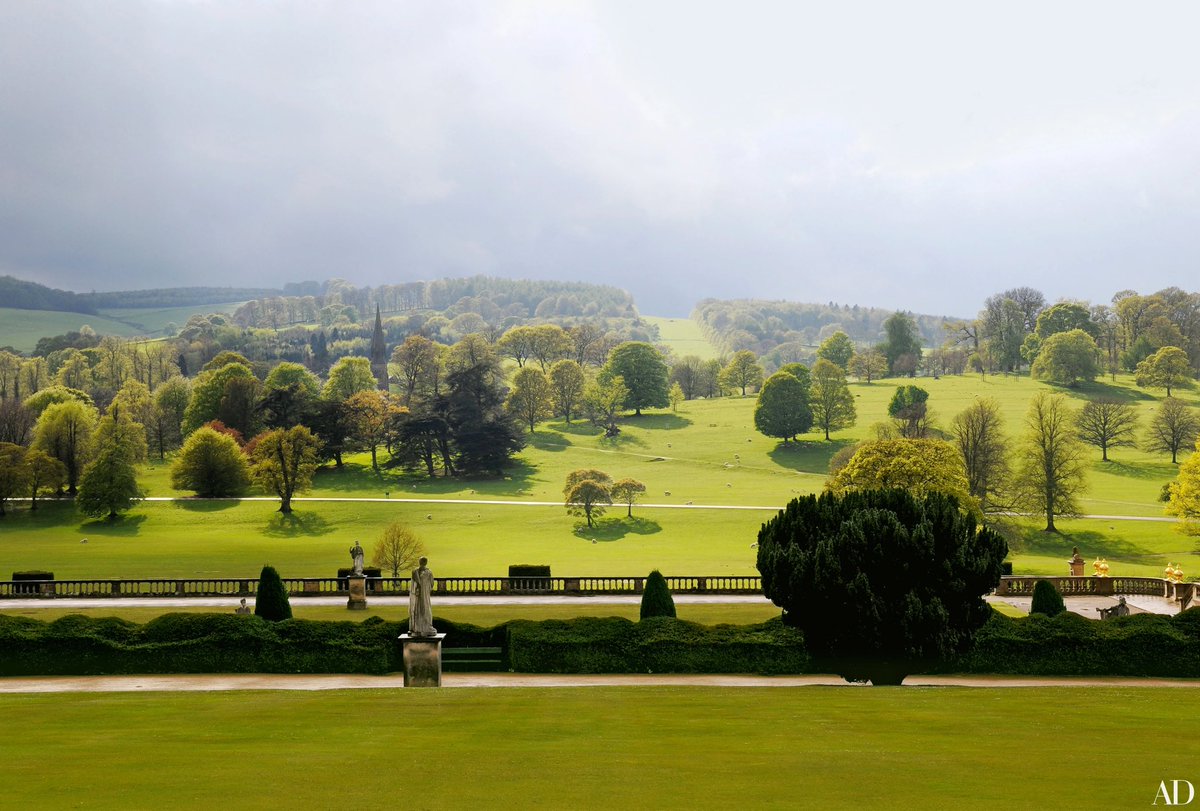
We treat them as ‘sights’, to be seen. Large landscape paintings. Like 18th century aristocrats, who would go so far as to have the landscape created to suit an ideal form, by luminaries such as Capability Brown. /3
(Photo: https://t.co/nIM8szjMqo) https://t.co/yr7ZbNBDr6
And the Australian landscape is also largely constructed, not ‘natural’. Either by deliberate intervention, by farming and forestry, or left to grow ‘naturally’, itself an intervention, removing thousands of years of human interaction with the landscape. /4
Many of these glorious views are landscapes in a lot of trouble. I noticed a lot of incredibly straight trees growing very close together, where I was visiting. I’m sure I’ve read somewhere that reflects disturbance, young trees in competitive regrowth.
Young, not old. /5
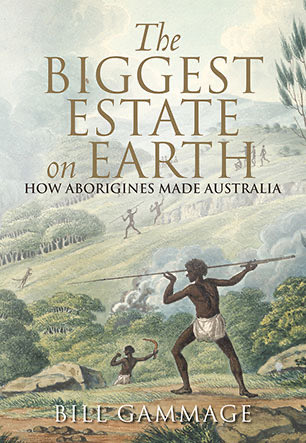
And of course Gammage’s magnificent exploration of just how landscape-d the Australian landscape is, by Indigenous Australians over tens of thousands of years. Much of what we see today is that thousands of years of work lying in ruins.
But it looks pretty. To a naive eye. /6 https://t.co/VytYVTsaJI
Which brings me back to place. Australians, like much of the developed world, have a Madonna-whore relationship to place. Either ‘working’ the landscape, usually to monocultural farming, forestry and mining ends.
Or admiring it as a sight. Tourists in our own land. /7
And this is what I mean by saying Western cultures in particular no longer have an understanding of place. We literally have no idea how to live in our landscapes. Even calling them landscapes reflects that.
No idea how to be in *relationship* with them. /8
Either using them as resources to be farmed and mined. Or views to be admired. Or locations for our Crocodile Dundee back to nature fantasies. Dundee is our own Elvis, the white (admiring) appropriation of a black culture.
Look at the team sports this confused mess produces. /9
We either shoot kangaroos for pet food, or put them in TV commercials to celebrate their quirkiness. To get the tourists in, including ourselves.
We have no idea how to have any sort of meaningful relationship with any of our flora, fauna or wider geography. /10
That’s the existential void that drives us to travel, obsessively. Thinking that by accumulating more and more sights, we will somehow close that void. That absence of any sense of place. Of home.
Home to us is an address. A node in a wider transportation network. /11
The roads in our suburbs aren’t places. They’re no-places. They’re a space designed entirely to take us to other spaces. All our roads connect. You can get from anywhere, to anywhere else. That’s the point.
The highways in northern NSW are fenced. /12 https://t.co/qUTda9F6dT
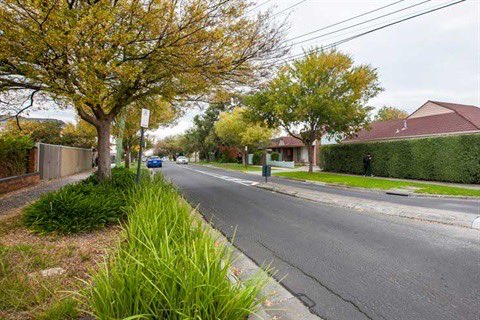
A road profoundly disrupts a landscape, cutting through it oblivious to any ecological relationships. The fences are there to stop the fauna stumbling into the path of cars and trucks. To lessen road kill.
Stand in the model for the road outside your house. /13
Notice that it’s a no-place. Its entire function is defined to be separate to where you actually are. To take you somewhere else. It runs right through your suburb. Its function is to never allow that suburb to become a place. A home. /14
This is the root structure of societies as economies. Mobilisation and displacement. Never settling. Moving people and resources around. The biggest champions of the substitution of societies with economies LOVE roads. /15
This isn’t to promote some bucolic fantasy of a landscape idyll either. It’s nowhere near that easy to rediscover place again. Even those who reject replacing societies with economies have no idea how to live meaningfully in our landscapes. /16
It’s not back-to-nature. There is no nature. It’s not living off the land, or going back to any simple life, or rejecting modern technology, etc. Not a return to a golden anything, that never existed.
It’s rediscovering place. What it means. Far before being anywhere.
/end