We’re all complicit (though not responsible) in the collapse of public-focused government. As a culture we…
We’re all complicit (though not responsible) in the collapse of public-focused government.
As a culture we support the idea of using popularity as the sole doorway to ultimate power, through elections. That’s game over. /1 https://t.co/95TH1p5Au0
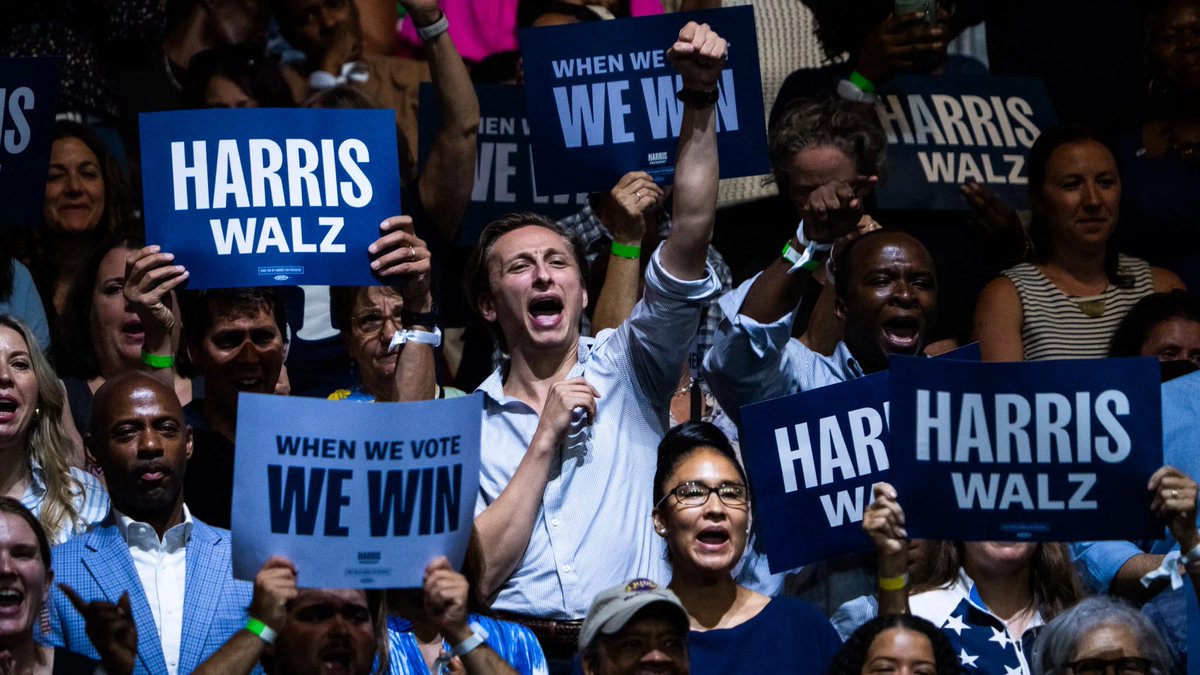
Difficult things are unpopular things. I don’t know why it’s hard to see that if popularity is the sole route to power, difficult things won’t get decided or done.
All that will be decided or done is things that protect votes, for the next election. /2
Politicians are acting entirely rationally, within the system we all embrace. They’re focused on popularity and votes, because without those they have no power.
And in the meantime nothing of consequence is done, out of fear of losing votes. /3
Or worse, the most extreme and toxic things are done, because somebody found a way to make those things popular.
Popularity is the loophole bad faith actors employ to hijack governance. They can’t believe their luck, that it’s that easy. /4
You can’t get the most junior job anywhere, based on popularity, let alone be promoted or be hired as a CEO. A parent who raised children using popularity as the method ends up with spoiled sociopaths.
And yet for control of our entire societies, it’s our ONLY method. /5
Elections are not democracy. They’re a method of selecting leaders grafted onto democracies only in the past century. They’re destroying them.
Governance should be identification of basic social need, and addressing of that need. Routing it through a popularity contest? /6
Why? Why are we surprised that the social needs get ignored and populists end up running everything, to their own advantage?
When you hop on a plane, do all the passengers vote for who’s going to fly it? Or are experienced pilots pre-selected to do that, for you? /7
You can’t vote your way out of the problems voting causes. Every person you vote for will be forced to operate inside this same insane system, of having to make things popular, to get them done.
And fighting bad faith actors who make social destruction popular. /8
The difficulty changing any of this is that it taps into the core DNA of how all social groups operate. The battle for status, in groups or teams.
Social conformity, driven by status (we conform with what we perceive to have status). /9
So when I say we need to ditch using popularity as the doorway to ultimate power, I don’t expect it to actually happen. People won’t surrender the status games.
It’s why one of my common themes is the historical observation that this is only ever resolved one way. /10
By catastrophes, internal or external, smashing existing status hierarchies, to make room for change. Again, we lived through an anomalous time in history.
The relative peace and prosperity of many of our lives up until this point didn’t come from democracy. /11
It came from 3 mega-catastrophes, in probably historically unique quick succession. WW1, the Spanish Flu, and WW2.
That conga line of catastrophe smashed our status hierarchies, globally. The peace and prosperity that followed was born from the need to survive. /12
The re-build after the last of these 3 catastrophes was relatively free of interference from status games, because we needed urgent action to stop total social collapse.
Institutions were set up to oversee our basic social needs. They governed us for 50-70 years. /13
And when their work had been done well enough that life seemed just spontaneously good again, our status games returned.
Disguised as ‘freedom’ from these same institutions. Anti-establishment politics, driven by both the Left and Right of politics. Pointless labels. /14
Everybody wins votes ‘sticking it to the man’. Taken to whole new levels by inventing a substitute for society we call an ‘economy’, based on the fantasy that societies operate by individuals all doing anything they like, creating spontaneous ‘emergent’ good. Markets. /15
‘The economy’ is a society run entirely on status. All leadership and needs-based decisions are stripped away by the laughable idea that what’s good for us collectively will just spontaneously emerge, in markets.
Everything else is ‘picking winners’. /16
If you don’t pick winners, if you don’t LEAD, then drug gangs eventually become the winners, and run everything. Like some South American governance. That’s the endgame of economy-based governance.
In many Western countries we’re on that trajectory now. /17
Societies splintered into an enormous number of groups (teams), all battling for ultimate status. Our traditional politics the same, with the growth of ‘hung’ parliaments. Seen as a good thing!
Social media is the accelerant for this process. It accelerates it massively. /18
People form teams here and do things like use the health of your kids and their teachers as footballs, to drive likes and status.
I wish none of this happened, that we’d identify empirical needs, with empirical solutions, and just do it. /19
As the fantasy fake debate about nuclear power and wind and solar farms in Oz shows us, it’s not going to happen. Everything will be turned into a new fight, to fuel the team sports.
So, we await catastrophe. To bring the change needed. /20
China’s industrial might with renewables and EVs is the least dangerous of catastrophes that might save us. With climate change at least. They also build pretty much everything we use. So their disruption really can upset our status hierarchies.
Let’s hope that’s enough. /end