Hub-network structure. A small number of people form hubs, leading thinking and behaviour. Our tendency to…
Hub-network structure. A small number of people form hubs, leading thinking and behaviour.
Our tendency to think of society as ‘the people’ means we often target public action at everybody, rather than focusing on the hubs.
That’s why the action fails. /1 https://t.co/3FaTQyIUzX
Our social models determine our likely success. I’ve Tweeted about how this is crippling our Covid response too.
Minimisers paint Covid as a problem for all people, everywhere. This makes it seem impossible to do anything about, which is the strategic intent. To stop action. /2
I see it now with the best-intentioned people advocating measures such as masking and ventilation. Masking and ventilation are hugely important.
But to adopt the model of needing to mask everywhere, and ventilate everywhere, is to lose. Minimisers want us to do that. /3
They want the task to seem impossibly enormous. That’s their strategy. We’re still focusing on means instead of ends, and using the wrong social models for the means.
Defeating Covid requires a very specific, targeted strike. Not disruptive to most people. /4
Covid infections follow a hub-network structure. Infections breed and multiply in the hubs, and spread into the community using community networks, looking to form new hubs.
The critical thing is to recognise that there *aren’t many hubs*. Relative to the entire society. /4
Target the hubs, and it will slow the spread of infections dramatically. We were already doing this when contact tracing and isolating. But we know the main hubs are very likely to be places like schools, even without contact tracing.
You only need to slow infections. /5
Not stop them. Get that Rt < 1, and exponential decay will do the rest. CONTROL the disease, like we control other infectious disease. With targeted, strategic action.
Not mass viral movements for masking or ventilation. Let’s go back to the idea of disease control. /6
Who could argue against disease control? Particularly when you point out we’ve been doing it for years, for multiple dangerous pathogens, and most people didn’t even know.
That’s how minimally disruptive control can be. If you recognise the hub-network structure of spread. /7
Which is also the hub-network structure of society. Not as coincidence or analogy, humans spread the disease. The hub-network structure of spread *is* the hub-network structure of society.
Viruses don’t go viral. That structure is the social status hierarchies I Tweet about. /8
To defeat Covid you have to target hubs. Which means you also have to target status. Like the Victorians in England, you have to make that work a high-status thing to do.
Make the engineers the champions. People love engineers. They seem above the fray. /9
‘We’re going to send in the engineers to shut down Covid in some key locations’ is much more likely to get traction than ‘everybody needs to mask and ventilate’.
Because we transact society on social media now, it’s hard to escape the universalising narratives. /10
Swift, strategic action isn’t about ‘mobilising’ the entire population. It’s a calm, practical task of identifying the specific risk, and applying a specific solution to that risk.
Put the emphasis back on control, rescue control from the universalising narratives.
/11
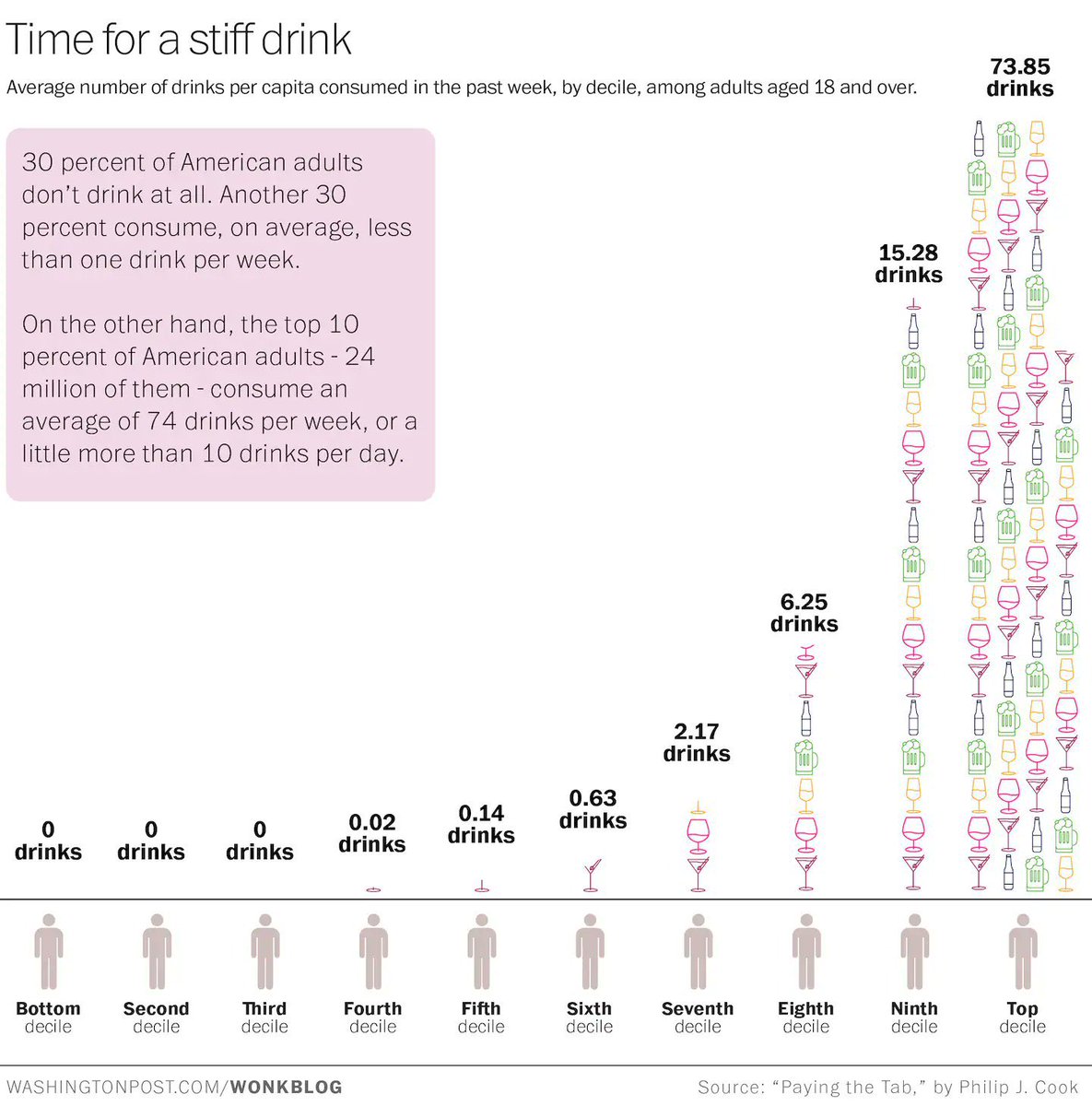
The original example of drinking. It’s possible to think that alcohol as a problem is exactly the same. Or violence. We target our public health campaigns at entire populations.
But they’re not the problem. A tiny handful always are.
Target the hubs. /end