This article is almost a decade old. But it asks a question even more pertinent for today. Are we too…
This article is almost a decade old. But it asks a question even more pertinent for today. Are we too connected?
Connection is an assumed good. I think that's a terrible mistake. /1
https://t.co/fxdtN9iTD5 https://t.co/vWdxNUCSTl
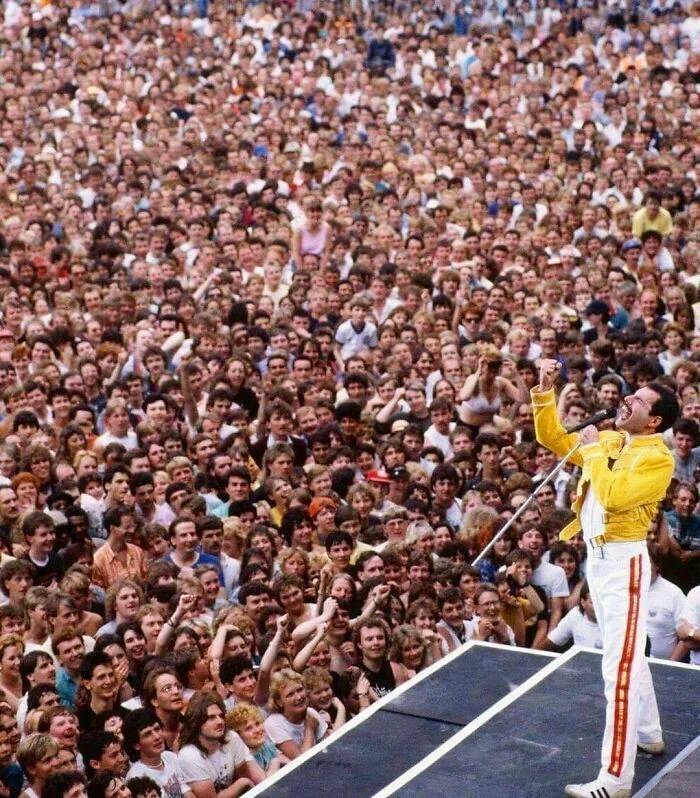
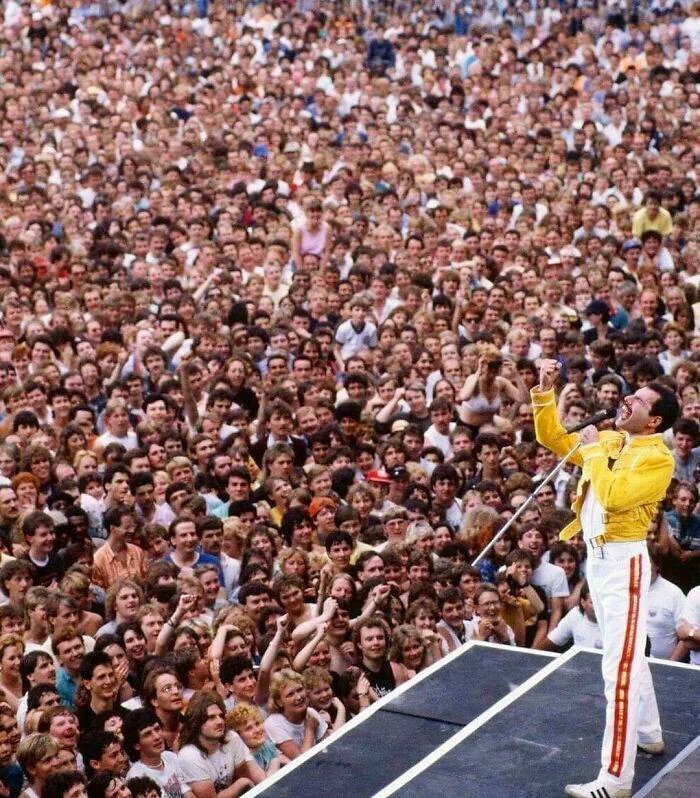
Contrast these two shots. On the left, a concert pre-mobile phones and social media. On the right, a concert today. An incredible window into a profound cultural change.
The 1980s concert-goers are sharing a space. Their attention is shared, and focused on the same thing. /2 https://t.co/7karQNLYmd
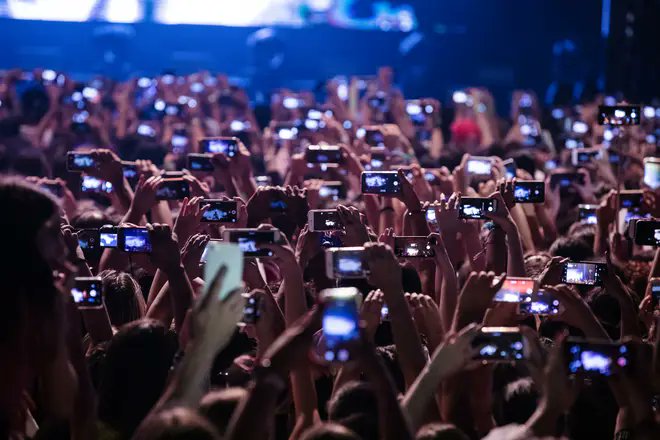
The social media era concert has people all in the same space. But their attention is fractured across thousands of individual virtual spaces, their online feeds.
They're not really 'there'. They're in their feeds. They're looking at the phones, not the act. /3 https://t.co/8OHCIJDNhd
And the crowd they feel a part of most is the virtual one of their online group of friends.
Social media is not just networking. That's the bait, in the bait-and-switch. The switch is the substitution of their physical location, with a virtual one. /4 https://t.co/ljzduzOK0R
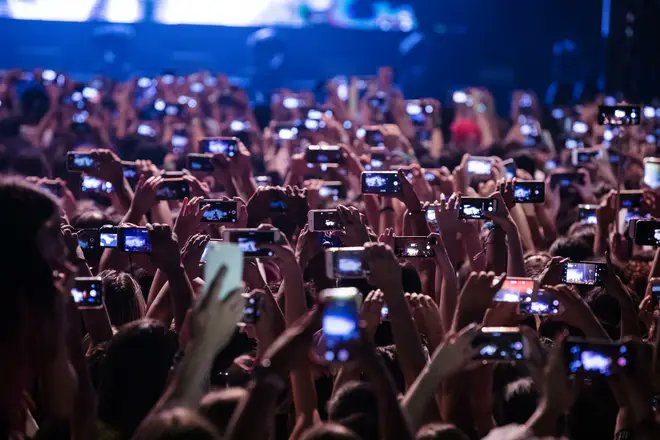
They're living inside social media networks much more than they're living in the traditional spaces of their everyday lives, with other people, often strangers.
That's important, they may have many more connections this way. But they're people they KNOW. Enclaves of friends. /5 https://t.co/mubec1vsNk
I suggest this 1980s image captures 'society' as we used to mean it. A mixture of strangers, co-inhabiting a space and sharing experiences.
A forced negotiation. What we call connection today is something fundamentally different. /6 https://t.co/rgUjOBXne2
It's a collection of enclaves or bubbles of hand-picked 'friends'. Usually of like mind, and interests.
Whereas previously we may not have had a lot in common with the people we shared our lives with, now we can 'network' with people much more like us, anywhere. /7
Do all of those self-elected bubbles of like-mindedness constitute a 'society', when added together?
Or rather do they constitute a proliferation of non-communicating, competing tribes? /8
I think it's definitely much more the latter. With social media our human shared interests can be pulverised to almost infinitely small levels of granularity, to constitute a social group.
The connection is only within the bubbles. Not between them. /9
No doubt at all this has helped marginalised and vulnerable people to find support that they didn't have before.
But social media networks are not neutral connecting technologies. They're organised around likes, and algorithms which convert those likes to dollars. /10
This perverts the connections you can even see there. What you see on social media, outside but even within your bubbles, is entirely at the whim of the algorithms.
Those algorithms are written for shareholders, not for you. /11
The platforms also then enable the linking together and empowering of extraordinarily toxic anti-social ideas and behaviours.
Ideas and practices which previously could gain little purchase in a community, the diversity acted as a filter. /12
I asked the other day, if social media enables this, why does enabling other more positive things excuse it? Isn't that like an NRA argument for good gun owners versus bad gun owners? /13 https://t.co/6xy10uQXF4
Societies are not and have never been about widespread connection. In fact they're the opposite. The deliberate, nuanced and complex filtering and structuring of connections.
Hierarchies of experience and expertise. Sifting of the good from the bad. /14
That's what our institutions were for. Evolving from generations of bitter experience, to regulate societies' connections.
Now it's open slather. And not even that, it's equally as controlled, except now the only control is the algorithms. /15
Those algorithms ARE our society now. And what's their purpose? As I said above. To maximise revenue for the shareholders of social media platforms.
The complex multiplicity of social filtering, in layers throughout society, now all replaced by algorithmic revenue software. /16
We're seeing the collapse this is causing in our societies off social media. We bizarrely rush to these same platforms to try to repair the social fabric.
The algorithms just monetise that same rush back.
/end