So many critiques of AI say machines can’t think like humans. But most of what we call human thinking is…
So many critiques of AI say machines can’t think like humans. But most of what we call human thinking is actually the social process of imitation. Social conformity.
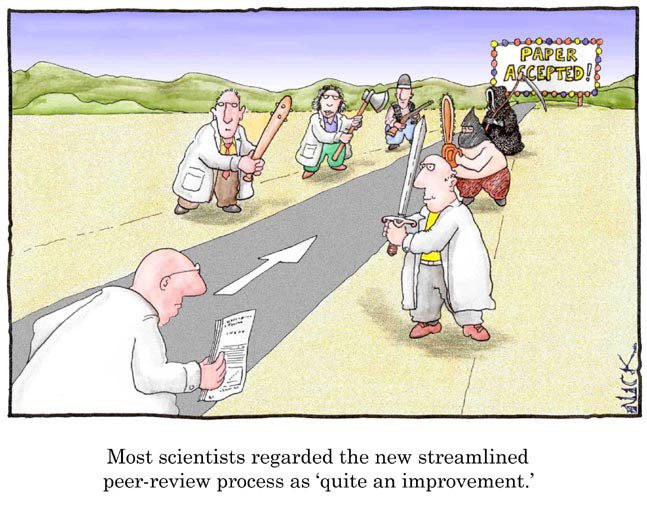
Even the process of peer review is largely the enforcing of social conformity. /1 https://t.co/8QwVQK2o2Z
Because we live in libertarian (i.e. teenage culture) times, mention of conformity creates automatic negative associations.
People behaving like ‘sheep’. But conformity is how societies are made, as well as destroyed. We would be long extinct without it. /2
We copy or imitate because we are all different. Not because we’re all the same. That seems a paradox.
But if all people and things are fundamentally unique or different from each other, all we can do to link them is imitate. /3
We can only copy something that is fundamentally different to us. We cannot be that other thing.
It’s that copying that then creates order. Because it’s a social process, we copy in teams. We copy to achieve and retain membership of our team(s). /4
We emulate those we admire and value. Baseliners in tennis might emulate Rafael Nadal or Bjorn Borg, while serve-volley exponents emulate Roger Federer or John McEnroe.
This creates a ‘culture’, a social grouping. We don’t become Borg or Federer. /5
We’re all different. But our imitation shapes our social world, and thus our world more generally. Baselining or serve/volleying become things. Cultures.
Even though we all do it differently. Or not at all, and that’s the crucial part. Rivalry appears. /6
The baseliners and serve-volleyers become rivals. Those two teams practice imitative rivalry.
Each team imitates its style, which is then in competition with the other style. Those styles are social, they’re cultures. /7
You can extend this beyond tennis, to ALL human life. Even science, as I began the thread with.
Most ‘thought’ is really imitation. We wouldn’t even recognise what people were saying if this wasn’t true. /8
Every idea or utterance would be so completely different that it would be unrecognisable to us. It must copy what came before, to be recognisable.
All thought is a type of plagiarism. With usually minor variations, all baseliners are variations on a Borg theme. /9
This all matters because we’re trying to think our way out of emergencies, like pandemics and climate change.
But the thought about how to do that has mostly already been done. By a relative handful of people. We’re not lacking the ideas. /10
We’re lacking the social process of emulating the right ideas, to create a culture that then enacts them.
Our dominant ‘influencers’ aren’t interested in those right ideas. They understand imitative rivalry much better than people who think for a living. /11
They bypassed the thinking and went straight to hijacking and dominating the emulation mechanism.
Once they captured that, they were free to pump it full of as much bullshit as they like. They ‘flood the zone with shit’, they openly admit it. /12
https://t.co/suv31ijnD0
Until we recognise the quite simple and fundamental social process in play in all things humans do, we’re puppets for bad faith actors.
Until we see that popularity is that core process. Which when decoupled from thought and material reality, leads to endless violence. /13
I won’t repeat how this decoupling happened in detail, but in a nutshell we isolated children from adult life, in schools.
The culture of schools is pure popularity. That’s adolescent life. When kids leave schools, they re-create that culture in adult life. /14
Over several generations, that process is now almost complete. Social media dramatically accelerated that shift.
The entire basis of social media is this process of emulation. Of ‘likes’. The currency is popularity. Elections are high school life, for adults. /15
Meaning a social media and election world is a world of endless imitative rivalry. Of violence. Rene Girard’s world.
Even things we call ‘market economies’ are just this same building out of an adolescent adult world. Look at its ideas. /16
The pulverisation of anything collective to be replaced with individually-focused consumer desire.
That’s teenage life, right there. The fight to achieve your individual place in a ‘market’ of desires. /17
I also tie historical research into how this all ends. Because only two things have historically defeated this basic social process of imitative rivalry.
One is catastrophe. Natural disasters, wars, plagues. Those destroy the social hierarchies of imitative rivalry. /18
Clearing a temporary space for a changed way of doing things. Like we did after WW2. It lasted about 50 good years.
The other is religion, which creates a principle of life transcendent to our social team sports. /19
More or less well. Religion itself is captured by the same team sports, we know this. Religious institutions can share all the same problems.
But there’s been enough transcendence there to eke out social progress over millennia. /20
You don’t have to ‘believe’ in the transcendences, to recognise the important role they play. That’s a tired Enlightenment team sport debate that survived into our era.
It’s not about belief in things. It’s about having a transcendent principle of social life. /21
What we call technology also resists our team sports, because it creates a necessary discipline of knowledge and action to build and maintain.
That’s how the Roman Empire was so successful, for so long. It put building stuff at its centre. /22
‘Likes’ aren’t going to help you build or maintain an airliner or sewage treatment plant. There is no ‘Left’ or ‘Right’ physics.
But even that socio-technical world can’t resist popularity on its own. Catastrophes have sadly always been required to reboot societies. /23
Climate change is (in my opinion) the next catastrophe that will force us to ditch the team sports again.
And it will be messy and lethal and destructive, like all catastrophes are. /end