The interplay of regular and random contacts in the dynamics of superspreading. Or more simply, the role of…
The interplay of regular and random contacts in the dynamics of superspreading. Or more simply, the role of mixing with strangers in the spread of Covid. It’s mixing with strangers that prolongs the pandemic. /1
https://t.co/BNwb6mmavs https://t.co/t3V04bKwRx
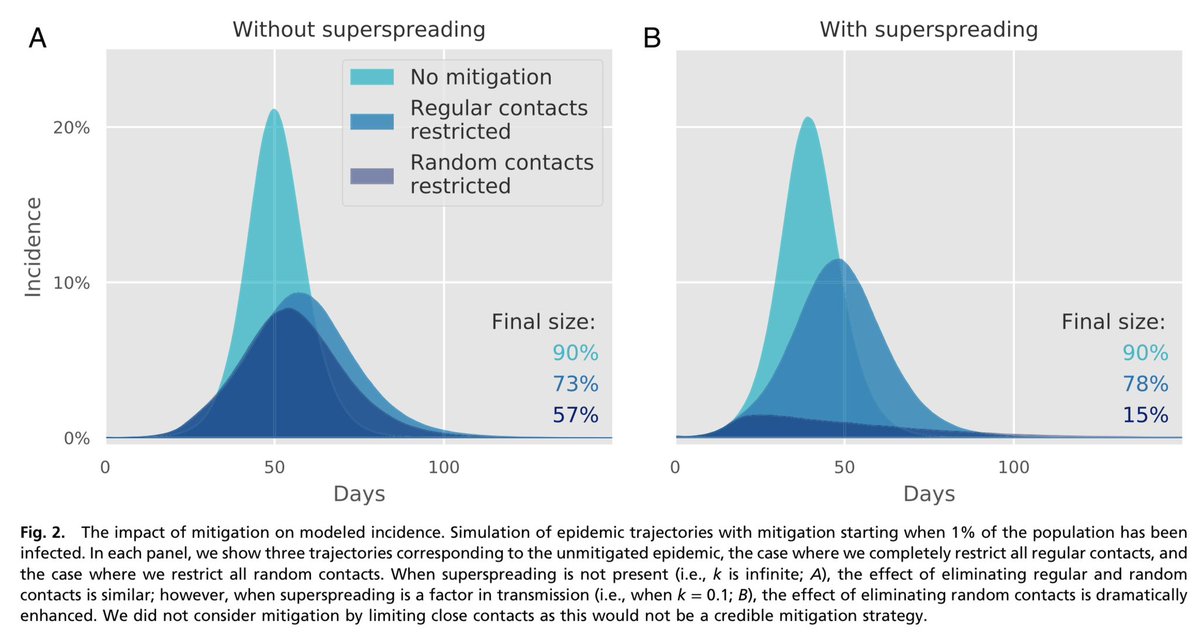
In environments that combine both degrees of contact, such as schools (regular = kids who mix in the same class each day, random is mixing of all classes in activities such as assemblies), it’s the random larger events that do the most damage. /2
Most obviously because that’s what gives any infected superspreader access to the most hosts. We knew this earlier in the pandemic when restricting things like sporting events, concerts etc.
This has profound social implications. /3
Covid thrives in a society of strangers. Of hypermobility and mixing. Ecologically this isn’t surprising, organisms and their pathogens live in ecosystems. They have niches.
Constant disruption to this groundedness of organisms is dangerous. /4
It’s the persistent mixing of people that makes Covid almost impossible to control. But socially, mixing is dislocation. It’s the continuous displacement of people, of never allowing things to settle.
Covid does not survive where people live settled lives. /5
That settled life was called ‘lockdowns’, but that’s a term defined by contrast, to hypermobility and mixing. There is nothing objectively necessary about either.
It’s a choice. A choice a culture obsessed with displacement and travel refuses to make. /6
If you choose to live in ecosystem of continuous mixing and displacement, you will be preyed upon by pathogens.
Pathogens created by that same dislocation. Zoonotic organisms for example, created by the destruction of ecosystems of other living things. /7
This is where the fight over working from home is interesting. A deep desire by people to be more settled.
To cut back on the continuous displacement of commuting. That hypermobility, made up mostly of round-trips. /8
Most of our journeys every day begin and end in the same place. Home. That place portrayed as a type of prison, by the anti-lockdown hysterics.
But people like home, it turns out. I’ve never seen people sad to go home at the end of a working day or week. /9
This is the nonsense we’ve been sold with the dismantling of Covid action. That we’ve ‘freed’ people up by setting them back on the hypermobility and displacement path.
In reality life in an economy needs that continuous dislocation and disruption. /10
As I’ve Tweeted about a lot, ‘the economy’ is really the old empire, in disguise. Empires dislocate, they disrupt, to ‘free’ up people and resources.
So they can be accumulated in centres of power and wealth. An economy is fundamentally in constant war with geography. /11
Any settling, a priority on ‘home’, is a critical danger to an economy. Why modern economic politicians LOVE building roads and other transport links.
Few stop to ask, would it be better if we moved LESS? /12
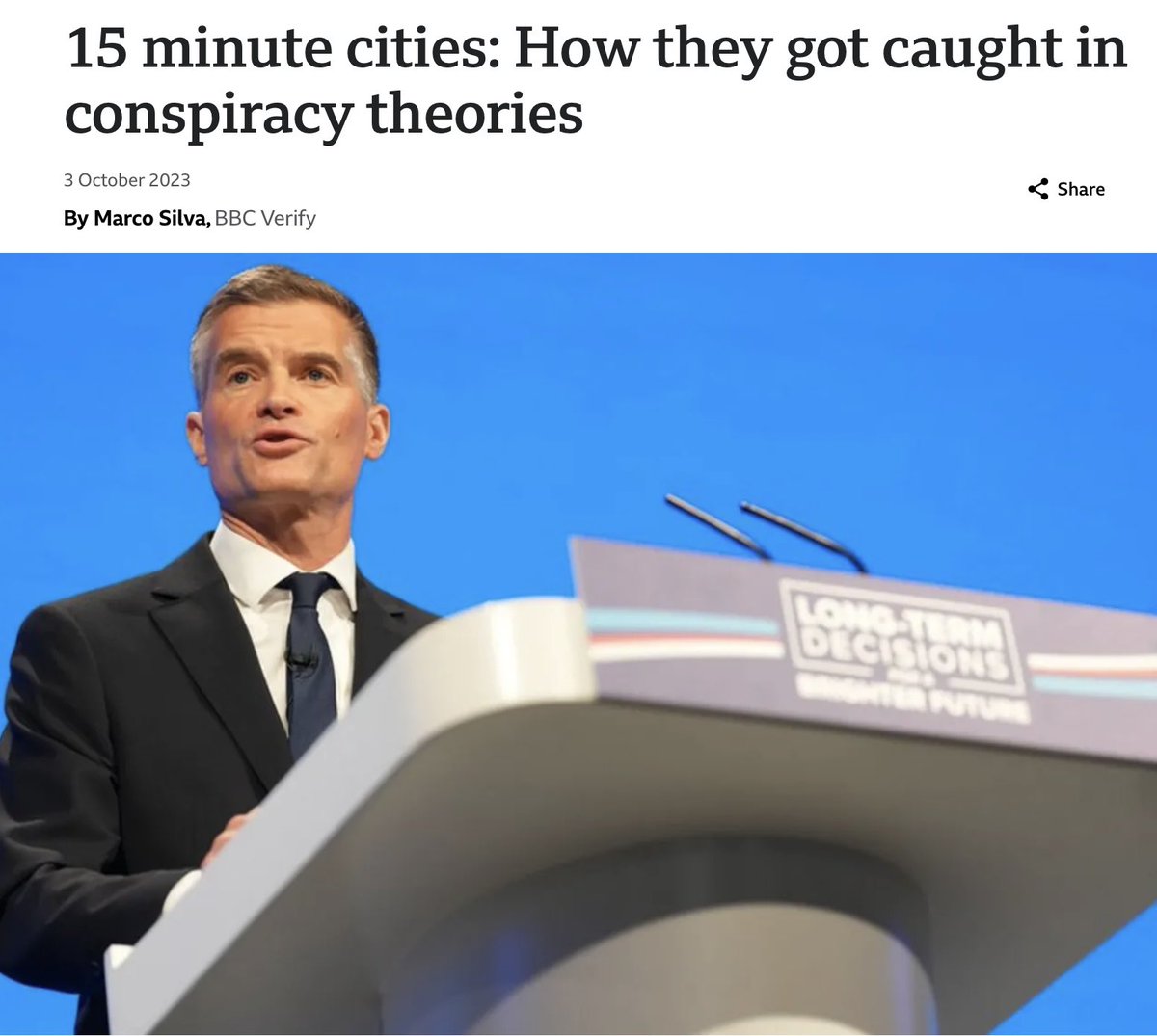
Well, to be fair, ideas like 15-minute cities ask that question. Very quickly set upon by weaponised social media zombies sponsored by the economy crowd.
The economy crowd know their enemies. /13
https://t.co/aCGttAI1yq https://t.co/TTxdyyQioX
Lockdowns were an existential threat to them. Not only was the disruption that generates economic ‘growth’ interrupted, people even began to get a share back of the common-wealth of societies, through pandemic payments.
And they began to get a taste for home again. /14
So the economy crowd went to the trenches. Massive and sponsored social media campaigns of hysteria about freedom and control.
It’s not a goodies and baddies thing either. People also LOVE travel, they love displacement. /15
I’ve always felt an outlier, when I travel. Like I’m constantly barging into other peoples homes. Which is what travel is.
The beautiful places we travel to are beautiful *because* they were previously made that. By people settled there. /16
Not in the economic way of settlement (dispossession), but in the home way of groundedness. Travel and its economic settlement is destroying those places, at an increasing rate.
And we’re all culpable. /17
Nothing is more difficult than convincing Western people to not travel. To stay home. To be settled. They don’t want to do that because it forces them to confront the world, without continuous distraction.
That may seem the opposite of what I’ve said above. /18
But Westerners love travel *because* they can come home after it. Just as they love coming home from work.
Very few live lives of continuous displacement, with no home-base. That’s what refugees live, it’s an appalling life. /19
Our supposed passion for ‘seeing new things’ is fake. It’s just distraction. Like all peoples and organisms, our most fundamental passion is to be grounded.
To have a place to call home. /20
We have shit jobs, and travel allows us maximum distraction from that basic reality. It’s why it’s so popular. If we had to sit at home contemplating our lives, we’d be much less happy with our work.
And the economy loves this, because the more we dislocate and move? /21
The more money it generates. The more new people and resources are freed up to feed into the great centres of accumulation.
As the cliche says, we’re not human beings now. We’re human doings. Always busy, always moving. Never settled.
Children of empire. /22
But deep down, it makes us unhappy. Deeply unhappy. When the movement stops, like in musical chairs, we get confronted by an existential emptiness through lack of groundedness.
Home is that groundedness. As our Indigenous peoples say. Land is the most sacred thing. /23
Place. Not space. Space is what a travel culture does to place. Everything becomes just a location on a map, an address. To move through, to ‘see’.
Now our young can’t even afford an address. Let alone create any form of place. /24
It’s time to settle again. To reinvent place. And stop destroying every other organism’s and peoples’ place, for our distraction. To re-route our desires towards groundedness. /end