We saw the same shift to ‘off-grid’ living during the economic crises of the 1970s. It’s a false dawn, a…
We saw the same shift to ‘off-grid’ living during the economic crises of the 1970s. It’s a false dawn, a bucolic delusion. Like most tree-change, it’s not a retreat to a more simple life. It’s a desire for the same comforts, for less money and with fewer neighbours. /1 https://t.co/oEyvBa5XZ1
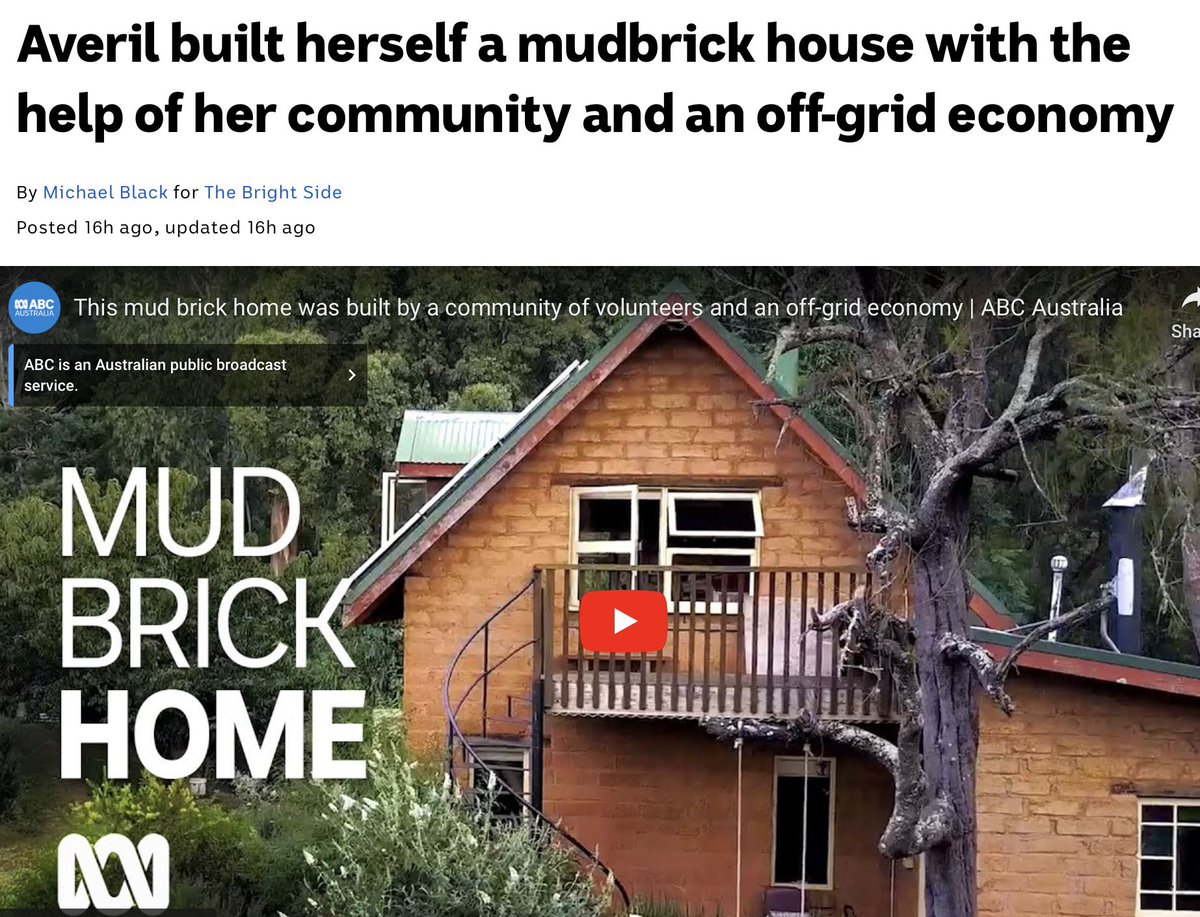
When you track what happens with many of these off-grid homes, they’re often re-sold years later at vastly inflated prices. The off-grid communities become gentrified boutique lifestyle locations. Here’s an example, Crystal Waters Permaculture village. /2
I spent some time there in my 20s, doing a Permaculture design course. (I grew out of it.) Current listings there are a block of land, mostly steep, for $450,000. This is the story of our entire ‘country’ areas. We don’t have city and country. /3
https://t.co/2aulxC8rlq
It’s one model. What we call the country or bush is just the seeding of new urban life. With more space and fresh air etc., but left to run it soon reproduces the city form it pretends to be escaping from. It plays out in every country town. To go off-grid, you need a grid. /end