One of DH Lawrence’s most interesting analyses is desperately needed in a ‘mis/disinformation’ age. The role…
One of DH Lawrence’s most interesting analyses is desperately needed in a ‘mis/disinformation’ age. The role of knowledge in peoples’ lives. Lawrence had the unpopular view that knowledge is a specific vocation, that should never be shared in a mass way. /1 https://t.co/b21Lrnqu0H
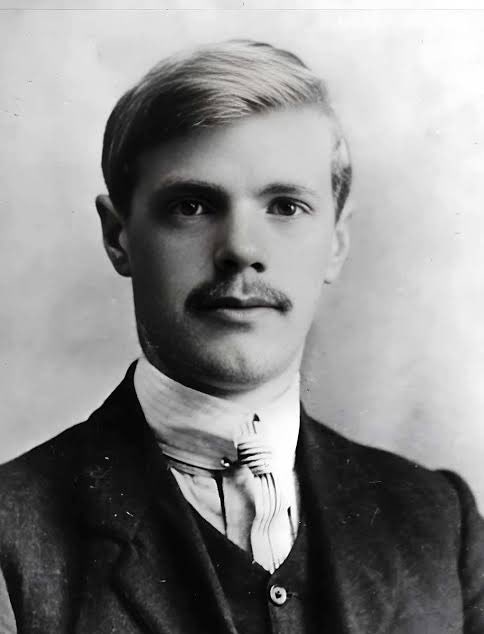
He saw what some call the ‘democratisation’ of knowledge as a catastrophe for societies. Which of course today would be seen as outrageous elitism. But peeling back the obligatory outrage we evoke for everything now for a minute, to get to the specific ideas? /2
To question the default here, that knowledge should be the right of everybody to engage with and own. Do we believe that for anything else humans do? Do we think everybody should be allowed to fly a plane without training, or wire their home, or do surgery? Of course not. /3
For every other activity humans engage with, there’s a sensible recognition that people need aptitude, training and experience to be trusted to do a specific job. What Lawrence saw was the total lack of respect for knowledge, that led to it being seen differently. /4
What we paint as a liberalisation or democratisation of knowledge is actually gross contempt for it. To allow all knowledge to be DIY is to say it’s worthless. That it requires no extensive training and experience to master, something we’d deny for everything else we do. /5
Lawrence said beliefs and knowledge are dangerous, lethal for societies, if not regulated by the sorts of training and experience that we use for everything else. That just as some people have a specific vocation for plumbing, only some will have a vocation, for knowledge. /6
The importance of scholars and scholarship. That, as a specific vocation, with its own specific rules, the sort of rules we see as vital in any other human activity. Rules institutionalised in places like universities - it’s why they exist. Not as job-training factories. /7
Lawrence in a series of brilliant essays describe how this rot starts, in schools. (He began his career as a teacher.) Where the older models of accepting only some small cohort of students would have aptitude for scholarship was replaced with ideas about mass education, /8
He saw how that generated a burning anger in those not suited for this work, a seething resentment focused on those who were, like requiring all students to compete at an elite level in athletics. Most will fail the latter, and also the former. And it will make them angry. /9
Where previously they would be allowed to pursue their own specific vocations, and would ignore, tolerate or even respect those who pursued the specific vocation of scholarship, now they would be made to feel stupid. By forcing them to take on work they’re not suited to. /10
Leading to a society I think we can see pretty clearly today, where everybody is encouraged to believe that ‘democracy’ is the right of anybody to think anything, about everything. And to challenge that right is to evoke the anger of those who were forced to be faux scholars. /11
Who now see all scholarship as a sham, who embody the maxim ‘a little knowledge is a dangerous thing’. Who have zero respect for scholarship, because that respect was shredded through years of hated schooling. Some people hate sport, because of forced participation in it. /12
This is the same, but for knowledge and scholarship. But also worse, because while those who hate sport don’t pretend they’re good at it, those who hate scholarship are convinced it’s not even an area of expertise. Anybody can Google anything. /13
There’s little to no visibility of the specific mechanisms of scholarship that create the knowledge studied in schools. For students, it just seems to appear there, like something would in a Google search. Why would they respect an activity they’ve never seen or heard of? /14
In an environment where they’ve been made to feel stupid, struggling to undertake tasks for which they have no vocation? As Lawrence would say, what is so wrong in acknowledging that working with knowledge is a specific expertise, that takes a specific vocation and work? /15
Welcome to the world, 2024. Where there’s no rank with knowledge, no way to say that something is just plain wrong, because it has no scholarship behind it. Where to even suggest that is to be seen as some elitist autocrat. Where to trust scholars is seen as laughable. /16
They’re part of ‘the elites’. Once upon a time you could counter some of this by example, like’ well you’d still go to the doctor if you’re sick’. Now people don’t, they look to influencers for healthcare. They reject basic vaccination. Etc. The march of populist destruction. /17
We need to recognise knowledge and the scholarship that creates and maintains it as specific vocations, undertaken by specific, trained people with their specific expertise, inside their ancient institutions. But that now seems a dream. And Lawrence would say, we did this. /18
By not acknowledging knowledge as a practical human activity, requiring specific practical skills and disciplines. By not allowing some, likely small, number of people to be seen as good at that, just as we think about other areas of human activity. /19
Lawrence would also say we misunderstood something basic. That it’s unquestionably true that there is no socio-economic or class basis to this specific vocation. He was living proof, a brilliant mind, from a very impoverished background. But our response to that? /20
We engineered schools to make everybody do the same scholarly work, rather than get better at identifying those, from any area of life, with a vocation for it. A sort of dumb massified response to an essential insight. What that produced was anger and resentment. /21
Amongst the kids with no vocation for this work. Towards those who do have that vocation, now playing out in adult life, across the world. /end