I know many people who despair at the challenges we all face as societies, and that little is being done…
I know many people who despair at the challenges we all face as societies, and that little is being done about them. There is comfort I think in understanding what’s going on, putting it in context. None of this is really new. About why history repeats, and how to stop that. /1 https://t.co/X1O9GxFeSZ
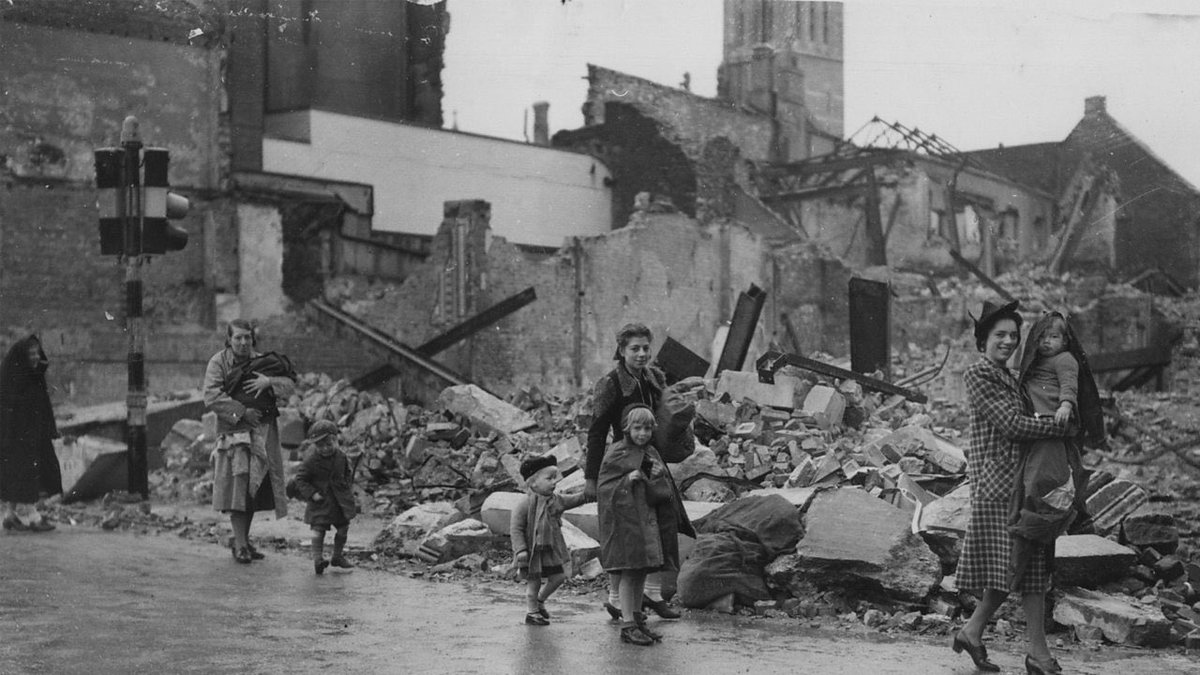
The truth of human societies is in some ways both brutal and simple. Humans are social creatures, first and most fundamentally. That doesn’t mean they’re naturally warm and cuddly and peace-loving, it actually means the opposite. Because sociality is driven by status. /2
Left to themselves, humans create groups, where 95% of the group follows the lead of 5% of the group, who are the high-status members. At all scales. A whole range of things create status, there’s no rule, it’s about human desires and how they’re operating at a point in time. /3
These groups then compete with other groups in imitative rivalry. Imitation is the key social act, it forms both the groups themselves (where the 95% imitate or emulate the 5%), and also then drives competition between groups. Why I call groups ‘teams’. /4
Because this mechanism is very similar to team sports. It’s why we LOVE team sports. They’re a window into the DNA of all human culture. Most of what I see here every day for example is people being part of some team or teams, and competing against other teams. /5
Zero Covids vs Infinite Covids, EV-lovers versus ICE-lovers, climate change action vs inaction, Left vs Right, etc. All team sports. The issues they discuss are important, but are hijacked for the team sport. The issues become the football in the game. /6
If societies let this mechanism carry on for long enough, eventually things collapse, as we see for example in many South American countries right now, where gangs more or less run the show. This is the great lie of the ‘freedom’ of libertarian political ideas. /7
That just leaving people alone to do whatever they like leads to a life of freedom for all to pursue whatever life they prefer. It does nothing of the sort, it surrenders humanity to continuous competing teams, fighting for status. Gang warfare. /8
Humans don’t, EVER, exist as free-floating individuals. They’re social, they exist in groups. And these groups are created by imitative rivalry, both internally and then between groups. The constant battle for status and team victory. So how do we get beyond this? /9
Historically, only one way. Through total catastrophe. The team sports eventually lead to complete social collapse, war, pestilence etc. Only that has the power to disrupt the social imitative status mechanisms. Humans are forced to devise collective ways to fix things. /10 https://t.co/t1SGPMZRL4
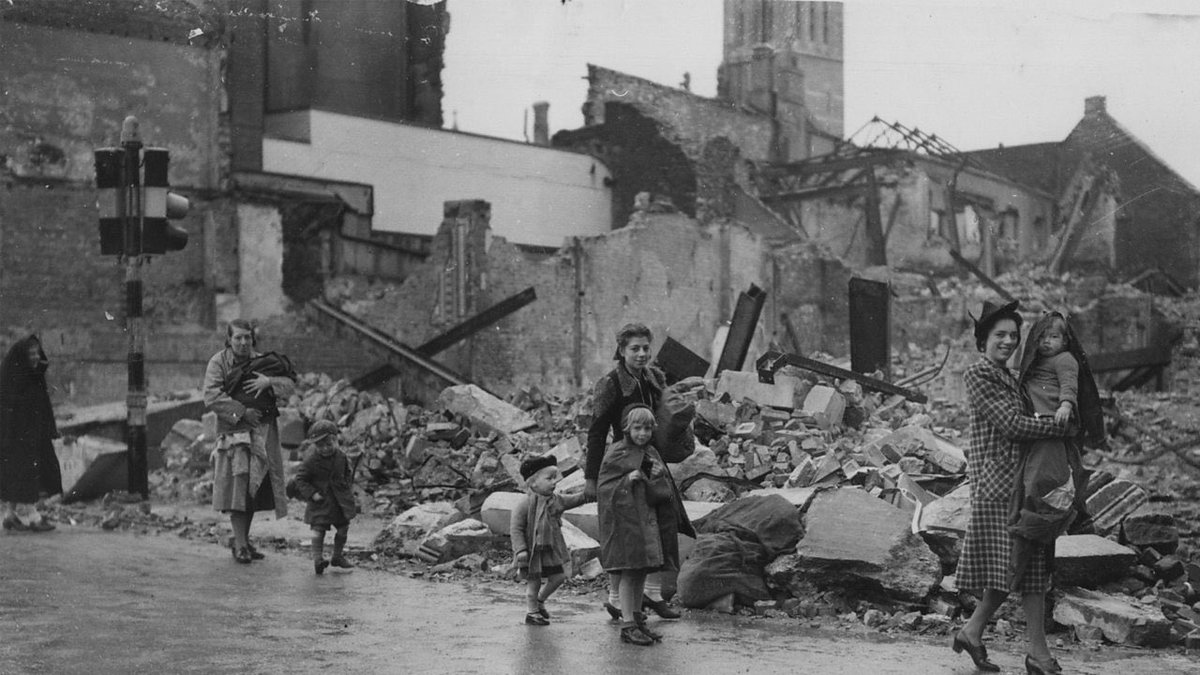
To survive, not because they want to. It goes against all of the imitative rivalry of social life, to do it. In the world wars, those status hierarchies were largely destroyed, society was levelled. Leading to the construction of a new ‘public’ space. Our past 70 years. /11
Here it is, through one powerful lens. You can see that from about mid-century, post-WW2, life got very good for us. We were healthier than we’d ever been. And richer. And why was this? Because we were forced to create collective mechanisms to service public life. /12 https://t.co/7MmWv0sdQP
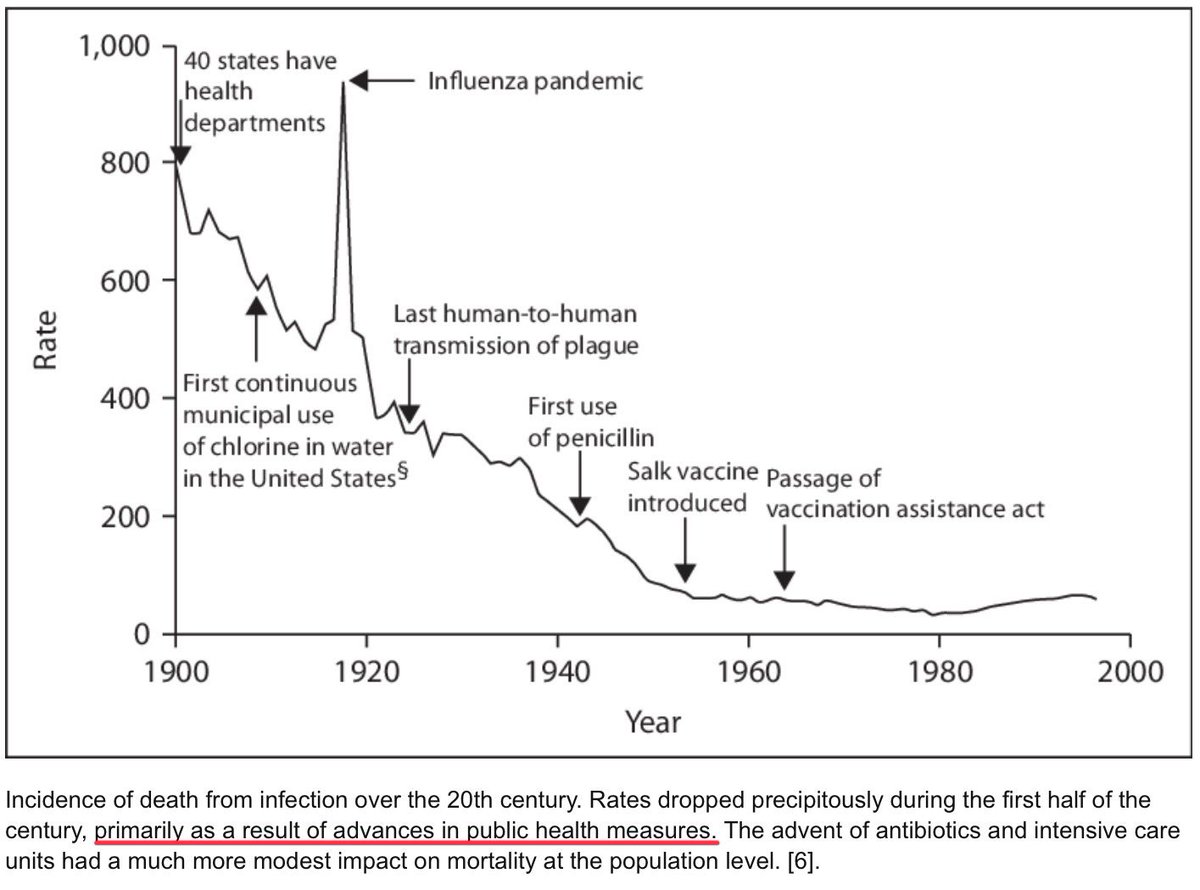
It was the wars and the Spanish Flu pandemic that created the public institutions that built our god-like good lives of the past 70 years. We planned and coordinated and organised societies, to work better. Rather than leaving it all to status hierarchy games. /13
But as night follows day, leave that good life to run long enough, say a generation or two (70 years), and people quickly forgot the origins of that good life. The collective action that created it. And so, as always happens in history, status came back. Imitative rivalry. /14
You can see it, from about the late-1970s, the push to remove all of these public institutions, as ‘red tape’ and ‘bureaucracy’, in favour of ‘markets’ of free-acting individuals. We see that as an economic shift, but like all human things, it was a social shift. /15
It was a set of convenient ideas to bring back status-driven imitative social life. Back to the gang warfare. Where apparently free markets are really just continuous waves of fads and fashions, creating status and power/wealth for some teams, and not others. /16
This is what societies will always default to, which in social terms is a type of feudalism. 5% rule, 95% follow. And that 95% are eager to follow, everybody clamours for status. Look at what happened in Oz schools when people got the choice of status privates or public. /17
We’re so used to thinking ‘democracy’ is anti-feudal that we assume feudalism is a bad thing, by definition. But it’s how societies always operate, without catastrophe. It’s not people being oppressed, people again clamour for status. They LOVE it, the team sports. /18
As an historical aside, one of the reasons I’m certain the Catholic Church was able to sustain social cohesion for so many centuries was that it introduced an entirely different element to this social mix. It took the top of the status hierarchy, God, and sacrificed him. /19 https://t.co/aQ6ckOnl3L
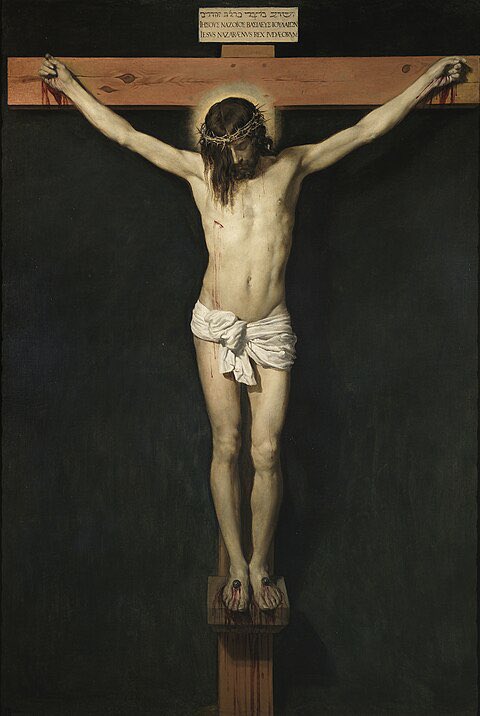
You don’t have to be ‘religious’ to understand how this was different. To take the top of the status hierarchy, and have that top surrender that status entirely. To go so far as to allow themselves to be killed, to tame the imitative rivalry. Rene Girard saw this. /20
But that’s a topic for another day. It shows though how these basic social mechanisms are there throughout history, and today is not fundamentally different. We lived historically unprecedented lives, here in the West, for the past 70 years. Because catastrophe made us. /21
Sadly we may now need it to save us again. But the rest of the world will look on and think ‘about bloody time you came back to the pack, and lived the lives again we never stopped living’. /end