Always think socially. Culturally. The idea of a generation implies humans shaped by an entire lifespan and…
Always think socially. Culturally. The idea of a generation implies humans shaped by an entire lifespan and the events that occur during that 50-100 years in time. But for some time now, Western humans are shaped almost exclusively by just one decade of their life. School. /1 https://t.co/5sNVvDURry
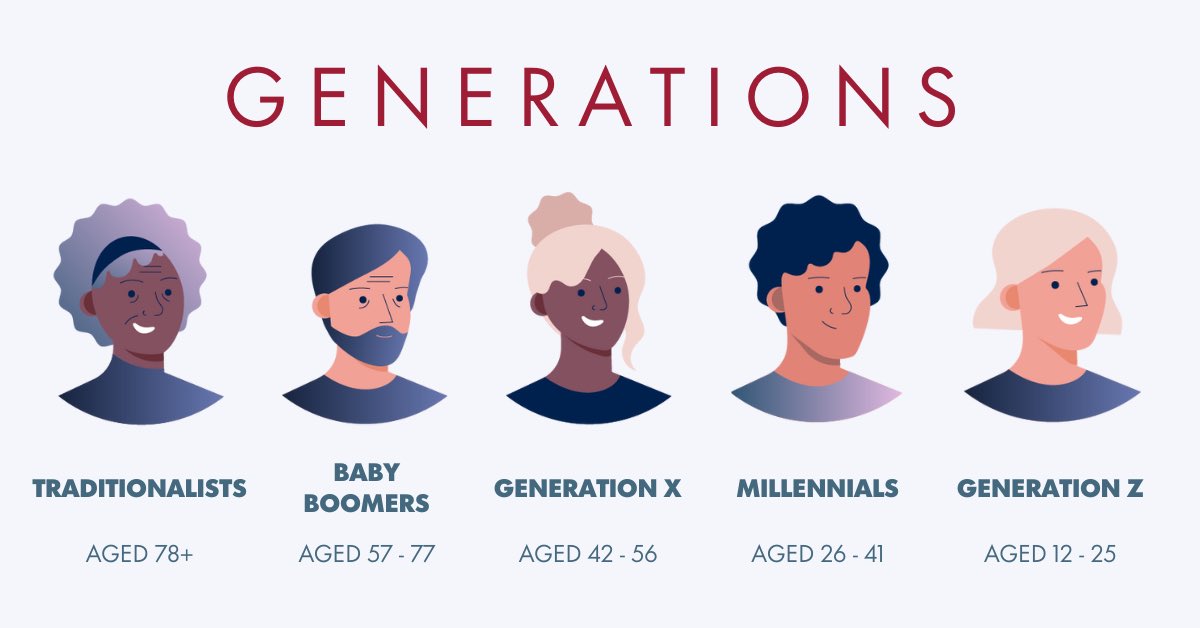
Like I Tweet a lot, societies changed fundamentally when they invented schooling separate to the adult world of work. That’s the point where kids no longer took their cues from adults, except teachers, in a highly structured environment. - the school. It was a CULTURAL shift. /2 https://t.co/l1OFfr1BUB
To extend what this means. It means the rough decade you spend in school is the decade you live more or less for the rest of your life, culturally. It’s your cultural reference point. Lives are no longer defined by various stages, from infant to toddler, to child,…/3
…to adolescent, to adult, to middle age, to old age etc. They’re now infant-toddler-child-adolescent. The generational process was curtailed at high school. From teenage years onwards now, socially and culturally, the majority live as adolescents for the rest of their lives. /4
Not in biological age, but in social/cultural reference points. Ways of seeing and understanding the world. The decade you were at school, and particularly high school, becomes your main adult worldview, for the rest of your life. People aren’t Gen Y or millienial or boomer. /5
They’re 60s kids, Or 80s kids. Or 2010 kids. Etc. Their founding decades at school shape them. You can see this most obviously in the obsession every age now has with the popular music of their decade. Which doesn’t end as they grow biologically older. /6
That’s their decade-school-bubble. They leave school, and instead of entering some adult world that previously existed, they now become just one more adolescent decade-bubble broken free from its base, to bobble up against all the other decade-bubbles. /7
The soundtrack varies between bubbles, because popular music will be different in each decade. But the social and cultural framework, including the central role of popular music, and the popularity team sports of school, is identical across all bubbles. /8
It’s not just what music people like and its centrality to their life that is the school culture. It’s the ways people organise into groups (what I call ‘teams’), at work, in politics, with popularity as the currency. The social media world of ‘likes’. That’s school culture. /9
Likes, and elections, the latter now increasingly replaced with daily trends on social media, a 3-yearly electoral ‘like’ is woefully insufficient for popularity-based culture. Now it’s done every minute of every day. What’s ‘trending’. None of this is analogies. /10
This is our culture now, it was a fundamental shift in how we organise our societies. Societies are 100% social. All of the grown-up categories we think distinguish an adult from a child world, like ‘the economy’, are really that same adolescent school culture, rebranded. /11
Look around at the decade-bubbles, not at the old demographer’s generations. That’s society now. Maybe as school attendances continue to drop, we’ll see another shift in this coming century. But for now, it’s all decades-bubbles. /end