When ‘live with the virus’ became the guiding idiocy of this pandemic, conceptually we should probably have…
When ‘live with the virus’ became the guiding idiocy of this pandemic, conceptually we should probably have shifted from immunity as the guiding principle, towards symbiotic classification. Ecological relationships. How you live with another organism is much more important. /1 https://t.co/C0ijcD1vS4
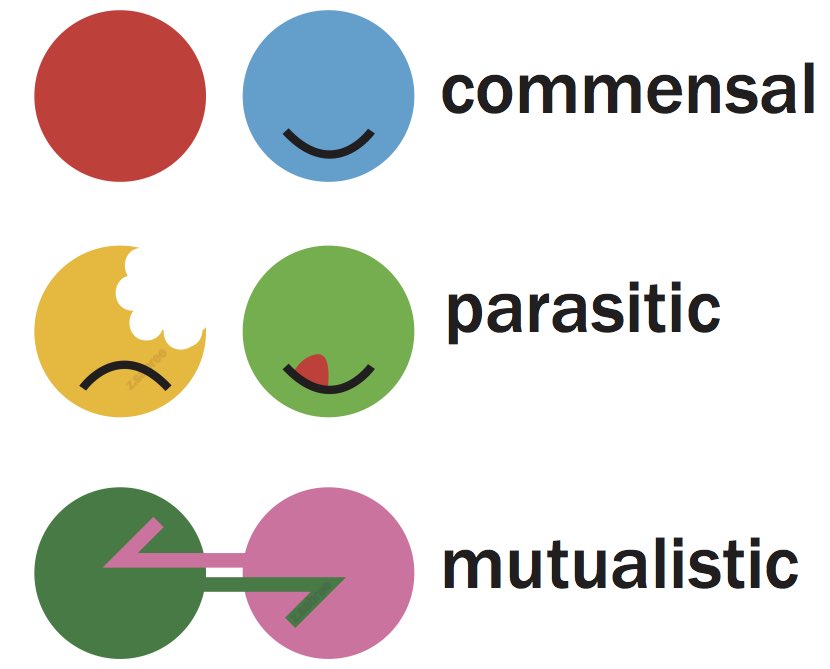
Covid-humans is not a commensal relationship. We as the hosts are clearly harmed. There’s also amensalism (not shown), where Covid would neither benefit nor be harmed, but we would be harmed. We are harmed, and SARS-Cov-2 seems to benefit, so that’s not it. /2 https://t.co/o6ztKkl6Ik
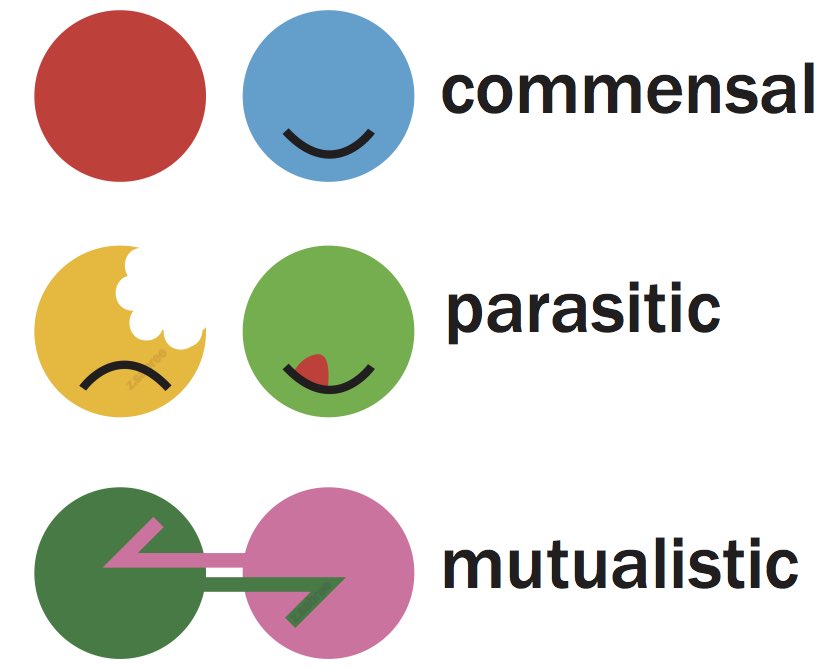
And it’s clearly not mutualism, because what possible benefit is SARS-Cov-2 infection bestowing on us as the hosts? So that just leaves parasitism. Politicians and Covid minimisers clearly think we’re creating a commensal relationship with SARS-Cov-2. /3 https://t.co/WOiUbUNO1L
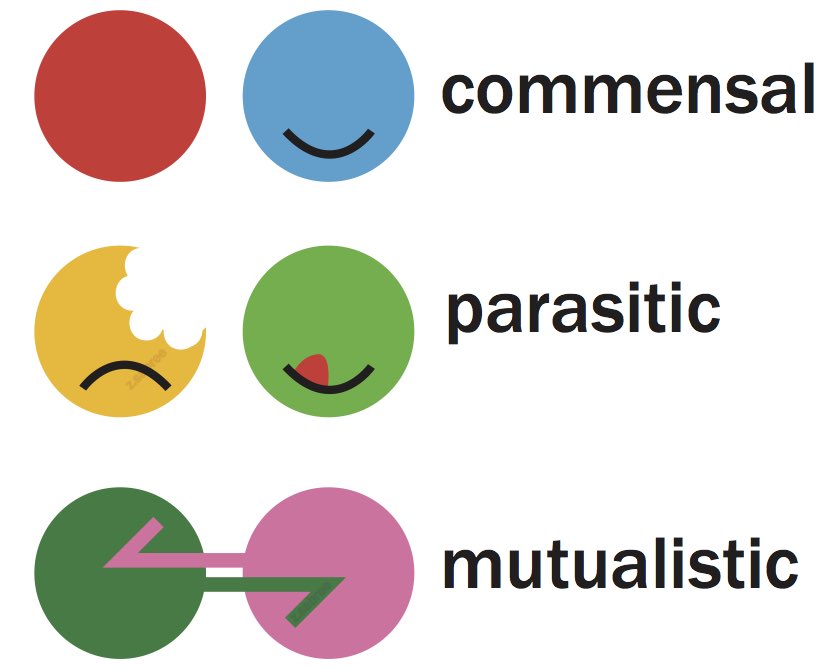
But there’s far too much harm to the host for that to be anything but laughably aspirational from a public policy point of view. We’ve invited a parasite into our lives and bodies. The reason I keep referring to the work of Paul Ewald is that this is his focus. /4 https://t.co/npBZDOUeqL
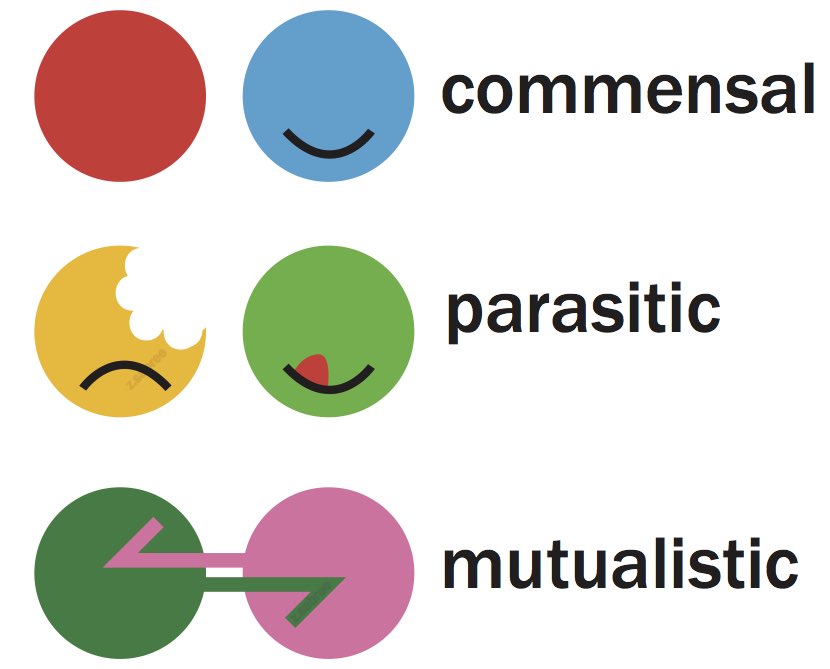
Acknowledging that we will always be vastly outnumbered by microbes, he believes the only sensible way to ‘live with’ them is to modify the ecological relationships we have with them. Which in turn can then help shift an evolution towards lower virulence. Towards commensalism. /5
Or perhaps even mutualism, depending on the case. The problem with immunity as a conceptual model, as we’re using with Covid, is that it’s fairly blind to these ecological relationships between organisms. ‘Herd immunity’ does try to capture it. But it’s not very useful. /6
Herd immunity has no consideration of virulence, simply amassing enough infection in a population to hopefully prevent further spread. And of course ‘living with’ Covid and at the same time saying we’re aiming for herd immunity are mutually contradictory strategies anyway. /7
Shifting the focus to the ecological relationships between the virus and ourselves allows for a whole range of possible interventions, many of which are spoken about. Changing the environment of that interaction, such as through modifying air quality. /8
Ewald’s research shows how the environment or context of infection an have profound impacts upon virulence, how the ‘vector’ can in turn shape the virulence. Mosquito-borne disease is often highly virulent for example, because the pathogen pays no price for damaging the host. /9
The mosquitoes will happily transport the pathogen to another host if the first one dies. A water-borne pathogen though can evolve to milder virulence if its ‘vector’ - the water - is cleaned up. When that happens, it’s in the interest of the pathogen to keep a host healthy. /10
Without water to transport itself to another host if the first one becomes ill or dies, it’s left with just that host as a possible home. So evolutionary selection will favour milder variants. Simple public health interventions such as fly screens may similarly promote…/11
…selection of milder variants of insect-borne disease. It starves the pathogens of hosts. DIsease is an ecosystem, not a binary between pathogen and host, mediated by immune systems. Even the immune system is an ecosystem. /end
P.S. from an evolutionary perspective, our current strategy of letting everybody get infected all of the time is likely the worst possible ecological approach. There’s no cost to SARS-Cov-2 for higher-virulence variants. It always has fresh hosts available.