The great hidden infection hypothesis. I love AIHW’s work, the charts are all from them. The common theory…
The great hidden infection hypothesis. I love AIHW’s work, the charts are all from them. The common theory says that mortality shifted from predominantly infectious disease, towards chronic disease, in the 20th century. Due to advances in vaccination and antibiotics, mostly. /1 https://t.co/dTCyQjwZ5i
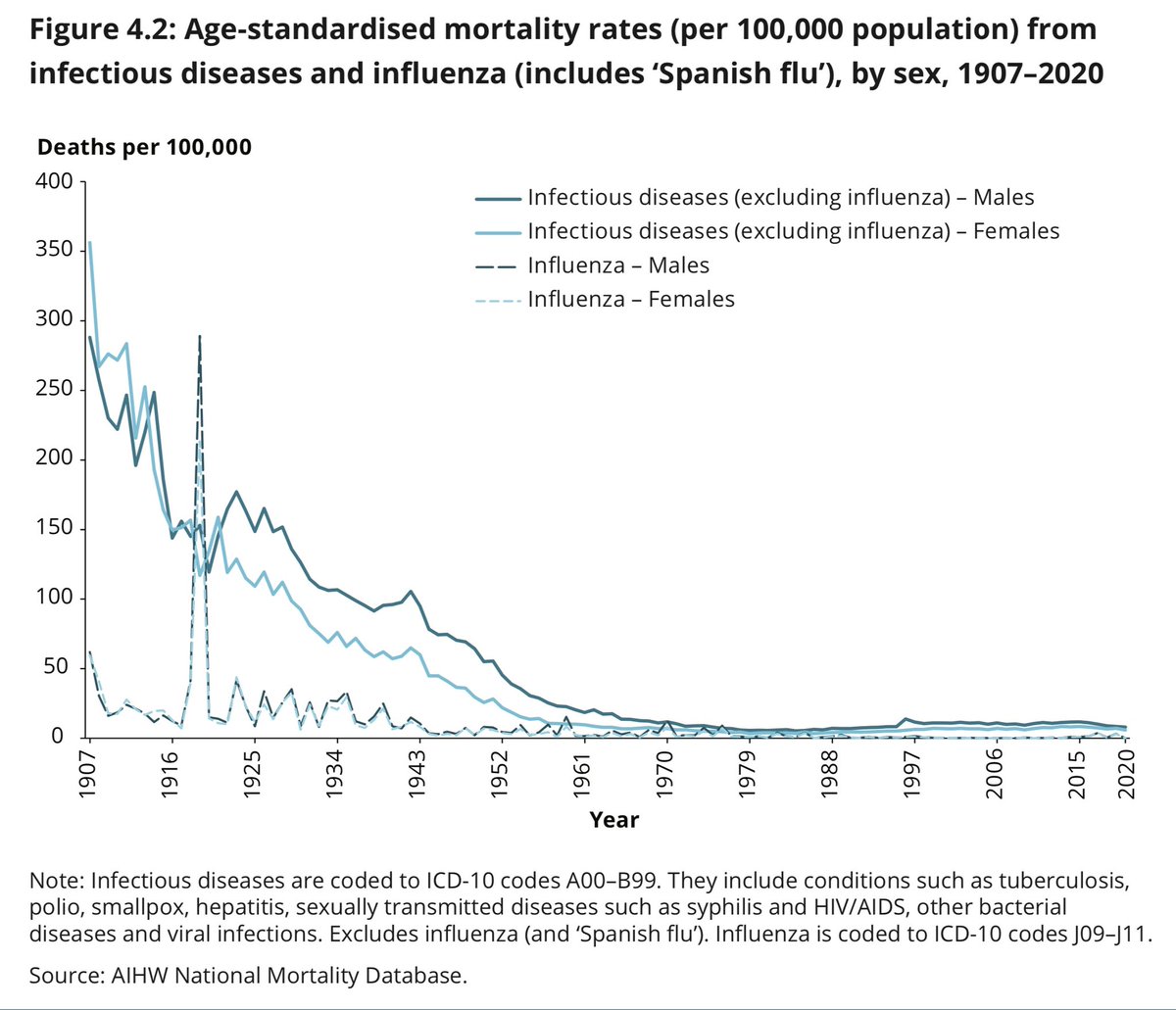
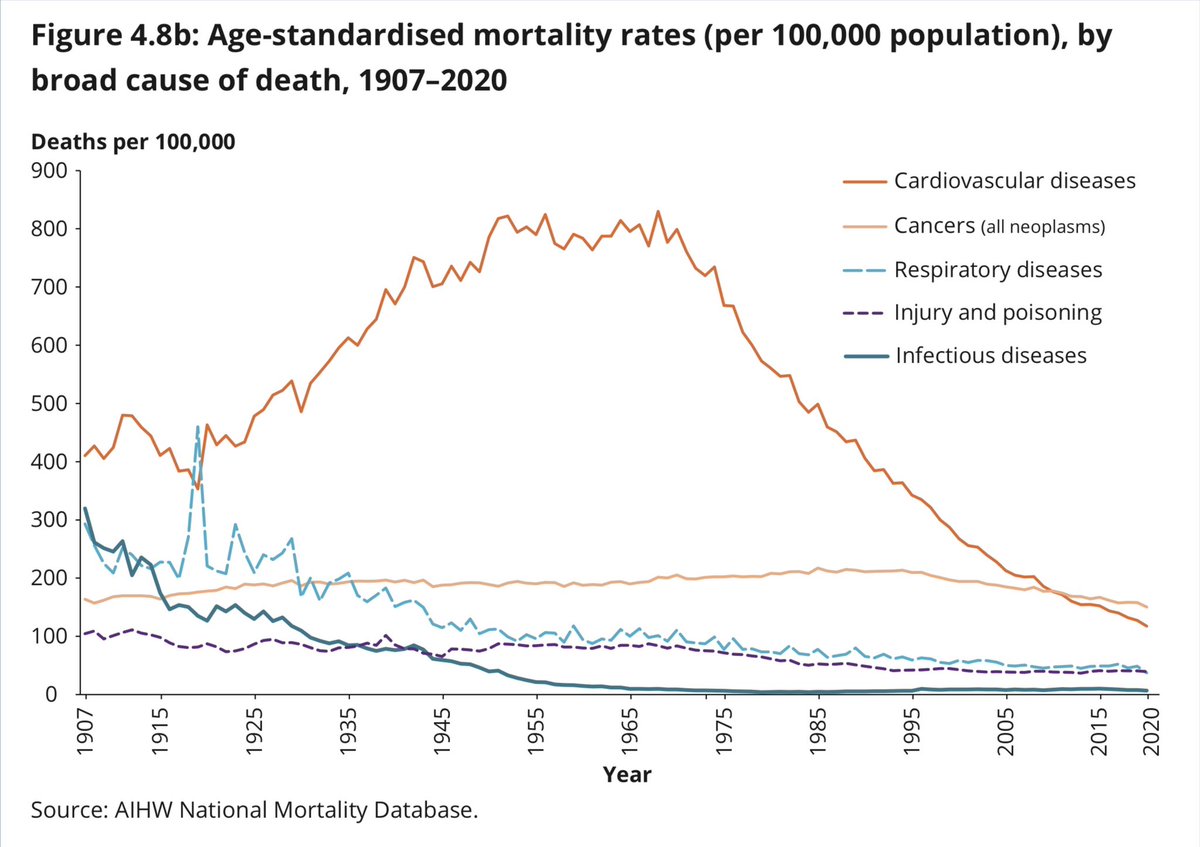
Here’s their chart showing the relative contribution of infectious and chronic disease to mortality rates, over that century. (I used the aged-standardised chart to shield myself from the actuarial glare of @KarenCutter4.) /2 https://t.co/g5OE08ow8q
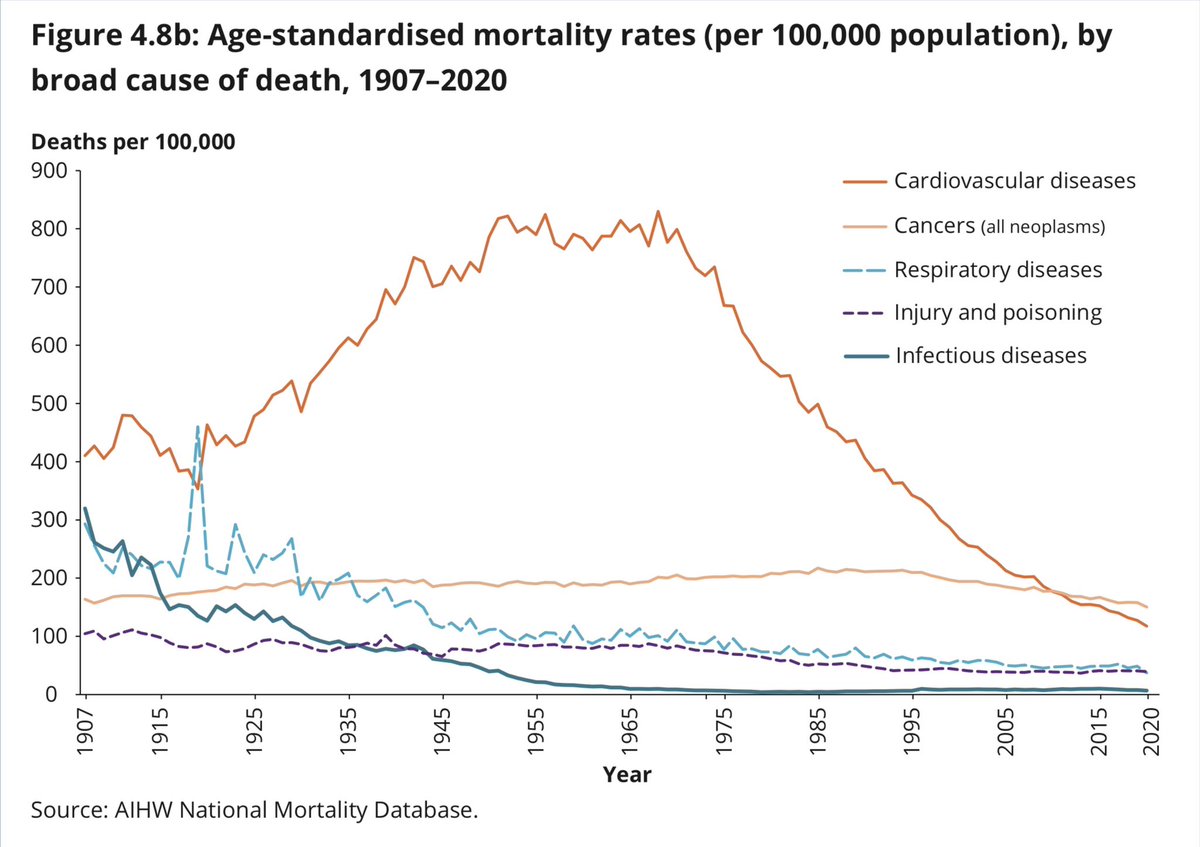
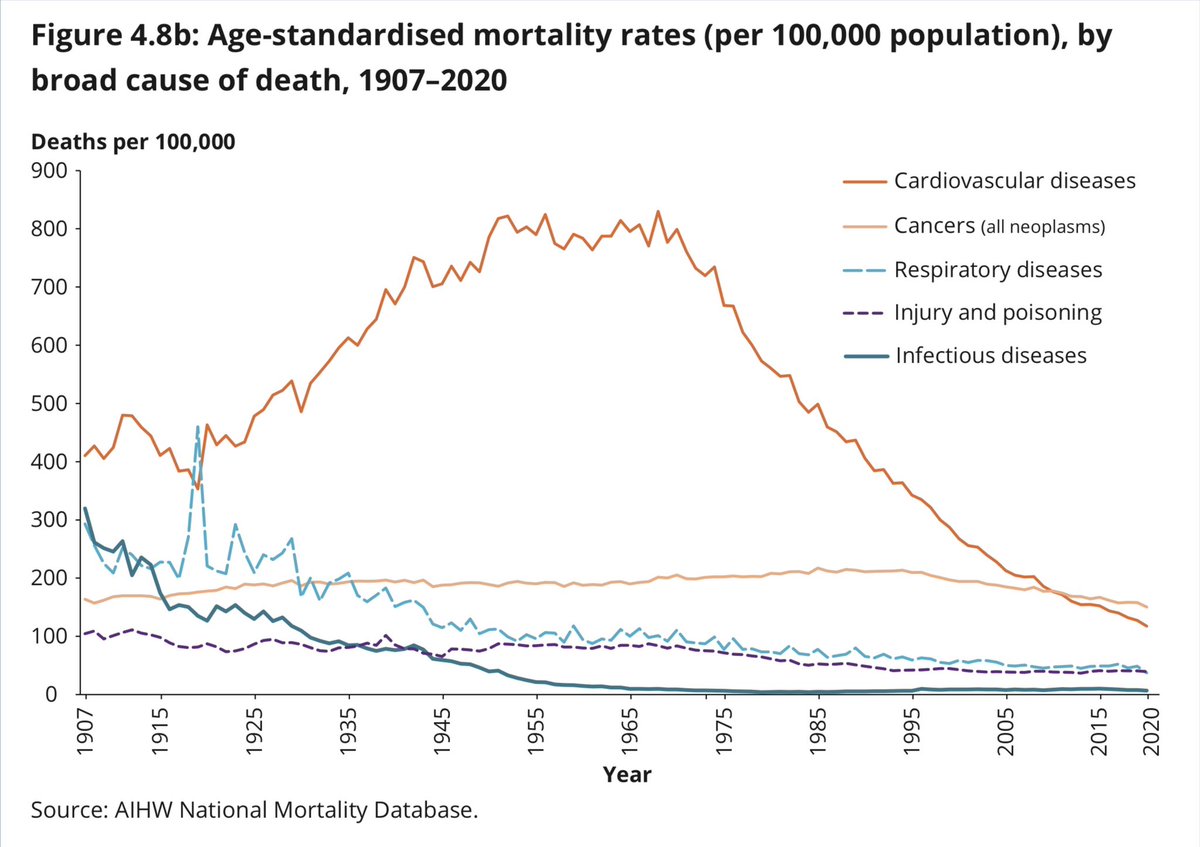
There’s no doubt at all that deaths from acute infection with various pathogens plummeted in the 20th century, much of it in children, but also more broadly. But look at the explosion of chronic cardiovascular disease, at the *same time* infectious disease was falling. /3 https://t.co/FCWJ2q165i
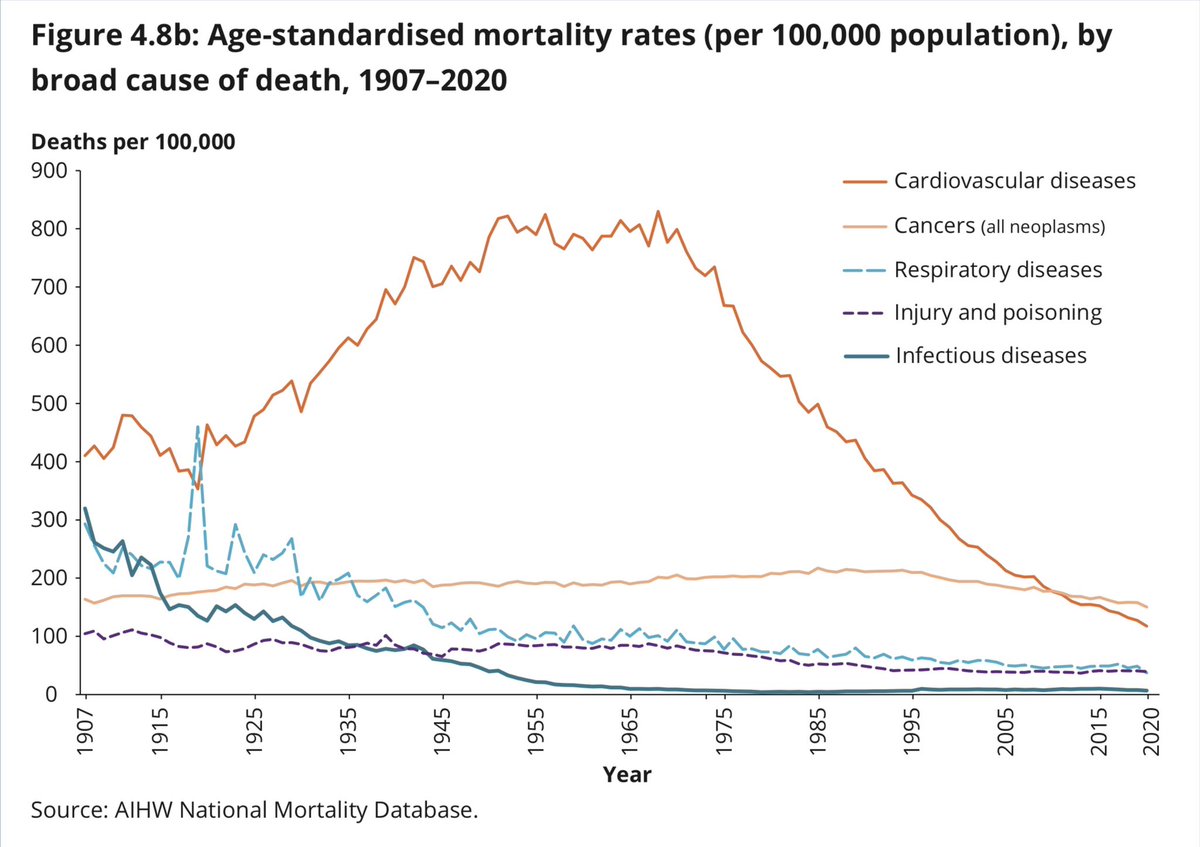
Nearly always people will tell you that was due to smoking, and poor diet. But the timelines don’t really add up. Smoking peaked in many Western countries, including Australia, in the 1960s, and then went into steady decline. Like heart disease, so it’s suggestive. /4 https://t.co/hNB2cyY0EC
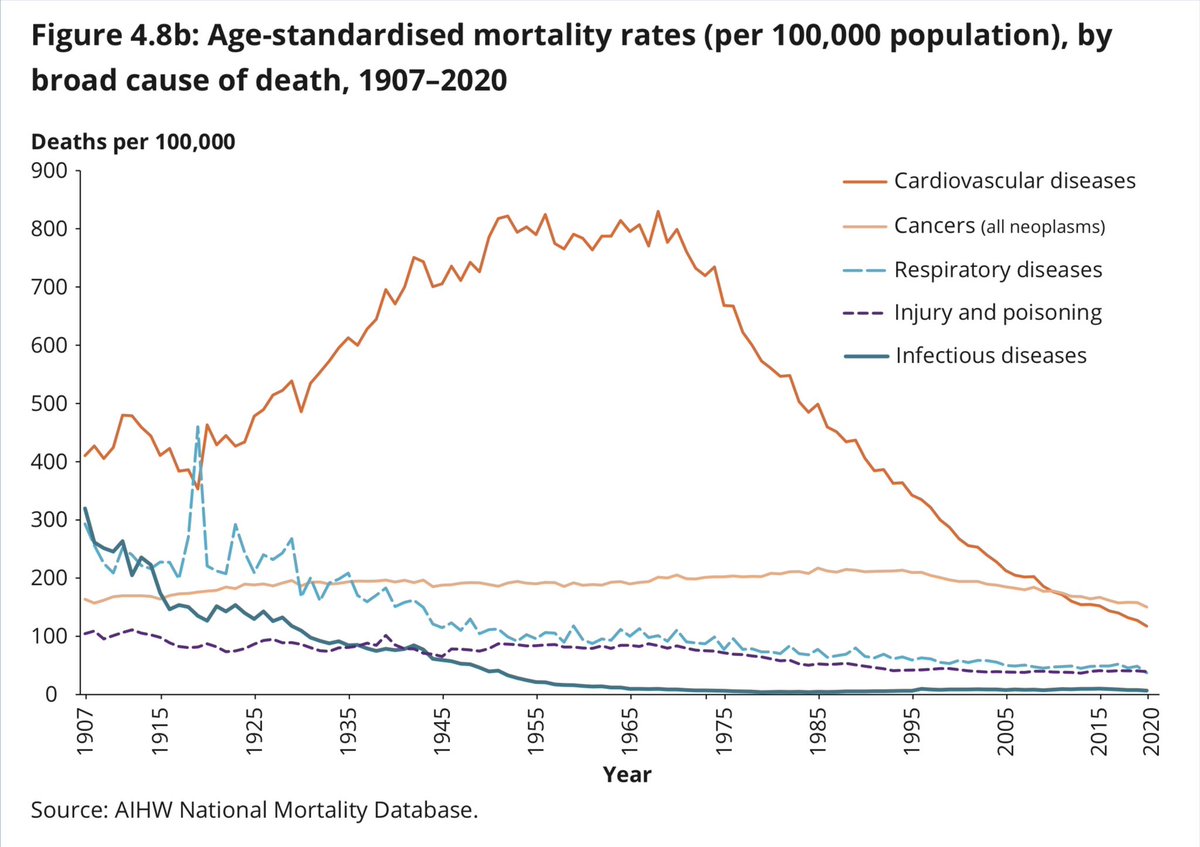
But it would normally take many years for smoking to cause heart disease mortality. (This in no way is a defence of smoking, which is a public health catastrophe. I lost my own father to smoking.) It doesn’t seem causal that the smoking curve and heart disease curves align. /5 https://t.co/Z01KmTj7xA
A big decline in smoking would, I assume, lead to a ‘pipeline’ effect of significant heart disease flowing through after that decline, for some time. Similarly the onset of mass smoking should lead to a gradual, lagged increase in coronary disease. /6
Neither of those are what the data seem to show. Similarly with diet, the saturated fat/cardiovascular disease hypothesis doesn’t match that it was a staple in human diets for centuries, but cardiovascular disease was (it appears) not an epidemic until the 20th century. /7
Which leads to the infectious origin of cardiovascular disease hypothesis, which is an area of research. Some even target the Spanish Flu pandemic as the major trigger of the cardiovascular disease epidemic in the 20th century. The chronic phase of that pandemic. /8 https://t.co/CdoVrHLzec
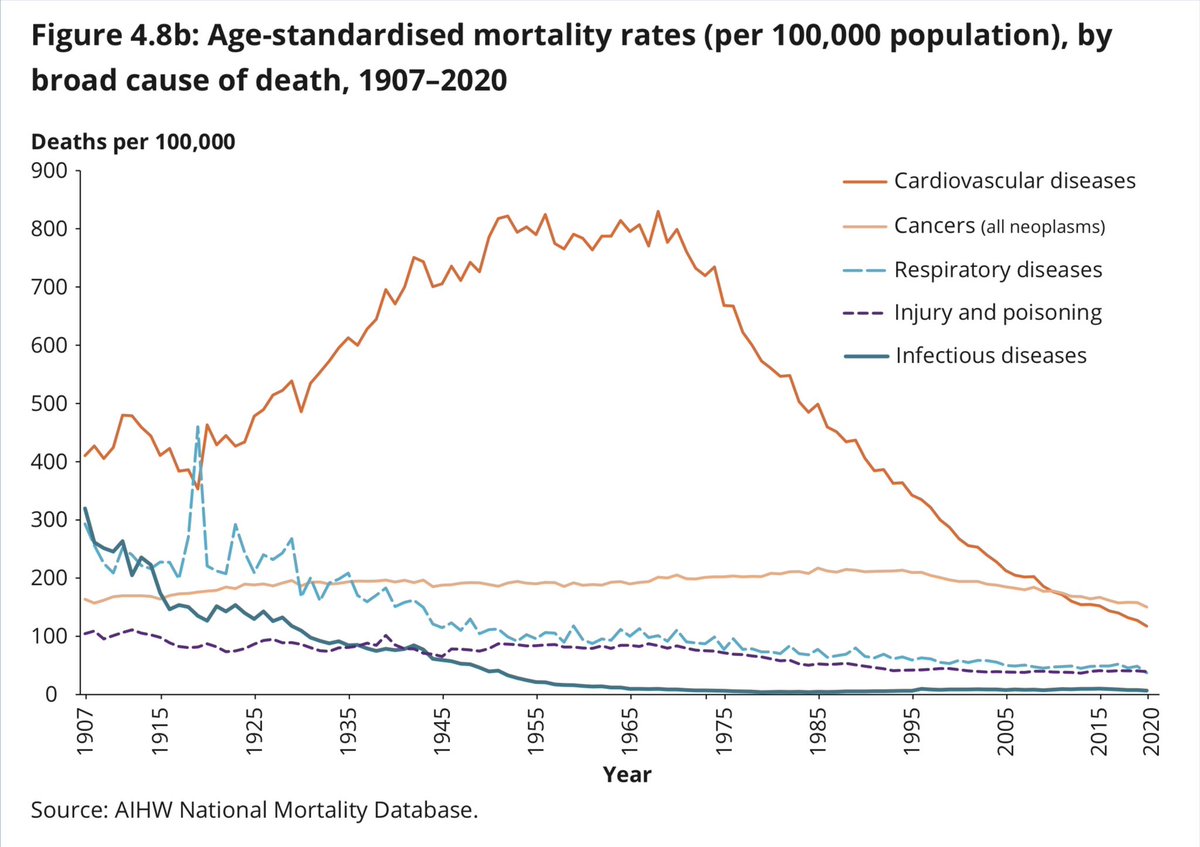
The timing matches better than the smoking hypothesis. A massive climb several years after that pandemic, rather than at the same time as the pandemic. And then a decline when the younger infected from that pandemic gradually died, from the 1960s onwards. /9 https://t.co/62MdUCcnZX
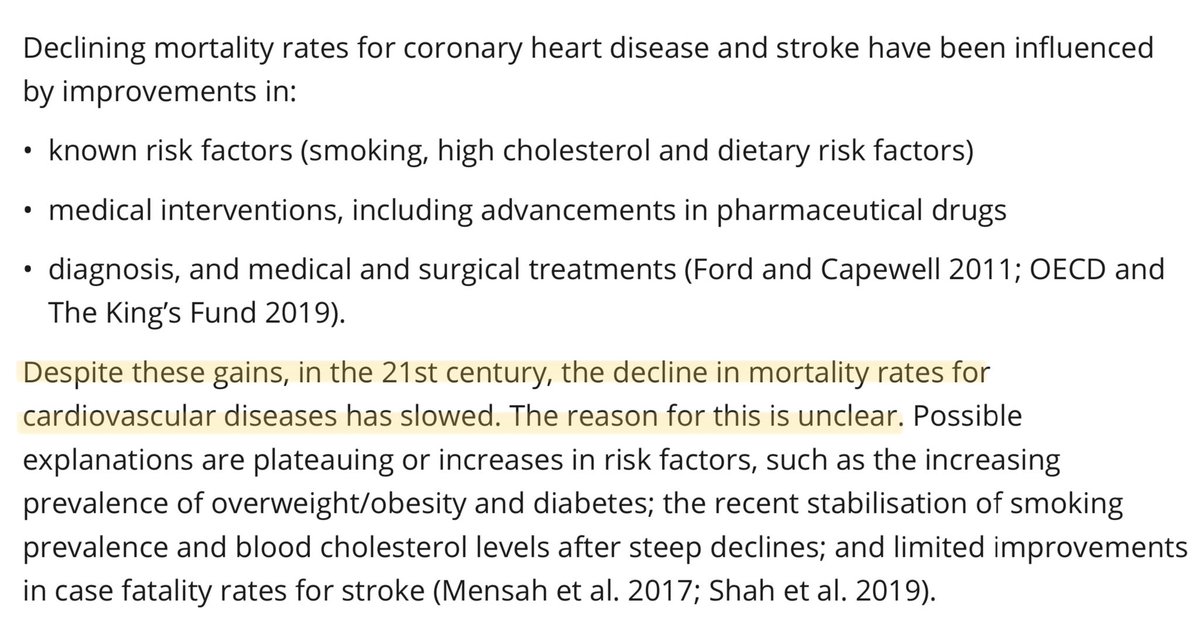
Interestingly, the AIHW report lists the usual explanations of that decline in cardiovascular mortality from the 1960s onwards: better treatments, declines in smoking, better diets. But those gains have plateaued, and as I’ve highlighted, “The reason for this is unclear”. /10 https://t.co/2ur9WYIAC7
It’s clearer under the chronic infection hypothesis. Whether its Spanish Flu or other influenza, or some other infectious cause, the diminishing gains against infectious disease as the century went on would also translate into persistent (lower-level) cardiovascular disease. /11
Cardiovascular disease in the 20th century follows an epidemic pattern. An infectious disease pattern. Ewald’s chronic infection as the great sleeper in health hypothesis. There’s also another way to assess this, in general models of the body. /12
Traditional health models have tended to favour a physical-chemical model of how the body operates. Heart disease happens when fat ‘clogs’ arteries, like a blocked pipe. The heart is a ‘pump’. Too much cholesterol (chemical) causes the fat deposits. Etc. /13
More engineering than biology, in the assumptions. The rapid growth of research now though on the microbial origins of much life suggests that the ecology of microbes might be a more powerful way to understand disease. The overwhelming focus on acute infection misses this. /14
We know microbes often like to linger, for years. Through reservoirs, or whatever mechanism. But once we’ve cleared that acute infection, we rush to assume we’re back to normal health. It seems extremely naive, given even a basic knowledge of how microbes operate. /15
Adding to this hypothesis is the now semi-regular revelation of an infectious origin for known chronic diseases. Those revelations are growing. We’re much, much too casual about infection. All infections. /end
https://t.co/nXH8YgdPgf