We are returning to a ‘normal’ form of life, but it’s not the normal of the post-war years, since 1945. If we…
We are returning to a ‘normal’ form of life, but it’s not the normal of the post-war years, since 1945. If we zoom out, what’s happening with Covid is part of a much greater historical shift, to unwind most of those post-war years. /1 https://t.co/Be0YEWOyZa
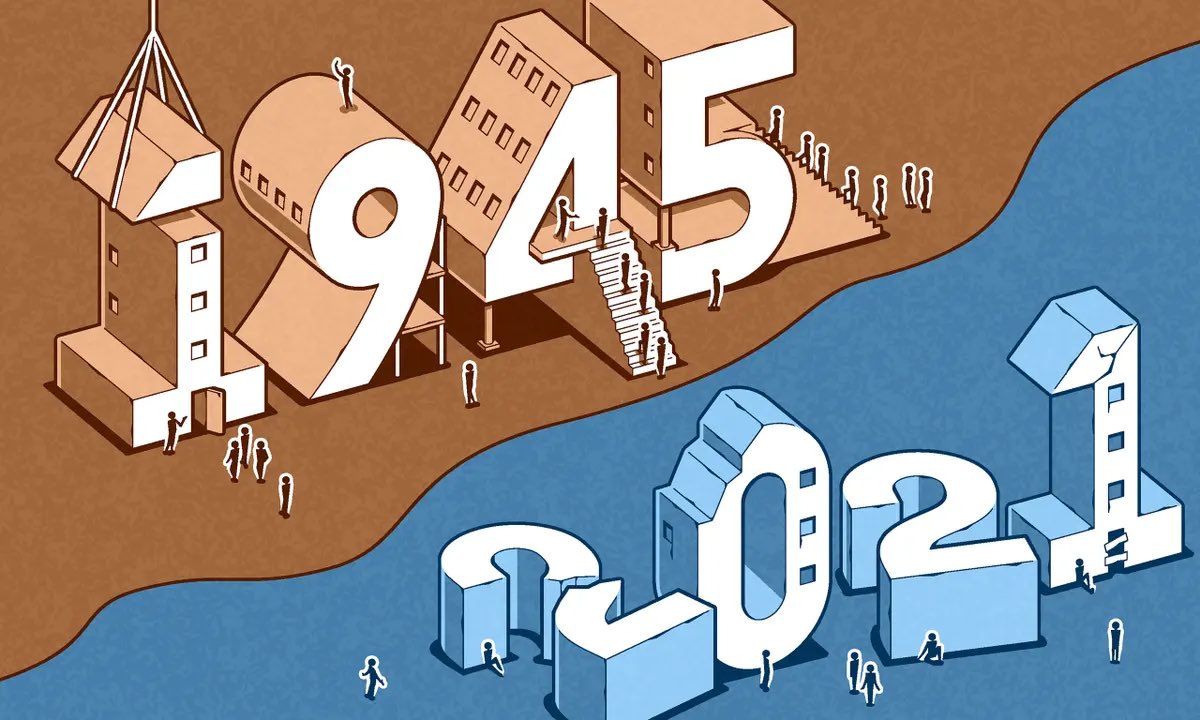
Wars and plagues, the only two things that really change politics. Everything else is theatre, team sports. The 20th century began with a global war, triggering a global pandemic. The mid-century period was dominated by a second global war. /2
Meantime the public health techniques we know about and which aren’t being applied now, mostly became operational in the late 19th century, in response to epidemics. And then the other major societal response to these great upheavals came post-WW2. The ‘welfare state’. /3
Just as public health was invented to respond to crippling social problems caused by disease, not because of noble foresight (elites invented public health to save themselves, which they’ve forgotten today), the welfare state was a similar response by elites…/4
…to rescue societies from collapse. To keep the lights on, to keep ‘economies’ going. It was desperation, the fear of social collapse, taking the economy with it. Then post-WW2, for several decades life seemed fantastic. On the back of these massive public investments,…/5
…there was little social conflict (welfare bought off the tensions), little threat from pandemics due to excellent public health systems. Wars and plagues had been temporarily tamed. But as Planck famously observed, social change mostly happens not because of thought…/6
…and innovation, it happens because one generation dies, with its ideas, and the next then gets to run with its own ideas. (The reason institutions are so crucial is that they allow ideas to transcend generations.) So during that great peace and prosperity post-WW2, whole…/7
…generations forgot what created it. Massive public investment and action. But the new elite generation that came to power in the 1970s forgot that, and began a process of erasing all of those 19th and 20th century public health and welfare actions. What we now call…/8
…the birth of ‘neoliberalism’, and libertarian politics. Just names really, you need to zoom out to see the true social movement it represents. It’s societies’ most common form, throughout all of human history, feudalism topped by some form of monarchical figure. /9
That monarch can be a president too. The US presidency is the most regal figure of power in the world today, populism has transformed that democracy back into the social form the US had desperately tried to escape. /10 https://t.co/1LDUcXM3Ls
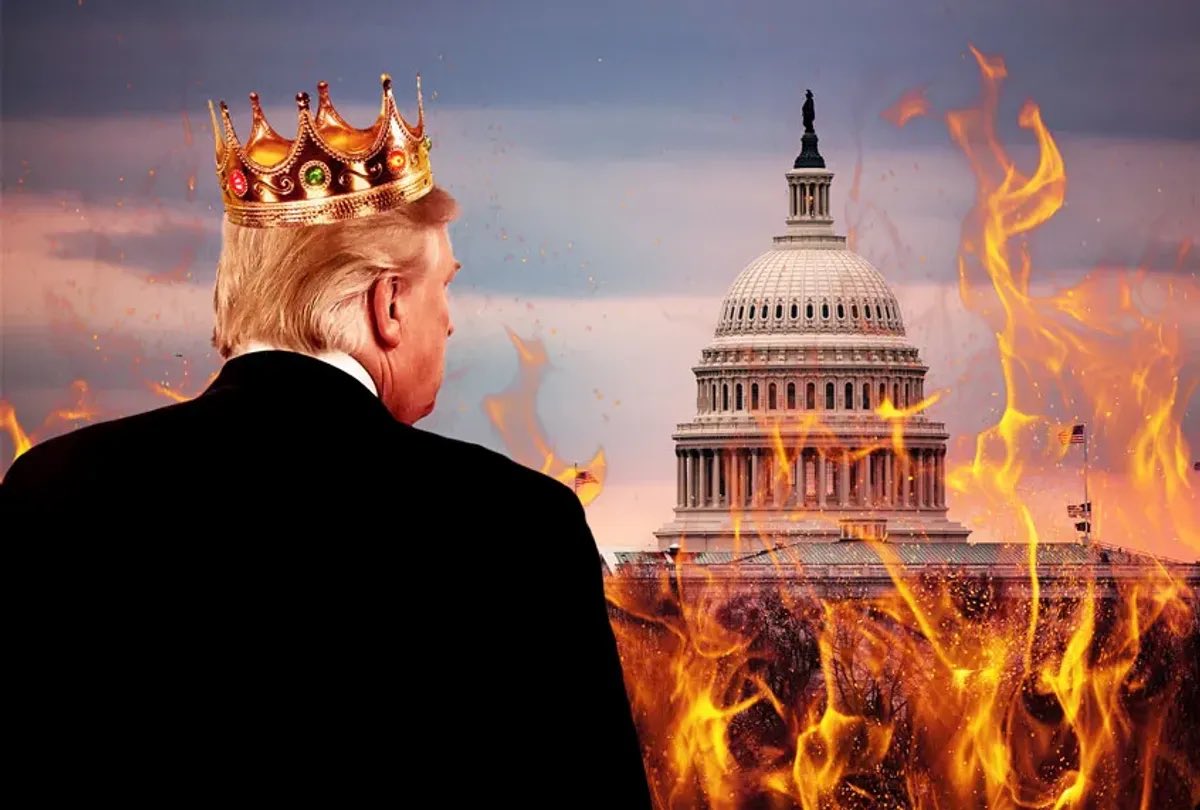
The main point is, Covid inaction is just one further part of this same movement that’s been going on for over 50 years. The removal of the ‘public’, an invention of the late-19th and 20th centuries, to restore societies to the form they’d had for centuries previously. /11
Societies have deep tectonic plates, like continents. Kings, gods, religion, these things don’t go away. The great experiment of the late-19th and 20th centuries, to invent a ‘public’ to challenge this centuries-old social model, has been unravelling for more than 50 years. /12
It’s also perhaps inevitable, as some anthropologists say, this social form may be the default for societies. We only ever temporarily escape it, with wars and plagues. Our current plague is not stopping the big push to strip away the public. /13
If it does fail to do that, it will be like all plagues pre-late 19th century. The historical norm. That’s the ‘normal’ we’re now returning to, not the post-1945 normal. The welfare state has been under siege as well - RoboDebt, anybody? /ends