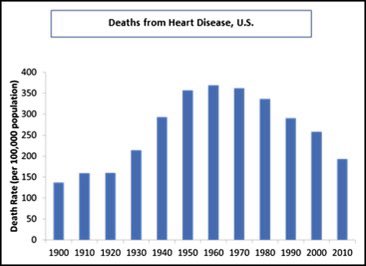
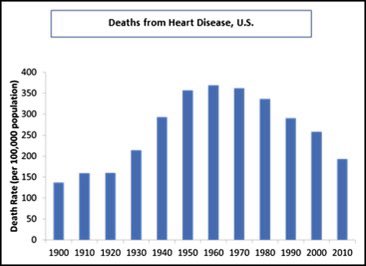
Heart disease in the 20th century followed a pretty classic epidemic-type curve. Have Tweeted before that…
Heart disease in the 20th century followed a pretty classic epidemic-type curve. Have Tweeted before that some believe the ‘Spanish Flu’ pandemic may have been responsible, that heart disease was the chronic after-effects of that pandemic. Some disagree. /1 https://t.co/E4paK4OBjg
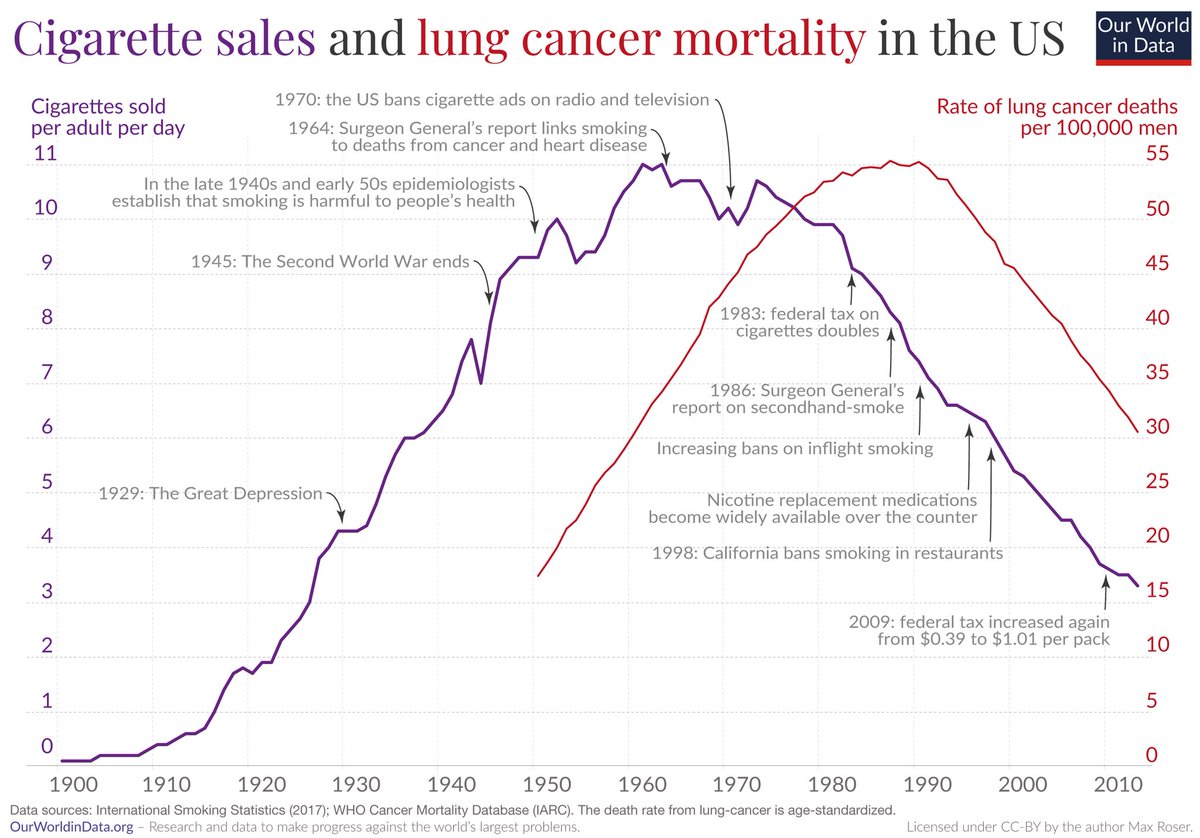
Many immediately come back and say it’s smoking that’s mostly responsible. The problem with the smoking hypothesis is that there’s no lag between the two curves. Smoking drops at the same time heart disease drops. You can see that lag for lung cancer, in the red. /2 https://t.co/iKWLFsQBie
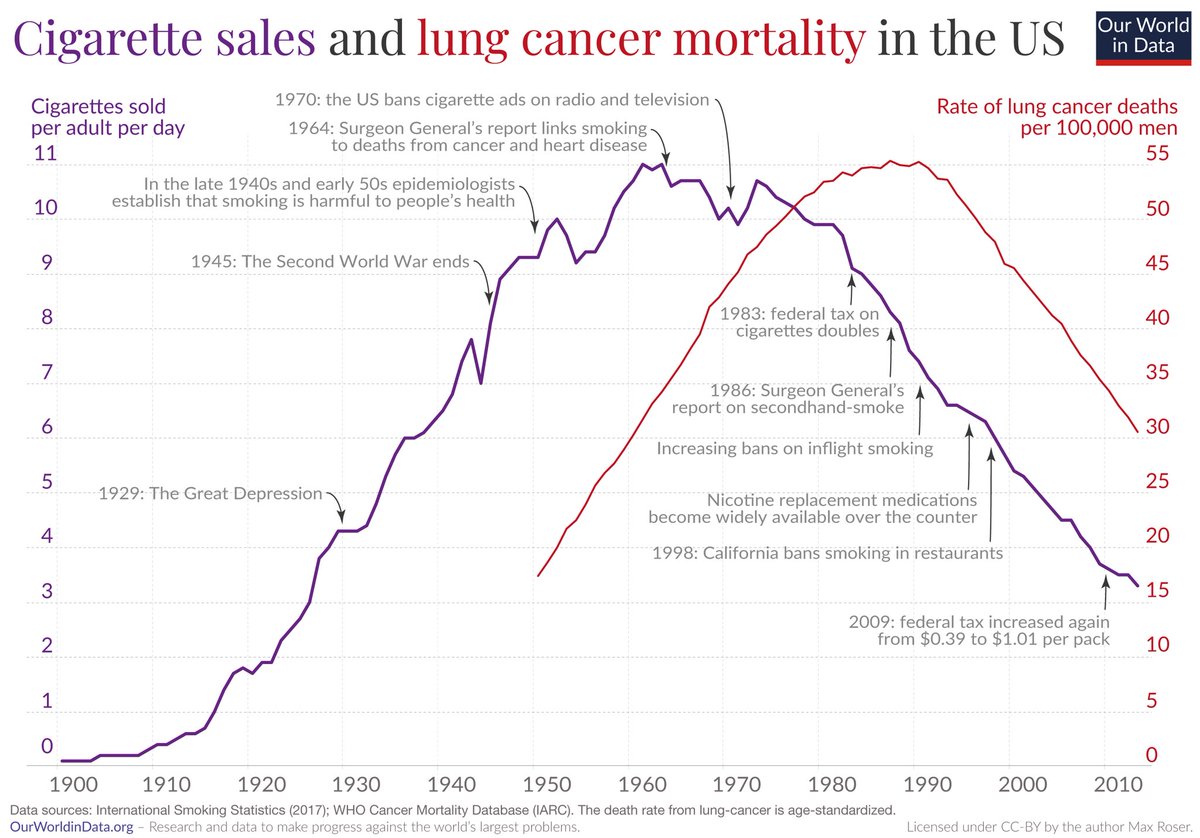
But if smoking really was the cause of the heart disease epidemic, why would heart disease and smoking drop simultaneously in the 1950s-60s, without a lag from one to the other? Reducing smoking instantly reduced heart disease? These changes need time. /3 https://t.co/kZSwu5P1Lt
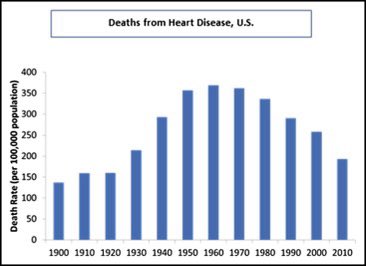
The more persuasive argument (to me) sees the take-off of heart disease in the 1930s as the chronic impact of pandemic flu infection up to the early 1920s. There’s the lag between one to the other that’s more persuasive, you need to allow time for impacts to flow through. /4 https://t.co/WuthHdUbAV
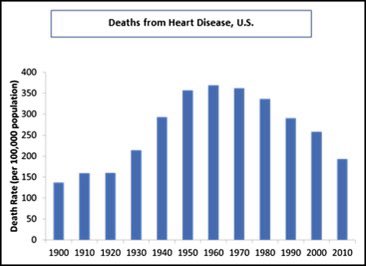
Similarly the decline from the 1960s marks very well the gradual dying out of the generation directly impacted by that earlier pandemic. One thing all on this topic seem to agree on is that the epidemic of heart disease in the 20th century is a one-off, and won’t be repeated. /5 https://t.co/iyofxKvvhf
Though who knows, with the flow-on chronic impacts of Covid. Separately the dietary hypothesis for the heart disease epidemic, that it was due to consumption of fats mostly, seems increasingly rejected. Have never understood it anyway, why does eating fat fill your arteries…/6
…with fat, but eating broccoli doesn’t fill your arteries with broccoli? It ignores metabolism. And humans ate a lot more fat in the centuries before the 20th as well, without the same epidemic heart disease pattern. No matter the answer here, at a minimum it seems…/7
…that infectious causes of chronic disease have been grossly neglected in medical thinking, and that paradigm may now have found its time to shine. I first saw it in the work of Paul Ewald, but it’s crossing many disciplines now. /ends