The international implementation of ‘Vision Zero’ for road safety I think provides a model for how to think…
The international implementation of ‘Vision Zero’ for road safety I think provides a model for how to think about defeating not just Covid, but other infectious diseases as well. Zero road deaths has been the implemented plan for many years now. /1
https://t.co/sVnFSr8x87
The article from the US Department of Transportation gives a summary of both the principles involved and the work that has already happened (including in Australia). For years. The principle that drives everything else is ZERO DEATHS. /2 https://t.co/sVnFSr8x87
This was already the principle employed in aviation and train transport. Can you imagine anything else? ‘O we’ll let the odd plane and train crash, you have to balance things’. It brings into focus the ludicrous spin we’ve been expected to swallow in this pandemic. /3
What’s important about the comparison is that this is also a part of our lives that impacts the entire population. Roads and road transport are the lifeblood of modern economies, impacting every single person. So it’s not some isolated, small thing that’s easier to control. /4
The approach prioritises health above all else, even mobility. That locking into place of health-first then cascades through the vast range of measures, in infrastructure, regulation, education etc., so that they all align around that fundamental principle of saving lives. /5
ALL lives. Zero deaths is not an aspirational ambition. It’s an achievable aim, and you can see from aviation which uses a similar principle, how it drives dramatic improvement, and fast. This is regulation at work, what humans designed it to do. To make life safer and easier…/6 https://t.co/J4NpSLPSHq
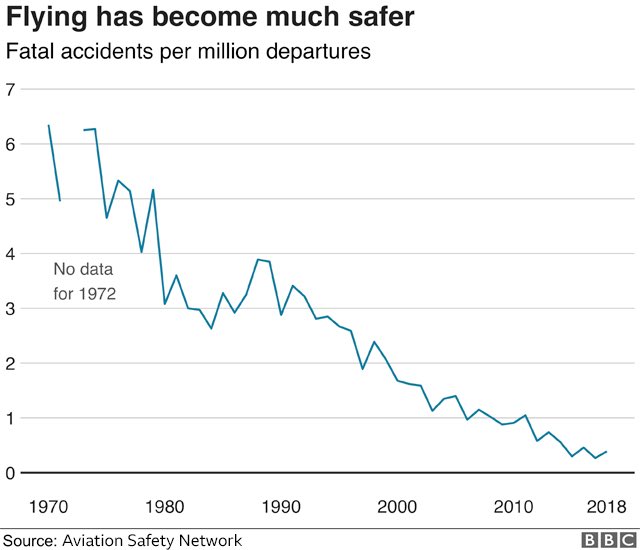
…for all. And it’s working, in Sweden, which (ironically, given its Covid efforts) pioneered the approach. An important additional detail here is that at the centre of the strategy is not just the planning towards zero deaths. Coupled to that is a *causal* mechanism. /7 https://t.co/qcseMesKdt
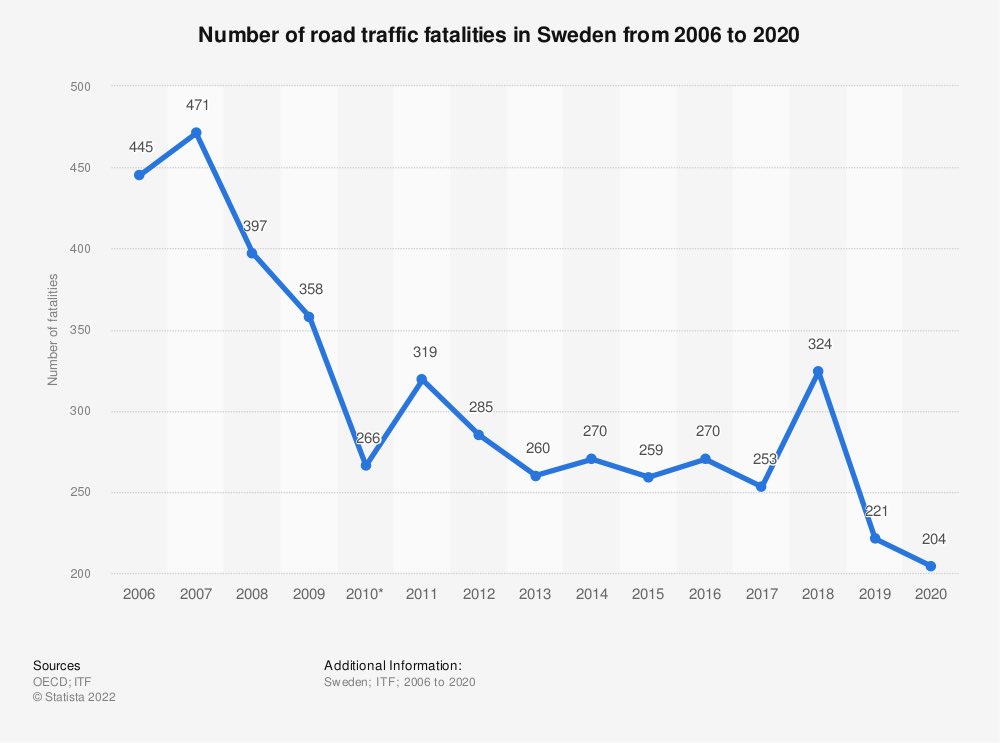
The strategy recognises that what kills people on roads (including pedestrians and cyclists) is the kinetic energy of impact, on bodies. So everything in the strategy, like road and car design, focuses on reducing that kinetic energy at impact to safe levels. /8
For Covid and other airborne diseases, the obvious pathway forward would be to make zero deaths (or even zero infection and illness) the grounding principle, coupled to a causal mechanism of clean air. I like many others am tired of having to listen to minimising nonsense…/9
…every day from bad faith actors about how all of this is impossible fantasy. We’re already doing it with roads, and we’ve been doing it with planes and other forms of transport for years as well. At enormous cost, at enormous scale. Internationally. /10
What has changed with Covid is not that we now face an impossible foe. What has changed is our politics, the decades of undermining of this sort of basic public administration and regulation. The enemy has become that regulation itself, rather than injury and death. /11
You can see this very clearly in the US. Previously its road safety performance was aligned with much of the rest of the world. But its descent into libertarian political extremism in recent decades has led to a rapid decline in road safety. /12 https://t.co/szm9Rp6AL0
This pandemic is a political phenomenon, not a health issue. We’ve known how to deal with pandemics for centuries, millennia. What’s changed with Covid is a politics that is sidelining and bypassing all of that expertise and knowledge, in favour of a ridiculous politics…/13
…of individual freedom. Ridiculous because the only way to be individually free, is to work collectively. It’s a false opposition. Nothing needs to be ‘balanced’ here. We don’t balance plane crashes against freedom to fly. Safe flights = freedom to travel. /ends
@RealOzSAGE