Societies have a geology as well as a politics. Deep, tectonic movements. The big political libertarian push…
Societies have a geology as well as a politics. Deep, tectonic movements. The big political libertarian push of the past 50 years is deeply linked to one of the founding tectonic plates of all human history. The battle between Church and State. (Covid linkage later.) /1 https://t.co/tVigLTvWJi
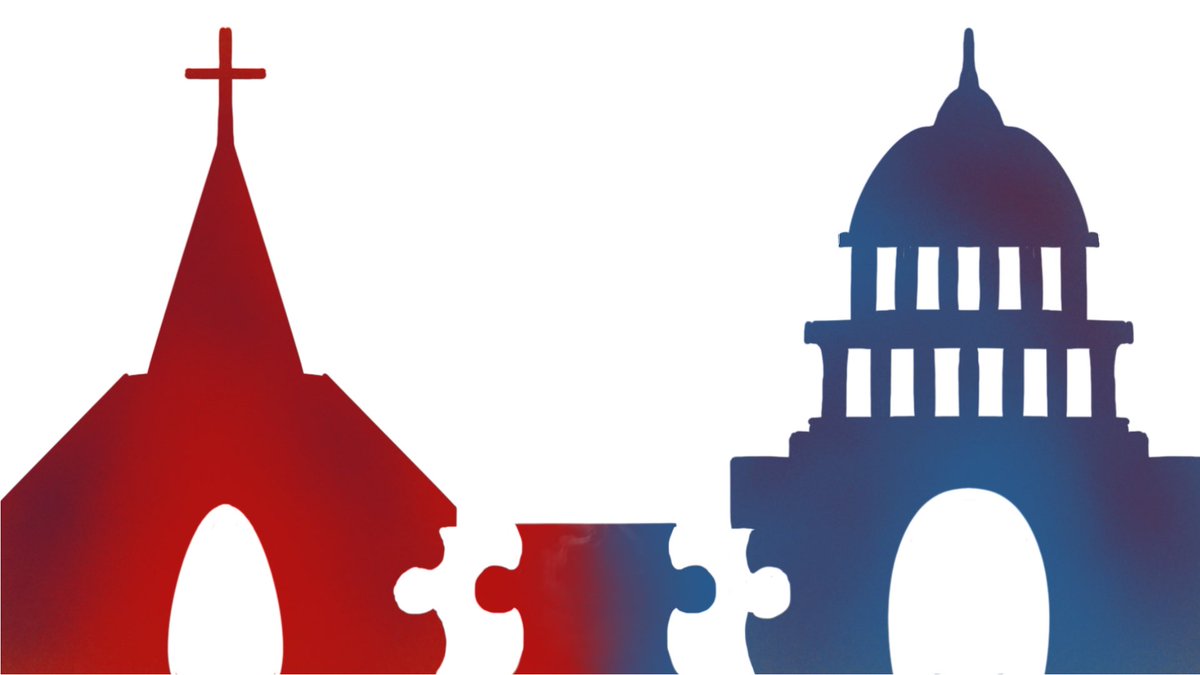
No analogy here, very often the two institutions involve the same players. For example in the US much of the ascendancy of the libertarian Right from the 1950s and particularly after the 1970s until today is due to many alliances between key Church figures and politicians. /2
Not to go into the history here, but figures like Billy Graham were absolutely crucial in the cross-over of religion and politics, as conservatives there strategised together to head off what they saw as a deeply disturbing surge of progressivism. /3
Churches have millennia of expertise in mobilising populations. They invented the process. To recognise their work, it’s not a stretch to say they pretty much invented Western society. For the majority of time our civilisation has existed, they’ve been in charge. /4
Secular States are very new inventions, historically. To be clear here, it’s also common in our modern world to read this history and assume Church = bad, State = good. I don’t think that’s necessarily true at all, I look at it it entirely as what works, and what doesn’t. /5
Included in the State camp are of course monarchies, the other major player in human history. Notice the Church both crowned and buried Queen Elizabeth 2. These connections never went away. The highly individual N=1 libertarian politics of our time are the same movement…/6
…we see within churches and monarchies too. Protestantism, the push for the replacement of an institutional relationship with God with an individual relationship with the deity. Many of the politicians today who fight what they see as the illegitimate State are motivated by…/7
…replacing it not just with God and the church again, but with each individual’s relationship with God. As Bruno Latour always said, we delude ourselves in seeing the modern world as having left these debates behind. The same drivers, still there. /8
https://t.co/XqMqiVfbfx
How to see the Covid debacle through this lens? One thing churches brought to society, and probably is the reason they were able to build and run societies for millennia, while secular States are fumbling after only 2-3 centuries, is a ‘higher’ arbiter of human affairs. God. /9
You don’t have to believe in God to recognise that having the deity in some way involved in politics introduces an arbitration of difficult issues that sits beyond the team sports of human popularity politics. And yes, of course the translation of God’s will into human…/10
…affairs is rife with corruption and cronyism too. But the key thing the Church invented here, is the church itself. An institution, not just God’s word and individual interpretations of it. A set of traditions and customs that are multi-generational. /11
No one person gets to interpret God’s will. Though the push towards individualist theologies is the push to allow that. But the societies we live in today are the victory of the institutionalists, not the individualists. And those are todays’ Covid battles too. Between…/12
…‘personal responsibility’ governance, and institutional governance. We built institutional expertise to defeat pandemics, over centuries. That’s being sidelined by an aggressive individualist politics, egged on by aggressive individualist theologies. /13
It’s often the same people, as our ex-PM shows, and this is all much more obvious in the US, where ‘God’ is a frequent player in political debates. The ongoing assault on the secular State is not just political. It’s that Church-State battle from all of our history. /ends