How does an infinitesimally tiny group in our society, the top 1%, attract mass support for policies that…
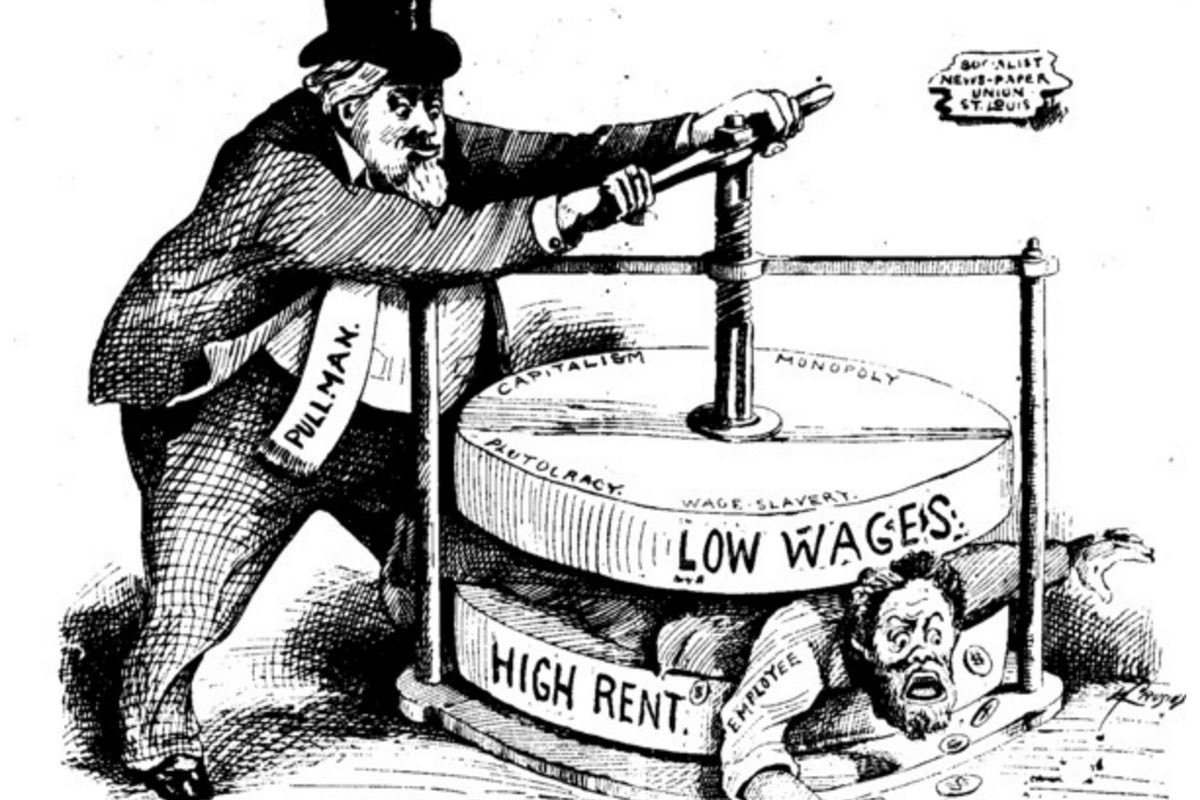
How does an infinitesimally tiny group in our society, the top 1%, attract mass support for policies that clearly benefit nobody except this tiny group? And how does it keep doing it, generation after generation? Graphic from ‘The Gilded Age’ in the US, 1870-1900. /1 https://t.co/ua1OZPUWR5
The trick is simple, but because we don’t talk about it, it’s a trick that keeps working, across centuries. Plutocrats and their strategists understand something about societies that their opponents don’t. That the glue that holds all human groups together is status. /2
Groups and societies are held together by copying, by the imitation of each other’s ideas and behaviour. It’s not a process of ‘free’ individuals each mulling over what to do. How do people decide who or what to imitate? That’s where status is the guide. Hierarchies of status. /3
What the top 1% do is tap into this basic social fact. On the one hand they say that society doesn’t exist, that it’s a free market of individuals each rationally calculating the best thing to do. Their ‘invisible hand’ nonsense. But they do this because they know that…/4
…individuals left to their own devices will always create and partake of hierarchies of status. And so at the same time the top 1% offer them a status to aspire to, shaped in a way that favours the top 1%. Aspirational politics. ‘If you have a go you’ll get a go’ politics. /5
Politics where the existing wealthy are portrayed as ex-poor people who had a go, and made themselves rich and privileged. This becomes the model for everybody else to aspire to, the status engine that taps into our core social act of imitation. It’s beautiful strategy,…/6
…because on the one hand the top 1% can (rightly) claim to be leaving it all to individual freedom, disingenuously aware that this will at the same time create the status hierarchy they want, with them at the head. Some of them no doubt believe this ‘free market’ idea…/7
…is actually real. Others know it isn’t and just cynically exploit the basic psychology in play here. Either way they win. In the meantime their opponents in progressive politics wallow in fantasies about ‘democracy’ where the population somehow magically self-organises…/8
…into a fairer and more peaceful and just world. Ironically they’re more believers in the free market than the top 1%, because they actually seem to believe that democracy is millions of individuals who somehow spontaneously self-organise into a better world. /9
When that inevitably fails, they despair at how stupid everybody is. Instead of offering leadership and status of their own to drive society in a different direction, everybody celebrates the ‘diversity’ of doing nothing, and blames mass stupidity when nothing happens. /10
To finish, Covid. The top 1% have played us, again. Under cover of their usual ‘freedom’ narrative, they’ve reinstated the same old hierarchies, with themselves at the top, convincing millions that heading back to Covid-infested schools and workplaces is the high-status play. /11
All the gaslighting about ‘living with’ the virus, about people who don’t having mental health problems, ‘bedwetters’, all designed to portray a sort of muscular status for ‘pushing through’ the waves of infection. In return those who know public health action is needed? /12
Lost in the weeds of science and data, trying to convince millions of individuals to see sense and spontaneously self-organise a public health fight back. It won’t work. Groups never, ever spontaneously self-organise as separate individuals. They’re led. /13
Pockets of resistance are being well-led by many principled, smart influencers online and elsewhere. But public health action is a government baby. Government invented it, to do the things the top 1%, which captured government, now don’t want it to do. /14
Their trained libertarian poodle politicians will never lead us out of a pandemic. Without that leadership, we’re stuck. /end