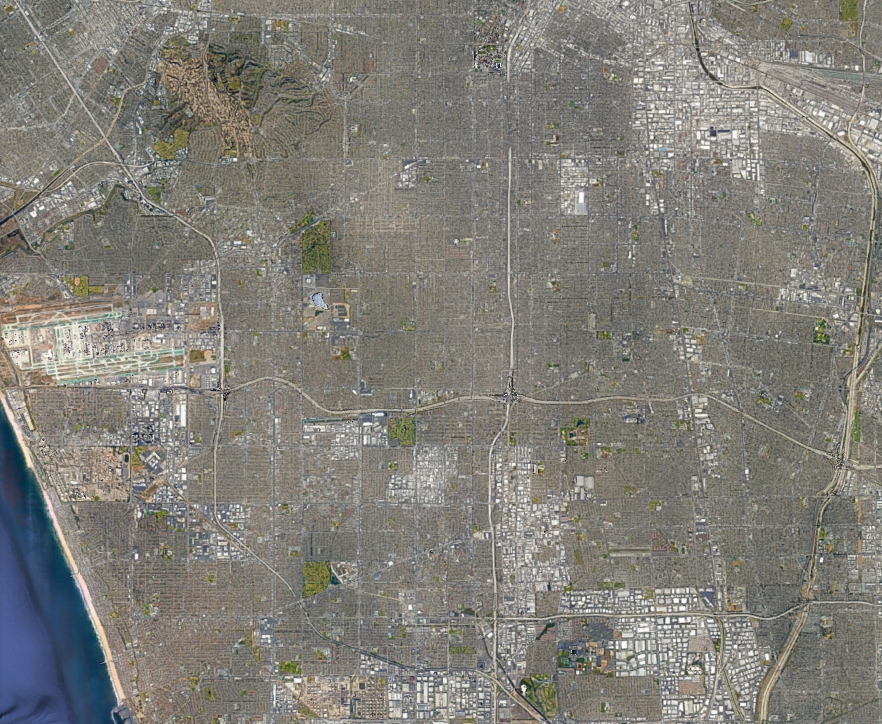
Los Angeles from above tells us a lot about our cultures. That vast grey washed-out colour is mostly roads.…
Los Angeles from above tells us a lot about our cultures. That vast grey washed-out colour is mostly roads. Roads occupy between 20-60% of urban space in modern cities. Quick thread looking at a different aspect of what that means. /1 https://t.co/oQUdeLwO13
A road, in spatial terms, is a space that is always directed *somewhere else*. That street outside your house is a no-space. Its purpose it to take you somewhere else. Its value as space is never at any point ON the road. It's in where *else* it will take you. /2 https://t.co/za5HOeAX1M
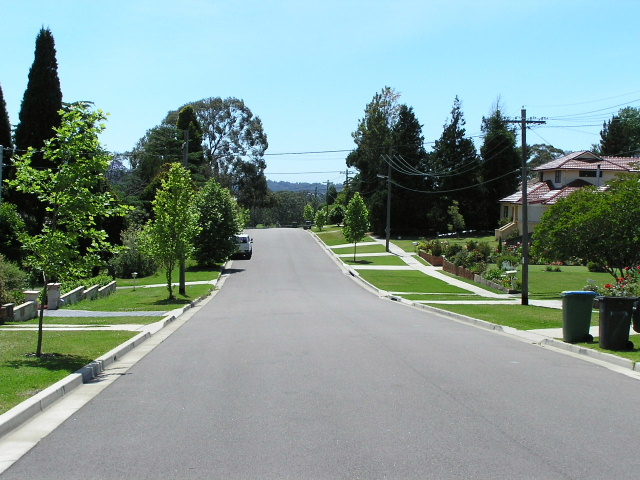
Combining Tweets 1 and 2, it means 20-60% of the space in our cities is devoted to taking us somewhere else. Cities are gradually becoming non-places, car parks. Our 'home' is increasing mobility, not a place. But mobility is also displacement. /3
For centuries occupying land was a marker of security and power. It still is. But as we can see in LA and other major modern metropolises, for most people their dwelling is little more than an extended garage, for their vehicle(s). /4
Much of the patterned structure of cities is given over to roads, and transport. Moving people around. And this (for me) is where it gets most interesting. Because most of those trips are not really taking people anywhere. They're round-trips, to work and back. /5
The best way to disempower people throughout history has been to displace them from the land under their feet. To sever their identity from their location. With vehicles, work was severed from community, and from peoples' relationship to the actual spaces where they live. /6
Now vast numbers of people expend their daily energy 'working' somewhere away from their actual home and community. Suburbs are not much more than places to park while you eat and sleep, ready for another commute. Shopping and other social activities need to be driven to. /7
Look at the fuss about working from home in the pandemic. This is much more than logistics, it's about peoples' desire to re-attach their work, to their community. 'Work-life' balance is not just balancing the hours at work and at home. It's about resistance to decoupling of.../8
...work, from community. Resistance to just being a 'worker', a drone, crammed into trains and buses and traffic jams, to go somewhere to enrich somebody else, while struggling to afford your own place out in a suburb devoid of community. /9
I've Tweeted before about how the obsession with roads and transport more generally is a marker of modern conservative politics. The 'Economy' is a political construction, designed to replace ideas of society and community. The easiest way to disempower people.../10 https://t.co/QwD3xuHbuz
...and make them biddable is to decouple their daily work, from their community. To funnel their labour into enriching others, away from that community. Roads and transport more generally are central to that task. /end