24 October
24 October · 01:11 UTC
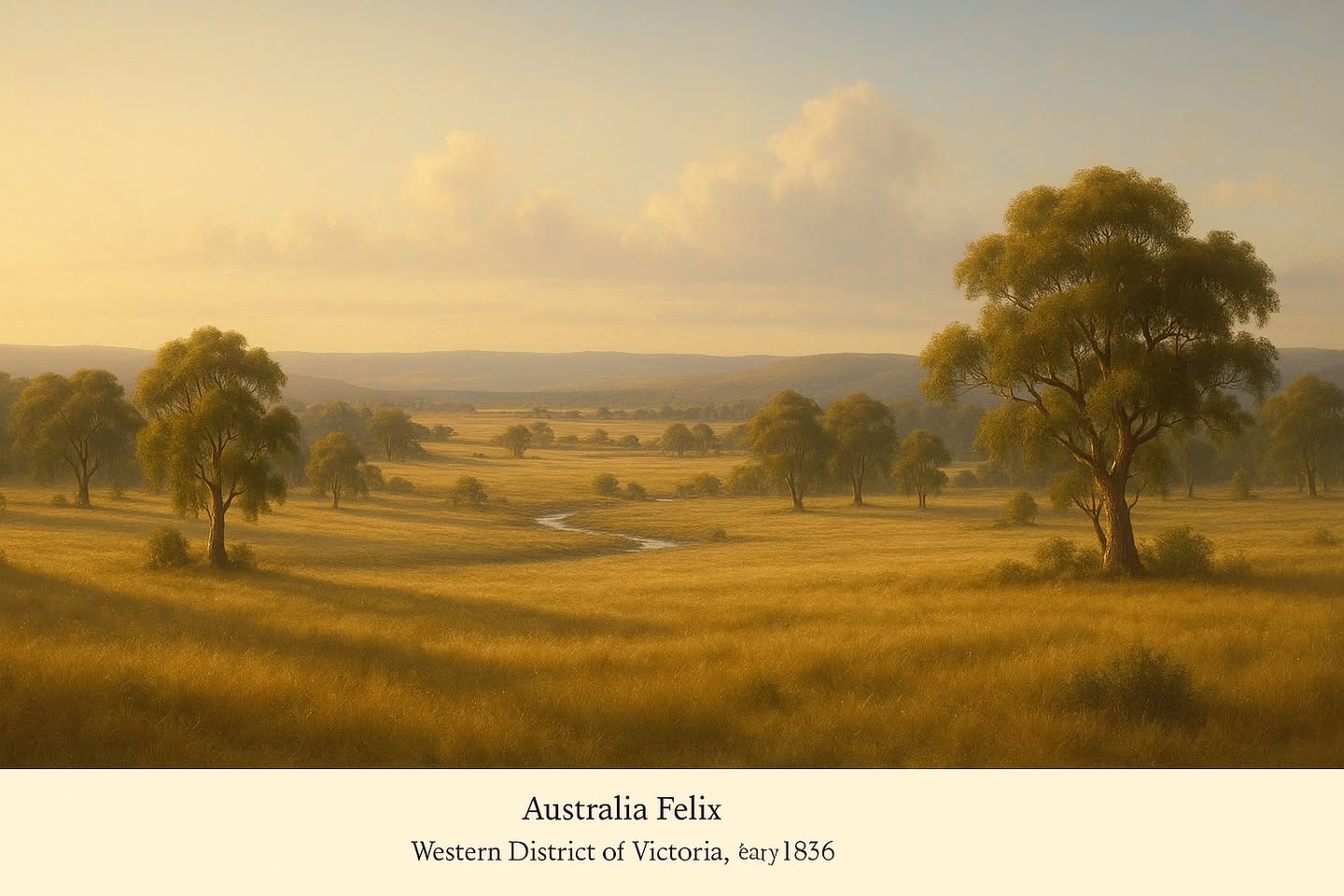
When Major Thomas Mitchell stumbled upon the Western District of Victoria in 1836, he described it as “the finest country in the world,” “rich, open, well-grassed, park-like.” See that? Park-like. There was a belief that these early explorers were just imposing their known European landscape ideals onto Australia. But as Gammage found, they were describing what they literally saw. Aboriginal Australia created an English estate the size of an entire continent. Now largely destroyed or allowed to fall into ruin, by those who either bulldoze, graze or plough it for resources, or those who sanctify it as 'nature'. Mitchell's own descriptions: Vast, rolling plains stretching to the horizon. Gently undulating land clothed in soft, knee-high golden grass. Scattered river red gums and clumps of trees standing apart “as if laid out for gentlemen’s seats.” A small, winding creek or stream reflecting the sky. Late-afternoon light turning everything amber; long shadows under a high summer sky. No fences, livestock, or human structures. Rather then fence to contain animals for farming, Aboriginals dramatically enriched the landscape to attract prey. Every animal free to move wherever it liked. Everybody won, including the prey and the landscape, animals free to roam and multiply on the rich food Aboriginals created for them. Compare with our farming, where you fence everything and then extract everything from that land, like soil mining. That lush grass was a permanent observation by first settlers, cultivated by Aborigines by fire mosaic burning.