14 January
14 January · 20:37 UTC
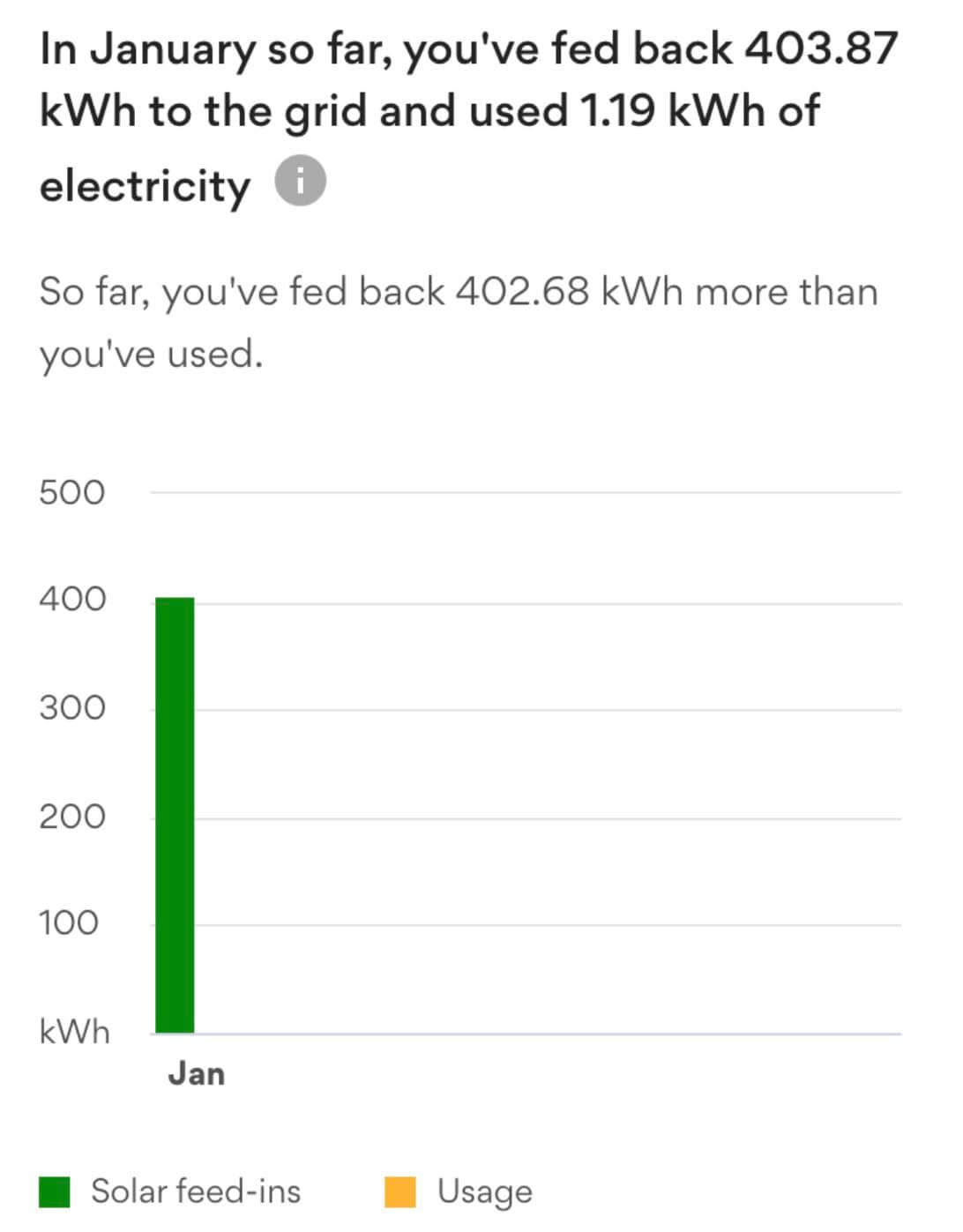
This is the side of solar that is less spoken about. Every person you see with solar panels on their roof is a mini power station. They’re providing some of the electricity you use, and they used their own money to generate it, by paying for their solar panels. In the first 2 weeks of January, we’ve exported enough electricity back to the grid to power several other houses. Solar owners get paid a feed-in tariff for this export, but it’s small now. For example you pay 20-30c/kWh to buy electricty off the grid, and solar owners get about 5-10c/kWh for the electricty they export. A big gap. You wouldn’t expect them to get the same as what everybody else pays as a retail price, that price takes into account a whole lot of grid maintenance and other costs, but it’s still a significant discrepancy. The electricty retailers that pay these tariffs to solar owners are getting super-cheap electricty to sell on at much higher rates. They’d love to buy more, but the grid isn’t ready to distribute it where it needs to go, because of 20 years of inaction by federal and State governments. The low feed-in tariffs are actually a supply management device, to try to reduce the amount of solar coming into the system, because the grid isn’t there to deal with it. As I’ve posted about a few times, Australia is sitting on a mountain of super-cheap energy, that it can’t use. 10 years of complete nonsense about ‘baseload power’ and ‘supply’. Supply has never been the issue, we have OODLES of electricty. Distribution is the problem, and ultimately government (that did nothing to build the distribution) is the problem.