21 June
21 June · 05:06 UTC
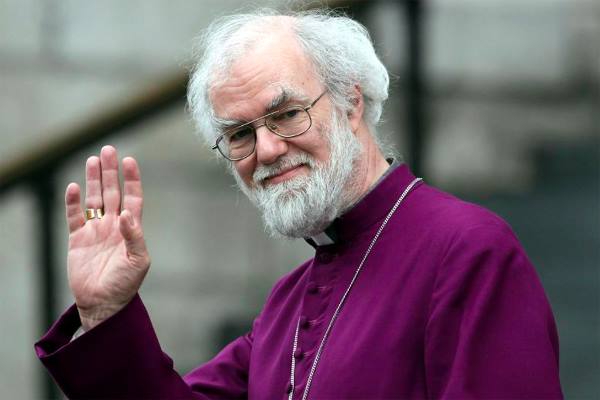
A post just for the two of you, from Rowan Williams again. The "vastly complicated and enticing and frustrating borderland, where physics and philosophy and psychology blend" is the space I work in, in religious ideas. (I'd add theology to the list.) I'm not arguing for divinity (or against it) from inside either of the standard traditions. Williams is closer to my view - you'll notice he says there is no such thing as 'dead matter', for example, and that intelligence is in all things. "...there is something about consciousness that intrinsically leaves the question of the sacred on the table. Consciousness as local yet also relational, as receptive and also creative, as narrative, as having to do with speaking and being spoken about, seeing and being seen, as the generation of symbol, is something that sits, if not comfortably, at least coherently, with that model of the universe that religious people on the whole take for granted, a model of the universe in which intelligibility and intelligence are omnipresent: in which there is no such thing as ‘dead matter’; in which there is always a speaking, an invitation, a summons to engage, which for the theologian is bound up with the nature of creation itself, with the idea that all that we are, as a finite set of systems in the universe, is as it is because it responds to a fundamental communication of intelligence or information – or indeed ‘communion’. Receptivity and co-operation, a sense of limit or incompleteness, symbol and the transparency of symbols – all of these have their natural location in the kind of human discourse that takes for granted what may be called ‘the sacred’ in general, but that I am much happier in calling God, within the context of a doctrine of creation, as making sense against the background of a God whose will or purpose or character it is to share what his life is...this vastly complicated and enticing and frustrating borderland, where physics and philosophy and psychology blend, what I have said so far about this may just make some sense of what many thinkers have wanted to say in the last century or more, which is that a loss of the sense of the sacred, a loss of the sense of being answerable to an intelligible gift, from beyond ourselves, in the long run entails more than simply the loss of God; it may entail the loss of the distinctively human."