5 July
5 July · 22:21 UTC
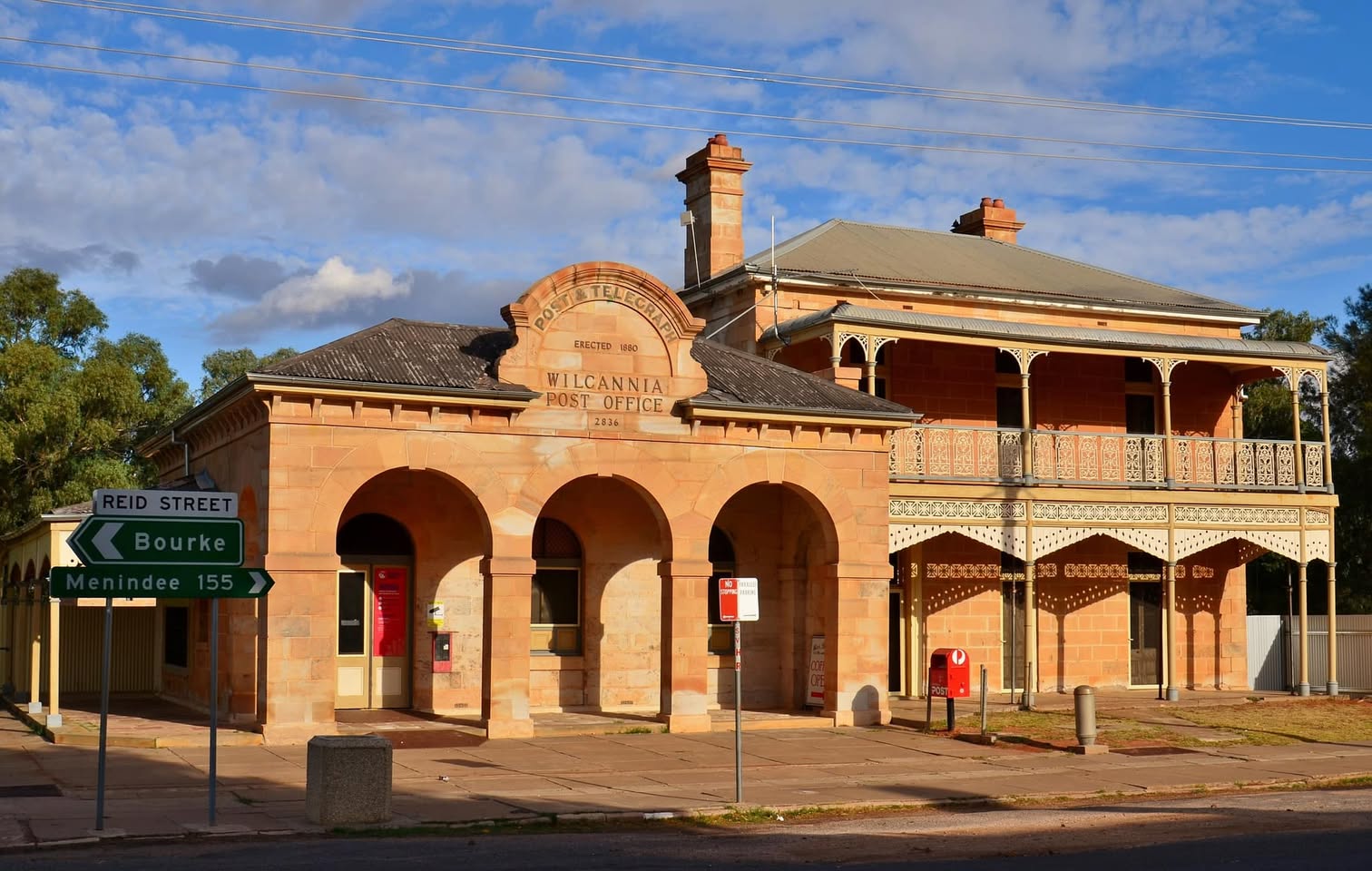
Wilcannia is a famous outback town. Like all outback towns, the history is one of expansion of some empire. Nearly always mining (Broken Hill, Lightning Ridge, White Cliffs) or agriculture (Bourke, Wilcannia to some extent, Lightning Ridge in its earliest days). One of the reasons I question ideas of the ‘outback’ is that we seem to strip away what our presence there mostly is. They’re historically extensions of our imperial cultures, into the bush or outback. They’re frontier towns. Or in other words, there is no real divide between the city and ‘the bush/outback’, that we pretend is there. Frontier towns are created by the cities, to expand their reach into the surrounding landscape. There’s no doubt living in these towns and landscapes is very different to being in a city, because the space is so vast some of its original character still impresses itself on you. But you’re still a spectator to the landscape, the life there is heavily drawn from the same urbanised culture of the cities, just with fewer amenities. Sure with local colour and flavour and eccentricities, but the underlying cultural framework is the same. All regional and remote towns aspire to be cities, underneath, they will grab with both hands all new sources of sustenance from passing tourists or metropolitan governments. Wilcannia a good case in point. The average life expectancy of an Aboriginal man there is 37. They’ve had disastrous Covid outbreaks. The NSW Government refused to isolate the town, tourism had to be allowed to continue. The economy must trump all. We drove through Wilcannia but didn’t stop for long, decided to touch the Earth lightly. It has enough problems, without more tourists. Driving over a Darling River constantly sucked dry by irrigators upstream just reinforced the extractive nature of our culture, even today.