25 August
25 August · 17:50 UTC
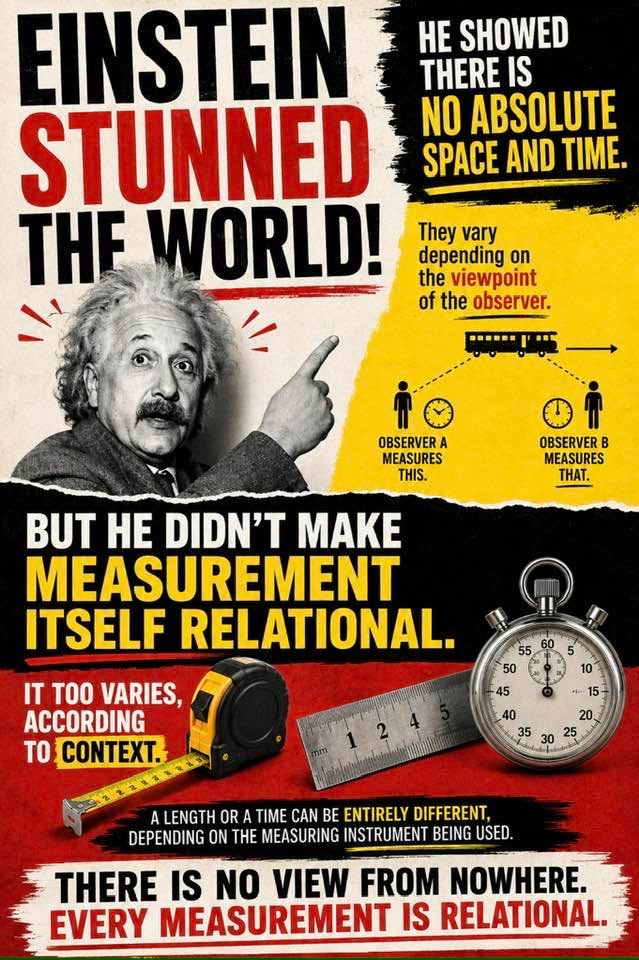
My own training followed a pathway that disappeared centuries ago. Where you were expected to understand both the sciences and humanities, but not as two separate domains. Not just a mix-and-match. All knowledge was called ‘natural philosophy’. Humans were seen as part of nature, and you had to understand both as seamless blends of the other. Einstein interests me for this reason. Most of the ‘wow’ surprise his ideas produced was really a small re-connection of science to philosophy. But not a large re-connection, he misunderstood some basic things, which it’s impossible to even suggest now without being accused of being unhinged. Einstein himself was extremely arrogant and rude to the prominent philosophers of his day who tried to point out these errors. One of the errors I think he made is one I’ve mentioned here before. He saw that ‘time’ and ‘space’ are relative to how and where you measure them. But he didn’t see that measurement itself is relational. If he’d seen that, his theory might have included that time and space are not even properties of the world. They’re relational outcomes between events. Measurement creates them. (Quantum theory moved in this direction, which is why Einstein didn’t like it.) We are never ‘in’ time or ‘in’ space.