28 January
28 January · 19:41 UTC
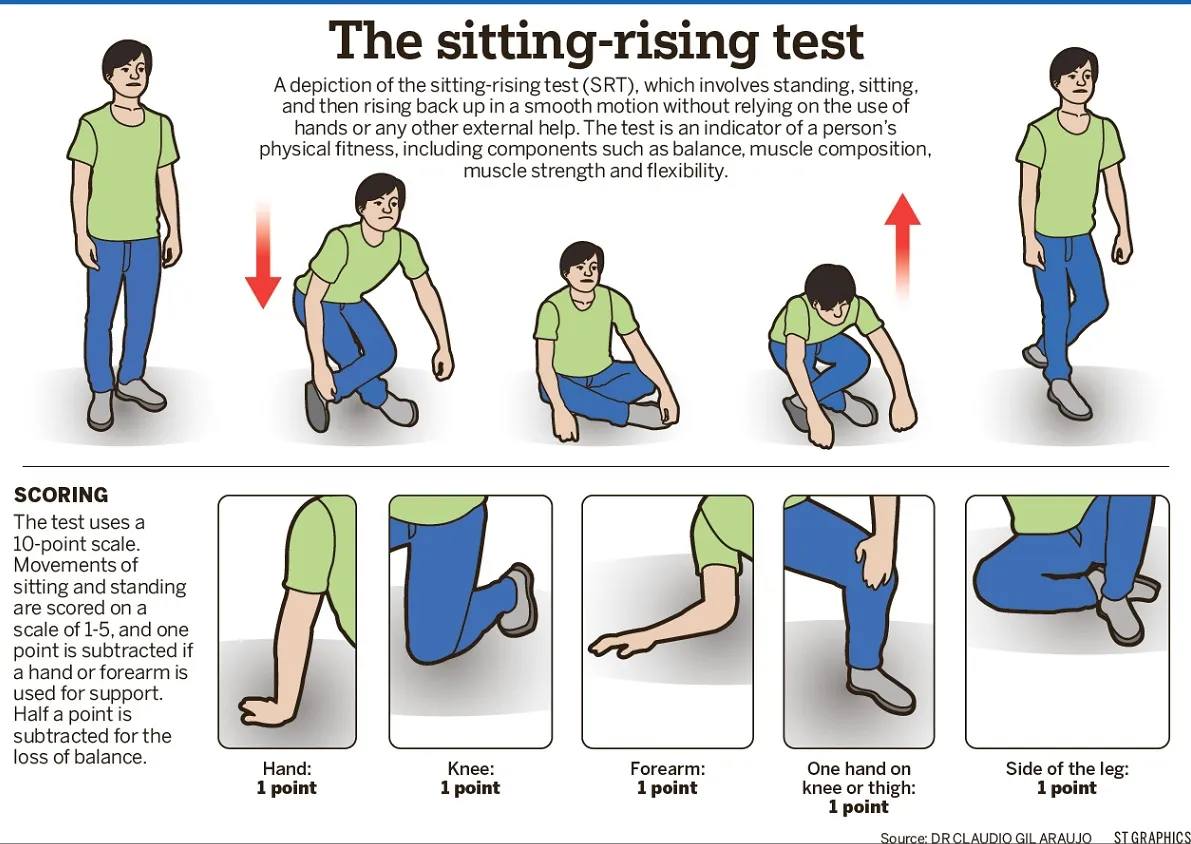
Can you, from standing, cross your feet and move smoothly to sitting cross-legged on the ground, without touching anything with your hands for support or using your knees for support? And then get smoothly up again, without using either your arms or knees for support? This is the sitting-rising test. A test often used in the old to see how flexible and stable they are, as people know falls are a major cause of injury and even death for the old. But people as young as their 30s can struggle to do this test without use of support from their hands or knees. I score a 9, I can do the sitting part but need one hand briefly for the rising. But anybody can work on this and improve their score to 10. 8-10 is considered a good score. People often get very stiff around that mid-body region (hips, thighs, lower back) as they age, particularly if they spend a lot of time sitting. Generally they’ll be advised to try to stretch that tightness away. I think that’s a mistake. Tight muscles are not tight, they’re your brain holding them that way. They’re you doing things out of balance, and your brain compensating by tightening muscles to keep you stable. The long-term solution is to just be present to the things you do, in the moment. That will coordinate your balance and body effortlessly. Not straining, straining is you trying to be somewhere you haven’t arrived yet, in space or time. Like trying to ‘get up’ out of a chair, while you’re still in the chair. You’re trying to fast forward to standing, while you’re still sitting. Or straining while sitting at a computer, trying to ‘hold yourself up‘. You need to take your attention off what you’re doing, to do that. Put your attention back on what you’re doing, and the strain disappears. Our body aches and stiffness and tensions are simple, they’re us not being present to what we’re doing.