27 November
27 November · 06:53 UTC
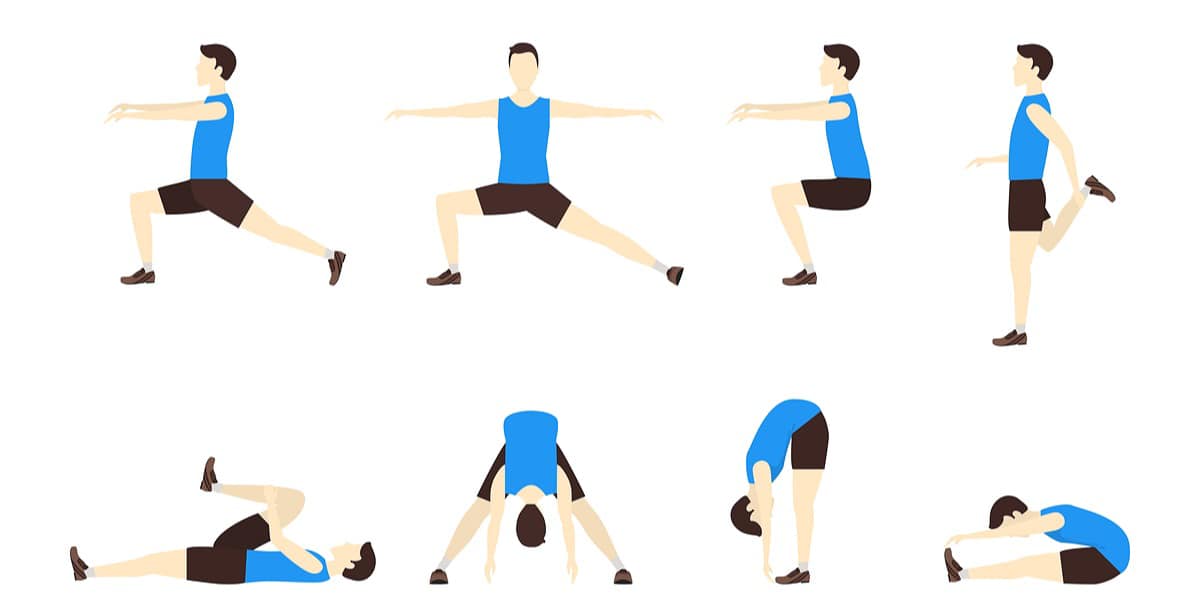
I post a bit about stretching, about why it’s mostly a waste of time, and in fact may be damaging. Here’s an extended wonderful passage by my friend David Gorman which gives a lot more detail. A bit of reading, but I think so valuable to everybody. Those tensions you feel often aren’t ‘tight muscles’, they’re your connective tissue providing support to your narrow activity, which any more open activity is then straining against. But as David says, just keep at that more open activity, the connective tissue will stretch and reset to that openness, all by itself. You don’t have to ‘stretch’, your everyday more open activity will do it all for you. In fact if you do stretch, you may damage yourself, and in effect you’re just training your connective tissues to assume those stretch positions, not loosening them up for ordinary everyday activity. Muscles and connective tissue adapt precisely to your most dominant activity. “The passive connective tissue is arranged in the body in precise opposition to disconnecting stresses and its major characteristic is that it is constantly trying to shrink, that is, to shorten in itself against these disconnecting stresses. It will shrink up in this manner until it becomes under enough tension to prevent it shortening any further. The resistance to the shrinking which brings the connective tissue under tension is, of course, from us going about our daily activities, bending, turning, flinging our arms about and constantly subjecting the tissue to lengthenings and stretches. The ongoing result being that the connective tissue will always shrink up to the edges of your range of motion. For an individual so unlucky as to have had an accident such that they are in hospital in a coma this shortening of the connective tissue will become so marked as to tighten them virtually into a foetal position. To keep the joints open and free physiotherapists must supply the range of motion by regularly moving the patient. Similarly, if your daily habit of use were to become more tight and narrow, the connective tissue would gradually take up whatever resulting slack by physiologically shortening until it comes under stretch from your new, more restricted range of movement. If you subsequently were to release these compressions and use yourself more openly, the connective tissue would be brought under greater stretch and would gradually yield to become longer tissue. All this happens bit by bit over a time scale which would produce noticeable changes in a period of several weeks. Thus, I've come to call this connective tissue passive, since it is not directly responsive to your thought in the manner of the active muscles. Instead it follows your activities, adapting to them and defining your limits at any one moment as a product of the use of all previous moments. We often tend to think of and feel our connective tissue as restriction which prevents us from having a broader range of motion and thus begs for stretching exercises to open it out giving us more 'room' to move. But it is important to be aware that the connective tissue is not there to get in your way, rather it is your basic level of integrity and security. The point being that it doesn't matter what you do, the connective tissue will always tighten up to the borders of that use, giving you the range within which you have the skill and practice to operate, but securing you from any precipitate and potentially damaging excursions beyond. Since most of our movements take place comfortably within that normal range, the occasional activity which ventures outside is bound to meet the resistance of the connective tissue. Any stretching and opening of that resistance will be transitory if the majority of time is spent operating well within the familiar range. Expansion will only be able to be maintained when the consistent day-to-day use also expands to use this new space fully enough to keep it open.”