9 December
9 December · 00:40 UTC
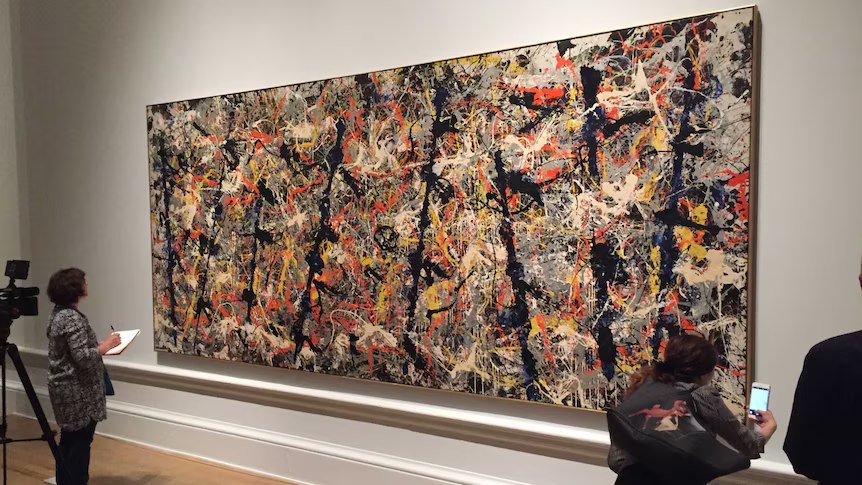
Gough Whitlam's government bought Jackson Pollock's Blue Poles in the 1970s, for $1.4 million. There was lots of fake outrage at the time from the other side of politics, who used it as a stick to beat the government with. The painting is now valued at $500 million. Pollock is another classic example of the clash with the idea of art as needing to 'look like' something. Great art creates perceptions and feelings that are non-human (percepts and affects). It gives you a way to perceive and feel the world in ways that normally you wouldn't, as a human. 'Recognising' ('looks like') is the direct enemy of that, recognition is an immediate non-thinking matching. Great art forces you to stop and think, to experience something new. Pollock looks like just random scribble, 'anybody could do that'. Anybody can play the chords in most Beatles songs. Great art requires you to do a bit of work, not just fall back on unthinking recognition, which is pure redundant duplication (A = A). Pollock isn't supposed to look like anything in that way, it's an experiment with how the materiality of paint and gravity behave to produce percepts and affects.