9 October
9 October · 19:31 UTC
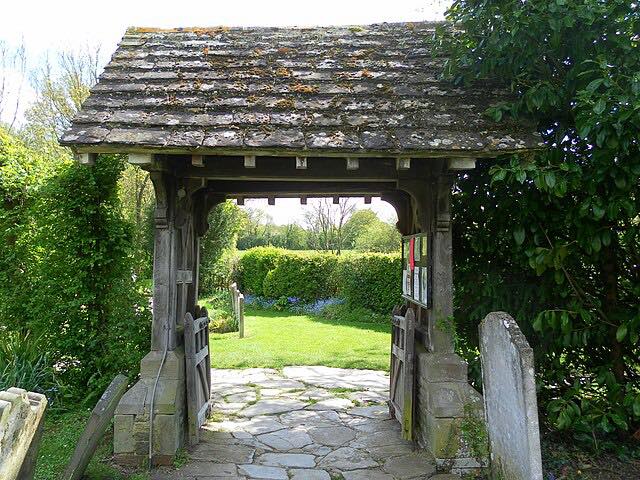
The lychgate is one of my favourite architectural features, at the entry to old churchyards. Functionally lychgates evolved as a place to shelter a coffin from the weather, while waiting for the arrival of the priest. But I’ll use it to talk about my deep dislike of travel culture, and what those who live it I think miss. As children of empire, we don’t inhabit the Earth. We live inside maps. Space and time are just coordinates, locations are only items for our ‘bucket list’ travel. We have such total disrespect for time that we fiddle with clocks twice a year, thinking we’re cleverly ‘saving’ it. We accumulate places in our travels like we used to collect stamps and coins. The imperial culture we evolved from travelled the globe, conquering, and then collecting what we found there (animals, resources, even people). The lychgate is a window into a culture we now can’t remember. Where space and time were sacred, where we *inhabited* both. It’s a portal between profane and sacred ground, but also between mortality and immortality (the carrying of the mortal and profane body through the lychgate to be sacralised and immortalised, via the service and then burial in the churchyard). A lychgate reminds us that space matters. You will directly feel a transition, walking through one, between two profoundly different spaces. The transition itself has a place, the gate gives it a reality. Old villages are now being consumed by the local rich, and emigrants and celebrities, who want to live inside Miss Marple stories. They have not one idea how those villages came to be. And so they’ll destroy them, as travellers do all locations. These villages were the profound, continuous inhabitation of both space and time. The locals worked the surroundings every day, with hard labour, to transform them into the beauty we see. Because to them place was sacred, they were reproducing what they saw as the sacred, in their landscapes. God’s creation. They were inhabiting space, working it continuously, to enrich and beautify it. And then on weekends, they would all gather at the local church, to meditate together on the traditions and meanings passed down through their culture. To re-inhabit time, to bring the past to life again, to work it and renew its lessons, in this continuous event that was their beautiful village. A sacred place, inhabited both in space and in time.