5 December
5 December · 19:54 UTC
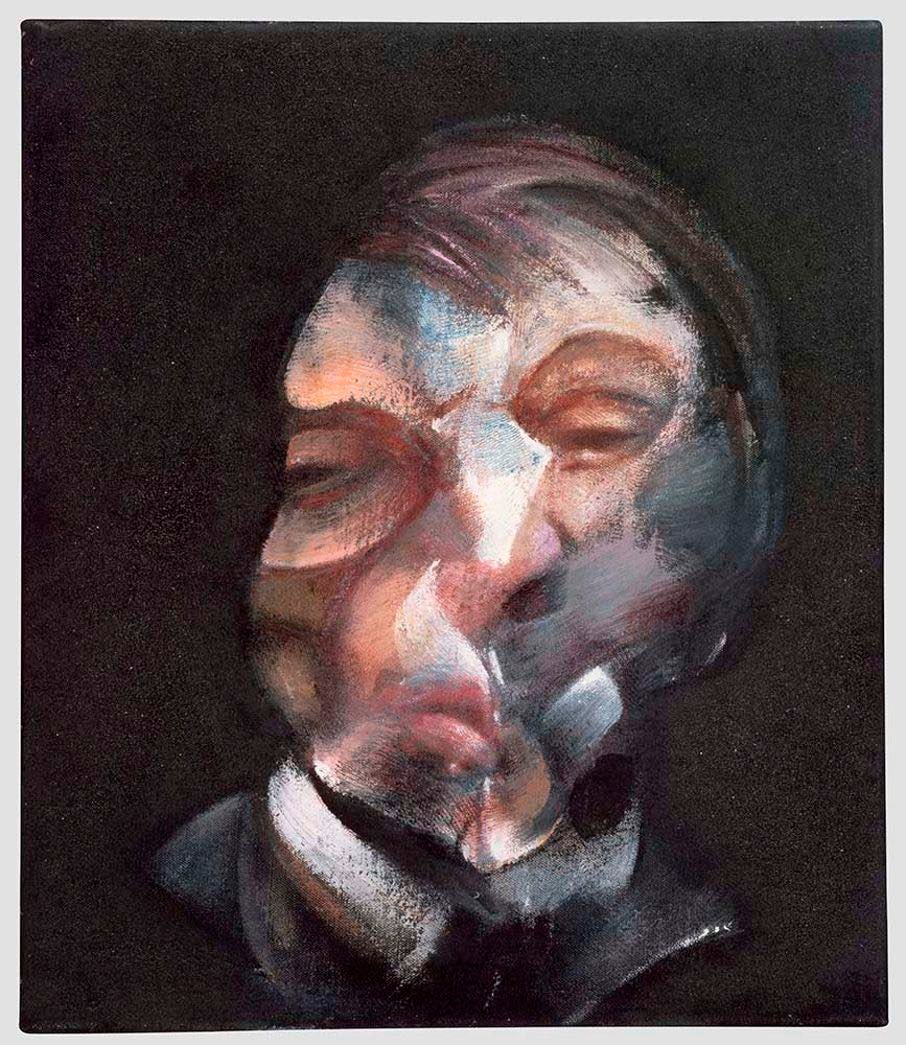
Supposedly abstract art, like Francis Bacon’s portrait here, annoys many because it doesn’t ’look like’ things. That gives it away, for non-artists ‘recognition’ is essential. Just as the greatest excitement at a gig is when the band plays one of the hits which the crowd ‘recognises’. Humans are social animals. What they recognise isn’t how things are, it’s a (social) agreement between people as to how they are. Perspective and realism are just styles of art, not art being truer to reality. Even the basic depth of a painting - perspective usually - is not reality, it’s a technique to try to include the view *other* people would have of a thing, standing somewhere else. It’s all about others, about sociality. What we like but also how and what we perceive, is determined by our relationship to others. Not reality. You may think your love of a band or artist is your personal taste or opinion, but it will nearly always be determined by a social group you’re part of, in competition with other social groups. A painter like Bacon tries to release us from the capture (it’s a literal capture) of social life, to see and experience things for how they actually are. Free of recognition (social pattern matching), forcing a confrontation with actual forces and affects. Abstract art is often ‘flat’, without the fake depth of perspective, trying to capture sensation itself, free of social imitation and rivalry. This is the first in a series of posts from me on the idea of a ‘world without others’. Not a world living as a hermit, but a life lived without constant reference to other people, a life not captured by sociality. A critical thing, in an adolescent age where sociality has replaced reality itself. Only what trends is (apparently) now real. ‘Why are you still wearing a mask? Nobody else is wearing one.’ Etc.