5 May
5 May · 19:25 UTC
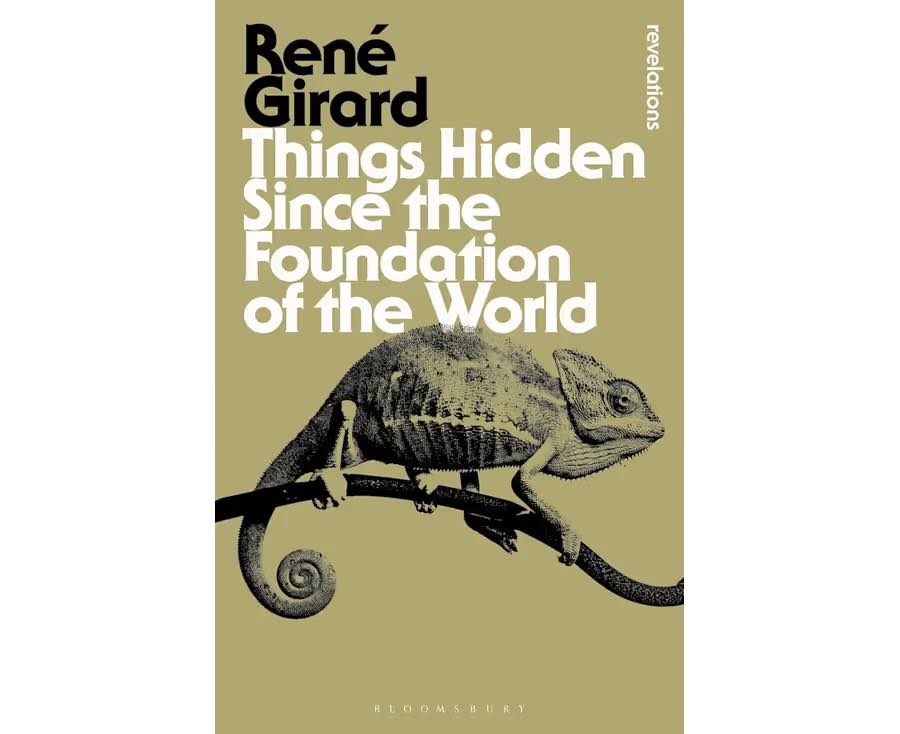
Girard realised that imitation was the root of all human life. Copying one another, our deepest passion. But he went a step further, because he realised *why* we do it. It’s rivalry. Imitative rivalry, his main concept. Humans copy one another to gain social status, in groups (I call them teams, to capture the rivalry). The rivalry is both within the teams, and then with other teams. Everybody is competing for status. Because status is also identity, for social animals. It makes you a somebody, rather than a nobody. We copy one another to ‘fit in’ with our groups, and to brand ourselves as distinct from other groups. Girard also saw that as rivalry intensifies, and our collective life itself as at risk from it, scapegoats are nominated to de-fuse it. People reunify, around the persecution and destruction of the scapegoat. You can see this in the news every day, some collective crisis is brought to a head by the identification of somebody to blame, and then the pile-on starts. But the pile-on ‘unites’ people again, it short circuits the rivalry that created the crisis in the first place. Suddenly everybody is ‘on the same page’ again. Girard also identified this as the core genius of Christianity, as a social tool. Christ’s crucifixion was the calling out of the scapegoating mechanism. The man with the highest status of all, the son of God, offered himself up as the scapegoat for human strife. In doing that, it sucked the oxygen out of the whole imitative rivalry/scapegoating mechanism. Religion for Girard wasn’t just belief in supernatural beings. It was a tool to deal with human violence. With status rivalry. The title of his main book is actually drawn from the Bible, the ‘things hidden’ there were the secrets to understanding evil and how to defeat it. It’s no coincidence that Western civilisation itself only took off and survived for millennia, once Christianity emerged. Kings and monarchies were also a tool to the same end, and why monarchs clashed with but also worked with churches. They created status hierarchies ‘above’ human life. None of us can be gods, or kings. So the striving for status is controlled by these central master hierarchies in societies, with their networked ‘courts’ and other mechanisms. The modern democratic belief that ‘the people’ is some intelligent entity that drives societies is a complete disaster, from Girard’s point of view. It does nothing but open up a space for eternal status rivalry, and thus violence and death, as each strives for status in the melee but never achieves any lasting result. And that’s today, our social media world. Nothing but endless argument, debate and violence, as people fight for status.