8 September
8 September · 18:55 UTC
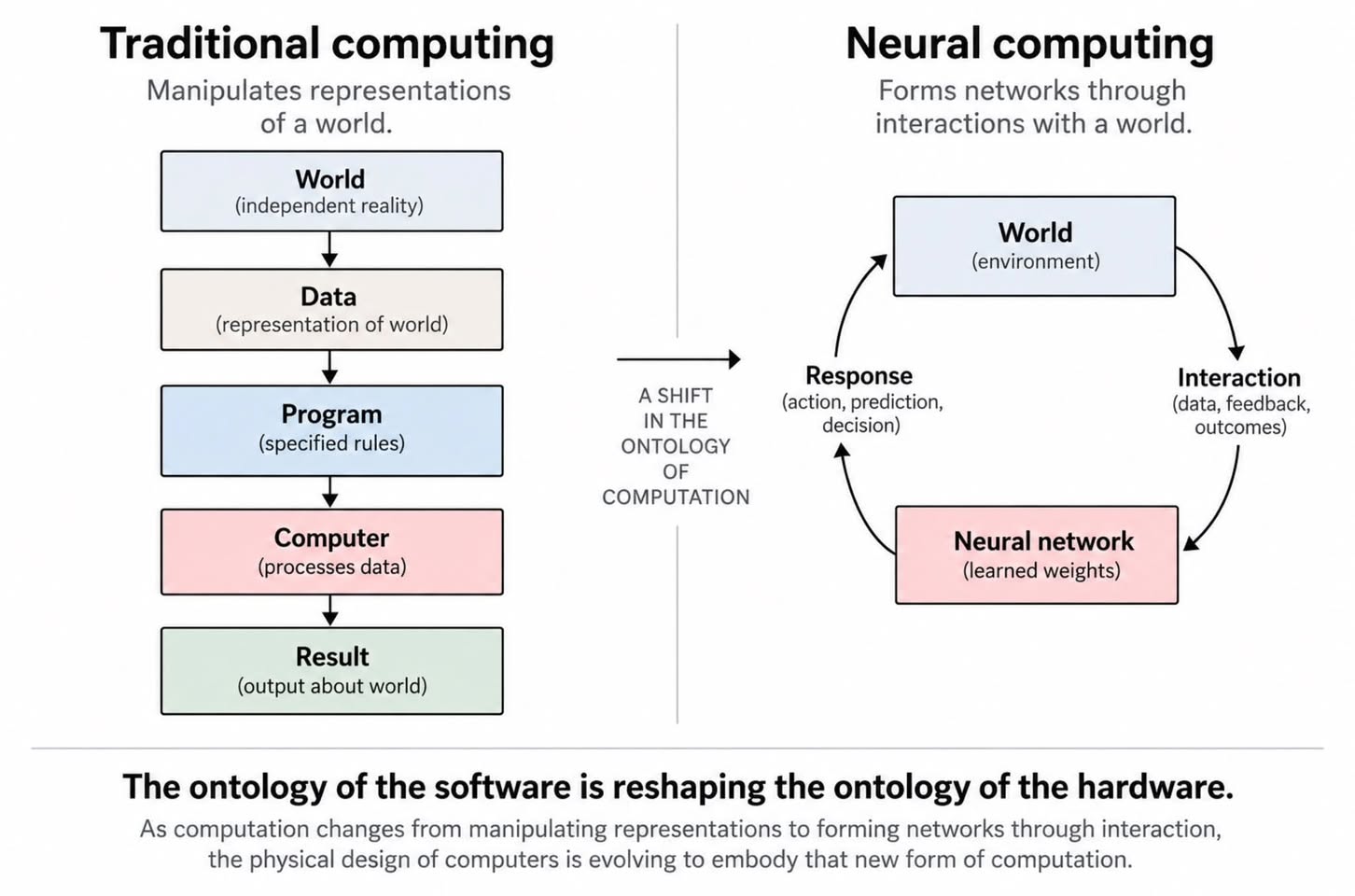
None of the public narratives about AI understand the first thing about what AI is or how it works. Most fundamentally, AI is changing what computing itself means and does. Traditional computers operate symbolic ‘representational’ models of the world. The data they process is the raw material of these models. So for example a computer game literally draws and animates a ‘model’ of the world. Or a word processor uses a symbolic model of language. Etc. AI does something astoundingly different. It creates a network with the world itself, interacting with the actual things in the world. That interaction creates ‘weightings’ inside its network, distributed in unplanned ways across its nodes or ‘neurons’. The astonishing thing about this is that those weightings alone can ‘generate’ the world, or any variation of it. Or even new worlds, just from those weightings. No model needed, no representation. An AI that writes or creates an image isn’t using a model a human put in there to do it. It’s *generating* both, all by itself, from what it LEARNED in interaction with the actual world, which generated its weightings. Those weightings ARE ‘thought’. Intelligence. Just as the networks of our own brains, nervous systems and the environments they operate in create weightings in our own brains. Why we can generate ‘imagined’ things. It’s exactly the same process. We’re already seeing this used in gaming, with ‘AI’ images. The game generates images, rather than constructing them from models and data. But traditional computers are designed to process separate data in models, so their architecture isn’t great for this. Apple’s architecture on the other hand is designed to integrate data and processing within a single chip. Which is why their computers are in high demand for AI work. Computers are shifting from creating content from data and models, towards generating it from weightings derived from actual interaction with the world itself. It will revolutionise everything.