2 September
2 September · 20:49 UTC
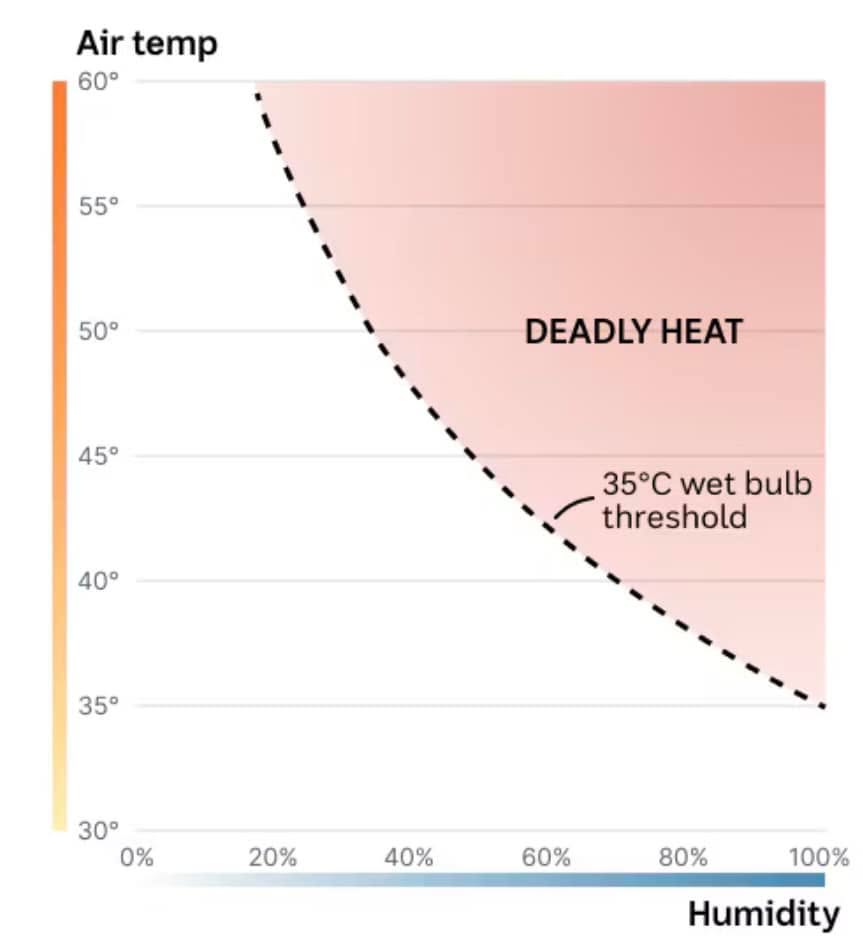
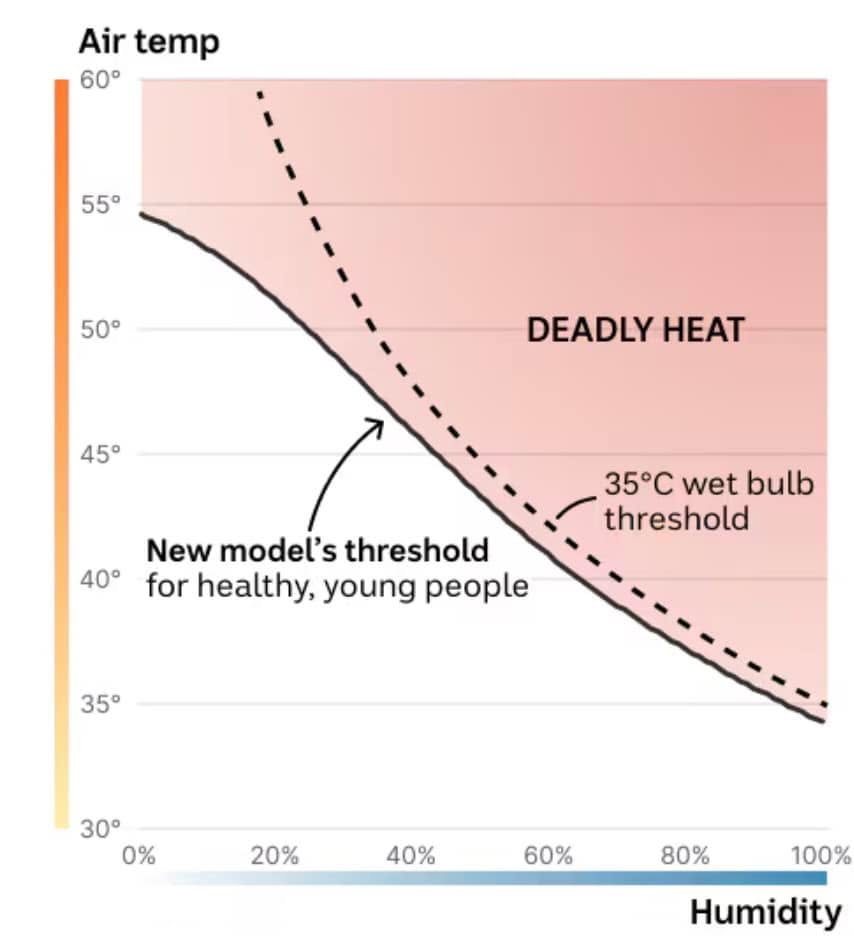
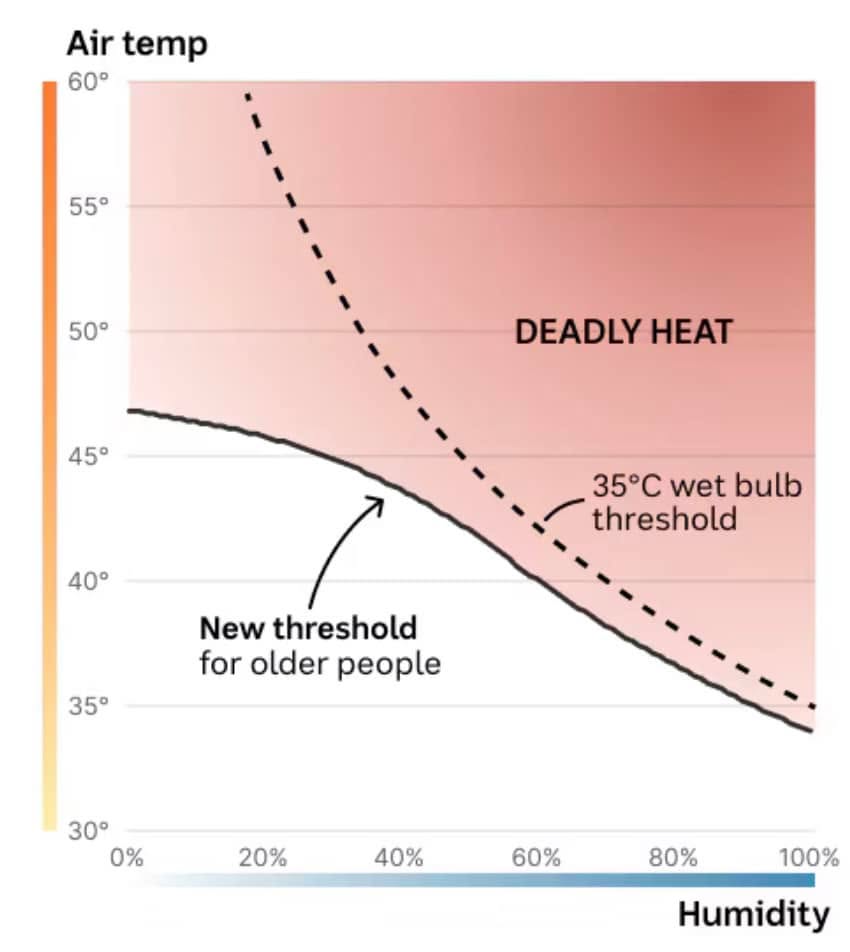
In a rapidly heating world it’s important to know how much heat the human body can withstand before the heat kills you. (Heat is already the greatest killer of all natural disasters, killing more than all other natural disasters combined.) The existing science said 35 degrees C wet-bulb temperature is the upper limit. Which is 35 degrees at 100% humidity. Beyond that threshold for any length of time and you’re dead, your body can’t cool down. You can reach that threshold at a whole range of different temperatures and humidity combinations (dotted line on the graph). The most recent work shows the threshold may actually be quite a bit lower. You can see that in the other two graphs, for older and younger people. You can use things like air conditioning to help stay below these thresholds. But those technologies and the power networks linked to them also have upper limits of operating temperature, which climate change is already causing to be exceeded in some places. And most of the world doesn’t have air conditioning, and is unlikely to any time soon.